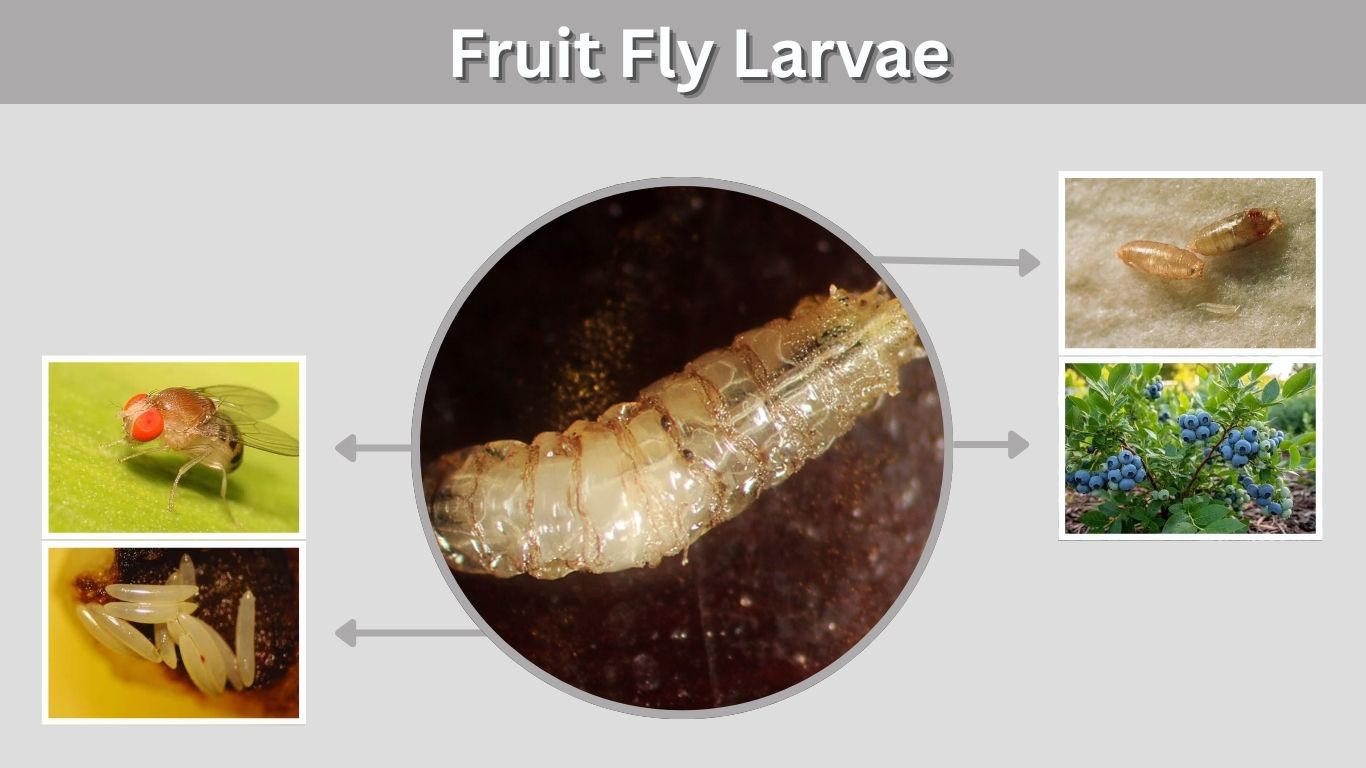
Fruit fly larvae are tiny, pale, worm-like maggots that develop in moist, fermenting organic material. In homes, common fruit fly larvae are most often found in overripe fruit, vegetables, garbage, recycling residue, drains, or other damp areas containing decomposing food. Other fruit flies, such as spotted wing drosophila, can develop inside intact raspberries, blackberries, strawberries, blueberries, and cherries. Although seeing larvae in food can be unpleasant, correctly identifying their source is the key to eliminating an infestation and preventing adult fruit flies from returning.
What Do Fruit Fly Larvae Look Like?
Fruit fly larvae are the immature feeding stage between the egg and pupa. They look very different from adult fruit flies and can easily be mistaken for other tiny maggots.
Fruit Fly Larvae Identification
- White, cream, or nearly transparent
- Worm-like and cylindrical
- Legless
- No obvious head capsule
- Body tapers toward one end
- Soft, segmented body
- Usually only a few millimeters long
- Move by wriggling or crawling
Common vinegar fly (Drosophila melanogaster) larvae are small white, legless maggots. UC IPM reports that mature larvae can reach roughly 5 mm, although size varies with species and developmental stage.
How Big Are Fruit Fly Larvae?
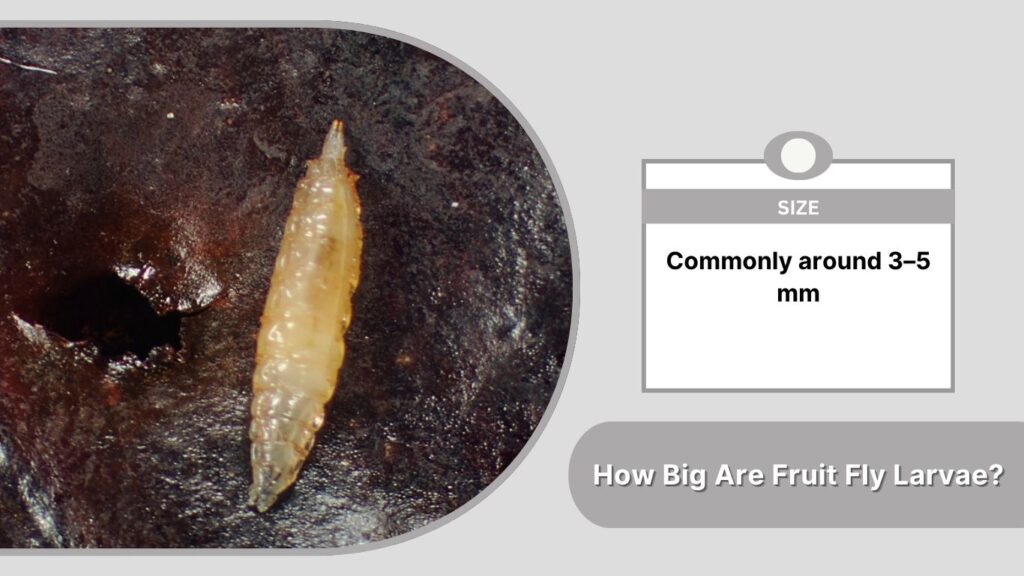
Newly hatched larvae are extremely small and may be difficult to notice without close inspection.
They grow through three larval stages, called instars, before becoming pupae.
Fruit Fly Larvae Size
Typical household Drosophila larvae measure only a few millimeters long. Depending on the species and source, mature larvae are commonly around 3–5 mm.
Some flies that are also commonly called “fruit flies,” particularly species in the family Tephritidae, have substantially larger larvae. Therefore, not every maggot discovered inside fruit belongs to the common kitchen fruit fly.
Are Fruit Fly Larvae Maggots?
Yes. Fruit fly larvae are maggots.
“Maggot” is simply a common term for the legless larval stage of many flies.
Fruit Fly Larvae vs Maggots
There is therefore no biological distinction between a fruit fly larva and a fruit fly maggot.
However, seeing a maggot does not automatically mean it is a fruit fly. House flies, blow flies, phorid flies, fungus gnats, and numerous other flies also produce larvae.
The location and appearance of the larvae help determine which species is responsible.
Fruit Fly Eggs and Larvae Life Cycle
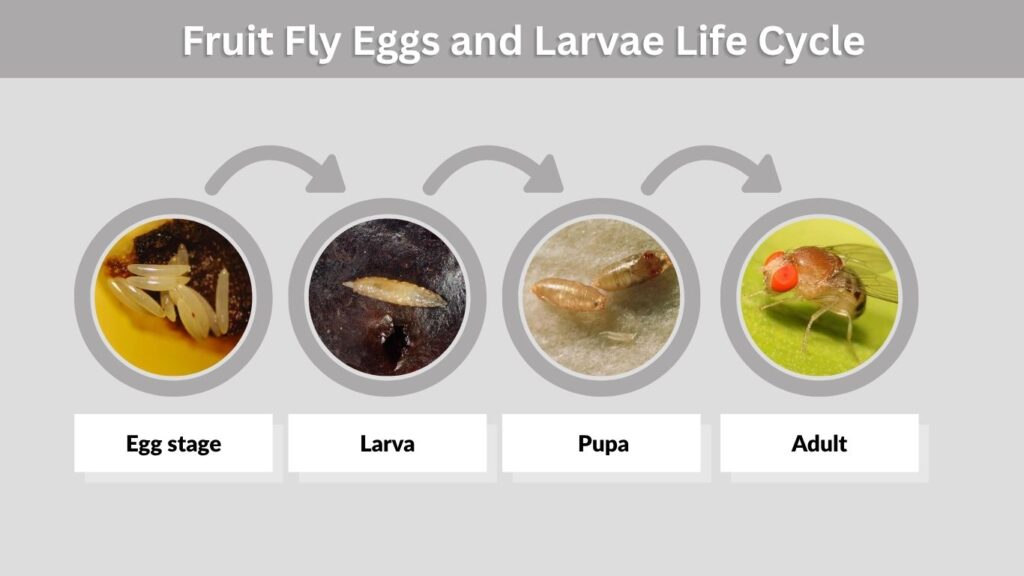
Fruit flies reproduce extremely quickly when warmth, moisture, and food are available.
Their life cycle consists of four stages:
Egg → Larva → Pupa → Adult
How Long Do Fruit Fly Eggs Take to Hatch?
Common Drosophila eggs can hatch within about a day under favorable warm conditions.
The larvae then feed for several days and pass through three instars before moving to a relatively dry location to pupate. The entire egg-to-adult cycle can sometimes be completed in only about 8–10 days under favorable conditions.
This rapid development explains why a few flies in the kitchen can seemingly become dozens within a short period.
Where Do Fruit Fly Larvae Live?
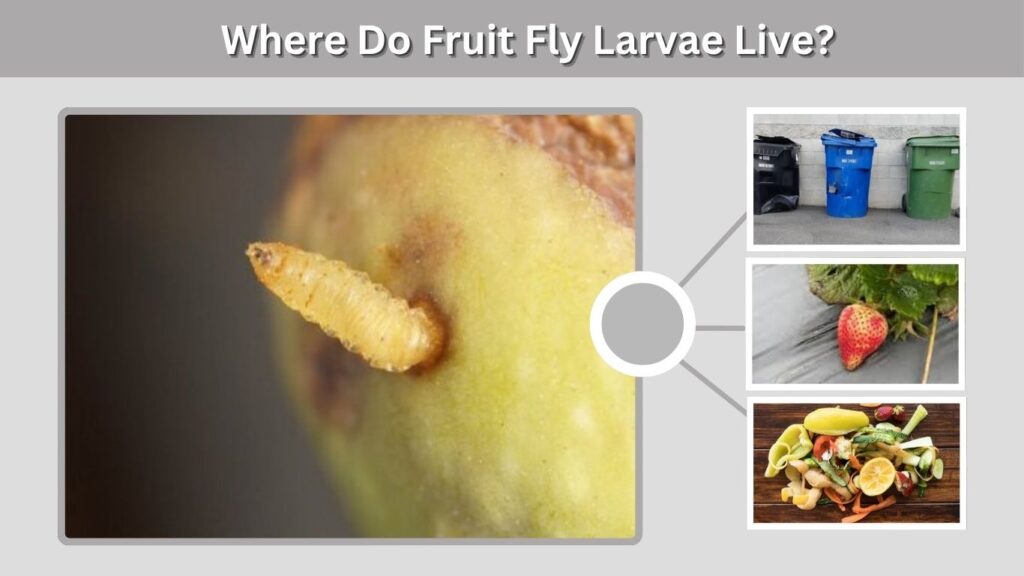
Common household fruit flies prefer moist material undergoing fermentation or decomposition.
Common Breeding Sources
Fruit fly larvae may develop in:
- Overripe bananas
- Rotten potatoes or onions
- Tomatoes
- Damaged berries
- Fruit scraps
- Garbage cans
- Recycling containers
- Wine and beer residue
- Fruit juice spills
- Garbage disposals
- Dirty drains
- Damp mops
- Compost
- Organic debris beneath appliances
The larvae depend heavily on yeasts and microorganisms growing in fermenting material.
Fruit Fly Larvae in Bananas and Other Fruit
Overripe or damaged bananas are classic breeding sites for common household fruit flies.
Adults are attracted by fermentation odors and lay eggs on suitable material.
Can Larvae Develop Inside Fruit?
Yes, depending on the fruit fly species.
Ordinary vinegar flies generally breed in damaged, overripe, or fermenting fruit rather than healthy intact fruit.
Spotted wing drosophila (Drosophila suzukii) is different. Females possess a serrated egg-laying structure that allows them to insert eggs into ripening, relatively intact soft fruit.
Fruit Fly Larvae in Raspberries and Blackberries
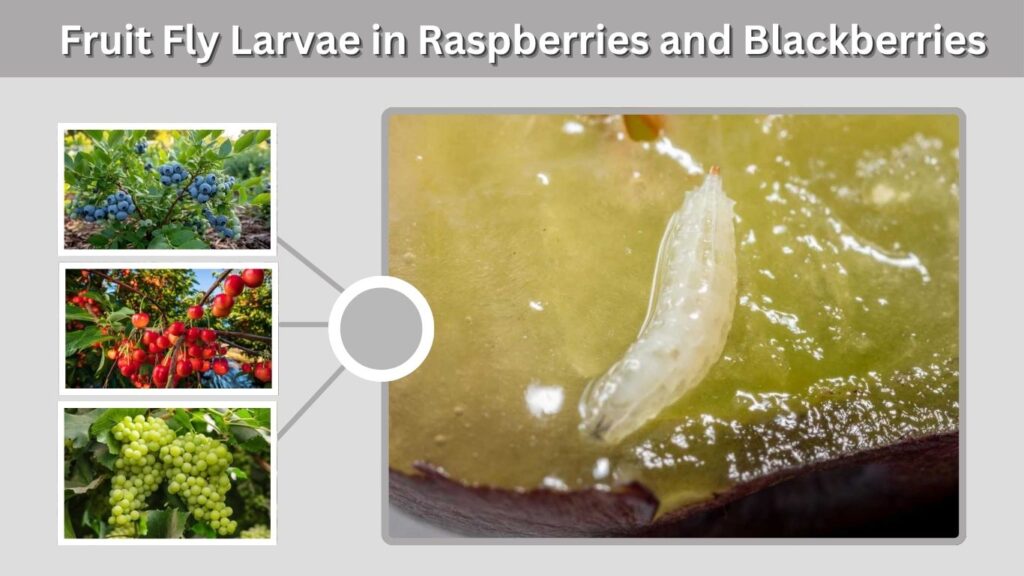
Tiny white larvae found inside fresh berries may be spotted wing drosophila rather than the common kitchen fruit fly.
Berries Commonly Infested
Spotted wing drosophila commonly attacks:
- Raspberries
- Blackberries
- Strawberries
- Blueberries
- Cherries
- Grapes
- Other soft-skinned fruits
Its larvae are white, cylindrical, legless, and about 1/8 inch long when mature. Infested berries may become soft, sunken, fermented, or rotten as larvae develop.
Cherry Fruit Fly and Other Fruit Fly Larvae
“Fruit fly” is a broad common name and includes insects from different families.
Cherry fruit flies, Mediterranean fruit flies, Oriental fruit flies, Queensland fruit flies, olive fruit flies, and mango-infesting fruit flies are not necessarily the same insects as household Drosophila.
Why Identification Matters
Many agricultural fruit fly larvae develop directly inside fruit.
Because the larvae of several species are small, pale maggots, identifying them accurately may require examining the adult fly or having the specimen professionally identified.
This is especially important when unusual larvae are discovered repeatedly in homegrown or commercially produced fruit.
Fruit Fly Larvae in Water
Common fruit fly larvae need moisture, but they are not primarily free-living aquatic animals.
They can appear in liquid or water-containing material if enough fermenting organic matter is present.
Where They May Appear
Examples include old beverage containers, dirty mop water, garbage residue, drains, fermenting juice, and liquid around decomposing fruit.
Clean water by itself does not provide the food necessary for normal fruit fly development.
Fruit Fly Larvae in Drains and Sinks
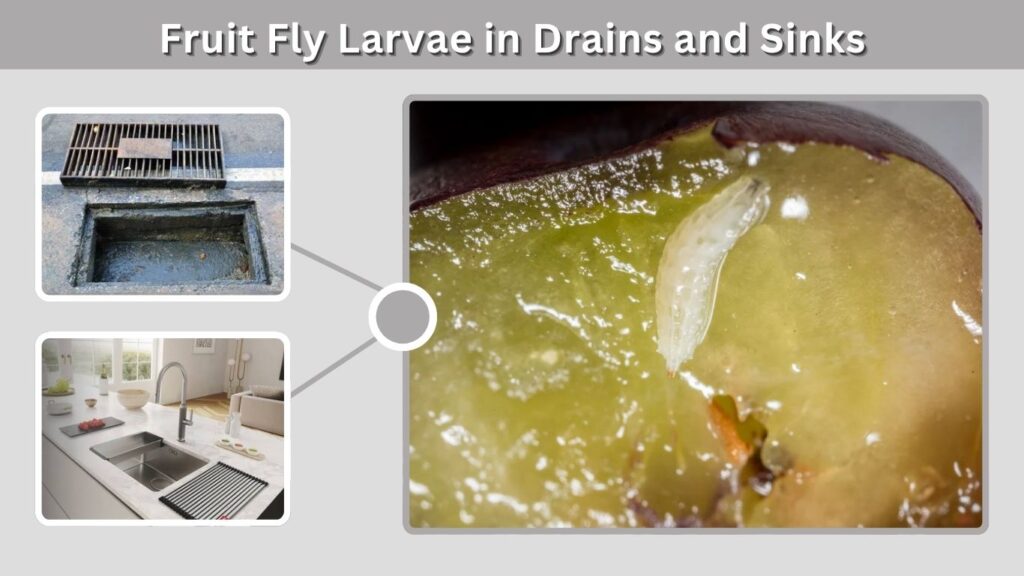
Fruit flies can reproduce around drains when a moist layer of fermenting organic residue is present.
However, larvae around drains could also belong to drain flies or phorid flies.
How to Check the Source
Clean away food residues and organic sludge rather than simply pouring chemicals into the opening.
Pay particular attention to garbage disposals, drain edges, overflow openings, and areas beneath sinks where liquid may have leaked.
Fruit flies cannot continue breeding once their moist food source is eliminated.
Fruit Fly Larvae in Plants and Soil
If small larvae are consistently found in houseplant soil, fungus gnats are usually a more likely explanation than common fruit flies.
Fruit flies may occur near plants when fallen fruit, fermenting material, compost, or decomposing vegetation is present.
Check the actual breeding material before treating the plant.
Are Fruit Fly Larvae Harmful to Humans?
Fruit fly larvae are not normally human parasites.
Accidentally consuming a tiny larva in a piece of fruit is generally unlikely to cause harm. University of Minnesota Extension specifically states that there is no known human-health risk from eating fruit containing spotted wing drosophila larvae.
Should You Eat Infested Fruit?
Even though the larvae themselves are not normally a serious hazard, heavily infested, rotten, moldy, or badly fermented fruit should be discarded.
Decomposing food can contain microorganisms unrelated to the larvae that may make the food unsuitable to eat.
If unexplained larvae appear in the skin, wounds, or other body tissues, seek medical evaluation rather than assuming they are ordinary household fruit flies.
Can Fruit Fly Larvae Survive in Your Stomach?
Common fruit fly larvae are adapted to fermenting organic material, not to living inside the human digestive system.
Accidental ingestion does not normally establish an infestation.
The stomach’s acidic environment and digestive processes make survival difficult.
How to Kill Fruit Fly Larvae
Killing individual larvae is less important than removing the material where hundreds of additional eggs and larvae may be developing.
Best Control Method
Remove overripe fruit, rotten vegetables, spills, and garbage. Refrigerate ripe produce, rinse recycling containers, clean garbage disposals and drains, and wash underneath appliances where food may have accumulated.
Sanitation is considered the primary method for controlling household fruit flies.
Does Vinegar Kill Fruit Fly Larvae?
Vinegar is more useful as an adult fruit fly attractant than as a dependable larval treatment.
Apple cider vinegar traps can capture adults, but traps alone do not eliminate eggs and larvae developing elsewhere.
Finding and removing the breeding source remains essential.
Does Boiling Water Kill Fruit Fly Larvae?
Very hot water may kill exposed larvae, but pouring it down a drain may not remove all of the fermenting organic film where larvae develop.
Physically cleaning the source and removing the organic buildup provides better long-term control.
Does Bleach Kill Fruit Fly Larvae?
Bleach may kill exposed insects when used according to its label, but it is not necessary for most fruit fly infestations and may not penetrate thick organic buildup inside drains.
Never mix bleach with vinegar, ammonia, drain cleaners, or other household chemicals because dangerous gases can be produced.
Fruit Fly Larvae in Compost
Fruit flies thrive in exposed fermenting kitchen scraps.
Reduce problems by burying fresh scraps beneath existing compost material, covering the pile appropriately, and avoiding large quantities of exposed fruit.
For fruit specifically infested with spotted wing drosophila, sealing and disposing of it is preferable to ordinary composting because composting may not reliably kill the pest.
FAQs
1. Can you see fruit fly larvae?
Yes. Mature larvae are visible to the naked eye as tiny white or cream-colored maggots, although newly hatched larvae are difficult to see.
2. How long do fruit fly larvae live?
The larval stage commonly lasts only several days under warm favorable conditions before the larva pupates. Development slows considerably at lower temperatures.
3. Are fruit fly larvae harmful to eat?
Accidentally eating a small number is generally not considered a serious health risk. However, rotten or contaminated food should still be discarded.
4. Why are there fruit fly larvae in my house?
Look for overripe produce, rotten vegetables, garbage, spilled beverages, recycling residue, dirty drains, or another consistently moist source of fermenting organic matter.
5. How do you get rid of fruit fly larvae permanently?
Remove their breeding material. Clean and dry affected areas, discard spoiled food, refrigerate ripe fruit, empty trash regularly, and eliminate fermenting residue in drains and containers.