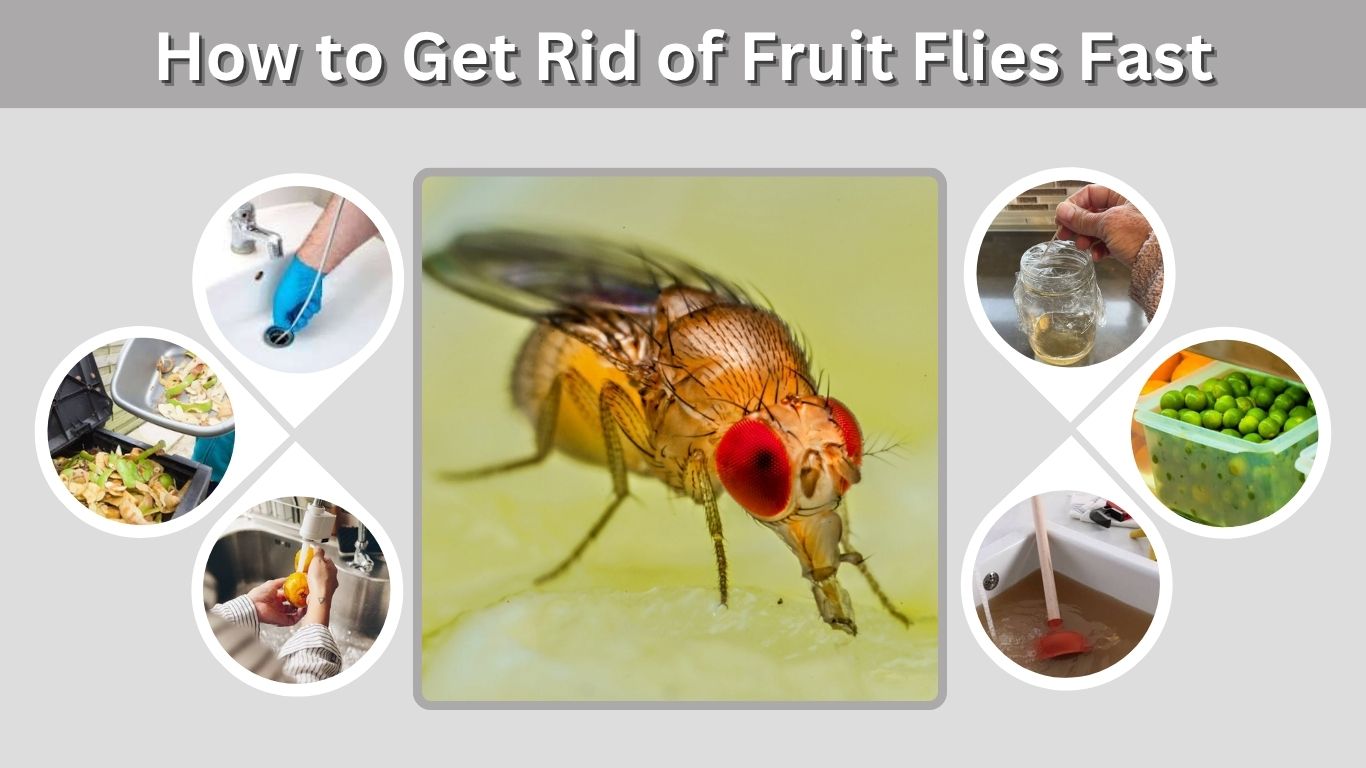
Fruit flies can seemingly appear overnight, gathering around bananas, garbage cans, drains, recycling bins, and other places where food is beginning to ferment. The fastest way to get rid of fruit flies is to remove every breeding source first and use traps to capture the remaining adults. Apple cider vinegar traps can reduce visible flies quickly, but traps alone rarely solve an infestation if rotten produce, spilled juice, or fermenting residue remains nearby. With thorough cleaning and food storage, most household fruit fly problems can be stopped without extensive pesticide use.
What Causes Fruit Flies in Your House?
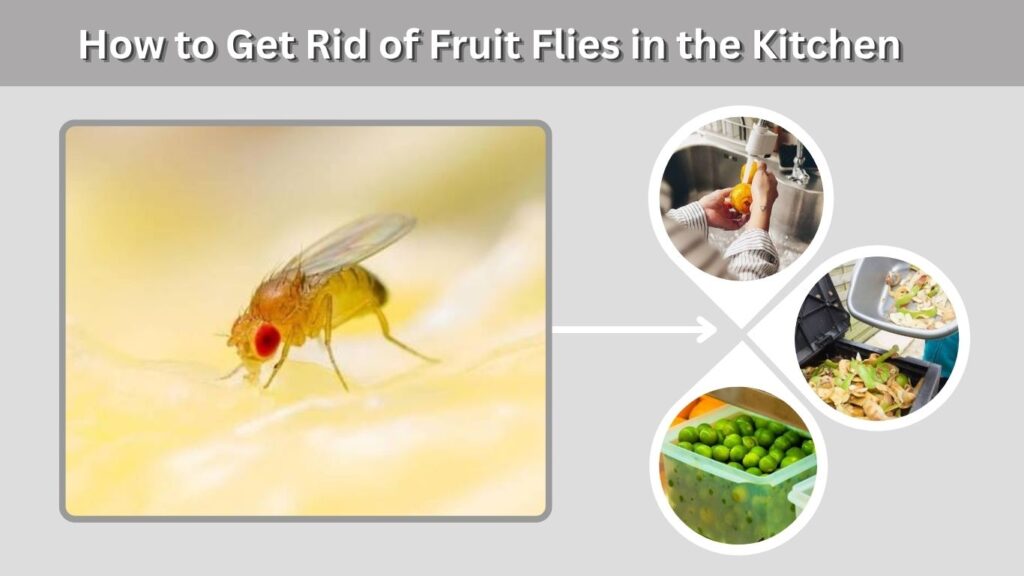
Fruit flies are tiny flies in the family Drosophilidae. Common household species are attracted to yeast and microorganisms associated with fermenting fruits, vegetables, and liquids.
They may enter through doors or window screens, but they are also frequently brought indoors with produce. Once suitable food is available, their numbers can increase rapidly.
Common Breeding Sources
Check for:
- Overripe bananas and other fruit
- Rotten onions or potatoes
- Tomatoes and melons
- Fruit scraps
- Garbage cans
- Recycling containers
- Empty beer or wine bottles
- Soft-drink cans
- Spilled juice
- Garbage disposals
- Damp cleaning cloths or mops
- Organic residue around drains
One forgotten onion, potato, or liquid spill can support a surprisingly large infestation.
How to Get Rid of Fruit Flies Fast
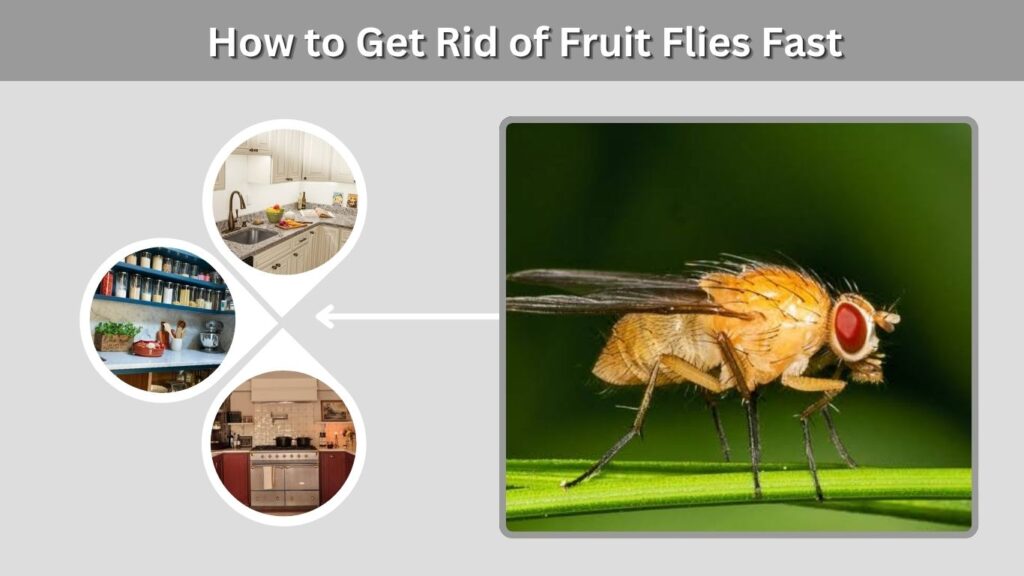
The most effective solution combines sanitation with trapping.
Killing the adults you can see provides temporary relief, but removing their breeding material is what breaks the life cycle.
1. Remove Ripe and Rotten Produce
Inspect your kitchen thoroughly.
Discard spoiled fruits and vegetables and refrigerate ripe produce whenever practical.
Look beyond the fruit bowl. Check:
- Under cabinets
- Behind appliances
- Pantry shelves
- Produce baskets
- Potatoes and onions in storage
- Grocery bags
- Countertop containers
A single forgotten piece of produce can keep producing new flies even after the kitchen appears clean.
2. Empty and Wash the Trash Can
Removing the garbage bag may not be enough.
Fruit juice, food residue, and other liquids can remain on the bottom or sides of the container.
Wash the bin thoroughly and allow it to dry.
Clean recycling containers as well, especially cans and bottles that previously contained soda, juice, beer, or wine.
3. Clean Hidden Spills
Move small appliances and inspect difficult-to-see areas.
Pay special attention to:
- Under refrigerators
- Beneath trash cans
- Around recycling bins
- Under fruit bowls
- Around cabinets
- Beneath coffee machines
University of Georgia Extension notes that even a small fruit-juice spill behind a refrigerator can become a substantial breeding source.
4. Set Fruit Fly Traps
Once the breeding source has been removed, traps help eliminate adults that remain in the room.
This combination works much better than repeatedly trapping adults while allowing larvae to continue developing elsewhere.
How to Get Rid of Fruit Flies With Vinegar
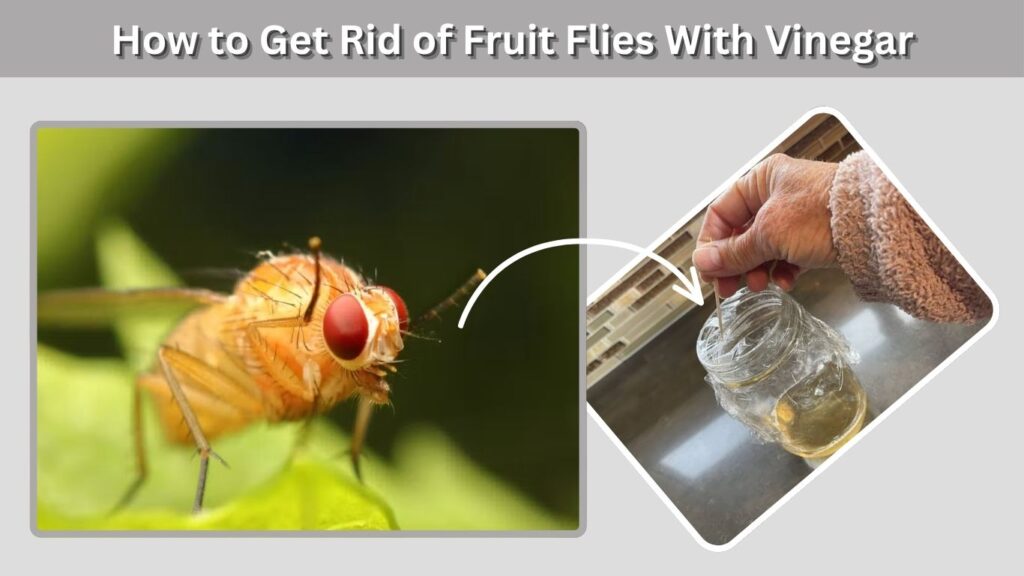
An apple cider vinegar trap is one of the simplest home methods for catching adult fruit flies because fermenting odors attract them.
Apple Cider Vinegar Trap
You will need:
- Small cup or jar
- Apple cider vinegar
- One drop of unscented dish soap
Pour a small amount of apple cider vinegar into the container and add a drop of dish soap.
The vinegar attracts flies, while the soap reduces the liquid’s surface tension so trapped flies are more likely to sink. Vinegar-based traps are widely used for monitoring Drosophila.
Place traps near the strongest activity, such as beside the fruit bowl or trash area.
Does White Vinegar Work?
Apple cider vinegar is generally preferred because its fermented fruit-like odor is attractive to fruit flies.
Wine and yeast-based mixtures can also attract them.
The important point is that a trap is supplementary control. If flies continue breeding in spoiled food, trapping adults alone may never eliminate the problem.
Can You Get Rid of Fruit Flies in 2 Minutes?
You can kill or trap some adult fruit flies within minutes, but completely eliminating an established infestation in two minutes is unrealistic.
Fruit flies have eggs, larvae, and pupae that may remain hidden in breeding material.
A better rapid approach is:
- Throw away spoiled produce.
- Refrigerate remaining ripe fruit.
- Empty garbage and recycling.
- Clean spills and food residue.
- Inspect drains.
- Put out vinegar traps.
Visible numbers may decline rapidly, but continue sanitation for several days so newly emerging adults have nowhere suitable to reproduce.
How to Get Rid of Fruit Flies in the Kitchen
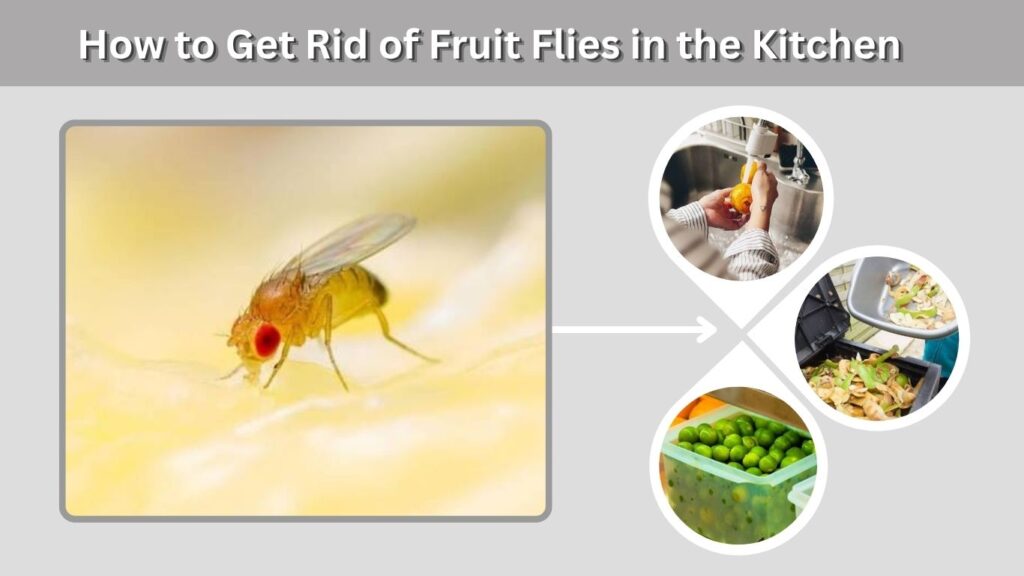
The kitchen is the most common problem area because it combines food, moisture, and fermenting material.
Start with produce and trash, then expand your inspection if flies continue appearing.
Kitchen Checklist
- Refrigerate ripe fruit.
- Throw away damaged produce.
- Clean the fruit bowl.
- Wash countertops.
- Empty garbage regularly.
- Rinse recycling.
- Clean under appliances.
- Wash mops and cleaning clothes.
- Wipe spilled juice and alcohol.
- Clean garbage disposals.
- Check pantry vegetables.
Common fruit flies are strongly associated with fermenting produce, alcoholic beverages, soft-drink containers, and trash.
How to Get Rid of Fruit Flies in Drains
Seeing tiny flies around a sink does not automatically mean they are fruit flies.
Fruit flies can use organic residue around plumbing, but fuzzy insects emerging directly from drains are often moth flies, also called drain flies.
Other small flies can also breed in plumbing.
Clean the Drain Properly
If a drain appears to be the source:
- Remove visible food debris.
- Scrub inside the drain with a stiff pipe brush.
- Clean the garbage disposal and splash guard.
- Remove the organic film coating the pipe.
- Correct leaks or standing-water problems.
Colorado State University Extension emphasizes that drain-associated flies are controlled by physically removing the organic film in which larvae develop. Simply pouring hot water down a drain may not remove this material.
Should You Pour Bleach Down the Drain?
Bleach or boiling water alone is not a dependable treatment for flies breeding in drain slime because it may pass through without removing the material lining the pipe.
Mechanical scrubbing is more important.
Fruit Flies in Plants: Are They Really Fruit Flies?
Tiny flies hovering around houseplants are frequently fungus gnats rather than fruit flies.
Fungus gnats are slender, dark, mosquito-like insects. Their larvae develop in moist potting soil, feeding largely on fungi, algae, and decaying plant material.
How to Get Rid of Fungus Gnats
If flies are concentrated around plant soil:
- Allow the upper soil to dry between watering.
- Avoid continually wet potting mix.
- Remove dead leaves from the soil surface.
- Use yellow sticky traps for adults.
- Consider a labeled Bacillus thuringiensis israelensis treatment when necessary.
Reducing excessive soil moisture is one of the most important control measures.
Treating a fungus gnat problem as a fruit fly infestation can waste considerable time because their breeding sources are completely different.
Fruit Flies vs Gnats
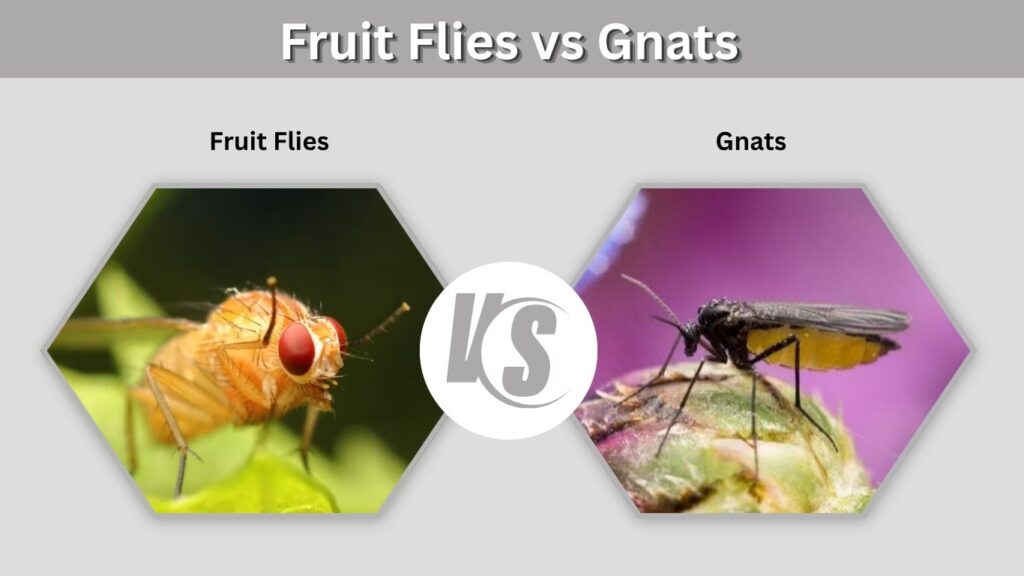
People often use “gnat” for almost any tiny flying insect, but determining the correct pest makes control much easier.
| Feature | Fruit Fly | Fungus Gnat | Drain Fly |
| Appearance | Tan/brown, often red-eyed | Dark, slender, long-legged | Fuzzy, moth-like |
| Common location | Fruit and kitchen | Houseplants | Sinks and drains |
| Breeding source | Fermenting food/liquid | Moist potting soil | Organic drain film |
| Best control | Remove food source | Dry soil | Scrub drain |
Fruit flies themselves are usually about 1/16–1/8 inch long, often with tan bodies, darker abdomens, and reddish eyes.
Best Natural Ways to Get Rid of Fruit Flies
Most infestations do not require extensive indoor pesticide applications.
Source removal is already a largely nonchemical solution.
Effective Natural Control
Focus on:
- Removing rotten produce
- Refrigerating ripe fruit
- Cleaning food spills
- Washing trash and recycling containers
- Scrubbing affected drains
- Using vinegar traps
- Keeping food containers closed
These measures attack the conditions allowing fruit flies to reproduce rather than simply killing insects that happen to be flying around.
Why Do Fruit Flies Keep Coming Back?
Persistent fruit flies almost always indicate that a breeding source has been overlooked or new adults are continually gaining access to food.
Common hidden sources include:
- Rotten potatoes or onions
- Residue beneath appliances
- Dirty recycling
- Beverage bottles
- Garbage disposal buildup
- Wet mops
- Food trapped beneath trash liners
- Fermenting produce in storage
Search systematically rather than adding more traps.
Traps are excellent for telling you adults are present, but sanitation is the key to long-term control.
How to Prevent Fruit Flies
Prevention becomes much easier once you know what attracts them.
Prevention Tips
- Eat or refrigerate ripe produce promptly.
- Discard damaged fruits and vegetables.
- Rinse drink containers before recycling.
- Keep trash containers clean.
- Wipe spills immediately.
- Clean beneath appliances regularly.
- Keep food covered.
- Inspect produce brought indoors.
- Avoid leaving dirty dishes or drink containers overnight.
These habits eliminate the fermenting materials that allow fruit fly populations to develop.
Can Fruit Flies Make You Sick?
Household fruit flies are primarily considered nuisance pests rather than major direct health threats. University of Minnesota Extension notes that they are generally not considered a health problem.
Still, fruit flies are associated with decomposing and fermenting food, so keeping food-preparation areas sanitary and discarding spoiled produce remains sensible.
FAQs
1. What is the fastest way to get rid of fruit flies?
Remove every fermenting food source, clean trash and recycling containers, wipe up spills, and then use vinegar traps to catch remaining adults. Source removal is more important than trapping alone.
2. Does apple cider vinegar kill fruit flies?
Apple cider vinegar attracts them. Adding a small amount of dish soap makes a liquid trap more effective by reducing surface tension.
3. Why are there suddenly so many fruit flies?
They reproduce quickly when fermenting food is available. Produce may also bring flies or eggs indoors, while adults can enter from outside.
4. Can fruit flies come from drains?
They can be associated with organic material around drains, but flies actually breeding deep in drain slime may instead be drain flies or other small fly species. Identifying the insect before treatment is important.
5. How long does it take to completely get rid of fruit flies?
Adult numbers can fall quickly after sanitation and trapping, but complete elimination may take several days because immature stages can continue developing. If flies persist, continue searching for an overlooked breeding source.