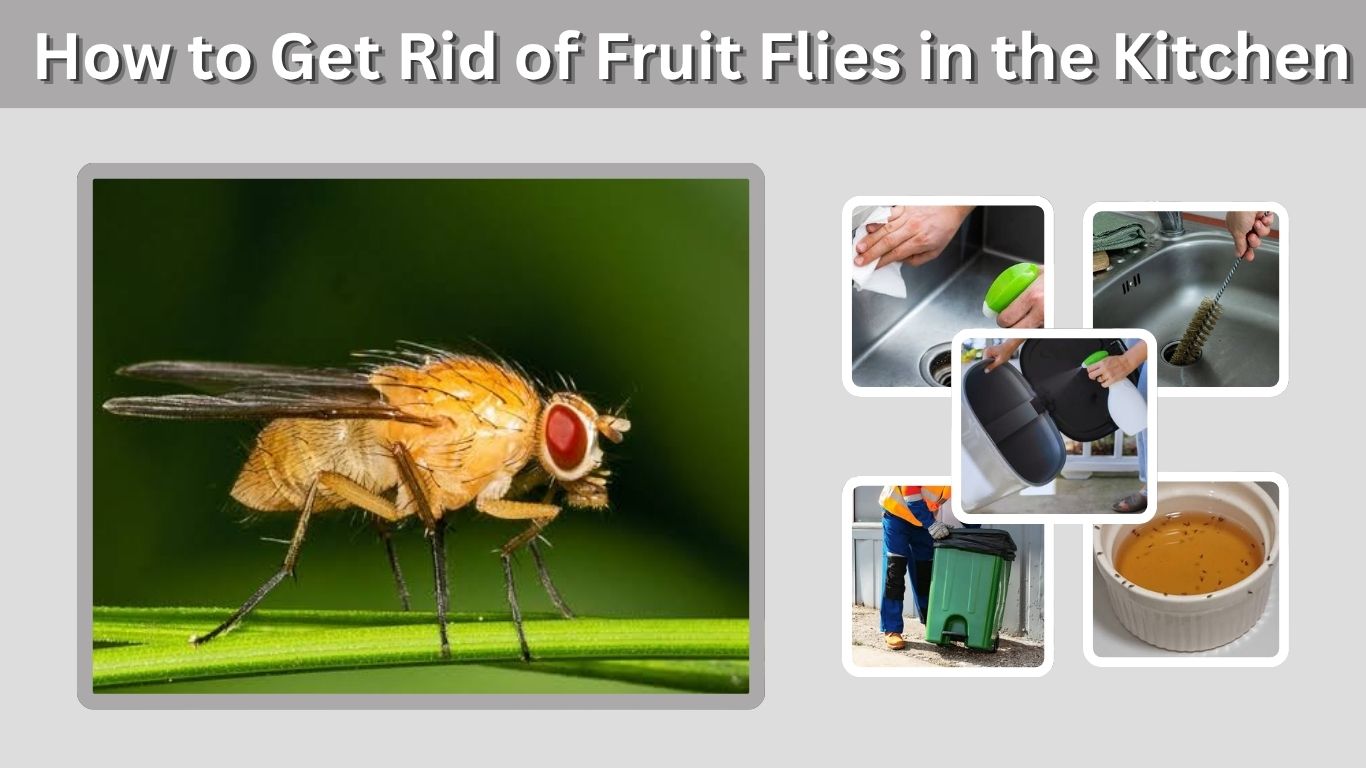
Fruit flies can quickly turn a clean kitchen into an irritating problem, especially around ripe fruit, trash cans, sinks, recycling bins, and spilled drinks. The fastest way to get rid of fruit flies in the kitchen is to find and remove the breeding source first, then use traps to catch the remaining adults. Simply killing visible flies will not solve the problem if eggs and larvae are developing in fermenting food or organic residue. With thorough cleaning, proper food storage, and a simple vinegar trap, most kitchen infestations can be brought under control.
Why Are There Fruit Flies in My Kitchen?
Fruit flies are attracted to fermenting organic material. Kitchens provide many ideal breeding sites because food, moisture, and warmth are usually available.
The flies may arrive on produce or enter through doors and windows. Once indoors, they can reproduce quickly if suitable material is available. The complete life cycle can take roughly a week under favorable conditions, allowing a small problem to become a noticeable infestation surprisingly fast.
Common Sources
Check carefully for:
- Overripe bananas and other fruit
- Rotten potatoes or onions
- Tomatoes and melons
- Fruit scraps
- Dirty garbage cans
- Recycling bins
- Empty beer and wine bottles
- Soda or juice containers
- Garbage disposals
- Spilled fruit juice
- Damp mops and cleaning cloths
- Compost containers
- Organic residue around drains
Even a small amount of spilled juice behind an appliance can support large numbers of fruit flies.
How to Get Rid of Fruit Flies in the Kitchen Fast
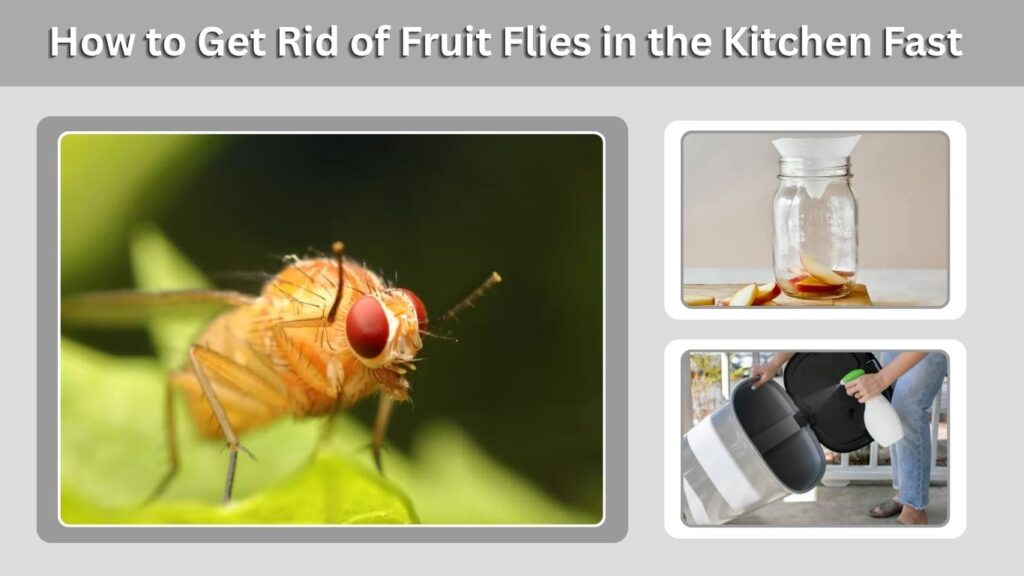
The most effective approach is a combination of source removal, sanitation, and trapping.
Adult traps can reduce the flies you see immediately, but the infestation will return unless larvae lose access to fermenting food.
1. Remove Overripe Produce
Inspect every fruit and vegetable in the kitchen.
Throw away anything rotten, leaking, or heavily overripe. Store remaining ripe produce in the refrigerator temporarily.
Remember to check less obvious locations such as pantry shelves and storage baskets containing potatoes or onions.
2. Empty and Wash the Trash Can
Take the garbage outside and then wash the actual container.
Liquids and food debris often collect beneath the liner and provide enough organic material for fruit flies to reproduce.
Wash and dry recycling bins as well.
3. Clean Bottles and Cans
Fruit flies are strongly attracted to residues from:
- Wine
- Beer
- Juice
- Soft drinks
- Fermented beverages
Rinse containers before placing them in recycling, particularly while dealing with an active infestation.
4. Clean Hidden Kitchen Areas
Move objects where practical and inspect:
- Behind the refrigerator
- Under the trash can
- Beneath countertop appliances
- Around the dishwasher
- Under fruit baskets
- Inside pantry corners
The breeding source is often somewhere less obvious than the visible swarm.
How to Get Rid of Fruit Flies With Vinegar
A vinegar trap is useful for catching adult fruit flies after you begin removing their breeding sites.
Simple Vinegar Trap
You need:
- A small jar or cup
- Apple cider vinegar
- A drop of dish soap
Pour a small amount of vinegar into the container and add one drop of dish soap.
The fermented smell attracts fruit flies, while the soap reduces surface tension and makes it harder for flies landing on the liquid to escape. University of Kentucky Extension recommends vinegar traps as a useful way to remove remaining adults after the breeding source is addressed.
Place the trap near the greatest fly activity, such as beside the trash area or fruit storage location.
Can I Use a Funnel Trap?
Yes.
Place cider vinegar in a jar and insert a paper funnel with a small opening at the bottom. Fruit flies enter toward the bait but have difficulty finding the exit.
This is another established home trapping method.
How to Get Rid of Fruit Flies in the Kitchen Sink
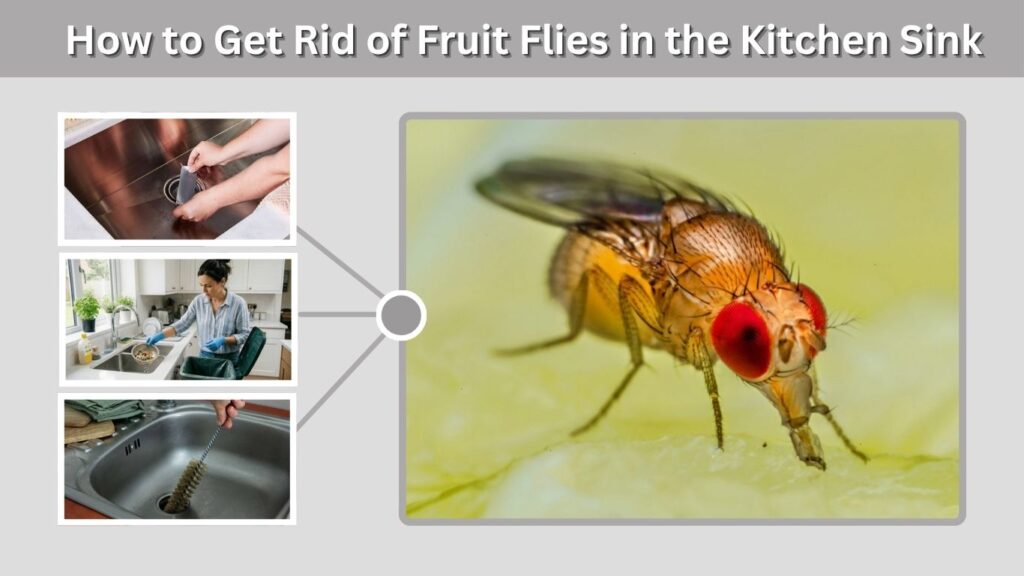
If most flies are concentrated around the sink, inspect the drain and garbage disposal.
Fruit flies can sometimes breed in the moist organic film inside plumbing, but other small flies—especially drain flies—are also frequently mistaken for fruit flies.
Clean the Drain
Use these steps:
- Remove visible food debris.
- Clean the sink strainer.
- Scrub inside the drain with an appropriate pipe brush.
- Clean the garbage disposal and rubber splash guard.
- Remove slime and organic residue from accessible surfaces.
- Flush according to the drain-cleaning product or plumbing instructions.
Physical removal of organic buildup is important because larvae can live within the film coating drain surfaces.
How to Check Whether Flies Are Coming From a Drain
If you are uncertain, place a clear plastic bag loosely over the drain overnight while leaving enough space for emerging insects to enter it.
Fruit flies or other small flies breeding in the plumbing may become trapped inside, helping identify the source.
Fruit Flies vs Drain Flies in the Kitchen
Correct identification is important because the treatment differs.
| Feature | Fruit Fly | Drain Fly |
| Appearance | Small tan/brown fly | Tiny fuzzy moth-like fly |
| Eyes | Often red or dark | Dark |
| Main location | Fruit, trash, drinks | Sink and drains |
| Breeding material | Fermenting foods | Organic drain film |
| Flight | Fast, erratic | Weak, short flights |
Drain flies have hairy bodies and broad, fuzzy wings held roof-like over the body.
Fruit Flies vs Gnats in the Kitchen
Tiny flies around houseplants are often fungus gnats, not fruit flies.
Fungus gnats are slender, dark, mosquito-like insects that reproduce in moist potting soil.
If the insects gather mainly around a plant rather than fruit or garbage, inspect the soil.
For Fungus Gnats
Allow the upper layer of potting soil to dry between watering when appropriate for the plant, remove dead plant matter, and avoid constantly saturated soil.
Fruit fly vinegar traps will not fix an infestation whose larvae are developing in potting mix.
How to Get Rid of Fruit Flies Naturally
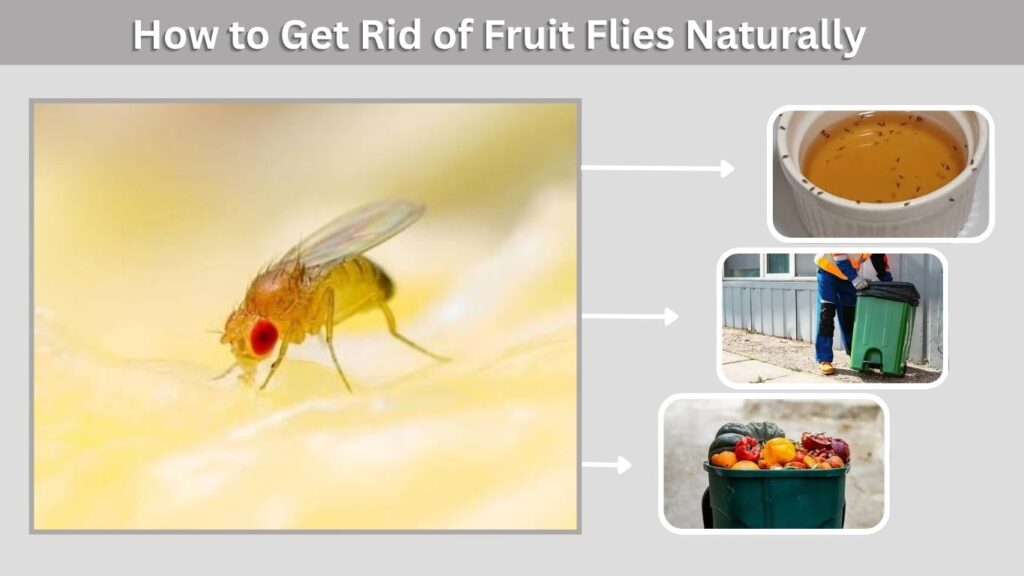
You usually do not need widespread pesticide spraying for a normal kitchen fruit fly problem.
The most effective natural approach is removing what the flies need to reproduce.
Natural Control Methods
- Refrigerate ripe fruit.
- Discard spoiled produce.
- Wash garbage bins.
- Rinse recycling.
- Clean spills immediately.
- Scrub contaminated drains.
- Keep compost tightly covered.
- Use vinegar traps for adults.
- Keep counters free of food residue.
If all breeding material is eliminated, fruit fly numbers should begin declining within a few days. Remaining adults may persist longer, which is why continued sanitation and trapping are important.
How to Get Rid of Fruit Flies in Kitchen Compost
Indoor compost containers can become major breeding sites when fruit scraps remain accessible.
Compost Control
Use a container with a secure lid and empty it regularly.
Wash residue from both the inside of the container and around the lid. During a severe infestation, consider temporarily storing compostable kitchen scraps in a sealed container or freezer until they can be taken outside.
Colorado State University notes that incompletely sealed compost containers can support small fruit fly breeding.
How to Handle a Fruit Fly Infestation in a Restaurant Kitchen
Fruit flies are more serious in restaurants and commercial kitchens because they may indicate sanitation problems and can contaminate food surfaces mechanically.
University of Kentucky notes that small flies can become significant pests in commercial kitchens and food facilities.
Commercial Kitchen Checklist
Inspect:
- Floor drains
- Beverage stations
- Soda lines and drip trays
- Garbage areas
- Recycling containers
- Mop buckets
- Floor-wall junctions
- Food-preparation equipment
- Produce storage
- Grease and food buildup beneath equipment
Professional pest management may be appropriate when the breeding source cannot be located or when food-safety requirements demand rapid control.
Spraying adult flies without correcting sanitation will generally provide only temporary improvement.
Why Do Fruit Flies Keep Coming Back?
Persistent fruit flies usually mean a breeding source remains somewhere in the kitchen.
Common overlooked locations include:
- One rotten potato in a cabinet
- Residue inside recycling
- Juice beneath an appliance
- Dirty garbage disposals
- Damp mops
- Compost containers
- Drain buildup
- Liquid beneath trash liners
Search for the larvae’s food instead of concentrating only on the flying adults.
Eliminating breeding sources is consistently identified by extension specialists as the most important part of fruit fly control.
How to Prevent Fruit Flies in the Kitchen
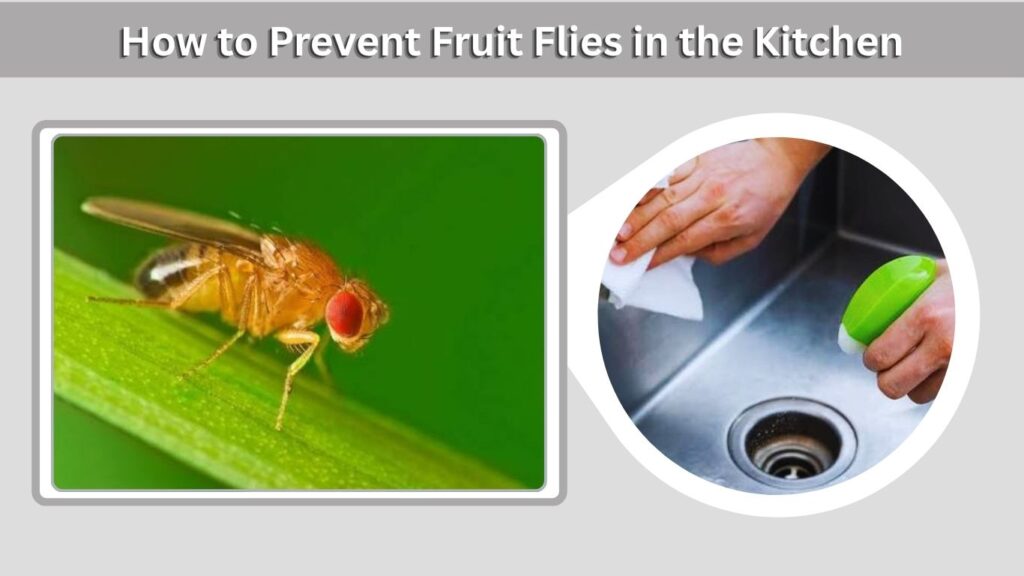
Prevention mainly involves keeping fermenting food unavailable.
Prevention Tips
- Refrigerate ripe produce.
- Eat fruit before it becomes overripe.
- Inspect potatoes and onions regularly.
- Empty trash frequently.
- Rinse recycling containers.
- Wipe spills immediately.
- Keep compost covered.
- Clean garbage disposals.
- Wash damp mops and cloths.
- Keep food containers sealed.
During an outbreak, storing susceptible fruit in the refrigerator for at least several days can help prevent new breeding while existing adults disappear.
FAQs
1. What is the fastest way to get rid of fruit flies in the kitchen?
Remove rotten or ripe food, clean trash and recycling containers, scrub contaminated drains, and use vinegar traps for the remaining adults.
2. Does vinegar get rid of fruit flies?
Vinegar effectively attracts adult fruit flies and can be used in homemade traps, but it will not eliminate an infestation unless breeding sources are also removed.
3. Why are fruit flies coming from my kitchen sink?
They may be feeding or breeding in organic residue associated with the drain. However, fuzzy insects living directly inside drains may actually be drain flies.
4. How long does it take to get rid of fruit flies?
Numbers should begin declining within several days after all breeding sources are removed. Remaining adults may persist for longer, so maintain sanitation and traps until activity stops.
5. Why do I have fruit flies even though my kitchen is clean?
A hidden source may remain, such as fermenting residue inside a drain, dirty recycling, a forgotten vegetable, compost, or a small spill underneath an appliance.