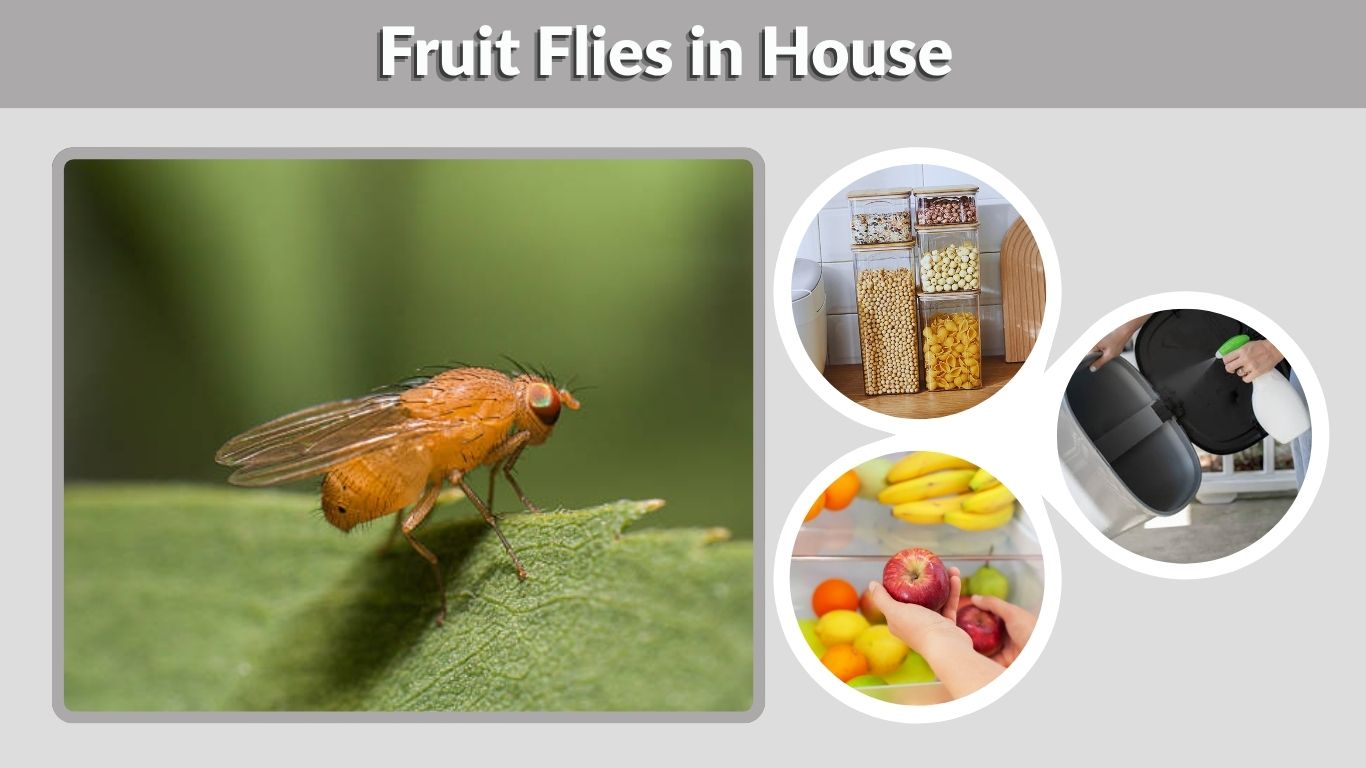
Fruit flies in the house can appear suddenly and multiply quickly, especially when ripe produce, food scraps, trash, or fermenting liquids are available. These tiny flies are most common in kitchens, but they may also gather near drains, recycling bins, compost containers, or houseplants. Getting rid of fruit flies requires more than killing the adults you can see. The most effective approach is to locate their breeding source, remove it, clean the surrounding area, and use simple traps to catch the remaining flies.
Why Are There Fruit Flies in Your House?
Fruit flies are attracted to fermenting organic material rather than to the house itself. Adults may enter through doors and windows or arrive with groceries and produce. Once they find suitable food, females can lay eggs near the surface. Because their development is fast in warm conditions, a few unnoticed flies can quickly become a noticeable indoor infestation.
Common Causes of Fruit Flies
Frequent sources include:
- Overripe bananas, apples, peaches, or tomatoes
- Rotten potatoes and onions stored in cabinets
- Open trash or compost containers
- Juice, soda, beer, or wine residue
- Dirty recycling bottles and cans
- Food trapped underneath appliances
- Organic buildup around garbage disposals
- Damp mops and cleaning cloths
- Fermenting food left in hidden areas
Checking each of these locations is usually more effective than simply spraying the adult flies.
Fruit Flies in the House With No Fruit
You can still have fruit flies even when there is no visible fruit on the counter. A forgotten onion, spilled juice, empty wine bottle, recycling container, or food residue beneath a trash liner can provide enough material for them to reproduce.
If you cannot find the source, inspect areas beneath refrigerators, cabinets, dishwashers, trash cans, and small appliances. Also check stored vegetables and bottles that previously contained sweet or fermented drinks.
How to Get Rid of Fruit Flies in the House Fast
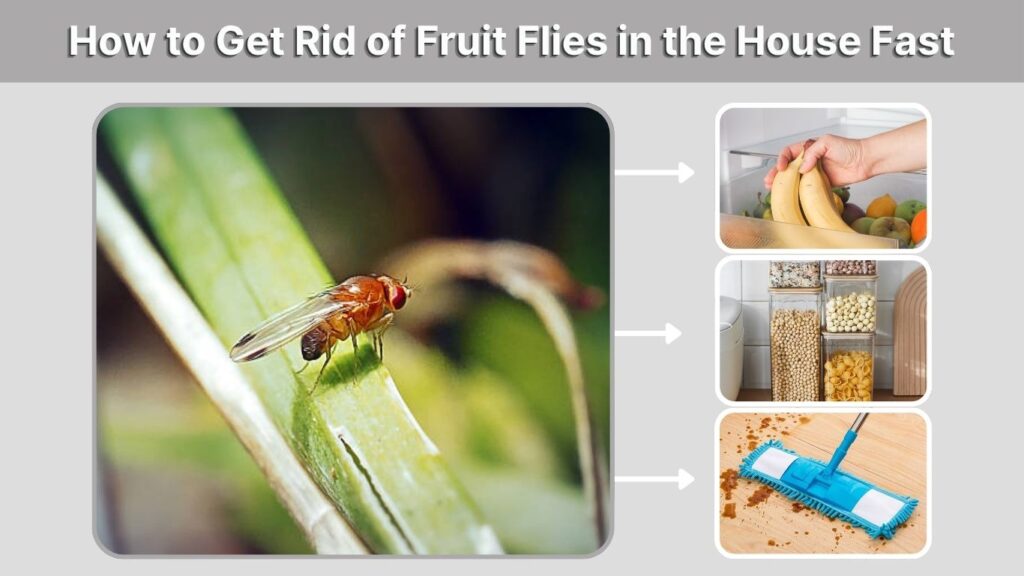
The fastest way to reduce fruit flies is to combine sanitation with trapping. Traps catch adults, while cleaning stops eggs and larvae from developing into another generation. If you only kill the visible adults, more flies may continue emerging from hidden breeding material. Start with the areas where you see the greatest number of flies and expand your search from there.
Step-by-Step Fruit Fly Removal
Follow these steps:
- Throw away spoiled or leaking produce.
- Refrigerate ripe fruits temporarily.
- Empty household trash and compost.
- Wash trash and recycling containers.
- Rinse bottles, cans, and food containers.
- Clean underneath kitchen appliances.
- Wipe up juice, alcohol, and sugary spills.
- Inspect drains and garbage disposals.
- Wash damp mops and cleaning cloths.
- Place traps near remaining adult activity.
Continue cleaning for several days even if fly numbers fall quickly.
Apple Cider Vinegar Fruit Fly Trap
Apple cider vinegar is one of the simplest ways to trap adult fruit flies.
Pour a small amount into a cup or jar and add a drop of dish soap. The fermented odor attracts the flies, while the soap makes it difficult for them to remain on the surface.
Place the trap near the trash can, fruit storage area, sink, or wherever flies are most active. Refresh the mixture when it becomes dirty or loses its odor.
Remember that the trap is most effective after the breeding source has been removed.
Best Home Remedies for Fruit Flies
Home remedies can work well for a small household infestation when they are combined with good sanitation. Most successful remedies either attract adult flies into a trap or eliminate the food and moisture needed for reproduction. They should not replace cleaning. Persistent fruit flies usually indicate that some fermenting organic material remains hidden somewhere in the home.
Effective Home Remedies
Useful options include:
- Apple cider vinegar: Use it as bait in a small jar.
- Dish soap: Add a drop to liquid traps.
- Red wine: A small amount can attract adult fruit flies.
- Beer: Fermented beer residue can also work as bait.
- Paper funnel trap: Place a funnel over bait in a jar.
- Refrigeration: Store ripe produce in the refrigerator temporarily.
- Regular cleaning: Remove spilled food and drink residue immediately.
These methods are inexpensive and usually safer for routine indoor use than unnecessarily spraying large areas with insecticides.
Do Essential Oils Repel Fruit Flies?
Some strong plant oils may temporarily discourage flies from a small area, but they are not a dependable solution for an established infestation.
A pleasant-smelling repellent does not stop eggs and larvae developing inside fermenting material. If the flies return after using oils or sprays, locate the source instead.
Cleaning, food storage, and trapping provide much more reliable long-term control.
Fruit Flies Around Houseplants and Drains
Tiny flies around plants or sinks are frequently called fruit flies even when they belong to another group. Correct identification matters because different insects reproduce in different places. Fruit flies prefer fermenting foods and liquids, while fungus gnats favor damp potting soil and drain flies develop in organic material around plumbing. Treating the wrong source can allow the infestation to continue.
Fruit Flies in Houseplants
Flies hovering around houseplant soil are often fungus gnats rather than true fruit flies.
Fungus gnats are usually darker, more slender, and mosquito-like. Their larvae live in moist potting mix.
Allowing the top layer of soil to dry between watering, removing dead leaves, and avoiding constantly wet soil can help reduce fungus gnats. If the insects are concentrated around soil rather than fruit or trash, investigate the plants before using fruit fly treatments.
Fruit Flies Near Drains
Fruit flies can gather around sinks when food residue and fermenting material are present. However, fuzzy moth-like insects coming directly from a drain are more likely to be drain flies.
If the sink appears to be the source, clean food debris from the strainer, garbage disposal, and accessible drain surfaces.
Simply killing flies around the sink will not solve the problem if organic material remains inside the plumbing.
Fruit Flies vs Gnats in the House
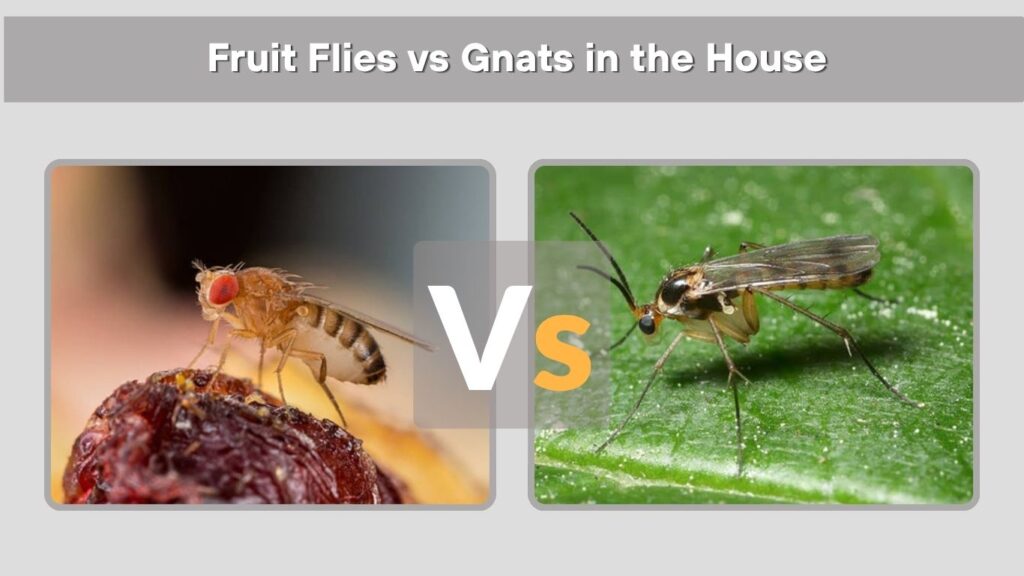
Fruit flies and gnats are often confused because both are tiny and may appear in kitchens. Their appearance and breeding locations provide important clues. Determining which insect you have should be one of the first steps before choosing a treatment. Vinegar traps may work well for fruit flies but will not solve a fungus gnat infestation developing in wet plant soil.
How to Tell Them Apart
Look for these differences:
- Fruit fly: Tan or brown, often with reddish eyes; found near fruit, trash, alcohol, and food residue.
- Fungus gnat: Dark, slender, and mosquito-like; commonly found around houseplant soil.
- Drain fly: Fuzzy with broad moth-like wings; normally found around sinks and drains.
- Phorid fly: Small with a hump-backed appearance; often runs across surfaces before flying.
Where the insects spend most of their time is often more useful for identification than their size.
Other Bugs That Look Like Fruit Flies
Several small flies can enter homes and resemble fruit flies from a distance.
Phorid flies, fungus gnats, and drain flies are particularly common lookalikes. Some outdoor insects may also enter around windows and lights.
If vinegar traps catch few insects despite heavy activity, reconsider the identification. Finding the actual breeding location usually reveals which pest you are dealing with.
How to Prevent Fruit Flies From Coming Back
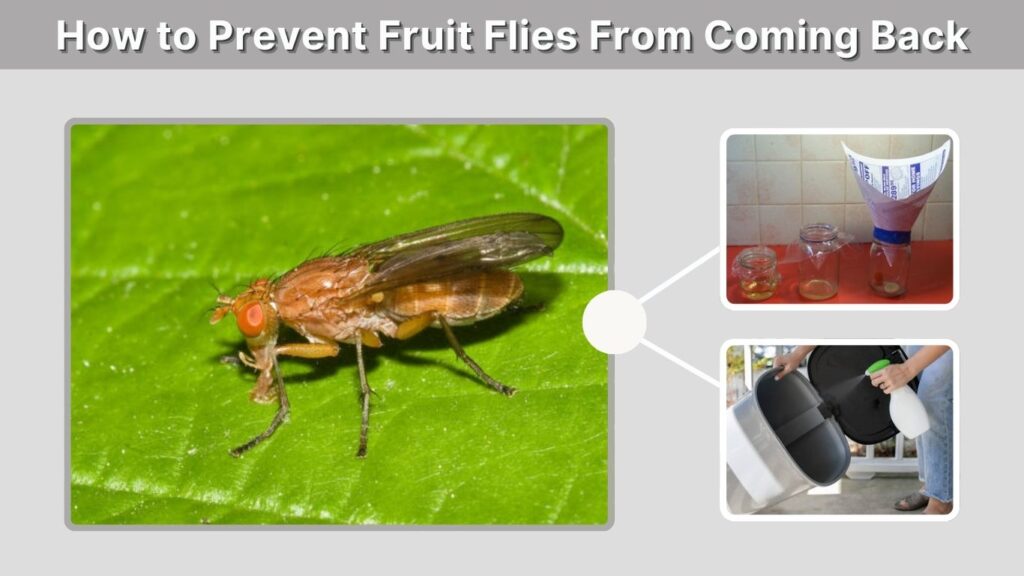
Prevention depends on removing the fermenting materials fruit flies need for reproduction. Once an infestation disappears, continue good sanitation rather than waiting for another sudden outbreak. Kitchens, recycling areas, compost containers, and food-storage spaces deserve regular attention. Fruit flies are much easier to prevent when ripe produce and food residue are not left exposed for long periods.
Long-Term Prevention
Refrigerate ripe fruit when practical and inspect stored potatoes and onions regularly. Empty trash before food begins decomposing and wash the container if liquid collects underneath the liner.
Rinse beverage bottles before recycling and keep indoor compost tightly covered. Clean spills promptly, especially juice, beer, wine, and soda.
Regularly cleaning hidden areas beneath appliances can also prevent forgotten food from becoming a breeding site.
When to Consider Professional Pest Control
Most fruit fly infestations can be solved without professional treatment.
However, professional inspection may help when large numbers continue appearing despite thorough sanitation, particularly in restaurants, commercial kitchens, apartment buildings, or homes with inaccessible plumbing problems.
Persistent activity may indicate a hidden breeding location that is difficult to reach or another fly species that requires a different treatment strategy.
FAQs
Fruit flies are common enough that sudden indoor outbreaks often raise the same questions: where they came from, why they keep returning, and which trap works fastest. In most situations, successful control depends on identifying the breeding material rather than choosing a stronger insect killer. These answers address several of the most common problems homeowners experience.
1. Why do I suddenly have so many fruit flies in my house?
A hidden source such as overripe produce, trash, recycling, spilled juice, or a rotten vegetable may have allowed them to reproduce rapidly.
2. What is the best way to kill fruit flies in the house?
Remove their breeding source first, then use apple cider vinegar and dish soap traps to catch the remaining adults.
3. Why do I have fruit flies when there is no fruit?
They may be breeding in trash, empty drink containers, compost, forgotten vegetables, food spills, or organic residue around kitchen areas.
4. How long does it take to get rid of fruit flies?
Adult numbers may decrease within a few days after thorough cleaning and trapping, but continue control measures long enough to catch newly emerging flies.
5. How can I stop fruit flies from returning?
Keep ripe produce refrigerated when possible, clean spills quickly, wash trash and recycling containers, keep compost covered, and regularly inspect hidden food-storage areas.