
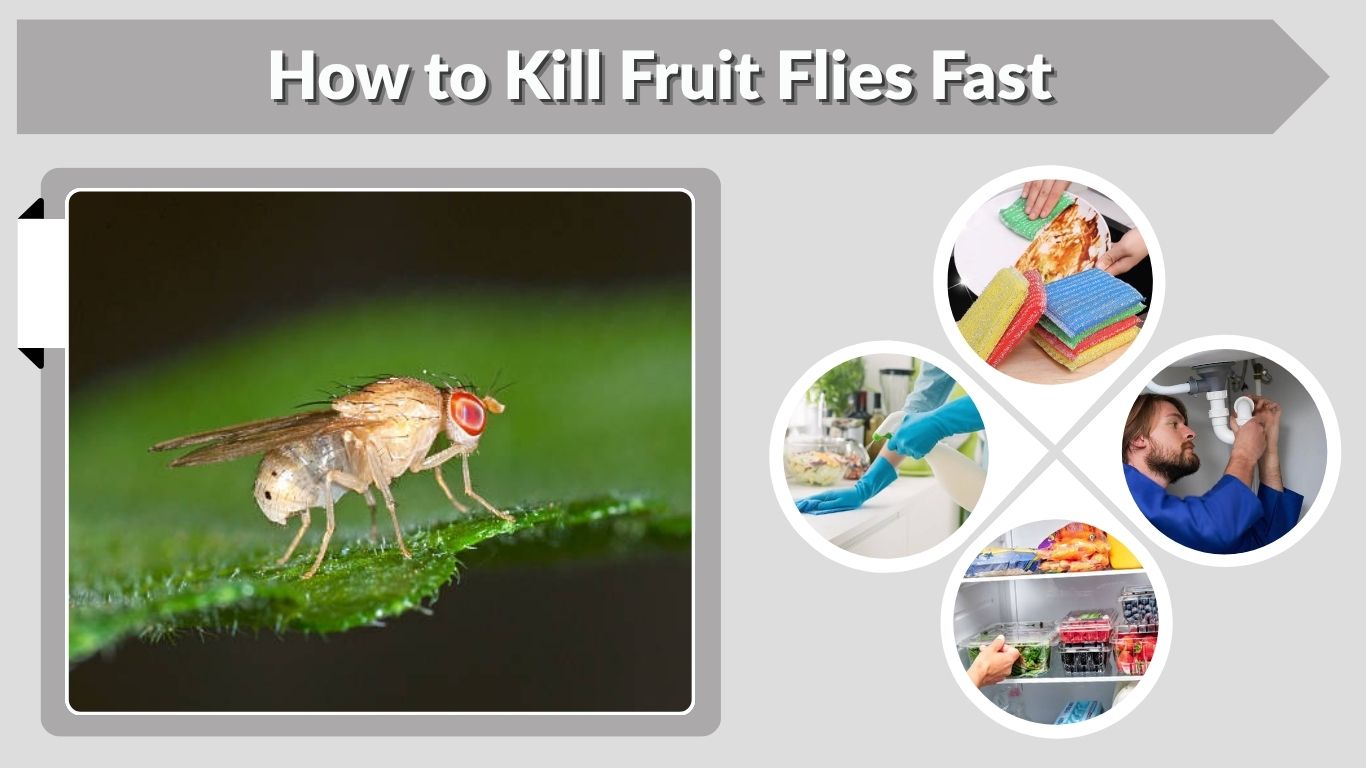
Learning how to kill fruit flies starts with removing whatever is allowing them to reproduce. Traps can quickly reduce the adults flying around your kitchen, but they will keep returning if overripe produce, fermenting liquids, dirty recycling, garbage, or organic buildup remains available. The most effective approach combines sanitation with simple traps such as apple cider vinegar and dish soap. By cleaning breeding sites, treating problem drains, storing produce correctly, and catching remaining adults, most household fruit fly infestations can be brought under control quickly.
How to Kill Fruit Flies Fast
Fruit flies reproduce rapidly, so killing only the adults you can see rarely solves the entire problem. Eggs and larvae may already be developing nearby. Fast control therefore requires two jobs at the same time: eliminate breeding material and trap existing adults. Kitchens, garbage areas, recycling containers, and forgotten produce should receive the most attention.
Quick Steps to Kill Fruit Flies
Start with these steps:
- Throw away rotten or overripe fruit.
- Refrigerate ripe produce temporarily.
- Check onions, potatoes, bananas, and tomatoes.
- Empty kitchen and compost bins.
- Wash sticky residue from garbage containers.
- Rinse bottles and cans before recycling.
- Clean spills underneath appliances.
- Wash dirty dishcloths, sponges, and mop heads.
- Inspect sinks and garbage disposals.
- Place fruit fly traps where adults are most active.
Removing breeding sources is more important than killing individual flies because it interrupts the next generation.
How to Instantly Kill Adult Fruit Flies
For individual flies, a vacuum can remove adults quickly without leaving pesticide residue around food-preparation surfaces. A light solution of water and dish soap in a spray bottle can also immobilize flies when sprayed directly, though surfaces should be wiped afterward.
Commercial flying-insect products may kill adults, but they should be used only according to the product label and are usually unnecessary for a small household infestation.
How to Kill Fruit Flies With Apple Cider Vinegar
Apple cider vinegar is popular because its fermented smell attracts adult fruit flies. It works best as a monitoring and population-reduction tool rather than as the only treatment. A trap may catch dozens of flies while larvae continue developing somewhere else, so always combine trapping with cleaning and source removal.
Apple Cider Vinegar and Dish Soap Trap
To make a simple trap:
- Pour about 1/2 cup of apple cider vinegar into a small glass or bowl.
- Add one or two drops of liquid dish soap.
- Stir gently without creating excessive foam.
- Place the container near the fruit bowl, trash can, or other activity.
- Replace the mixture when it becomes dirty or loses its odor.
The vinegar attracts adults while the soap reduces the liquid’s surface tension, making it harder for flies that touch the solution to remain on the surface.
How to Attract and Kill More Fruit Flies
Placement matters. Set traps close to suspected breeding areas rather than randomly around the house.
Several small traps can be more useful than one trap when flies occur in multiple rooms. Position them near recycling containers, produce storage areas, compost bins, or sinks.
You can also create a funnel trap using a jar containing vinegar or a small piece of ripe fruit. A paper funnel directs flies inside while making escape more difficult.
How to Kill Fruit Flies in Drains
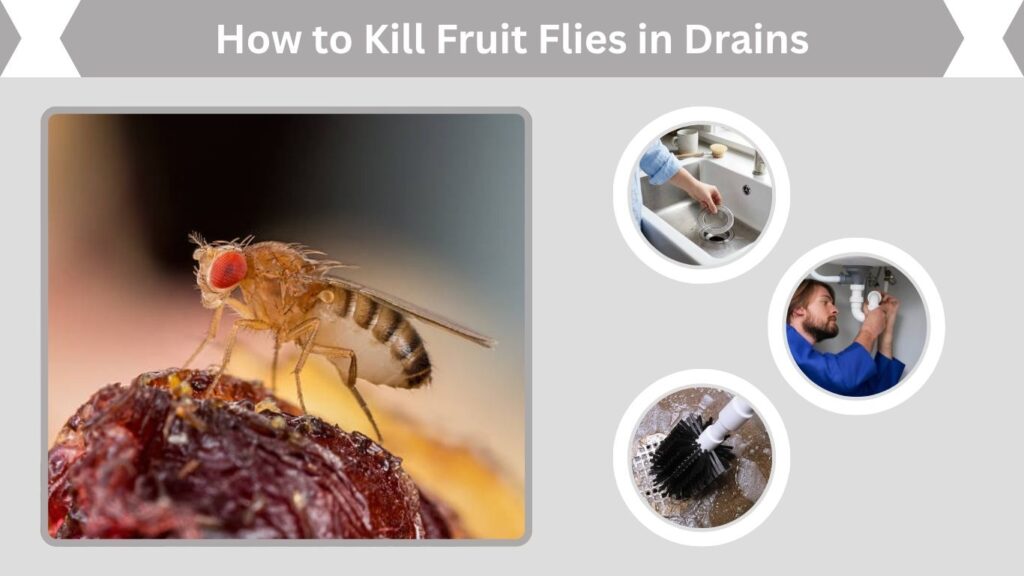
Fruit flies can gather around sinks because moisture and fermenting organic material may accumulate there. However, flies emerging directly from drains may also be drain flies, which look fuzzier and more moth-like. Before repeatedly pouring products into plumbing, confirm that organic buildup in the drain is actually contributing to the infestation.
How to Clean a Drain for Fruit Flies
Use this approach:
- Remove food particles from the sink and strainer.
- Clean underneath removable drain components.
- Scrub accessible drain walls with a long drain brush.
- Clean the rubber splash guard of a garbage disposal.
- Remove slime and organic residue rather than simply rinsing it.
- Use an enzyme or biological drain cleaner according to its label when needed.
- Repeat cleaning until buildup is gone.
The goal is to physically remove the organic material where flies could develop.
Simply pouring liquid down a drain may not reach residue coating the sides of the pipe.
Should You Pour Bleach Down the Drain?
Bleach is not the best primary solution for a fruit fly problem because it may pass through the pipe without removing the organic film supporting larvae.
Never mix bleach with vinegar, ammonia, drain openers, or other household cleaners because dangerous gases or chemical reactions can result.
Mechanical cleaning followed by an appropriate drain-maintenance product is usually more useful than repeatedly adding harsh chemicals.
How to Kill Fruit Flies Without Vinegar
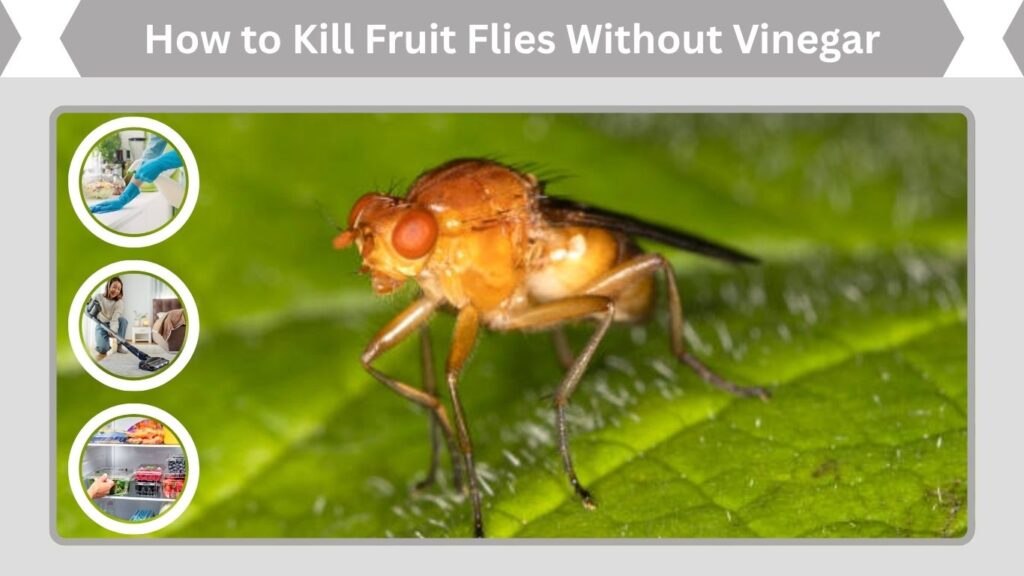
Apple cider vinegar is convenient, but it is not essential. Fruit flies respond strongly to fermenting odors, so several other baits can attract adults. Regardless of the bait used, traps should be considered temporary control tools while you search for and eliminate the source of the infestation.
Alternatives to Apple Cider Vinegar
Possible bait options include:
- A small amount of red wine
- Beer
- Ripe banana
- Overripe fruit
- Fruit juice
- Wine vinegar
- Yeast mixed with a little sugar and water
Place liquid bait in a container with a small amount of dish soap, or use fruit inside a jar fitted with a paper funnel.
Do not leave these traps indefinitely because old bait can itself become an unsanitary source of fermenting material.
Can You Naturally Kill Fruit Flies?
Yes. For many homes, pesticides are unnecessary.
Cleaning, refrigeration, traps, vacuuming adults, and removing fermenting material can eliminate an infestation without conventional insecticides.
Essential oils are sometimes promoted as fruit fly repellents, but relying on fragrance alone is unlikely to stop reproduction. Removing food and breeding material is far more important.
How to Kill Fruit Flies in the Kitchen
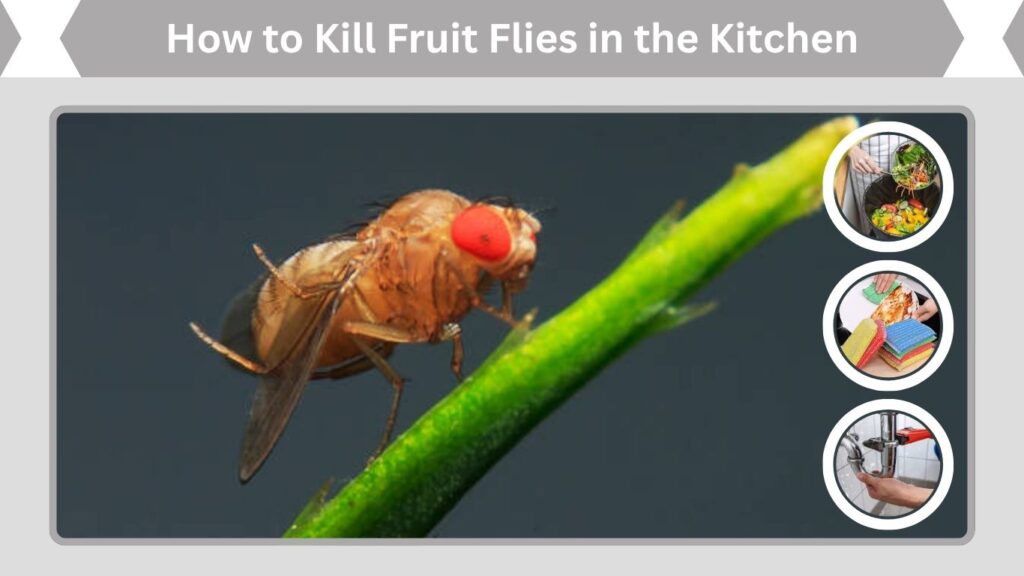
Kitchens provide almost everything fruit flies need: moisture, warmth, sugars, yeast, and fermenting organic material. A single forgotten onion or sticky recycling bin can support repeated generations. If flies return shortly after trapping, assume there is still an overlooked food source rather than simply adding more traps.
Check These Hidden Breeding Areas
Inspect:
- Under refrigerators and ovens
- Garbage and recycling bins
- Compost containers
- Empty wine and beer bottles
- Produce baskets
- Potatoes and onions stored in cabinets
- Garbage disposals
- Sticky beverage containers
- Mop buckets
- Sponges and cleaning cloths
- Food trapped beneath trash bags
- Cracks where juice or food has spilled
A forgotten potato or piece of fruit hidden behind an appliance can support surprisingly large numbers.
Fruit Flies in the House With No Fruit
Fruit is only one possible source.
Fruit flies can develop around fermenting vegetables, beer, wine, juice, soda residue, food waste, compost, or dirty recycling. If no obvious produce is present, check trash bins, bottles, stored onions and potatoes, and areas where beverages may have spilled.
If cleaning these areas has no effect, reconsider whether the insects are actually fruit flies.
Fruit Flies in Plants, Sinks and Other Areas
Tiny flies around houseplants are frequently mistaken for fruit flies. Identifying the insect matters because treatment differs. Fruit flies are usually associated with fermenting food, whereas fungus gnats commonly breed in damp potting soil. Drain flies develop in slimy organic material around drains and have noticeably fuzzy wings.
Fruit Flies vs Gnats and Drain Flies
Use these clues:
Fruit flies:
Small tan or brown flies, often with reddish eyes, usually concentrated around produce, trash, recycling, or fermented liquids.
Fungus gnats:
Dark, slender, mosquito-like flies usually found around houseplants and moist potting soil.
Drain flies:
Tiny, fuzzy insects with broad moth-like wings frequently resting on walls close to sinks and drains.
If vinegar traps catch very few insects despite heavy activity around plants, fungus gnats may be the real problem.
How to Kill Fruit Flies in Plants
True fruit flies generally do not use ordinary potting soil as their main breeding environment.
Remove fallen fruit, decaying plant material, or compost sitting around indoor plants. If tiny flies consistently emerge from wet soil, treat the problem as likely fungus gnats instead: allow the upper soil layer to dry appropriately, improve drainage, and remove dead organic material.
Correct identification prevents weeks of using ineffective fruit fly treatments.
How Long Does It Take to Kill Fruit Flies?
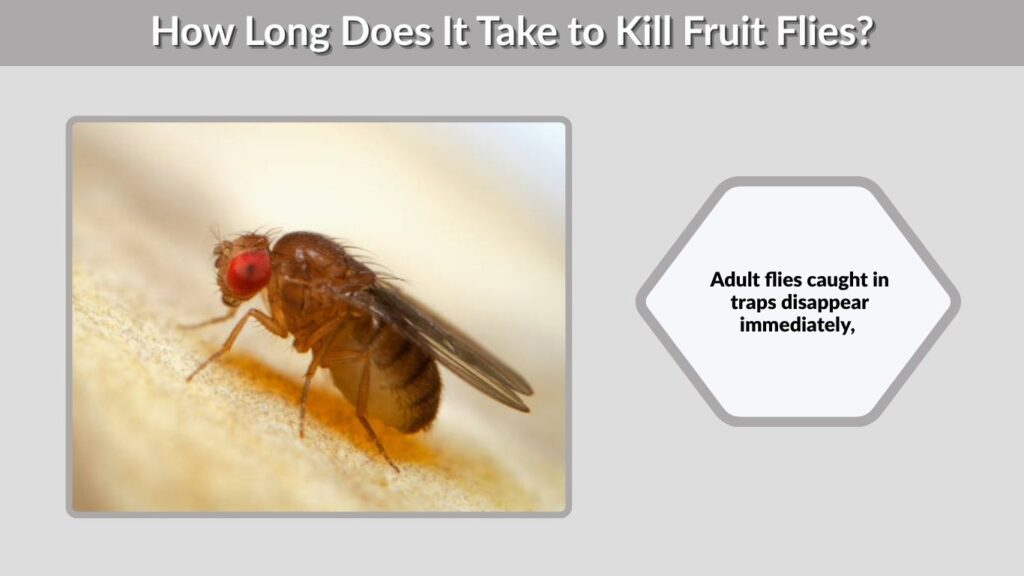
Adult flies caught in traps disappear immediately, but eliminating an infestation takes longer because eggs, larvae, and pupae may remain. Even after removing the breeding source, newly developed adults can continue appearing temporarily. Consistent sanitation for several days is therefore essential instead of stopping treatment when the first traps begin catching fewer flies.
Why Fruit Flies Keep Coming Back
Persistent infestations commonly result from:
- An overlooked breeding source
- Dirty recycling
- Hidden rotten produce
- Organic material in drains
- Garbage not emptied frequently enough
- Fruit left uncovered
- Spilled beverages beneath appliances
- Incorrect identification of fungus gnats or drain flies
Continue removing adults while searching systematically for the source.
Once breeding material is eliminated, the population should decline as remaining adults die and immature stages finish developing.
How to Prevent Fruit Flies Permanently
Long-term prevention depends on making the home unattractive for reproduction. Fruit flies do not require large amounts of food; a thin layer of fermenting residue may be enough. Consistent kitchen sanitation therefore works better than waiting for an infestation and trying to kill hundreds of adults afterward.
Fruit Fly Prevention Tips
Refrigerate very ripe fruit, especially during warm weather. Regularly inspect stored onions and potatoes because one spoiled vegetable can become a major source.
Empty trash and compost frequently, rinse recycling containers, clean spills immediately, and wash garbage cans when residue develops. Keep counters and floors free of sugary liquids.
Cleaning suspected breeding locations every few days during an infestation helps prevent newly emerged adults from establishing another generation.
FAQs
1. What is the fastest way to kill fruit flies?
Remove the breeding source immediately and place apple cider vinegar-and-dish-soap traps near remaining adults. Vacuuming visible flies can reduce their numbers even faster.
2. Does vinegar really kill fruit flies?
Vinegar mainly attracts fruit flies. Adding a small amount of dish soap makes the liquid much more effective at trapping and killing adults.
3. How do I kill fruit flies in a sink drain?
Scrub accessible drain surfaces and remove organic buildup. Clean garbage-disposal components and use an appropriate enzyme drain cleaner if needed. Simply pouring chemicals down the drain may not remove the breeding material.
4. Why won’t my fruit flies go away?
A hidden breeding source is probably still present, or the insects may actually be fungus gnats or drain flies. Inspect produce, recycling, trash, drains, spills, and houseplants carefully.
5. How can I kill all fruit flies in my house?
Combine source removal, deep cleaning, refrigeration of ripe produce, trash and recycling sanitation, drain cleaning where necessary, and several adult traps. Continue until no new flies appear for several days.
