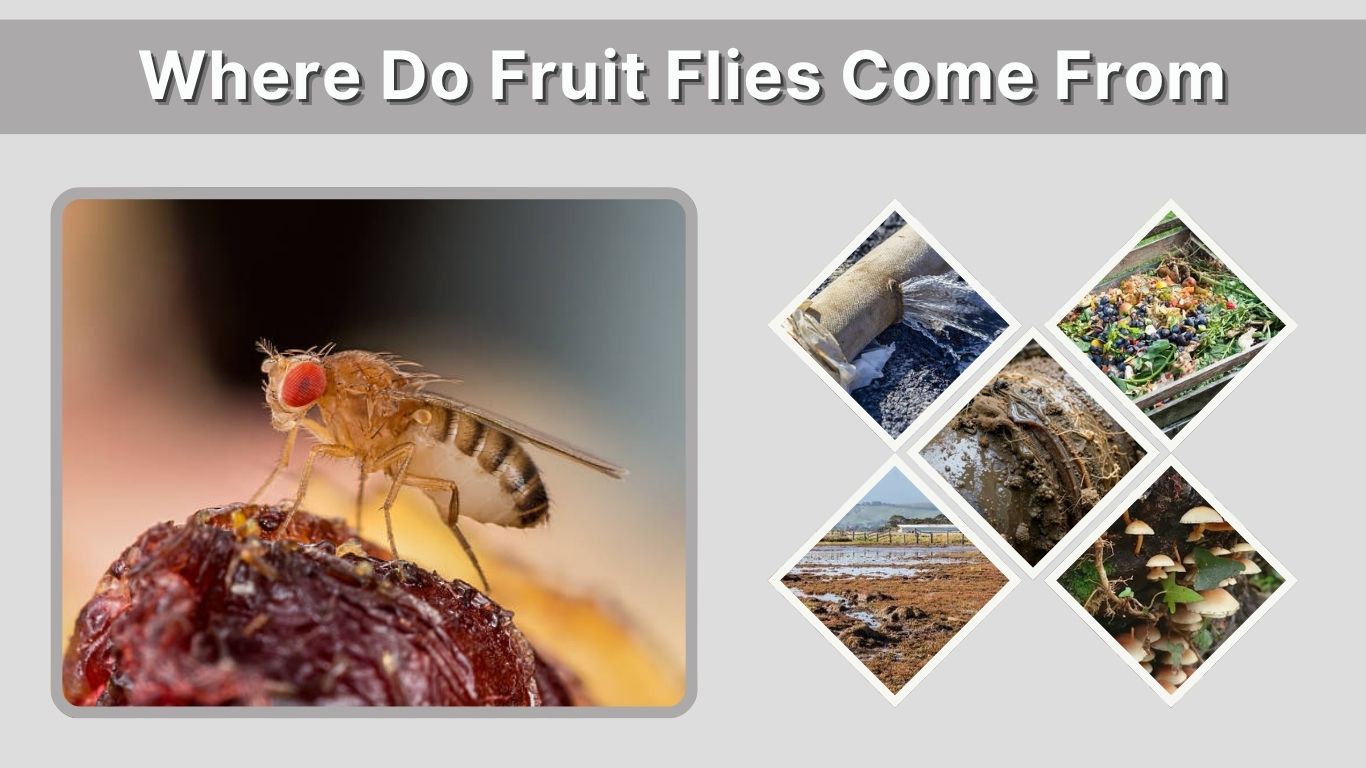
Have you ever wondered where fruit flies come from, especially when they seem to appear overnight? These tiny flies usually enter homes from outdoors or arrive with produce and then reproduce wherever they find fermenting organic material. Ripe fruit, vegetables, recycling containers, spilled drinks, garbage, and dirty drains can all provide suitable conditions. Because fruit flies develop quickly, a small unnoticed breeding source can suddenly produce many adults. Finding that source is the key to understanding why they appear and how to prevent them from returning.
Where Do Fruit Flies Come From?
Fruit flies do not spontaneously appear from fruit or materialize inside a kitchen. Adult flies either enter from outside or are brought indoors with produce, containers, or other materials. Once inside, they are strongly attracted to the odors produced by yeast and microorganisms breaking down sugary organic matter.
Common Sources of Fruit Flies
Fruit flies commonly originate from:
- Overripe bananas
- Soft or damaged fruit
- Rotting potatoes and onions
- Open garbage containers
- Compost bins
- Empty wine and beer bottles
- Juice and soda residue
- Dirty recycling
- Food waste under appliances
- Fermenting vegetables
- Organic buildup in some drains
- Forgotten food in cabinets
One overlooked item may be enough to support a population.
Why Do Fruit Flies Like Fermenting Food?
Fruit flies are strongly attracted to fermentation. Yeasts and microorganisms begin breaking down sugars as fruit becomes damaged or overripe, creating odors that adult flies can detect.
Females seek these environments because they provide suitable places to lay eggs. When the eggs hatch, the larvae feed in the moist, decomposing material before eventually becoming adults.
Where Do Fruit Flies Come From in the House?
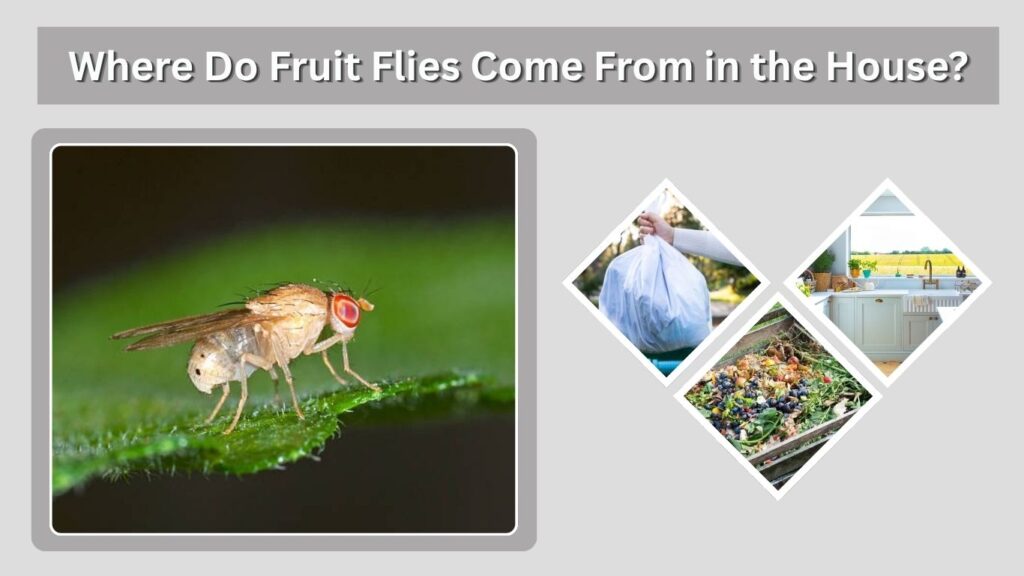
Inside a house, the kitchen is the most common source, but infestations can start almost anywhere food residue accumulates. Fruit flies need only a small amount of moist fermenting material, so the breeding site may be much less obvious than a bowl full of rotten fruit.
Hidden Sources Inside Your Home
Check areas such as:
- Under the refrigerator
- Behind the stove
- Under garbage bags
- Inside recycling containers
- Around compost containers
- Beneath kitchen cabinets
- Around spilled juice or wine
- In mop buckets
- Around forgotten potatoes or onions
- Inside empty beverage bottles
Fruit flies may continue emerging even after visible fruit has been removed if larvae are already developing somewhere else.
Why Are Fruit Flies Suddenly Everywhere?
A sudden infestation usually means reproduction has already been occurring unnoticed.
Under warm conditions, common fruit flies can progress from egg to adult in roughly a week or a little longer. Females can also lay many eggs during their lives.
As a result, several flies around a forgotten banana or recycling container can become dozens of visible adults relatively quickly.
Where Do Fruit Flies Come From on Bananas?
Bananas are strongly associated with fruit flies because they ripen rapidly and produce attractive fermenting odors. The sweeter and softer a banana becomes, the more attractive it can be to adult flies searching for food and breeding sites.
Do Fruit Flies Come From Inside Bananas?
Fruit flies generally do not magically develop from inside healthy bananas.
Adult flies can be attracted to ripe or damaged bananas after harvest, during transport, at stores, or once the fruit reaches your home. Eggs may be deposited on damaged or fermenting surfaces where suitable material is available.
A fruit bowl can therefore become a breeding site surprisingly quickly when bananas become overripe.
How to Prevent Fruit Flies Around Bananas
To reduce problems:
- Buy only as much fruit as you can use.
- Eat ripe bananas promptly.
- Refrigerate suitable ripe produce when possible.
- Discard badly damaged fruit.
- Clean juice or fruit residue from counters.
- Wash fruit bowls regularly.
- Empty nearby trash and compost.
- Use traps if adult flies are already present.
Removing one spoiled piece of produce can sometimes dramatically reduce an infestation.
Where Do Fruit Flies Come From in the Kitchen?
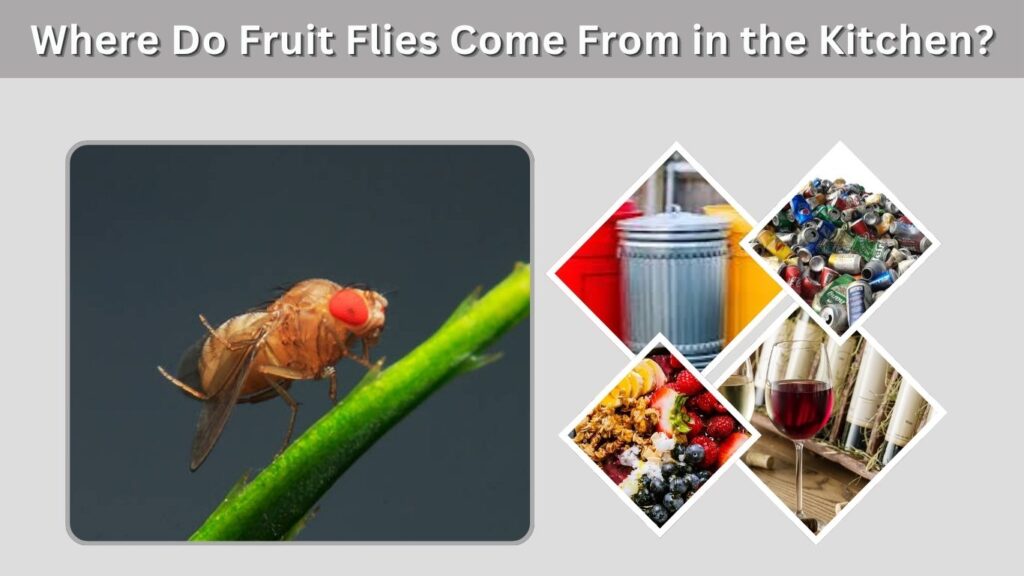
Kitchens offer ideal conditions because food, moisture, warmth, and fermentation are often available together. A fruit fly does not need an entire rotten apple. A small amount of sugary liquid beneath an appliance or inside a recycling container can potentially provide enough material for larvae.
Common Kitchen Breeding Areas
Pay particular attention to:
- Fruit bowls
- Garbage cans
- Compost bins
- Recycling
- Wine bottles
- Beer cans
- Juice containers
- Garbage disposals
- Food scraps
- Sticky spills
- Stored vegetables
After removing these sources, wipe counters, clean floors, and inspect places that are normally hidden.
Why Do They Keep Coming Back?
If fruit flies return after trapping, a breeding source probably remains.
Traps remove adult flies but do not necessarily eliminate eggs, larvae, or pupae. This is why an apple cider vinegar trap may catch many adults while new flies continue appearing.
Successful control depends on sanitation first and trapping second.
Do Fruit Flies Come From Drains?
Fruit flies can sometimes reproduce in drains containing enough fermenting organic residue. However, tiny flies around sinks are frequently misidentified. Drain flies, for example, are a different group and commonly develop in the slimy material coating drains.
Fruit Flies vs Drain Flies
Fruit flies typically have:
- Tan or yellow-brown bodies
- Clear wings
- Often reddish eyes
- Strong attraction to fruit and fermented liquids
Drain flies usually have:
- Fuzzy bodies
- Broad, hairy wings
- A tiny moth-like appearance
- Strong association with drains and plumbing
If the insects look fuzzy while resting on bathroom walls, they are more likely drain flies than ordinary fruit flies.
How to Check a Suspected Drain
Inspect and clean accessible drain surfaces rather than simply pouring chemicals down the pipe.
Scrub away slime and food residue, clean sink strainers, and thoroughly wash garbage-disposal components.
If fruit flies continue appearing afterward, look for other sources such as garbage, recycling, spilled drinks, or produce.
Where Do Fruit Flies Come From in the Bathroom?
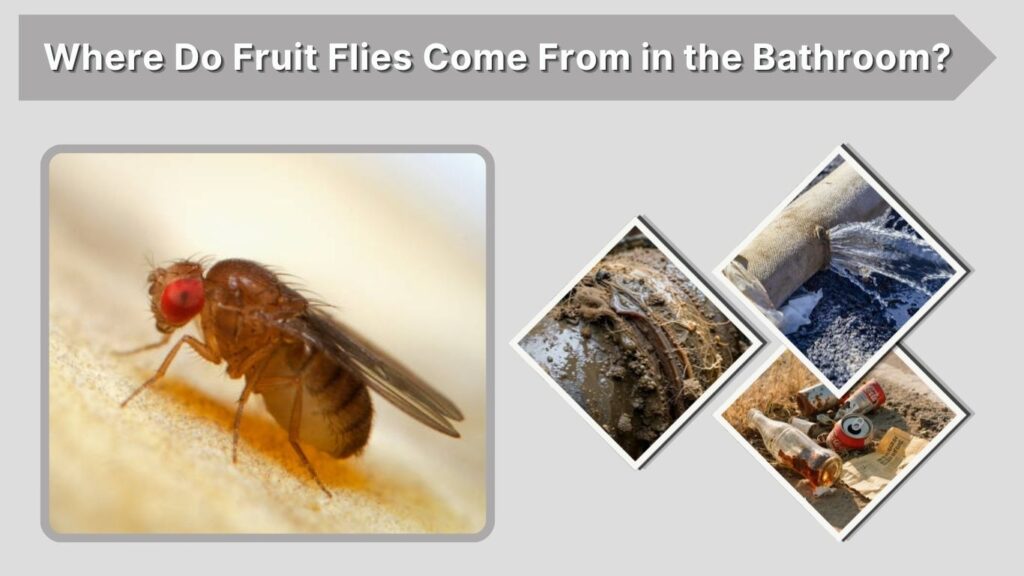
A true fruit fly infestation originating entirely in a bathroom is less common unless fermenting organic material is available. Bathrooms are more frequently associated with drain flies or sometimes fungus gnats from nearby plants.
Why Tiny Flies Appear in Bathrooms
Possible sources include:
- Organic buildup inside drains
- Dirty trash cans
- Damp cleaning materials
- Forgotten beverage containers
- Houseplants
- Plumbing leaks
- Moist debris
Identifying the insect is important before beginning treatment.
A fuzzy moth-like fly points toward drain flies, while a slender dark fly near plant soil is more likely a fungus gnat.
Do Fruit Flies Come From Houseplants?
Usually not from ordinary potting soil. When tiny flies repeatedly emerge from indoor plants, fungus gnats are more likely.
Fruit flies prefer fermenting fruits and other sugary organic materials, while fungus gnat larvae develop in moist soil rich in fungi and decaying plant matter.
Fruit Flies vs Fungus Gnats
Fruit flies are typically tan, compact, and concentrated around food.
Fungus gnats are darker and slender, with long legs and an appearance resembling tiny mosquitoes.
If flies gather around potting soil rather than fruit or garbage, allow the upper soil surface to dry appropriately, remove decaying leaves, and improve drainage.
Correct identification can save considerable time.
Where Do Fruit Flies Come From in Winter?
Fruit flies can remain active indoors during winter because heated homes provide temperatures suitable for survival and reproduction.
They may enter with groceries or persist in kitchens, restaurants, recycling areas, or other protected environments containing food.
Why You Can Have Fruit Flies in Cold Weather
Indoor sources can include:
- Imported or stored produce
- Compost
- Garbage
- Recycling
- Fermenting beverages
- Stored potatoes and onions
- Heated commercial kitchens
Outdoor cold may reduce local populations, but it does not prevent fruit flies from surviving inside a warm building.
Where Do Fruit Flies Come From When You Open Wine?
Fruit flies are extremely attracted to fermented beverages.
Opening wine does not create fruit flies. Instead, the aroma can attract adults already present nearby. Open wine bottles, unfinished glasses, beer containers, and recycling can then provide additional food and potentially suitable breeding material.
Wine and Fruit Fly Problems
To prevent them:
- Cork or cover opened bottles.
- Rinse empty containers.
- Do not leave unfinished drinks overnight.
- Clean sticky wine spills.
- Empty recycling regularly.
- Wash recycling containers.
A small amount of old wine left inside a bottle can continue attracting flies.
Where Do Fruit Flies Originally Come From?
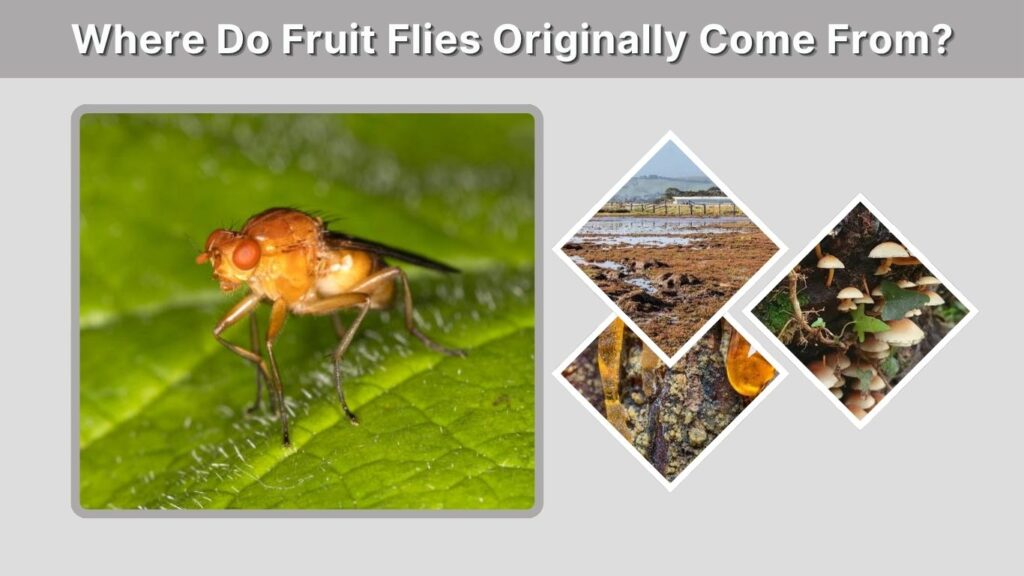
Common household fruit flies belong to the genus Drosophila, a large group naturally associated with decaying and fermenting plant material.
In nature, these insects occur around fallen fruit, damaged vegetation, tree sap, fungi, and other decomposing organic resources. Human homes simply provide concentrated versions of many of the same conditions.
They are therefore natural insects that opportunistically enter buildings rather than pests that originate inside houses.
How to Find Where Fruit Flies Are Coming From
Finding the breeding site is the most important part of controlling an infestation. Instead of concentrating only on flies in the air, work systematically through every location containing food or fermenting residue.
Fruit Fly Source Checklist
Inspect:
- Fresh and overripe produce
- Potatoes and onions
- Trash containers
- Compost
- Recycling
- Drains
- Garbage disposal
- Empty bottles
- Spilled beverages
- Under appliances
- Cleaning cloths
- Mop buckets
- Forgotten food
Remove suspicious material and thoroughly clean each location.
If flies remain concentrated around houseplants or drains despite this work, reconsider the identification.
FAQs
1. Where do fruit flies come from all of a sudden?
They usually come from adults or immature stages already present near a hidden breeding source. Their rapid development can make the population appear to increase almost overnight.
2. Do fruit flies come from bananas?
Bananas do not spontaneously produce fruit flies. Adult flies are attracted to ripening or damaged bananas and may lay eggs where fermenting material is available.
3. Where do fruit flies come from if there is no fruit?
Check potatoes, onions, garbage, compost, recycling, spilled beverages, wine bottles, and organic residue. Fruit is only one possible breeding source.
4. Can fruit flies come from drains?
They can use drains containing sufficient fermenting organic buildup, but many insects thought to be fruit flies in drains are actually drain flies.
5. Why do fruit flies keep coming back?
Usually because the breeding source has not been completely removed. Trapping adults alone will not stop eggs and larvae already developing in hidden organic material.