
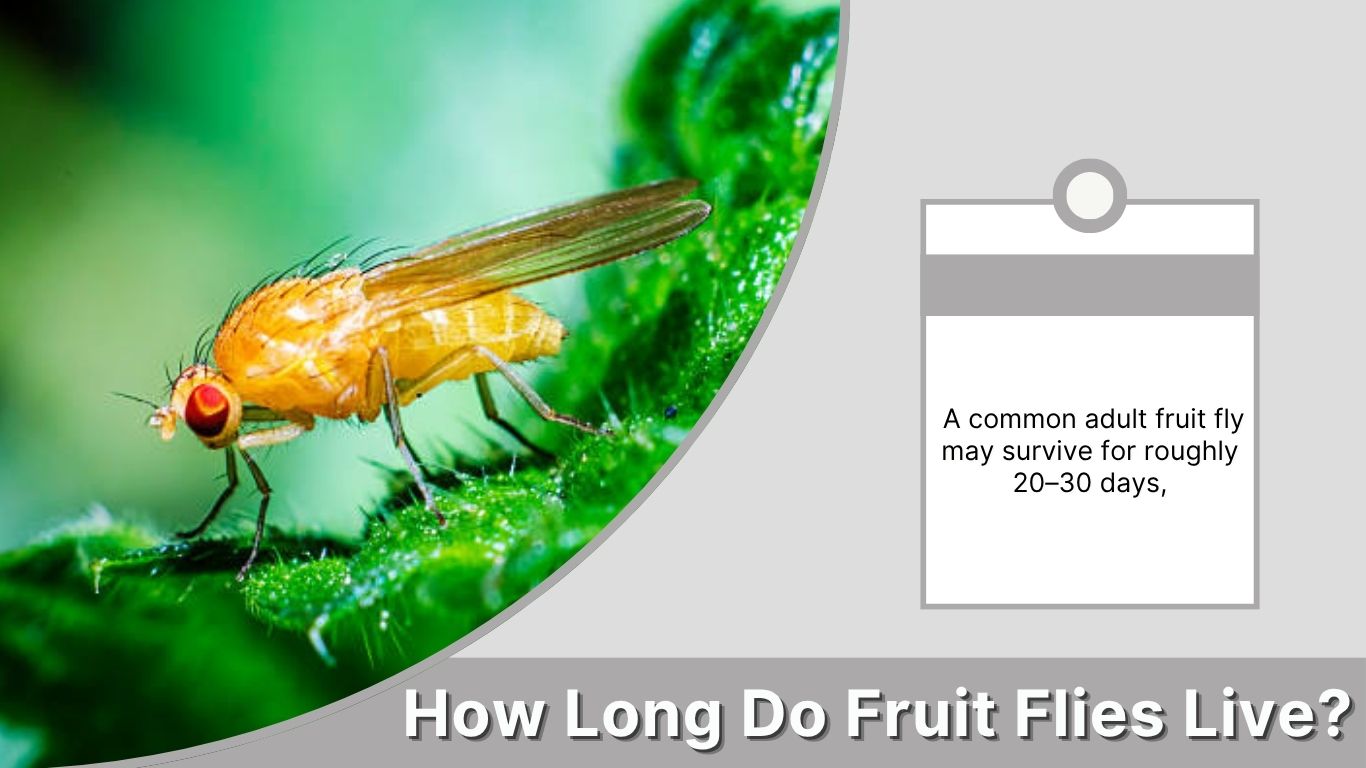
Fruit flies usually live for several weeks, but warm temperatures, available food, moisture, and species can change their lifespan considerably. A common adult fruit fly may survive for roughly 20–30 days, while laboratory individuals under ideal conditions sometimes live longer. Their rapid development is more important than the lifespan of a single fly: eggs can become reproducing adults in approximately 8–10 days. This allows several overlapping generations to make a household infestation appear as though the same fruit flies are living forever.
How Long Do Fruit Flies Live For?
Common household fruit flies generally spend two to four weeks as adults. Under favorable laboratory conditions, some can survive for 30–50 days or longer. However, flies living inside a kitchen face changing temperatures, limited moisture, cleaning products, traps, and other hazards that may shorten their lives.
Average Adult Fruit Fly Lifespan
An adult fruit fly’s lifespan depends on several factors:
- Species and genetic background
- Indoor temperature
- Access to sugar and yeast
- Availability of water or moist food
- Humidity level
- Reproductive activity
- Exposure to pesticides
- Predators and accidental injuries
A fly living near continuously available fruit waste may survive longer than one trapped in a clean, dry room. Females can lay numerous eggs during their adult lives, so even a short-lived fly may produce another generation.
Why Fruit Flies Seem to Live Forever
The flies circling your kitchen for weeks are probably not the same adults. New flies continue emerging from eggs, larvae, and pupae hidden in moist organic material.
Removing visible adults does not eliminate these immature stages. A trap may catch every flying individual one evening, but newly developed adults can appear shortly afterward. The problem ends only after breeding sources are removed and all remaining immature flies have completed or failed to complete development.
Complete Fruit Fly Life Cycle
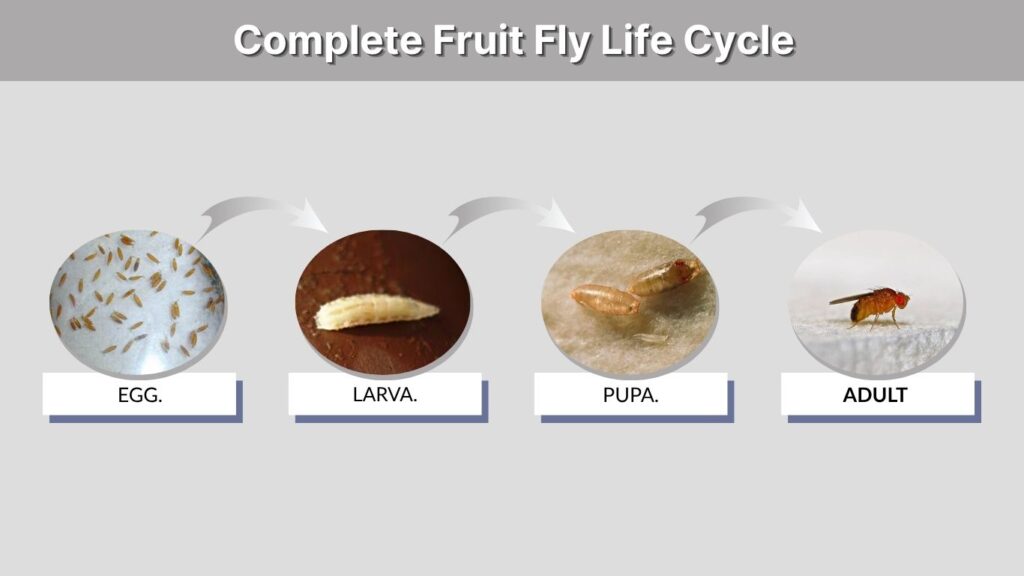
Fruit flies undergo complete metamorphosis with four distinct stages: egg, larva, pupa, and adult. Under warm conditions, the journey from egg to reproductive adult may take little more than a week. Cooler temperatures slow development, while extremely hot, cold, or dry conditions can reduce survival.
Egg Stage
Female fruit flies place tiny eggs on moist, fermenting materials where their offspring will have immediate access to food. Common sites include overripe produce, spilled juice, dirty recycling containers, and residue inside trash cans.
The eggs may hatch in about a day under warm conditions. Their small size makes them almost impossible to notice without magnification, which is why apparently clean produce can still introduce fruit flies into a house.
Larval Stage
Fruit fly larvae are tiny, pale, legless maggots. They feed on yeasts and microorganisms associated with fermenting organic matter rather than simply consuming fresh fruit.
Larval development typically lasts several days. The larvae pass through three growth stages, becoming larger each time. When fully developed, they often crawl away from the wettest part of the food source and search for a slightly drier place to pupate.
Pupal Stage
During the pupal stage, the larva transforms into an adult inside a firm protective case. Pupae may be attached to a dry section of fruit, the side of a container, or a nearby surface.
This stage often lasts around four or five days in warm conditions. Cleaning away the rotting food but overlooking nearby pupae can therefore lead to another group of adults appearing later.
Adult Stage
New adults emerge from their pupal cases and soon begin searching for food and mates. Under favorable conditions, females can begin laying eggs shortly after reaching maturity.
Adults commonly survive for two to four weeks in a home, but their actual lifespan varies. Because new eggs may reach adulthood in approximately 8–10 days at favorable temperatures, multiple generations can overlap continuously.
How Long Do Fruit Flies Live Without Food?
Removing food is essential for controlling fruit flies, but starvation does not kill every adult immediately. Their survival depends on stored energy, access to moisture, temperature, age, and genetic differences. Ordinary fruit flies usually survive only a few days without nutrients, although exact results vary considerably.
Survival Without Food
Without a usable food source, many common fruit flies may survive approximately two to four days if water or moisture remains available. Some will die sooner, while unusually starvation-resistant laboratory strains can survive much longer.
Laboratory studies often provide water in the form of agar while withholding nutrients. Those results do not perfectly represent a dry house, where the flies may lose water as well as food.
Survival Without Food or Water
A fruit fly deprived of both food and water generally dies faster because its tiny body loses moisture quickly. Warm, dry air accelerates dehydration, while cooler and more humid conditions may extend survival.
Even a supposedly clean kitchen can provide traces of moisture and energy. A sugary spill, damp cloth, drop of wine, or residue inside a bottle may be enough to keep adults alive and support egg production.
Can Fruit Flies Live Without Fruit?
Fruit flies do not require an actual piece of fruit. They can use many fermenting or sugary materials, including:
- Wine, beer, or juice residue
- Soft or rotting vegetables
- Ketchup and other sweet sauces
- Compost scraps
- Soda containers
- Garbage residue
- Fermenting plant material
- Food trapped beneath appliances
- Dirty mops, sponges, or cloths
- Organic buildup around drains
Removing the fruit bowl will not solve the problem if another suitable food source remains nearby.
How Long Do Fruit Flies Live Indoors?
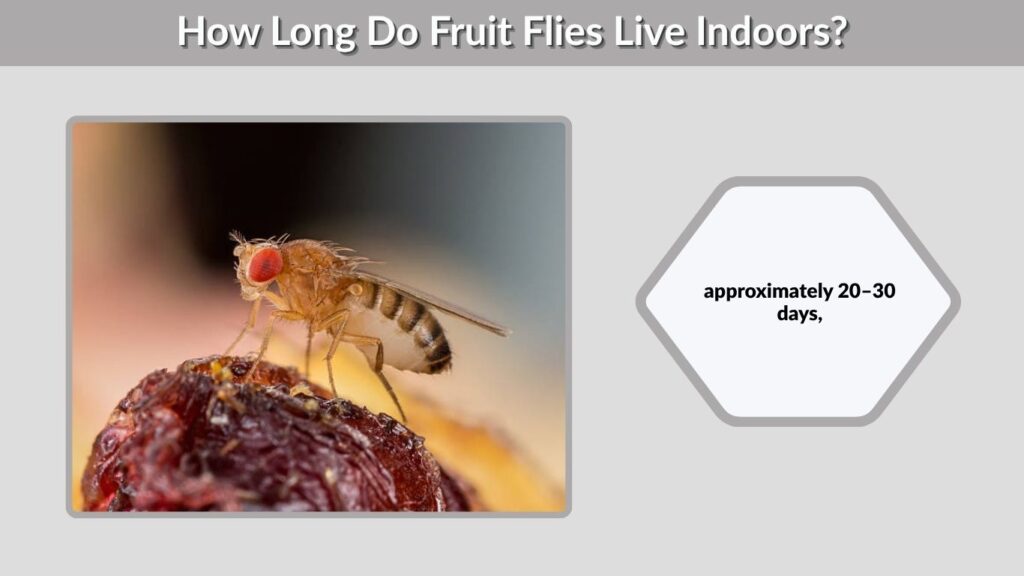
A heated house can provide fruit flies with comfortable temperatures throughout the year. If food and moisture remain available, they may reproduce continuously rather than disappearing with seasonal weather. An indoor infestation can consequently last for months even though each individual adult survives for only several weeks.
Lifespan Inside a House
An adult living indoors commonly survives for approximately 20–30 days, although environmental conditions can shorten or extend this period. Kitchens, bars, restaurants, and food-storage areas are particularly favorable because they regularly provide fermentation odors.
A population can persist in hidden onions, potatoes, recycling bottles, garbage disposals, compost containers, and spilled liquids. Finding and removing these sources is more effective than waiting for the adults to die naturally.
How Long Will an Infestation Last?
After all breeding material is removed, visible activity should begin declining within several days. However, pupae already present may continue producing adults for a week or longer.
Continue using traps and careful sanitation for at least one to two weeks after removing the suspected source. If fruit flies remain active, another breeding area is probably present or the insects may be drain flies or fungus gnats instead.
How Long Do Fruit Flies Live in the Refrigerator?
Refrigeration slows fruit-fly movement, feeding, development, and reproduction, but cold does not necessarily kill every life stage immediately. Survival varies with temperature, exposure time, life stage, and species. A refrigerator should therefore be used to protect produce, not as the only method for killing an existing infestation.
Can Fruit Flies Survive Refrigerator Temperatures?
Adult Drosophila can survive several days at typical refrigerator temperatures under some conditions. Cold exposure may leave them inactive, and apparently dead flies can sometimes move again after warming.
Eggs and larvae are generally more vulnerable to prolonged severe cold than pupae or adults, but refrigeration results vary. Discard badly infested or decaying produce instead of relying on cold to make it safe or pest-free.
Does Cold Weather Kill Fruit Flies?
Cool weather slows the fruit-fly life cycle and reduces activity. Freezing conditions kill many exposed individuals, but protected flies may survive in buildings, stored produce, compost, and sheltered organic material.
Indoor heating allows household populations to remain active during winter. For this reason, cold outdoor weather may reduce new insects entering without eliminating an established kitchen infestation.
How Long Do Flightless Fruit Flies Live?
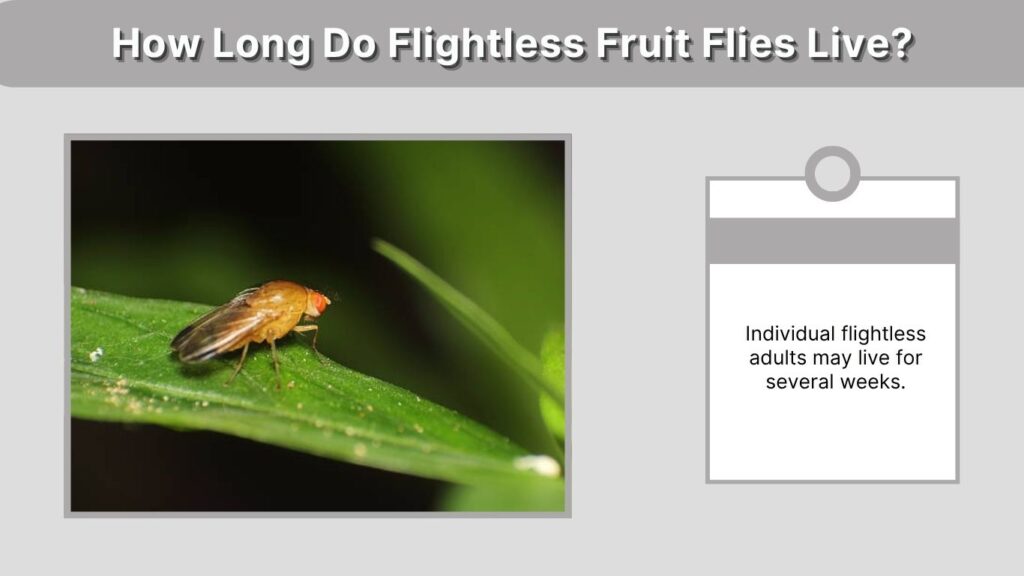
Flightless fruit flies are usually cultured as food for frogs, fish, spiders, praying mantises, and small reptiles. They are strains of Drosophila that cannot fly normally, but their feeding, reproduction, and life-cycle requirements remain broadly similar to those of flying strains.
Adult Flightless Fruit Fly Lifespan
Individual flightless adults may live for several weeks when provided with suitable culture media, moisture, and temperature. A culture can continue producing flies beyond the lifespan of its original adults because their offspring develop inside the container.
Heat, overcrowding, mold, mites, dried medium, and excessive moisture can cause a culture to collapse early. Keeping it at the temperature recommended by the supplier helps maintain consistent production.
Wingless vs. Flightless Fruit Flies
“Flightless” and “wingless” do not always describe the same condition. Some cultured flies have full-looking wings but cannot use them effectively, while wingless strains have visibly reduced or deformed wings.
Neither form necessarily lives longer than ordinary fruit flies. Genetics and culture conditions have a much greater influence on survival than the simple inability to fly.
Fruit Flies vs. Gnats: Lifespan Differences
The word “gnat” is commonly applied to several unrelated small flies. Fungus gnats, drain flies, and fruit flies may appear together indoors, but their larvae use different breeding materials. Estimating lifespan will not help much unless the insect has first been identified correctly.
Fruit Fly Identification
Common household fruit flies are usually tan or brown, approximately 1/16 to 1/8 inch long, and may have bright red eyes. They hover around produce, alcohol, sugary liquids, trash, and recycling.
Fungus gnats have slender, dark bodies and long legs. They generally gather around damp houseplant soil. Drain flies have broad, fuzzy wings and are commonly found resting near sinks, showers, and floor drains.
How Long Do Gnats Live?
Adult fungus gnats commonly live for approximately one to two weeks, while their full life cycle may take several weeks. Drain-fly adults often survive for around two weeks. Temperature, moisture, food, and species affect both estimates.
If small flies persist after produce and food residue are removed, inspect houseplant soil and plumbing. Treating every small fly as a fruit fly can allow the actual breeding source to remain untouched.
How to Shorten a Fruit Fly Infestation
Waiting for fruit flies to reach the end of their natural lifespan is ineffective because they may reproduce before dying. Control requires removing larval food, trapping remaining adults, and maintaining sanitation long enough to prevent another generation from becoming established.
Essential Control Steps
- Discard overripe or damaged produce.
- Refrigerate ripe fruit when possible.
- Inspect stored onions, potatoes, and squash.
- Empty and clean trash and compost containers.
- Rinse bottles and cans before recycling.
- Clean food and beverage spills immediately.
- Wash and dry mops, sponges, and cloths.
- Scrub organic buildup from suspected drains.
- Use apple cider vinegar traps for adults.
- Continue monitoring for at least one to two weeks.
Adult traps reduce visible flies, but eliminating breeding material is the most important step.
FAQs
How long does an adult fruit fly live?
A common adult fruit fly often lives for approximately 20–30 days. Under highly favorable laboratory conditions, certain individuals may survive for 30–50 days or longer.
How long do fruit flies live without food?
Ordinary fruit flies commonly survive only a few days without nutrients. Access to water, humidity, temperature, age, and genetics can significantly change the result.
How quickly do fruit flies reproduce?
Under favorable warm conditions, development from egg to adult may take approximately 8–10 days. This fast cycle allows a small population to increase rapidly.
Will fruit flies eventually die on their own?
Individual flies will die, but the infestation may continue if they lay eggs in fermenting material. Removing every breeding source is necessary to stop new generations.
Why do fruit flies keep returning after cleaning?
Hidden produce, recycling residue, dirty trash cans, damp cleaning tools, beverage spills, or nearby pupae may remain. The insects could also be fungus gnats or drain flies rather than fruit flies.
