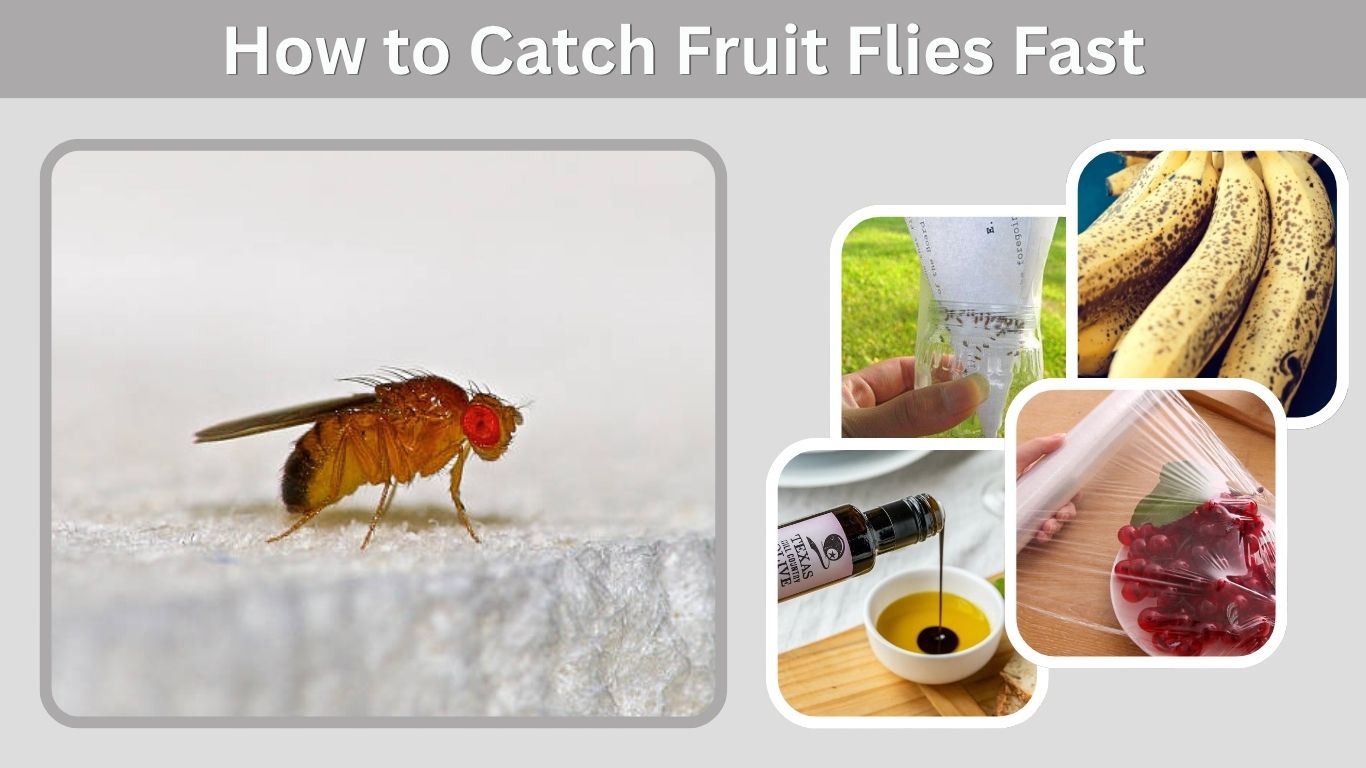
Fruit flies can quickly gather around ripe produce, trash cans, drains, and open drink containers. Catching the adults is easy, but traps alone will not end an infestation if eggs and larvae remain in hidden breeding materials. The most effective approach combines an attractive homemade trap with careful kitchen cleaning and food storage. Apple cider vinegar usually provides the strongest household bait, although wine, beer, ripe fruit, and yeast mixtures also work. Follow these practical methods to catch fruit flies and prevent them from returning.
Make Sure They Are Fruit Flies
Before setting traps, confirm which small fly is present. Fruit flies, fungus gnats, and drain flies require different control methods. A trap may catch some adults without solving the infestation when it targets the wrong insect. Pay attention to the fly’s appearance, flight pattern, and the location where the greatest number gathers.
How to Identify Fruit Flies
Look for these common characteristics:
- Approximately 1/16 to 1/8 inch long
- Tan, yellowish-brown, or dark-brown body
- Clear wings held over the back
- Red or dark-colored eyes
- Slow hovering around produce or beverages
- Strong attraction to fermenting smells
- Frequent activity near trash, recycling, or compost
Fruit flies are sometimes called vinegar flies because fermentation odors strongly attract them. They commonly enter houses on produce carrying nearly invisible eggs or arrive through open doors and window gaps.
Fruit Flies vs. Gnats and Drain Flies
Fungus gnats are slender, dark, mosquito-like insects generally found around damp houseplant soil. Drain flies have broad, fuzzy wings and resemble tiny moths. They usually rest on walls close to sinks, showers, or floor drains.
True fruit flies have more compact bodies and concentrate around fermenting fruit, vegetables, juice, alcohol, and food residue. Correct identification helps determine whether you should inspect produce, plant soil, or plumbing.
How to Catch Fruit Flies with Apple Cider Vinegar
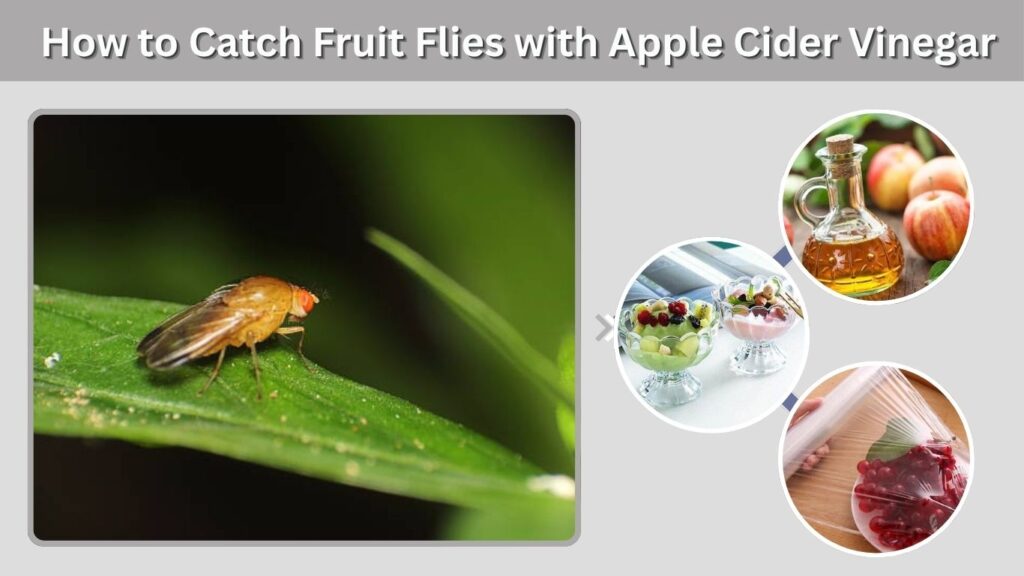
Apple cider vinegar is one of the most dependable household attractants because its fermented aroma resembles the food fruit flies naturally seek. A small open dish may attract several flies, but adding dish soap and controlling the entrance makes the trap considerably more effective.
Apple Cider Vinegar Trap Instructions
You will need:
- A small glass, bowl, cup, or jar
- Two to four tablespoons of apple cider vinegar
- One or two drops of liquid dish soap
- Plastic wrap
- A rubber band
- A toothpick or similar pointed tool
Pour the vinegar into the container and gently mix in the dish soap. Cover the opening tightly with plastic wrap and secure it with a rubber band. Poke several tiny holes in the top, then place the trap where fruit flies are most active.
How Does the Trap Work?
The vinegar’s fermentation odor draws adult flies toward the container. They crawl through the small holes and have difficulty locating the exits. Dish soap reduces the surface tension of the liquid, causing flies that land on it to sink instead of standing on the surface.
A plastic covering is optional when dish soap is present, but it improves containment. Replace the bait when it becomes crowded, diluted, contaminated, or noticeably less aromatic.
How to Catch Fruit Flies with Vinegar and Dish Soap
A shallow vinegar-and-soap trap is the fastest design when you do not want to prepare a lid. The wider exposed surface releases more odor and gives flies an easy landing area. Place it somewhere it will not be disturbed by children, pets, food preparation, or moving dishes.
Open-Bowl Vinegar Trap
Follow these steps:
- Pour a small amount of apple cider vinegar into a shallow bowl.
- Add one or two drops of dish soap.
- Stir gently without creating excessive foam.
- Position the bowl near the main source of activity.
- Check it after several hours.
- Empty and refresh the mixture when needed.
Do not add too much soap. A small amount is enough to break the liquid’s surface tension, while excessive fragrance could compete with the bait’s fermentation odor.
Can White Vinegar Catch Fruit Flies?
White vinegar is generally less attractive than apple cider vinegar because it lacks the same fruity aroma. It may still work when mixed with a small amount of sugar, overripe fruit, or fruit juice.
Balsamic and red wine vinegar can also attract flies, although they may be more expensive and can stain porous surfaces if spilled. Whatever vinegar you select, adding dish soap improves a drowning trap.
How to Catch Fruit Flies Without Apple Cider Vinegar
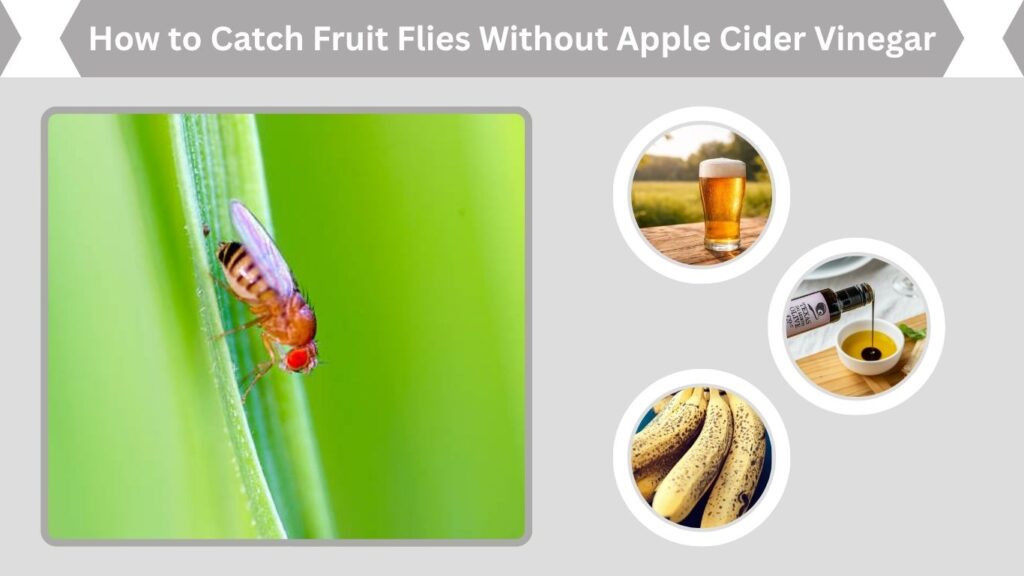
Several fermented, sweet, or overripe ingredients can replace apple cider vinegar. The best alternative is usually something already attracting flies in your kitchen. A small quantity is sufficient, so there is no need to waste an entire drink or piece of fruit.
Effective Alternative Baits
Try one of the following:
- Red wine or leftover wine
- Beer
- Fruit juice
- A piece of overripe banana
- Soft pear, peach, or melon
- Wine or balsamic vinegar
- Sugar dissolved in warm water
- Sugar, water, and active yeast
- Honey diluted with water
- Fermenting fruit scraps
For liquid baits, add a drop of dish soap if you want to kill the captured flies. For solid fruit bait, use a paper funnel or plastic-wrap cover to prevent escape.
Yeast and Sugar Trap
Combine warm—not hot—water with a little sugar and active dry yeast in a jar. As the yeast ferments the sugar, it releases odors that attract fruit flies. Cover the jar with a paper funnel or perforated plastic wrap.
Leave enough empty space above the mixture to reduce the chance of spills or overflow. This method is useful when fruit flies appear uninterested in vinegar or no vinegar is available.
How to Catch Fruit Flies in a Jar or Bottle
A funnel trap allows fruit flies to enter through a narrow opening but makes finding the exit difficult. It works with liquid or solid bait and can be adapted for catching flies alive. Transparent containers are useful because you can easily monitor how many insects have entered.
Paper Funnel Jar Trap
Place a small piece of ripe fruit, wine, beer, or vinegar in a jar. Roll paper into a cone, leaving a tiny opening at the narrow end. Insert the funnel without allowing its bottom to touch the bait, and tape it so there are no gaps around the rim.
The opening only needs to be slightly larger than a fruit fly—approximately toothpick-sized. If it is too wide, flies may escape more easily. If it is too small or blocked by liquid, they may not enter.
Plastic Bottle Trap
Cutting the top from a plastic bottle and turning it upside down creates a reusable funnel. Place bait in the lower section, insert the inverted top, and seal the edges with tape.
Set the bottle close to a fruit bowl, recycling container, compost bin, or other suspected source. Avoid positioning traps directly beside an open window, as the bait could draw additional flies toward the house.
Where to Place Fruit Fly Traps
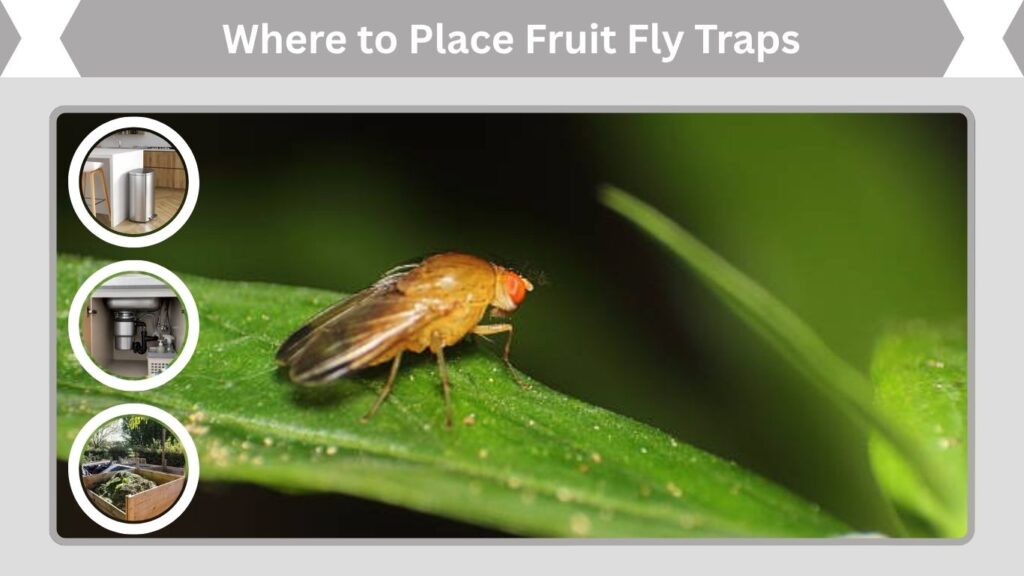
Trap placement is just as important as bait selection. Fruit flies usually remain close to food, moisture, and breeding material. Instead of placing one trap in the middle of a large room, use small traps near concentrated activity and compare which location produces the greatest catch.
Best Trap Locations
Place traps near:
- Fruit bowls and produce storage areas
- Kitchen trash cans
- Compost containers
- Recycling bins
- Empty beverage bottles
- Sink or garbage-disposal areas
- Pantry shelves containing onions or potatoes
- Wet mops, sponges, or cleaning cloths
- Beverage dispensers and bar areas
- The location where damaged produce was stored
Keep traps away from uncovered meals. Empty drowning traps regularly so they do not become unpleasant or spill onto food-contact surfaces.
How Long Does a Vinegar Trap Take to Work?
A well-positioned trap may catch fruit flies within a few hours. It often takes several days to substantially reduce the visible adults, especially when newly developed flies continue emerging.
If a fresh trap captures nothing after a day, reconsider the identification, change the bait, or move the trap. Fungus gnats and drain flies may not respond strongly to fruit-based bait.
How to Catch and Get Rid of Fruit Flies Completely
Catching adults provides immediate relief, but sanitation produces lasting control. Fruit flies can continue developing in a small amount of moist, fermenting material. A forgotten potato, dirty recycling bottle, or residue beneath a trash bag may support a continuing infestation.
Eliminate Breeding Sources
Complete the following steps:
- Discard overripe, leaking, or damaged produce.
- Refrigerate ripe fruit when practical.
- Inspect stored potatoes, onions, and squash.
- Empty and wash garbage and compost containers.
- Rinse beverage cans, bottles, and food containers.
- Clean spills beneath appliances and cabinets.
- Wash and thoroughly dry mops, sponges, and clothes.
- Remove food residue from garbage disposals.
- Scrub organic buildup from problem drains.
- Continue operating traps for at least several days.
Sanitation is the primary method of fruit-fly control; baited traps mainly reduce and monitor the adults. If breeding material remains, the population will return even after a trap catches many flies.
Cleaning a Suspected Drain
Fruit flies can sometimes develop in organic residue associated with drains, but drain flies are a more common plumbing-related pest. Cover a suspected drain overnight with a clear container or transparent tape positioned to catch emerging insects without completely sealing airflow.
When a drain is involved, physically scrub the inside walls, rim, stopper, and accessible pipe surfaces. A product labeled for digesting organic drain buildup may also help when used according to its instructions. Simply pouring bleach into the opening may not remove the film supporting larvae, and dangerous cleaning chemicals should never be mixed.
How to Catch Fruit Flies Alive
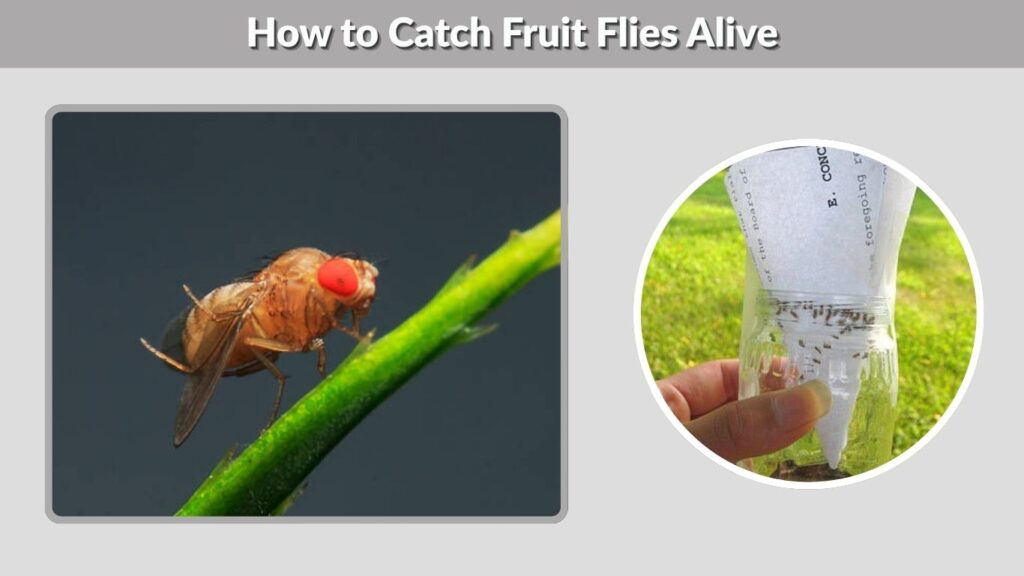
Catching flies without killing them requires a dry funnel trap. Place a piece of banana or other ripe fruit in a jar, then add a paper funnel with a narrow opening. Do not use dish soap or a deep liquid bait.
Releasing Live Fruit Flies
Once flies enter, take the closed trap outdoors and release them well away from doors and windows. Be aware that moving adults outside will not solve the problem if eggs and larvae remain indoors.
Do not use wild-caught flies to feed frogs, spiders, or praying mantises. They may have contacted pesticides, spoiled food, or environmental contaminants. Cultured feeder fruit flies from a reliable supplier are a safer and more consistent food source for captive animals.
How to Prevent Fruit Flies from Returning
Fruit flies reproduce quickly when food and moisture remain available. Prevention depends on interrupting their access to fermenting materials before adults can lay eggs. During warm weather, inspect produce regularly and act as soon as the first flies appear.
Fruit Fly Prevention Checklist
- Refrigerate ripe and cut fruit.
- Use sealed containers for countertop produce.
- Remove damaged fruit immediately.
- Empty kitchen trash frequently.
- Keep compost in a covered container.
- Rinse recyclables before storing them.
- Clean juice, wine, soda, and syrup spills.
- Check potatoes and onions stored in dark cabinets.
- Keep cleaning tools dry between uses.
- Wash produce after bringing it home.
- Clean under appliances and trash containers.
- Repair plumbing leaks that create persistent moisture.
Continue these measures after the adults disappear. Any overlooked immature flies need time to complete development, so consistent cleaning is more effective than a one-day effort.
FAQs
What is the fastest way to catch fruit flies?
Place apple cider vinegar and one or two drops of dish soap in a shallow container near the area with the greatest activity. At the same time, remove overripe produce and clean all suspected breeding sources.
Can regular vinegar catch fruit flies?
White vinegar may catch some fruit flies, but apple cider vinegar is generally more attractive. Improve white vinegar by adding sugar, juice, or a small piece of ripe fruit.
Why is my vinegar trap not catching fruit flies?
The insects may be fungus gnats or drain flies, the bait may be stale, or the trap may be too far from their breeding source. Try fresh bait and observe where the flies gather.
How many holes should I make in a fruit-fly trap?
Make several small, toothpick-sized holes in the plastic covering. The holes should allow flies to enter while making escape difficult. Avoid tearing large openings.
Will fruit flies disappear without traps?
They may disappear after every breeding source is removed, but traps help capture the remaining adults and show whether the infestation is declining. Cleaning and food storage remain more important than trapping alone.