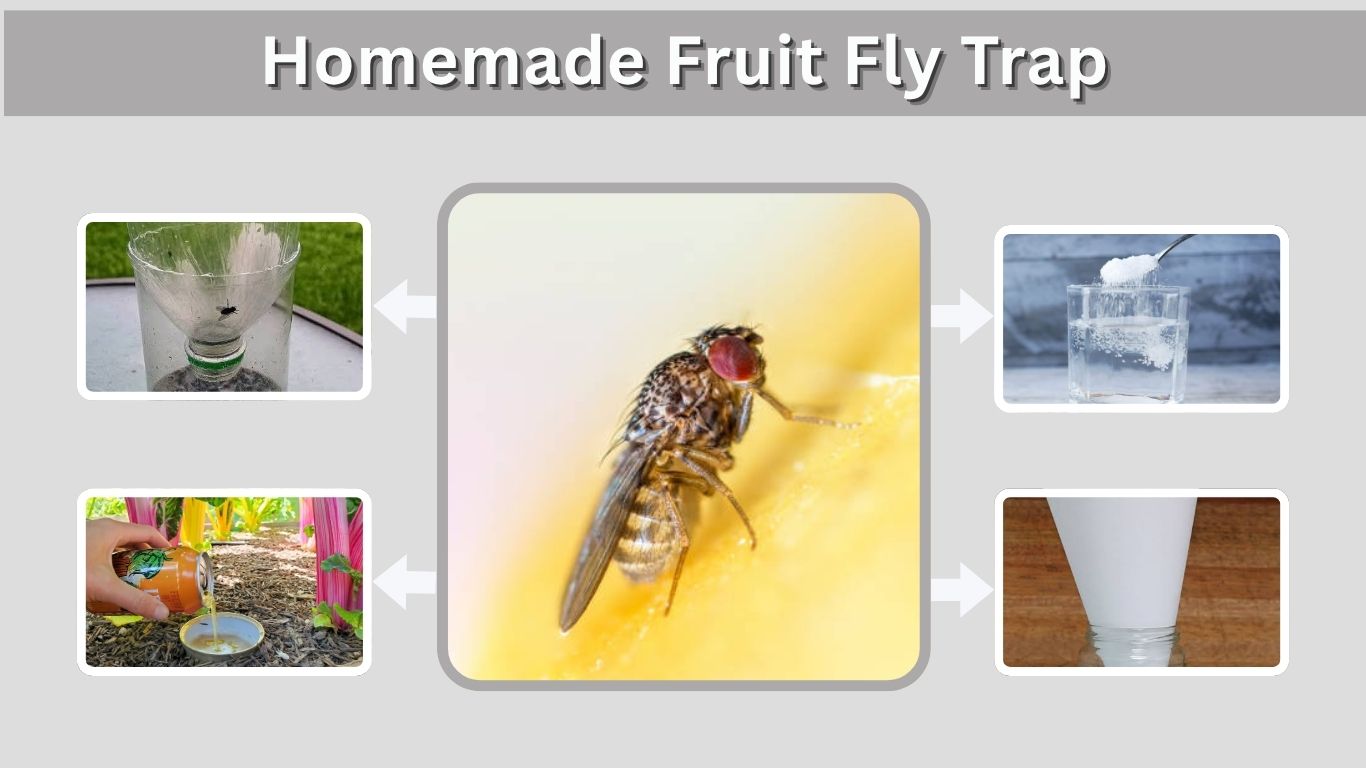
A homemade fruit fly trap is one of the simplest ways to control small flies gathering around fruit bowls, sinks, trash cans, and kitchen counters. Most effective traps use a sweet or fermented bait that attracts adult fruit flies and a container that makes escape difficult. Apple cider vinegar is the most popular option, but you can also make effective traps with white vinegar, wine, beer, fruit, sugar water, or yeast. Below are several easy homemade fruit fly trap recipes using common household ingredients.
Best Homemade Fruit Fly Trap With Apple Cider Vinegar
Apple cider vinegar is widely used in DIY fruit fly traps because its fermented smell attracts adult fruit flies. Combining it with dish soap makes the trap even more effective because the soap reduces the liquid’s surface tension, allowing flies that land on it to sink.
What You Need
- 2 to 4 tablespoons apple cider vinegar
- A small bowl, cup, or jar
- 1 to 2 drops liquid dish soap
- Plastic wrap, optional
- Toothpick or fork, optional
How to Make the Trap
Pour the apple cider vinegar into a small container and add one or two drops of dish soap. Stir gently without creating too much foam.
Place the container close to the area where fruit flies are most active. Common locations include beside a fruit bowl, near the kitchen sink, or next to a trash container.
For additional containment, cover the container tightly with plastic wrap and poke several small holes in the top. Fruit flies can enter through the holes while finding it more difficult to escape.
Why This Method Works
Fruit flies are strongly attracted to fermenting organic material. Apple cider vinegar produces an odor similar to overripe or fermenting fruit.
The vinegar acts as the bait, while dish soap helps trap the flies once they contact the liquid.
Homemade Fruit Fly Trap Without Apple Cider Vinegar
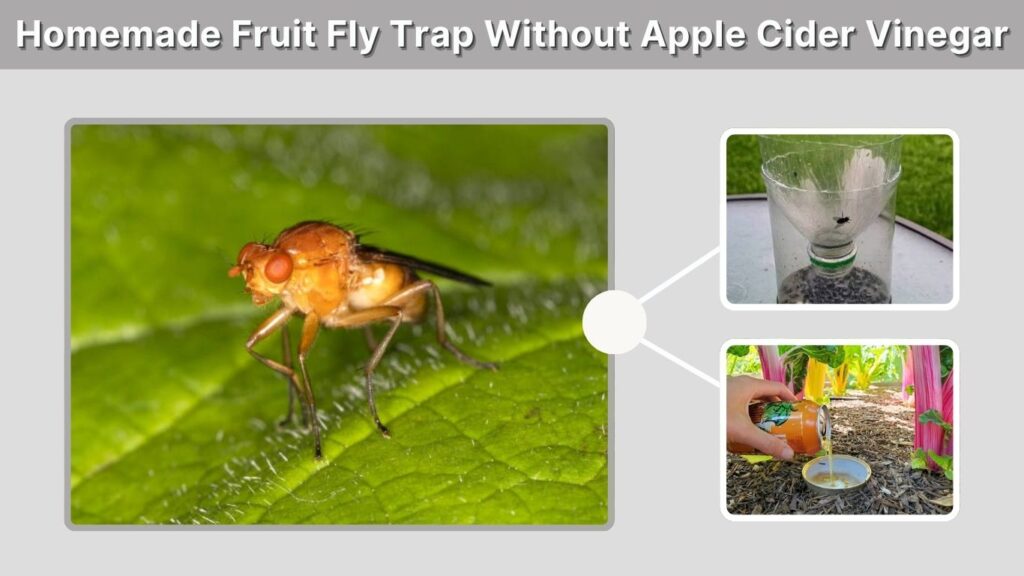
You do not need apple cider vinegar to make a useful fruit fly trap. Several other ingredients can produce similar fermented or sweet odors.
Good alternatives include wine, beer, ripe fruit, fruit juice, sugar water, or yeast mixtures.
Sugar Water and Dish Soap Trap
Mix warm water with a spoonful of sugar until most of the sugar dissolves. Add one or two drops of dish soap and place the mixture in a small open container.
This method is inexpensive and can be helpful when vinegar is unavailable.
Wine or Beer Trap
Leave a small amount of red wine or beer in the bottom of a glass or jar. Add a drop of dish soap.
The fermented aroma can attract fruit flies in much the same way as vinegar.
Banana Fruit Fly Trap
Place a small piece of very ripe banana inside a jar. Create a paper cone with a small opening at the bottom and place it inside the jar without allowing the cone to touch the fruit.
The banana attracts the flies, while the funnel design makes it harder for them to find their way back out.
Homemade Fruit Fly Trap With White Vinegar
White vinegar can also be used, although its scent is generally less fruity than apple cider vinegar.
For better attraction, combine white vinegar with something sweet.
Simple White Vinegar Recipe
Mix:
- 3 tablespoons white vinegar
- 1 teaspoon sugar
- 1 to 2 drops dish soap
Place the mixture in a shallow container near the fruit fly activity.
Adding sugar increases the sweetness of the bait, while the dish soap helps prevent flies from simply landing on the liquid and flying away.
Homemade Fruit Fly Trap Using a Plastic Bottle
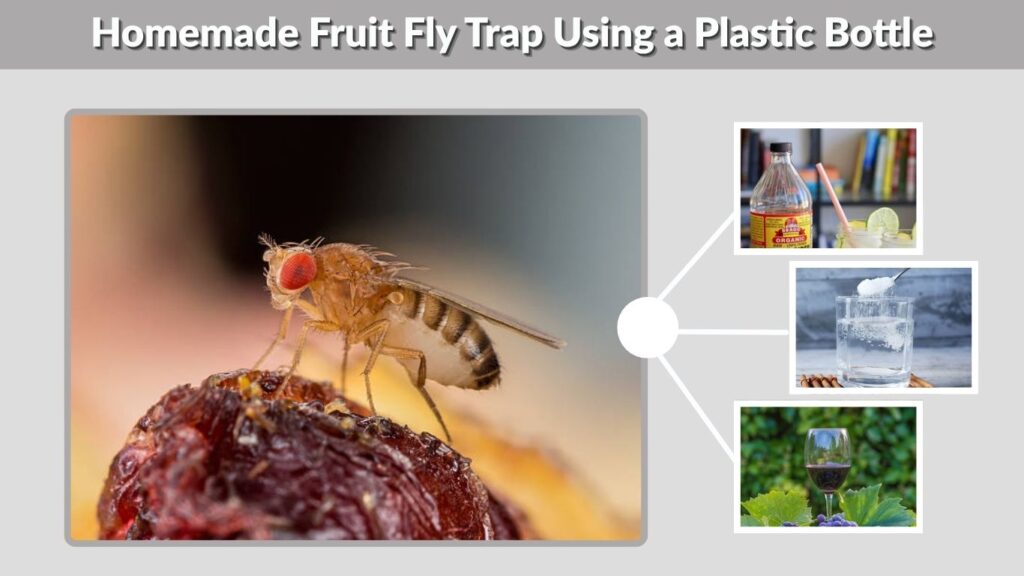
A plastic bottle provides an easy way to create a reusable funnel trap.
How to Make a Bottle Trap
Cut the upper section from a plastic water or soda bottle. Turn the cut top upside down and insert it into the lower half so it forms a funnel.
Pour your chosen bait into the bottom.
Possible baits include:
- Apple cider vinegar
- Wine
- Beer
- Fruit juice
- Sugar water
- Overripe fruit
Leave enough space between the funnel opening and the liquid.
Fruit flies follow the smell through the narrow opening but often have difficulty locating the exit.
Homemade Fruit Fly Trap With Dish Soap
Dish soap is useful in liquid traps because it changes how the surface behaves.
Without soap, a fruit fly may sometimes land briefly on liquid and escape. A small amount of soap reduces the surface tension, making it harder for the fly to remain supported on top.
You usually need only one or two drops. Adding too much soap can reduce the bait’s attractive smell.
Dish soap works particularly well when combined with apple cider vinegar, wine, fruit juice, or sugar water.
Homemade Fruit Fly Trap With a Paper Funnel
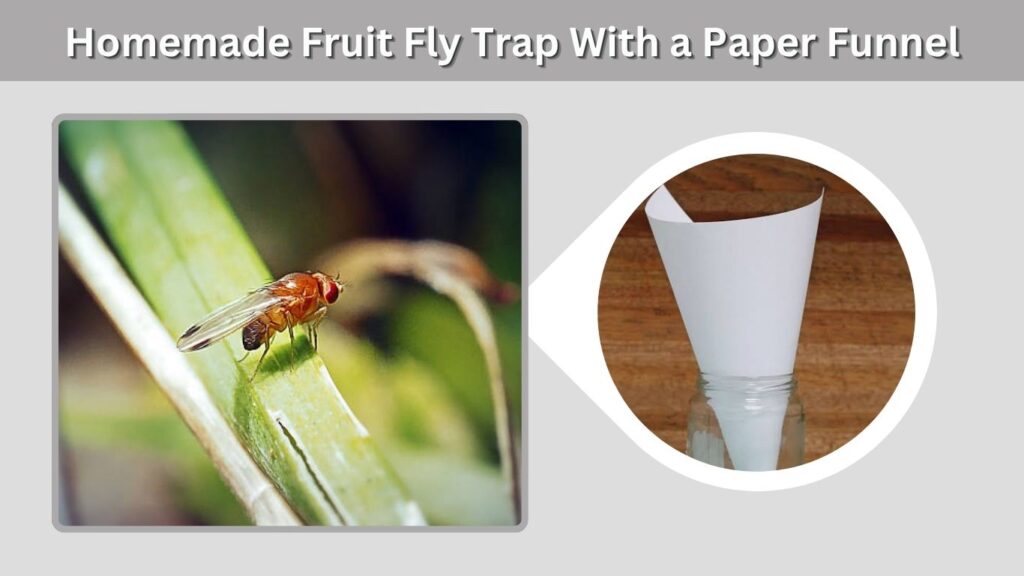
A paper funnel trap is useful when you want to keep fruit flies contained rather than relying entirely on liquid.
Roll a sheet of paper into a cone and leave a very small opening at the narrow end.
Place bait at the bottom of a jar, then position the cone so the narrow opening points toward the bait without touching it.
Good Funnel Trap Baits
- Ripe banana
- Peach pieces
- Apple slices
- Wine
- Fruit juice
- Apple cider vinegar
Tape the side of the cone so it keeps its shape.
The flies follow the odor into the jar but may struggle to locate the small funnel opening when attempting to leave.
Homemade Fruit Fly Trap With Yeast
Yeast can create a fermented smell that attracts fruit flies.
Combine warm water, a small amount of sugar, and a pinch of active yeast in a jar. Allow the mixture to begin fermenting, then position a paper funnel over the container.
Avoid completely sealing actively fermenting mixtures in airtight containers because gas can build up.
This method is especially useful if you want a homemade fruit fly trap without vinegar.
Where Should You Place Fruit Fly Traps?
Trap placement can make a major difference in how quickly you catch fruit flies.
Put traps close to the source rather than randomly throughout the house.
Common Fruit Fly Hotspots
- Fruit bowls
- Kitchen counters
- Recycling containers
- Trash cans
- Compost bins
- Empty beverage containers
- Sink areas
- Areas where produce is stored
Using two or three small traps near multiple problem areas can sometimes work better than one large trap.
How to Get Better Results From a Homemade Trap
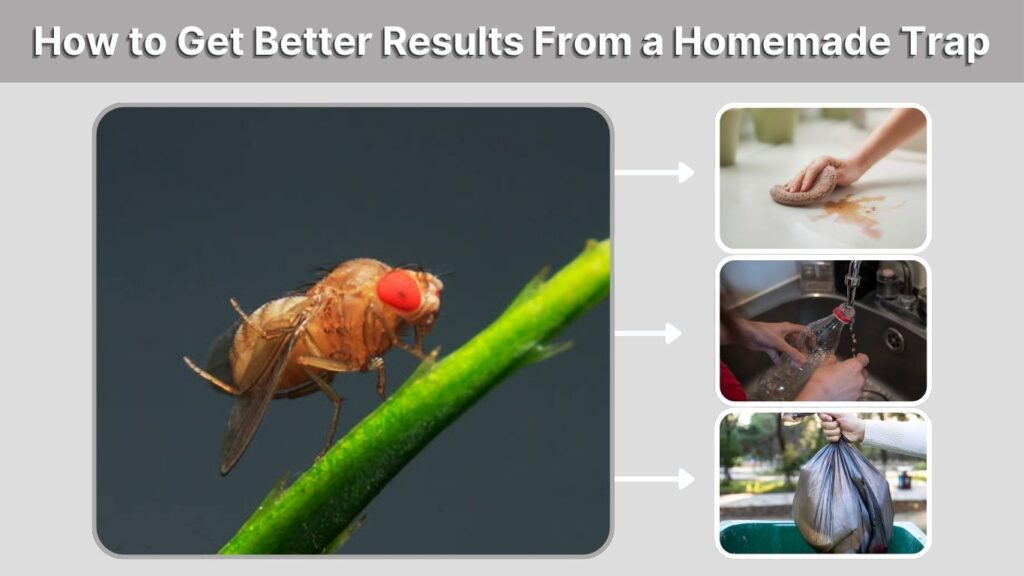
A trap catches adult flies, but it does not remove the material where fruit flies are breeding. For better control, combine trapping with sanitation.
Remove overripe produce, clean sticky spills, rinse recyclable bottles, empty trash regularly, and inspect onions, potatoes, and other stored produce for decay.
Clean food residue from counters, underneath appliances, and around garbage containers.
Also check drains if flies appear to be concentrated around sinks. Fruit flies can feed and reproduce in moist organic residue, although other small flies such as drain flies may also occur there.
What Is the Best Homemade Fruit Fly Trap?
For most kitchens, apple cider vinegar combined with one or two drops of dish soap is the easiest starting point. It requires very little preparation, creates a strong fermented scent, and can be placed directly beside the problem area.
If you do not have apple cider vinegar, wine, beer, ripe banana, fruit juice, or sugar-and-yeast mixtures can provide effective alternatives.
The best results come from using traps while also removing the food and breeding sources attracting fruit flies in the first place.
FAQs
1. How do you make a simple homemade fruit fly trap?
Pour a few tablespoons of apple cider vinegar into a small bowl and add one or two drops of dish soap. Place it near the area where fruit flies are active.
2. What can I use instead of apple cider vinegar?
You can use wine, beer, white vinegar mixed with sugar, fruit juice, overripe fruit, sugar water, or a yeast-and-sugar mixture.
3. Does white vinegar work for fruit flies?
White vinegar can work better when combined with sugar or another sweet ingredient. Apple cider vinegar usually provides a stronger fermented fruit smell.
4. How long should I leave a fruit fly trap out?
Leave the trap near active areas and check it daily. Replace the bait when it becomes dirty, diluted, or loses its smell.
5. Why do fruit flies keep coming back after trapping them?
Traps mainly target adult flies. If fermenting fruit, food residue, trash, or another breeding source remains, new adults can continue appearing. Removing those sources is essential for long-term control.