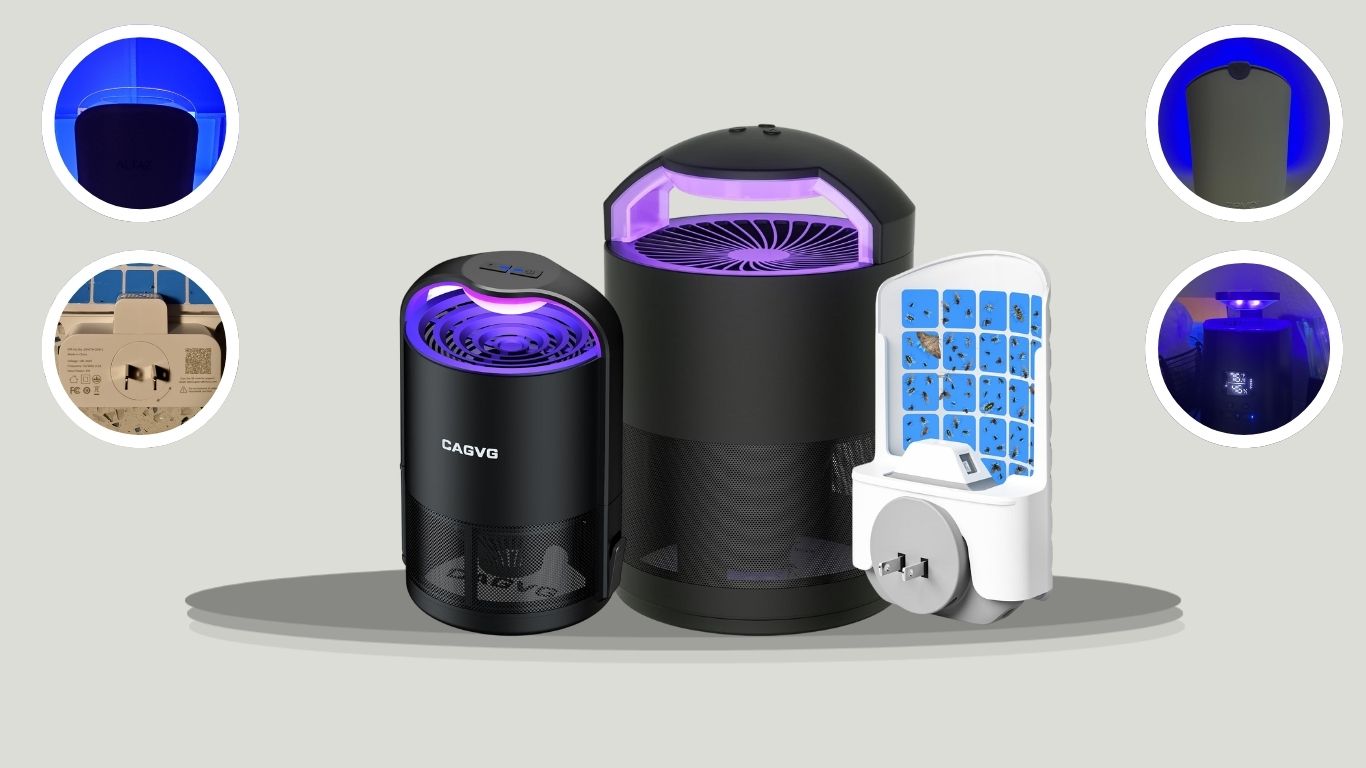
Fruit flies can quickly become a problem around kitchens, sinks, trash cans, fruit bowls, and other indoor areas where food or moisture is present. A reliable indoor fruit fly trap can help reduce adult flies without relying on constant spraying. Many modern traps use light, suction, sticky cartridges, or a combination of these methods to attract and capture flying insects. In this guide, we review nine of the best indoor fruit fly traps for convenient placement, easy maintenance, and effective everyday control around the home.
1. WOWCATCH Flying Insect Trap for Indoor Use
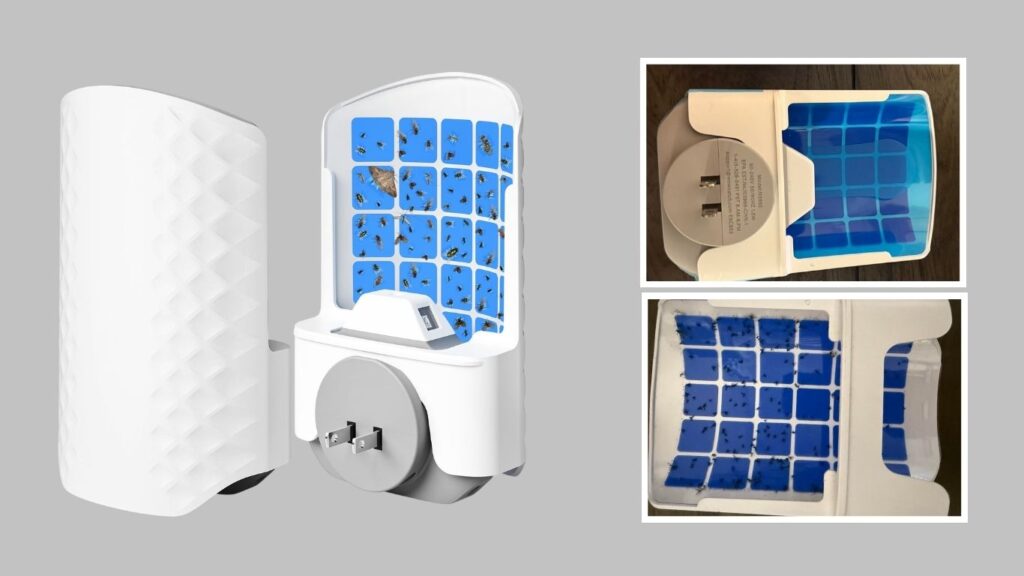
The WOWCATCH Flying Insect Trap is designed for people who want a convenient way to reduce fruit flies and other small flying insects inside the home. Its enclosed design makes it easier to use around kitchens, bedrooms, dining areas, and other living spaces where traditional hanging fly strips may look unattractive. It provides continuous trapping with minimal day-to-day attention.
Key Features
- Designed for indoor flying insects
- Suitable for fruit flies and similar small pests
- Compact design for countertops or nearby surfaces
- Works continuously once positioned
- Avoids the mess of exposed hanging fly paper
- Suitable for kitchens and living spaces
- Simple routine maintenance
Why It Is Best for Everyday Indoor Use
The main advantage of the WOWCATCH trap is convenience. Fruit flies often appear around food preparation areas where users may not want exposed sticky ribbons or frequent insecticide spraying.
A compact indoor trap can stay near an active area without taking over the room. This makes it especially useful for ongoing problems around kitchen counters, sinks, or fruit storage locations.
Performance and Placement
Like most indoor fruit fly traps, placement has a major effect on performance. Positioning the unit close to where flies are regularly seen gives it a better chance of intercepting them.
Reducing nearby competing light sources or food odors may also improve results. Keeping the trapping area clean and replacing consumable trapping components when necessary helps maintain performance over time.
Best for Low-Maintenance Fruit Fly Control
WOWCATCH is a practical choice for users who prefer an indoor device that can remain in place rather than setting up homemade traps repeatedly.
It works best as part of a broader control routine that includes removing overripe fruit, cleaning spills, and emptying trash. For households that want a cleaner-looking alternative to exposed fly strips, this style of trap provides a convenient approach to reducing visible adult fruit flies.
2. Flying Insect Trap With Refill Cartridges
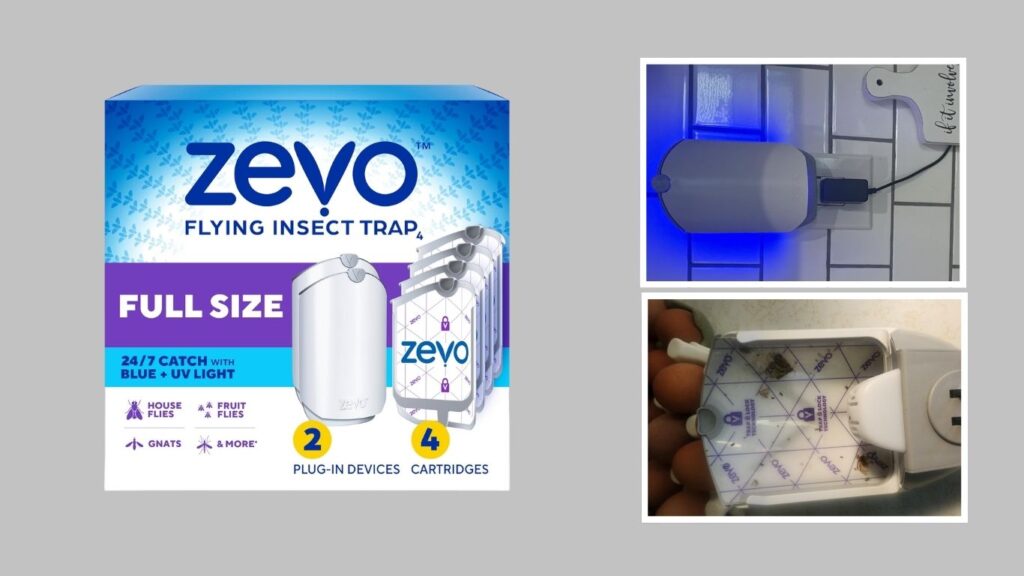
This Flying Insect Trap with Refill Cartridges is designed around a replaceable trapping system, making it useful for households dealing with recurring fruit fly activity. Instead of replacing the entire device, users can change the cartridge when the trapping surface becomes full. That design can make long-term maintenance easier while keeping the trap ready for repeated indoor use.
Key Features
- Replaceable refill cartridge system
- Designed for indoor flying insects
- Suitable for continuous use
- Helps contain captured insects
- Minimal daily maintenance
- Compact household design
- Easy-to-replace trapping component
Why It Is Best for Long-Term Use
A refillable trap can be particularly useful when fruit flies return periodically throughout warmer months. Rather than setting up a completely new trap each time, the main unit can remain in position while the internal cartridge is replaced as needed.
This makes the system convenient for kitchens, dining spaces, and other rooms where discreet pest control is preferred.
Trapping Performance and Maintenance
The cartridge should be checked periodically for captured insects, dust, and debris. Once much of the usable trapping area is covered, replacing it helps restore performance.
The trap should also be positioned near fruit fly activity rather than in an isolated corner. Areas around sinks, trash cans, produce, and recycling containers are generally more productive locations.
Best for Convenient Cartridge Replacement
This model is particularly appealing to users who value simple maintenance. The replaceable-cartridge approach reduces the need to handle exposed sticky materials directly and can make routine servicing more manageable.
For recurring indoor fruit fly problems, especially in homes where a trap may remain in use for extended periods, a cartridge-based design offers a practical combination of cleanliness, convenience, and continuous trapping.
3. Indoor Fruit Fly Trap With Adjustable Lighting
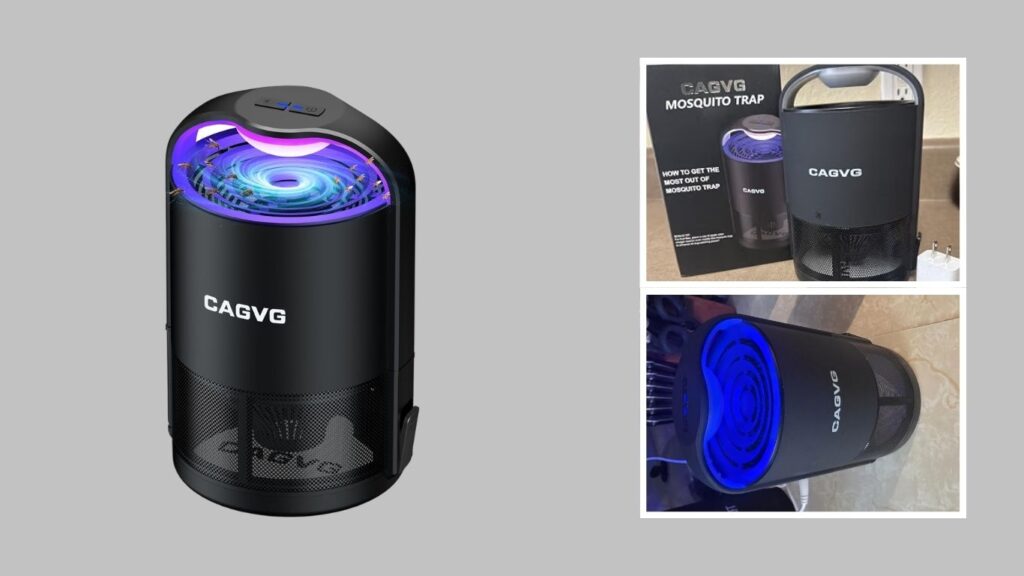
The Indoor Fruit Fly Trap with Adjustable Lighting provides more control over how the device operates within different rooms. Light-based attraction is commonly used in indoor flying-insect traps because many small flies naturally move toward illuminated areas. Adjustable lighting can make the trap easier to adapt for daytime or nighttime use while keeping it suitable for kitchens and living areas.
Key Features
- Adjustable lighting settings
- Designed to attract small flying insects
- Suitable for indoor fruit fly control
- Convenient for day or night operation
- Compact household-friendly design
- Continuous trapping capability
- Suitable for kitchens and other rooms
Why It Is Best for Adjustable Operation
Not every room has the same lighting conditions. A bright kitchen during the day and a dark dining area at night can require different attraction levels.
Adjustable lighting gives users more flexibility when positioning the trap. It can also help make the unit less intrusive when used in bedrooms or other areas where excessive brightness may be distracting.
Performance in Different Indoor Areas
For the strongest results, the trap should be placed where fruit flies already travel. Keeping it relatively close to the infestation source generally works better than positioning it across the room.
During evening use, reducing competing lights may make the trap more noticeable to flying insects. Cleaning the surrounding area and removing alternative food sources can further improve its effectiveness.
Best for Kitchens and Multi-Room Use
This adjustable-lighting fruit fly trap is particularly useful for households that want one device capable of fitting different indoor environments.
It can be moved between kitchens, dining spaces, utility areas, or other rooms depending on where fly activity is strongest. For users who appreciate more control over operation and visibility, adjustable lighting provides an advantage over simpler fixed-output traps.
4. Fooxem Indoor Flying Insect Trap With Temperature & Humidity Display
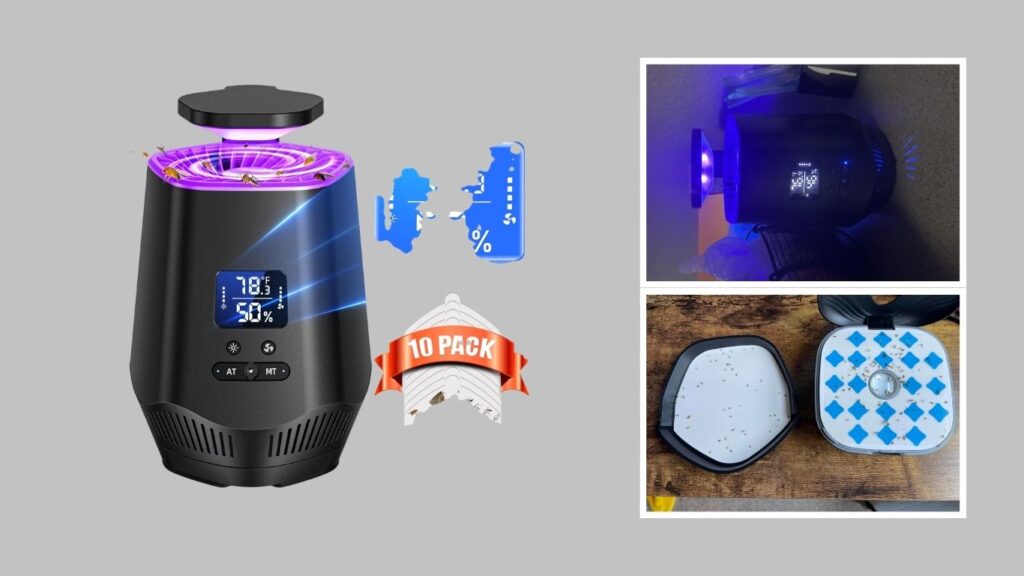
The Fooxem Indoor Flying Insect Trap combines flying-insect control with environmental monitoring features. In addition to helping reduce fruit flies, its temperature and humidity display can provide useful information about indoor conditions. This combination makes it more versatile than a basic trap and may appeal to users who already monitor temperature or moisture levels around kitchens, plant areas, or living spaces.
Key Features
- Designed for indoor flying insects
- Temperature display
- Humidity monitoring
- Suitable for fruit fly activity
- Multi-function household design
- Works without exposed hanging fly paper
- Useful in kitchens and plant areas
Why It Is Best for Multi-Function Use
The standout feature of this Fooxem model is its ability to provide more than insect trapping. Temperature and humidity readings can help users better understand indoor conditions while the device remains positioned in an active fruit fly area.
This can be useful around houseplants, kitchens, or rooms where moisture levels are already something the household monitors.
Indoor Performance and Convenience
For fruit fly trapping, location remains important. The unit should be positioned reasonably close to the area where flies congregate.
Its environmental display can also make it feel more like a household appliance than a conventional pest-control product. Routine cleaning and timely replacement of any trapping components will help maintain consistent operation.
Best for Users Who Want Extra Functionality
The Fooxem trap is a strong option for users who prefer household devices with more than one purpose. Instead of dedicating space solely to pest control, the unit also provides useful environmental information.
For kitchens, indoor plant areas, or utility rooms where fruit fly activity and humidity can both be relevant, its combination of trapping and monitoring gives it a practical edge over simpler designs.
5. VEYOFLY Flying Insect Catcher for Indoor Use
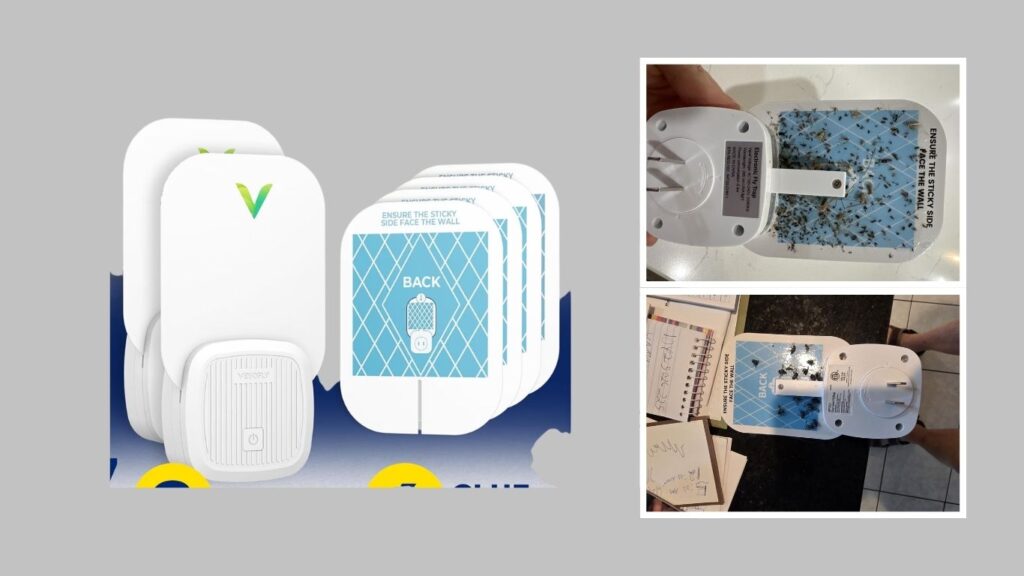
The VEYOFLY Flying Insect Catcher is designed to provide discreet indoor control of fruit flies and other small flying insects. Its compact form makes it suitable for household environments where traditional flypaper may be too visible or inconvenient. Once positioned in an active area, the trap can work continuously while requiring relatively little daily attention.
Key Features
- Designed for indoor flying insects
- Suitable for fruit flies and similar pests
- Compact and discreet appearance
- No exposed hanging ribbon required
- Continuous indoor operation
- Suitable for kitchens and living spaces
- Straightforward routine maintenance
Why It Is Best for Discreet Indoor Placement
Appearance matters when a pest-control device is used in kitchens, dining rooms, or other visible parts of the home. VEYOFLY provides a more contained solution than traditional sticky ribbons hanging from ceilings.
Its compact design allows it to remain close to problem areas without drawing unnecessary attention, making it useful for everyday residential spaces.
Performance and Everyday Maintenance
The trap should be positioned close to common fruit fly hotspots, such as fruit storage areas, sinks, recycling bins, or trash containers. Keeping the surrounding environment clean helps prevent other food sources from competing with the trap.
Regularly checking the capture area and replacing trapping components when they become full also helps keep the device operating effectively.
Best for Clean and Convenient Home Use
VEYOFLY is especially suitable for homeowners who want a simple device that blends more naturally into indoor spaces.
It is most effective when used alongside good sanitation practices rather than as the only control method. By combining passive trapping with removal of overripe produce, spills, and breeding materials, this type of catcher can help noticeably reduce adult fruit fly activity while keeping the home looking cleaner and more organized.
6. Indoor Fruit Fly Trap With Suction & Adjustable Settings
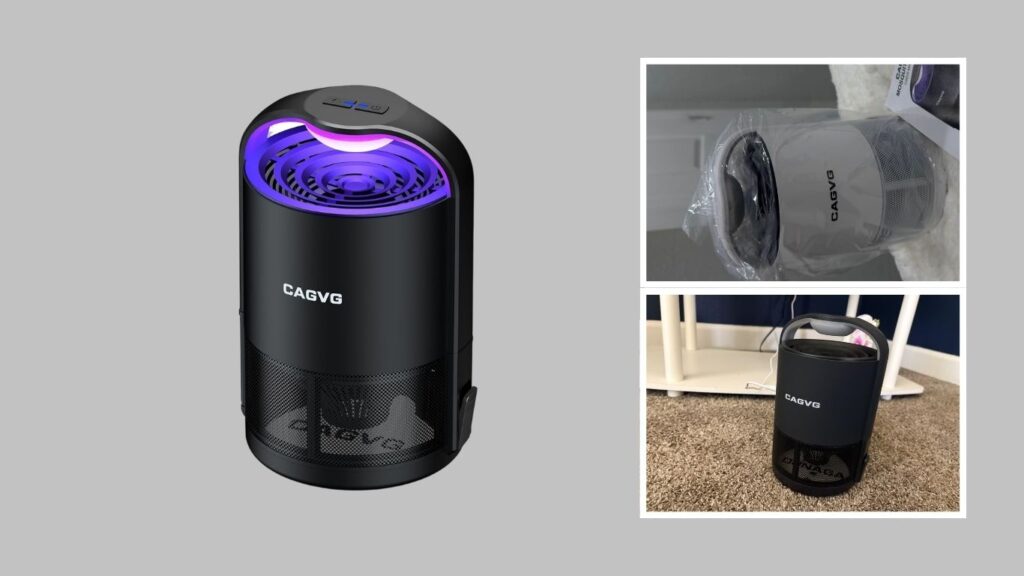
This Indoor Fruit Fly Trap combines light attraction with suction to capture small flying insects around the home. Instead of depending only on an exposed adhesive surface, the fan-assisted design can pull nearby fruit flies into the trapping area. Adjustable settings also provide greater flexibility for different rooms and levels of insect activity, making it useful for kitchens, dining rooms, and other indoor spaces.
Key Features
- Light-based insect attraction
- Built-in suction fan
- Adjustable operating settings
- Designed for indoor fruit flies
- Suitable for continuous operation
- Compact countertop-friendly design
- Useful for multiple indoor locations
Why It Is Best for Suction-Based Trapping
The suction system is the main advantage of this model. Once fruit flies approach the attraction area, airflow helps draw them into the trap rather than relying entirely on the insects landing on a sticky surface themselves.
This can be especially useful in rooms where fruit flies move constantly around sinks, counters, or produce.
Performance and Everyday Operation
For better results, position the unit near the strongest fruit fly activity while keeping competing food sources to a minimum. Running it during quieter or darker periods can also help light-based attraction stand out.
Regularly inspect and clean the collection or trapping area so airflow and trapping performance remain consistent.
Best for Active Indoor Fruit Fly Problems
This model is well suited to households that want something more active than a basic sticky trap. Its combination of attraction, suction, and adjustable operation provides additional control over how the unit performs.
When paired with removal of breeding sources, it offers a practical way to manage persistent adult fruit flies.
7. Indoor Flying Insect & Mosquito Trap
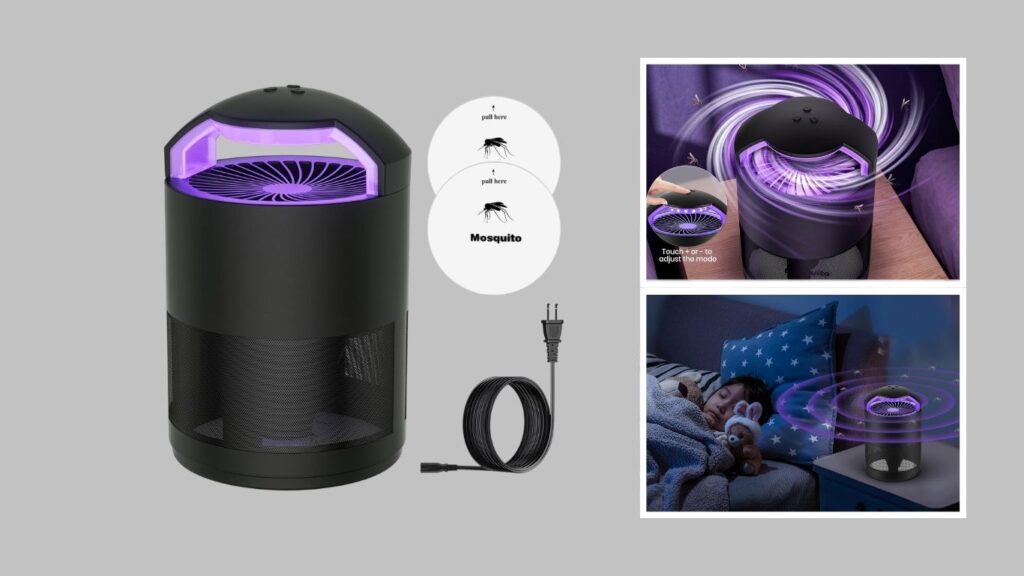
The Indoor Flying Insect and Mosquito Trap provides broader coverage for households dealing with fruit flies as well as other small flying pests. Its indoor-focused design makes it suitable for kitchens, bedrooms, living areas, and utility spaces. A multi-insect trap can be particularly convenient when several types of flying insects appear around the home during warmer months.
Key Features
- Designed for multiple flying insects
- Suitable for fruit flies and mosquitoes
- Indoor-use design
- Continuous trapping capability
- Compact placement options
- No traditional hanging fly ribbon
- Useful in several rooms
Why It Is Best for Multiple Flying Pests
Some homes experience fruit flies in the kitchen while mosquitoes or gnats appear elsewhere. A trap designed for several types of flying insects can reduce the need to use separate devices in every situation.
This versatility makes the unit more practical for households with changing seasonal pest activity.
Trapping Performance and Placement
Place the trap relatively close to where flying insects are regularly observed. Fruit fly problems often originate near produce, trash, recycling, or food residue, while mosquitoes may concentrate near entryways or other resting areas.
Limiting competing lights can improve the visibility of a light-based trap, especially at night.
Best for Whole-Home Flexibility
This model is a useful option for people who want a more versatile indoor trap rather than a product dedicated to only one insect.
It can be moved between rooms as pest activity changes and left operating where needed. Combined with sanitation, screened windows, and removal of standing water where relevant, it can become a useful part of a broader indoor flying-insect control strategy.
8. Indoor Fruit Fly & Mosquito Trap With Adjustable Settings
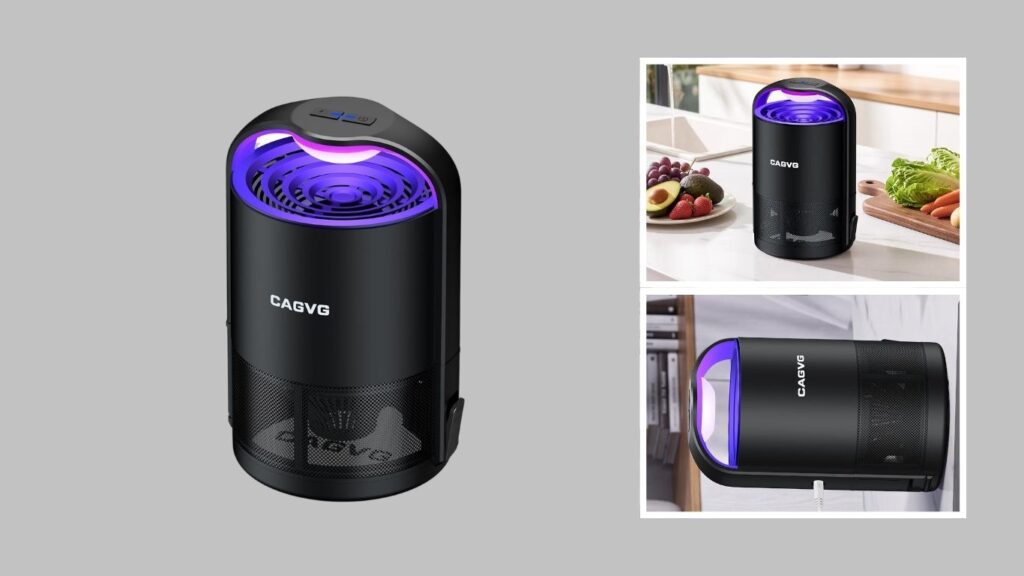
This Indoor Fruit Fly and Mosquito Trap combines multi-insect capability with adjustable operation. It is designed for people who want greater control over how an indoor trap functions while targeting common flying pests. Its compact format can fit easily into kitchens, bedrooms, dining spaces, or other locations where fruit flies and mosquitoes become troublesome.
Key Features
- Targets fruit flies and mosquitoes
- Adjustable operating settings
- Designed for indoor use
- Compact household design
- Suitable for continuous operation
- Easy to reposition between rooms
- Provides an alternative to exposed flypaper
Why It Is Best for Adjustable Pest Control
Adjustable operation allows users to tailor the trap to different conditions rather than relying on one fixed setting.
A kitchen with significant fruit fly activity may benefit from stronger operation, while a quieter bedroom environment may require a different setting. This flexibility can make the device easier to integrate into everyday home use.
Performance and Ease of Maintenance
Place the trap close enough to insect activity that flies can readily encounter it. For fruit flies, focus on kitchens, counters, sinks, trash areas, and produce storage.
Maintaining the trap is equally important. Check the capture surface or collection area regularly and replace or clean components when required.
The trap will generally perform better when exposed food and breeding sources are removed.
Best for Flexible Multi-Room Use
This adjustable model works particularly well for users who expect to move the trap between different parts of the house.
Its combination of fruit fly and mosquito control provides additional versatility, while adjustable settings make operation easier to customize. For households seeking a device that can adapt to different pest situations, this model offers a practical balance of flexibility and convenience.
9. Indoor Insect & Fruit Fly Trap
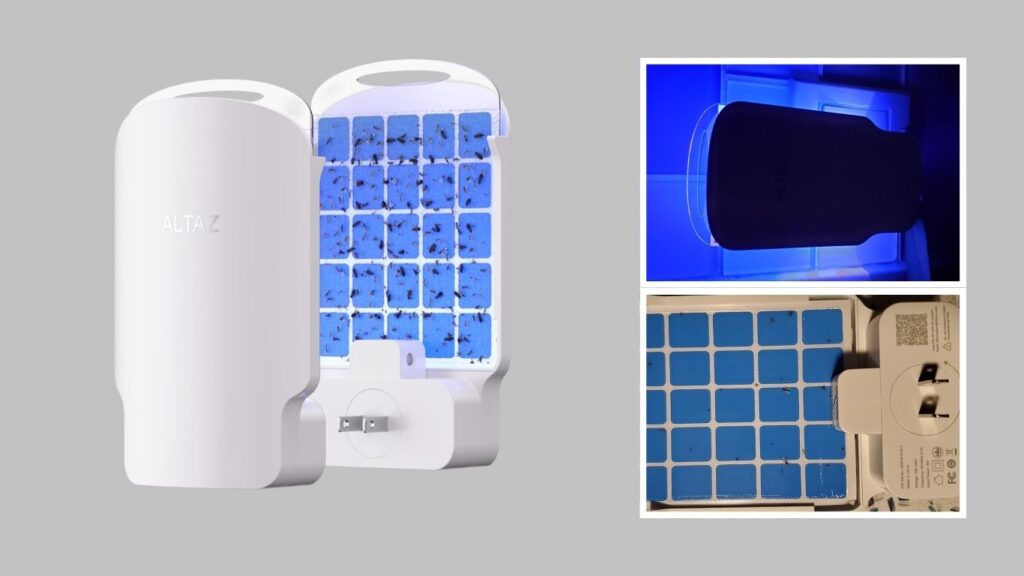
The Indoor Insect and Fruit Fly Trap rounds out the list as a straightforward option for reducing small flying insects in common household areas. It is intended to operate continuously without requiring repeated preparation of liquid bait or homemade mixtures. Its contained design can also make it more suitable for visible living areas than traditional sticky ribbons.
Key Features
- Designed for fruit flies and indoor insects
- Compact indoor configuration
- Continuous trapping operation
- Suitable for kitchens and living areas
- Requires limited daily attention
- No homemade bait preparation needed
- Easy to position near fly activity
Why It Is Best for Simple Indoor Operation
Not everyone wants to mix vinegar solutions, replace homemade bait, or hang sticky strips around the kitchen. A dedicated indoor trap provides a more convenient approach that can remain positioned near the problem area.
Once set up, it requires relatively little attention beyond normal cleaning and replacement of trapping components when necessary.
Performance and Practical Maintenance
The trap should be placed strategically rather than simply positioned anywhere in the room. Keeping it near fruit fly hotspots increases the chance that insects encounter the attraction and capture area.
For kitchens, this may mean placing it near a fruit bowl, sink, recycling station, or trash area while keeping it away from direct food preparation surfaces.
Routine inspection helps ensure the trap remains clean and functional.
Best for Straightforward Household Fly Control
This indoor trap is most suitable for users who want a simple, dedicated device for everyday flying-insect management.
Its biggest advantage is convenience. There are no complicated homemade recipes to prepare, and it can remain available whenever adult fruit flies appear.
When combined with cleaning, proper food storage, and removal of breeding materials, it can provide an effective supporting tool for keeping visible fruit fly populations under control.
FAQs
1. What type of indoor fruit fly trap works best?
Light-based traps, suction traps, and sticky-cartridge traps can all work well against adult fruit flies. The best option depends on the room and severity of the problem. Suction models provide active capture, while sticky-cartridge traps are usually simpler and quieter. Proper placement is important regardless of the design.
2. Where should I place an indoor fruit fly trap?
Place the trap close to areas where fruit flies are most active, such as near fruit bowls, kitchen sinks, recycling containers, trash cans, or produce storage areas. Avoid positioning it directly beside competing bright lights or strong food odors that may reduce its attractiveness.
3. Can an indoor fruit fly trap completely eliminate fruit flies?
A trap can catch many adult fruit flies, but trapping alone may not eliminate an infestation. Fruit flies can continue reproducing if overripe produce, spilled liquids, dirty recycling, or other fermenting organic material remains available. Removing the breeding source is essential for long-term control.
4. How long should I run an indoor fruit fly trap?
Many electronic indoor traps are designed to operate for extended periods. During an active problem, continuous operation can provide consistent trapping. Follow the manufacturer’s operating instructions and regularly clean the unit or replace sticky cartridges so the trap can continue working effectively.
5. Are indoor fruit fly traps better than homemade vinegar traps?
Both approaches can be useful. Homemade vinegar traps are inexpensive and easy to prepare, while dedicated indoor traps generally offer cleaner presentation, continuous operation, and less frequent preparation. An electronic or sticky-cartridge model may be more convenient for recurring problems, while vinegar traps can work well for occasional fruit fly activity.