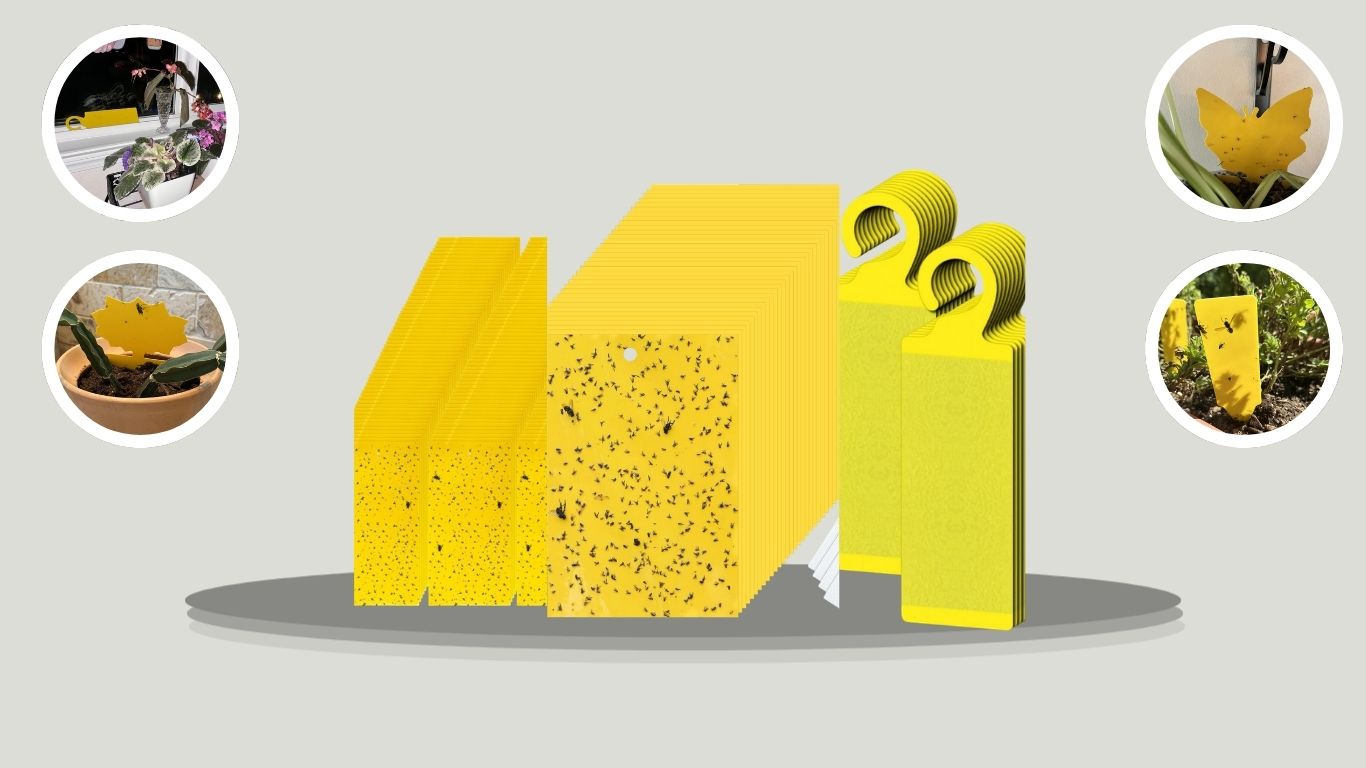
Cucumber beetles can quickly damage cucumbers, squash, melons, pumpkins, and other garden plants by feeding on leaves, flowers, and young stems. A well-placed sticky trap can help monitor beetle activity and reduce the number of flying pests around vulnerable plants. The best cucumber beetle traps use bright yellow surfaces and strong adhesive to attract and capture insects without complicated setup. In this guide, we review nine practical sticky trap options for gardens, greenhouses, raised beds, and indoor growing areas to help you choose an effective pest-control solution.
1. MAXGUARD Yellow Stake Sticky Insect Traps
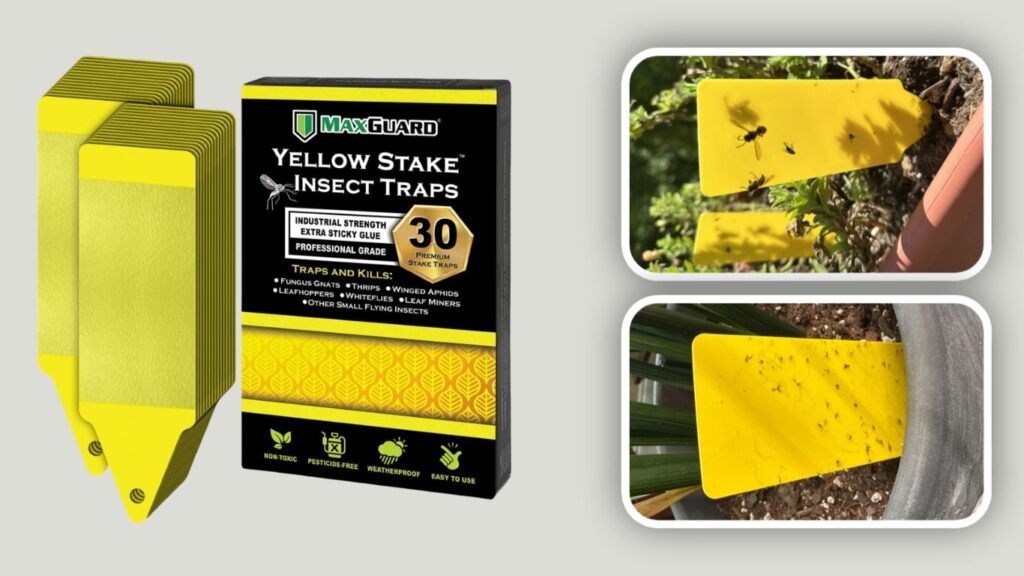
MAXGUARD Yellow Stake Sticky Insect Traps provide a straightforward way to monitor and capture cucumber beetles and other flying garden pests around vulnerable plants. Their bright yellow surface helps draw insects toward the adhesive area, while the stake-style design makes them easy to position near cucumbers, squash, melons, pumpkins, and other garden plants. They are particularly convenient for gardeners who want a pesticide-free trapping method that requires little maintenance.
Key Features
- Bright yellow insect-attracting surface
- Double-sided sticky design
- Built-in stake for soil placement
- Suitable for indoor and outdoor plants
- No insecticide or bait required
- Useful around vegetable gardens and greenhouses
- Easy to replace when covered with insects
Why It’s Best for Garden Beds
The stake format makes MAXGUARD especially practical for cucumber plants growing in raised beds, containers, and traditional garden rows. Each trap can be placed close to foliage where adult beetles are active without requiring separate holders or complicated installation.
This positioning also makes it easier to monitor pest pressure. If several cucumber beetles begin appearing on the adhesive surface, gardeners get an early indication that closer plant inspection may be necessary.
The yellow color works well for a broad range of flying plant pests, making these traps useful beyond cucumber beetles.
Trapping Performance & Durability
The rigid design helps keep the adhesive area upright rather than allowing the trap to fold against plant leaves. Double-sided adhesive provides capture space from either direction as insects move around the plant.
Outdoor performance will naturally depend on dust, rain, and the number of insects collected. Replacing a trap once the adhesive becomes dirty or heavily covered helps maintain trapping efficiency.
Overall Verdict
MAXGUARD Yellow Stake Sticky Traps are a strong all-around choice for gardeners who want simple cucumber beetle monitoring without spraying plants. Their stake design, bright yellow color, and large adhesive surface make them particularly convenient around individual cucurbit plants.
They work best as part of a broader pest-management approach that includes regular plant inspection and early action when beetle numbers begin increasing.
2. Yellow Sticky Trap for Flying Insects
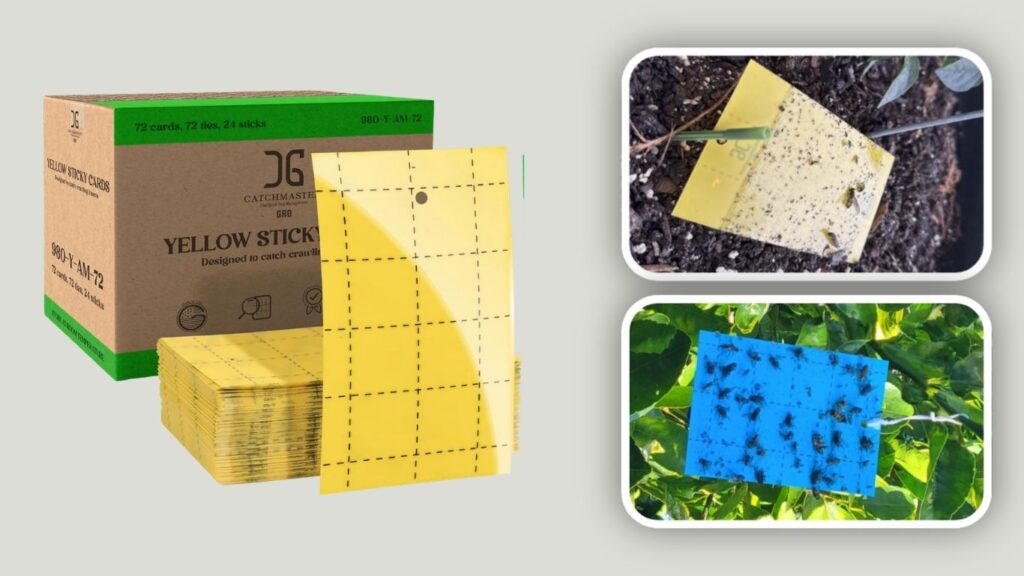
These Yellow Sticky Traps offer a simple and adaptable method for capturing flying insects around cucumbers and other vegetables. Their flat yellow cards provide a large adhesive surface that can be positioned near plant foliage, along garden rows, or inside greenhouses. Because they do not require electricity, liquid bait, or chemical insecticides, they are easy to incorporate into an existing garden pest-monitoring routine.
Key Features
- Bright yellow sticky cards
- Double-sided adhesive surface
- Suitable for gardens and greenhouses
- No electricity required
- No chemical spray application
- Can monitor multiple flying pests
- Simple hanging or positioning options
Why It’s Best for Flexible Placement
One advantage of flat sticky cards is the ability to position them according to the garden layout. They can be hung near cucumber vines, attached to stakes, or placed around greenhouse crops.
This flexibility matters because cucumber beetles are mobile adults that can move throughout a planting area. Rather than relying on one central trap, gardeners can spread several cards around vulnerable plants.
The traps also make pest activity visible. Checking the cards regularly can help determine whether insect numbers appear to be increasing or decreasing.
Trapping Performance & Durability
A large double-sided adhesive surface provides more opportunity to intercept insects approaching from different directions. The simple design contains no mechanical components that can fail, so performance mainly depends on adhesive condition and correct positioning.
Outdoor dust, leaves, and trapped insects will gradually cover the sticky surface. Moving or replacing cards as conditions change can help maintain effectiveness throughout the growing season.
Overall Verdict
These Yellow Sticky Traps are a useful choice for gardeners who prioritize flexibility and uncomplicated pest monitoring.
Their broad adhesive surface can be positioned wherever cucumber beetles are most active, while the pesticide-free design makes them easy to integrate around edible garden plants.
For best results, use them to monitor adult beetle activity while also checking cucumber leaves, flowers, and stems for feeding damage.
3. Catchmaster Yellow Adhesive Traps for Garden & Greenhouse
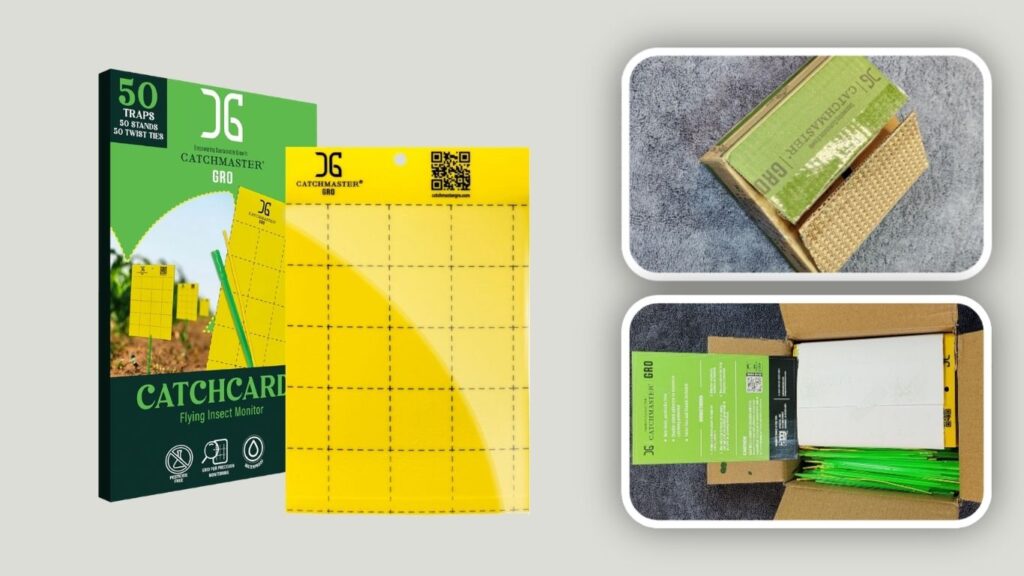
Catchmaster Yellow Adhesive Traps are designed for gardeners who want a more structured approach to monitoring flying plant pests. The bright yellow cards use sticky surfaces rather than insecticides, allowing them to capture insects as they move through gardens, greenhouses, hydroponic systems, and growing areas. Their versatile design makes them particularly useful when cucumber beetle monitoring is needed across multiple plants rather than a single container.
Key Features
- Bright yellow monitoring surface
- Double-sided adhesive
- No additional bait required
- Suitable for gardens and greenhouses
- Can be positioned around plant canopies
- Useful for multiple flying plant pests
- Designed for repeated garden monitoring
Why It’s Best for Greenhouses
Greenhouses can make pest monitoring challenging because insects may move between closely spaced plants before damage becomes obvious.
Catchmaster’s yellow cards make it easier to monitor flying pests across different parts of the growing area. Gardeners can distribute traps at strategic points and compare what is being captured.
For cucumbers grown under cover, positioning cards near or slightly above the crop canopy can provide an early indication that adult cucumber beetles or other flying pests are present.
The flat cards are also useful where traditional stake traps may be difficult to position.
Trapping Performance & Durability
The sticky surface works continuously without batteries or maintenance beyond inspection and replacement. Because both sides can catch insects, the trap remains active regardless of which direction pests approach.
The cards can also be repositioned when plants grow or when pest activity shifts to another part of the greenhouse.
Once the surface becomes crowded with insects, dust, or plant material, replacement helps restore a clean capture area.
Overall Verdict
Catchmaster Yellow Adhesive Traps are particularly appealing for gardeners who want dependable monitoring across a greenhouse or larger growing area.
Their flexible positioning, visible yellow surface, and double-sided adhesive make them useful for identifying pest activity early.
For cucumber beetles, they are best viewed as a monitoring and population-reduction tool used alongside plant inspection, barriers, trap crops, or other appropriate controls.
4. LFSYS Yellow Sticky Traps for Plants
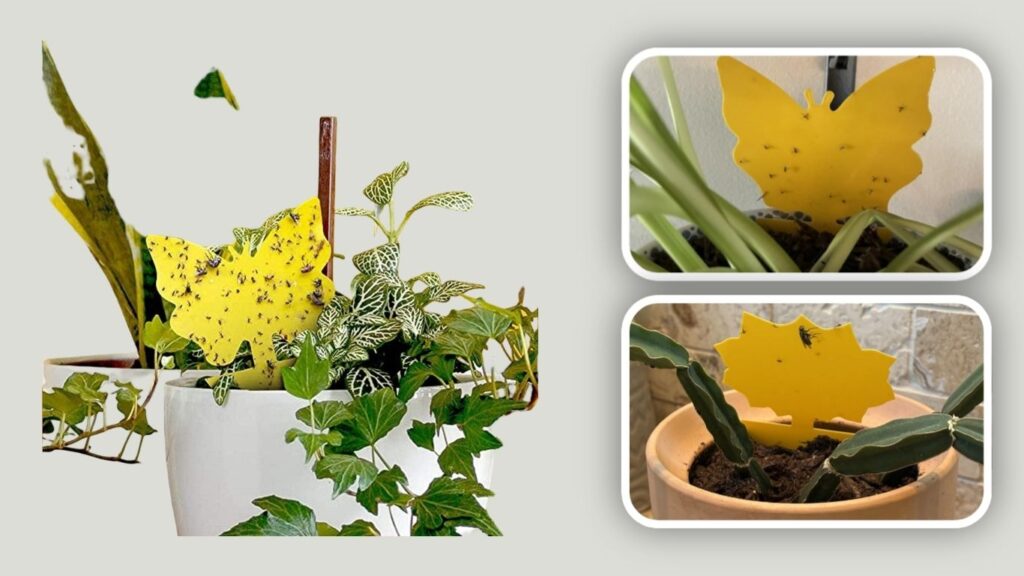
LFSYS Yellow Sticky Traps are designed for convenient placement near plants where flying pests tend to gather. Their bright yellow surfaces and adhesive coating make them useful around cucumbers, seedlings, container vegetables, and greenhouse crops. The uncomplicated design makes them especially suitable for gardeners who want to monitor pest activity without mixing sprays or setting complicated traps.
Key Features
- Yellow pest-attracting surface
- Sticky insect-capture coating
- Designed for placement around plants
- Suitable for indoor and outdoor growing
- No electricity or liquid bait needed
- Useful for vegetable and ornamental plants
- Easy visual pest monitoring
Why It’s Best for Small Growing Areas
LFSYS traps are well suited to compact gardens, balconies, small greenhouses, and container-growing spaces where large pest-control equipment may be unnecessary.
Placing traps close to cucumber foliage allows gardeners to monitor the area without taking up substantial growing space.
Their passive design is another benefit. After placement, they continue working without timers, refills, or power sources.
Gardeners can simply inspect the sticky surface during routine watering and plant checks to see whether beetles or other flying pests are appearing.
Trapping Performance & Durability
Sticky traps work most effectively when the adhesive remains exposed and clean. Positioning them so leaves do not constantly touch the surface helps preserve usable trapping space.
Because cucumber vines grow quickly, periodically adjusting trap height may help keep the adhesive area close to active foliage.
Outdoor traps may require more frequent replacement if exposed to dust, rain, or heavy insect populations, while protected greenhouse placements may remain usable longer.
Overall Verdict
LFSYS Yellow Sticky Traps offer a simple option for monitoring cucumber beetles in smaller gardens and controlled growing environments.
Their greatest strengths are ease of installation, minimal maintenance, and compact placement around plants.
They are particularly practical for gardeners who want to identify pest activity early before deciding whether additional cucumber beetle control measures are necessary.
5. MaxGuard Yellow Hanging Sticky Traps
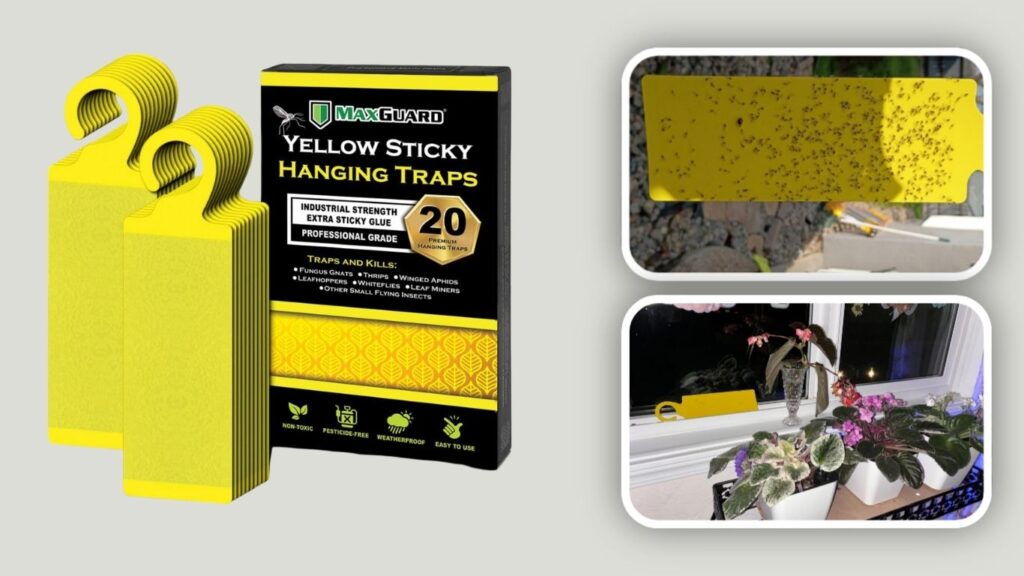
MaxGuard Yellow Hanging Sticky Traps provide broader coverage than small soil stakes by allowing the adhesive cards to hang near or above plant foliage. This makes them useful around climbing cucumber vines, trellises, greenhouses, and larger vegetable beds. Their yellow coloring attracts a variety of flying insects, while the sticky surface captures pests that make contact with either side.
Key Features
- Hanging trap configuration
- Bright yellow adhesive surface
- Double-sided insect capture
- Suitable for gardens and greenhouses
- No pesticide spray required
- Useful around trellised plants
- Can be repositioned as vines grow
Why It’s Best for Trellised Cucumbers
Cucumbers commonly grow upward on trellises, meaning pest activity can occur well above soil level. Hanging traps provide an advantage because they can be positioned closer to the leaves, flowers, and growing tips where adult cucumber beetles may be active.
The trap height can also be adjusted as the vines develop throughout the season.
This makes hanging cards more versatile than fixed low-level traps when dealing with tall cucumber plants or greenhouse vines.
Spacing multiple traps along a row can provide a better picture of where beetle pressure is greatest.
Trapping Performance & Durability
A hanging card exposes a larger section of adhesive to flying insects without occupying planting space around the roots.
Double-sided surfaces also increase the available capture area. In sheltered growing environments, the traps can remain positioned for extended monitoring periods.
Strong wind may cause hanging cards to contact leaves or structures, so choosing a relatively stable mounting point helps keep the adhesive exposed.
Replace individual traps when they become crowded or contaminated.
Overall Verdict
MaxGuard Hanging Sticky Traps are an excellent format for climbing cucumber plants and larger garden layouts.
Their adjustable hanging height makes it easier to keep traps close to the active plant canopy as vines grow.
Gardeners who use trellises or greenhouse supports may find this configuration more practical than soil stakes, particularly when monitoring adult cucumber beetles across several plants.
6. Catchmaster Outdoor & Greenhouse Sticky Insect Traps
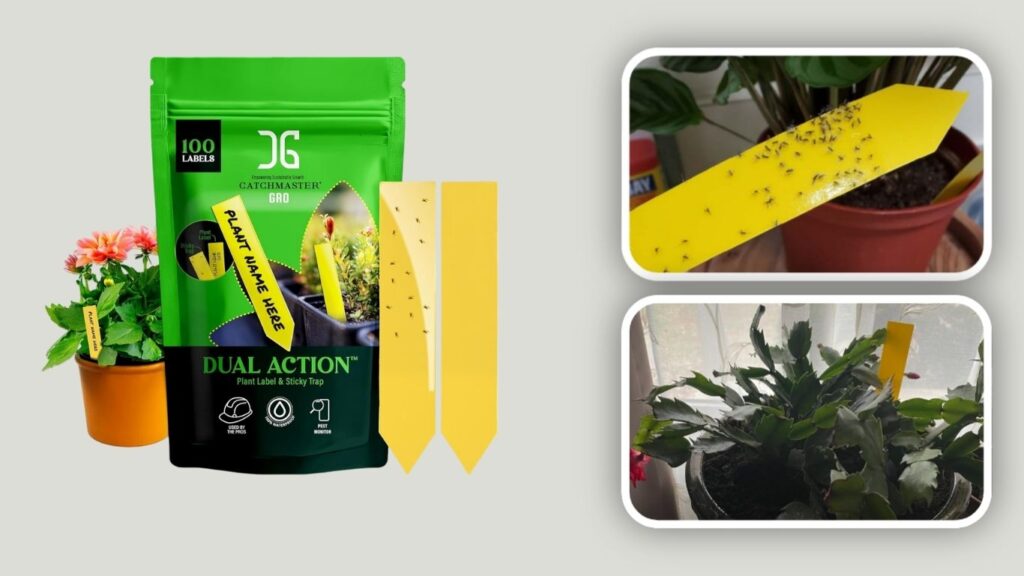
Catchmaster Outdoor & Greenhouse Sticky Insect Traps provide a versatile solution for growers managing cucumbers in gardens, greenhouses, or hydroponic environments. Their yellow adhesive surfaces help monitor flying pest activity without requiring additional bait. They can be incorporated into routine scouting, making it easier to notice changes in insect numbers before feeding damage becomes severe.
Key Features
- Bright yellow sticky surface
- Designed for outdoor and greenhouse use
- No separate insect bait required
- Suitable for pest monitoring
- Broad adhesive capture area
- Works without electricity
- Useful around vegetables and live plants
Why It’s Best for Regular Pest Monitoring
Regular monitoring is one of the most important parts of cucumber beetle management, especially when cucumber plants are young and more vulnerable to feeding.
Catchmaster traps make monitoring straightforward because captured insects remain visible on the card. Gardeners can inspect the traps alongside leaves and flowers during routine garden checks.
Using several traps can also help reveal where beetles are entering or concentrating within the growing area.
This information can help gardeners focus additional control measures where pest pressure is highest.
Trapping Performance & Durability
The traps operate continuously once installed, so there is no need to activate them each day.
Positioning is important. Keeping the cards near the crop canopy while preventing leaves from sticking to them preserves more usable adhesive area.
Outdoor weather, dust, and insect accumulation eventually reduce trapping efficiency. Inspecting the cards regularly makes it easy to determine when replacement is necessary.
Overall Verdict
Catchmaster Outdoor & Greenhouse Traps are particularly useful for gardeners who take a monitoring-first approach to cucumber beetle control.
The visible adhesive cards allow pest activity to be tracked over time while also capturing some adult insects.
Their simple, pesticide-free operation makes them easy to combine with row covers, hand removal, garden sanitation, or other cucumber beetle management strategies.
7. Qualirey Yellow Sticky Houseplant Stakes
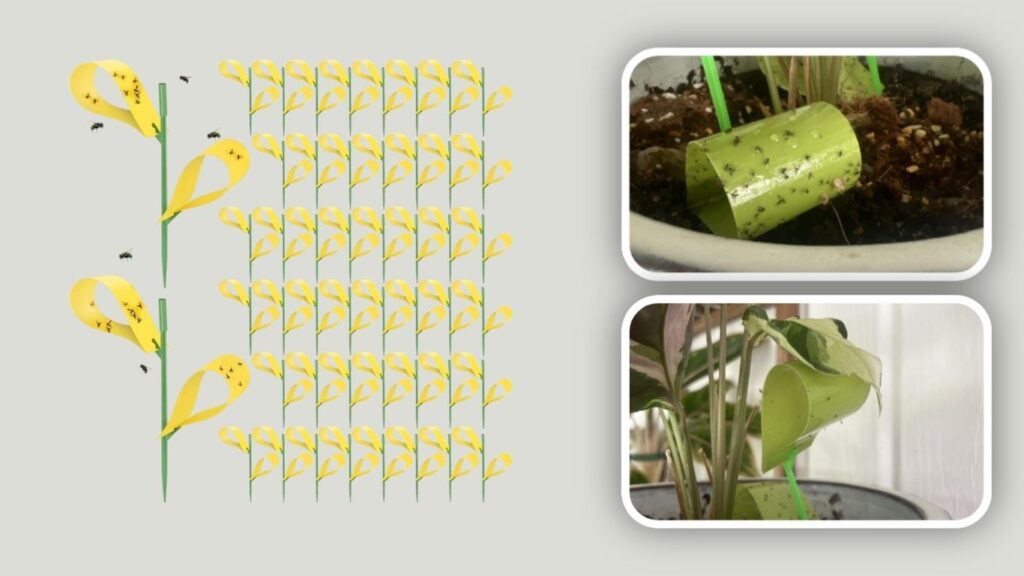
Qualirey Yellow Sticky Stakes provide an easy soil-mounted trapping system that can also be useful around container cucumbers, seedlings, and compact vegetable beds. Their bright yellow surfaces are designed to attract flying plant pests, while the sticky coating captures insects on contact. The stake-style construction eliminates the need for strings, clips, or separate supports.
Key Features
- Built-in soil stakes
- Bright yellow trap surface
- Adhesive insect capture
- Compact design
- Easy placement near individual plants
- No powered components
- Suitable for containers and growing beds
Why It’s Best for Container Cucumbers
Container-grown cucumbers often have limited space around the base of the plant. A compact stake trap fits naturally into the pot without taking up the room required by a freestanding pest-control device.
The trap can be placed close enough to the plant to monitor insects arriving around the leaves and stems.
This is especially convenient on patios and balconies where cucumber plants may be grown individually rather than in long garden rows.
Because the traps are removable, they can also be relocated as pest activity changes.
Trapping Performance & Durability
The fixed stake helps keep the card upright and provides consistent exposure to flying pests. Placing the trap slightly away from leaves prevents vines from accidentally sticking to the adhesive.
As cucumber plants grow taller, additional traps may be needed higher in the canopy if beetle activity shifts upward.
Like other adhesive traps, performance gradually decreases as the surface becomes covered with insects, dirt, or debris, making timely replacement important.
Overall Verdict
Qualirey Yellow Sticky Stakes are particularly convenient for container gardens, raised planters, and smaller cucumber-growing areas.
Their compact soil-mounted format requires virtually no setup and provides an easy way to monitor adult pest activity close to individual plants.
For gardeners growing only a few cucumbers, this targeted approach can be more practical than installing large hanging traps throughout the area.
8. Double-Sided Yellow Sticky Insect Traps
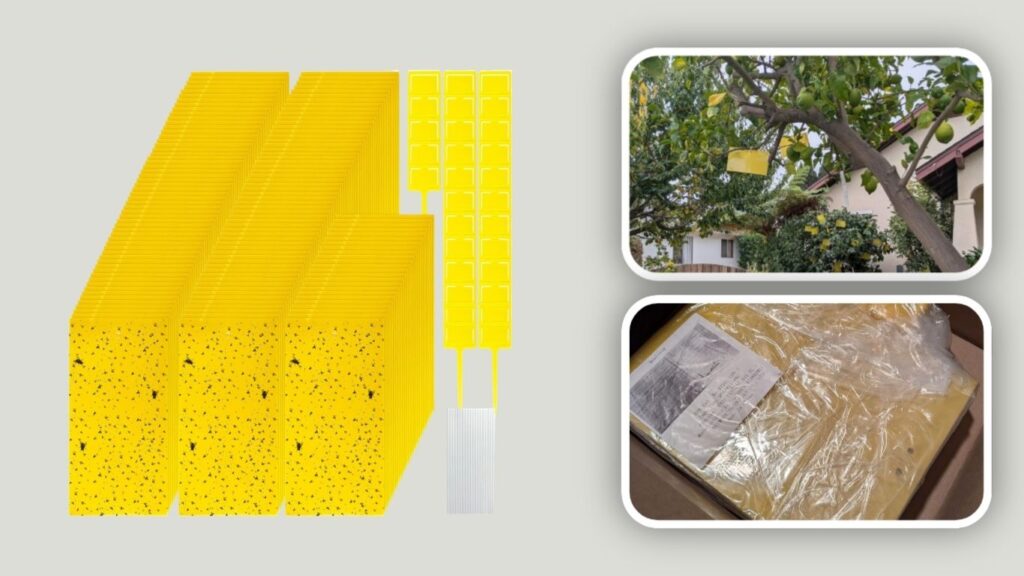
These Double-Sided Yellow Sticky Insect Traps provide a large capture surface for gardeners dealing with cucumber beetles and other flying pests around vegetables. Their two-sided design increases the usable adhesive area, allowing insects approaching from either direction to become trapped. They are suitable for outdoor gardens, greenhouses, raised beds, and other areas where pesticide-free pest monitoring is preferred.
Key Features
- Double-sided adhesive coating
- Bright yellow visual attraction
- Large capture surface
- Suitable for indoor and outdoor growing
- No electricity required
- No liquid bait needed
- Can monitor several flying pest species
Why It’s Best for Broad Coverage
When several cucumber plants grow close together, a larger sticky surface can be more practical than placing very small traps beside every plant.
These double-sided cards can be positioned between plants or along the edges of the crop to intercept insects moving through the area.
Because both surfaces remain exposed, gardeners get useful capture space without needing two separate cards in the same location.
This format is particularly helpful in raised beds or greenhouse rows where plants form a continuous canopy.
Trapping Performance & Durability
The combination of bright yellow coloring and adhesive on both sides makes these traps suitable for continuous passive monitoring.
Unlike traps that require attractant refills, the cards are ready to work as soon as the protective backing is removed.
Environmental conditions are the main factor affecting longevity. Dust, plant debris, rain, and high numbers of captured insects can gradually cover the adhesive.
Regular inspection makes it easy to replace only the cards that are no longer sufficiently sticky.
Overall Verdict
Double-Sided Yellow Sticky Traps are a practical choice when coverage area matters.
Their large, two-sided adhesive surface offers plenty of room for catching flying pests while providing an easy visual indicator of insect activity.
For cucumber growers managing several plants together, placing these traps strategically around the crop can provide useful support for a broader beetle-control program.
9. Yellow Sticky Traps with Plastic Holders
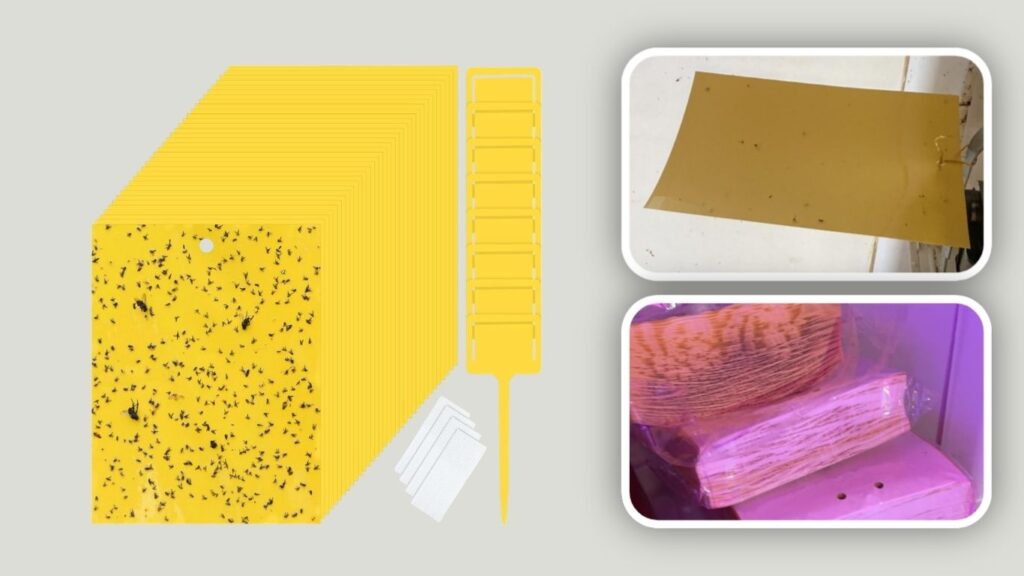
Yellow Sticky Traps with Plastic Holders combine replaceable adhesive cards with supportive holders that make positioning around plants easier. This configuration can be particularly useful for cucumber growers who want traps to remain upright and consistently positioned despite watering, plant growth, or routine garden maintenance. The holders can be distributed around containers, raised beds, greenhouse plants, or small garden plots.
Key Features
- Yellow adhesive trap cards
- Plastic support holders
- Stable positioning near plants
- Suitable for indoor and outdoor use
- Easy card replacement
- No chemical insecticide required
- Useful for ongoing pest monitoring
Why It’s Best for Reusable Placement
The plastic holder is the main advantage of this design. Instead of replacing an entire stake system every time a sticky card becomes full, gardeners can maintain a consistent trap position and change the adhesive portion when necessary.
Stable positioning is also useful around actively growing cucumber vines. The trap can remain close to the plant without easily falling into the foliage.
For gardeners who monitor the same raised bed or greenhouse area throughout the season, reusable holders can make repeated trap changes more organized.
Trapping Performance & Durability
The yellow cards provide the actual trapping surface, while the plastic holders keep them elevated and visible to flying pests.
Proper placement near cucumber foliage gives the traps a better chance of intercepting adult insects moving through the crop.
Because the support structure is separate from the sticky card, gardeners can replace heavily contaminated cards while continuing to use the same holders.
Keeping the traps out of direct contact with leaves helps preserve both the adhesive and the plant.
Overall Verdict
Yellow Sticky Traps with Plastic Holders are a strong option for gardeners who want a more organized, reusable trapping setup.
The supportive holders simplify positioning, while replaceable sticky cards provide continuous pest monitoring throughout the cucumber-growing season.
For raised beds, greenhouse cucumbers, and container gardens where traps need to remain in consistent locations, this design offers a useful balance between convenience and practical pest monitoring.
FAQs
1. Do yellow sticky traps work for cucumber beetles?
Yes. Adult cucumber beetles can be attracted to yellow and may be captured on yellow sticky traps. These traps are particularly useful for monitoring beetle activity and reducing some adult numbers. However, they should generally be combined with other cucumber beetle management methods rather than used as the only control.
2. Where should I put sticky traps for cucumber beetles?
Position traps close to cucumber plants, generally within or just above the plant canopy where adult beetles are active. For trellised cucumbers, hanging traps can be raised as the vines grow. Avoid placing sticky surfaces directly against leaves or flowers.
3. When should I start using cucumber beetle traps?
Start monitoring early, especially around the seedling and young-plant stages. Early detection is important because young cucumber plants are more vulnerable to feeding damage. Having traps in place before beetle numbers become high can make changes in pest activity easier to notice.
4. How often should yellow sticky traps be replaced?
Replace a trap when much of its adhesive surface becomes covered with insects, dust, leaves, or other debris. Outdoor conditions may require more frequent replacement than protected greenhouse conditions. Checking traps whenever you inspect or water plants is a simple way to monitor their condition.
5. Can sticky traps completely eliminate cucumber beetles?
No. Sticky traps can capture adult beetles and help monitor pest pressure, but they are generally not a complete cucumber beetle-control system. Combining traps with regular plant inspection, row covers when appropriate, hand removal, garden sanitation, and other suitable control methods provides a more comprehensive approach.