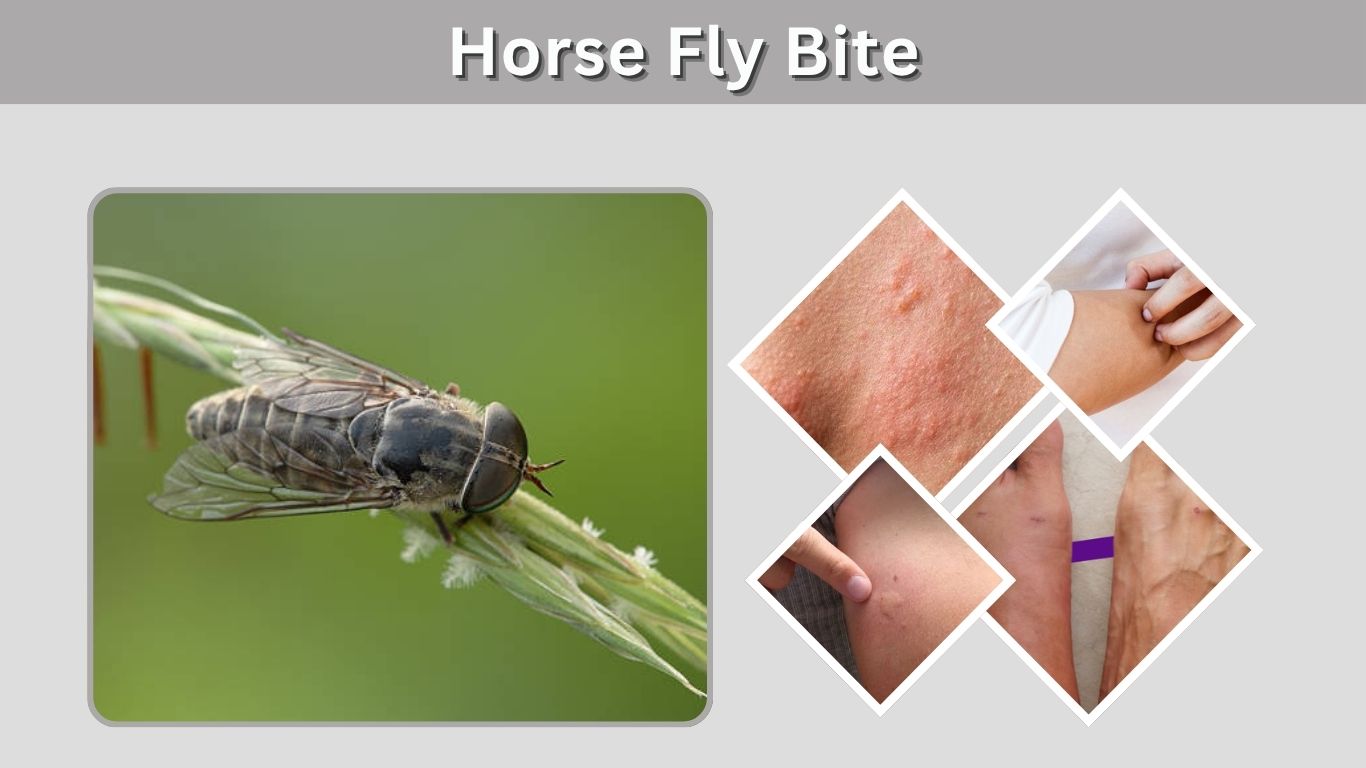
A horse fly bite can be surprisingly painful compared with many other insect bites. Instead of quietly piercing the skin like a mosquito, a female horse fly uses cutting mouthparts to break the skin and feed on blood. This can leave a painful, swollen, red or discolored bump that may itch as it heals. Most horse fly bites improve within several days, but occasionally they can cause significant swelling, an allergic reaction, or an infection. Knowing what a horse fly bite looks like and how to treat it can make recovery more comfortable and help you recognize warning signs.
What Does a Horse Fly Bite Look Like?
A horse fly bite commonly appears as a raised red, pink, or discolored bump. The surrounding skin may become swollen and tender, and a small amount of blood can sometimes be visible immediately after the bite.
Unlike many mosquito bites, a horse fly bite is often painful the moment it happens. This occurs because the fly cuts or tears the skin rather than simply inserting a needle-like feeding tube.
The reaction can vary from person to person. Some people develop only a small swollen bump, while others experience a larger area of redness, warmth, itching, or inflammation.
A single horse fly may leave one obvious bite rather than the large clusters commonly associated with some other biting insects.
Why Do Horse Flies Bite Humans?
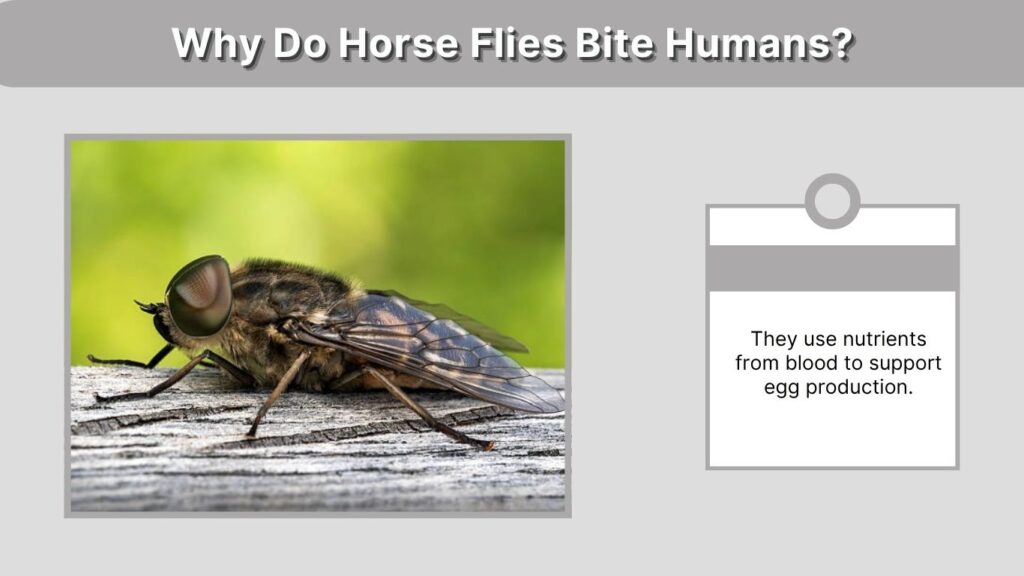
Only female horse flies require blood meals. They use nutrients from blood to support egg production. Male horse flies mainly feed on nectar and pollen and do not need blood meals.
Humans are not their only targets. Horse flies commonly feed on large mammals such as horses and cattle, but they may also attack people when the opportunity arises.
Horse flies are particularly common around warm, wet environments and areas close to livestock or water. They are strong fliers and may actively pursue moving animals or people.
Horse Fly Bite Symptoms
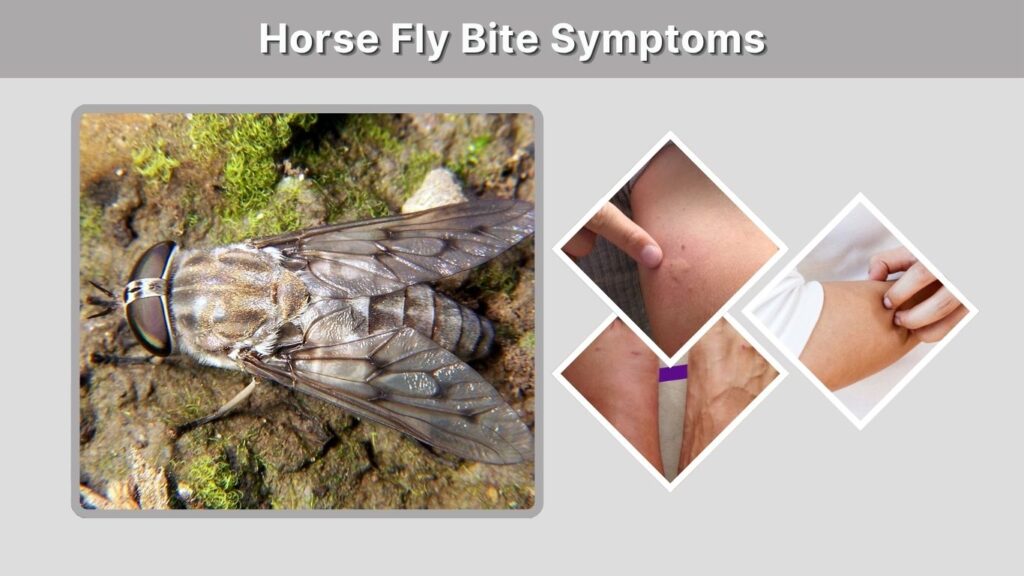
Pain is usually the first noticeable symptom. Afterward, the bite site may develop swelling, tenderness, itching, redness or skin discoloration.
A typical uncomplicated reaction may include a raised bump, localized pain, mild bleeding, itching, warmth and swelling.
Some people develop more noticeable inflammation because their immune system reacts strongly to proteins introduced during feeding.
The symptoms should generally begin improving rather than becoming progressively worse.
Stages of a Horse Fly Bite
There are no medically defined stages that every horse fly bite follows, but the healing process commonly follows a general pattern.
Immediately after the bite, you may feel a sharp or burning pain and notice a small amount of bleeding. During the following hours, a raised, swollen bump may develop.
Over the next day or two, tenderness, redness and itching may become more noticeable as the immune response develops. After that, an uncomplicated bite should gradually become less painful and swollen.
Most horse fly bites heal within several days.
A bite that continues worsening, becomes increasingly painful, develops drainage, or remains significantly inflamed requires more attention because infection or another complication may be developing.
How to Treat a Horse Fly Bite
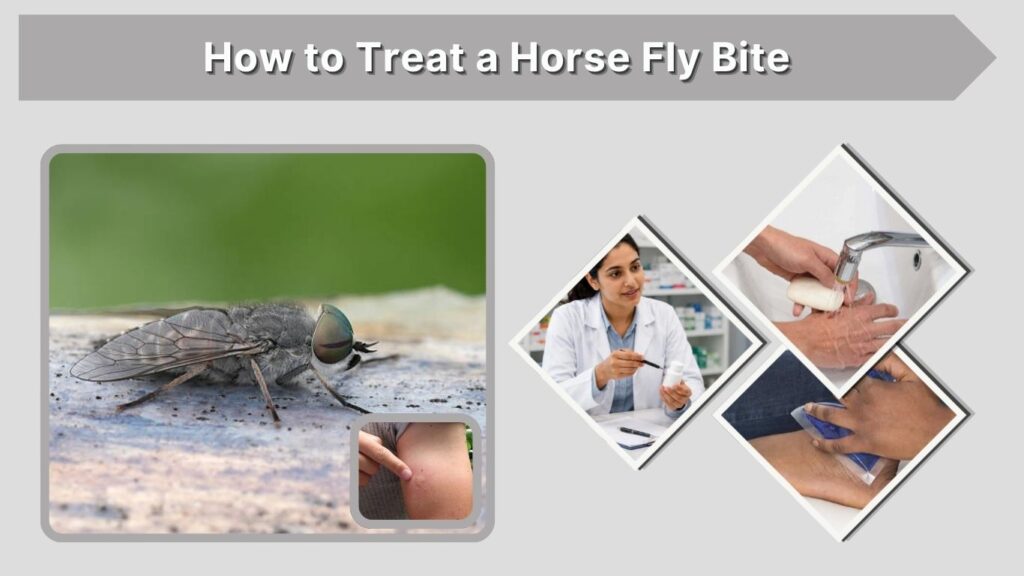
Most uncomplicated horse fly bites can be managed at home. The main goals are to clean the wound, reduce swelling, control discomfort and prevent infection.
- Wash the bite gently with soap and water.
- Apply an ice pack wrapped in cloth for about 20 minutes to reduce swelling.
- Elevate the affected area when practical.
- Avoid scratching or picking the bite.
- An appropriate over-the-counter antihistamine may help itching.
- An appropriate over-the-counter pain reliever may help discomfort.
- Follow medication labels and ask a pharmacist or healthcare professional if you are unsure what is appropriate for you.
Keeping the wound clean is particularly important because scratching can break the skin further and increase the possibility of bacterial infection.
How Long Does a Horse Fly Bite Last?
Most uncomplicated horse fly bites improve and disappear within a matter of days.
The exact healing time varies according to the severity of the bite, the person’s immune response, how much swelling develops, and whether the area has been scratched.
A larger local reaction may take longer to settle.
If a bite is still severely swollen, painful or itchy after many days—or symptoms are becoming worse instead of better—medical advice is appropriate.
Horse Fly Bite Swelling and Allergic Reactions
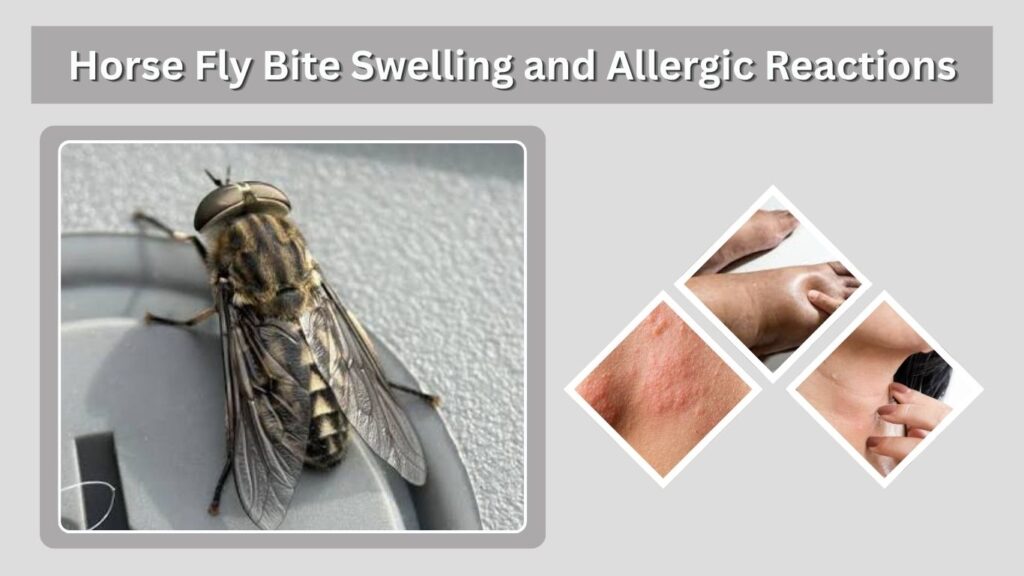
Some swelling around the bite is common. A stronger allergic reaction can cause more extensive swelling, spreading redness or discoloration, itching and hives.
A severe allergic reaction is uncommon but requires emergency treatment. Warning signs include swelling of the lips, tongue or throat, difficulty breathing, wheezing, dizziness, fainting, vomiting, diarrhea or other rapidly developing whole-body symptoms.
If these occur, seek emergency medical help immediately.
People who have previously experienced significant reactions to insect bites should discuss prevention and emergency planning with a healthcare professional.
Can a Horse Fly Bite Become Infected?
Yes. Scratching or repeatedly touching the damaged skin can introduce bacteria and lead to an infection.
Warning signs include redness or discoloration that continues spreading, increasing warmth and pain, pus or drainage, significant swelling, red streaking, fever, chills or swollen lymph nodes.
A healthcare professional should evaluate suspected infections because antibiotics may sometimes be necessary.
Horse flies can also transmit tularemia in rare circumstances. A worsening skin sore accompanied by fever, chills, headache, muscle aches or other systemic symptoms should be medically evaluated.
How to Prevent Horse Fly Bites
Reducing exposed skin is one of the simplest preventive measures. Wear long pants, long sleeves and a hat when spending time in areas with heavy horse fly activity.
Light-colored clothing may also be preferable because horse flies are often attracted to darker moving objects.
Insect repellents containing established active ingredients such as DEET or picaridin may provide additional protection. Avoiding marshy areas, livestock areas and other horse fly habitats during periods of heavy activity can further reduce exposure.
FAQs
Do horse flies bite humans?
Yes. Female horse flies feed on blood and can bite humans as well as horses, cattle and other mammals. Their cutting mouthparts make their bites noticeably painful.
How painful is a horse fly bite?
A horse fly bite can cause immediate sharp or burning pain because the insect cuts the skin during feeding. Pain levels vary, but horse fly bites are generally more noticeable than mosquito bites.
What should I put on a horse fly bite?
Start by washing the area with soap and water. A cloth-wrapped cold pack can reduce swelling and discomfort. An appropriate antihistamine may help itching, while an appropriate pain reliever may help soreness.
When should I worry about a horse fly bite?
Seek medical advice if swelling or pain keeps getting worse, the wound produces pus, redness spreads, you develop fever, or symptoms persist longer than expected. Emergency care is necessary for difficulty breathing, throat or tongue swelling, fainting, or other signs of a severe allergic reaction.
Why is my horse fly bite still swollen?
Some people develop stronger local inflammatory reactions than others. Mild swelling can be part of normal healing, but swelling that continues increasing or occurs with warmth, severe pain, drainage, fever or spreading redness may indicate infection or another complication and should be medically evaluated.