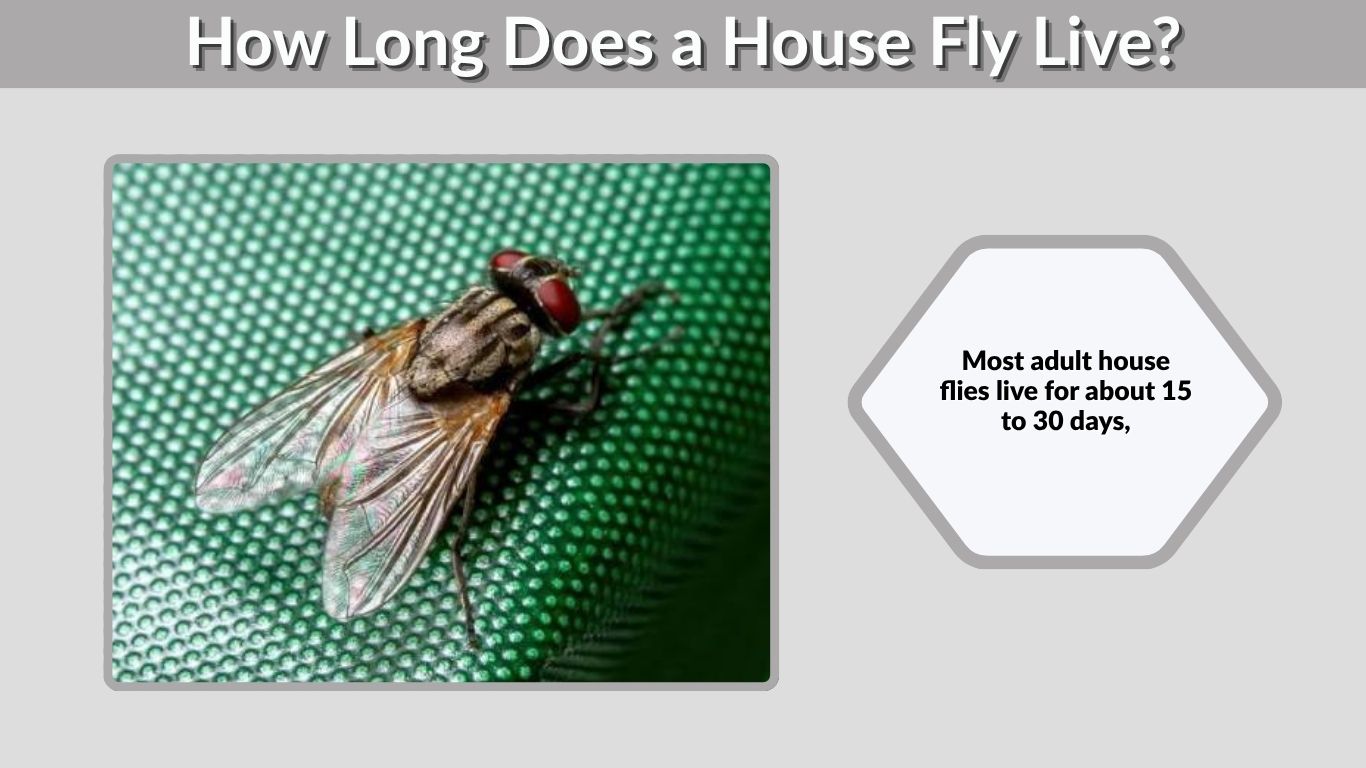
A house fly may seem like it stays around forever, but its actual life is surprisingly short. So, how long does a house fly live? Most adult house flies live for about 15 to 30 days, although some may survive longer when food, water, and comfortable temperatures are available. A fly living inside your house can potentially survive for several weeks while reproducing rapidly. Understanding the house fly lifespan, life cycle, and survival needs can help explain why a few flies can quickly become a household problem.
How Long Does a House Fly Live?
The average adult house fly usually lives for roughly 15 to 30 days. Under especially favorable conditions, some individuals may survive for a month or longer. Temperature, access to food and moisture, predators, and environmental conditions all affect longevity. Although individual flies have short lives, their rapid reproduction can make an infestation continue much longer.
Average House Fly Lifespan
A typical house fly does not live for several months under ordinary household conditions. Its adult life is generally measured in weeks.
Typical lifespan estimates include:
- Average adult lifespan: About 15–30 days
- Favorable indoor conditions: Around 30 days or sometimes longer
- Hot or stressful environments: Lifespan may be considerably shorter
- Complete life cycle: Often completed within several weeks
- Multiple generations: Possible during warm periods
This short lifespan is compensated for by the fly’s ability to reproduce rapidly.
Do Female House Flies Live Longer?
Male and female house flies have relatively similar adult lifespans, although survival can vary considerably among individuals. Female flies must obtain enough nutrients to produce eggs, while environmental stresses can shorten the lives of both sexes.
A female can lay multiple batches of eggs during her adult life. Therefore, even a female that survives only a few weeks may contribute hundreds of eggs under suitable conditions.
Can a House Fly Live for Months?
It is unusual for an ordinary adult house fly to remain active inside a home for several months. When homeowners notice flies over a long period, they are usually seeing different generations, rather than one unusually old fly.
Continuous access to breeding material allows new adults to replace older flies, making the problem appear endless.
How Long Can a Fly Live in a House?
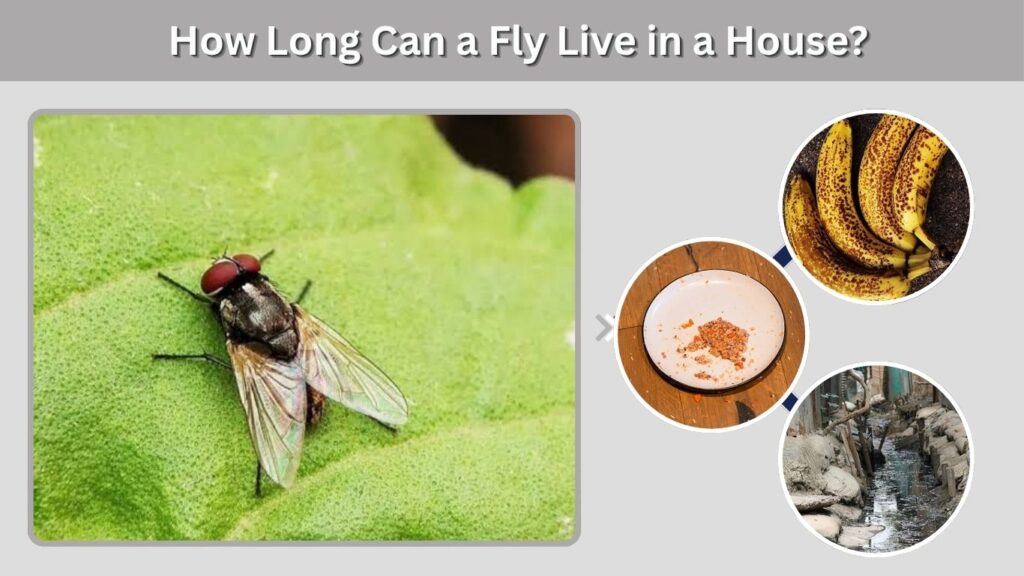
A fly living indoors can survive for several weeks if your home provides suitable temperatures, moisture, food, and sheltered resting places. Houses may actually protect flies from some outdoor predators and weather. However, indoor survival depends heavily on whether flies can find water and suitable food sources.
What Helps Flies Survive Indoors?
Several household conditions can extend the time flies remain active:
- Open garbage containers
- Food crumbs and spills
- Overripe fruit
- Pet food
- Dirty drains
- Organic waste
- Moist garbage
- Animal waste
- Warm indoor temperatures
- Accessible water or other liquids
Removing these resources makes indoor conditions much less favorable.
Where Do House Flies Hide?
House flies normally remain in accessible areas rather than building permanent nests. During the day, they commonly spend time near food, windows, doors, garbage containers, and kitchens.
At night, flies usually become less active and rest on ceilings, walls, curtains, light fixtures, wires, and other elevated surfaces. Their preferred resting areas are generally protected from drafts and disturbances.
Will a Fly Eventually Die Inside Your House?
Yes. An adult house fly trapped inside will eventually die even if you do nothing. However, waiting for this to happen is not always practical.
If food and moisture are readily available, it could remain active for weeks. More importantly, the presence of several flies may indicate that breeding is happening nearby. Removing one adult fly will not solve an infestation if eggs, maggots, or pupae remain elsewhere.
House Fly Life Cycle: From Egg to Adult
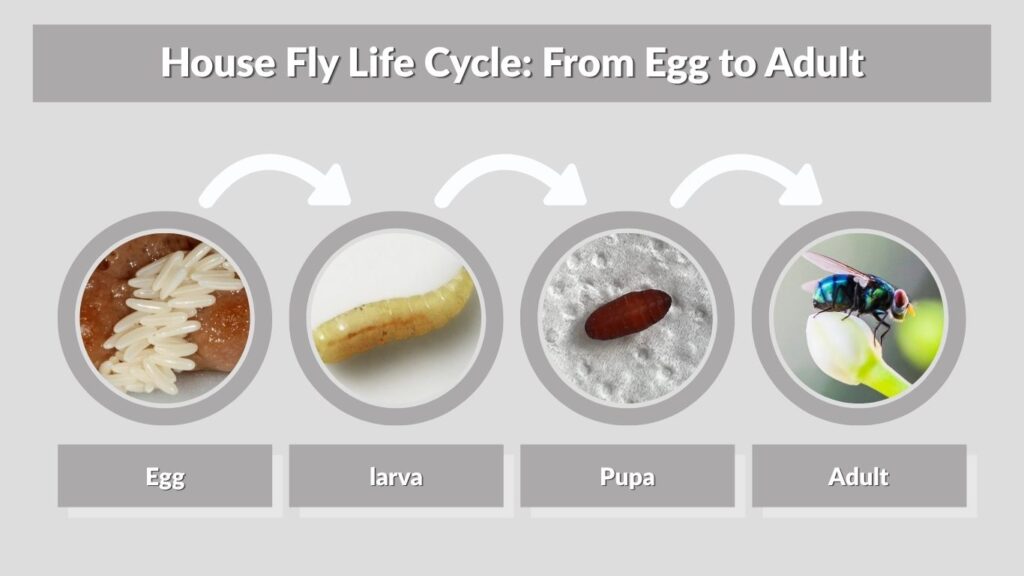
The adult flying around your kitchen represents only one part of the house fly life cycle. House flies undergo complete metamorphosis, passing through egg, larval, pupal, and adult stages. Under warm conditions, development can happen quickly, which explains how fly populations can suddenly increase.
Four Stages of a House Fly’s Life
The life cycle includes:
- Egg: Females deposit tiny white eggs on moist, decaying organic material.
- Larva: Eggs hatch into larvae, commonly called maggots, which feed on organic matter.
- Pupa: Mature larvae move toward a somewhat drier area and form pupae.
- Adult: Fully developed flies emerge and soon begin feeding and reproducing.
Warm temperatures generally accelerate development.
How Quickly Can House Flies Reproduce?
House flies can reproduce remarkably quickly. Females seek decomposing organic matter where their offspring will have immediate access to food.
Garbage, manure, rotting food, and similar materials can become breeding sites. Eggs may hatch within about a day when temperatures are favorable. The larvae then feed and develop before reaching the pupal stage.
Because new generations can develop rapidly, eliminating breeding material is usually more effective than simply killing visible adults.
How Many Eggs Can a House Fly Lay?
A female house fly can lay many eggs during her short adult life. Eggs are normally deposited in batches rather than individually.
This reproductive ability explains why seemingly minor sanitation problems can produce large numbers of flies. A small amount of forgotten organic waste may support developing larvae even when adult flies are being removed regularly.
What Affects How Long a House Fly Lives?
Not every house fly survives for the same number of days. Environmental conditions have a major influence on survival. An adult with consistent access to nutrients and moisture generally has a better chance of living longer than one trapped somewhere without resources.
Main Factors Affecting Fly Lifespan
Important factors include:
- Temperature: Moderate warmth supports normal activity and development.
- Food availability: Flies need accessible nutrients to survive.
- Water and moisture: Dehydration can quickly become dangerous.
- Predators: Spiders and other predators frequently capture flies.
- Pesticide exposure: Insecticides can dramatically reduce survival.
- Physical injuries: Damaged wings or legs may make feeding and escaping difficult.
- Sanitation: Clean environments provide fewer feeding and breeding opportunities.
These factors explain why lifespan estimates are ranges rather than exact numbers.
Does Temperature Affect House Fly Lifespan?
Yes. Temperature strongly affects both adult behavior and development. Warm weather generally increases fly activity and accelerates the life cycle.
Extremely hot, cold, or dry conditions can reduce survival. Cooler temperatures may slow activity and development without necessarily killing every fly immediately. Heated buildings can therefore allow house flies to remain active even when outdoor temperatures become less favorable.
Why House Flies Seem to Live So Long
One fly may disappear and another emerge soon afterward. Homeowners can easily assume the same fly has survived for months.
In reality, repeated sightings frequently result from ongoing reproduction or flies continually entering from outside. Finding and removing the source is therefore more important than estimating the age of individual flies.
How Long Can a House Fly Live Without Food?
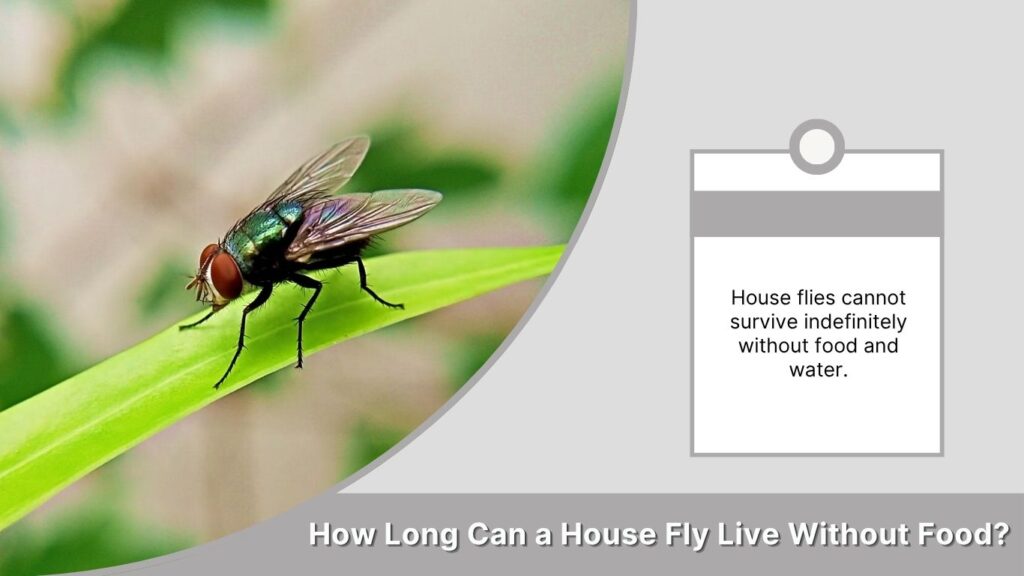
House flies cannot survive indefinitely without food and water. Moisture is particularly important because these insects can become dehydrated relatively quickly. Exact survival time varies with temperature, humidity, age, and access to liquids.
Food and Water Requirements
House flies commonly consume liquids or foods they can liquefy. Household sources may include sugary drinks, food residue, garbage liquids, fruit juices, and animal waste.
Without reliable food or moisture, their survival drops considerably. A home that appears clean may still provide small amounts of nourishment through drains, trash cans, recycling containers, pet bowls, or hidden spills.
Can House Flies Live Underwater?
House flies are terrestrial insects and are not adapted to live underwater. An adult submerged for an extended period will eventually drown.
House fly maggots prefer moist organic material, but this does not mean they normally live permanently submerged in clean water. Discovering maggots around drains or wet garbage usually indicates nearby decaying organic material rather than an aquatic lifestyle.
How to Reduce House Flies in Your Home
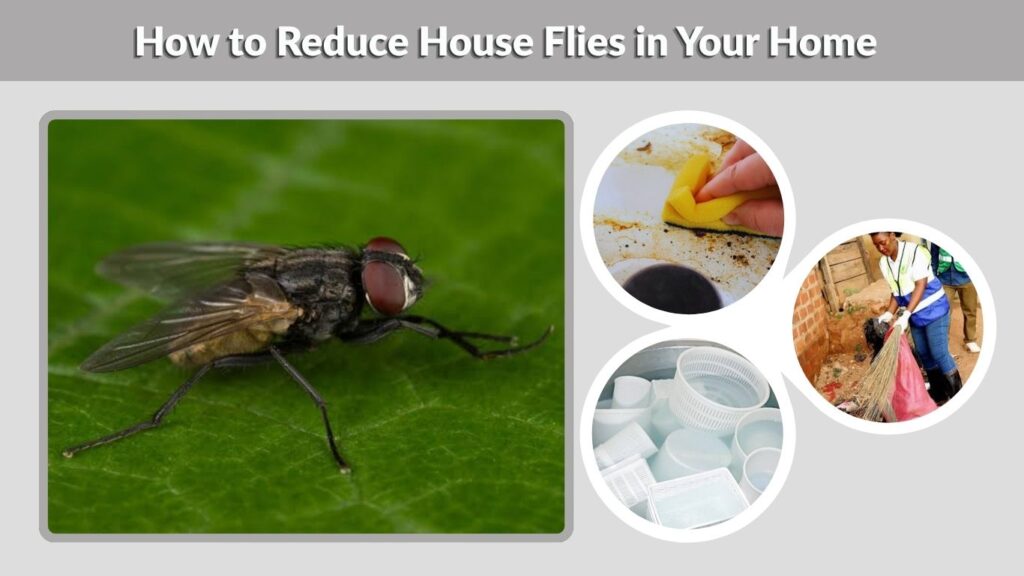
Knowing how long a fly lives does not mean you should simply wait several weeks for it to disappear. If breeding conditions remain available, new adults may continue appearing. Long-term control should focus on sanitation, blocking entry points, and eliminating breeding sources.
Steps That Help Control House Flies
Focus on these measures:
- Empty garbage regularly.
- Keep trash containers tightly covered.
- Clean food spills promptly.
- Remove overripe or rotting produce.
- Wash recycling containers.
- Avoid leaving pet food exposed.
- Clean organic residue around drains.
- Repair damaged window and door screens.
- Keep doors closed when practical.
- Inspect hidden areas if large numbers suddenly appear.
Reducing breeding material breaks the life cycle instead of targeting only adult flies.
FAQs
1. How many days does a house fly live?
Most adult house flies live roughly 15 to 30 days, although environmental conditions can make individual lifespans shorter or longer.
2. How long can a fly live inside your house?
A house fly may remain alive indoors for several weeks when it has access to food, moisture, warmth, and safe resting areas.
3. How long does a common house fly live as an adult?
The adult stage usually lasts several weeks. During this relatively short period, females can mate and lay multiple batches of eggs.
4. Can one house fly live in my house for months?
It is unlikely that the same active adult house fly will remain around for months. Persistent flies usually indicate repeated entry from outdoors or multiple generations developing inside or near the home.
5. Why do house flies keep appearing after I kill them?
New flies may be entering through doors or windows, or larvae may be developing in garbage, decaying organic material, animal waste, or another hidden breeding source. Eliminating that source is essential for lasting control.