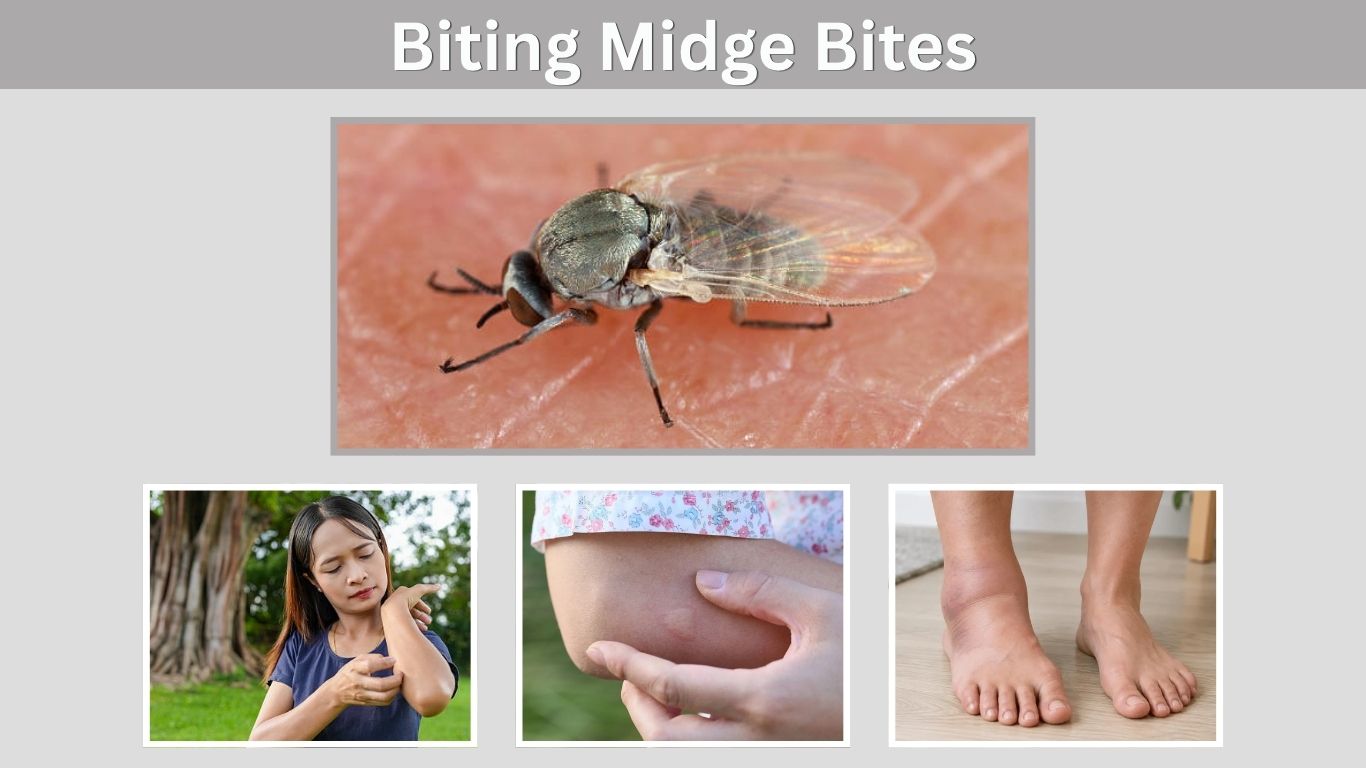
Biting midge bites can cause surprisingly intense itching, redness, swelling, and small raised bumps despite the insect’s tiny size. Biting midges, often called no-see-ums, are tiny flies whose females feed on blood and inject saliva into the skin while feeding. Reactions range from mild red spots to painful, swollen welts that may remain itchy for days. This guide explains what midge bites look like, common symptoms, how long they last, treatment options, swelling, bite prevention, and when medical attention may be necessary.
What Do Biting Midge Bites Look Like?
Biting midge bites can resemble mosquito, flea, or other small insect bites, making identification from skin marks alone difficult. The typical reaction develops because the immune system responds to proteins and other substances in the insect’s saliva. Looking at the size, distribution, timing, and circumstances of the bites can provide useful clues, especially after outdoor exposure near damp or vegetated areas.
Common Biting Midge Bite Marks
Bites may appear as:
- Small red or pink bumps
- Raised, itchy papules
- Tiny central puncture marks
- Multiple bites grouped together
- Redness surrounding each bite
- Localized swelling
- Larger welts in sensitive people
- Scratched or crusted areas after repeated itching
Typical arthropod bites can form itchy pink-to-red raised lesions, sometimes with a subtle break in the skin at the feeding site. Biting midge reactions can become especially uncomfortable because their saliva can trigger a strong inflammatory response.
Biting Midge Bite Patterns
There is no single bite pattern that confirms biting midges. A person may have isolated bumps or numerous bites over exposed areas, especially when several insects are feeding nearby.
Biting midges are extremely small—often under 3 mm—so people may receive several bites without noticing the insects themselves. They are also known as “no-see-ums” because their small size makes them difficult to detect while they are feeding.
Symptoms of Biting Midge Bites on Humans
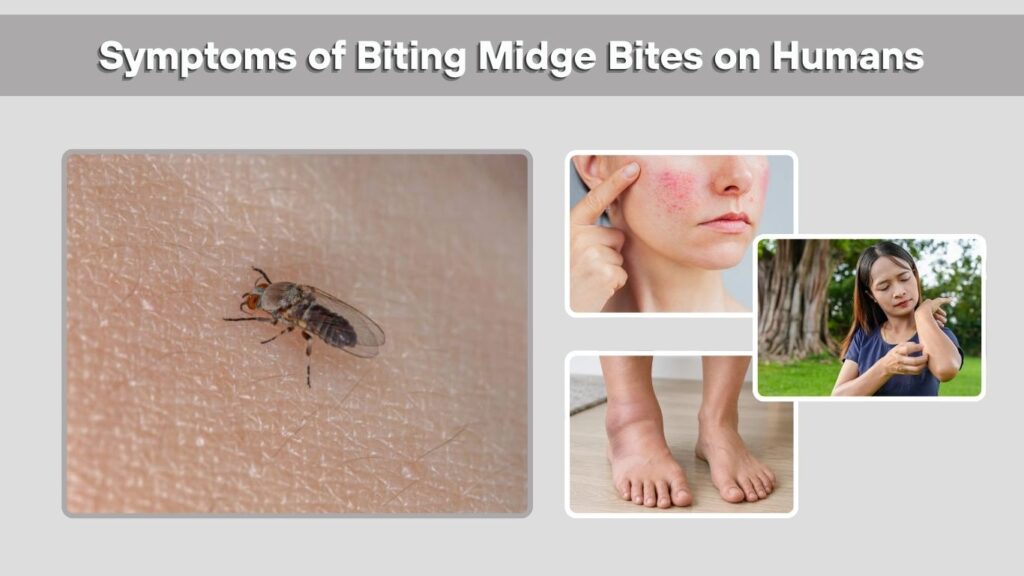
Most reactions remain limited to the skin, but the intensity varies considerably between people. Some notice mild irritation, while others develop large, itchy welts and noticeable swelling. Symptoms can also become more uncomfortable hours after exposure because immune reactions do not always peak immediately. Scratching can further inflame the area and increase the possibility of secondary skin infection.
Common Symptoms
Biting midge bite symptoms can include:
- Intense itching
- Redness
- Burning or stinging
- Small raised bumps
- Local swelling
- Warmth around the bite
- Larger itchy welts
- Tenderness
- Irritation that becomes stronger later
- Broken skin caused by scratching
Some people experience delayed inflammation, with symptoms becoming more pronounced 24–48 hours after the bite.
Why Do Biting Midge Bites Itch So Much?
Biting midges do not create irritation by urinating on the skin, despite a common myth. Instead, the female injects saliva while obtaining a blood meal.
Proteins in that saliva can trigger an allergic and inflammatory response. This reaction leads to itching, redness, blood-vessel dilation, and swelling around the feeding site.
Can Biting Midge Bites Cause Swelling?
Yes. Localized swelling is a common reaction and may be much larger than the original bite mark in sensitive people. Legs, ankles, arms, and other exposed areas may appear puffy when numerous bites occur close together.
Significant swelling does not automatically indicate infection, but swelling that continues to expand or is accompanied by worsening pain, fever, pus, or other concerning symptoms deserves medical attention.
How Long Do Biting Midge Bites Last?
The duration depends on individual sensitivity and the number of bites. Mild marks may improve within several days, while stronger inflammatory reactions can remain itchy for a week or longer. University of Arkansas Extension notes that midge reactions can sometimes persist for a week or more, particularly because symptoms may peak one or two days after exposure.
Why Some Bites Last Longer
Repeated scratching is one major reason a bite stays irritated. Scratching damages the skin surface, increases inflammation, and can introduce bacteria.
Individual immune responses also differ. Someone who reacts strongly to biting midge saliva may develop larger and longer-lasting welts than another person exposed at the same location.
Most uncomplicated bites gradually improve, rather than becoming progressively more painful.
Biting Midge Bite Treatment
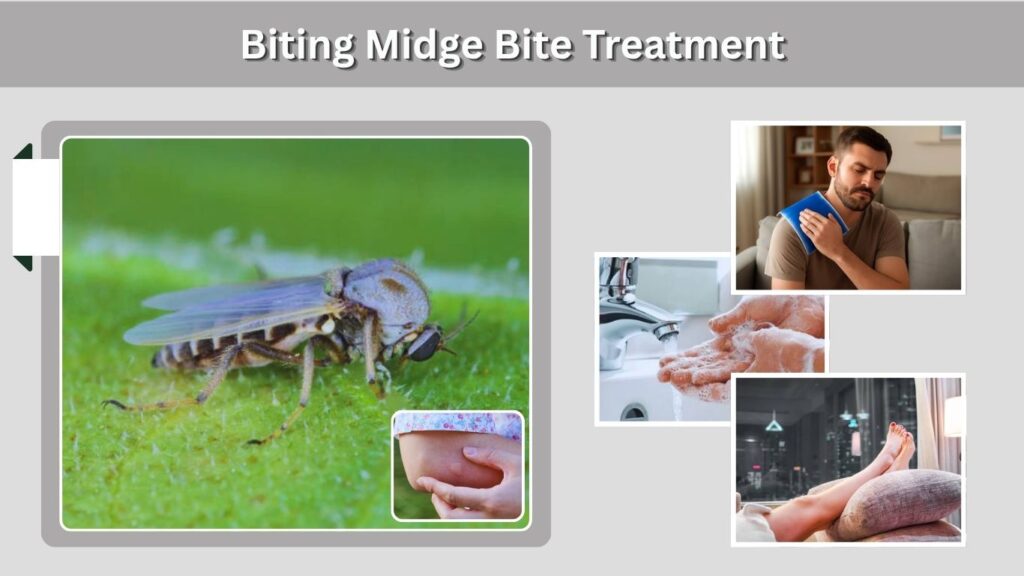
Treatment mainly focuses on reducing itching and swelling while protecting the skin as it heals. There is no special cure required for an ordinary biting midge bite. Cold treatment, soothing topical products, and appropriate anti-itch medication can make symptoms easier to tolerate. Preventing scratching is especially important because damaged skin can develop a secondary bacterial infection.
How to Treat Biting Midge Bites
Try these steps:
- Gently wash the affected skin.
- Apply a cold compress to reduce swelling.
- Avoid scratching or rubbing the bites.
- Consider calamine or another soothing lotion.
- Use an appropriate over-the-counter hydrocortisone product for mild itching when suitable.
- Keep fingernails short to reduce skin damage.
- Wear loose clothing that does not rub irritated areas.
- Follow medication labels carefully.
- Ask a pharmacist or healthcare professional about antihistamines if the reaction is significant.
Cold compresses and soothing creams can help mild reactions, while antihistamines may sometimes be used for more troublesome reactions.
Avoid Scratching the Bites
Scratching may provide temporary relief but often makes the problem last longer. Once the skin breaks, bacteria such as Staphylococcus or Streptococcus can enter and cause a secondary infection.
If itching is keeping you awake, cold treatment and an appropriate anti-itch product are safer strategies than repeatedly scratching the affected area.
How to Prevent Biting Midge Bites
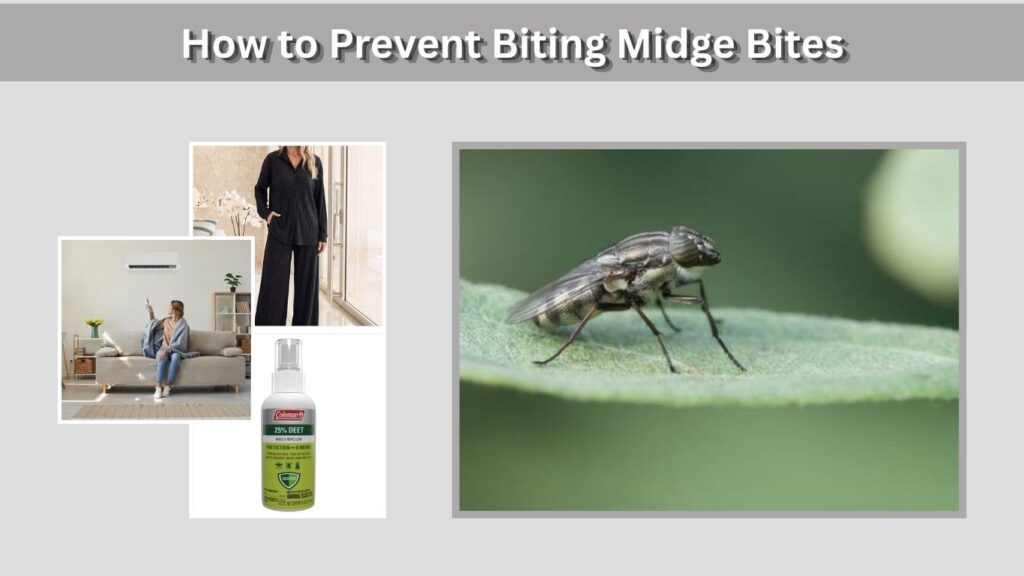
Prevention can be especially valuable because biting midges may occur in large numbers and are difficult to see. Different species are active during daytime or evening hours, and many thrive around wet soil, decaying vegetation, woodland, mud, and other damp habitats. Protective clothing, appropriate repellents, and fine screening can reduce exposure.
Ways to Prevent Biting Midge Bites
Consider these precautions:
- Wear loose-fitting long sleeves and long pants.
- Use an EPA-registered repellent labeled for biting flies or no-see-ums.
- Follow repellent label instructions.
- Limit exposure where midges are highly active.
- Use air-conditioned rooms when available.
- Install fine-mesh screening.
- Repair gaps around windows and doors.
- Avoid relying on ordinary mosquito screens alone.
CDC guidance notes that standard insect screens may have openings large enough for biting midges to pass through and recommends approximately 20×20 mesh where these insects are a problem.
Biting Midge vs Mosquito Bites
Skin reactions can look very similar, so identifying the insect solely from a bump is unreliable.
Biting midges are typically much smaller than mosquitoes. Both can produce itchy red bumps because their saliva triggers an immune response. Exposure history can sometimes help: numerous small bites after spending time around wet, muddy, coastal, or wooded habitat may raise suspicion of biting midges.
When Should You See a Doctor?
Most biting midge bites can be managed with simple home care, but worsening symptoms should not be ignored. Scratched bites can become infected, and certain biting midges can transmit pathogens in particular parts of the world. For example, CDC identifies biting midges as important vectors of Oropouche virus in parts of the Caribbean and Central and South America.
Warning Signs to Watch For
Seek medical advice if you develop:
- Rapidly increasing swelling
- Severe pain
- Pus or drainage
- Expanding redness
- Fever
- Worsening warmth around the bite
- Red streaks spreading from damaged skin
- Difficulty breathing
- Swelling of the face, mouth, or throat
- Illness after travel to an area with insect-borne disease
Difficulty breathing or swelling involving the face or throat requires urgent medical attention.
FAQs
Biting midge reactions can be confusing because they often look similar to bites from mosquitoes and other tiny flies. Their very small size also means people frequently notice the skin reaction without ever seeing the insect responsible. These answers cover common questions about appearance, swelling, healing time, larvae, and the differences between biting and non-biting midges.
1. What do biting midge bites look like?
They commonly look like small red, itchy, raised bumps. Some people develop larger swollen welts, while others experience relatively mild marks. Multiple bites may occur together after heavy exposure.
2. How long do biting midge bites last?
Mild bites may improve within several days, while stronger reactions can remain itchy for a week or longer. Some people’s reactions peak about 24–48 hours after exposure rather than immediately.
3. Do biting midge bites cause leg swelling?
They can. Numerous bites on the ankles or legs may produce noticeable localized swelling, particularly in people who react strongly to midge saliva. Persistent or rapidly worsening swelling should be evaluated medically.
4. Do biting midge larvae bite humans?
No. The familiar blood-feeding behavior occurs in adult females of biting species. Larvae live in moist or aquatic environments and do not fly around biting people.
5. What is the fastest way to relieve biting midge bites?
A cold compress can quickly reduce itching and swelling. Soothing lotions or an appropriate anti-itch treatment may provide additional relief. Most importantly, avoid scratching so the irritated skin can heal without becoming infected.