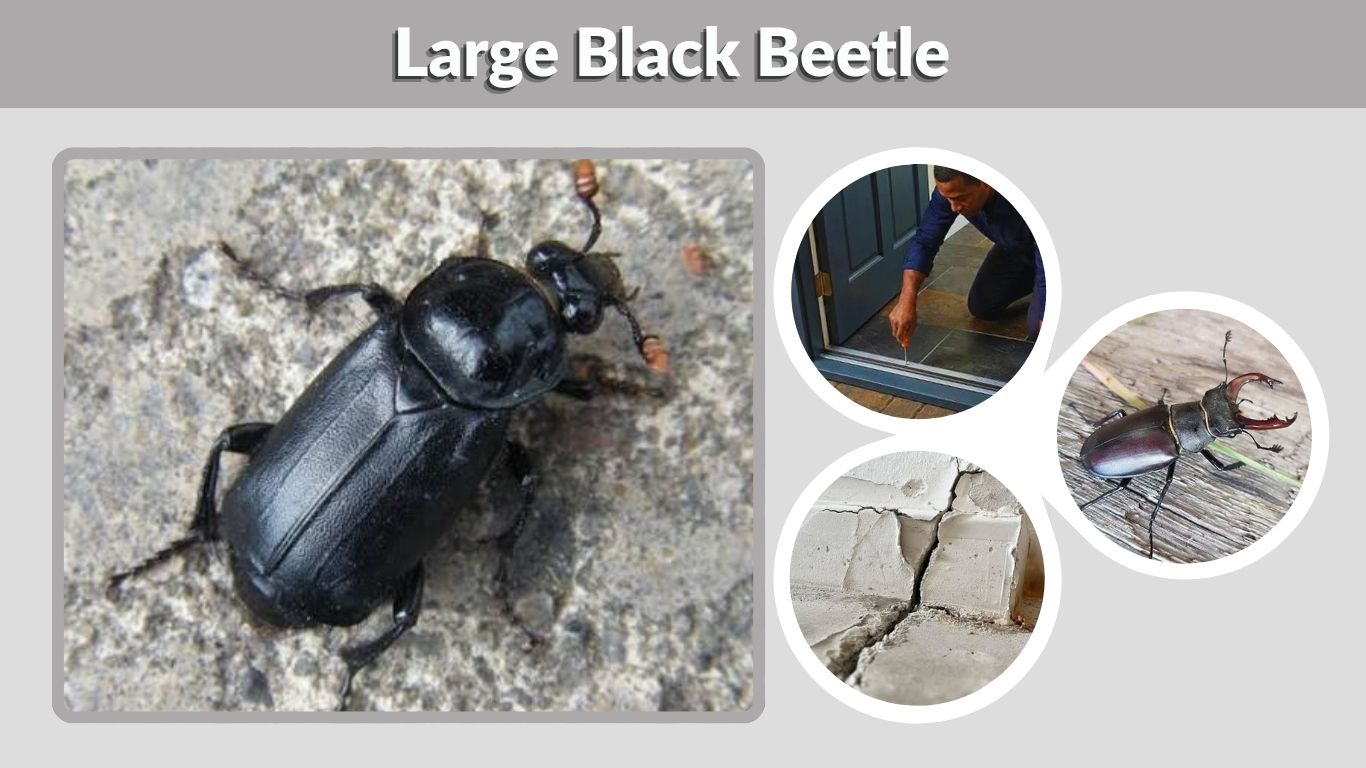
A large black beetle can look intimidating, especially when it appears inside a house, flies around lights, or displays noticeable pincers or long antennae. However, many large black beetles are harmless insects that live outdoors in soil, wood, gardens, or forests. Accurate identification depends on body shape, size, antenna length, mandibles, surface texture, and location. This guide explains common large black beetles, how to identify them, why they enter houses, whether they bite, and what different physical features may indicate.
How to Identify a Large Black Beetle
Large black beetles belong to many different families, so color alone cannot identify the species. Some are shiny and rounded, while others are flat, elongated, or equipped with prominent jaws. Observing several physical characteristics together is much more reliable than focusing only on body color.
Key Identification Features
Look closely at:
- Overall body length
- Shiny, dull, or textured surface
- Round, oval, flat, or elongated body
- Length and shape of the antennae
- Presence of large mandibles or pincers
- Leg length and thickness
- Whether the beetle flies
- Markings in white, orange, yellow, or green
- Location where the beetle was discovered
A photograph taken from above and from the side can make identification much easier.
Large Shiny Black Beetle
A large shiny black beetle may belong to the ground beetle, darkling beetle, scarab, or stag beetle groups. Ground beetles often have smooth or grooved wing covers and long legs adapted for running.
Darkling beetles may appear glossy or matte and are commonly found in dry habitats. Scarab-type beetles tend to have heavier, more rounded bodies.
Habitat provides an important clue. A shiny beetle running across the ground at night is more likely to be a ground-dwelling species than a wood-boring beetle.
Common Types of Large Black Beetles
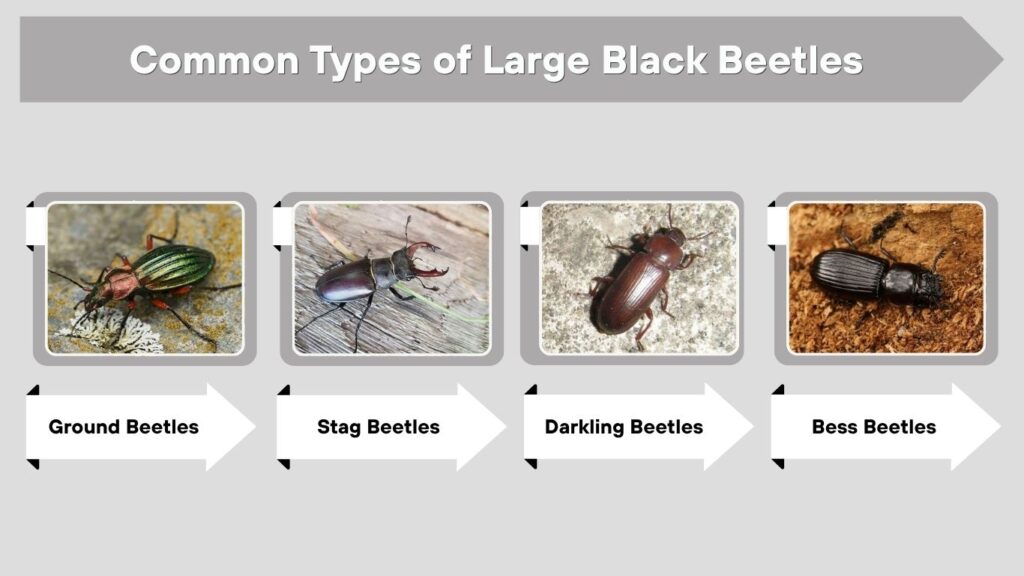
Several beetle groups regularly match the description of a large black beetle. Some are powerful predators, while others feed on decaying vegetation, wood, roots, or plant material. Most are important parts of natural ecosystems and should not be treated as pests unless the species is causing identifiable damage.
Ground Beetles
Ground beetles are often dark brown or black, with flattened or slightly elongated bodies and strong running legs.
Many are nocturnal predators that feed on:
- Caterpillars
- Slugs
- Insect larvae
- Small insects
- Other invertebrates
They frequently enter homes accidentally through doors, garages, basements, or foundation gaps. They generally do not reproduce indoors.
Stag Beetles
Stag beetles are famous for the oversized mandibles found on males. A black beetle with large pincers may therefore be a stag beetle.
Male mandibles are used mainly during competition with other males rather than for attacking people. Stag beetle larvae develop in decaying wood and help break down old woody material.
Their large size and unusual jaws can make them appear threatening, but they are generally not aggressive toward humans.
Darkling Beetles
Darkling beetles include many black or dark-colored species with sturdy bodies. Some are elongated, while others appear rounded or oval.
They are commonly associated with dry soil, decaying vegetation, stored organic matter, deserts, and grasslands. Several species are particularly noticeable in dry western regions of North America.
Bess Beetles
Bess beetles are large, glossy black beetles that live primarily inside decaying logs. Their bodies are thick and heavily armored in appearance.
Adults and larvae live together in rotten wood and play an important role in decomposition. They are generally harmless and are unlikely to become household pests unless brought inside with wood.
Large Black Flying Beetle
A large black flying beetle can be surprising because its heavy body may make its flight look slow or clumsy. Many beetles hide delicate flight wings beneath hardened outer wing covers called elytra.
Why Large Black Beetles Fly
Large beetles may fly to:
- Find mates
- Locate food
- Search for new habitat
- Reach host trees or plants
- Move between breeding sites
- Respond to lights at night
Flying behavior does not necessarily indicate that a beetle is dangerous.
Why They Fly Around Lights
Many nocturnal beetles are attracted to artificial lights. Porch lights, garage lights, and illuminated windows can draw adult beetles close to buildings.
This explains why homeowners sometimes suddenly find large flying black beetles around doors or windows during warm evenings.
Reducing unnecessary outdoor lighting or switching lights off when not needed can decrease these encounters.
Large Black Beetle in the House
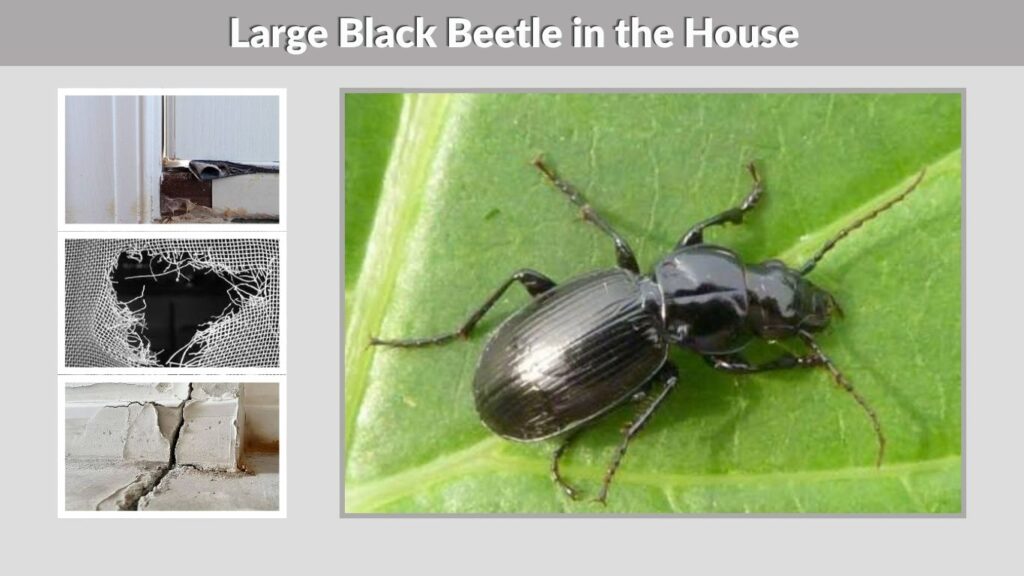
A large black beetle found indoors is usually an accidental visitor rather than evidence of an infestation. Ground beetles, darkling beetles, and other outdoor species may enter through open doors, windows, foundation cracks, or garage openings.
Common Entry Points
Check areas such as:
- Gaps beneath exterior doors
- Damaged window screens
- Cracks around foundations
- Garage doors
- Basement windows
- Utility openings
- Vents
- Firewood carried indoors
Large beetles usually cannot establish indoor populations unless appropriate food and breeding materials are available.
What to Do If You Find One
If only one or two beetles appear, they can usually be captured and released outside.
Vacuuming is another option when handling is difficult. Afterward, inspect nearby doors, screens, and foundation gaps.
Repeated sightings may suggest that beetles are entering through the same opening or being attracted by lighting rather than reproducing inside.
Black Beetle With Large Pincers or Mandibles
One of the most dramatic large black beetles is a beetle with oversized jaws. These structures may look like pincers, horns, or antlers depending on the species.
Stag beetles are among the best-known examples.
What Are the Pincers Used For?
Male stag beetles use enlarged mandibles mainly when competing with rivals. They may push, grab, or lift another male.
The mandibles can look dangerous, but their primary function is not hunting people.
Females generally have much smaller but sometimes stronger-looking jaws. Any large beetle should still be handled gently or left alone because defensive pinching is possible.
Large Beetle With a “Stinger”
A large black beetle may sometimes appear to have a stinger at the rear of its body, but true beetles generally do not possess stingers like wasps or bees.
What looks like a stinger may be:
- An extended abdominal tip
- An ovipositor-like structure
- Part of the wing system
- A defensive posture
- Another anatomical feature
Correct identification is important before assuming the insect can sting.
Large Black Beetles With Long Antennae
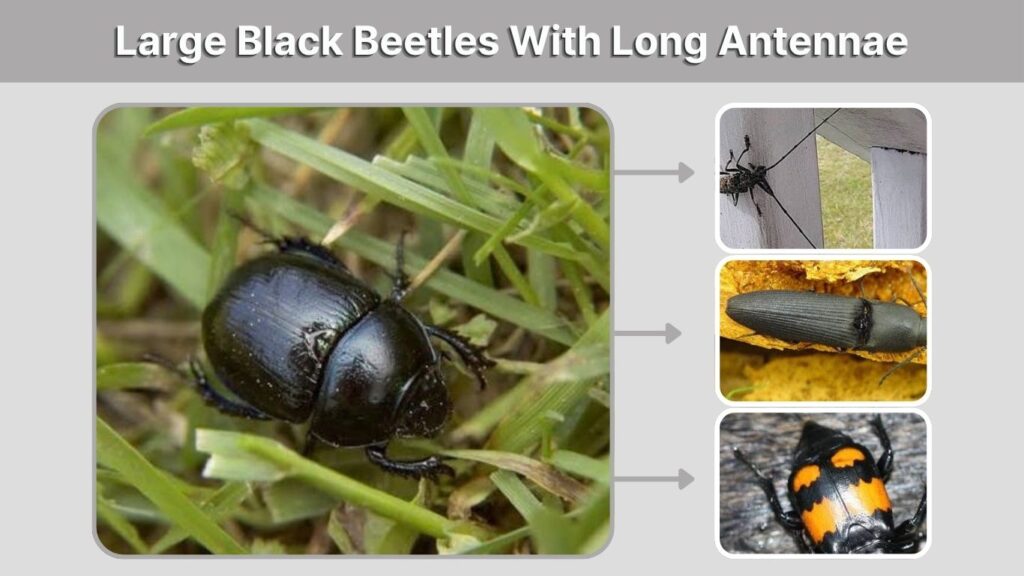
A large black beetle with long antennae may belong to the longhorn beetle family. Longhorn beetles are named for their unusually long antennae, which can equal or exceed the length of the body.
Longhorn Beetle Characteristics
Common features include:
- Long antennae
- Elongated body
- Strong legs
- Hard wing covers
- Black, brown, or patterned coloration
- Association with trees and wood
The larvae of many longhorn beetles develop inside dead, dying, or weakened wood.
Some species can affect living trees, but many simply use dead woody material and play an important role in decomposition.
Are Longhorn Beetles Dangerous?
Most longhorn beetles are not dangerous to humans. Large individuals may pinch if handled, but they do not normally attack people.
If adults repeatedly emerge from firewood or structural wood, identifying the species is worthwhile because the importance of wood-boring activity varies considerably between species.
Large Black Beetles by Location
The type of large black beetle you encounter depends heavily on geography and habitat. Search terms involving Arizona, Texas, Florida, Michigan, Ohio, Pennsylvania, California, and other regions may refer to completely different species.
Large Black Beetles in Dry Regions
In places such as Arizona, Utah, Colorado, and parts of California, darkling beetles are particularly common.
These beetles are well adapted to dry conditions and may be seen walking across roads, yards, desert terrain, and patios.
Large Black Beetles in Wooded Areas
Wooded regions can support stag beetles, bess beetles, ground beetles, and many longhorn beetles.
Decaying logs and old trees provide breeding habitat for numerous species. As a result, finding a large beetle near fallen wood does not automatically mean it is harming healthy trees.
Are Large Black Beetles Dangerous?
Most large black beetles are harmless to people. Their size, heavy armor, strong legs, and mandibles may make them appear threatening, but they generally prefer escaping rather than attacking.
Can Large Black Beetles Bite?
Some large beetles are capable of pinching or biting defensively when handled.
However, they do not normally seek out humans to bite, feed on blood, or behave aggressively.
Ground beetles, darkling beetles, and stag beetles usually pose very little danger when left alone.
Are They Harmful to Homes?
Most large outdoor beetles do not damage houses.
Occasional beetles wandering indoors should not be confused with structural pests. If beetles repeatedly emerge from wooden beams, firewood, or stored products, identification becomes more important because the insects may be developing within those materials.
How to Keep Large Black Beetles Out of the House
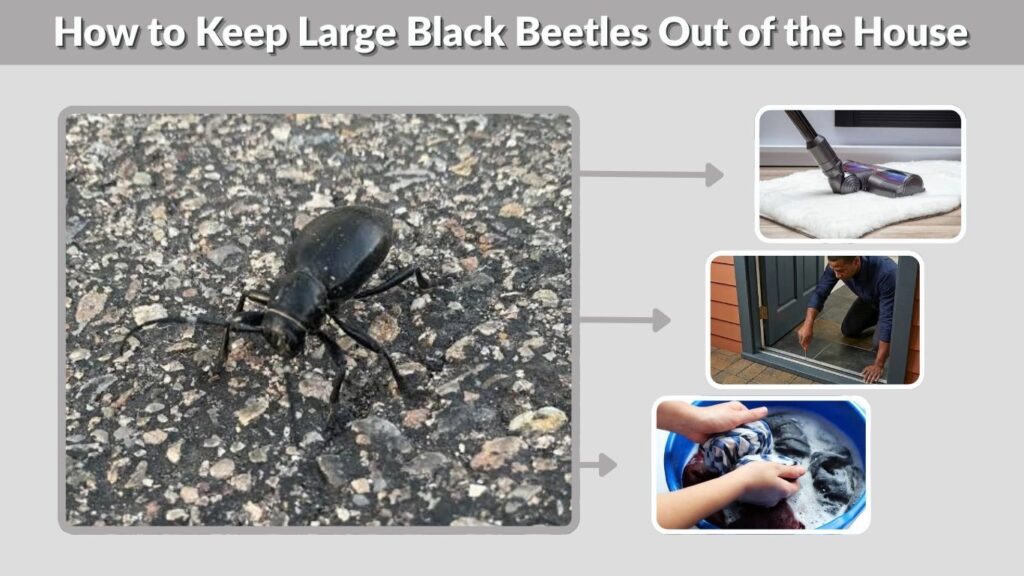
Prevention is usually easier than controlling beetles after they enter. Since many large black beetles originate outdoors, reducing entry points and nighttime attraction can significantly decrease indoor sightings.
Simple Prevention Steps
Try the following:
- Repair damaged window screens.
- Install door sweeps.
- Seal foundation gaps.
- Close garage doors when possible.
- Check firewood before bringing it inside.
- Reduce bright outdoor lighting at night.
- Remove excessive debris beside the foundation.
- Keep doors and windows closed or screened.
Pesticide treatment is rarely necessary for a few accidental beetles.
FAQs
1. What is a large black beetle in my house?
It may be a ground beetle, darkling beetle, stag beetle, or another outdoor species that entered accidentally. Body shape, antenna length, and the presence of pincers can help narrow the identification.
2. What is a large black beetle with pincers?
A stag beetle is one common possibility. Male stag beetles can have very large mandibles that resemble antlers or pincers and are used mainly during competition with other males.
3. Can a large black beetle fly?
Yes. Many large black beetles have functional flight wings beneath their hardened wing covers and may fly when searching for mates, food, or new habitat.
4. Do large black beetles bite?
Most do not normally bite people. Some species with strong jaws can pinch defensively if handled roughly, but they generally try to escape rather than attack.
5. Why do large black beetles come into houses?
They may enter accidentally through doors, windows, foundation gaps, garages, or with firewood. Outdoor lights can also attract flying beetles toward buildings at night.