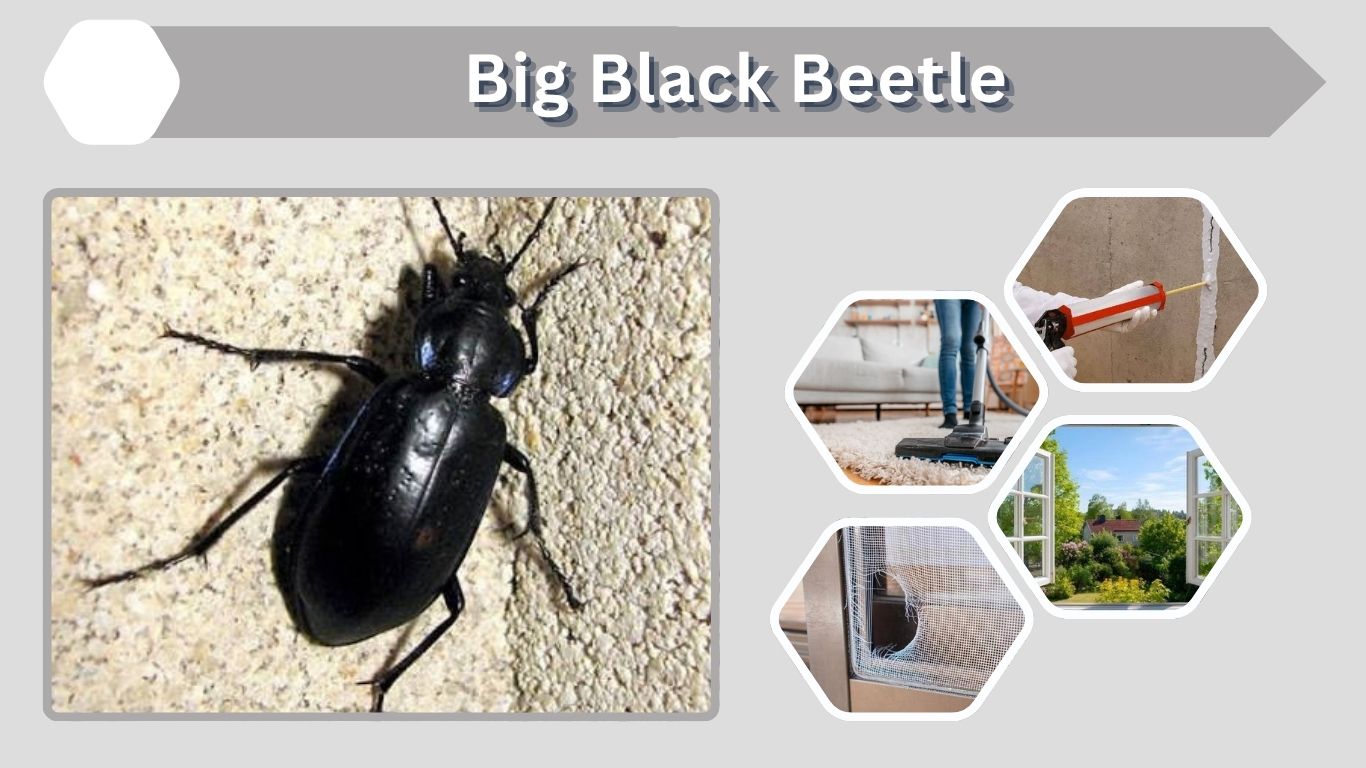
A big black beetle can look intimidating, especially when one suddenly appears inside your house or flies around the yard. However, “big black beetle” is a general description rather than the name of one species. Darkling beetles, ground beetles, stag beetles, longhorn beetles, and several other groups may fit this description. Identifying the insect by its size, pincers, antennae, body shape, ability to fly, and location can help determine whether it is harmless or requires control.
What Is a Big Black Beetle?
The term big black beetle may describe many unrelated beetle species with dark bodies and relatively large adult sizes. Some live beneath logs or rocks, while others inhabit gardens, forests, deserts, or buildings. Color alone is rarely enough for identification. Looking closely at the beetle’s jaws, antennae, legs, wings, shape, and behavior provides much more useful information.
Common Identification Features
When trying to identify a large black beetle, check these visible characteristics:
- Color: Usually black, dark brown, or glossy black
- Body shape: Oval, elongated, rounded, or somewhat flattened
- Size: Often 0.5 to more than 2 inches depending on species
- Wing covers: Hard front wings called elytra cover the abdomen
- Antennae: May be short, clubbed, segmented, or extremely long
- Legs: Usually six prominent jointed legs
- Jaws: Some species have noticeable mandibles or pincers
- Wings: Certain large beetles can fly, while others rarely do
Size is especially useful when separating a genuinely large beetle from smaller household pests such as carpet beetles.
Why So Many Beetles Look Black
Dark coloration occurs in numerous beetle families. A black or nearly black exoskeleton can help provide camouflage in soil, bark, leaf litter, and other shaded environments. Some desert beetles also have heavily hardened bodies that help them tolerate dry conditions.
Because similar coloration evolved in unrelated species, identifying a beetle only as “black” can easily lead to confusion. Shape and anatomy provide better clues.
Common Types of Big Black Beetles
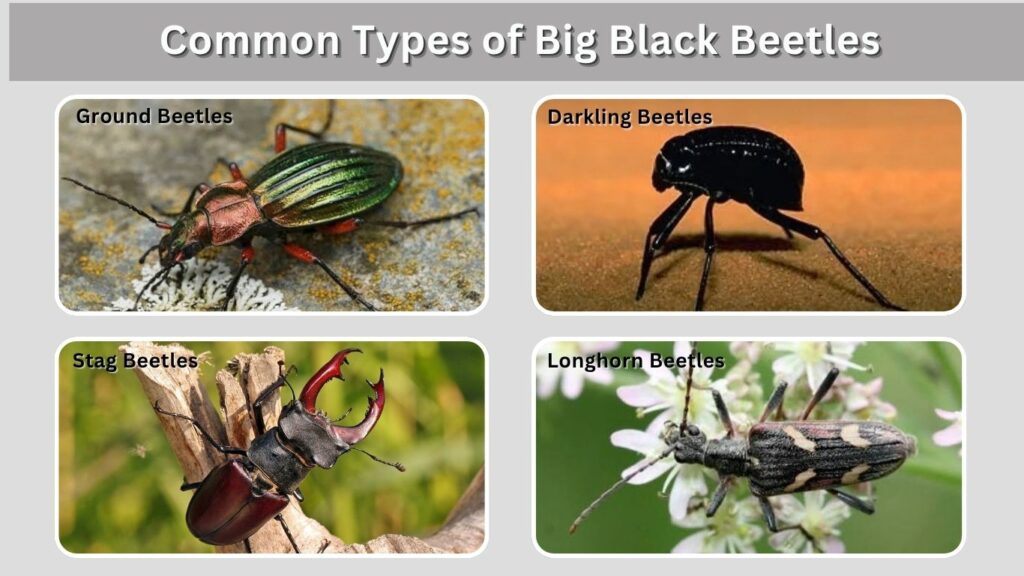
Several beetle groups are frequently described as big black beetles. Which species you encounter depends heavily on geographic location and habitat. A beetle seen in Arizona may be completely different from one found in Michigan, Texas, Florida, or Pennsylvania.
Ground Beetles
Ground beetles are among the most common large dark beetles found around houses and gardens.
Typical characteristics include:
- Shiny black or dark brown coloration
- Long legs adapted for running
- Flattened or elongated bodies
- Strong jaws
- Adults commonly active at night
- Frequent hiding beneath stones, logs, mulch, and debris
Most ground beetles are predators that feed on insects, caterpillars, larvae, and other small invertebrates.
Darkling Beetles
Darkling beetles include thousands of species, many of which are black or dark brown. They are particularly noticeable in dry western regions of North America.
Some species have:
- Thick black exoskeletons
- Oval or elongated bodies
- Relatively short antennae
- Slow walking behavior
- Limited or absent flight ability
Large darkling beetles are particularly common in desert environments, which helps explain frequent searches for a big black beetle in Arizona.
Stag Beetles
A big black beetle with pincers may be a stag beetle, particularly when the insect has dramatically enlarged jaws.
Male stag beetles can have:
- Large mandibles resembling antlers
- Broad heads
- Heavy bodies
- Dark brown to black coloration
- Strong legs
- Functional wings beneath the wing covers
Despite their intimidating appearance, stag beetles generally use their oversized mandibles when competing with other males rather than attacking people.
Longhorn Beetles
If you see a big black beetle with long antennae, a longhorn beetle may be responsible. Members of this family typically have antennae approaching or exceeding their body length.
Some longhorn beetles are attracted to outdoor lights. Their larvae usually develop inside woody plants, branches, logs, or trees.
Big Black Beetles With Pincers, Horns, or Wings
Unusual structures can make identification considerably easier. Large jaws are commonly mistaken for pincers, while projections on the head or thorax may be described as horns. Wings are another important clue because some large beetles are powerful flyers, whereas others remain primarily on the ground.
Big Black Beetle With Pincers
Large pincers usually refer to prominent mandibles rather than true pincers. Stag beetles are the classic example.
Other beetles also possess strong jaws, including:
- Ground beetles
- Predaceous diving beetles
- Certain longhorn beetles
- Bess beetles
The jaws are primarily used to capture food, manipulate material, defend against predators, or compete with other beetles.
Big Black Beetle With Horns
A large dark beetle with a horn may belong to the rhinoceros beetle group. Males of some species develop prominent horns on the head or thorax.
These beetles are generally robust, heavy-bodied insects. Their horns are primarily associated with competition between males.
Big Black Flying Beetle
Many people become alarmed when a large beetle suddenly begins flying. However, numerous harmless beetles are capable flyers.
A big black flying beetle could potentially include:
- Stag beetles
- Longhorn beetles
- Scarab beetles
- Certain ground beetles
- Bess or related beetles
Flying adults may temporarily appear around porch lights, windows, garages, and patios, especially during warmer months.
Why Is There a Big Black Beetle in the House?
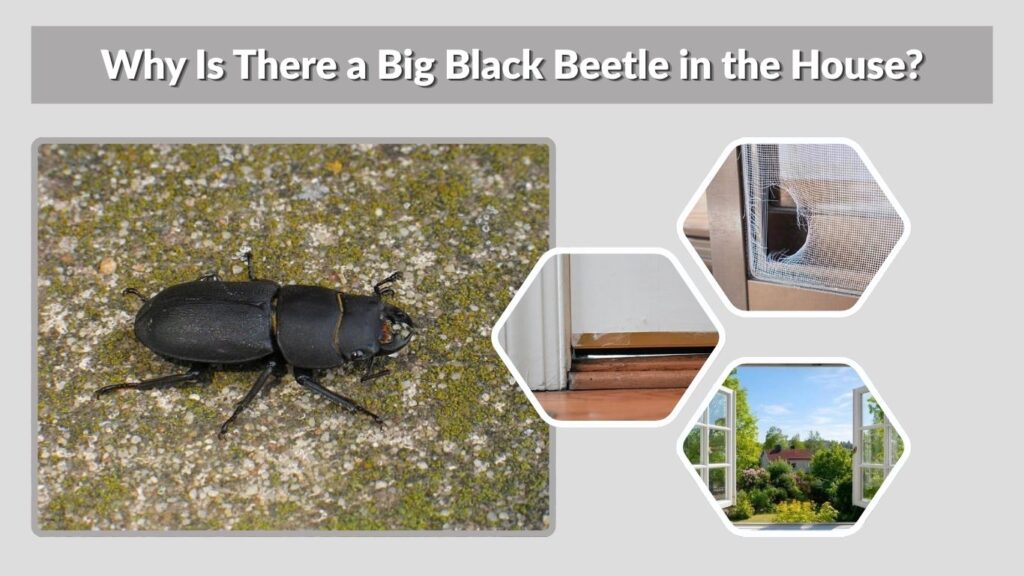
Finding a big black beetle in the house does not automatically mean you have an infestation. Outdoor beetles commonly wander indoors accidentally through doors, windows, foundation openings, or gaps around utility lines. Lights can also attract flying beetles toward buildings at night, where they eventually enter through small openings.
How Big Black Beetles Get Indoors
Common entry points include:
- Gaps beneath exterior doors
- Damaged window screens
- Open windows
- Cracks around foundations
- Garage doors
- Openings around plumbing or cables
- Firewood carried indoors
- Boxes or stored outdoor materials
Beetles that normally live in mulch or soil may also enter homes during extreme heat, heavy rainfall, drought, or seasonal temperature changes.
Are They Infesting the House?
A single large beetle usually indicates accidental entry. Multiple beetles appearing repeatedly deserve closer investigation.
Check basements, crawl spaces, garages, stored firewood, window wells, and exterior foundation areas. Determining the exact beetle species is important because control methods depend on whether the insect normally lives outdoors, develops in wood, or feeds on stored materials.
Are Big Black Beetles Harmful?
Most large black beetles encountered around homes are more frightening than dangerous. Many are beneficial predators or decomposers that play valuable roles outdoors. Still, some beetles can pinch when handled, and particular wood-boring species may require attention if they are emerging repeatedly from structural or decorative wood.
Can a Big Black Beetle Bite?
Some beetles have strong enough jaws to pinch human skin when trapped or handled. A defensive pinch may feel uncomfortable, but many commonly encountered large beetles do not actively seek out people.
Avoid picking up unidentified beetles with bare fingers. Instead, guide the insect into a container or onto a piece of cardboard for removal.
Does a Big Black Beetle Have a Stinger?
Beetles generally do not have the type of stinger found in bees and wasps. What appears to be a stinger may actually be part of the abdomen, a leg, an egg-laying structure, or another anatomical feature.
A beetle that appears black and has an obvious stinger may actually be a different type of insect, making careful identification particularly important.
How to Get Rid of Big Black Beetles
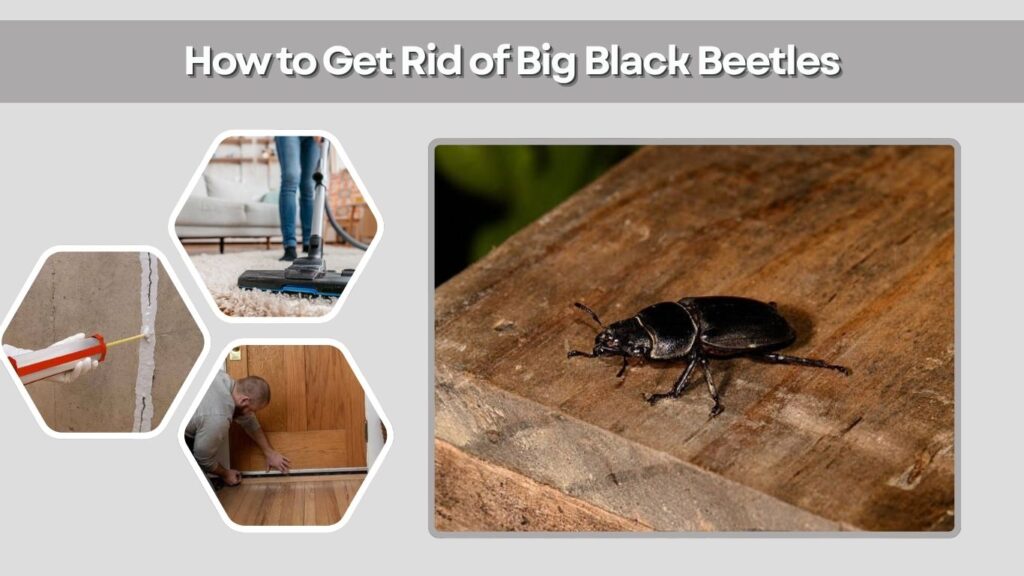
When outdoor beetles occasionally wander indoors, extensive pesticide treatment is usually unnecessary. Physical removal combined with sealing entry points can often solve the problem. If large numbers continue appearing, determine the species and identify where they are coming from before choosing a treatment method.
Remove Beetles Indoors
For occasional beetles:
- Capture them with a cup and stiff paper
- Use a vacuum for difficult-to-reach insects
- Empty the vacuum afterward
- Avoid crushing beetles on carpets or furniture
- Release harmless outdoor species away from entrances
Some beetles can produce unpleasant defensive chemicals, making crushing them less desirable.
Prevent Future Entry
Reduce indoor encounters by:
- Sealing cracks around foundations
- Installing door sweeps
- Repairing damaged screens
- Caulking openings around pipes and cables
- Keeping exterior doors closed
- Moving firewood away from exterior walls
- Reducing accumulated leaves and debris near foundations
- Adjusting outdoor lighting where practical
These measures are useful for many wandering beetles and other outdoor insects.
When Professional Identification Helps
Consider professional pest identification if numerous large beetles repeatedly emerge from walls, flooring, structural lumber, furniture, or stored wood.
Wood-boring beetles require different management from harmless ground beetles wandering indoors. Correct identification prevents unnecessary treatments and helps determine whether any material is actually being damaged.
Big Black Beetles in Different U.S. States
The species described as a big black beetle varies greatly by region. Climate, elevation, vegetation, and local habitats determine which beetles are most common. Desert states often produce different sightings from humid southeastern or cool northern states.
Arizona and the Southwest
Searches for big black beetles in Arizona, Las Vegas, Utah, and New Mexico often involve darkling beetles. Many desert darkling species are large, heavily armored, dark-colored insects that walk across dry ground, patios, trails, and roads.
Texas and Florida
Texas and Florida support extremely diverse beetle populations because of their warm climates. Residents may encounter ground beetles, scarab beetles, longhorn beetles, stag beetles, and other large species.
Michigan, Ohio, and the Northeast
In Michigan, Ohio, Pennsylvania, Massachusetts, New York, New Jersey, and neighboring areas, large black beetles may include ground beetles, stag beetles, carrion-associated species, and various wood-inhabiting beetles.
The season and habitat where the insect was found provide important additional clues.
FAQs
1. What is the most common big black beetle?
There is no single species called the big black beetle. Ground beetles and darkling beetles are among the groups commonly described this way, but local species vary considerably.
2. Are big black beetles dangerous?
Most large black beetles are not dangerous to people. Some can pinch defensively when handled, while certain wood-boring species may damage wood. Identifying the species provides the clearest answer.
3. Why do I keep finding big black beetles in my house?
They may be entering through gaps around doors, windows, foundations, or utility openings. Outdoor lighting, weather changes, firewood, and nearby vegetation can also contribute to indoor sightings.
4. What is a big black beetle with large pincers?
A beetle with exceptionally large jaw-like pincers may be a male stag beetle. Ground beetles and several other groups also have noticeable mandibles, so additional features should be checked before identification.
5. Can big black beetles fly?
Yes. Many large beetles can fly, including various stag beetles, longhorn beetles, scarabs, and other species. Others, particularly certain darkling beetles, rarely fly or have reduced flight capability.