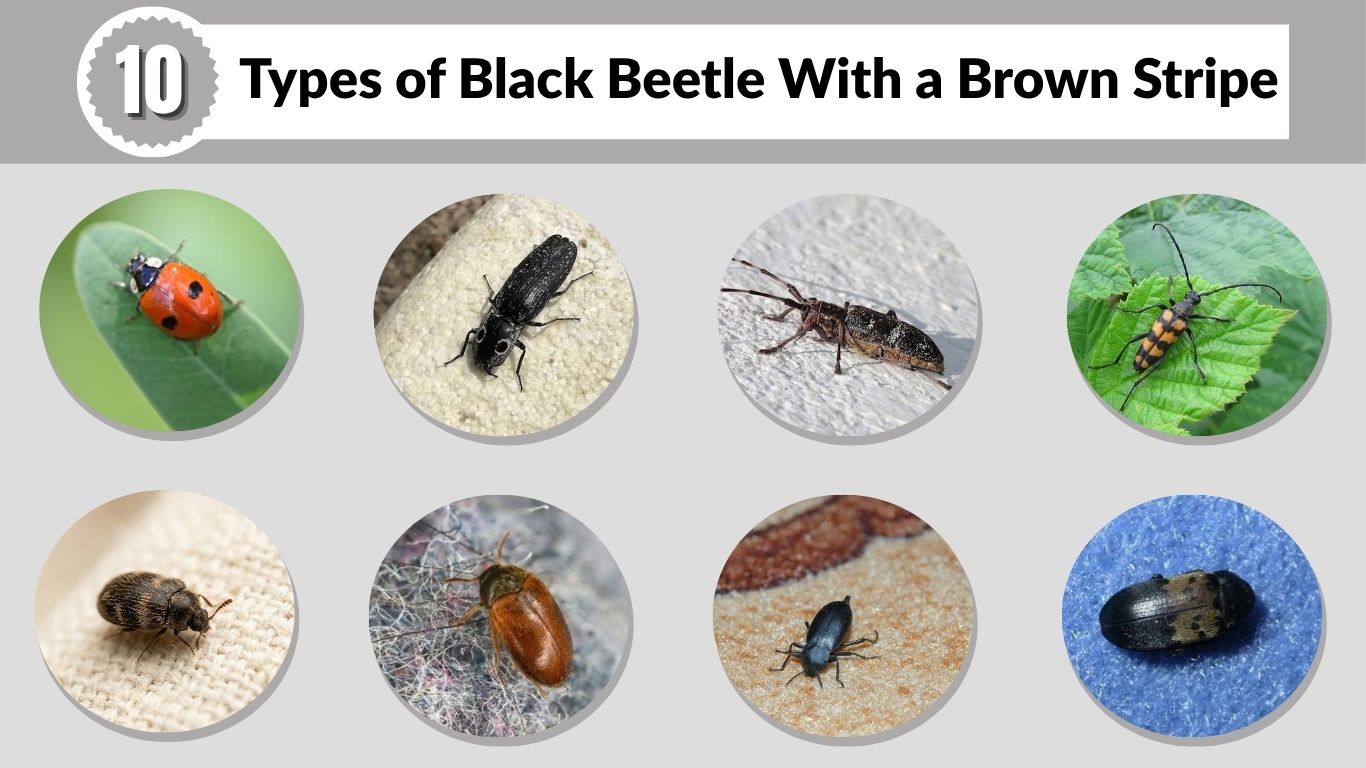
A black beetle with a brown stripe can be easy to confuse with other black and brown beetles, especially when several species share similar markings. Some are small household pests, while others are harmless outdoor beetles that enter homes accidentally. Common possibilities include larder beetles, carpet beetles, longhorn beetles, click beetles, and lady beetles. By comparing body size, stripe patterns, spots, antenna length, habitat, behavior, diet, and life cycle, you can identify the black and brown beetle you have found more accurately.
1. Larder Beetle
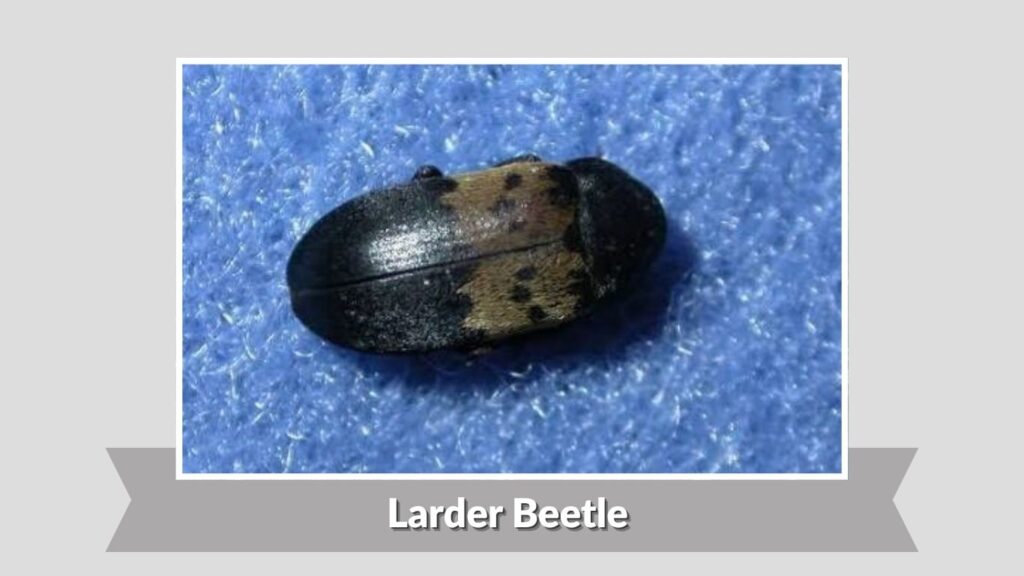
The larder beetle (Dermestes lardarius) is one of the most recognizable matches for a black beetle with a brown stripe. Adults have a dark, elongated body with a broad light-brown or yellowish band across the front portion of the wing covers. This contrasting stripe makes the species easier to distinguish from many other small black and brown beetles found inside homes.
Identification
- Adult size: About 1/4 to 3/8 inch long
- Body color: Mostly dark brown to black
- Stripe: Broad tan, yellowish-brown, or light-brown band across the wing covers
- Markings: The pale band usually contains several dark spots
- Body shape: Oval to elongated with a slightly rounded back
- Antennae: Short with noticeably clubbed tips
- Larvae: Brownish, hairy, elongated, and often equipped with two small curved projections near the rear
A small black beetle with a brown stripe found near stored food or animal-based materials is often worth checking against these characteristics.
Habitat
Larder beetles occur both outdoors and indoors. Outside, they help recycle dead insects and animal remains. Inside homes, they may be found in kitchens, pantries, attics, basements, wall voids, pet-food storage areas, and places where dead insects or rodents have accumulated.
A black beetle with a brown stripe in the house may appear around windows as adults move toward light. Repeated sightings can indicate that a suitable food source is present somewhere nearby.
Behavior
Adult larder beetles can crawl and fly, allowing them to move between rooms or enter buildings from outdoors. They frequently become noticeable in spring when adults emerge from overwintering sites.
Females seek protein-rich material for egg laying. The larvae may wander away from their food source before pupating and can sometimes bore into soft wood, insulation, cork, or similar materials to create protected pupal chambers.
Diet and Life Cycle
Larder beetles mainly feed on dry materials rich in animal protein. Their diet may include dried meat, cheese, pet food, animal hides, feathers, dead insects, dried fish, and carcasses of small animals.
Females lay eggs directly on or near suitable food. After hatching, the hairy larvae feed and pass through several developmental stages before seeking a protected place to pupate. Adults eventually emerge and may live for several months under favorable conditions. Because larvae can survive on hidden organic material, locating and removing the food source is the most important step when these black and brown beetles repeatedly appear indoors.
2. Black Carpet Beetle
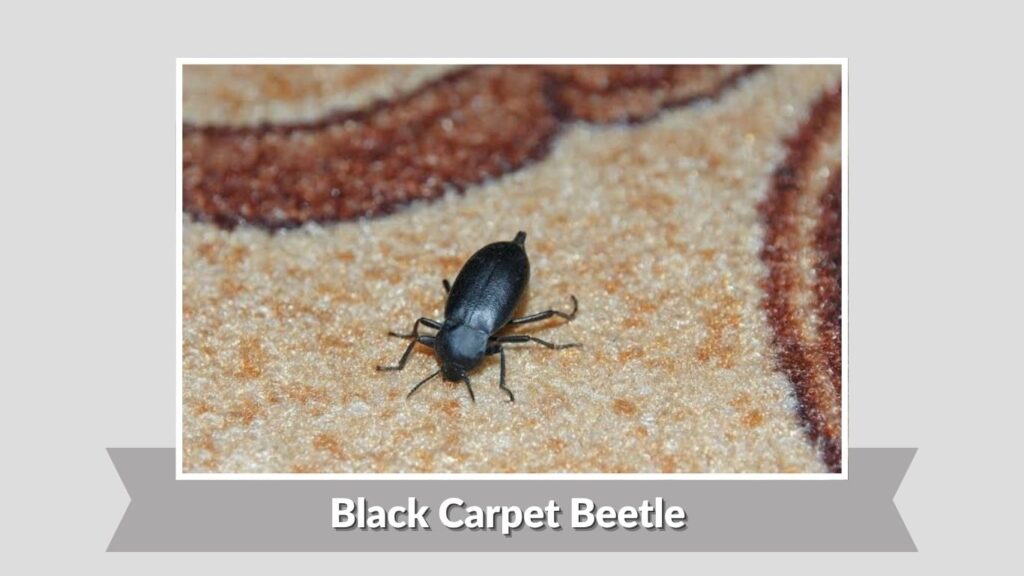
The black carpet beetle (Attagenus unicolor) is a small household beetle that may appear dark brown to black, especially as an adult. Although it does not always have a clear brown stripe, variations in body color and lighting can make it appear like a small black and brown beetle. It is especially important indoors because the larvae can damage natural fabrics and stored materials.
Identification
- Adult size: About 1/8 to 3/16 inch long
- Body color: Dark brown, reddish-brown, or nearly black
- Body shape: Oval and slightly elongated
- Surface: Usually smooth and somewhat shiny
- Antennae: Short with clubbed ends
- Larvae: Brown, elongated, hairy, and tapered toward the rear
- Common sign: Cast larval skins around closets or stored fabrics
Habitat
Black carpet beetles commonly live in homes, warehouses, museums, and other buildings containing natural fibers or stored animal products. Adults may gather near windows because they are attracted to light.
Larvae prefer dark, undisturbed places such as closets, drawers, beneath furniture, air ducts, and storage boxes. Outdoors, adults may feed on pollen and nectar before entering buildings.
Behavior
Adults are capable of flying and may enter through open windows or doors. Once indoors, females lay eggs close to suitable larval food.
The larvae avoid bright areas and often remain hidden for long periods. This behavior can allow an infestation to develop before the beetles themselves become noticeable.
Diet and Life Cycle
Black carpet beetle larvae feed on wool, fur, feathers, leather, dried animal products, dead insects, and sometimes stored foods. Adults generally feed outdoors on pollen.
Eggs hatch into larvae that pass through several molts before pupating. Development may take months depending on temperature and food availability. Removing infested materials and cleaning hidden areas helps interrupt their life cycle.
3. Varied Carpet Beetle
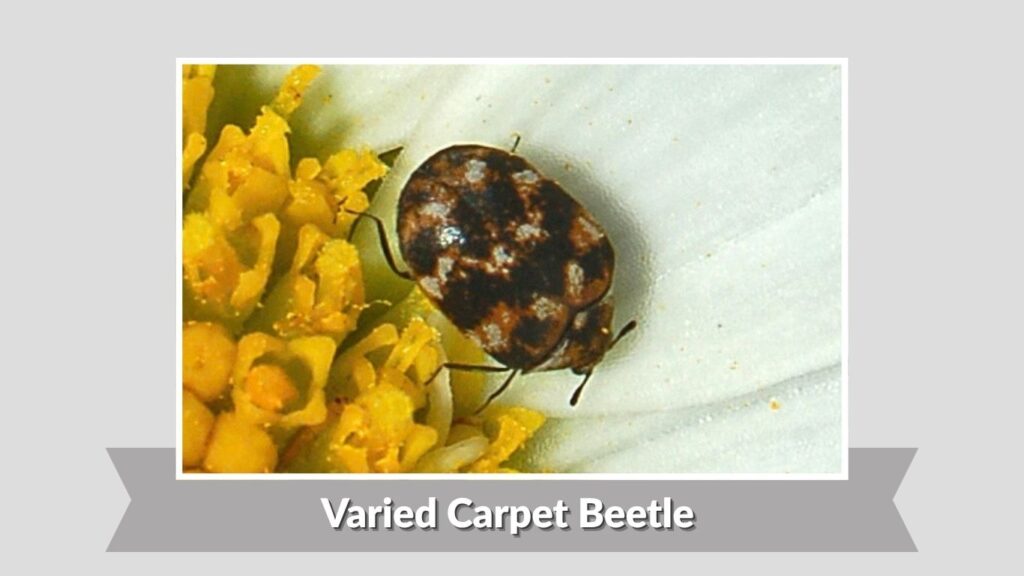
The varied carpet beetle (Anthrenus verbasci) is a tiny household beetle with a mottled combination of black, brown, white, and yellow scales. Because these markings form irregular bands and patches, it is sometimes described as a black and brown striped beetle or a small beetle with spots on its back.
Identification
- Adult size: About 1/16 to 1/8 inch long
- Body shape: Small, rounded, and dome-shaped
- Color: Mixture of black, brown, cream, yellow, and white
- Pattern: Irregular bands or patches across the wing covers
- Antennae: Short and clubbed
- Larvae: Brown and hairy with distinct tufts near the rear
- Appearance: Sometimes resembles a tiny patterned lady beetle
Habitat
Varied carpet beetles commonly occur in houses, museums, closets, attics, and storage areas. Adults are often noticed on windowsills, flowers, or near doors.
Larvae prefer quiet, dark places where natural fibers and organic debris accumulate, including underneath rugs, along baseboards, inside cabinets, and within upholstered furniture.
Behavior
Adult varied carpet beetles are attracted to sunlight and may fly indoors from flowering plants. Their larvae move slowly and avoid exposed areas.
Because larvae remain hidden, homeowners may first notice shed skins, damaged fabrics, or adult beetles near windows rather than seeing active larvae.
Diet and Life Cycle
Larvae eat wool, silk, fur, feathers, dried insects, animal hair, and other protein-rich materials. Adults feed primarily on pollen and nectar.
Females lay eggs near suitable food sources. Larvae may remain active for several months before pupating. The duration of the life cycle varies depending on temperature, humidity, and food quality.
4. Furniture Carpet Beetle
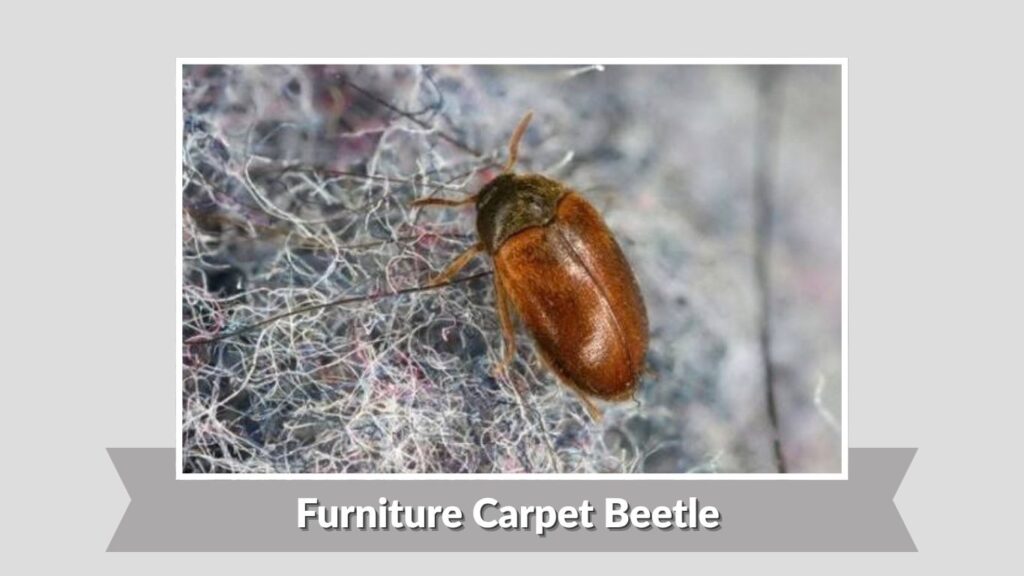
The furniture carpet beetle (Anthrenus flavipes) is another small patterned beetle commonly found indoors. Its mix of dark and light scales may give it a brown and black beetle appearance. Despite its name, damage is caused mainly by the larvae rather than the adult beetles.
Identification
- Adult size: About 1/8 inch long
- Body shape: Rounded or oval
- Color: Black, brown, yellowish, and whitish scales
- Pattern: Mottled or irregular patches
- Legs: Often yellowish-brown
- Larvae: Brown, hairy, and carrot-shaped
- Rear hairs: Longer tufts may be visible at the end of the larval body
Habitat
Furniture carpet beetles are commonly found in upholstered furniture, carpets, closets, bedding storage, museums, and areas containing feathers or animal-based materials.
Adults may also occur outdoors on flowers. Indoors, larvae tend to remain in dark locations beneath furniture or inside cracks where lint and animal hair collect.
Behavior
Adults can fly and are commonly attracted to windows and bright indoor spaces. Females search for suitable material where their larvae can feed after hatching.
Larvae move away from light and can remain concealed in furniture or storage areas. Their shed skins are often one of the first indications of their presence.
Diet and Life Cycle
The larvae consume wool, fur, silk, feathers, hair, dried insects, and other materials containing animal proteins. They can also damage upholstered furniture containing natural fibers.
Eggs hatch into feeding larvae, which molt several times before pupation. Adults emerge after the pupal stage and may move outdoors to feed on pollen before reproducing.
5. Brown Carpet Beetle
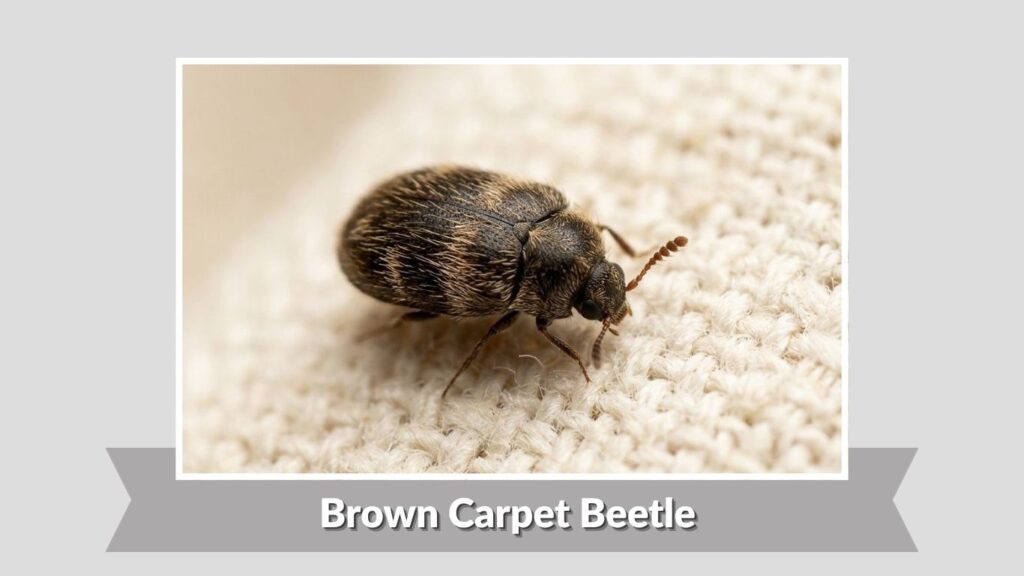
The brown carpet beetle (Attagenus smirnovi) has a dark head and thorax combined with brown wing covers. This contrast makes it a strong match for searches such as beetle with black head and brown body, brown beetle with black head, or small black and brown beetles found indoors.
Identification
- Adult size: Approximately 1/8 to 3/16 inch long
- Head: Dark brown to black
- Thorax: Usually dark or nearly black
- Wing covers: Reddish-brown to medium brown
- Body shape: Elongated oval
- Antennae: Short and clubbed
- Larvae: Brown, hairy, and somewhat tapered
Habitat
Brown carpet beetles are associated with warm indoor environments. They may occur in homes, offices, warehouses, museums, and heated buildings.
Larvae typically inhabit concealed places such as carpet edges, cupboards, closets, storage containers, and spaces underneath furniture. Adults are frequently seen near windows.
Behavior
Adults are capable flyers and often move toward light. Females place eggs near suitable larval food sources rather than in open areas.
The larvae prefer dark, protected locations. They may spread between rooms while searching for food, which can make it difficult to identify the original source of an infestation.
Diet and Life Cycle
Brown carpet beetle larvae consume wool, hair, feathers, fur, dead insects, and other dried animal materials. They may also feed on debris that accumulates in undisturbed household areas.
After eggs hatch, larvae develop through multiple molts. They eventually pupate in protected locations, after which adults emerge and begin the reproductive cycle again.
6. Banded Longhorn Beetle
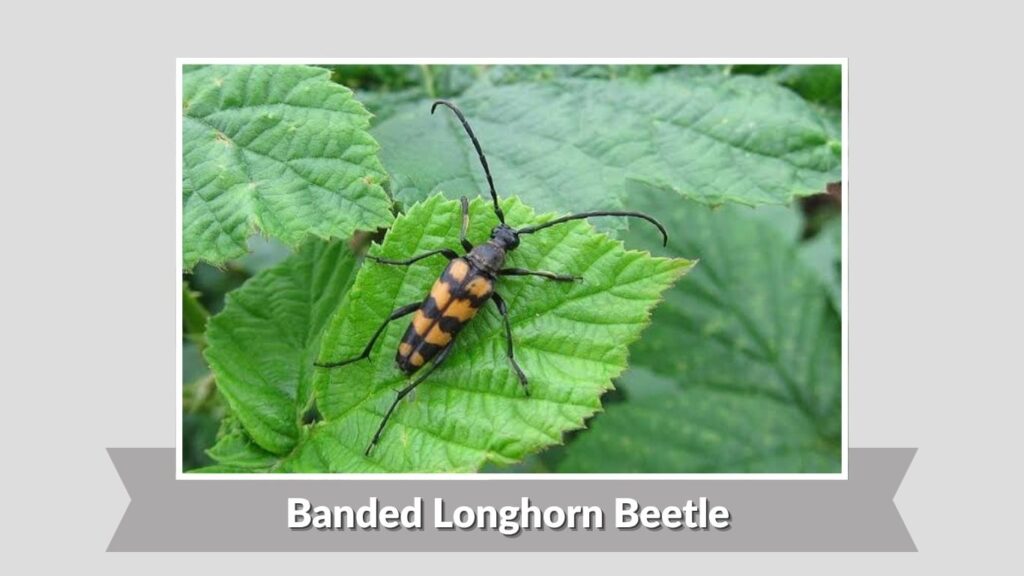
A banded longhorn beetle may be described as a black beetle with a brown stripe when its dark body is crossed by lighter brown, tan, or yellowish markings. Longhorn beetles are particularly easy to recognize because of their exceptionally long antennae, which may equal or exceed the length of the body.
Identification
- Body size: Varies widely by species
- Body shape: Elongated rather than rounded
- Color: Commonly black or dark brown
- Bands: Brown, tan, yellow, or pale stripes may cross the wing covers
- Antennae: Very long and strongly segmented
- Legs: Long and noticeable
- Wing covers: Hard, elongated, and often patterned
Habitat
Longhorn beetles are strongly associated with trees and wood. Adults can be found in forests, gardens, around cut timber, firewood piles, or near dead and dying trees.
Some adults are attracted to porch lights and may accidentally enter houses through open doors or windows. Finding one indoors does not necessarily indicate an indoor infestation.
Behavior
Adult longhorn beetles are often active during warm weather. Many species fly well and may be attracted to lights at night.
Their long antennae help them sense their surroundings and locate potential mates or suitable host plants. When disturbed, some species may produce squeaking or scraping sounds.
Diet and Life Cycle
Adult feeding varies by species and may include pollen, nectar, bark, leaves, or plant sap. The larvae are primarily wood borers and develop inside trunks, branches, logs, or dead wood.
Females lay eggs in bark crevices or suitable woody material. The larvae tunnel through the wood as they grow, eventually pupating inside or near the host. Adults later emerge through exit holes and continue the cycle.
7. Spotted Longhorn Beetle
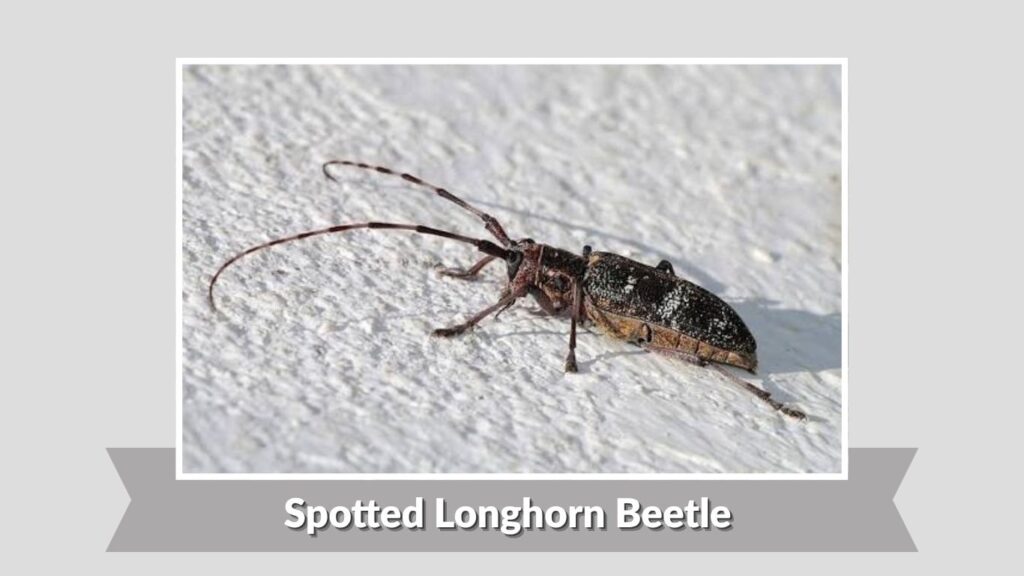
The spotted longhorn beetle is a useful match for searches involving a brown and black beetle with long antennae. Longhorn beetles vary greatly in color, but many species combine black, dark brown, tan, or pale markings across their wing covers. Their most distinctive feature is the pair of exceptionally long antennae, which immediately separates them from most small household beetles.
Identification
- Body size: Usually medium to large, depending on species
- Body shape: Long and narrow
- Color: Black, brown, or a combination of both
- Pattern: Spots, bands, or irregular markings may cover the wings
- Antennae: Often as long as or longer than the body
- Legs: Long and clearly visible
- Wing covers: Firm and usually elongated
- Head: Well developed with noticeable jaws
Habitat
Spotted longhorn beetles are primarily associated with wooded environments. They may be found around forests, gardens, dead trees, logs, freshly cut branches, lumber, and firewood.
Adults sometimes appear around porch lights during summer. A black and brown beetle in the house with very long antennae may simply have entered accidentally through an open door or window.
Behavior
Most longhorn beetles are active during warm months. Adults may crawl over tree bark or fly between host plants while searching for mates.
Their long antennae are highly sensitive and help them detect their surroundings. Many species remain outdoors throughout their life cycle, so occasional indoor appearances do not automatically indicate a household infestation.
Diet and Life Cycle
Larvae usually feed inside dead, weakened, or occasionally living wood. They create tunnels while consuming plant material beneath bark or deeper within wood.
Adult feeding varies by species and may include pollen, nectar, leaves, bark, or plant sap. Females deposit eggs on suitable woody material, and the larvae develop inside before pupating and emerging as adults.
8. Black-Spotted Click Beetle
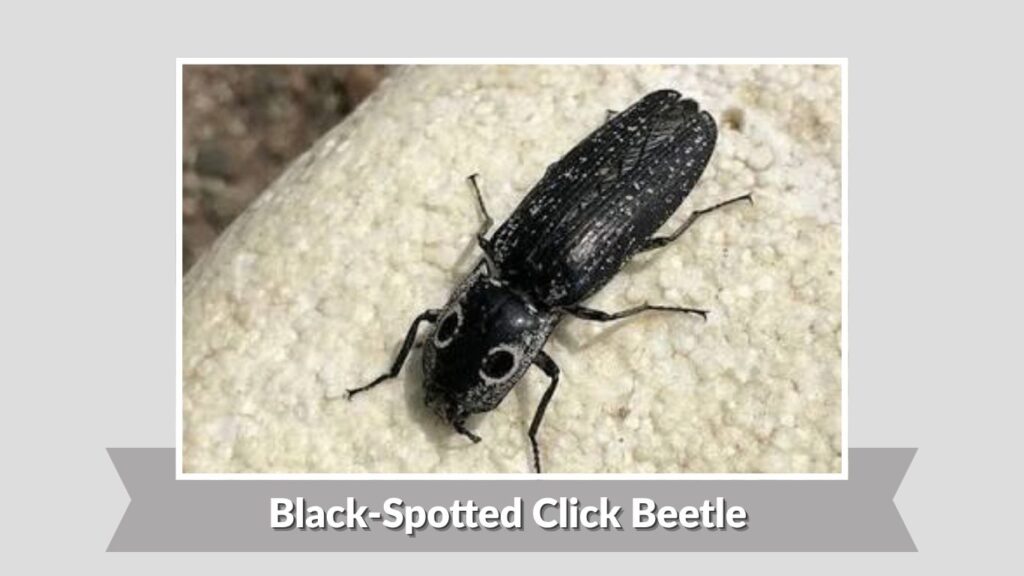
The black-spotted click beetle can match searches for a brown beetle with black spots or a long brown beetle with darker markings. Click beetles are known for their unusual ability to snap their bodies and launch themselves upward when placed on their backs. Their elongated form also helps distinguish them from rounded carpet beetles.
Identification
- Body shape: Narrow, long, and somewhat flattened
- Color: Brown, reddish-brown, or tan with dark markings
- Spots: Black dots or patches may occur on the wing covers
- Thorax: Often has pointed rear corners
- Antennae: Medium-length and segmented
- Legs: Relatively short compared with body length
- Movement: Can produce a distinctive clicking motion
- Larvae: Thin, hard-bodied wireworms
Habitat
Click beetles typically live outdoors in grasslands, gardens, agricultural fields, forests, and areas containing decaying vegetation. Adults may hide under bark, stones, logs, or plant debris during the day.
They frequently fly toward lights at night and can accidentally enter houses. An occasional click beetle indoors is generally an outdoor visitor rather than evidence of an infestation.
Behavior
Their most famous behavior is the clicking mechanism located between the thorax and abdomen. When trapped on their backs, click beetles flex their bodies rapidly, producing a click and throwing themselves into the air.
Adults are often nocturnal and may gather near outdoor lighting during warm evenings.
Diet and Life Cycle
Adult diets differ among species and may include plant material, nectar, pollen, or very little feeding. Their larvae, called wireworms, live mostly in soil or decaying wood.
Some wireworms eat plant roots and seeds, while others prey on small soil organisms. Development from egg to adult can take a year or longer in certain species.
9. Brown Prionid Beetle
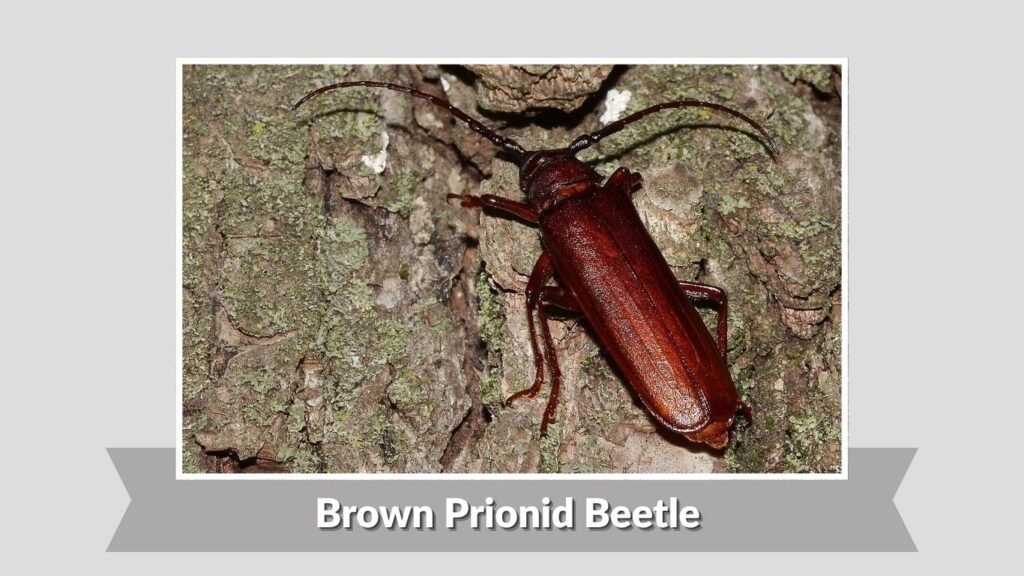
The brown prionid beetle belongs to the longhorn beetle family and is often large, elongated, and dark brown to nearly black. Depending on lighting, it may look like a black brown beetle or a beetle with a dark head and brown body. Its large size and long antennae usually make it easy to separate from tiny household pests.
Identification
- Body size: Often around 1 inch or longer
- Color: Reddish-brown, dark brown, or nearly black
- Body shape: Large, elongated, and robust
- Antennae: Long and strongly segmented
- Mandibles: Noticeable and relatively strong
- Wing covers: Hard, smooth, and brown to dark brown
- Legs: Sturdy and well developed
- Thorax: Broad and sometimes edged with small projections
Habitat
Brown prionid beetles are associated with forests, wooded properties, orchards, and areas containing tree roots or decaying wood. Their larvae usually develop underground in roots or woody material.
Adults may fly considerable distances and are sometimes attracted to bright exterior lights. For this reason, they may occasionally be found near garages, porches, windows, or inside houses.
Behavior
Adults are primarily active during warmer months and may fly at night. Their large size can make them look intimidating, but they generally try to escape rather than interact with people.
When handled roughly, their strong mandibles may be capable of a defensive pinch, so it is better to move them with a container instead of bare hands.
Diet and Life Cycle
The larvae feed primarily on woody roots and decaying underground plant material. They may remain in the larval stage for an extended period while growing beneath the soil.
Adults live for a much shorter period and focus mainly on reproduction. Females lay eggs near suitable trees or roots, allowing newly hatched larvae to reach their food source.
10. Two-Spotted Lady Beetle
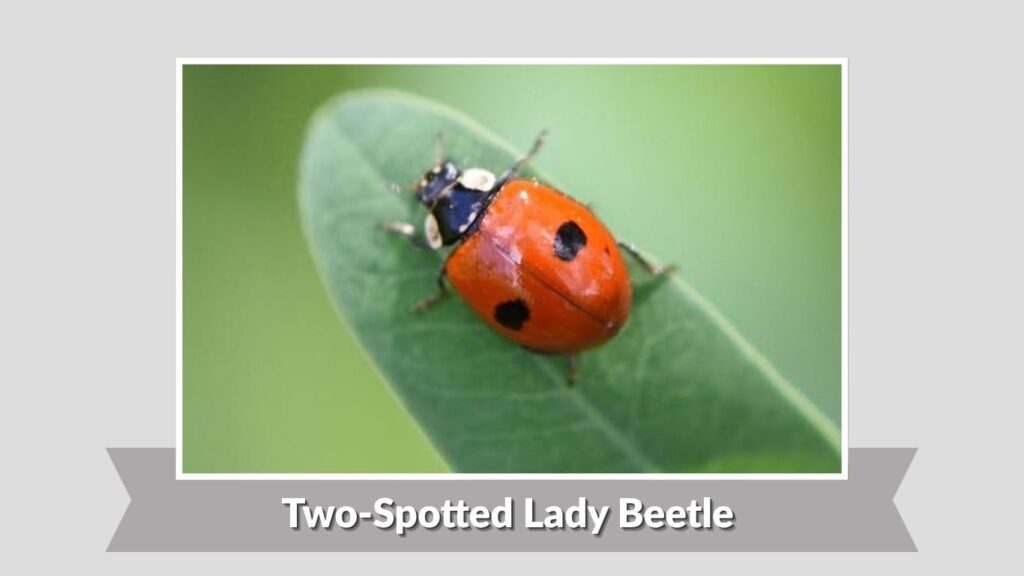
The two-spotted lady beetle can vary considerably in color. Some individuals are reddish or orange with black spots, while darker forms may appear mostly black with reddish-brown markings. These variations can lead people to describe them as a black and brown spotted beetle or a black and brown ladybug-looking beetle.
Identification
- Adult size: Usually about 1/8 to 1/4 inch long
- Body shape: Rounded and strongly dome-shaped
- Color: Red, orange, brownish, or black depending on form
- Markings: Commonly two contrasting spots
- Head: Small and partly hidden beneath the pronotum
- Antennae: Short
- Legs: Short and tucked underneath the body
- Larvae: Elongated, dark, and somewhat spiny
Habitat
Two-spotted lady beetles occur in gardens, fields, orchards, forests, and other places where aphids are abundant. They may be seen on trees, shrubs, flowers, and agricultural crops.
Like several other lady beetles, adults may enter sheltered spaces when preparing to overwinter. They can occasionally be found near windows, walls, attics, or other protected areas.
Behavior
These beetles are active predators. Adults and larvae move across leaves and stems while searching for soft-bodied insects.
They are capable flyers and can move between plants efficiently. Their bright or contrasting markings also help discourage predators by signaling that they may be distasteful.
Diet and Life Cycle
Both adults and larvae primarily feed on aphids and may also consume mites and other small soft-bodied insects.
Females place clusters of eggs near aphid colonies. The larvae hatch and feed actively before entering a pupal stage attached to a leaf or stem. Adults then emerge and continue hunting for prey.
FAQs
1. What is a black beetle with a brown stripe?
A black beetle with a brown stripe is often a larder beetle, especially when the brown or tan band crosses the front part of the wing covers and contains dark spots. However, some carpet beetles and longhorn beetles may also have similar black-and-brown patterns.
2. Why am I finding small black and brown beetles in my house?
Small black and brown beetles indoors may be carpet beetles or larder beetles. They can be associated with stored animal products, dead insects, pet food, wool, feathers, fur, hair, or accumulated organic debris. Species identification helps determine where to look for the source.
3. Is a black and brown beetle harmful?
Most black and brown beetles are not dangerous to people. However, carpet beetle larvae can damage fabrics and other natural materials, while certain wood-boring beetle larvae develop inside trees or wood. Large beetles may also pinch defensively if handled.
4. What is a brown beetle with black spots?
A brown beetle with black spots could belong to several groups, including click beetles, longhorn beetles, or patterned carpet beetles. Body shape, antenna length, size, and the exact arrangement of the spots are useful identification clues.
5. How do I identify a black and brown beetle?
Start by examining its size, body shape, antennae, stripe or spot pattern, and where it was found. A small rounded beetle indoors may indicate a carpet beetle, while an elongated beetle with very long antennae is more likely to be a longhorn beetle. A broad tan band across a dark body strongly suggests a larder beetle.