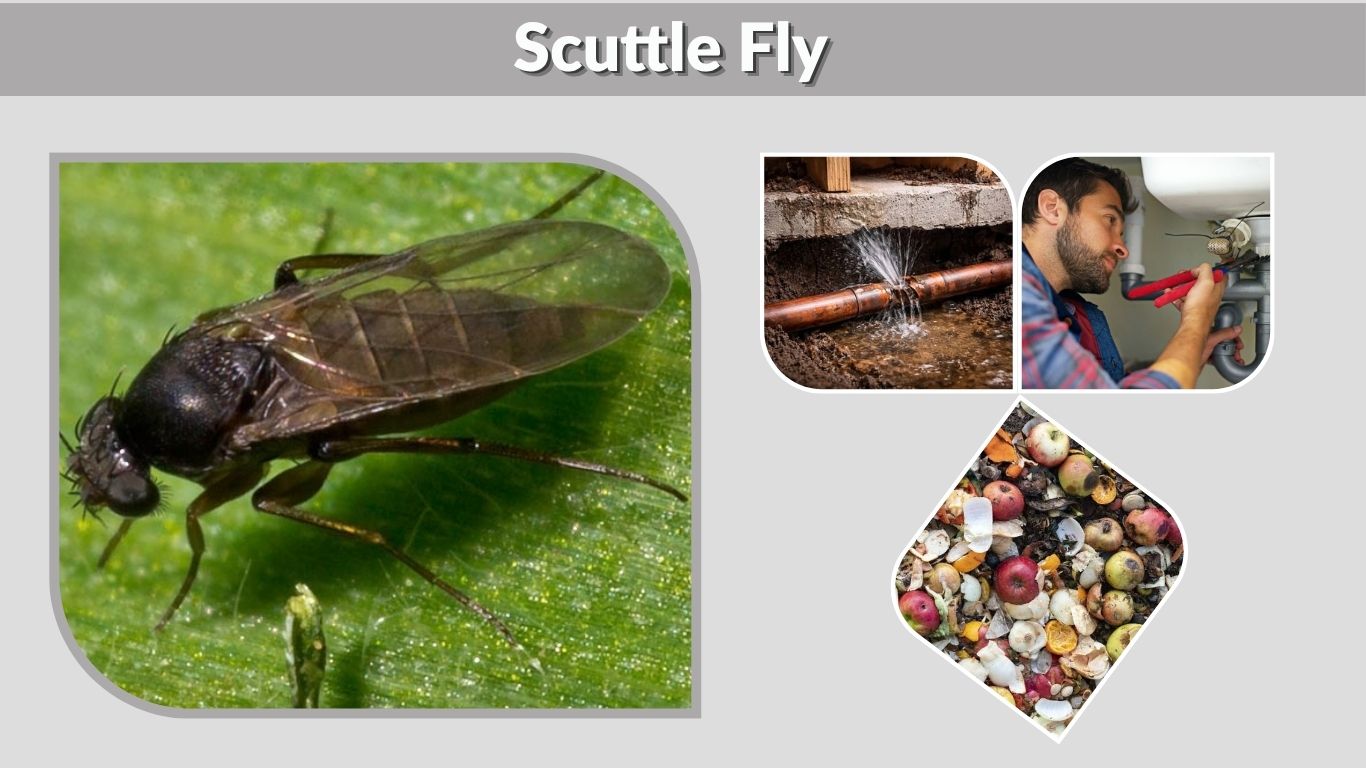
Scuttle flies are tiny insects in the family Phoridae, often noticed running rapidly across counters, floors, windows, or walls instead of immediately flying away. Also called phorid or humpbacked flies, they are commonly associated with moist, decaying organic material, drains, garbage, plumbing problems, and other hidden breeding sites. Although they are usually nuisance pests rather than biting insects, a persistent scuttle fly infestation can indicate sanitation or moisture issues that need attention. This guide explains identification, larvae, eggs, life cycle, infestations, traps, and effective control.
What Is a Scuttle Fly?
Scuttle flies belong to the large fly family Phoridae, which includes thousands of species. The name “scuttle fly” comes from their characteristic behavior: when disturbed, many species rapidly run or “scuttle” across a surface instead of immediately taking flight. Household species are particularly associated with damp locations containing decomposing organic material.
Scuttle Fly Identification
Common characteristics include:
- Size: Usually only a few millimeters long; household phorid flies may be around 1/8 inch.
- Color: Commonly brown, dark brown, blackish, or yellow-brown.
- Body shape: A noticeably arched or humpbacked thorax when viewed from the side.
- Wings: Clear wings with relatively simple venation.
- Movement: Fast, irregular running across surfaces is particularly distinctive.
- Location: Frequently found around drains, trash, moisture, plumbing leaks, or decomposing material.
Their small size can make identification difficult without magnification, especially because several other tiny household flies look similar.
Scuttle Fly vs Fruit Fly
Fruit flies and scuttle flies may appear in the same kitchens or food-handling areas, but their appearance, movement, and preferred breeding sites provide useful clues. Identifying the correct insect matters because eliminating fruit flies from overripe produce will not necessarily solve a phorid fly problem developing deep inside a drain or plumbing system.
Appearance and Behavior Differences
Fruit flies tend to hover and fly readily around fermenting fruit, vegetables, beverages, and food residue. Scuttle flies are more strongly characterized by their rapid running behavior and humpbacked profile.
Scuttle flies are also more likely to emerge from hidden organic material, including contaminated drains, garbage, or areas affected by sewer or plumbing leakage. University of Minnesota Extension specifically lists trash containers, drains, plumbing problems, and sewer leaks as common indoor sources.
If tiny flies continue appearing after fruit and food waste have been removed, checking drains and concealed moisture sources becomes especially important.
Scuttle Fly Eggs, Larvae, and Life Cycle
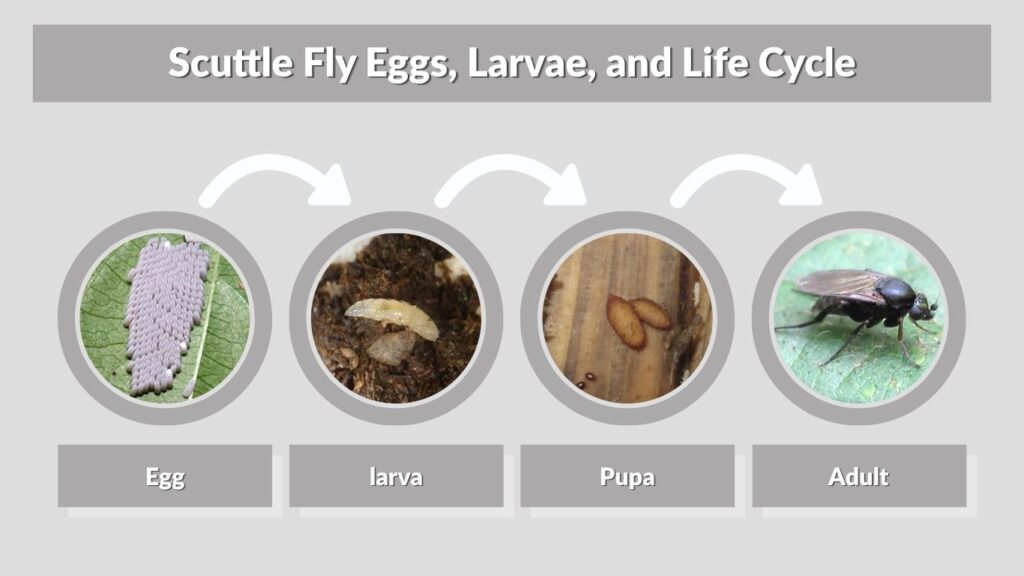
Like other true flies, scuttle flies undergo complete metamorphosis. Temperature, species, moisture, and available food influence development, so there is no single life-cycle duration that applies to every phorid fly. Warm, food-rich environments can allow some species to reproduce relatively quickly.
Stages of a Scuttle Fly
The life cycle has four major stages:
- Egg: Females deposit tiny eggs on or near suitable organic material.
- Larva: Pale, maggot-like larvae hatch and feed within the breeding material.
- Pupa: Mature larvae transform into pupae before becoming adults.
- Adult: Adults emerge, mate, and females search for new sites suitable for egg laying.
Research on the common forensic species Megaselia scalaris found development from egg to adult can take about 12.6 days at 25°C, although development changes substantially with temperature. Other phorid species may require several weeks.
Scuttle Fly Larvae and Maggots
Scuttle fly larvae usually remain close to moist organic material where food is readily available. Because they may develop underneath residue, inside drains, beneath damaged flooring, or around hidden plumbing problems, homeowners can see adults without ever finding the larvae.
Finding and removing this larval habitat is the most important part of long-term control.
Where Do Scuttle Flies Come From?
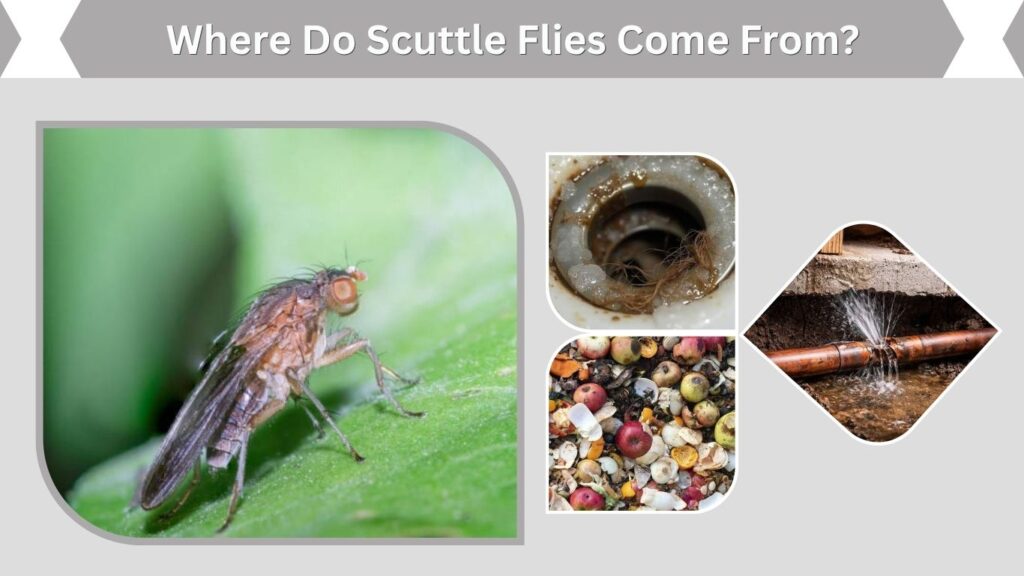
An occasional adult may simply enter from outdoors, but repeated indoor activity generally means a suitable breeding source exists nearby. The source can sometimes be obvious, such as neglected garbage, but serious infestations may originate from locations that cannot easily be seen.
Common Breeding Sources
Potential sources include:
- Organic buildup inside drains
- Garbage or decomposing food
- Leaking plumbing
- Sewer-line problems
- Moist debris beneath appliances
- Decaying organic material beneath flooring
- Poorly cleaned trash containers
- Damp animal or plant material
Because adults can emerge some distance from the breeding material, the room where flies are visible is not necessarily where the infestation began.
Do Scuttle Flies Bite Humans?
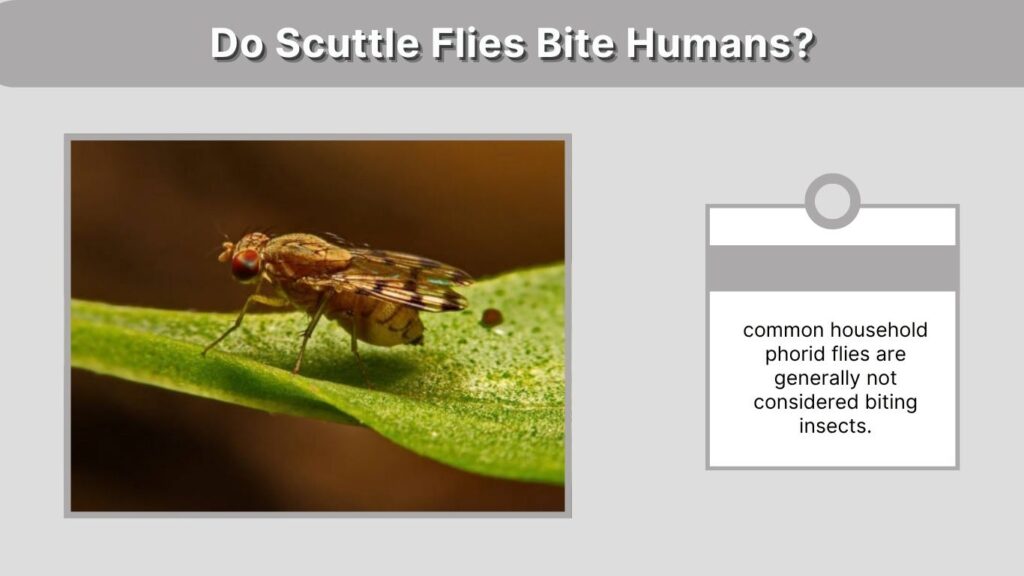
Scuttle fly bites are frequently searched for online, but common household phorid flies are not generally regarded as biting pests. People sometimes notice a tiny fly around the skin and assume that an unrelated itchy mark was caused by it.
Are Scuttle Flies Dangerous?
For most households, scuttle flies are primarily a nuisance. University of Minnesota Extension notes that they generally are not considered a direct health problem, although flies associated with contaminated material may potentially transport bacteria mechanically from dirty surfaces.
That makes sanitation important, particularly when flies occur around food-preparation areas. Unexplained bites or persistent skin irritation should not automatically be attributed to scuttle flies, since mosquitoes, fleas, bed bugs, mites, and other causes are more likely explanations.
Signs of a Scuttle Fly Infestation
One or two flies do not always indicate a major problem. However, repeated sightings over several days, adults emerging from the same location, or large numbers around drains and windows can suggest active breeding.
Infestation Warning Signs
Look for:
- Numerous tiny humpbacked flies indoors
- Flies running rapidly across counters or floors
- Activity around sinks and floor drains
- Flies gathering near windows or lights
- Continued activity despite removing exposed food
- A persistent unpleasant drain or sewer odor
- Moisture or unexplained plumbing leakage
A sudden heavy infestation can justify inspecting areas below floors or around drain and sewer connections, particularly when routine cleaning makes little difference.
How to Get Rid of Scuttle Flies
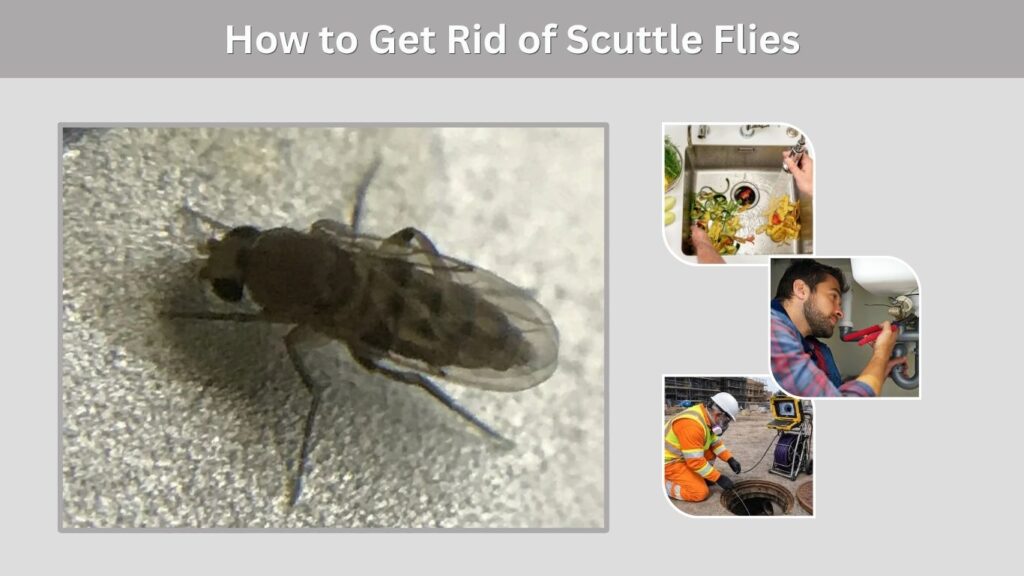
Effective scuttle fly control depends much more on eliminating the breeding source than on killing visible adults. Spraying adult flies may temporarily reduce numbers, but another generation can emerge if larvae remain in decomposing material.
Scuttle Fly Control Steps
Start by locating the source. Clean food residue and garbage, wash trash containers, inspect drains, correct plumbing leaks, and investigate persistent sewage odors. Organic buildup inside a drain should be physically removed where practical.
Drain-cleaning or biological/enzyme products may help break down organic residue when used according to their labels, but they cannot repair damaged pipes or sewer leaks. Avoid mixing different drain chemicals.
If flies repeatedly emerge from beneath flooring or from a structural opening, professional plumbing or pest-control inspection may be necessary.
Using a Scuttle Fly Trap
Sticky traps can capture adults and help determine where activity is greatest. They are especially useful for monitoring around sinks, drains, utility rooms, and suspected breeding areas.
However, traps alone rarely eliminate an established infestation. Their best role is showing whether fly numbers are increasing or decreasing while the underlying moisture and organic-material problem is corrected.
Scuttle Flies in Forensic Entomology
Some scuttle flies have an unusual scientific importance. Species such as Megaselia scalaris can colonize decomposing remains, including bodies located indoors or in concealed environments that larger flies may have difficulty reaching.
Why Forensic Scientists Study Them
Their developmental stages can sometimes contribute information when estimating a minimum postmortem interval. Studies have documented phorid flies on concealed remains and in cases where they provided useful entomological evidence. Their relevance depends on species identification, environmental temperature, developmental stage, and the circumstances of the scene.
FAQs
1. Why are scuttle flies called scuttle flies?
They are named for their habit of rapidly running or “scuttling” across surfaces instead of immediately flying when disturbed.
2. How long does a scuttle fly live?
Lifespan and development depend on the species and environmental conditions. Some species can develop from egg to adult in roughly two weeks under warm conditions, while others require considerably longer.
3. Can scuttle flies come from drains?
Yes. Drains containing moist decomposing organic material can provide suitable breeding habitat, especially when there is heavy buildup or a plumbing problem.
4. Do scuttle flies bite?
Common household scuttle flies are not generally considered biting insects. If unexplained bite-like marks occur, another insect or a non-insect cause should be considered.
5. What is the fastest way to eliminate a scuttle fly infestation?
Finding and removing the breeding source is the key. Cleaning organic residue, fixing leaks, correcting drain or sewer problems, and eliminating damp decomposing material usually provide more lasting control than simply killing adult flies.