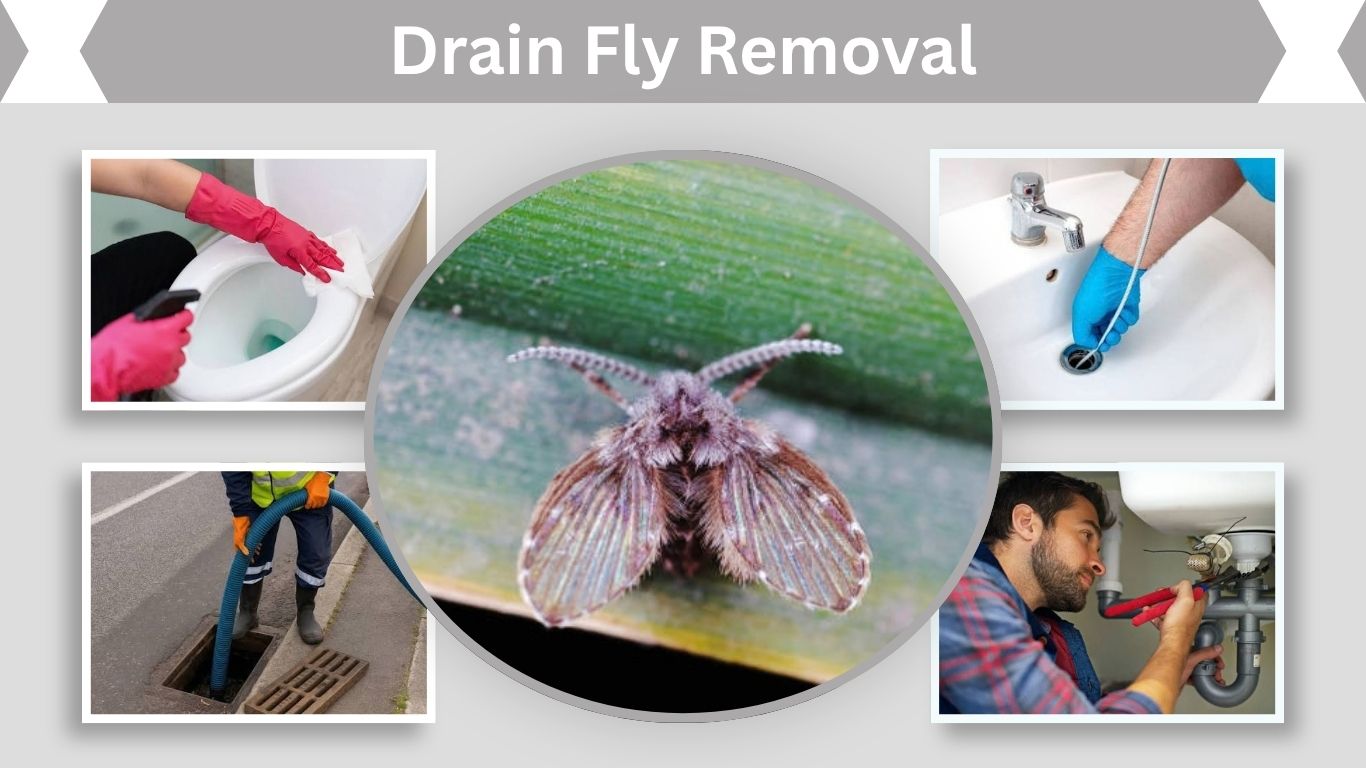
Drain fly removal requires more than killing the tiny adult flies you see around sinks, bathrooms, or kitchens. These insects usually reproduce in moist organic buildup inside drains, pipes, floor drains, or other wet areas. Unless this breeding material is removed, new adults can continue appearing. Effective control involves finding the source, scrubbing away drain slime, managing larvae, and correcting moisture problems. This guide explains how to remove drain flies, which methods work best, and when professional removal may be necessary.
How to Remove Drain Flies
Successful drain fly removal starts by eliminating the organic material where eggs and larvae develop. Adult sprays or traps may reduce visible flies, but they rarely solve an infestation by themselves. The most effective approach combines thorough drain cleaning, moisture control, and continued monitoring until no new adults emerge.
Find the Breeding Source
Check common locations such as:
- Bathroom sink drains
- Shower and bathtub drains
- Kitchen sinks
- Floor drains
- Garbage disposals
- Utility sinks
- Overflow openings
- Wet plumbing areas
- Rarely used drains
Look for drains where adult flies repeatedly gather.
Scrub the Drain
Remove the drain cover when possible and pull out visible hair or debris. Use a stiff drain brush to scrub the inner walls of the pipe.
This step is important because drain fly larvae live within the slimy organic film attached to drain surfaces. Simply running water through the pipe may leave this material behind.
Drain Fly Larvae Removal
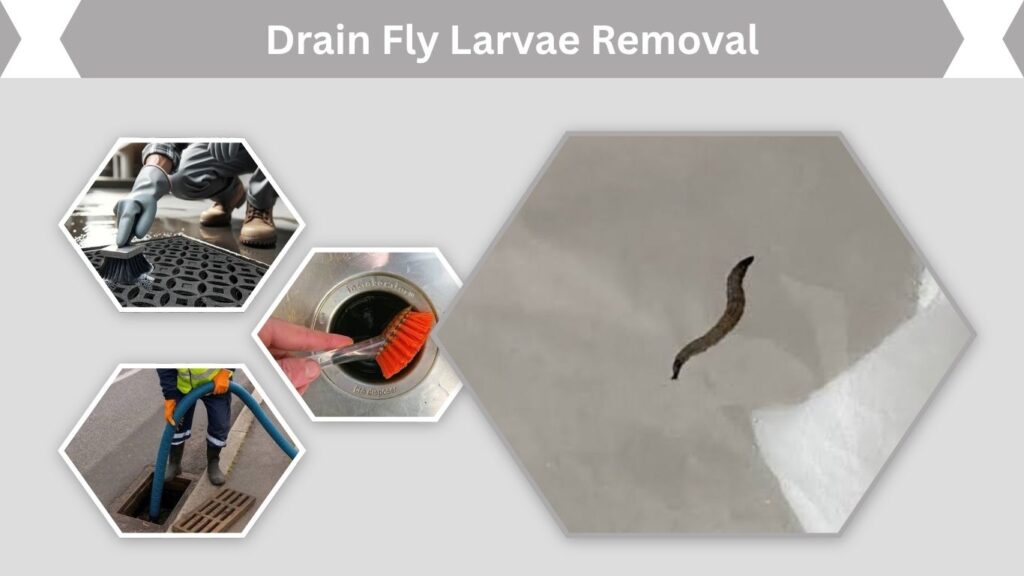
Drain fly larvae are small, worm-like organisms that live in moist organic residue. Removing visible larvae alone provides temporary control because eggs and other larvae may remain deeper inside the breeding material. Effective larval removal therefore focuses on destroying their habitat rather than simply killing individual insects.
How to Remove Drain Fly Larvae
Use these steps:
- Remove accessible sludge and debris.
- Scrub the sides of the drain.
- Clean underneath drain covers.
- Remove hair and soap buildup.
- Flush loosened material away.
- Clean surrounding wet surfaces.
- Repeat treatment if activity continues.
Use an Enzyme Drain Cleaner
An enzyme or biological drain-cleaning product can help break down organic buildup that is difficult to reach manually.
Apply the product according to its label instructions. These products are generally designed to digest organic residue rather than simply kill adult insects.
Never mix different drain cleaners, bleach, acids, or other chemicals because dangerous reactions can occur.
DIY Drain Fly Removal
Many minor drain fly infestations can be handled without professional pest treatment. The main goal should be cleaning rather than repeatedly spraying adult flies. DIY control works best when you can identify a specific contaminated drain and there are no underlying sewer leaks or major plumbing problems.
Simple DIY Removal Steps
A practical routine includes:
- Identify the affected drain.
- Remove hair and visible debris.
- Scrub the drain thoroughly.
- Clean the drain stopper and cover.
- Treat remaining organic buildup appropriately.
- Fix leaks or standing water.
- Monitor adult activity.
- Repeat cleaning when necessary.
Removing Adult Drain Flies
Adult flies can be vacuumed from walls or captured with sticky traps placed near suspected drains.
Traps can also help determine whether activity is declining after cleaning. However, killing adults alone will not stop larvae already developing inside organic material.
How to Remove Drain Flies From a Bathroom
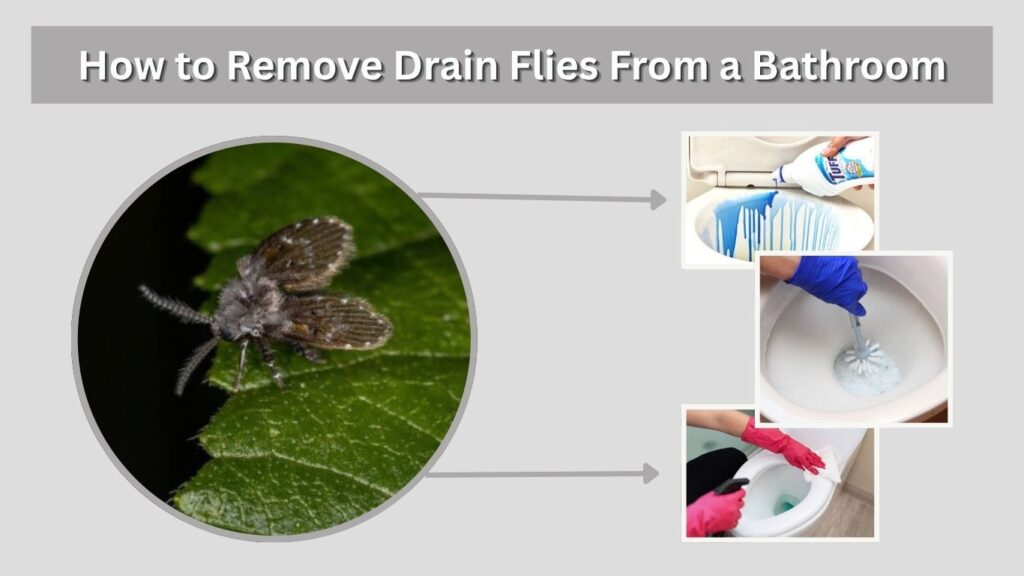
Bathrooms are common drain fly problem areas because showers, sinks, toilets, and floor drains provide constant moisture. Soap residue, hair, skin cells, and other organic debris can accumulate inside plumbing and create suitable breeding conditions.
Check Every Bathroom Drain
Do not assume the drain closest to the adult flies is automatically the source.
Inspect:
- Shower drains
- Sink drains
- Bathtub drains
- Floor drains
- Sink overflow openings
- Plumbing around toilets
If one drain is cleaned while another remains contaminated, the flies may continue appearing.
Check for Hidden Moisture
Drain flies found around walls, floors, or the base of a toilet may indicate a leak rather than an ordinary dirty drain.
Persistent dampness, sewer odors, damaged grout, or water around fixtures should be investigated. Hidden wastewater contamination can support substantial populations and may require professional plumbing repair.
How to Remove Drain Flies From a Kitchen
Kitchen drain flies commonly develop where food particles, grease, and organic material accumulate. Garbage disposals and sink drains require particular attention because residue can remain on surfaces even when the drain appears to flow normally.
Clean Kitchen Breeding Areas
Pay attention to:
- Sink drains
- Garbage disposals
- Drain stoppers
- Sink overflow areas
- Dishwasher connections
- Trash and recycling areas
- Wet areas under the sink
Clean food residue promptly and repair leaking plumbing.
Fruit Flies vs Drain Flies
Small kitchen flies are not always drain flies. Fruit flies are attracted to fermenting fruit, sugary liquids, beverage residue, and food waste.
Drain flies typically have fuzzy, broad wings and often remain near wet plumbing. Correct identification helps ensure that you treat the actual breeding source.
Drain Fly Removal Products
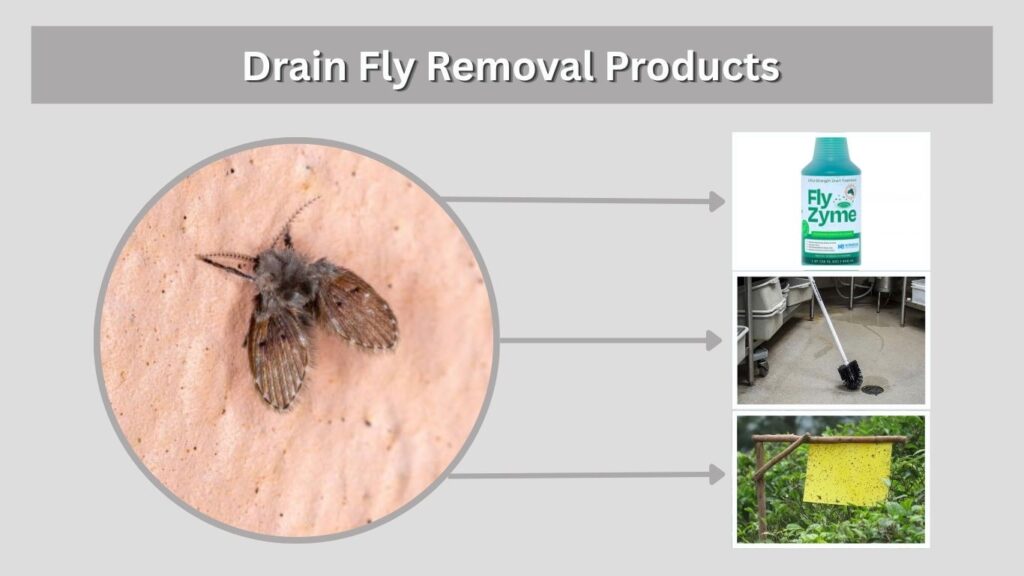
Several products are marketed for drain fly problems, including enzyme gels, biological drain cleaners, brushes, sticky traps, and adult insect-control products. Each serves a different purpose. Products that remove organic buildup generally address the breeding source more directly than products designed only to kill adult insects.
Useful Product Types
Common options include:
- Drain brushes
- Enzyme drain gels
- Biological drain cleaners
- Sticky monitoring traps
- Drain-cleaning tools
- Appropriate adult fly traps
Follow all product instructions carefully.
What About Baking Soda?
Baking soda and similar household methods may help with general drain cleaning, but they should not replace physical removal of heavy organic buildup.
If a drain contains substantial slime, scrubbing the pipe surfaces is usually more important than simply pouring a household mixture into the opening.
Professional Drain Fly Removal
Professional assistance becomes useful when an infestation continues despite thorough cleaning. A persistent population can indicate damaged pipes, sewage contamination, hidden standing water, or another breeding site that cannot be reached through routine household cleaning.
When to Call a Professional
Consider professional help if:
- Drain flies keep returning.
- Multiple rooms are affected.
- Flies emerge from walls or floors.
- Sewer odors are present.
- Plumbing leaks are suspected.
- Larvae repeatedly appear after cleaning.
- You cannot locate the breeding site.
Pest Control or Plumber?
A pest-management professional can identify the insect and help locate breeding sites. A plumber may be more appropriate when the problem involves damaged pipes, leaking toilet seals, sewage leaks, or drainage failures.
In persistent infestations, both types of expertise may sometimes be necessary.
How to Prevent Drain Flies After Removal
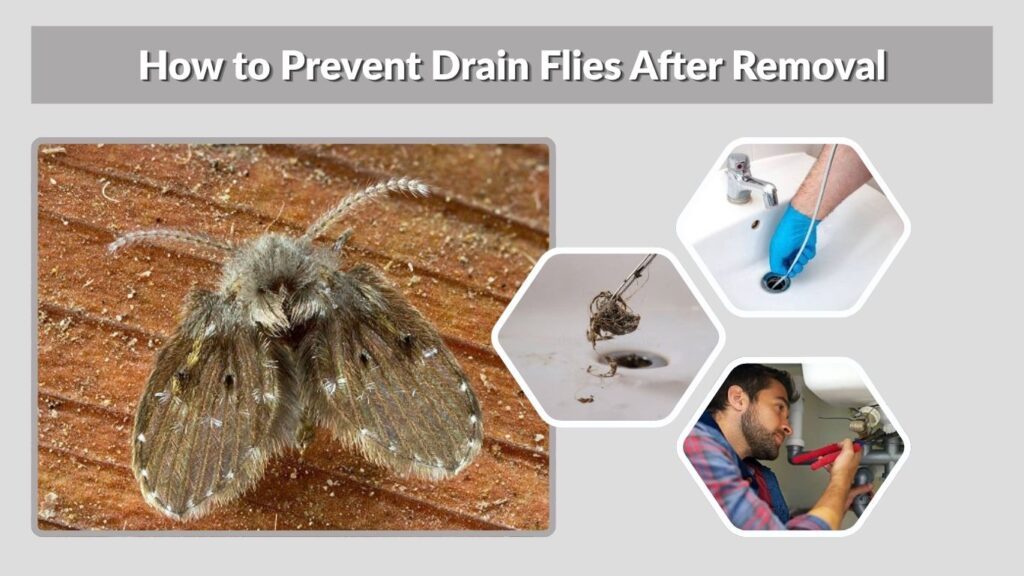
Long-term prevention depends on keeping drains clean and correcting conditions that allow organic material and moisture to remain undisturbed. Regular maintenance can prevent a small buildup from becoming a full drain fly infestation.
Prevention Tips
- Clean drains regularly.
- Remove hair and debris.
- Repair plumbing leaks.
- Keep wet areas clean.
- Maintain rarely used drains.
- Clean garbage disposals.
- Prevent standing water.
- Investigate sewer odors.
- Monitor previously affected drains.
FAQs
1. What is the best way to remove drain flies?
Find the breeding source and physically remove the organic film inside the affected drain. Cleaning the larval habitat is more important than simply killing adult flies.
2. How do you remove drain fly larvae?
Scrub contaminated drain surfaces, remove slime and debris, and clean surrounding wet areas. Appropriate enzyme or biological drain cleaners may help break down remaining organic material.
3. Can I remove drain flies myself?
Yes. Many minor infestations can be controlled through thorough drain cleaning and moisture management. Persistent infestations may require professional assistance.
4. How long does drain fly removal take?
Adults may continue appearing briefly after cleaning because some larvae or pupae were already developing. Activity should gradually decrease when the breeding source has been completely removed.
5. When should I use professional drain fly removal?
Seek professional assistance when flies repeatedly return, multiple areas are affected, sewer odors or leaks are present, or the breeding source cannot be found.