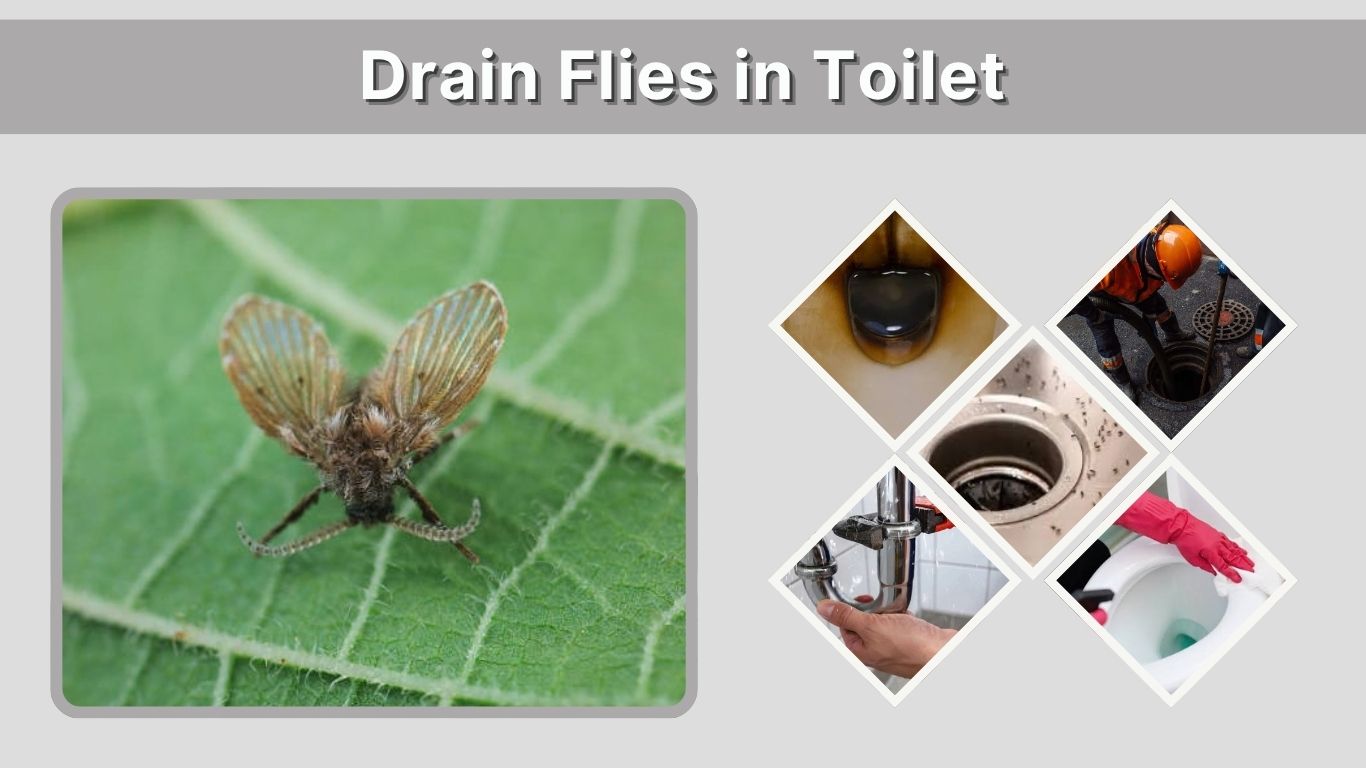
Finding drain flies in the toilet can be unpleasant, especially when tiny flies or worm-like larvae appear around the bowl, tank, or bathroom floor. Drain flies usually breed in moist organic buildup rather than clean toilet water itself, so their presence may point to hidden residue, an unused toilet, plumbing problems, or nearby drains. Identifying the real breeding source is essential. With proper cleaning, moisture control, and plumbing inspection when necessary, most toilet drain fly problems can be eliminated effectively.
What Are Drain Flies in a Toilet?
Drain flies, also called moth flies or sewer flies, are tiny insects that thrive in damp places containing decomposing organic material. Adults are often seen resting on bathroom walls or near plumbing fixtures. When they appear around a toilet, they may be breeding in hidden buildup inside plumbing, around the toilet base, or in another nearby wet location.
What Do Toilet Drain Flies Look Like?
Adult drain flies are usually easy to distinguish from common house flies. Typical characteristics include:
- Very small body size
- Gray, brown, or dark coloration
- Fuzzy body and wings
- Broad, moth-like wings
- Weak, short-distance flight
- Frequent resting on bathroom walls
- Slow movement around plumbing fixtures
They may look like tiny moths rather than conventional flies.
Can Drain Flies Live in Toilets?
Drain flies can occur around toilets, but a frequently flushed, properly functioning toilet bowl is not usually an ideal breeding site.
They require a moist layer of organic material where eggs and larvae can develop. This may exist under the toilet rim, in neglected plumbing, around a leaking seal, inside an unused fixture, or in a nearby floor drain.
What Causes Drain Flies in the Toilet?
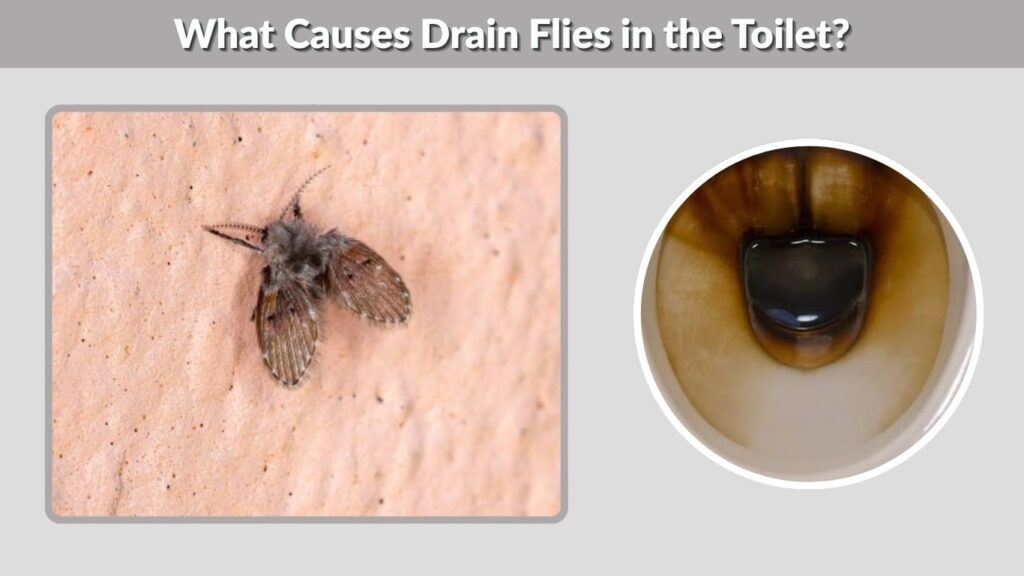
Drain flies appear when moisture and organic debris remain undisturbed long enough to support their life cycle. A toilet problem may therefore involve more than the visible bowl. Inspect the rim, tank, base, nearby drains, and plumbing connections when adults repeatedly appear in the same bathroom.
Common Causes
Possible sources include:
- Organic buildup under the toilet rim
- A rarely used toilet
- Dirty or stagnant plumbing
- Leaking toilet seals
- Moisture around the toilet base
- Nearby floor drains
- Sewage leaks
- Septic system problems
- Accumulated sludge in drain lines
- Persistent bathroom moisture
Drain Flies Coming From Under the Toilet
Flies appearing around the base of a toilet deserve special attention. A failed wax ring or another damaged seal can allow moisture, odors, and contaminated material to accumulate below the fixture.
This hidden area may provide suitable conditions for drain flies.
If the toilet rocks, leaks, produces persistent sewer odors, or has visible moisture around its base, a plumber should inspect it rather than relying solely on insect treatments.
Can Drain Flies Come Through the Toilet?
Adult flies can sometimes appear to emerge from a toilet or associated plumbing, particularly when a fixture has been unused or a plumbing problem exists.
However, repeated activity does not automatically mean flies are traveling directly from the sewer. They may be breeding in organic material closer to the fixture and simply emerging near the bowl.
Drain Fly Larvae in the Toilet
Drain fly larvae are small, worm-like immature insects that develop in wet organic matter. Finding them in or around a toilet indicates that a moist breeding environment is nearby. Their exact origin should be investigated because simply flushing the visible larvae away may not eliminate the underlying population.
What Do Drain Fly Larvae Look Like?
Drain fly larvae may appear as:
- Small worm-like organisms
- Thin, elongated bodies
- Pale, gray, or translucent coloration
- Darker ends
- Slow crawling movement
- Tiny black or dark-looking worms
- Larvae associated with slimy wet material
Their appearance can lead people to describe them as black worms in the toilet.
Drain Fly Larvae in Toilet Bowl
Larvae found in toilet water may have entered from another section of the plumbing or from buildup around the fixture.
A clean toilet bowl with regularly moving water generally provides fewer suitable surfaces than a dirty drain. Therefore, check under the rim, overflow areas, nearby drains, and surrounding plumbing rather than focusing only on the bowl water.
Drain Fly Larvae and Septic Systems
Homes using septic systems can experience drain fly activity if organic material and moisture become available around plumbing or wastewater components.
A few drain flies do not automatically indicate septic failure. However, persistent sewer odors, backups, unusually slow drainage, wastewater leakage, or repeated insect problems can justify professional inspection of the plumbing or septic system.
How to Get Rid of Drain Flies in the Toilet
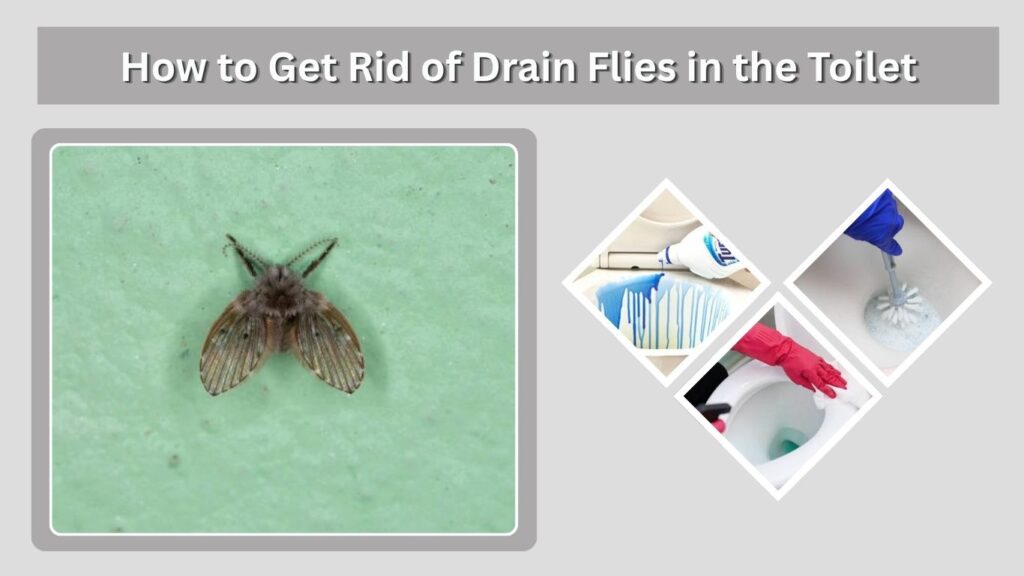
Successful control depends on removing the material where drain fly larvae are developing. Killing visible adults may reduce the immediate nuisance, but the population can return if eggs and larvae remain in hidden organic buildup. Begin with detailed cleaning and then investigate plumbing issues if the insects continue appearing.
Clean the Toilet Thoroughly
A useful cleaning routine includes:
- Scrub beneath the toilet rim.
- Clean the bowl thoroughly.
- Remove visible slime and mineral buildup.
- Clean around the toilet base.
- Wipe areas behind the toilet.
- Inspect the tank for unusual contamination.
- Clean nearby floor drains.
- Remove standing water around the fixture.
- Check for leaks after flushing.
Pay particular attention to hidden areas that remain damp between cleanings.
Inspect Nearby Drains
The toilet may not actually be the main source. Bathroom sinks, shower drains, tubs, and floor drains can produce adult drain flies that later gather around the toilet.
If several fixtures are present, inspect and clean each one.
A simple monitoring trap or clear adhesive placed near suspected drains may help identify where adult flies are emerging.
Remove Organic Buildup
Where accessible, physical cleaning is one of the most effective approaches. Drain fly larvae live within slimy organic film, so removing that material eliminates both their food and habitat.
Enzyme or biological drain-cleaning products may help break down inaccessible organic material when used according to label directions.
Never mix different drain cleaners or household chemicals.
How to Get Rid of Drain Fly Larvae in a Toilet
Visible larvae can be removed quickly, but complete control requires finding the source. If larvae repeatedly return after flushing and cleaning, they are likely developing somewhere that remains contaminated. Repeated appearances should prompt inspection of the toilet’s hidden surfaces, seals, nearby drains, and wastewater plumbing.
Clean Rather Than Only Flush
Flushing can remove larvae that are visible in the bowl, but it may leave breeding material untouched.
Scrubbing surfaces is more useful because it physically removes organic film.
Clean the toilet rim, bowl, nearby plumbing surfaces, and any accessible areas that remain wet or slimy. Continue monitoring over the following days for renewed activity.
Check for Plumbing Problems
Consider a plumbing inspection if you notice:
- Water around the toilet base
- Persistent sewer odors
- A rocking or loose toilet
- Repeated drain fly larvae
- Slow drainage
- Frequent toilet backups
- Moist flooring
- Flies emerging from under the toilet
These signs may indicate a damaged seal, drain problem, or another moisture source that ordinary cleaning cannot correct.
Drain Flies in Toilet Tank and Around the Rim
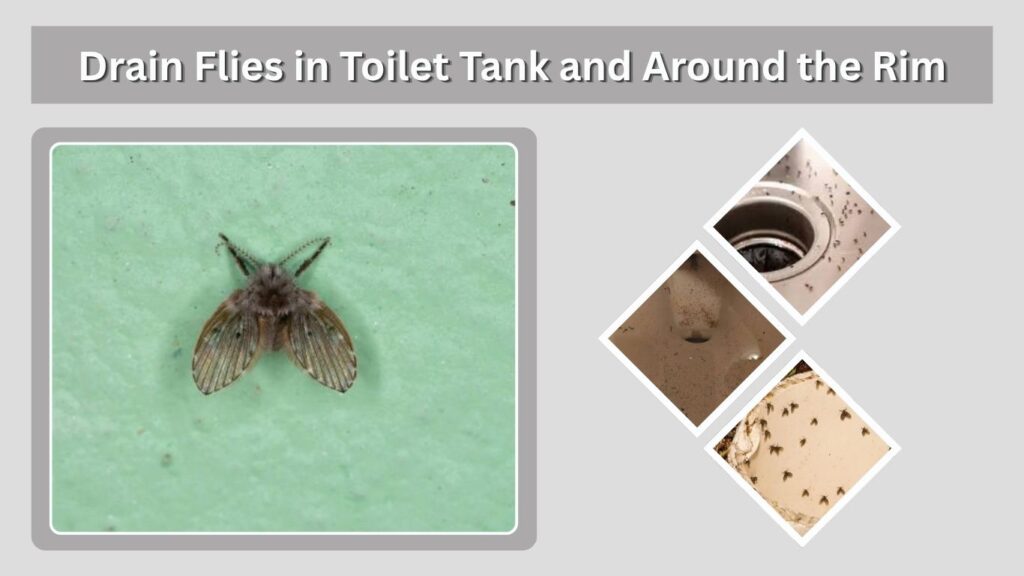
Although most toilet tanks contain relatively clean water, neglected tanks can accumulate biofilm, sediment, or other material. Drain flies seen around the tank may also originate elsewhere in the bathroom, so activity should be evaluated throughout the entire toilet area rather than assuming the tank is responsible.
Drain Flies in the Toilet Tank
Inspect the tank if flies repeatedly appear when the lid is opened. Look for heavy organic buildup, unusual sludge, contamination, or stagnant conditions.
Clean the tank according to the toilet manufacturer’s recommendations and correct any problems that allow contaminated water or debris to enter.
Do not damage internal rubber seals or components with inappropriate chemicals.
Drain Flies Around the Toilet Rim
The underside of the rim can remain wet and accumulate deposits that are difficult to see.
Regular scrubbing helps remove material from this area. If flies continually emerge from rim openings despite thorough cleaning, investigate whether contamination exists farther inside the plumbing system.
How to Prevent Drain Flies in Toilets
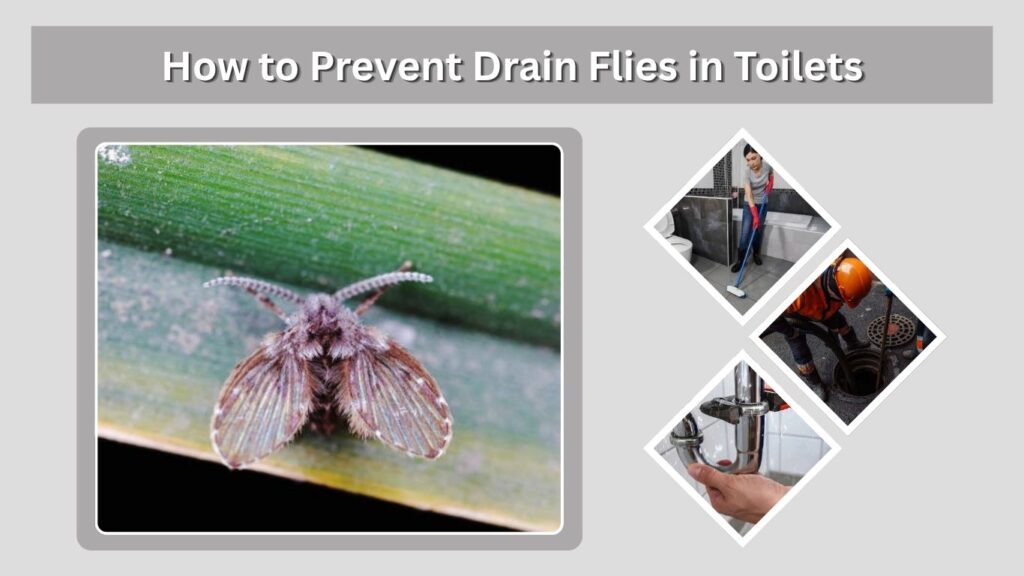
Prevention focuses on sanitation, moisture control, and proper plumbing maintenance. A clean, regularly used toilet should provide few suitable breeding areas for drain flies. Bathrooms with leaks, stagnant fixtures, or hidden wastewater problems require extra attention because those conditions can support recurring populations.
Prevention Tips
To prevent future infestations:
- Clean toilets regularly.
- Scrub beneath the rim.
- Repair leaks promptly.
- Keep the toilet base dry.
- Maintain nearby drains.
- Flush rarely used toilets periodically.
- Improve bathroom ventilation.
- Investigate sewer odors.
- Repair damaged toilet seals.
- Keep floor drains clean.
- Address slow or backed-up plumbing.
Rarely Used Toilets
Guest bathrooms, vacant properties, RV toilets, and other infrequently used fixtures can develop stagnant conditions.
Regular inspection and maintenance can prevent organic buildup from remaining undisturbed. If a toilet will be unused for a long period, follow appropriate plumbing maintenance procedures for the specific system rather than simply leaving the fixture unattended.
Drain Flies vs Other Worms in the Toilet
Not every small worm found in a toilet is a drain fly larva. Other insects or organisms can occasionally appear in bathroom fixtures, particularly where wastewater or plumbing problems exist. Accurate identification matters because different organisms require different solutions.
Signs That Suggest Drain Fly Larvae
Drain fly larvae are more likely when adult fuzzy moth-like flies are also present nearby.
If no adult drain flies are visible and unusual worms continue appearing, collect a clear photo or specimen for identification. Persistent unexplained organisms in a toilet may justify professional pest or plumbing evaluation rather than assuming drain flies are responsible.
FAQs
1. Can drain flies come from a toilet?
Yes, drain flies can appear around toilets, particularly when organic buildup, stagnant plumbing, leaks, or nearby drains provide suitable breeding conditions.
2. Why are there black worms in my toilet?
Small dark worms may be drain fly larvae, especially if fuzzy adult drain flies are also present. However, other organisms can look similar, so identification is important.
3. How do I get rid of drain flies in a toilet?
Clean the bowl, rim, base, tank, and nearby drains thoroughly. Remove organic buildup and repair any leaks or damaged plumbing that keeps the area moist.
4. Why do drain fly larvae keep appearing in my toilet?
Repeated larvae usually indicate that breeding material remains somewhere nearby. Possible sources include the rim, drain lines, a leaking toilet seal, nearby floor drains, or wastewater plumbing.
5. Should I call a plumber for drain flies around my toilet?
Consider a plumber if drain flies persist despite thorough cleaning or if you notice leaks, sewer odors, slow drainage, backups, moisture around the toilet base, or insects emerging from beneath the fixture.