

Flea eggs are tiny, whitish, oval-shaped structures that can quickly lead to a household infestation if left undetected. Female fleas lay eggs on animals, but the eggs often fall into carpets, bedding, furniture, and floor cracks. Because they are extremely small, homeowners may overlook them until adult fleas begin appearing. Understanding what flea eggs look like, where they develop, and how to remove them is essential for effective flea control. This guide explains flea egg identification, hatching times, life cycle stages, and practical methods for preventing infestations.
What Are Flea Eggs?
Flea eggs are the first developmental stage in the flea life cycle. Adult female fleas produce eggs after feeding on blood from suitable hosts, including cats and dogs. Unlike the eggs of some other parasites, flea eggs are not attached firmly to animal fur. They commonly fall into surrounding environments where developing larvae can find shelter and food.
Flea Egg Identification
- Color: White, off-white, or slightly translucent.
- Shape: Smooth and oval, resembling miniature grains of rice.
- Size: Approximately 0.5 millimeters long.
- Texture: Smooth, without a sticky coating.
- Visibility: Barely visible to the naked eye.
- Movement: Flea eggs remain motionless and cannot jump or crawl.
What Do Flea Eggs Look Like?
Flea eggs resemble extremely small white specks with rounded, oval bodies. Their light coloration makes them difficult to distinguish from dust, fabric fibers, or other household debris. They are especially challenging to recognize against light-colored bedding and carpets. Examining suspected eggs with a magnifying glass can help reveal their characteristic smooth surfaces and oval shapes.
Flea Eggs vs. Flea Dirt
Flea eggs are pale and oval, whereas flea dirt consists of dark specks containing digested blood.
When placed on damp white paper, flea dirt may produce reddish-brown stains. This simple observation can help distinguish flea droppings from ordinary dirt, although suspected eggs may require closer examination.
Where Do Fleas Lay Their Eggs?
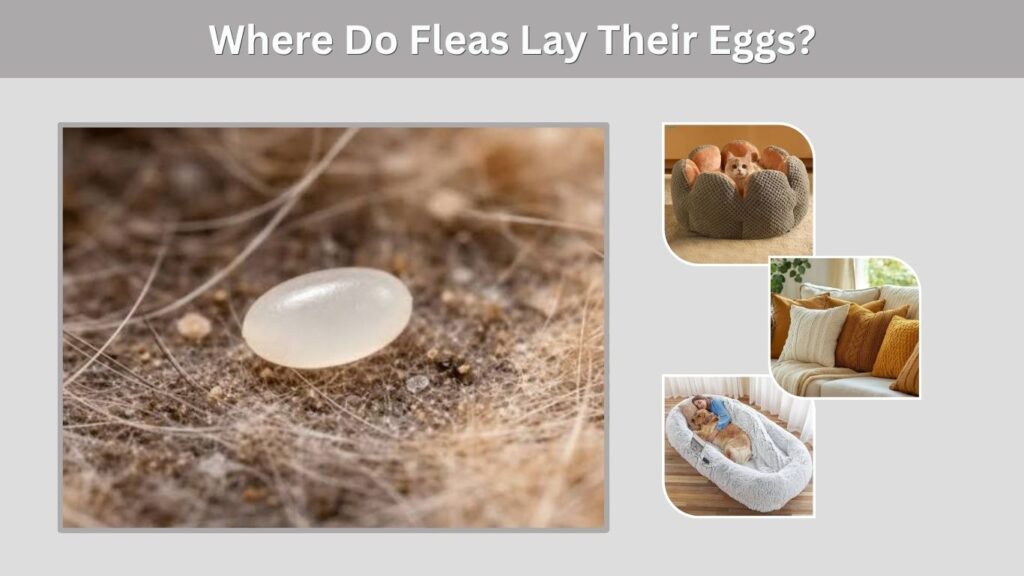
Adult fleas commonly lay eggs while living on cats, dogs, and other suitable animals. However, these eggs are not firmly attached to the host’s fur. They fall into areas where pets spend time, allowing larvae to develop in sheltered surroundings. Understanding these locations helps homeowners identify likely infestation sites and concentrate cleaning efforts effectively.
Common Places to Find Flea Eggs
- Pet bedding: Blankets, cushions, and sleeping mats.
- Carpets: Fibers and areas where pets frequently rest.
- Sofas: Upholstery, cushions, and furniture crevices.
- Human beds: Mattresses and bedding used by flea-infested pets.
- Floor cracks: Protected gaps along baseboards and flooring.
- Outdoor shelters: Shaded areas frequented by infected animals.
Cat Flea Eggs vs. Dog Flea Eggs
Cat fleas and dog fleas are closely related species that commonly infest domestic animals. Despite their names, cat fleas frequently infest dogs, while dog fleas can also affect cats. Their eggs are extremely similar in appearance, making species identification difficult without examining adult fleas. Both species can contribute to household infestations when eggs accumulate in suitable indoor environments.
Are Cat and Dog Flea Eggs Different?
Cat flea eggs and dog flea eggs are generally small, whitish, and oval.
Their appearance is not a reliable way to identify the flea species. Adult fleas require closer examination of body characteristics for accurate identification.
How Long Does It Take Flea Eggs to Hatch?
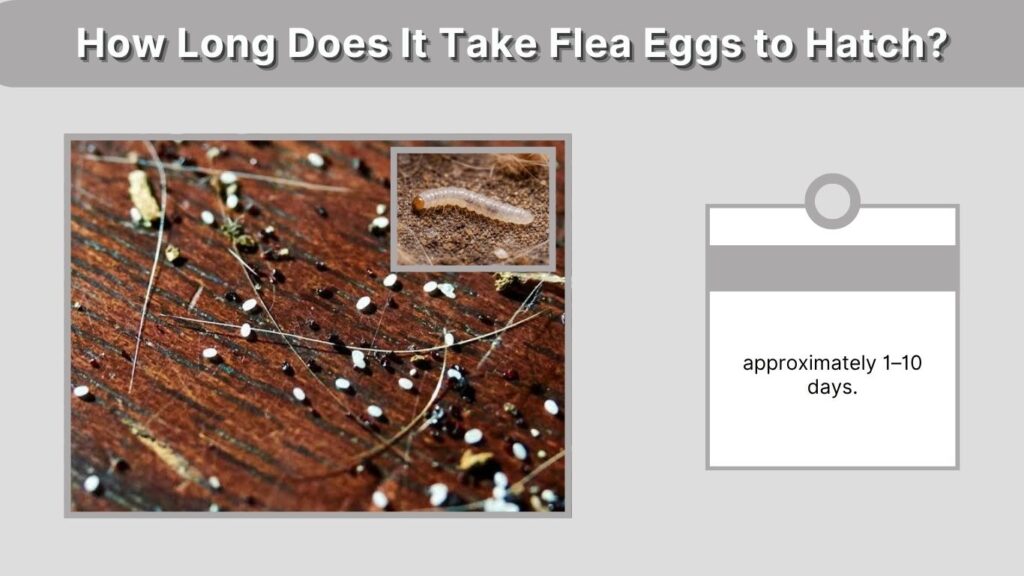
Flea egg development depends heavily on environmental conditions, particularly temperature and humidity. Warm, humid environments generally support faster development, while unfavorable conditions can delay hatching or reduce survival. Flea eggs commonly hatch within several days, but their development varies considerably. Understanding this timeline explains why household infestations may continue even after adult fleas are treated.
Flea Egg Hatching Time
Under favorable conditions, flea eggs commonly hatch within approximately 1–10 days.
Newly hatched larvae move into protected areas where they feed on organic debris, particularly adult flea feces. They do not immediately develop into biting adult fleas.
Flea Life Cycle: From Eggs to Adults
Fleas undergo complete metamorphosis, meaning they pass through four distinct developmental stages. Each stage has different environmental requirements and vulnerabilities. Understanding the entire flea life cycle is important because treatments targeting only adult fleas may not eliminate immature stages. Eggs, larvae, and pupae can remain hidden in carpets and other protected household locations.
Four Stages of the Flea Life Cycle
- Egg: Female fleas lay small, pale eggs that fall from host animals.
- Larva: Worm-like larvae hatch and feed on organic material, including flea dirt.
- Pupa: Larvae develop protective cocoons where they transform into adults.
- Adult: Mature fleas emerge, find hosts, feed on blood, and reproduce.
Why Flea Infestations Keep Returning
Flea pupae can remain protected inside cocoons for extended periods.
Because some immature stages survive initial treatments, newly emerged adults may appear weeks later. Consistent cleaning and coordinated pet treatment help interrupt this cycle.
Can Flea Eggs Live in Carpets and Beds?
Carpets and bedding provide protected environments where flea eggs may accumulate after falling from pets. While the eggs themselves do not feed, developing larvae require suitable conditions and organic material. Shaded carpet fibers, furniture crevices, and pet sleeping areas can support immature flea stages, making regular cleaning essential for household flea management.
Flea Eggs in Carpets
Carpets can collect flea eggs, larvae, and adult flea droppings, particularly where animals regularly sleep.
Thorough vacuuming helps remove eggs and other immature stages. Pay additional attention to carpet edges, areas beneath furniture, and commonly used pet resting locations.
Flea Eggs on Beds
Flea eggs may fall onto human bedding when infested pets sleep on beds.
Wash removable bedding according to fabric instructions, using hot water when suitable. Vacuum mattress seams and surrounding flooring to remove loose debris and immature fleas.
How to Get Rid of Flea Eggs in Your Home

Effective flea egg removal requires cleaning the environment while treating affected animals. Because fleas develop through several life stages, eliminating visible adults alone may not stop an infestation. Regular vacuuming, laundering, veterinary-approved flea prevention, and appropriate environmental treatment can help interrupt reproduction. Severe infestations may require professional pest management and continued monitoring.
Effective Flea Egg Removal Methods
- Vacuum regularly: Clean carpets, rugs, upholstery, and floor edges thoroughly.
- Wash pet bedding: Launder blankets and washable cushions using suitable hot-water settings.
- Clean furniture: Vacuum upholstered furniture and crevices where eggs collect.
- Treat all pets: Ask a veterinarian about appropriate flea-control products.
- Use labeled treatments: Apply indoor flea-control products only according to their instructions.
- Repeat cleaning: Continue sanitation while remaining flea stages develop and emerge.
What Kills Flea Eggs?
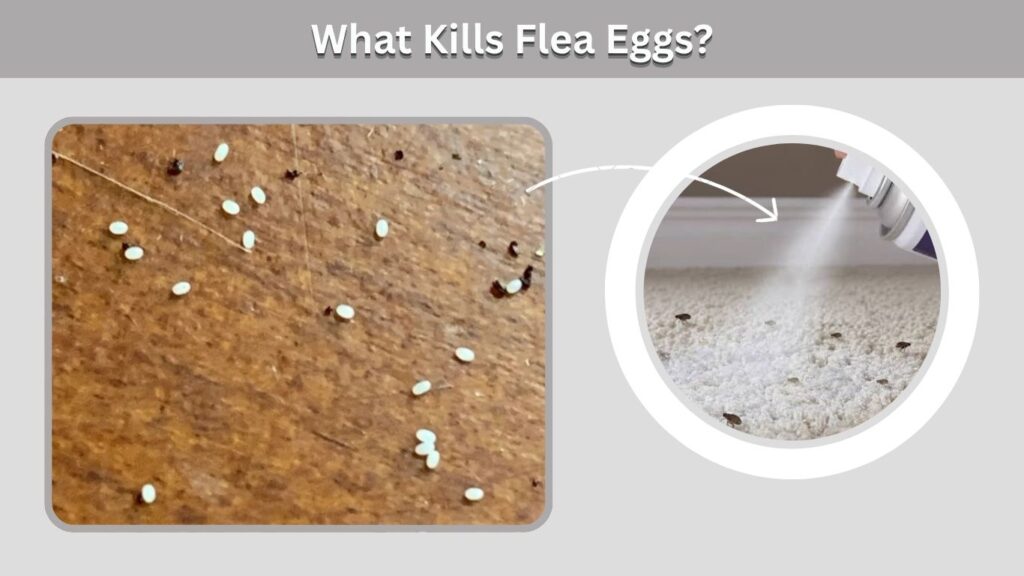
Flea eggs are vulnerable to certain environmental conditions and physical removal methods. However, not every flea-control product kills eggs directly, and some products mainly target adult fleas or developing larvae. Successful treatment requires addressing multiple life stages rather than relying on a single spray or household remedy. Proper cleaning remains an important part of long-term management.
Effective Flea Egg Control Methods
Vacuuming physically removes many flea eggs from carpets and furniture. Washing suitable fabrics with detergent and hot water can also help eliminate immature fleas.
Some registered environmental treatments contain insect growth regulators that interrupt flea development. Their effectiveness depends on the active ingredient, application instructions, and targeted life stage.
Avoid applying rubbing alcohol, essential oils, or unapproved pesticides to pets or bedding.
How to Prevent Flea Eggs in Your Home
Preventing flea eggs from accumulating begins with controlling adult fleas on animals. Female fleas reproduce after feeding, making consistent pet protection especially important. Household sanitation also reduces the number of immature fleas developing in carpets and furniture. Regular inspections and preventive treatment can reduce infestation risk throughout the year.
Practical Flea Prevention Tips
Maintain veterinarian-recommended flea prevention for dogs and cats, even during seasons when flea activity appears reduced.
Wash pet bedding frequently, vacuum high-traffic areas, and inspect animals for adult fleas or flea dirt. Address suspected infestations promptly before large numbers of eggs accumulate.
Frequently Asked Questions
1. What Do Flea Eggs Look Like to the Human Eye?
Flea eggs appear as tiny white or translucent oval specks measuring approximately 0.5 millimeters. They can be difficult to distinguish from household debris.
2. How Long Do Flea Eggs Take to Hatch?
Flea eggs commonly hatch within 1–10 days, depending on temperature, humidity, and other environmental conditions.
3. Can Flea Eggs Survive in Human Beds?
Yes. Flea eggs can fall onto mattresses and bedding when infested animals rest there. Regular cleaning and appropriate pet treatment help control the infestation.
4. Does Vacuuming Remove Flea Eggs?
Yes. Thorough vacuuming removes many flea eggs, larvae, and other flea-related debris from carpets and upholstery, although repeated cleaning is usually necessary.
5. What Is the Best Way to Kill Flea Eggs?
Use a coordinated approach involving frequent vacuuming, washing suitable bedding, and veterinarian-approved flea treatment for pets. Environmental flea-control products may also be necessary for persistent infestations.
