
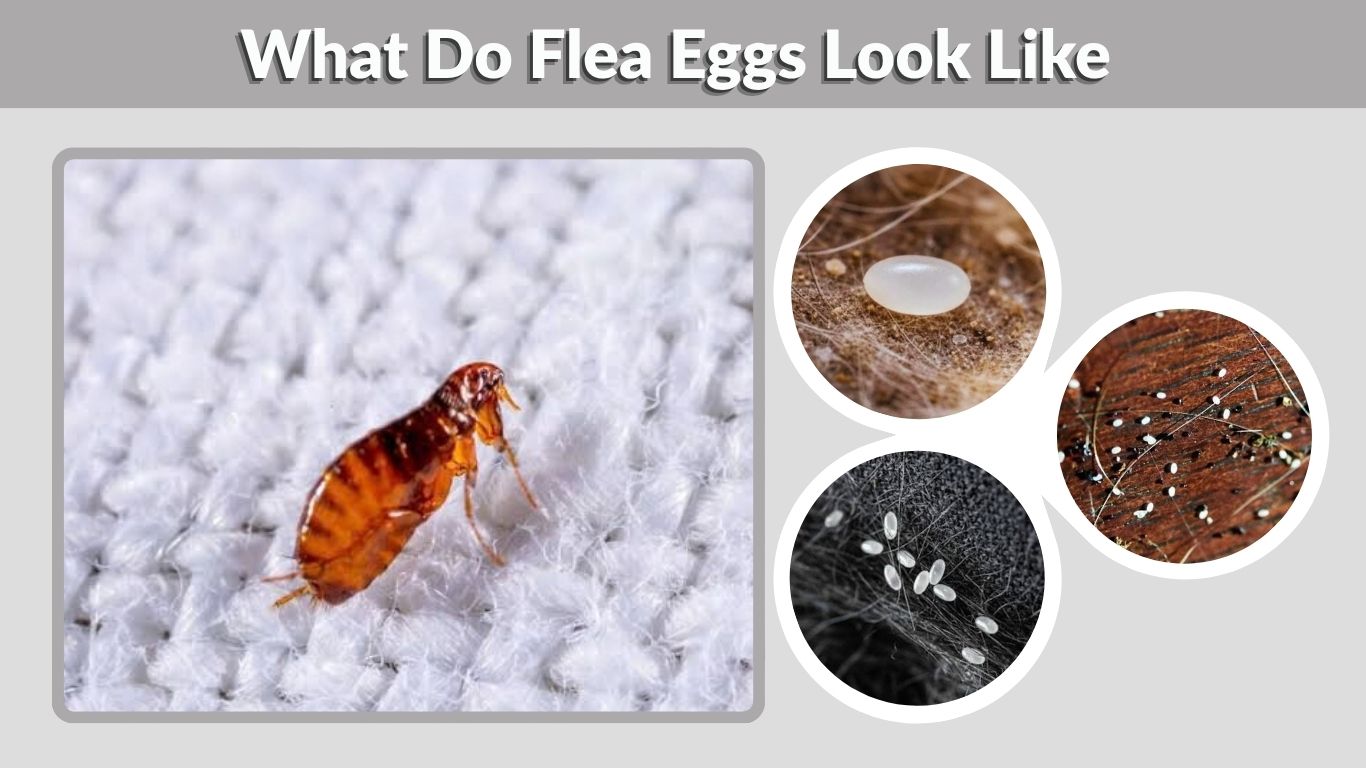
Flea eggs look like tiny white or pearl-colored oval specks, usually measuring about 0.5 millimeters long. They are difficult to notice without close inspection, especially when hidden in carpets, pet bedding, or furniture. Adult female fleas lay eggs on animals, but the eggs commonly fall into surrounding areas. Identifying them early can help prevent a growing infestation. This guide explains flea egg size, color, shape, and appearance, including how to distinguish flea eggs from flea dirt, larvae, and other insect eggs found around your home.
What Do Flea Eggs Look Like to the Human Eye?
Flea eggs are extremely small, smooth, oval structures that may resemble miniature grains of white rice. Unlike adult fleas, they do not have visible legs or move independently. Their pale coloration makes them difficult to recognize on light fabrics. On dark surfaces, several eggs may appear as scattered white specks when viewed closely.
Flea Egg Identification Features
- Color: Pearly white, off-white, or slightly translucent.
- Shape: Oval with smooth, rounded ends.
- Size: Approximately 0.5 millimeters long.
- Surface: Smooth and non-sticky.
- Movement: Completely motionless.
- Visibility: Barely visible without magnification.
Can You See Flea Eggs Without a Microscope?
Yes, flea eggs are technically visible to the naked eye. However, their small size makes them difficult to identify confidently.
A magnifying glass or close-up photograph can help reveal their oval shape. Finding several pale specks near flea dirt may suggest an infestation, but appearance alone does not confirm they are flea eggs.
What Color Are Flea Eggs?
Flea eggs are generally pearly white, although lighting and their surroundings can affect how they appear. Fresh eggs are pale rather than black or dark brown. Many homeowners mistake flea dirt, dust particles, and tiny fabric fibers for eggs. Understanding their natural coloration makes identifying suspected flea eggs easier, particularly on dark-colored bedding or clothing.
Are Flea Eggs White or Black?
Healthy flea eggs are typically white or translucent, not black.
Black specks found in pet fur or bedding are more likely to be flea dirt, which contains digested blood. However, other household debris can also appear dark, so additional inspection may be necessary.
How Big Are Flea Eggs?
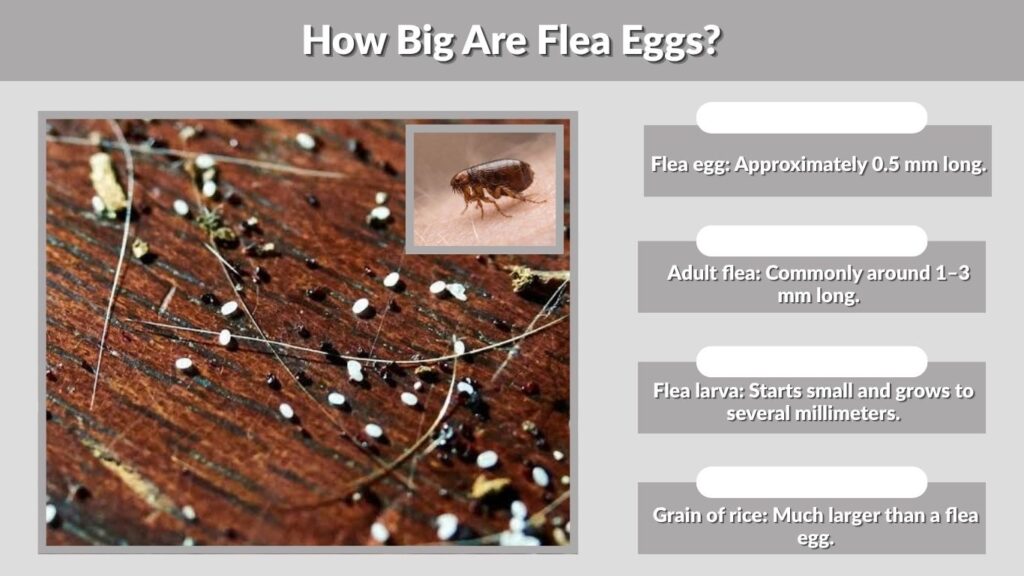
Flea eggs measure approximately half a millimeter in length, making them considerably smaller than adult fleas. Their tiny dimensions allow them to settle between carpet fibers, bedding threads, and floorboard gaps. Although they can sometimes be seen individually, their identification is easier under magnification. Understanding their size is useful when examining suspicious particles around pets.
Flea Eggs Compared With Common Objects
- Flea egg: Approximately 0.5 mm long.
- Adult flea: Commonly around 1–3 mm long.
- Flea larva: Starts small and grows to several millimeters.
- Grain of rice: Much larger than a flea egg.
- Fine salt particle: May appear similar in size, although its shape differs.
Where Can You Find Flea Eggs?
Female fleas usually deposit eggs while feeding and living on their animal hosts. Because these eggs have smooth surfaces and do not adhere strongly to fur, they readily fall into the environment. The greatest concentrations often occur where pets sleep, groom, and rest. Finding flea eggs indoors may indicate that adult fleas are reproducing nearby.
Flea Eggs on Cats and Dogs
Flea eggs may briefly remain in an animal’s fur before falling onto surrounding surfaces.
Check pet bedding and favorite resting areas rather than expecting to find large clusters attached to hairs. A flea comb can help reveal adult fleas or flea dirt.
Flea Eggs in Beds and Carpets
Flea eggs can accumulate in carpet fibers, sofa cushions, mattresses, and bedding, particularly where infested pets regularly rest.
Carpets provide protected spaces for developing larvae after eggs hatch. Finding suspected flea eggs in a bed does not automatically mean that the insects are bed bugs.
Flea Eggs vs. Flea Dirt
Flea eggs and flea dirt are commonly confused because both may appear as tiny particles around pets. However, they differ significantly in color, shape, and biological function. Flea dirt is the waste produced by adult fleas after feeding on blood. Flea eggs are reproductive structures that eventually hatch into larvae under suitable conditions.
How to Tell Flea Eggs From Flea Dirt
Flea eggs appear pale, smooth, and oval, while flea dirt resembles tiny black pepper flakes.
Place suspected flea dirt on damp white paper. If it contains digested blood, it may dissolve into reddish-brown stains.
Flea eggs do not produce this characteristic staining reaction.
Flea Eggs vs. Flea Larvae and Bed Bug Eggs
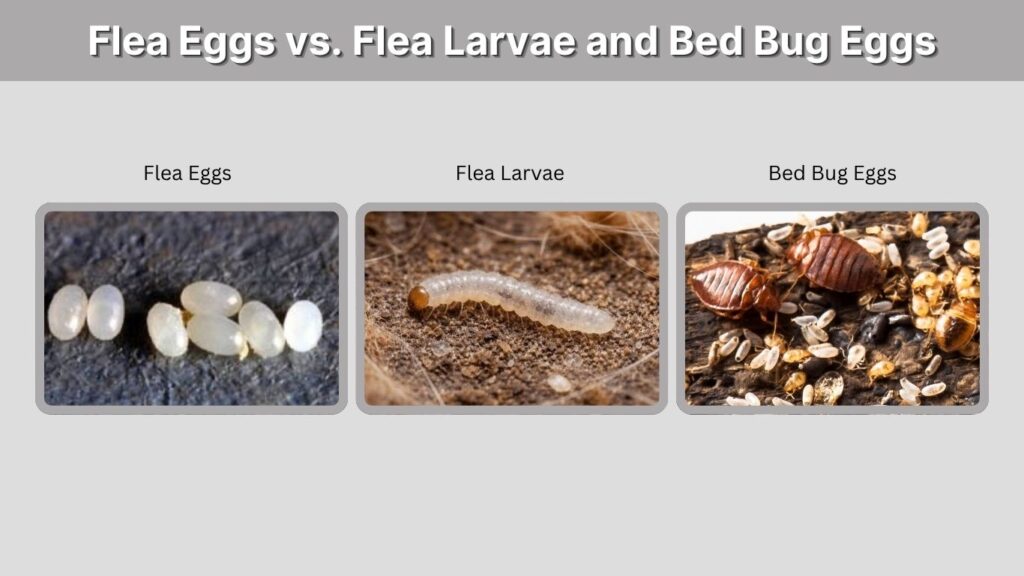
Flea eggs may also be mistaken for other insect life stages. Flea larvae are worm-like creatures that emerge after eggs hatch, while bed bug eggs are pale and elongated. Although both flea and bed bug eggs can occur near bedding, their behavior, placement, and surrounding evidence differ. Understanding these distinctions can prevent incorrect pest identification.
Main Identification Differences
| Feature | Flea Eggs | Flea Larvae | Bed Bug Eggs |
|---|---|---|---|
| Color | Pearly white | Whitish | Pearly white |
| Shape | Oval | Worm-like | Elongated oval |
| Size | About 0.5 mm | Several millimeters as they grow | About 1 mm |
| Movement | None | Crawling | None |
| Typical location | Pet bedding, carpets | Sheltered floor areas | Mattress seams, crevices |
Are Flea Eggs Attached to Fabric?
Flea eggs are not naturally glued to fabric or fur.
By comparison, bed bug eggs are deposited with an adhesive substance that helps secure them to surfaces. This difference can help with identification, although professional examination may be necessary.
How Long Do Flea Eggs Take to Hatch?
Flea egg development depends primarily on temperature and humidity. Warm, humid conditions generally support faster hatching, while cooler or drier environments can delay development or reduce egg survival. After hatching, flea larvae seek protected locations and feed on available organic material. Eggs do not develop directly into adult fleas, because fleas undergo complete metamorphosis.
Flea Egg Hatching Time
Flea eggs generally hatch within 1–10 days, depending on environmental conditions.
Newly emerged larvae avoid light and often move deeper into carpet fibers or sheltered floor spaces. They feed partly on adult flea droppings before progressing through later developmental stages.
How to Get Rid of Flea Eggs
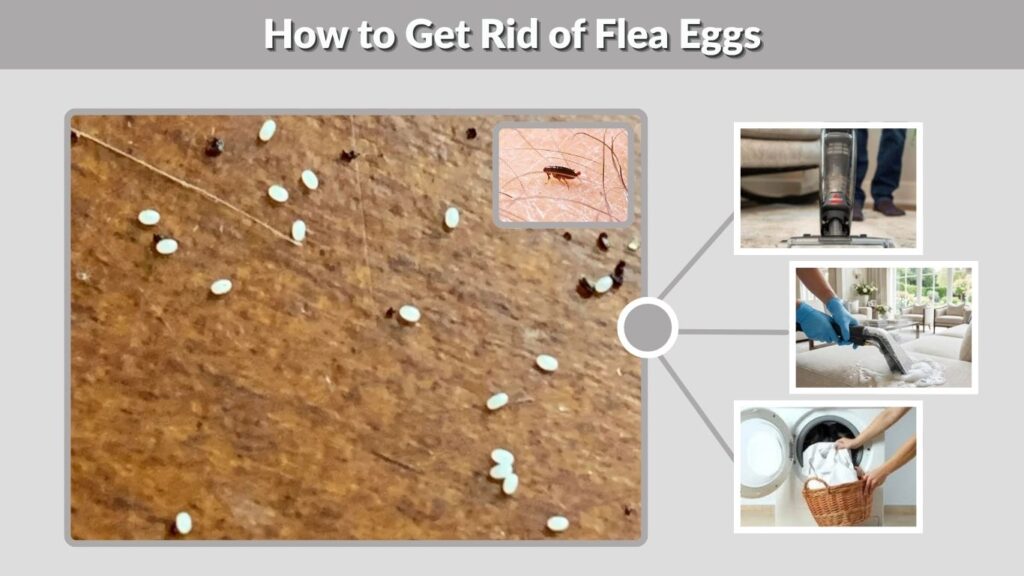
Removing flea eggs effectively requires more than identifying visible white specks. Eggs can become scattered across multiple household surfaces, while adult fleas continue reproducing on untreated pets. Controlling an infestation therefore involves cleaning affected areas, treating animals appropriately, and continuing management long enough to interrupt the flea life cycle.
Effective Flea Egg Removal Methods
- Vacuum thoroughly: Clean carpets, rugs, upholstery, and floor edges.
- Wash pet bedding: Use detergent and the hottest washing setting suitable for the fabric.
- Clean sleeping areas: Vacuum mattresses and wash removable bedding.
- Treat household pets: Use veterinarian-recommended flea prevention appropriate for each animal.
- Empty vacuum contents: Seal and discard collected debris outdoors.
- Continue treatment: Repeat cleaning because surviving pupae can later produce adult fleas.
Can Flea Eggs Survive Vacuuming?
Vacuuming can physically remove many flea eggs, but it may not eliminate every immature flea stage.
Eggs and larvae can remain in protected spaces, while pupae inside cocoons are particularly difficult to eliminate. Repeated cleaning combined with appropriate pet treatment is more effective than a single vacuuming session.
How to Prevent Flea Eggs in Your Home
The best way to prevent flea eggs is to stop adult fleas from feeding and reproducing on household animals. Regular cleaning reduces the number of eggs and developing fleas in the environment. Because fleas may remain active indoors throughout the year, prevention should continue even when adult fleas are not immediately visible.
Preventing Future Flea Infestations
Follow a veterinarian-approved flea prevention schedule for every household pet.
Regularly wash animal bedding, vacuum frequently used resting areas, and inspect pets for fleas or flea dirt. Early intervention reduces the likelihood that unnoticed eggs will develop into a larger household infestation.
FAQs
1. What Do Flea Eggs Look Like on a Bed?
Flea eggs appear as tiny pearly-white oval specks, approximately 0.5 millimeters long. They may be difficult to distinguish from dust or fabric debris.
2. Are Flea Eggs Visible to the Naked Eye?
Yes. However, their extremely small size makes identification difficult without magnification, particularly on light-colored surfaces.
3. What Do Dead Flea Eggs Look Like?
Dead or nonviable flea eggs may resemble normal eggs. Their appearance alone cannot reliably determine whether they are alive or dead.
4. Do Flea Eggs Stick to Human Hair?
Flea eggs do not normally adhere firmly to hair. They are smooth and usually fall from their animal hosts into surrounding environments.
5. How Can You Tell Whether White Specks Are Flea Eggs?
Examine their size, oval shape, and smooth surface using magnification. Look for accompanying adult fleas or flea dirt. If identification remains uncertain, consult a pest identification professional.
