
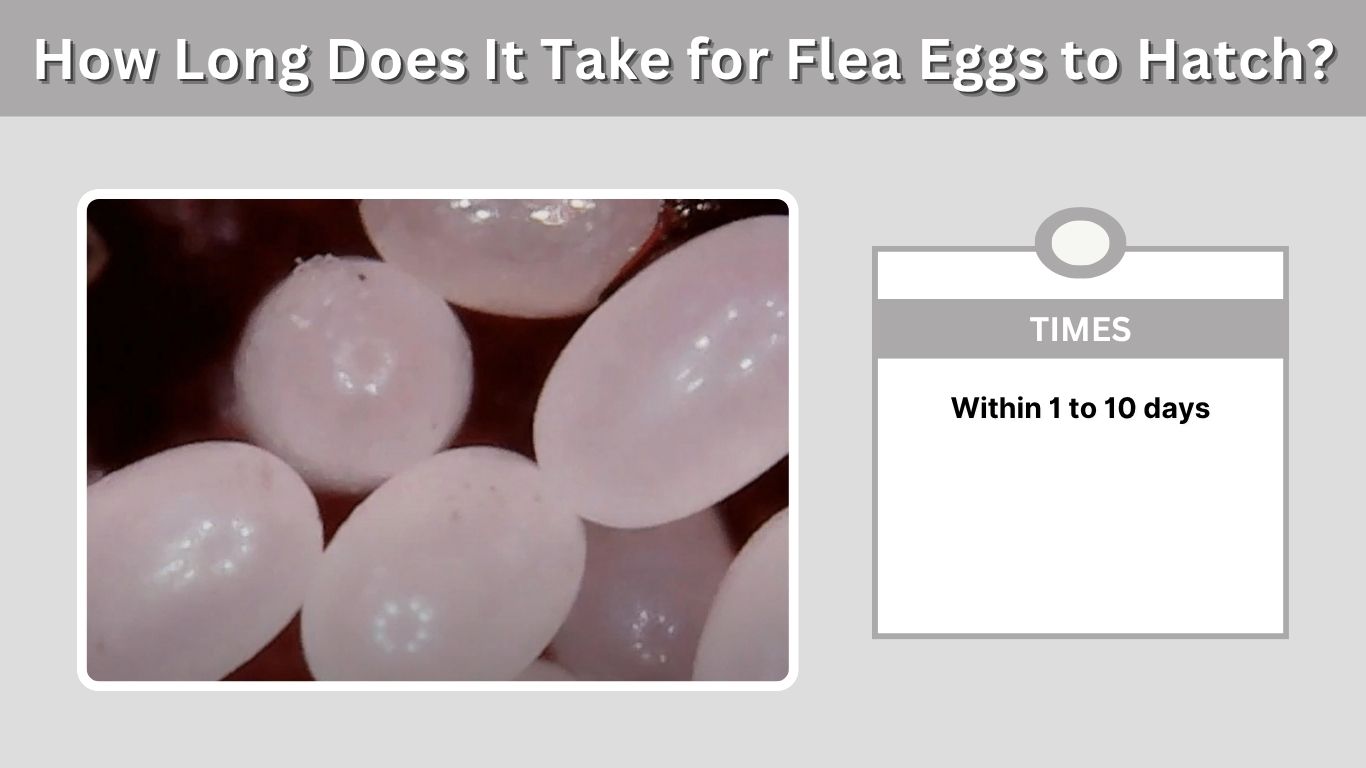
Flea eggs typically hatch within 1 to 10 days, depending on temperature, humidity, and environmental conditions. Under warm and humid conditions, most eggs hatch in approximately 2 to 5 days. However, unfavorable temperatures or low moisture levels can slow development or prevent eggs from surviving. Understanding how long it takes for flea eggs to hatch is important when dealing with infestations in pets, carpets, bedding, or furniture. Learning about their development, ideal hatching conditions, and prevention methods can help homeowners control fleas before they become a larger problem.
How Long Does It Take for Flea Eggs to Hatch?
Flea eggs develop relatively quickly when environmental conditions support their survival. Adult female fleas lay eggs on their hosts, but these eggs usually fall into surrounding areas before hatching. The exact incubation period depends on warmth and humidity. Understanding the typical hatching timeline helps explain why flea infestations can develop rapidly inside homes and other protected environments.
Average Flea Egg Hatching Time
Most flea eggs hatch within 2 to 5 days under favorable conditions. However, the broader incubation period commonly ranges from 1 to 10 days.
Warm, humid environments encourage successful development, while cooler or drier conditions can delay hatching or reduce egg survival.
After hatching, tiny worm-like larvae emerge and begin feeding on organic debris and adult flea droppings.
Can Flea Eggs Hatch in 24 Hours?
Under especially favorable conditions, some flea eggs may hatch within approximately 24 hours.
However, hatching this quickly is not typical for every egg.
Temperature, moisture, and flea species influence development. Most household flea eggs require several days before larvae emerge.
What Conditions Help Flea Eggs Hatch?
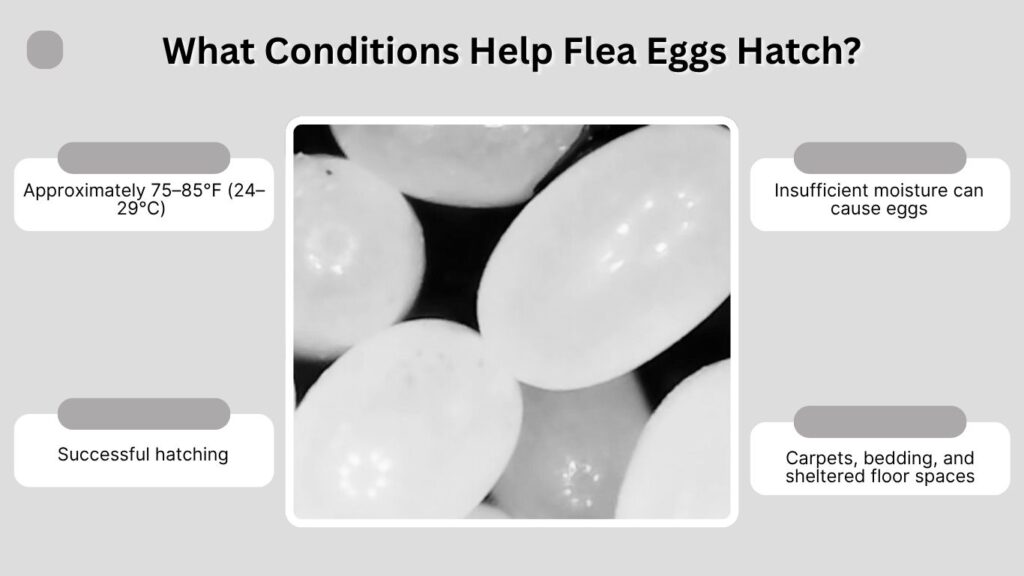
Temperature and humidity are two of the most important factors affecting flea egg development. Fleas reproduce successfully in environments that provide sufficient warmth and moisture. However, extreme dryness or cold can significantly reduce survival. Understanding these conditions helps homeowners identify areas where flea eggs are most likely to hatch and develop into larvae.
Ideal Temperature and Humidity
Several environmental factors influence flea egg hatching:
- Warm temperatures: Approximately 75–85°F (24–29°C) generally favor development.
- High humidity: Moist conditions support egg survival and successful hatching.
- Dry environments: Insufficient moisture can cause eggs to dry out.
- Cold conditions: Low temperatures slow development and may kill eggs.
- Protected locations: Carpets, bedding, and sheltered floor spaces offer suitable conditions.
- Environmental stability: Consistent warmth and moisture can support faster development.
Do Flea Eggs Hatch Faster in Summer?
Yes. Warm temperatures and relatively high humidity often support faster flea development during summer.
Outdoor flea reproduction is especially common in shaded, moist areas where animals frequently rest.
However, indoor heating and controlled environments can allow flea populations to reproduce throughout the year.
Can Flea Eggs Hatch in Winter?
Flea eggs may hatch during winter when indoor conditions remain sufficiently warm and humid.
Outdoors, freezing conditions can prevent successful development and kill exposed eggs.
Heated homes provide more favorable environments, especially within protected carpets and pet bedding.
What Happens After Flea Eggs Hatch?
Hatching is only the beginning of flea development. Fleas undergo complete metamorphosis, progressing through four stages: egg, larva, pupa, and adult. Each stage has different environmental requirements and survival characteristics. Understanding this lifecycle explains why eliminating visible adult fleas does not immediately resolve an infestation and why additional fleas may appear weeks after the initial treatment.
Flea Larvae Development
Newly hatched flea larvae are small, whitish, worm-like insects.
Unlike adults, larvae do not live on pets or feed by biting them. Instead, they consume organic debris and adult flea feces containing digested blood.
Larval development commonly takes approximately 5 to 11 days under suitable conditions, although unfavorable conditions may extend this period.
Flea Pupae and Adult Emergence
After the larval stage, fleas create protective cocoons and develop into pupae.
Adult fleas may emerge after approximately one to two weeks under favorable conditions. However, fully developed adults can remain inside cocoons for much longer.
Movement, warmth, and carbon dioxide can stimulate emerging fleas to seek hosts.
How Long Is the Complete Flea Lifecycle?
The entire flea lifecycle can sometimes be completed in approximately two weeks under ideal conditions.
In ordinary household environments, development from egg to adult commonly takes around three to eight weeks.
Unfavorable conditions may greatly extend development, particularly during the protected pupal stage.
Where Do Flea Eggs Hatch in Your Home?
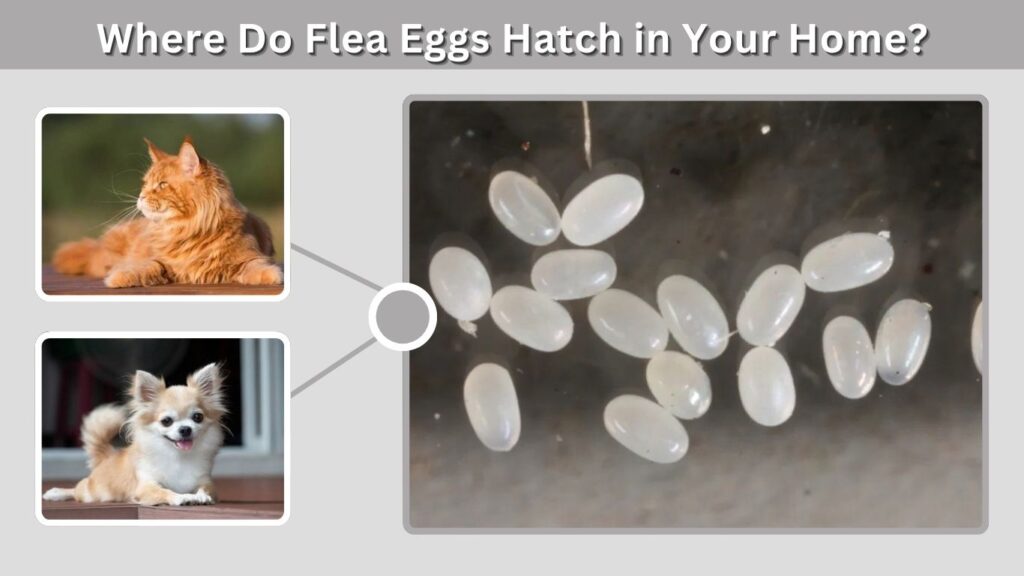
Flea eggs are usually laid on dogs, cats, or other suitable hosts, but they do not remain attached to fur. Normal movement causes eggs to fall into surrounding environments. These hidden locations provide protection and sometimes enough moisture for development. Identifying common hatching sites is essential because treating pets alone may leave many immature fleas inside the home.
Do Flea Eggs Hatch on Dogs and Cats?
Flea eggs generally fall from pet fur before hatching.
Adult fleas remain on dogs and cats, feeding on blood and producing eggs. These eggs then accumulate wherever the animals spend time.
Consequently, pet bedding and resting areas often contain more flea eggs than the animals’ coats.
Can Flea Eggs Hatch in Carpets?
Yes. Carpets can provide suitable conditions for flea eggs to hatch.
Eggs settle between carpet fibers, where emerging larvae may find protection from light and access to organic debris.
Frequent vacuuming helps remove eggs and other developing flea stages.
Do Flea Eggs Hatch in Beds and Furniture?
Flea eggs may hatch in mattresses, blankets, upholstered furniture, and pet beds when conditions are favorable.
This is especially possible when infested animals regularly sleep in these locations.
Washing bedding and thoroughly vacuuming upholstered surfaces can reduce flea contamination.
How to Stop Flea Eggs From Hatching
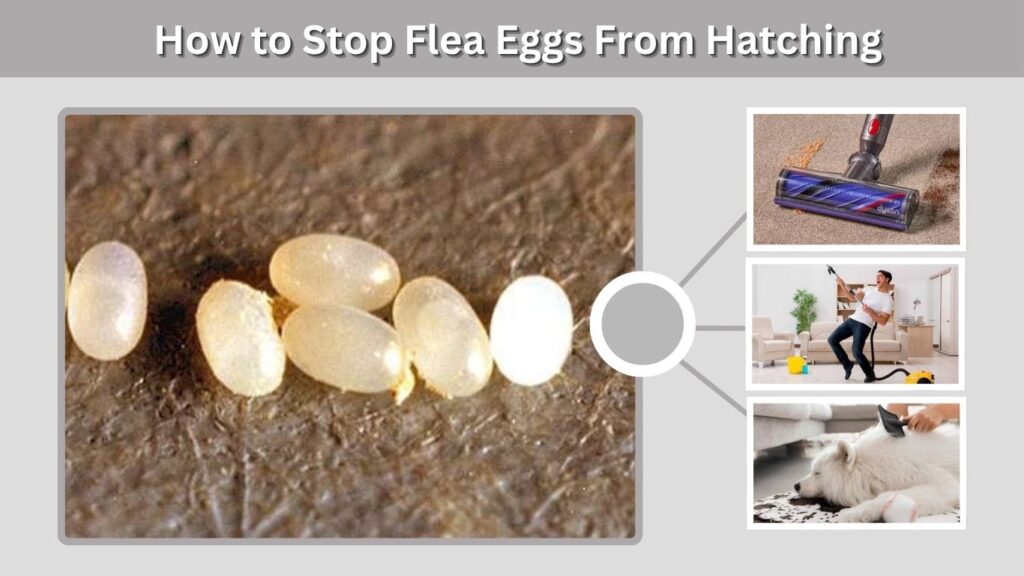
Preventing flea eggs from developing requires interrupting their lifecycle before new adults emerge. Because eggs are distributed throughout the environment, treatment should address both household pets and their surroundings. Veterinary-approved flea products, regular cleaning, and careful monitoring provide more reliable results than occasional bathing or unproven homemade remedies. Consistent treatment is particularly important during established infestations.
Effective Ways to Control Flea Eggs
Several methods can help reduce flea eggs and developing fleas:
- Vacuum regularly: Remove eggs, larvae, and debris from carpets and furniture.
- Wash pet bedding: Use hot water when suitable for the fabric.
- Treat household pets: Use veterinarian-recommended flea prevention.
- Clean resting areas: Pay attention to floor cracks, rugs, and upholstery.
- Use appropriate environmental products: Follow insecticide labels and professional advice where treatment is necessary.
- Continue monitoring: Watch for emerging adult fleas during subsequent weeks.
Do Flea Treatments Stop Eggs From Hatching?
Some flea-control products contain insect growth regulators, such as pyriproxyfen or (S)-methoprene, which interfere with immature flea development.
Other medications primarily kill adult fleas before they produce additional eggs.
Treatment effectiveness depends on the product and its approved use. Always choose medications appropriate for the animal’s species, age, and weight.
Can Flea Eggs Hatch After Treatment?
Yes. Eggs already present in carpets or bedding may hatch after pets receive flea medication.
Additionally, pupae can remain protected inside cocoons and emerge later.
This does not necessarily mean the treatment has failed. Continuing recommended prevention and household cleaning helps eliminate newly emerging fleas.
How to Prevent Flea Eggs From Returning
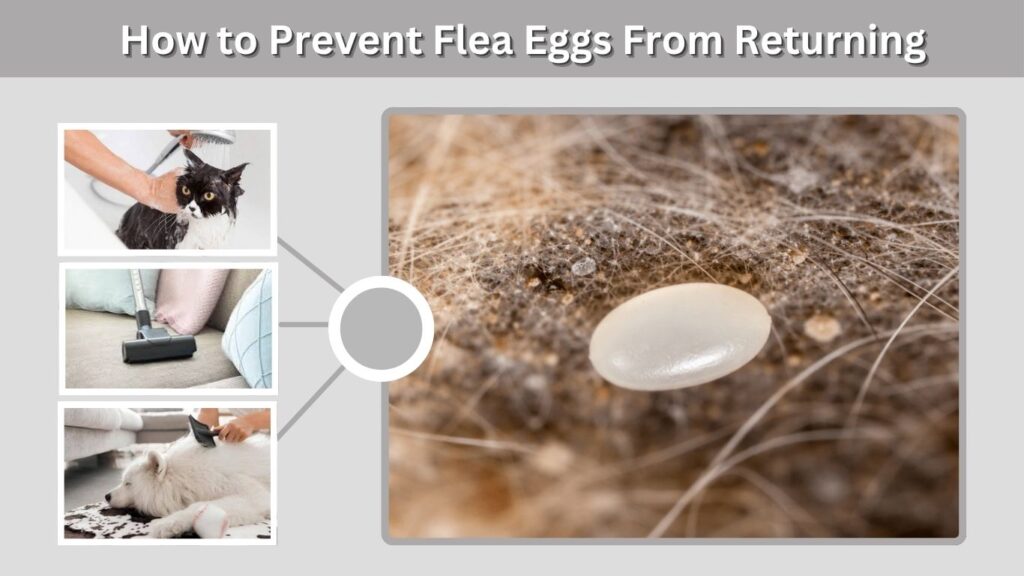
Long-term flea prevention depends on stopping adult fleas from reproducing and reducing suitable environments for immature stages. Even a small number of surviving fleas can restart an infestation because females produce numerous eggs. Maintaining regular preventive treatment and cleaning frequently used pet areas helps limit recurring problems and protects animals from itching, flea allergy dermatitis, and other complications.
Flea Prevention Tips
Useful preventive measures include:
- Maintain year-round flea prevention when recommended by your veterinarian.
- Examine pets regularly for fleas and flea dirt.
- Wash pet bedding and blankets frequently.
- Vacuum carpets, rugs, and upholstered furniture.
- Treat all household pets with species-appropriate products.
- Avoid using dog-only flea treatments on cats.
- Inspect shaded outdoor areas where pets frequently rest.
How Long Does It Take to Eliminate Fleas?
A household flea infestation may require several weeks or longer to control completely.
Existing pupae can continue releasing adult fleas even after cleaning and treatment.
Consistent prevention, repeated environmental cleaning, and veterinary guidance help interrupt the reproductive cycle and reduce the chance of reinfestation.
FAQs
Flea egg hatching times vary because environmental conditions affect development and survival. Homeowners often wonder whether eggs hatch directly on pets, how long they remain viable, and whether treatment stops them immediately. Understanding the difference between egg hatching and the complete flea lifecycle helps explain recurring infestations. These answers address five common questions about flea egg development.
1. How Many Days Does It Take for Flea Eggs to Hatch?
Flea eggs generally hatch within 1 to 10 days. Under favorable warm and humid conditions, hatching commonly occurs within 2 to 5 days.
2. Can Flea Eggs Hatch Without a Host?
Yes. Flea eggs can hatch away from animals when environmental conditions are suitable. However, adult fleas require blood meals to reproduce successfully.
3. Do Flea Eggs Hatch Faster in Heat?
Warm temperatures generally accelerate flea egg development within a suitable range. However, excessive heat and dryness can kill eggs rather than speed hatching.
4. Can Flea Eggs Survive for Months Without Hatching?
Flea eggs are not normally the long-lasting dormant stage. Unfavorable conditions often kill them. The pupal stage, protected inside a cocoon, is primarily responsible for delayed adult emergence.
5. How Long After Flea Eggs Hatch Do They Become Adults?
Under favorable conditions, fleas may develop from larvae into adults within approximately two to four weeks after hatching. Development can take considerably longer when temperature, humidity, or food availability is unfavorable.
