
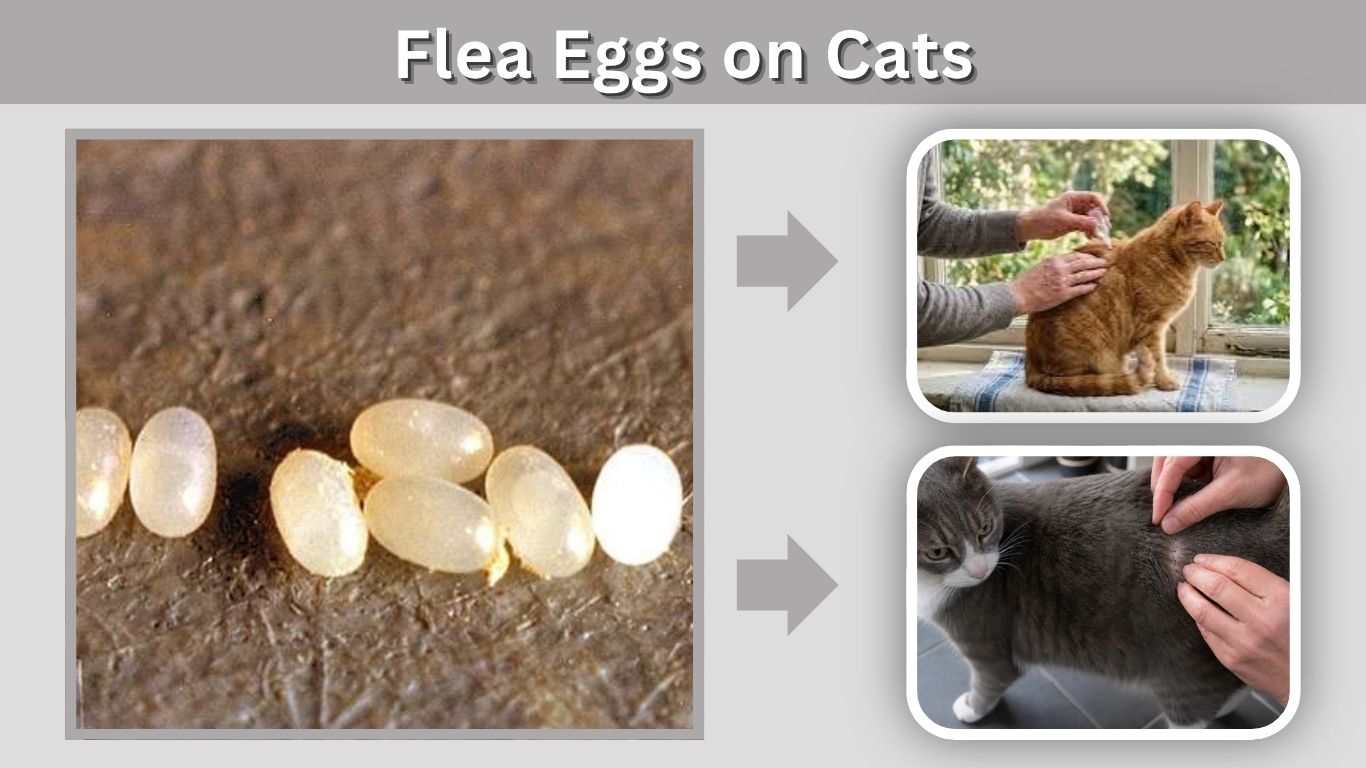
Flea eggs on cats are tiny, white, oval-shaped particles that can easily be mistaken for dandruff or dry skin. Although adult fleas live and feed on cats, their eggs usually fall into bedding, carpets, and other surrounding areas. A single female flea can produce dozens of eggs daily, allowing infestations to spread quickly. Understanding what flea eggs look like, how to identify them, and which treatments effectively interrupt their development is essential. Proper flea control protects your cat from itching, skin irritation, and recurring infestations throughout your home.
What Do Flea Eggs Look Like on Cats?
Flea eggs are extremely small reproductive structures produced by adult female fleas. They are usually white or slightly translucent, making them difficult to detect within a cat’s fur. Unlike flea dirt, which appears as dark particles, flea eggs have a smooth, pale appearance. Recognizing their physical characteristics helps distinguish them from ordinary skin flakes and other debris.
Flea Eggs on Cats Identification
Common characteristics of flea eggs include:
- Color: Pearly white, creamy white, or translucent.
- Size: Approximately 0.5 millimeters long.
- Shape: Smooth, oval, and slightly elongated.
- Texture: Non-sticky, allowing them to fall from fur.
- Appearance: Similar to tiny grains of salt.
- Visibility: Barely noticeable without close inspection or magnification.
Where Can You Find Flea Eggs on Cats?
Flea eggs may temporarily appear around a cat’s neck, back, belly, and tail base. However, they do not attach firmly to the hair.
As cats move or groom themselves, eggs fall into carpets, furniture, and bedding.
Adult fleas and flea dirt are generally easier to discover on the animal than flea eggs themselves.
Flea Eggs on Black Cats
White flea eggs may be easier to notice against dark fur, although their small size still makes identification difficult.
Use a fine-toothed flea comb and inspect collected debris under bright lighting.
Finding black specks instead of white particles may indicate flea dirt rather than eggs.
Flea Eggs vs. Dandruff on Cats
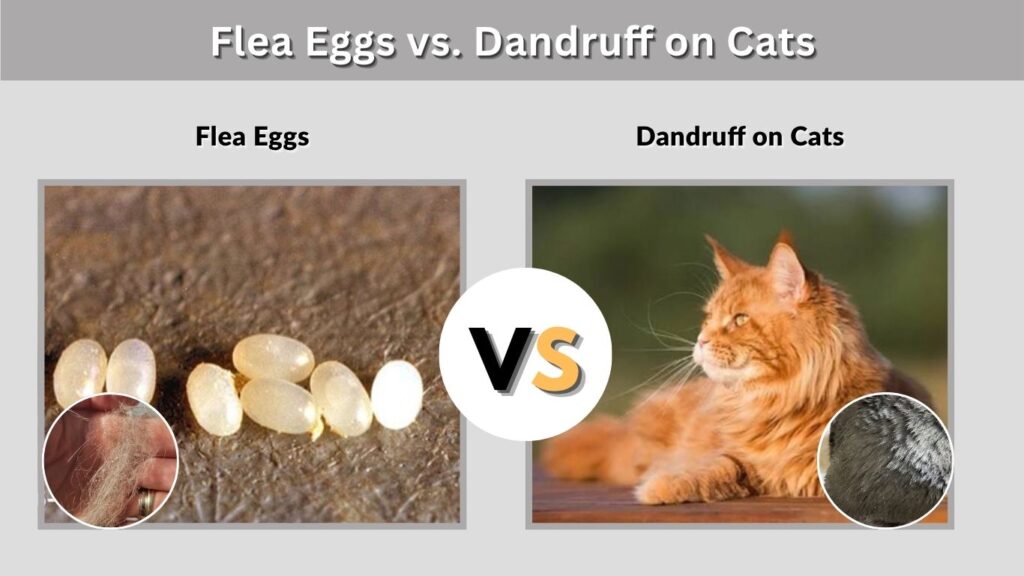
Cat owners often confuse flea eggs with dandruff because both can appear as white particles scattered through the coat. However, they differ in shape, origin, and texture. Flea eggs are produced by adult fleas, whereas dandruff consists of dead skin cells. Understanding these differences can help determine whether your cat has fleas or another skin-related problem.
How to Tell Flea Eggs From Dandruff
The main differences include:
- Shape: Flea eggs are oval, while dandruff consists of irregular flakes.
- Color: Flea eggs are pearly white; dandruff may appear white or grayish.
- Surface: Eggs are smooth, while dandruff looks flat and flaky.
- Attachment: Eggs fall away easily, while skin flakes may cling to fur.
- Associated symptoms: Fleas may cause itching, excessive grooming, and flea dirt.
Are Black Specks on Cats Flea Eggs?
No. Flea eggs are not naturally black.
Small black or reddish-black particles commonly indicate flea dirt, which contains digested blood.
Place collected debris on a damp white paper towel. If reddish-brown staining appears, flea dirt is likely present.
Black specks on the chin may also be associated with feline acne rather than fleas.
Flea Eggs Around a Cat’s Tail or Anus
Tiny pale particles near the tail may be skin flakes or other debris.
However, larger white segments resembling rice grains around the anus may indicate tapeworms rather than flea eggs.
Because cats can acquire tapeworms by swallowing infected fleas, consult a veterinarian if these segments appear.
How Long Do Flea Eggs Take to Hatch on Cats?
Flea eggs develop according to temperature, humidity, and environmental conditions. Although female fleas lay eggs directly within the fur, most eggs fall away before hatching. They usually develop in carpets, bedding, floor cracks, and other protected locations. Understanding the flea lifecycle explains why treating the cat alone may not completely eliminate an established infestation.
How Long Does It Take Flea Eggs to Hatch?
Flea eggs typically hatch within approximately one to six days under favorable conditions.
Warm, humid environments generally support faster development.
After hatching, larvae feed on organic debris and flea dirt before developing into pupae. Adult fleas eventually emerge and seek an animal host.
Do Flea Eggs Stay on Cats?
Flea eggs usually fall from the coat within a few hours because their surfaces are not sticky.
They collect wherever cats frequently sleep, groom, or rest.
Consequently, most developing fleas are found in the surrounding environment rather than directly on the cat.
Can Flea Eggs Hatch on Cats?
Flea eggs normally hatch after falling into the environment.
Occasional eggs may remain briefly within dense fur, but cats are not the primary location for larval development.
Flea larvae prefer protected surroundings containing organic debris and suitable humidity.
How to Get Rid of Flea Eggs on Cats
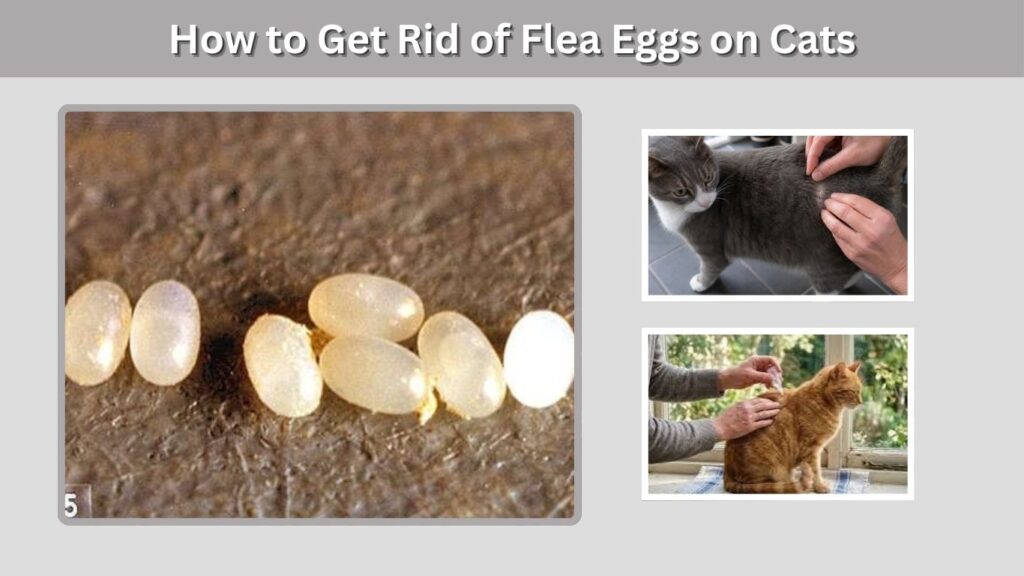
Getting rid of flea eggs requires addressing both adult fleas and immature stages developing around the home. Simply removing visible eggs does not prevent adult fleas from laying more. Effective control combines veterinary-approved medication, grooming, environmental cleaning, and consistent prevention. The most appropriate treatment depends on your cat’s age, weight, general health, and previous flea-control history.
Steps to Remove Flea Eggs From Cats
Follow these practical steps:
- Inspect the coat: Look for adult fleas, flea dirt, and unusual white particles.
- Use a flea comb: Gently comb the neck, back, belly, and tail base.
- Select cat-safe treatment: Ask your veterinarian about suitable flea medication.
- Clean bedding: Wash blankets and frequently used sleeping materials.
- Treat other pets: Use appropriate flea protection for every household pet.
- Continue prevention: Maintain the recommended treatment schedule.
Can Bathing Remove Flea Eggs?
Bathing can remove loose eggs and some adult fleas from the coat.
However, washing alone cannot eliminate developing fleas throughout the home.
Many cats find bathing stressful, and frequent shampooing may irritate their skin. Use only feline-appropriate products and follow veterinary guidance.
How to Kill Flea Eggs on Cats Naturally
Regular flea combing and household cleaning are useful nonchemical control measures.
However, natural remedies cannot reliably eliminate established infestations.
Avoid applying essential oils, garlic, concentrated vinegar, or homemade insecticides to cats. Some substances can cause serious poisoning.
What Kills Flea Eggs on Cats?
Different flea medications target different developmental stages. Some products kill adult fleas before they reproduce, while others contain insect growth regulators that interfere with egg and larval development. Choosing a product designed specifically for cats is essential because certain dog flea treatments contain ingredients that are highly toxic to felines. Always follow veterinary recommendations and product labels.
Do Advantage, Frontline, and Bravecto Kill Flea Eggs?
Advantage II for cats contains pyriproxyfen, an insect growth regulator that disrupts flea egg and larval development.
Frontline Plus for cats contains (S)-methoprene, which helps inhibit the development of immature fleas.
Bravecto primarily targets adult fleas, reducing further egg production. Capstar and Credelio also primarily target adult fleas rather than directly eliminating environmental eggs.
Formulations and approved uses vary, so check the exact product label.
What Kills Flea Eggs Instantly?
No single treatment instantly eliminates every flea egg from a cat and its surroundings.
Some approved products inhibit egg development, while adulticides prevent further reproduction.
Pupae already present in the environment may continue emerging after treatment, making consistent flea prevention essential.
Does Dawn Dish Soap Kill Flea Eggs on Cats?
Dish soap may wash away loose eggs and fleas, but it is not a reliable ongoing flea-control treatment.
Routine use can irritate feline skin and disrupt natural protective oils.
Never substitute dish soap for veterinary-approved flea medication. If accidental pesticide exposure occurs, contact a veterinarian immediately for decontamination instructions.
How to Remove Flea Eggs From Your Home

The majority of flea eggs deposited on cats eventually fall into the surrounding environment. Carpets, upholstery, pet bedding, and hidden floor spaces allow immature fleas to develop without being noticed. Consequently, household cleaning is an important part of successful flea control. Addressing these locations helps reduce emerging flea populations and supports the effectiveness of treatment applied directly to pets.
Best Ways to Eliminate Flea Eggs at Home
Useful cleaning practices include:
- Vacuum carpets: Concentrate on pet resting areas and floor edges.
- Wash bedding: Clean blankets and washable pet beds regularly.
- Dry with heat: Use a suitable dryer setting when fabric instructions allow.
- Clean furniture: Vacuum upholstered surfaces where cats frequently rest.
- Dispose of debris: Empty vacuum contents into sealed outdoor trash.
- Repeat cleaning: Continue while existing flea populations decline.
How Long Does Flea Elimination Take?
Established flea infestations may require several weeks or even months to control completely.
Protected pupae can continue producing adult fleas after initial cleaning and treatment.
Consistent prevention and environmental management are necessary until emerging adults are eliminated.
Signs and Prevention of Fleas on Cats
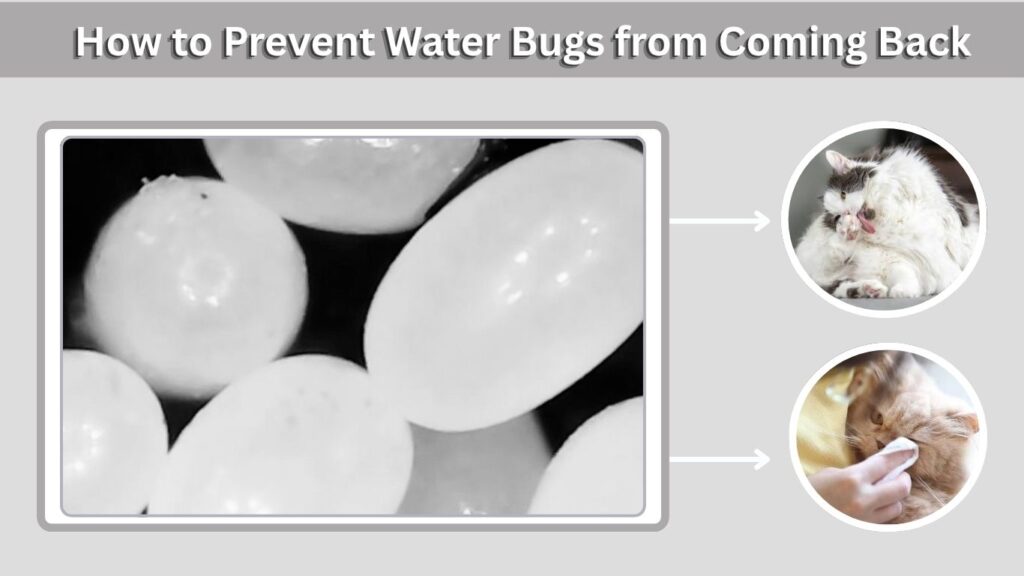
Flea infestations often cause recognizable behavioral and skin-related symptoms, although some cats show very little scratching. Regular grooming, coat inspection, and veterinary-approved preventive treatments can help identify problems early. Because fleas may remain active indoors throughout the year, ongoing prevention is particularly important for cats living in warm climates or households with multiple pets.
Common Signs of Fleas on Cats
Infested cats may experience frequent scratching, excessive grooming, irritated skin, hair loss, or small crusted bumps.
Some develop flea allergy dermatitis, causing severe itching after relatively few bites.
Heavy infestations can produce anemia, especially in kittens. Pale gums, weakness, or unusual lethargy require prompt veterinary attention.
How to Prevent Flea Eggs on Cats
Use veterinarian-recommended flea prevention consistently and monitor your cat’s coat.
Wash bedding regularly, vacuum frequently used resting areas, and ensure other household pets receive appropriate treatment.
Never apply dog-only flea products to cats. Permethrin-containing dog treatments can cause life-threatening poisoning in felines.
FAQs
Flea eggs on cats raise common questions about their appearance, removal, and development. Their tiny size makes them difficult to distinguish from ordinary skin debris, while their tendency to fall into the home complicates treatment. Understanding the flea lifecycle and using cat-safe preventive products can help owners avoid repeated infestations and unnecessary risks.
1. What Color Are Flea Eggs on Cats?
Flea eggs are generally pearly white or slightly translucent. They are oval-shaped and approximately 0.5 millimeters long.
2. Can You See Flea Eggs on Cats?
Yes, but they are extremely small. A flea comb, bright lighting, and magnification make identification easier.
3. What Is the Best Way to Kill Flea Eggs on Cats?
Use veterinarian-approved flea prevention, including an insect growth regulator where appropriate, and clean the pet’s environment consistently.
4. Why Are There Flea Eggs but No Fleas on My Cat?
Cats frequently groom away visible fleas. Eggs may indicate recent flea activity even when adult fleas are difficult to find. Confirm suspicious particles before assuming they are eggs.
5. Do Flea Eggs Turn Red in Water?
No. Flea eggs do not normally turn red when wet. Flea dirt can produce reddish-brown staining because it contains digested blood.
