
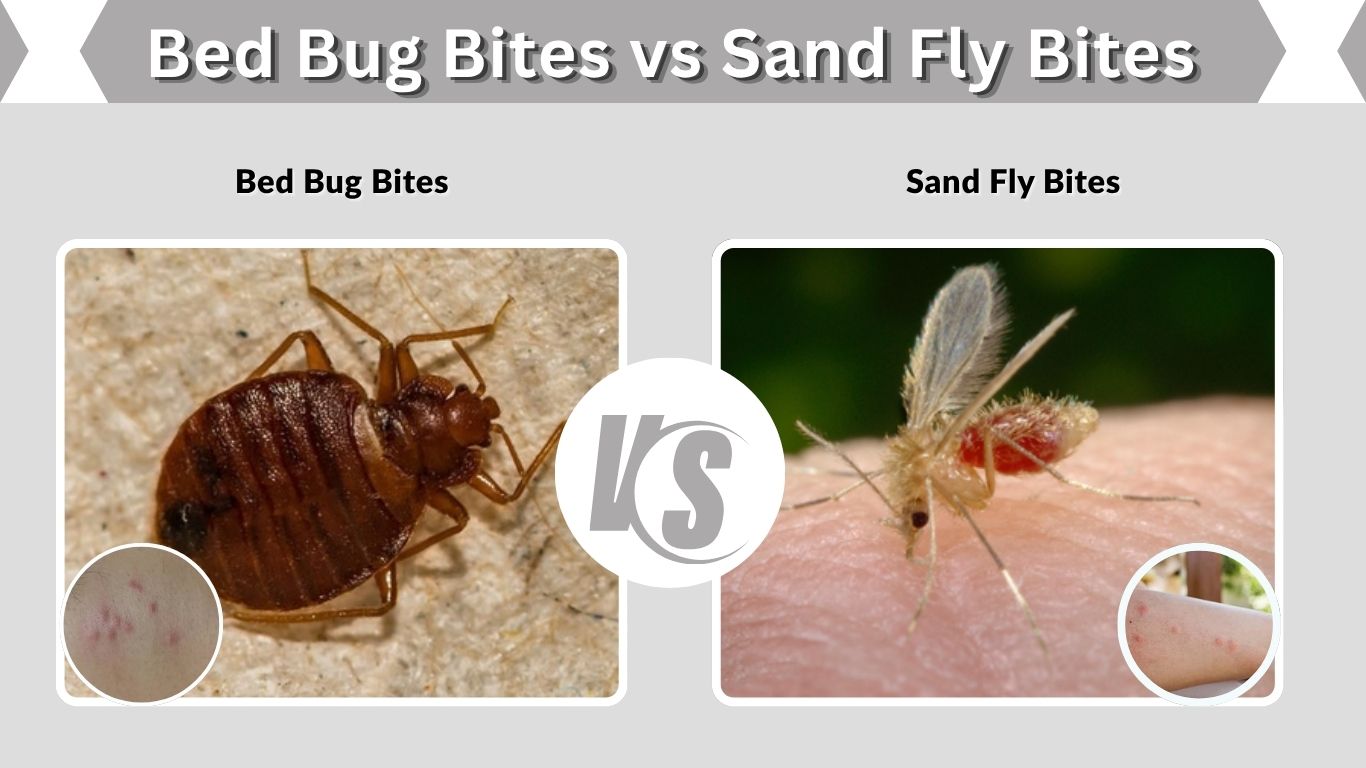
Bed bug bites and sand fly bites often look similar, causing itchy bumps, redness, and skin irritation that can last several days. However, these insects differ significantly in appearance, habitat, feeding behavior, and potential health risks. Bed bugs commonly bite people while they sleep indoors, whereas sand flies are generally associated with outdoor exposure or unscreened buildings in affected regions. Understanding bed bug bites vs sand fly bites can help identify possible exposure sources and prevent future bites. This guide also compares mosquitoes, sand fleas, black flies, and other biting insects.
Bed Bug Bites vs Sand Fly Bites: Main Differences
Although both insects feed on blood, their behaviors and habitats differ considerably. Bed bugs are wingless insects that hide near sleeping areas, while true sand flies are tiny, winged insects commonly active during twilight and nighttime. Their bites can produce similar skin reactions, so identifying the responsible insect usually requires examining exposure conditions rather than relying on bite patterns.
Key Differences Between Bed Bug and Sand Fly Bites
- Appearance: Both can produce small, itchy bumps, sometimes grouped together.
- Biting location: Bed bugs commonly bite during sleep; sand flies may bite outdoors or inside poorly screened buildings.
- Activity: Bed bugs generally feed at night, while true sand flies often feed around dusk and nighttime.
- Bite reaction: Both can cause redness, itching, swelling, and delayed reactions.
- Disease risk: Bed bugs are not known to transmit human diseases, while certain sand flies can transmit leishmaniasis.
Can You Identify Them From Bite Marks?
Neither the arrangement nor the size of bite marks provides reliable identification. Some people experience pronounced swelling, while others develop almost no visible reaction.
Finding actual bed bugs, inspecting sleeping areas, or observing biting flies provides stronger evidence than comparing skin photographs alone.
What Do Bed Bug and Sand Fly Bites Look Like?
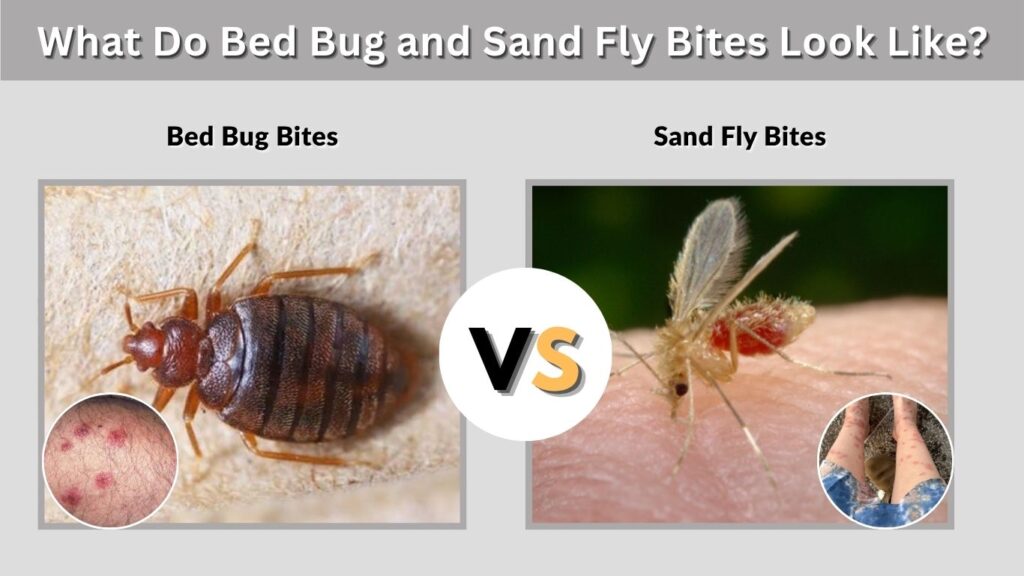
Both insects introduce saliva during feeding, which can trigger an immune response in the skin. The resulting bumps may look almost identical, especially during early stages. Skin tone, individual sensitivity, and repeated scratching also influence appearance. Bite photographs can help readers recognize general symptoms but should not be treated as definitive evidence of which insect caused the reaction.
Bed Bug Bite Appearance
Bed bug bites often appear as itchy, raised bumps on exposed skin, including the arms, neck, face, and hands.
Marks sometimes appear in clusters or lines, although these patterns are not exclusive to bed bugs. Reactions may become noticeable several days after exposure.
Sand Fly Bite Appearance
Sand fly bites can produce small, itchy, inflamed bumps, sometimes with localized swelling.
On darker skin, these marks may appear purple, brown, or darker than surrounding tissue rather than bright red.
The reactions can resemble bed bug or mosquito bites, making exposure history particularly important.
Sand Fly vs Mosquito Bites: What Is Different?
Sand flies and mosquitoes are both blood-feeding insects, and their bites frequently cause similar symptoms. Nevertheless, the insects differ in size, physical structure, and feeding patterns. True phlebotomine sand flies are generally much smaller than mosquitoes and have noticeably hairy bodies. Mosquitoes are more recognizable because of their elongated mouthparts and relatively larger bodies.
Sand Fly vs Mosquito Identification
True sand flies commonly measure around 2–3 millimeters and have hairy wings held upward when resting.
Mosquitoes are generally larger, have a more recognizable elongated proboscis, and breed in aquatic environments.
Male sand flies and male mosquitoes do not take blood meals. Females require blood for egg development.
Sand Fly Bites vs Mosquito Bites
Both can cause itchy welts and swelling. Neither bite size nor the intensity of itching can distinguish them reliably.
Sand fly feeding often occurs around dusk and nighttime, while mosquito activity varies considerably by species.
Some mosquitoes transmit malaria, dengue, or other infections. Certain phlebotomine sand flies transmit Leishmania parasites.
Sand Fly vs Sand Flea, Black Fly, and Biting Midge
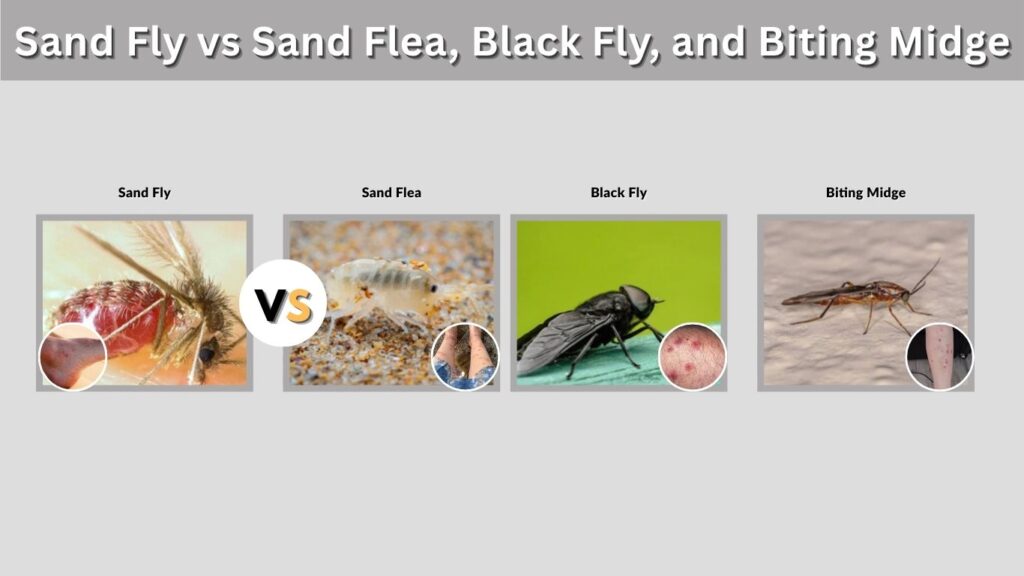
The term sand fly creates confusion because it refers to different insects across countries. In medical entomology, it commonly describes phlebotomine sand flies, but people in Australia and New Zealand may use the name for other biting flies. Sand fleas are different organisms altogether. Knowing the regional terminology helps prevent mistakes when identifying insects and researching bite-related health risks.
Sand Fly vs Sand Flea
Sand flies are winged insects, while sand fleas may refer to beach-dwelling amphipod crustaceans or parasitic chigoe fleas.
Beach amphipods generally do not bite people. However, female chigoe fleas can embed themselves in human skin and cause tungiasis.
This is different from an ordinary sand fly bite.
Sand Fly vs Black Fly and No-See-Um
Black flies belong to the family Simuliidae and often breed in flowing water. In New Zealand, they are commonly called sandflies.
Biting midges, also known as no-see-ums, belong to the family Ceratopogonidae. In Australia, these are frequently called sand flies.
Both may cause itchy bites, but their biology and disease risks differ from those of phlebotomine sand flies.
Other Biting Flies That Resemble Sand Flies
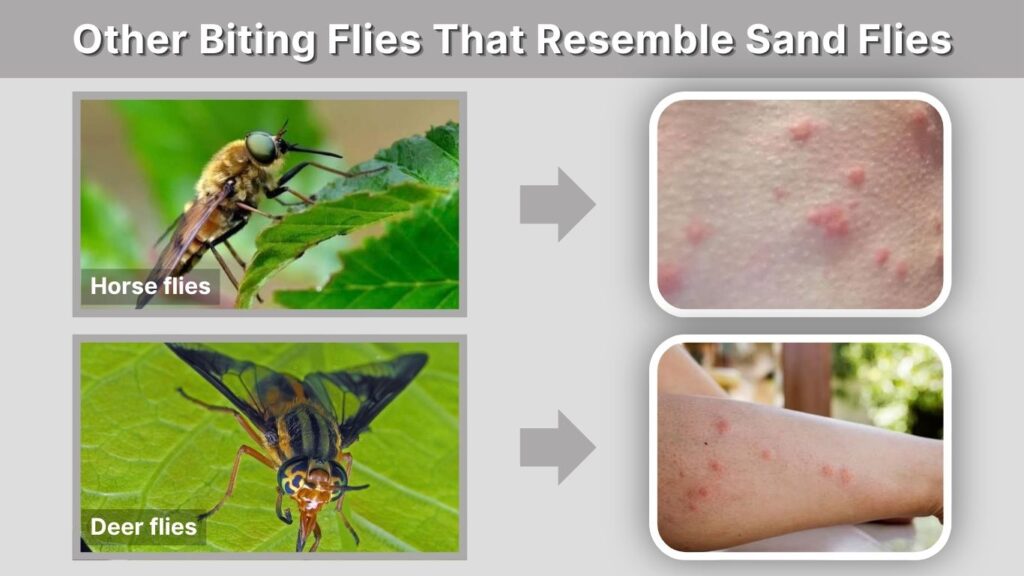
Several fly species can cause painful or itchy skin reactions, leading to confusion during identification. Horse flies, deer flies, and tsetse flies are generally larger and behave differently from true sand flies. Meanwhile, ordinary house flies and fruit flies are frequently mistaken for biting insects despite not feeding on human blood. Identifying the insect helps determine whether bite prevention or another form of pest control is appropriate.
Horse Fly, Deer Fly, and Tsetse Fly Differences
- Horse flies: Relatively large, strong-flying insects whose females can deliver painful bites.
- Deer flies: Smaller than many horse flies, often with patterned wings and painful bites from females.
- Tsetse flies: Blood-feeding African flies whose males and females bite; infected individuals can transmit African trypanosomiasis.
These insects are generally easier to see than tiny sand flies, and their habitats differ substantially.
Sand Fly vs House Fly, Fruit Fly, and Gnats
House flies and common fruit flies do not bite people. Their mouthparts are adapted to consuming liquids rather than piercing skin.
The word gnat refers to several groups of small flies. Some bite, while others, including fungus gnats, generally do not.
Identifying an actual specimen is more reliable than judging by insect size alone.
How to Identify Which Insect Bit You
Determining the cause of an unexplained bite requires examining the environment, timing, and physical evidence. Skin symptoms alone are rarely diagnostic because many insects trigger similar inflammatory responses. Indoor sleeping conditions, outdoor activities, geographical location, and sightings of insects can provide useful clues. Understanding these factors also helps avoid unnecessary pest treatments aimed at the wrong species.
Identification Clues to Check
- After sleeping: Inspect mattress seams, bed frames, and nearby furniture for bed bugs or their traces.
- After outdoor exposure: Consider mosquitoes, sand flies, biting midges, and other local insects.
- Near running water: Black flies may be particularly common in suitable habitats.
- Near coastal wetlands: Biting midges may explain repeated itchy bites.
- After international travel: Consider region-specific insects and relevant disease risks.
When Is a Bite Reaction Concerning?
Seek medical attention for increasing redness, warmth, pus, severe swelling, or persistent skin lesions.
In areas where leishmaniasis occurs, a sore that develops weeks or months after a possible sand fly bite deserves evaluation.
Breathing difficulty, throat swelling, or fainting following any insect bite requires emergency medical care.
How to Treat and Prevent Different Insect Bites
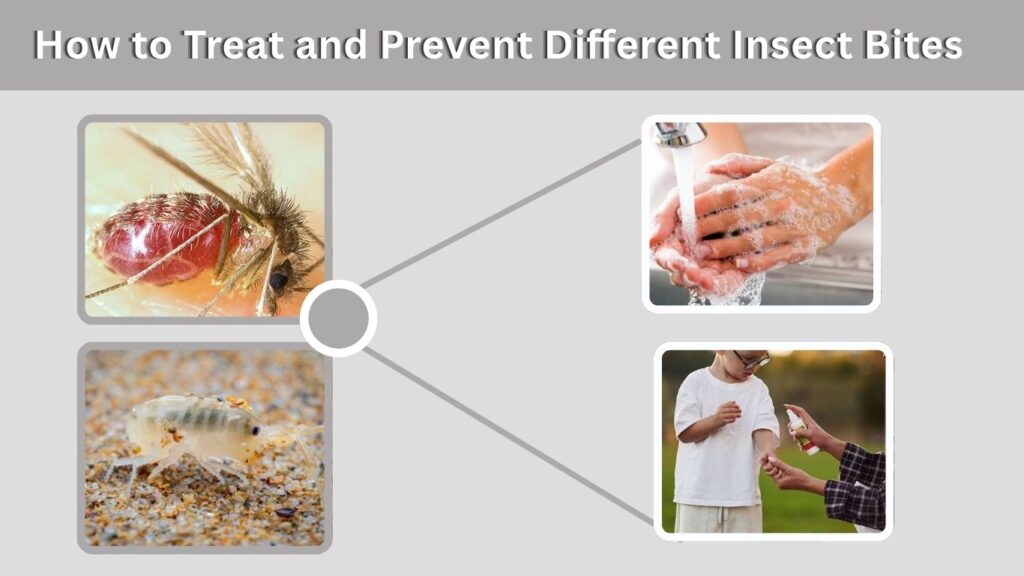
Most uncomplicated reactions from bed bugs, mosquitoes, or sand flies can be managed with similar skin-care measures. The immediate priorities are reducing itching, protecting damaged skin, and preventing repeated exposure. However, insect-control methods differ significantly. Bed bugs require inspection and indoor infestation management, while flying insects are generally addressed through repellents, protective clothing, and suitable barriers.
Basic Treatment for Itchy Insect Bites
- Clean the skin: Wash affected areas with mild soap and water.
- Apply cold compresses: Reduce temporary swelling and discomfort.
- Use anti-itch treatments: Consider calamine lotion or appropriate hydrocortisone cream.
- Ask about antihistamines: A pharmacist can suggest suitable medication for troublesome itching.
- Avoid scratching: Broken skin increases the risk of secondary infection.
Preventing Bed Bug and Sand Fly Bites
To prevent bed bug bites, inspect sleeping areas and luggage, and address confirmed infestations using appropriate pest-control methods.
For sand flies and other biting insects, use registered repellents, protective clothing, and fine-mesh screens or bed nets.
The most effective strategy depends on the insect, location, and exposure conditions.
FAQs
People often compare sand flies with other insects because their bites share many symptoms. Questions about bite appearance, itching, timing, and disease transmission are especially common. The following answers clarify some important differences and explain why environmental evidence is essential when identifying the cause of unexplained skin irritation.
1. Are Sand Fly Bites Worse Than Bed Bug Bites?
Either can cause significant itching and swelling. Certain sand flies also transmit diseases, while bed bugs are not known to transmit human infections.
2. Can Sand Fly Bites Look Like Mosquito Bites?
Yes. Both commonly cause raised, itchy bumps, and their appearance can overlap substantially.
3. How Can I Tell Bed Bug Bites From Sand Fly Bites?
Check exposure conditions and look for insect evidence. Bed bugs commonly hide near beds, whereas sand flies may be encountered outdoors or in unscreened buildings.
4. Are Sand Flies the Same as No-See-Ums?
Not scientifically. True phlebotomine sand flies and biting midges belong to different families, although their common names overlap in certain regions.
5. Which Is More Dangerous: Sand Flies or Tsetse Flies?
Both can transmit serious infections in specific regions. Sand flies can transmit leishmaniasis, while tsetse flies can transmit African sleeping sickness. Individual risk depends on geography and exposure.
