
Fleas are tiny, blood-feeding insects that can survive surprisingly long without an animal nearby. If you have discovered fleas in your carpet, furniture, or bedding, you might wonder how long they can remain alive without a host. The answer depends on their life stage, temperature, humidity, and access to food. While adult fleas usually survive only a short time without feeding, developing fleas can remain hidden for months. Understanding how long fleas can live without a host helps you prevent infestations and eliminate these persistent pests.
How Long Can Fleas Live Without a Host?
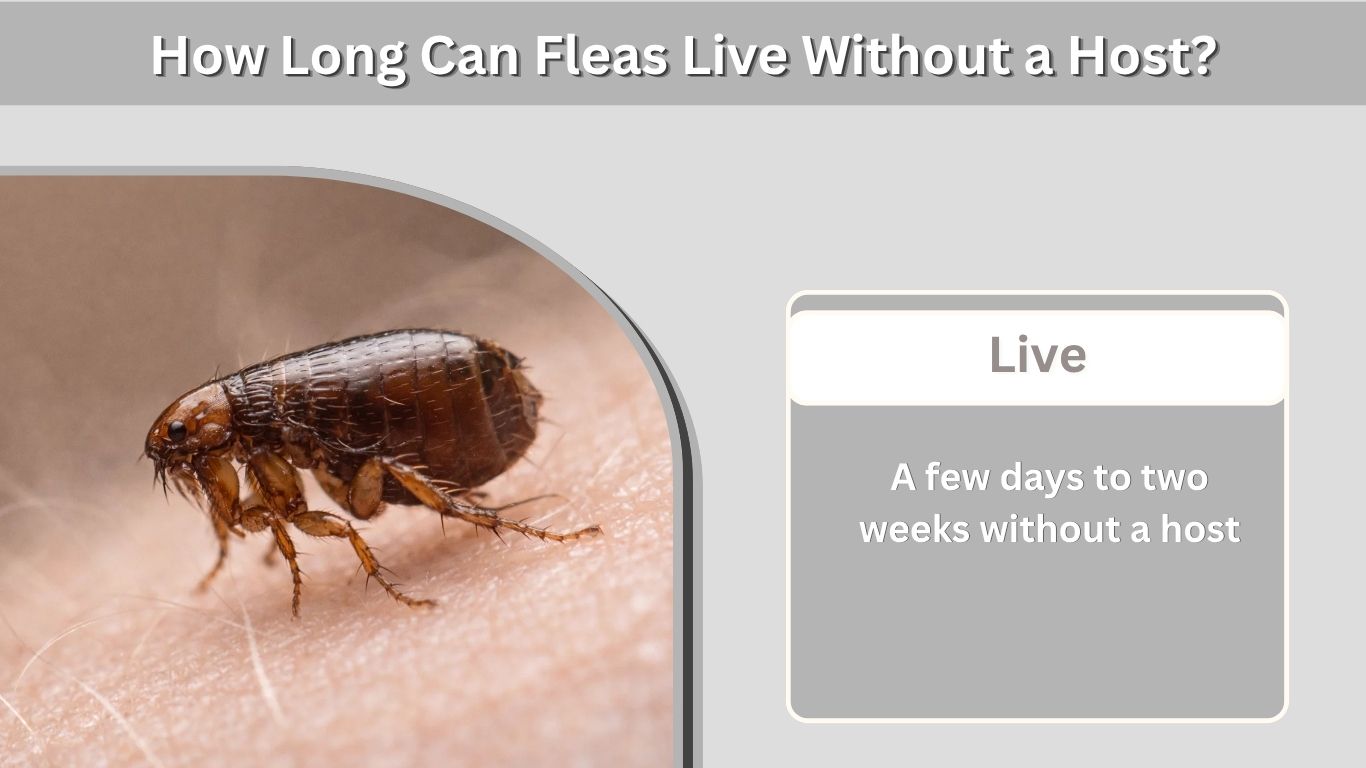
Adult fleas typically survive a few days to two weeks without a host, although some can survive several weeks or longer under favorable conditions. Their survival depends on whether they have previously fed, their species, and their surroundings.
However, flea eggs, larvae, and pupae do not need to live directly on animals. These stages can develop in carpets, bedding, and other protected locations.
Flea Survival Time by Life Stage
| Flea Life Stage | Typical Survival or Development Without a Host |
| Adult flea | A few days to 1–2 weeks; sometimes longer |
| Flea eggs | Usually hatch within 1–10 days |
| Flea larvae | Usually develop over 5–20 days |
| Flea pupae | Can remain protected for weeks or months |
| Adults inside cocoons | May remain dormant for several months, occasionally up to a year |
These periods vary significantly with environmental conditions. Importantly, fleas inside cocoons can survive much longer than exposed adult fleas searching for blood.
How Long Can Fleas Survive at Different Life Stages?
Fleas develop through four stages: eggs, larvae, pupae, and adults. Each stage has different feeding requirements and survival abilities. Understanding these differences explains why flea infestations sometimes return after pets have been removed or a home has remained empty for weeks.
1. How Long Can Adult Fleas Live Without a Host?
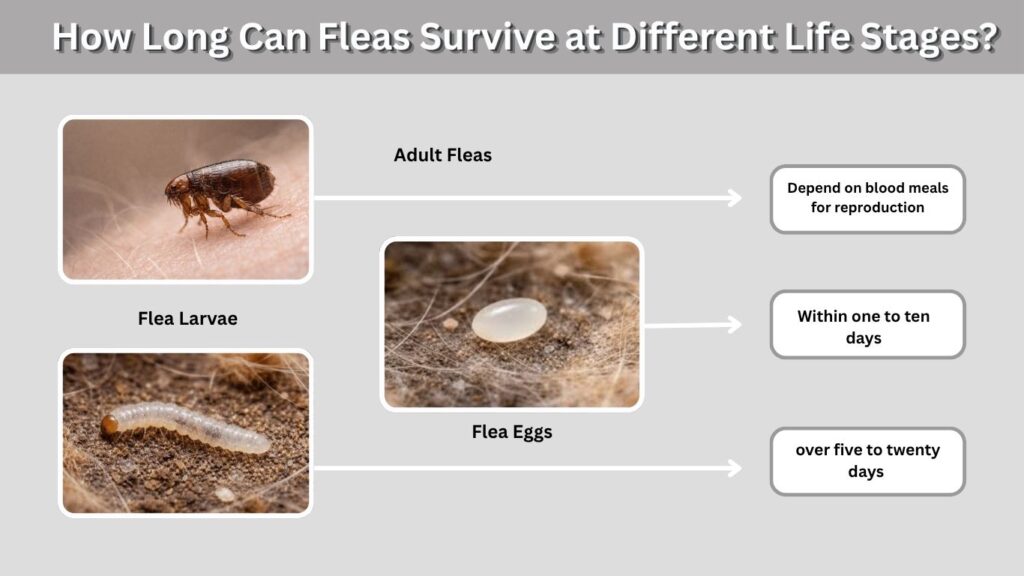
Adult fleas depend on blood meals for reproduction and continued survival. Most newly emerged adults can survive approximately one to two weeks without finding an animal to feed on.
Previously fed fleas and adults kept under favorable conditions may survive longer. However, dry air, extreme temperatures, and dehydration can considerably shorten their lifespan.
Cat fleas and dog fleas generally prefer warm-blooded animals, particularly cats and dogs. Without access to suitable hosts, they eventually die, but they may bite humans while searching for food.
2. How Long Can Flea Eggs Live Without a Host?
Flea eggs do not need a host to develop. Female fleas lay their eggs on animals, but the eggs quickly fall into carpets, furniture, bedding, and floor cracks.
Under suitable conditions, flea eggs generally hatch within one to ten days. Their development depends heavily on temperature and humidity.
Eggs do not feed on blood, so removing a pet does not automatically eliminate them. Once they hatch, the larvae begin searching for suitable organic material and flea droppings.
3. How Long Can Flea Larvae Live Without a Host?
Flea larvae live independently of animals and do not bite humans or pets. They primarily feed on flea dirt, which contains partially digested blood, along with certain organic materials.
Larvae generally develop over five to twenty days when conditions are favorable. Cool temperatures or insufficient food can extend development.
They prefer dark, protected, humid locations, including deep carpet fibers, beneath furniture, and inside pet bedding. Without adequate moisture or nutrition, many larvae die before reaching the pupal stage.
4. How Long Can Flea Pupae Survive Without a Host?
Flea pupae are particularly important because they can survive for extended periods without feeding.
During this stage, developing fleas remain inside protective cocoons. Fully developed adults may stay within those cocoons for several months, sometimes approaching a year under suitable conditions.
Vibrations, body heat, and movement can stimulate adults to emerge when a potential host approaches.
This explains why fleas sometimes appear suddenly in homes that have been vacant for a long time.
How Long Can Fleas Live in Different Places Without a Host?
Flea survival also depends on where the insects are hiding. Carpets, clothing, furniture, and outdoor environments offer different levels of protection. However, the location alone does not determine an exact survival time. The flea’s life stage and surrounding conditions are usually more important.
How Long Can Fleas Live in Carpets Without a Host?
Adult fleas in carpets may survive for several days to a few weeks without feeding. However, flea eggs, larvae, and protected cocoons can remain much longer.
Carpet fibers provide shelter from light and physical disturbance. They also collect flea dirt and organic debris that developing larvae can consume.
A carpet may therefore contain several flea life stages simultaneously. Even after adult fleas disappear, new adults can emerge from surviving cocoons.
Regular vacuuming helps remove eggs, larvae, and debris while stimulating some hidden fleas to emerge.
How Long Can Fleas Live on Clothes Without a Host?
Fleas can temporarily hide in clothing, particularly garments that have contacted infested pets or environments.
However, clothing is not their preferred long-term habitat. Adult fleas generally need to find a suitable animal host within days or weeks.
Flea eggs may also fall onto clothing, although the material itself does not provide blood meals.
Washing potentially infested clothing according to its care label and using an appropriate heated drying cycle can help eliminate fleas and their developing stages.
How Long Can Fleas Live on Furniture and Bedding?
Fleas can survive inside upholstered furniture, mattresses, pet beds, and blankets, especially where animals regularly rest.
Adult fleas may remain alive for days or weeks without feeding. Meanwhile, eggs and larvae can develop in protected crevices.
Flea cocoons are especially difficult to detect because debris sticks to their surfaces, helping them blend into their surroundings.
Thoroughly vacuuming sofas, cushions, mattress edges, and furniture seams helps reduce hidden flea populations.
How Long Can Fleas Live Outside Without a Host?
Outdoor flea survival depends strongly on weather conditions.
Fleas generally survive better in humid, shaded locations than in dry, exposed environments. Areas beneath shrubs, porches, and outdoor pet shelters can provide favorable conditions.
Hot sunlight and dry soil are especially harmful to flea larvae.
Outdoor fleas may also find alternative hosts among stray animals, rodents, and wildlife. Therefore, removing household pets does not necessarily eliminate an outdoor infestation.
What Factors Affect Flea Survival Without a Host?
Several environmental and biological factors determine how long fleas remain alive without access to blood. Conditions that protect fleas from drying out or allow them to find another host can increase survival.
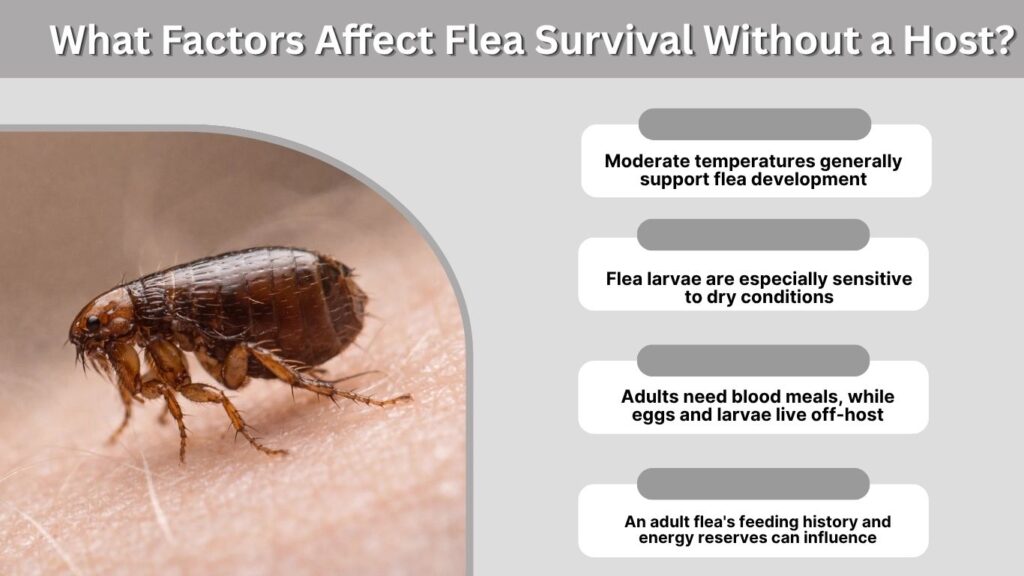
- Temperature: Moderate temperatures generally support flea development, while prolonged extreme heat or cold can kill fleas.
- Humidity: Flea larvae are especially sensitive to dry conditions. Moist environments help protect them from dehydration.
- Life stage: Adults need blood meals, while eggs and larvae live off-host and pupae remain protected inside cocoons.
- Previous feeding: An adult flea’s feeding history and energy reserves can influence how long it survives without another meal.
- Host availability: Nearby pets, rodents, or wildlife allow adult fleas to resume feeding and potentially reproduce.
Because these factors interact, flea survival cannot be predicted from temperature or time alone.
Can Fleas Live in a House Without Pets?
Yes, fleas can remain in a house even when no cats or dogs live there.
Previous occupants may have owned infested animals, or fleas may have entered through wildlife, rodents, visitors, or contaminated belongings.
Adult fleas generally prefer animal hosts, but they can bite people when pets are unavailable. More importantly, eggs, larvae, and pupae may remain hidden in the home.
Even if exposed adults eventually die, flea cocoons can produce new adults when movement and warmth signal a possible host.
Therefore, leaving a house empty for several weeks is not a reliable flea-control method.
How to Get Rid of Fleas Without a Host
Eliminating fleas requires addressing every life stage, not simply waiting for adult insects to die. The following steps help reduce existing infestations and prevent new generations from developing.
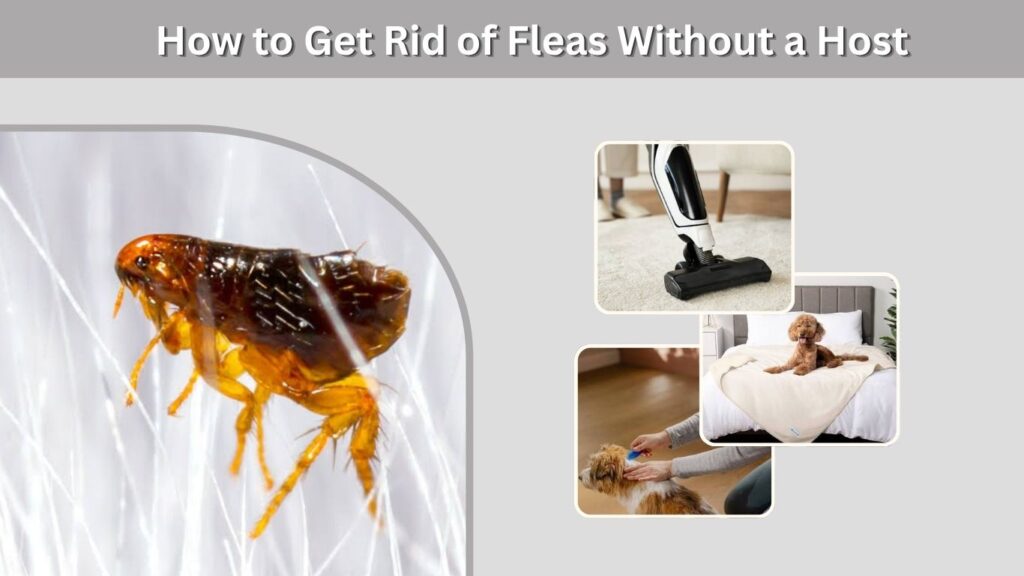
- Vacuum carpets and floors regularly. Focus on rugs, furniture seams, floor cracks, baseboards, and areas where pets previously rested. Empty or dispose of vacuum contents promptly.
- Wash bedding and fabrics. Clean pet blankets, removable furniture covers, and washable bedding. Follow fabric instructions and use suitable heat when possible.
- Treat household pets. If animals are present, consult a veterinarian about species-appropriate flea prevention. Never apply dog-only flea products to cats.
- Address hidden flea habitats. Inspect upholstered furniture, shaded outdoor pet areas, and protected spaces where fleas may develop.
- Continue monitoring and treatment. Because fleas can emerge from cocoons after initial cleaning, repeated cleaning and professionally recommended treatments may be necessary.
For significant infestations, a licensed pest-control professional can recommend an appropriate treatment plan. Avoid relying solely on home remedies or leaving rooms unoccupied.
FAQs
1. How Long Can Cat Fleas Live Without a Host?
Newly emerged cat fleas commonly survive approximately one to two weeks without feeding. Some may live longer under favorable conditions. However, adults protected inside cocoons can remain dormant for months before emerging.
2. How Long Can Dog Fleas Live Without a Host?
Dog fleas generally survive for days to weeks without access to a suitable blood meal. Conditions such as temperature, humidity, and previous feeding influence their survival. Cat fleas also commonly infest dogs.
3. Can Fleas Survive Without Human or Animal Blood?
Adult fleas require blood meals to reproduce and sustain themselves long-term. They may survive temporarily without feeding, while flea eggs, larvae, and pupae can develop or remain protected without directly feeding on a host.
4. Will Fleas Die if You Leave Your House Empty?
Not necessarily. Although many exposed adult fleas eventually die, protected developing stages may remain alive. Adults waiting inside cocoons can emerge when people or animals return, causing an infestation to become noticeable again.
5. How Long Can Newly Hatched Fleas Live Without a Host?
Newly emerged adult fleas can typically survive about one to two weeks without a blood meal. However, their survival may be shorter under hot, dry conditions or longer when environmental conditions are particularly favorable.
