
Fleas are tiny, blood-feeding parasites that commonly affect dogs, causing itching, skin irritation, and discomfort. However, their small size and quick movements make them difficult to identify, especially on dogs with thick or dark fur. Understanding what fleas look like on dogs can help pet owners recognize an infestation before it becomes more serious. From adult fleas and eggs to flea dirt and bite marks, several visible clues can indicate their presence. This guide explains how to identify fleas on dog skin, fur, and different body areas.
What Do Fleas Look Like on Dogs to the Human Eye?
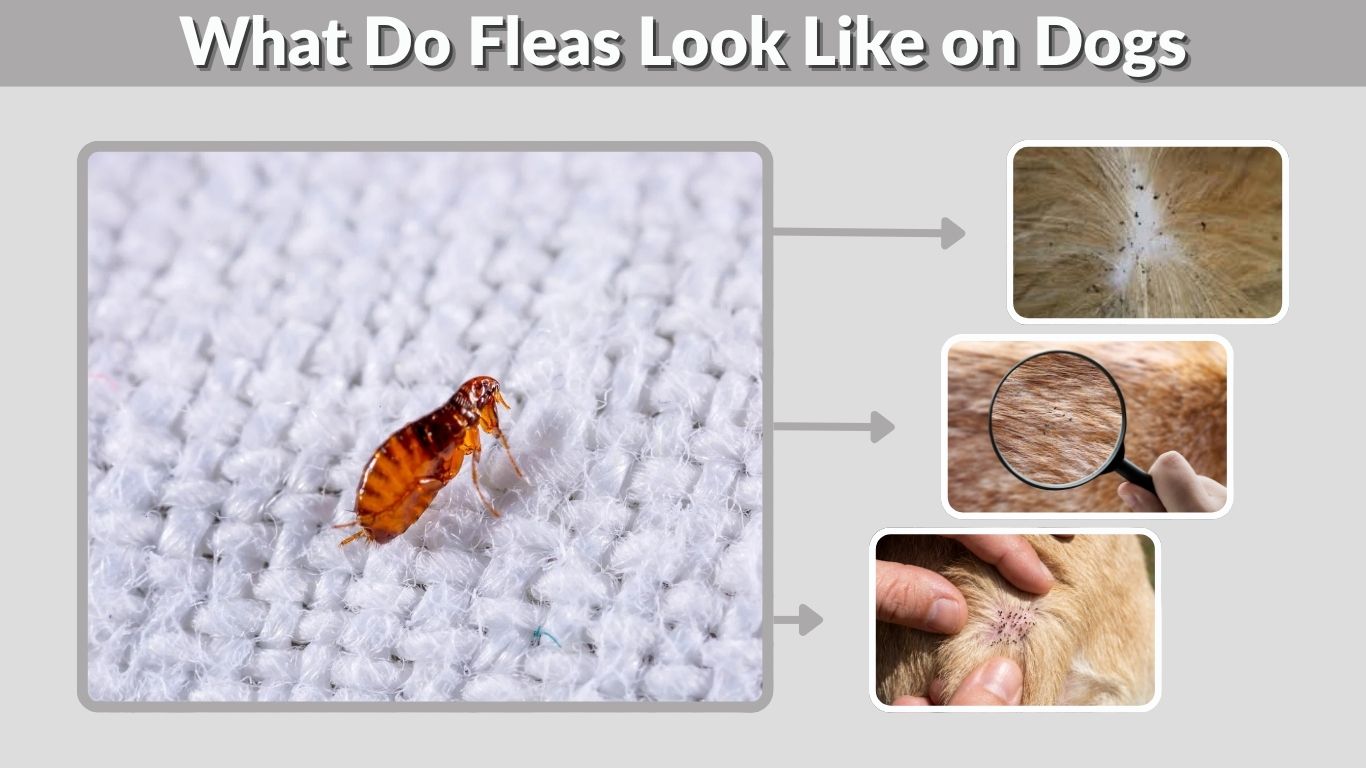
Adult fleas appear as tiny, dark reddish-brown insects moving rapidly through a dog’s fur. They usually measure between 1.5 and 4 millimeters long, making them visible to the naked eye. However, they are easy to miss because they move quickly and hide close to the skin. Their narrow bodies help them travel between individual hairs.
Physical Characteristics of Dog Fleas
- Size: Usually 1.5–4 millimeters long, approximately the size of a small sesame seed.
- Color: Reddish-brown, dark brown, or nearly black.
- Body shape: Narrow, oval, and flattened from side to side.
- Legs: Six legs, including powerful hind legs designed for jumping.
- Wings: Fleas are wingless insects and cannot fly.
- Movement: They crawl quickly between hairs and jump when disturbed.
What Do Dog Fleas Look Like Up Close?
Under magnification, fleas have segmented bodies, small heads, and backward-pointing bristles. Their strong legs allow them to cling to animal fur while feeding.
The cat flea (Ctenocephalides felis) is actually the most common flea found on dogs in many regions, although true dog fleas (Ctenocephalides canis) also occur. Both are difficult to distinguish without magnification.
Where Do Fleas Hide on Dogs?
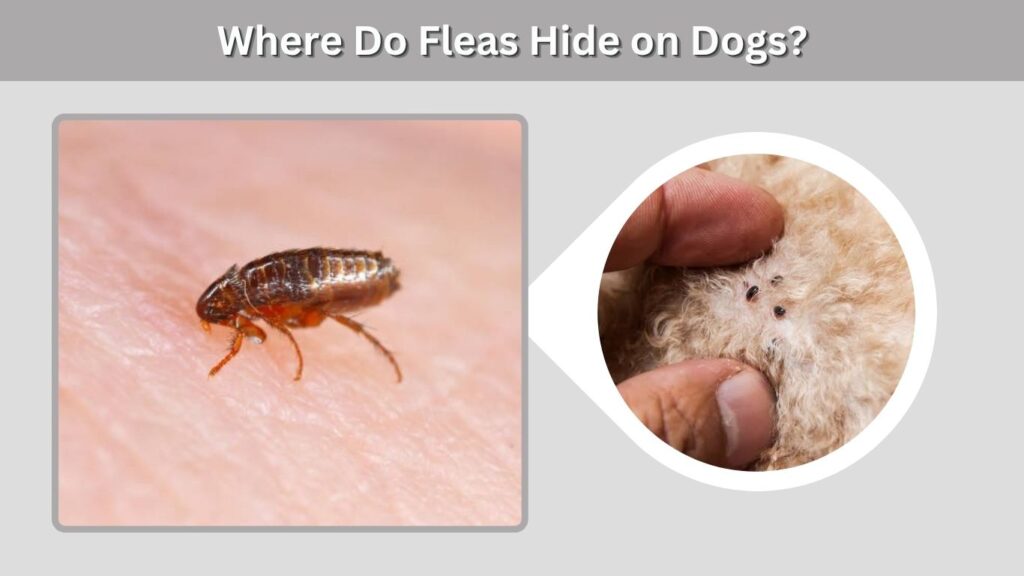
Fleas prefer areas where they can reach the skin and remain relatively undisturbed. Although they can move across the entire body, certain locations are more likely to contain visible fleas or flea dirt. Regularly examining these areas helps pet owners identify problems that might otherwise go unnoticed beneath thick fur.
What Do Fleas Look Like on Dog Skin and Stomach?
On a dog’s stomach, fleas appear as small, moving brown or black insects against the exposed skin. Since belly fur is often thinner, they may be easier to observe here.
Fleas may also hide around the groin, inner thighs, neck, and base of the tail. Redness, irritated patches, or small dark specks can provide additional clues.
What Do Fleas Look Like on Black and White Dogs?
On white dogs, fleas typically stand out as tiny, dark moving insects. Flea dirt may also appear as black pepper-like particles trapped in the coat.
On black dogs, identifying fleas is more difficult because their dark bodies blend into the fur. Using a fine-toothed flea comb and examining the collected material against white paper can make detection easier.
What Do Flea Eggs and Baby Fleas Look Like on Dogs?
Fleas develop through four life stages: egg, larva, pupa, and adult. While adult fleas feed on dogs, the immature stages usually develop in the surrounding environment. Recognizing these different appearances is important because finding adult fleas may indicate that additional eggs and developing fleas are present in the home.
What Do Flea Eggs Look Like on Dogs?
Flea eggs are tiny, oval, and pearly white, measuring approximately 0.5 millimeters long. They resemble miniature grains of salt and can be difficult to distinguish from ordinary debris.
Female fleas lay their eggs in the dog’s coat, but the eggs do not stick firmly to the hair. Instead, they usually fall into bedding, carpets, and other areas where the dog rests.
What Do Baby Fleas Look Like?
Newly hatched fleas are larvae that resemble small, pale, segmented worms. Unlike adult fleas, they have no legs and cannot jump.
These larvae generally live away from the dog, hiding in carpets, floor cracks, or bedding while feeding on organic material and flea droppings.
After developing inside protective cocoons, they eventually emerge as adult fleas.
What Do Flea Bites Look Like on Dogs?
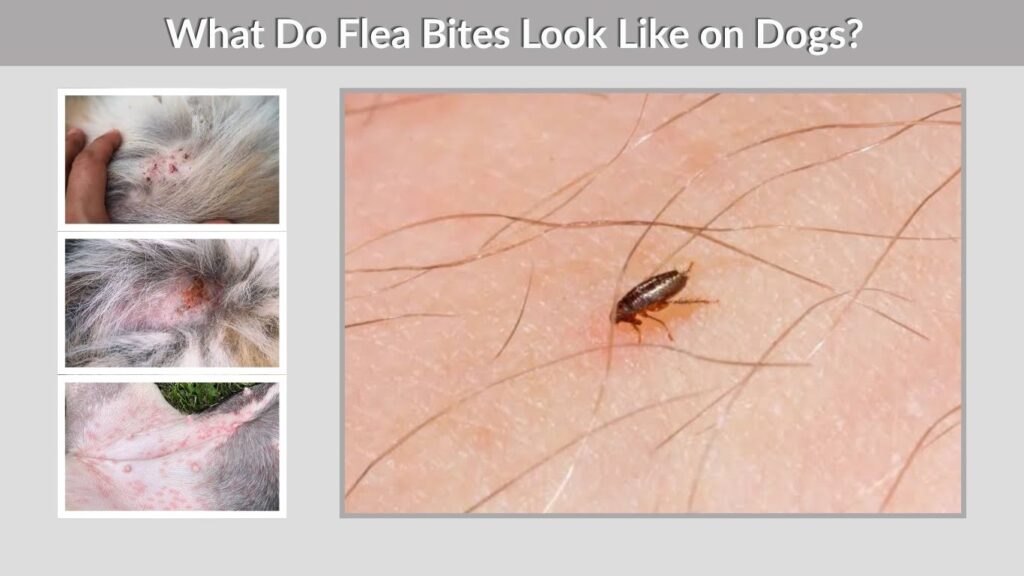
Flea bites often appear as small, irritated bumps on the skin. However, they can be difficult to identify beneath a dog’s coat, and not every bite produces an obvious mark. Some dogs experience mild irritation, while others develop intense itching and allergic skin reactions after being exposed to flea saliva.
Common Signs of Flea Bites on Dogs
- Red bumps: Small, raised, irritated areas on the skin.
- Frequent scratching: Persistent itching around the back, belly, or tail.
- Hair loss: Thinning fur caused by repeated scratching or chewing.
- Skin inflammation: Redness, scabs, or irritated patches.
- Excessive licking: Repeated grooming of uncomfortable areas.
What Does Flea Allergy Dermatitis Look Like?
Flea allergy dermatitis occurs when a dog develops an allergic reaction to flea saliva.
Affected dogs may experience severe itching, hair loss, scabs, and inflamed skin, particularly around the lower back and tail base.
Even a single flea bite can trigger prolonged discomfort in sensitive animals. Persistent scratching, open sores, or signs of infection require veterinary attention.
What Does Flea Dirt Look Like on Dogs?
Flea dirt is one of the most useful signs of an infestation, especially when live fleas are difficult to locate. It consists of flea droppings containing digested blood and resembles tiny black or reddish-brown grains. These particles may collect around the dog’s skin, tail, or sleeping areas.
How to Identify Flea Dirt
To check suspicious dark particles, place them on a damp white paper towel. Flea dirt typically dissolves or spreads into reddish-brown stains because it contains digested blood.
Ordinary dirt generally does not produce the same effect.
A flea comb is useful for collecting these particles, particularly from thick coats. Although flea dirt strongly suggests fleas are present, identifying the insects themselves provides additional confirmation.
What Do Dead Fleas Look Like on Dogs?
Dead fleas resemble living adults but remain motionless. They may appear curled, dried, or flattened while retaining their dark brown coloration.
Dead fleas can sometimes be found in the coat or bedding after flea treatment. Their presence does not necessarily mean the infestation has completely disappeared.
Fleas vs. Ticks: What Do They Look Like on Dogs?
Fleas and ticks are both blood-feeding parasites, but their appearance and behavior differ significantly. Fleas are narrow insects that jump and move quickly through fur. Ticks are arachnids that crawl and often remain attached to the skin while feeding. Understanding these differences helps prevent confusion during a pet inspection.
| Feature | Fleas | Ticks |
| Body shape | Narrow, flattened sideways | Oval or rounded |
| Adult legs | 6 | 8 |
| Movement | Crawl and jump | Crawl |
| Wings | None | None |
| Feeding | Repeated blood feeding | Often attach for days |
| Appearance | Small, dark, fast-moving | Can become swollen after feeding |
Unlike fleas, feeding ticks may appear firmly attached to the skin. An engorged tick can become much larger than an unfed tick.
How to Check Your Dog for Fleas
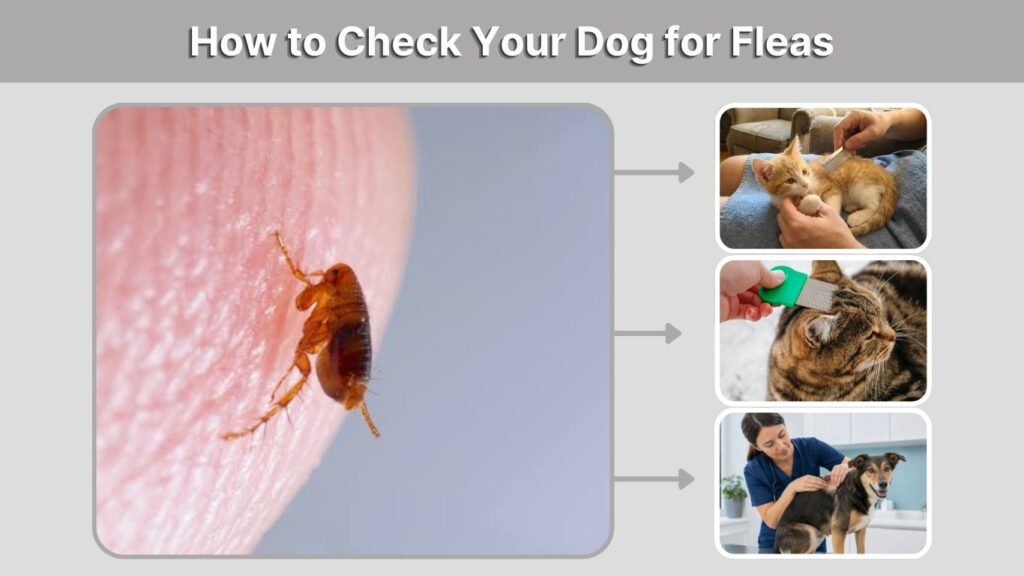
Checking your dog’s coat carefully is the most reliable way to find visible fleas or flea dirt. Because fleas can move quickly into dense fur, a casual inspection may miss them. Using appropriate lighting and a fine-toothed flea comb improves the chances of detecting an infestation before irritation becomes severe.
Step-by-Step Flea Inspection
- Choose a bright location: Natural daylight or a bright lamp helps reveal small insects.
- Separate the fur: Examine the skin around the neck, belly, groin, and tail base.
- Use a flea comb: Slowly comb through the hair close to the skin.
- Inspect collected material: Look for moving insects and dark flea dirt.
- Check the bedding: Examine your dog’s sleeping area for eggs, insects, and dark specks.
What Should You Do if You Find Fleas?
If you discover fleas, consult your veterinarian about an appropriate flea treatment for your dog’s age, weight, and health.
Effective control also involves cleaning the surrounding environment. Vacuuming floors and carpets, washing pet bedding, and maintaining regular flea prevention can help reduce reinfestation.
Treatments intended for dogs should never be applied to cats unless specifically labeled safe for cats. Puppies also require age-appropriate products.
FAQs
1. Can You See Fleas on Dogs With the Naked Eye?
Yes. Adult fleas are visible without magnification, although they can be difficult to recognize because of their size, dark color, and rapid movements.
2. What Do Fleas Look Like on a Dog’s Belly?
They appear as tiny, dark reddish-brown insects crawling or jumping across the skin. Red bumps and flea dirt may also be visible.
3. What Do Fleas Look Like on a Puppy?
Fleas on puppies look the same as those on adult dogs. However, heavy infestations are particularly dangerous for young puppies because blood loss can lead to anemia.
4. Do Fleas Stay Attached to Dogs Like Ticks?
No. Fleas crawl through fur and feed on blood but do not remain anchored to the skin like ticks. Adult fleas may nevertheless spend much of their lives living in a dog’s coat.
5. Can a Dog Have Fleas Without Visible Fleas?
Yes. Dogs may have flea bites or flea allergy dermatitis without obvious live fleas during an inspection. Flea dirt, excessive scratching, and irritated skin can provide additional clues.
