
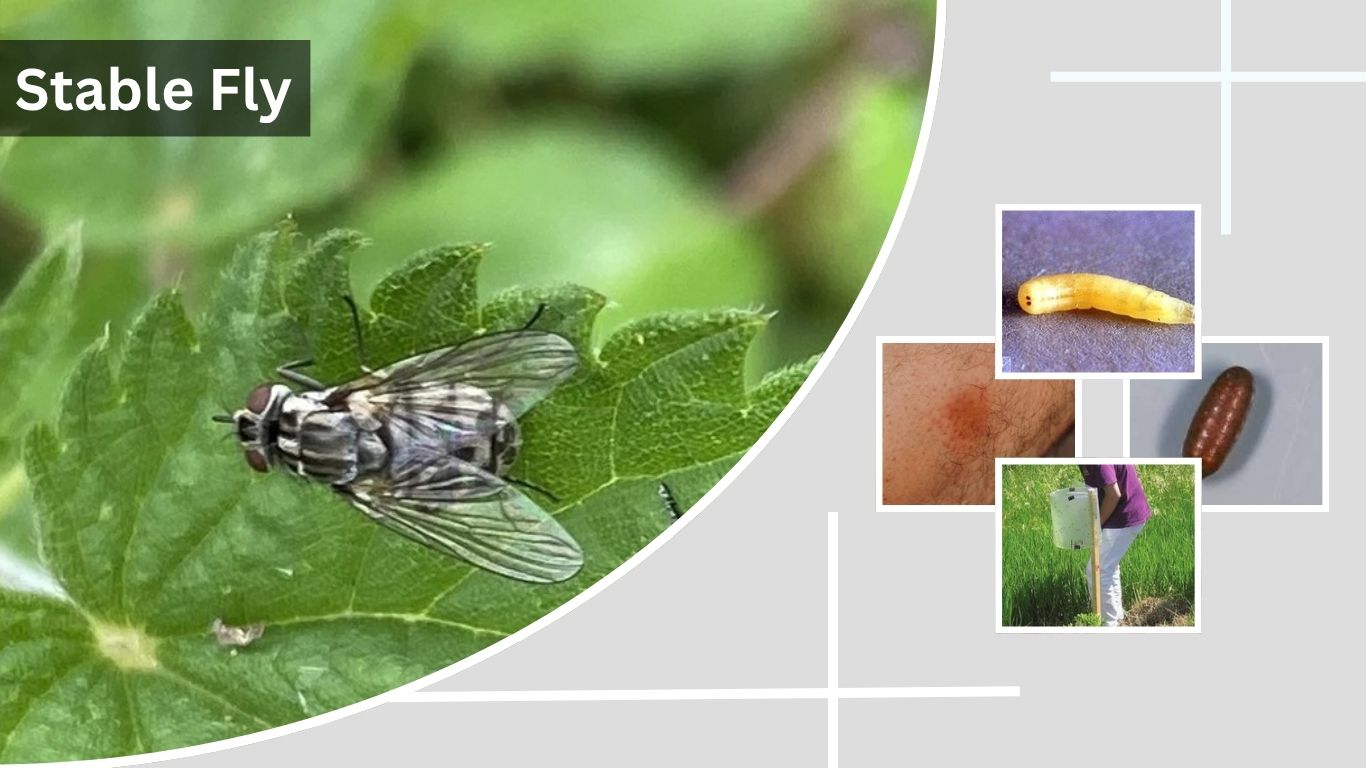
Stable flies are small, blood-feeding insects known for their painful bites and aggressive feeding behavior. Unlike ordinary house flies, stable flies bite humans, horses, cattle, and other warm-blooded animals. They commonly appear around livestock facilities, farms, gardens, and areas containing decaying organic materials. Their bites can cause irritation, swelling, and discomfort, making them troublesome outdoor pests. Understanding stable fly identification, biting habits, breeding sites, and effective control methods can help you protect yourself, your animals, and your property from these persistent insects.
What Is a Stable Fly?
The stable fly (Stomoxys calcitrans) is a blood-feeding insect belonging to the family Muscidae. It is commonly called the biting house fly because it closely resembles an ordinary house fly but possesses specialized mouthparts for piercing skin.
Both male and female stable flies feed on blood. They are widespread throughout the world and frequently occur near livestock, agricultural environments, and accumulated organic waste.
| Characteristic | Description |
| Scientific name | Stomoxys calcitrans |
| Family | Muscidae |
| Average size | 5–7 mm |
| Color | Gray with dark markings |
| Diet | Blood from mammals and other animals |
| Habitat | Farms, stables, pastures, gardens |
| Active period | Primarily daytime |
| Lifespan | Approximately 2–4 weeks, depending on conditions |
What Does a Stable Fly Look Like?
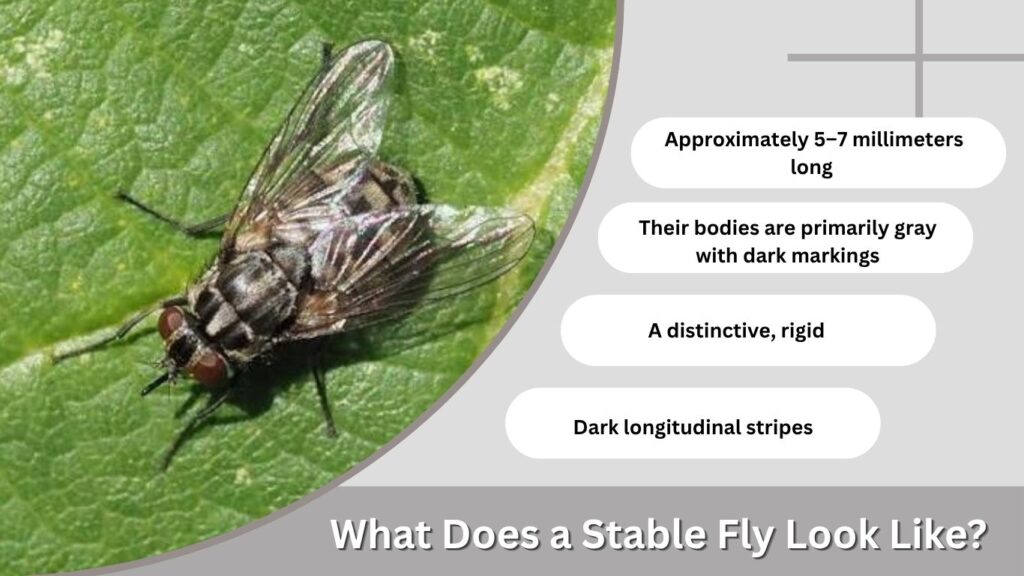
Stable flies look remarkably similar to common house flies, making identification difficult without examining their physical characteristics. However, their piercing mouthparts, body markings, and blood-feeding behavior help distinguish them from harmless flies.
Key Identification Features
- Body size: Adult stable flies measure approximately 5–7 millimeters long.
- Body color: Their bodies are primarily gray with dark markings.
- Mouthparts: A distinctive, rigid, needle-like proboscis extends forward from the head.
- Thorax: Dark longitudinal stripes are often visible behind the head.
- Abdomen: The abdomen features dark spots or a checkered pattern.
- Wings: They have one pair of transparent wings.
- Legs: Six slender, dark legs allow them to land quickly on animals and people.
The most reliable identification feature is the forward-pointing proboscis, which stable flies use to pierce skin and consume blood.
Stable Fly vs. House Fly vs. Horse Fly
Stable flies, house flies, and horse flies are frequently confused because they share similar habitats and general appearances. However, these insects differ significantly in size, mouthparts, and feeding habits.
| Feature | Stable Fly | House Fly | Horse Fly |
| Size | Small | Small | Usually larger |
| Bites humans | Yes | No | Yes |
| Male bites | Yes | No | No |
| Mouthparts | Piercing | Sponging | Cutting |
| Main food | Blood | Liquids and organic matter | Female: blood; both sexes: nectar |
| Common habitat | Farms and stables | Homes and farms | Fields and wetlands |
Stable flies differ from horse flies because both stable fly sexes require blood meals, whereas only female horse flies bite to obtain blood for egg production.
Do Stable Flies Bite Humans?
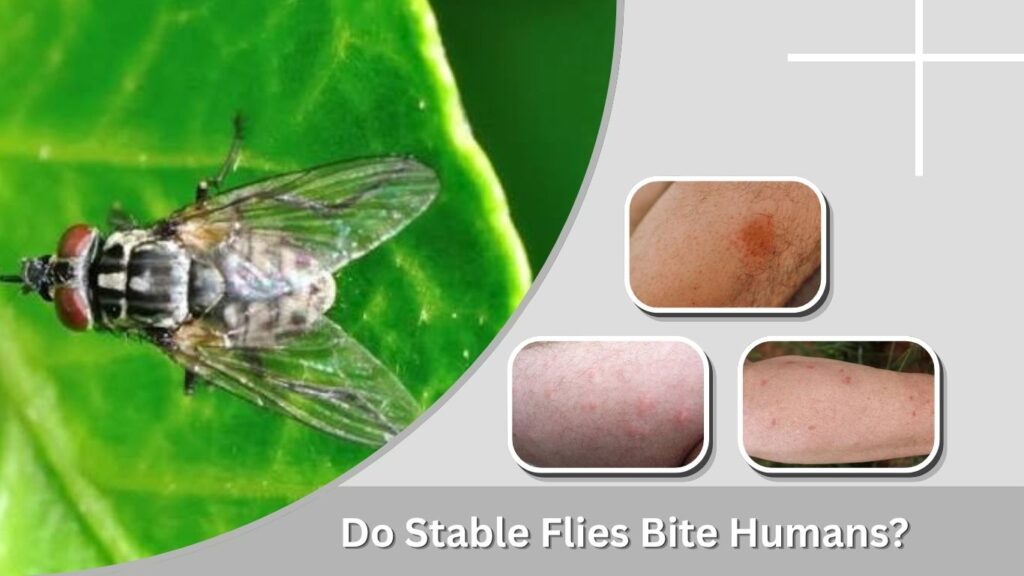
Yes, stable flies bite humans, particularly around the ankles, feet, and lower legs. Their sharp mouthparts penetrate the skin and allow them to withdraw blood.
Unlike mosquitoes, which often bite unnoticed, stable fly bites usually produce immediate, sharp pain. They are most active during daylight, particularly around early morning and late afternoon.
What Do Stable Fly Bites Look Like?
Stable fly bites typically cause localized irritation. Their appearance can vary depending on skin sensitivity and the number of bites received.
Common symptoms include:
- Immediate sharp pain during biting.
- Small raised bumps around the bite.
- Redness or discoloration around the affected area.
- Mild swelling and itching.
- Tenderness or irritation lasting several days.
Bites may appear on exposed ankles and legs. However, their appearance alone cannot reliably distinguish stable fly bites from other insect bites.
How to Treat Stable Fly Bites
Most stable fly bites heal without medical treatment. Simple first-aid measures can relieve pain and reduce irritation.
- Wash the bite: Clean the affected area thoroughly with soap and water.
- Apply a cold compress: Use a cool cloth for 10–20 minutes to reduce swelling.
- Relieve itching: Consider an appropriate antihistamine or mild hydrocortisone cream.
- Avoid scratching: Scratching can damage the skin and increase infection risk.
- Monitor symptoms: Seek medical attention if swelling worsens, pus develops, or pain increases.
Difficulty breathing or swelling of the throat after any insect bite requires emergency medical attention.
Are Stable Flies Dangerous?
Stable flies are primarily considered nuisance pests rather than major carriers of human disease in the United States. Their bites can nevertheless cause significant pain, irritation, and secondary skin infections from scratching.
They can mechanically transport certain pathogens, particularly those affecting livestock, although transmission risks vary by disease and region.
For cattle and horses, repeated biting causes stress, restlessness, reduced feeding, and potentially decreased production.
Heavy infestations may create substantial economic losses for livestock farmers.
Stable Fly Life Cycle and Breeding Habits
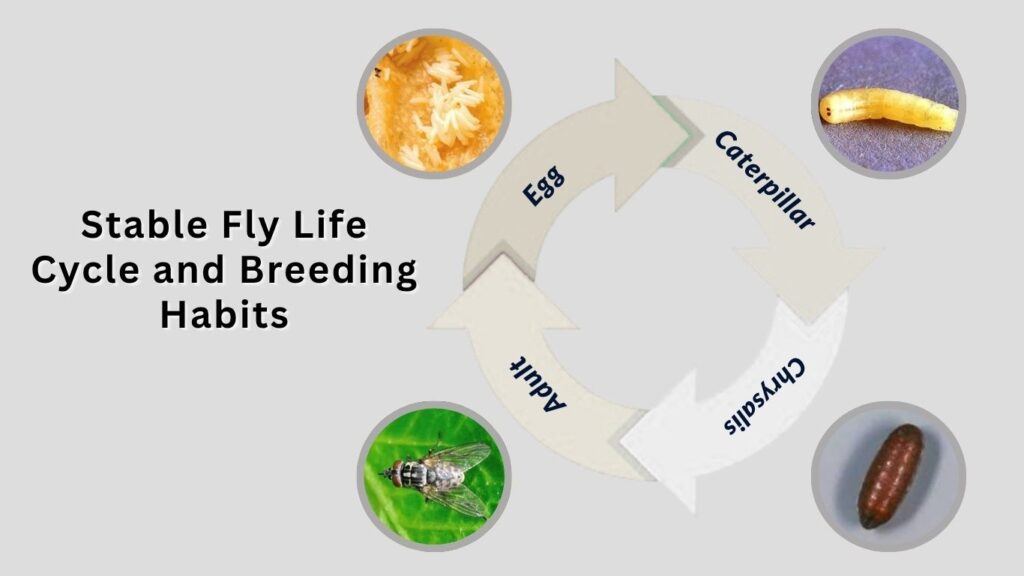
Stable flies undergo complete metamorphosis through four developmental stages: egg, larva, pupa, and adult. Their development depends heavily on temperature, moisture, and access to decomposing organic material.
Four Stages of the Stable Fly Life Cycle
- Egg: Females deposit small, pale eggs in moist, decomposing organic matter, particularly manure mixed with straw or hay.
- Larva: White, worm-like maggots emerge and feed on decaying materials.
- Pupa: Mature larvae transform into pupae, where adult body structures develop.
- Adult: Fully developed flies emerge, seek blood meals, mate, and reproduce.
Under favorable warm conditions, the entire life cycle may be completed in approximately two weeks. Cooler temperatures can extend development considerably.
Where Do Stable Flies Breed?
Common breeding locations include wet livestock bedding, manure mixed with vegetation, rotting hay, spilled animal feed, damp grass clippings, and poorly maintained compost piles.
Removing these breeding materials is essential for effective long-term control.
How to Get Rid of Stable Flies
The most effective stable fly control strategy combines sanitation, breeding-site removal, trapping, and appropriate animal protection. Eliminating breeding areas is particularly important because adult flies can repeatedly emerge from untreated organic waste.
1. Remove Breeding Materials
Clear accumulated manure, wet straw, old hay, grass clippings, and spoiled feed. Clean livestock bedding regularly and dispose of contaminated materials properly.
2. Keep Animal Housing Clean
Maintain clean stables, barns, and feeding areas. Replace wet bedding, repair drainage problems, and prevent manure from accumulating near animals.
3. Install Stable Fly Traps
Use sticky traps designed specifically for stable flies. Position them in appropriate outdoor locations where flies are active, beyond the reach of children and livestock.
4. Use Appropriate Fly Sprays
Approved barn and stable fly sprays can help reduce adult populations. Select products labeled for the intended animals and locations, follow application instructions, and avoid contaminating feed or water.
5. Maintain Outdoor Areas
Manage compost piles, remove decaying vegetation, and keep feeding areas dry. These practices help prevent future infestations.
Sanitation and habitat management provide more sustainable control than relying on insecticides alone.
Best Stable Fly Traps for Effective Control
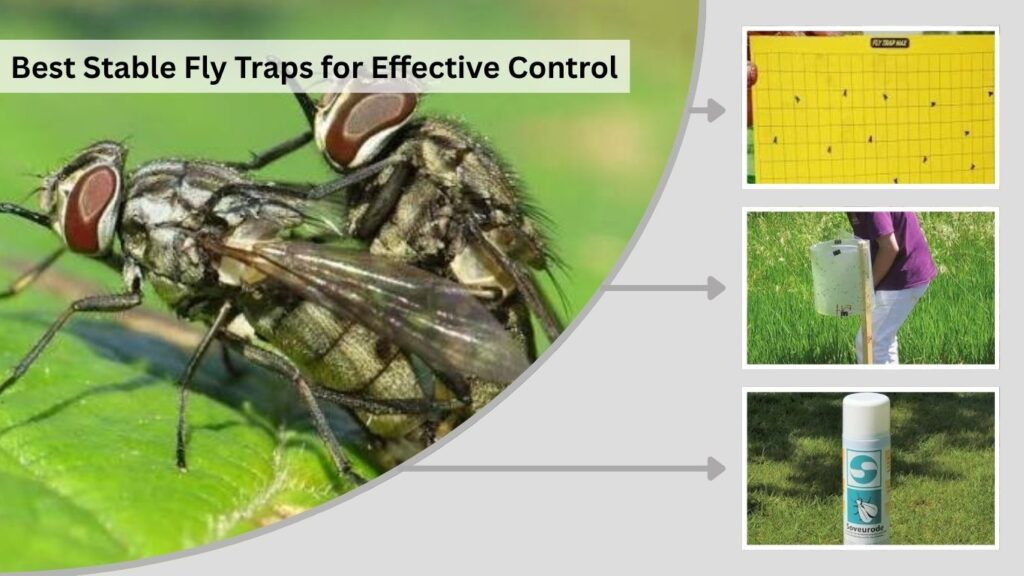
Stable fly traps help capture biting adults and monitor population activity. Different trap designs vary in effectiveness depending on environmental conditions and placement.
Common options include:
- Sticky stable fly traps: Adhesive-coated panels capture flies that land on their surfaces.
- Alsynite fiberglass traps: Reflective fiberglass cylinders or panels attract stable flies and capture them using adhesive sleeves.
- White panel traps: Specially designed white adhesive panels can attract stable flies effectively.
- Commercial biting fly traps: Products designed for stable flies provide ready-made trapping systems for farms and outdoor areas.
Traps should be inspected regularly and replaced when covered with dust or captured insects. They work best alongside breeding-site removal rather than as the only control measure.
How to Prevent Stable Fly Bites
Preventing bites requires limiting exposure and reducing the number of flies around frequently used outdoor areas.
Wear long pants, socks, and closed shoes to protect vulnerable skin. Although stable flies can sometimes bite through thin clothing, thicker fabrics provide better protection.
Use personal insect repellents labeled for biting flies, following the manufacturer’s instructions. Repellent effectiveness against stable flies can vary.
For horses and other livestock, choose veterinarian-recommended repellents or approved animal fly-control products. Clean housing and properly managed waste remain essential.
FAQs
1. Why Do Stable Flies Bite?
Stable flies bite because they need blood for survival and reproduction. Both males and females use their specialized piercing mouthparts to feed on warm-blooded animals, including humans, cattle, horses, and dogs.
2. Do Stable Fly Bites Itch?
Yes, stable fly bites may itch after the initial sharp pain subsides. They can also produce localized swelling, redness, and tenderness. Symptoms usually improve within several days, although individual skin reactions vary.
3. Can Stable Flies Bite Through Clothing?
Yes, stable flies can sometimes bite through thin clothing, including socks and lightweight fabrics. Wearing thicker pants, sturdy socks, and protective footwear can reduce exposure, especially when working around farms or livestock.
4. What Is the Best Way to Control Stable Flies?
The best approach combines removing wet bedding, manure mixed with vegetation, and rotting organic materials with properly placed stable fly traps. Regular sanitation reduces breeding opportunities and helps prevent recurring infestations.
5. Are Stable Flies and False Stable Flies the Same?
No. Stable flies (Stomoxys calcitrans) feed on blood and deliver painful bites. False stable flies (Muscina stabulans) resemble them but possess sponging mouthparts and do not bite humans or animals.
