
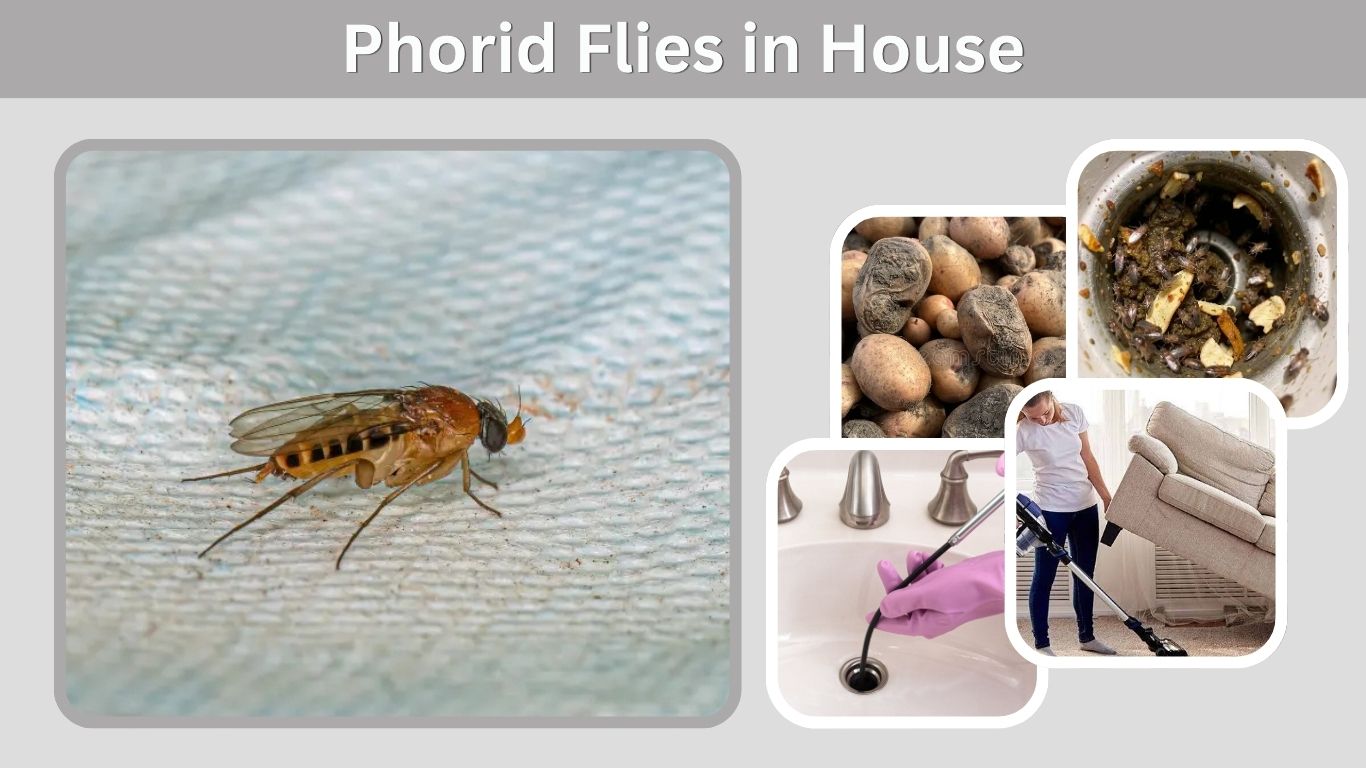
Finding phorid flies in your house can be frustrating, especially when tiny black or brown insects repeatedly appear around kitchen sinks, bathrooms, drains, and windows. These small, humpbacked flies reproduce in moist, decaying organic matter and can spread throughout a home when suitable breeding conditions exist. While phorid flies do not normally bite humans, they may indicate hidden sanitation or plumbing problems. Understanding why phorid flies enter houses, how to locate their breeding sites, and which removal methods actually work can help you eliminate an infestation and prevent these troublesome insects from returning.
What Are Phorid Flies in the House?
Phorid flies are small insects belonging to the family Phoridae. They are commonly called scuttle flies or humpbacked flies because of their distinctive body shape and unusual running behavior.
Adults generally measure around 1–4 millimeters long and range from light brown to nearly black.
Unlike common house flies, phorid flies often run quickly across surfaces before flying away. Indoors, they typically reproduce near decomposing food, accumulated organic material, or damp areas containing organic debris.
Their presence becomes particularly concerning when large numbers appear without an obvious breeding source.
How to Identify Phorid Flies in Your House
Phorid flies look similar to fruit flies and fungus gnats. However, their distinctive movement and body shape help homeowners distinguish them from other small household insects.
Common Identification Features
- Small body: Usually around 1–4 millimeters long.
- Humpbacked appearance: Their thorax curves noticeably upward.
- Dark coloration: Adults may be brown, tan, or nearly black.
- Rapid movement: They run across surfaces in irregular bursts.
- Transparent wings: Their wings contain distinctive dark veins.
- Common locations: Frequently spotted around kitchen sinks, bathrooms, and garbage containers.
Unlike larger house flies, phorid flies tend to run short distances, pause, and suddenly change direction.
Why Are Phorid Flies in My House?
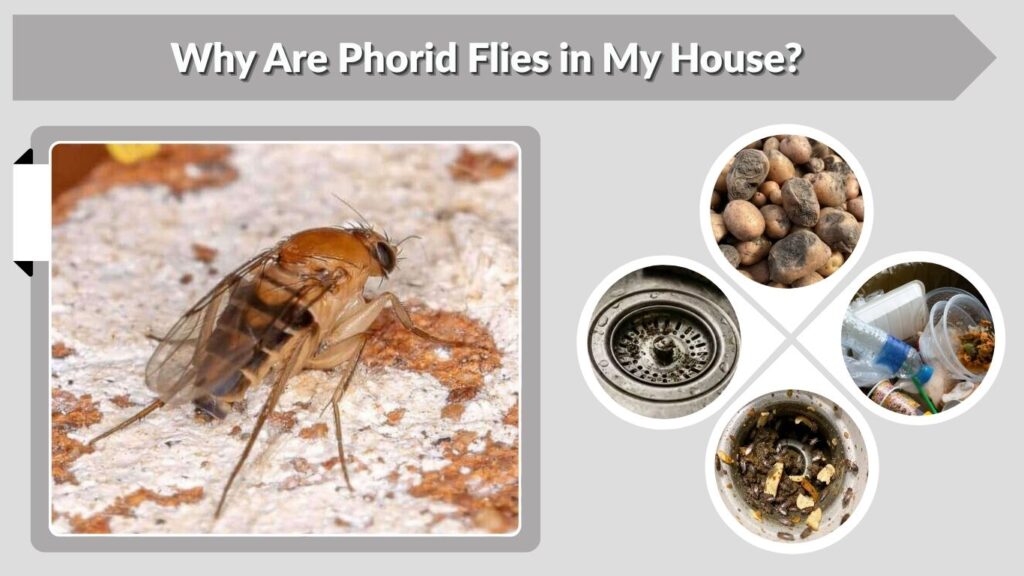
Phorid flies are attracted to moist, decaying organic materials. Their presence often indicates an accessible food source where females can lay eggs and larvae can develop.
Common Causes of Phorid Flies in Houses
- Dirty drains: Organic buildup inside sink and floor drains can support developing larvae.
- Rotting food: Forgotten vegetables, spoiled potatoes, and food scraps provide breeding materials.
- Garbage containers: Wet food waste and dirty trash bins attract adult flies.
- Plumbing leaks: Damaged sewer pipes may create hidden breeding environments.
- Houseplant soil: Excessively wet potting soil containing decaying organic matter may attract certain species.
- Animal waste: Neglected pet litter, animal droppings, or decomposing animal remains can support infestations.
Even regularly cleaned homes can experience phorid flies when hidden moisture problems or inaccessible organic debris create breeding conditions.
How Do Phorid Flies Get Into Your House?
Phorid flies can enter houses through open doors, windows, damaged screens, and small structural gaps. They may also arrive with infested potting soil, decomposing produce, or other contaminated organic materials.
However, many indoor infestations develop when adult flies lay eggs in suitable materials already inside the home.
In severe cases, phorid flies may emerge from sewage-contaminated soil beneath a building. Cracks around foundations and plumbing can provide routes into living spaces.
Where Do Phorid Flies Hide in a House?
Locating the breeding site is essential because killing adult flies does not prevent new generations from emerging.
| Location | Possible breeding source |
| Kitchen sink | Organic buildup inside drains |
| Bathroom | Damp debris and dirty floor drains |
| Garbage area | Decomposing food waste |
| Under refrigerator | Moisture and trapped food debris |
| Basement | Leaking pipes and damp organic matter |
| Houseplants | Moist soil and decomposing roots |
| Laundry area | Standing water and accumulated debris |
To narrow down the source, place sticky traps in several locations and compare where the most flies appear.
You can also place a strip of clear tape across part of a drain opening overnight, leaving airflow unobstructed. Flies emerging from the drain may become trapped on the adhesive.
How to Get Rid of Phorid Flies in Your House
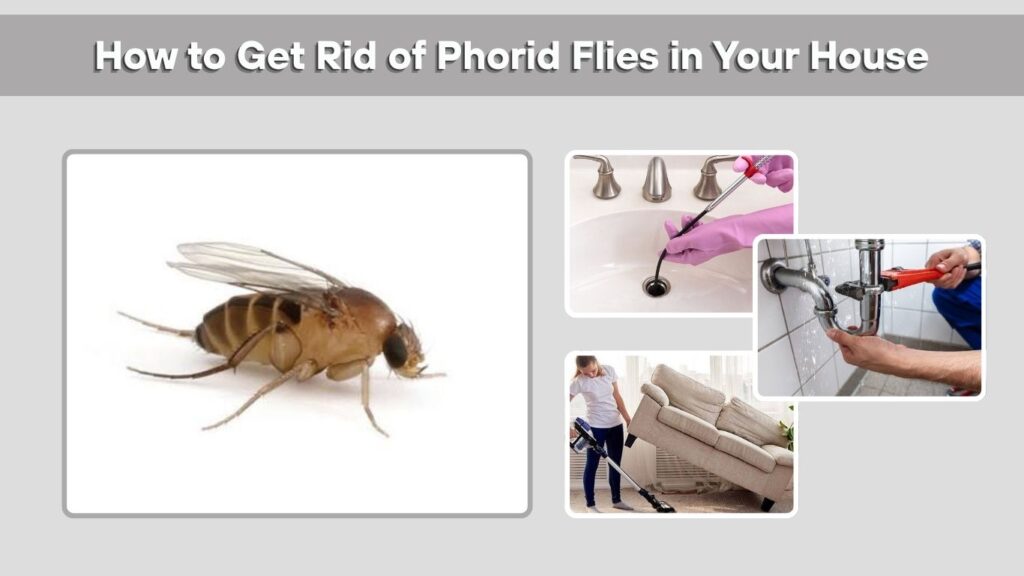
The most effective way to eliminate phorid flies is to remove the organic material where their larvae develop. Cleaning, moisture control, and trapping should be combined for lasting results.
1. Clean Kitchen and Bathroom Drains
Inspect sink drains, garbage disposals, and bathroom plumbing. Remove accessible food residue and organic buildup using a suitable drain brush.
Enzyme-based or microbial drain cleaners may help break down remaining deposits when used according to their instructions. Avoid mixing drain-cleaning chemicals.
2. Remove Decaying Food and Garbage
Discard spoiled vegetables, rotten fruit, and forgotten food scraps. Wash garbage containers and recycling bins to remove accumulated liquids.
Pay special attention to food that may have fallen beneath appliances or kitchen cabinets.
3. Repair Water Leaks
Inspect pipes beneath sinks and around washing machines, dishwashers, and refrigerators.
Repair leaks and thoroughly dry affected areas. If flies continue emerging from floors or plumbing gaps, consider a professional plumbing inspection.
4. Use Sticky Fly Traps
Position sticky traps near sinks, windows, garbage areas, and other locations where flies frequently appear.
Traps help catch adult phorid flies and identify activity hotspots. However, they cannot eliminate larvae developing inside hidden breeding sites.
5. Clean Hidden Household Areas
Remove accumulated debris beneath refrigerators, behind kitchen appliances, and around floor edges.
Wash dirty cleaning cloths, mop heads, and pet feeding equipment. Keep these materials dry when not in use.
6. Inspect Your Houseplants
Check potting soil for excessive moisture, dead roots, and decomposing vegetation. Remove rotting plant material and adjust watering practices.
If you find persistent fly activity around one container, examine the plant and soil more closely.
7. Contact a Professional When Necessary
If phorid flies remain abundant after thorough cleaning, hidden sewage leaks or contaminated soil may be responsible.
A qualified plumber or pest management professional can help identify inaccessible breeding areas and recommend appropriate repairs.
Phorid Flies in Houseplants
Phorid flies occasionally develop in potted plants containing damp, decaying organic matter. However, fungus gnats are more commonly responsible for tiny flies hovering around indoor plants.
To reduce the problem, allow the potting mix to dry appropriately between waterings, remove decomposing plant debris, and ensure containers have adequate drainage.
If roots are rotting or the growing medium remains waterlogged, repotting into fresh, suitable potting mix may be necessary.
Correctly identifying the insect prevents unnecessary treatments.
Phorid Flies vs. House Flies
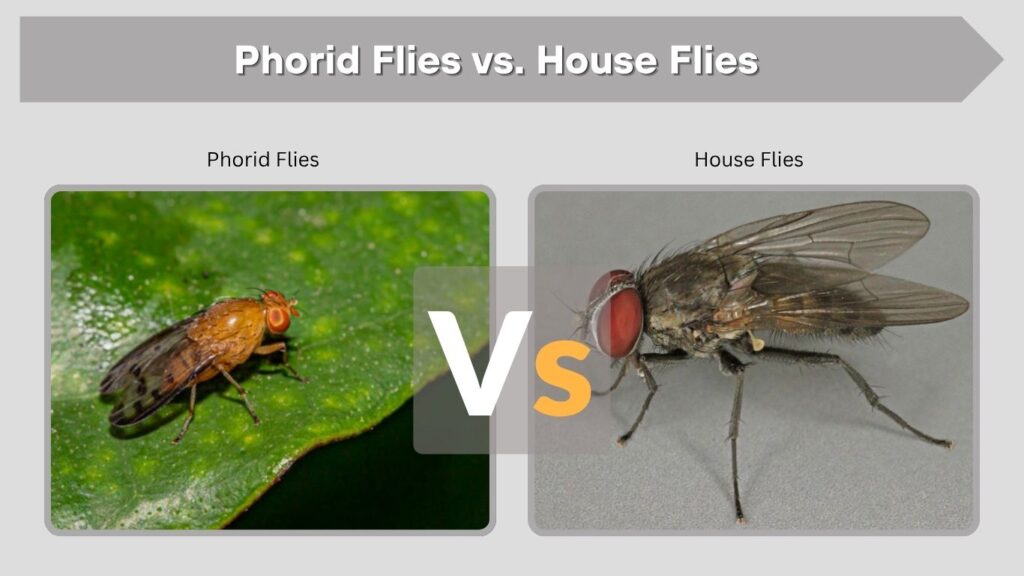
Although phorid flies and house flies belong to the order Diptera, they differ considerably in size, appearance, and behavior.
| Feature | Phorid Flies | House Flies |
| Average size | Around 1–4 mm | Around 6–7 mm |
| Body shape | Humpbacked | More elongated |
| Color | Brown to black | Gray |
| Movement | Run in short bursts | Mostly fly |
| Breeding sites | Moist decaying organic matter | Garbage, manure, waste |
| Bite humans | No | No |
The smaller body and characteristic running behavior are especially useful for distinguishing phorid flies from ordinary house flies.
Do Phorid Flies Bite Humans in the House?
No, phorid flies do not bite humans, even when they are present in large numbers inside houses.
Unlike biting flies, common household phorid flies lack the specialized mouthparts needed to pierce human skin.
Nevertheless, they can pose sanitation concerns because they visit decomposing material and may transfer microorganisms to food preparation surfaces.
Keep exposed food covered and clean surfaces where flies have been active.
How to Prevent Phorid Flies From Entering Your House
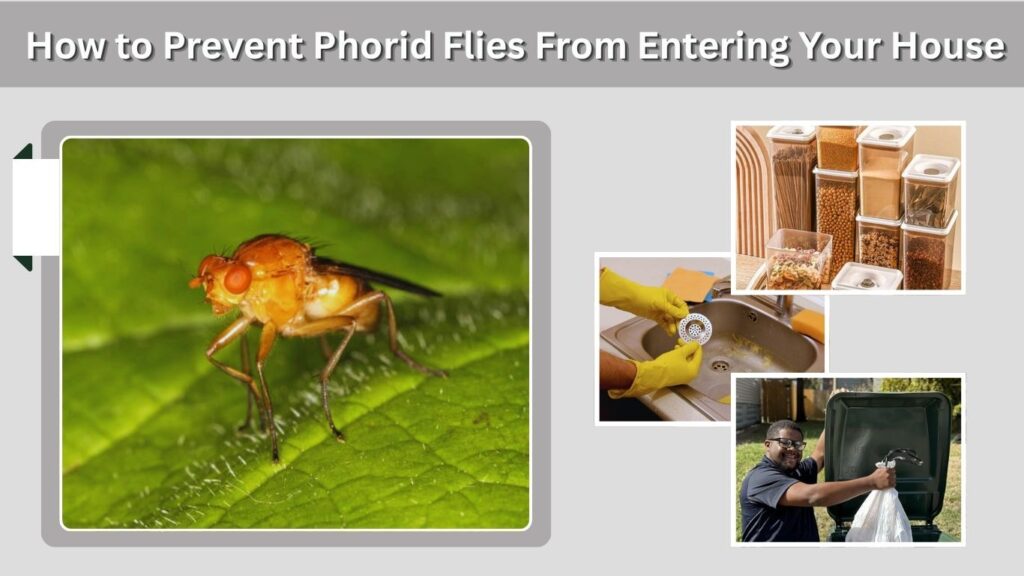
Preventing future infestations requires eliminating breeding opportunities and restricting entry from outdoors.
- Clean kitchen and bathroom drains regularly.
- Remove household garbage frequently.
- Store food in sealed containers.
- Repair plumbing leaks promptly.
- Avoid overwatering indoor plants.
- Install properly fitted window screens.
- Seal cracks around doors and plumbing openings.
- Clean condensation trays and damp household equipment.
Consistent sanitation and moisture control are more effective for long-term prevention than repeated insecticide applications.
FAQs
1. Why Are Phorid Flies Suddenly Appearing in My House?
A sudden increase in phorid flies usually indicates that adults are emerging from a hidden breeding source. Common causes include rotting food, dirty drains, wet garbage, or sewage leaks. Check damp areas and accumulated organic materials first.
2. Can Phorid Flies Infest an Entire House?
Yes, adult phorid flies can spread throughout a house, particularly when populations become large. However, the primary breeding site may be limited to one hidden location. Finding and eliminating that source is essential for successful control.
3. How Long Does It Take to Eliminate Phorid Flies?
Phorid fly populations may decline within several days after the breeding source is removed, but complete elimination can take longer. Persistent flies after one or two weeks may indicate another breeding location or an unresolved moisture problem.
4. Will Vinegar Traps Kill Phorid Flies?
Vinegar traps may attract some phorid flies, but their effectiveness varies. Sticky traps are generally more useful for monitoring phorid fly activity. Neither method eliminates eggs or larvae developing in concealed organic materials.
5. Can Phorid Flies Come From Under the House?
Yes, phorid flies can reproduce in sewage-contaminated soil beneath homes when underground drainpipes leak. Large, persistent infestations near floors or foundations may justify professional plumbing inspection, especially when ordinary household breeding sources cannot be found.
