
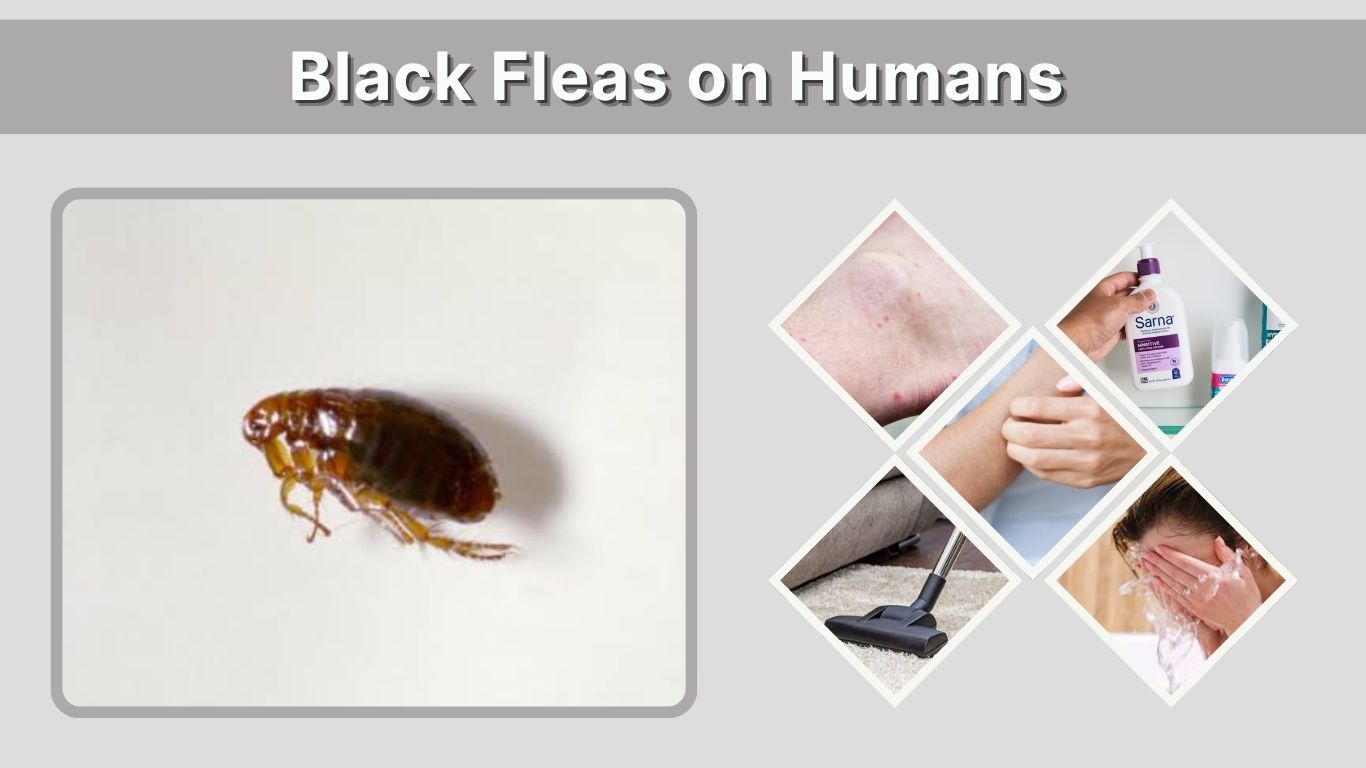
Black fleas on humans can cause uncomfortable itching, small bumps, and skin irritation. These tiny, dark-colored insects feed on blood and may jump onto people from pets, carpets, furniture, or outdoor environments. Although fleas usually prefer animal hosts, they can bite humans when searching for food. Their bites may also look different depending on skin tone, making identification challenging. Understanding what black fleas look like on humans, how their bites appear, and how to remove them can help you manage infestations and protect your skin from further irritation.
What Are Black Fleas on Humans?
Black fleas are not necessarily a separate flea species. Many common fleas appear dark brown, reddish-brown, or almost black to the naked eye. These small, wingless insects feed on the blood of mammals and birds.
Cat fleas, dog fleas, and human fleas can all bite people. However, cat fleas are among the most common species encountered in homes with pets.
Adult fleas usually measure approximately 1–4 millimeters long, depending on the species. Their flattened bodies allow them to move between animal hairs, while their powerful hind legs help them jump onto potential hosts.
How to Identify Black Fleas on Humans
Identifying a black flea involves examining its physical characteristics and movement.
- Color: Dark brown, reddish-brown, or nearly black.
- Size: Usually around 1–4 millimeters long.
- Body shape: Narrow and flattened from side to side.
- Legs: Six legs, including enlarged hind legs for jumping.
- Wings: Completely wingless.
- Movement: Fast crawling and powerful jumping.
- Feeding: Pierces the skin to obtain blood.
A tiny dark insect that jumps and causes itchy bites may be a flea, but appearance alone cannot confirm its identity.
Do Black Fleas Live on Humans?
Black fleas can bite humans, but common cat and dog fleas generally do not live permanently on human bodies.
These insects prefer animals with dense fur because hair provides protection and favorable feeding conditions.
When fleas encounter people, they may jump onto exposed skin, take a blood meal, and return to the surrounding environment.
Unlike head lice, most household fleas do not establish permanent populations in human hair.
However, certain species, including the human flea (Pulex irritans), are capable of feeding on humans and other mammals.
Where Do Black Fleas Come From?
Fleas generally originate from infested animals or environments where flea eggs and larvae develop.
Common sources include household pets, stray animals, rodents, carpets, bedding, and upholstered furniture.
Adult female fleas lay eggs after feeding. These eggs often fall from an animal’s fur into the surrounding environment.
When developing fleas become adults, they search for suitable hosts, sometimes biting people in the process.
What Do Black Flea Bites Look Like on Humans?
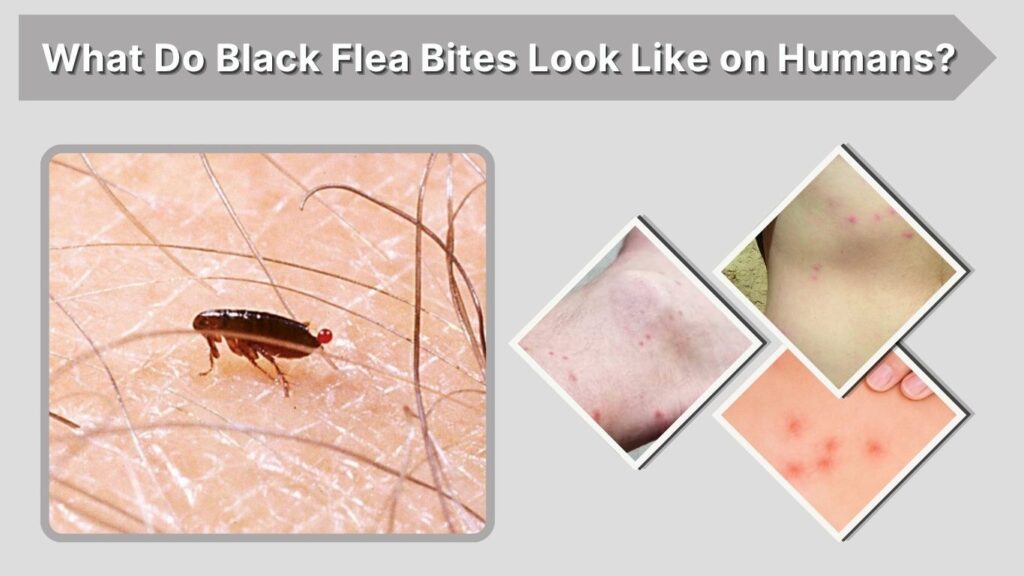
Black flea bites generally appear as small, raised, itchy bumps. They may occur individually or in groups, sometimes forming short lines or clusters.
The surrounding skin may become inflamed, swollen, or discolored. Some people develop only mild irritation, while others experience stronger reactions to flea saliva.
Flea bites commonly affect the ankles, feet, calves, and lower legs because these areas are close to carpets and floors where fleas emerge.
However, fleas can bite other exposed body parts.
Common Signs of Black Flea Bites
- Small bumps: Tiny, slightly raised spots on the skin.
- Intense itching: Irritation caused by the body’s reaction to flea saliva.
- Grouped bites: Several bites appearing close together.
- Skin discoloration: Red, pink, purple, brown, or darker patches depending on skin tone.
- Mild swelling: Local inflammation around the bite.
- Persistent marks: Dark spots that may remain after the itching disappears.
Bite patterns alone cannot reliably distinguish fleas from bed bugs, mosquitoes, or other insects.
What Do Flea Bites Look Like on Black Skin?
Flea bites on Black and brown skin may appear different from the bright red bumps commonly shown in medical photographs.
On darker complexions, inflammation may look purple, brown, dark red, or similar to the surrounding skin tone.
Raised bumps and itching can sometimes be more noticeable than changes in color.
The appearance also depends on a person’s individual skin response and whether the bites have been scratched.
Flea Bite Appearance on Different Skin Tones
| Skin Tone | Possible Bite Appearance |
| Light skin | Pink or red raised bumps |
| Medium skin | Red-brown or darker pink bumps |
| Brown skin | Brown, purple, or skin-colored bumps |
| Dark skin | Dark brown, violet, or subtly raised spots |
These descriptions are general. Bite appearance varies widely, and no skin color has one characteristic flea-bite reaction.
Can Flea Bites Leave Dark Spots on Black Skin?
Yes. Flea bites can sometimes cause post-inflammatory hyperpigmentation, particularly in people with medium to dark skin tones.
This happens when inflammation stimulates additional melanin production.
Scratching may increase irritation and make lingering marks more noticeable.
Although the bite itself may heal within several days, dark spots can remain for weeks or months.
Avoiding scratching, preventing new bites, and using gentle skincare can help reduce further discoloration.
Tiny Black Bugs That Look Like Fleas on Humans
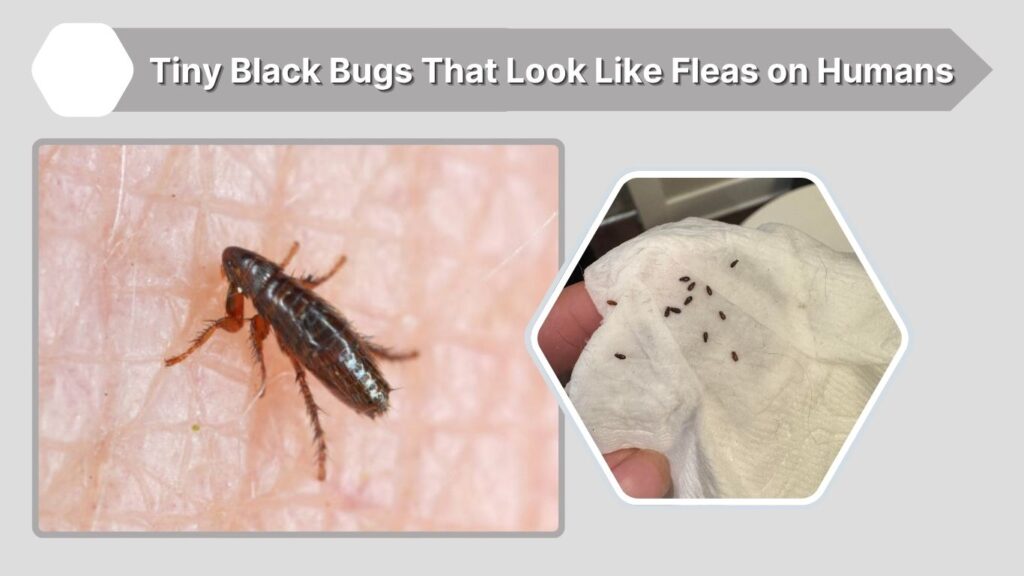
Not every small black insect found on human skin is a flea. Several household insects and other arthropods have similar appearances, making identification confusing.
Understanding their differences helps prevent unnecessary treatments.
Fleas vs. Other Small Black Bugs
| Insect or Arthropod | Main Difference |
| Fleas | Wingless, laterally flattened, jumping, blood-feeding |
| Bed bugs | Flattened, oval insects that crawl rather than jump |
| Springtails | Tiny jumping creatures that do not bite humans |
| Carpet beetles | Small beetles; their larvae may cause skin irritation |
| Head lice | Crawl through hair and cannot jump |
If small black insects appear repeatedly, collecting a specimen for identification may help determine whether fleas are responsible.
How to Get Rid of Black Fleas on Humans
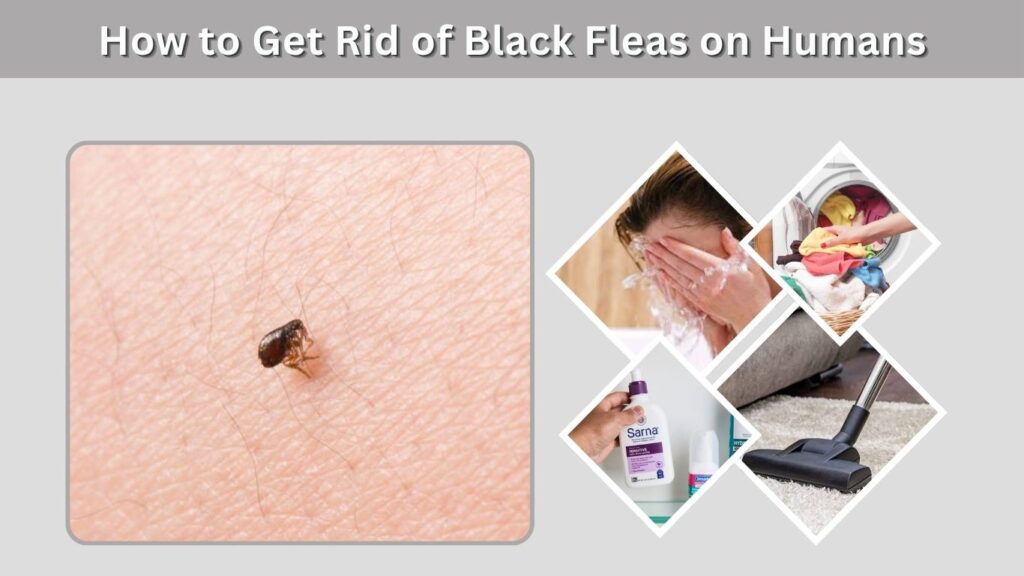
Getting rid of fleas requires treating the bites and addressing the environmental source. Washing your skin may remove fleas present at that moment, but it will not eliminate fleas developing in carpets, bedding, or on untreated animals.
1. Wash Your Skin and Clothing
Wash affected skin gently with soap and water.
Change clothing if you suspect fleas have jumped onto it, and launder potentially infested garments according to their care labels.
A shower can help remove insects present on your body, but it will not prevent additional bites from an infested environment.
2. Relieve Itching and Irritation
Apply a cool compress to itchy areas for several minutes to reduce discomfort.
Over-the-counter hydrocortisone cream or an oral antihistamine may help some people manage itching, when appropriate and used according to the label.
Avoid excessive scratching because broken skin can become infected.
Seek medical advice for worsening swelling, spreading warmth, pus, fever, or persistent symptoms. Difficulty breathing or swelling of the face or throat requires emergency care.
3. Vacuum Carpets and Furniture
Vacuum carpets, rugs, furniture seams, and floor cracks thoroughly.
Focus on locations where pets frequently rest because flea eggs and larvae accumulate in these environments.
Dispose of vacuum contents promptly outside the home.
Continue regular cleaning because protected flea pupae may survive initial treatment.
4. Treat Household Pets
If you have cats or dogs, consult a veterinarian about appropriate flea prevention.
Use a flea comb to inspect your pets, especially around their necks, backs, and tails.
Never use dog-only flea treatments on cats, as certain ingredients can be extremely toxic to them.
5. Control the Household Infestation
Wash pet bedding and other potentially infested fabrics regularly.
For persistent infestations, consider consulting a licensed pest-control professional about targeted flea treatments.
Use only products labeled for the intended location and follow all safety instructions.
Never apply household insecticides directly to human skin.
Are Black Fleas Dangerous to Humans?
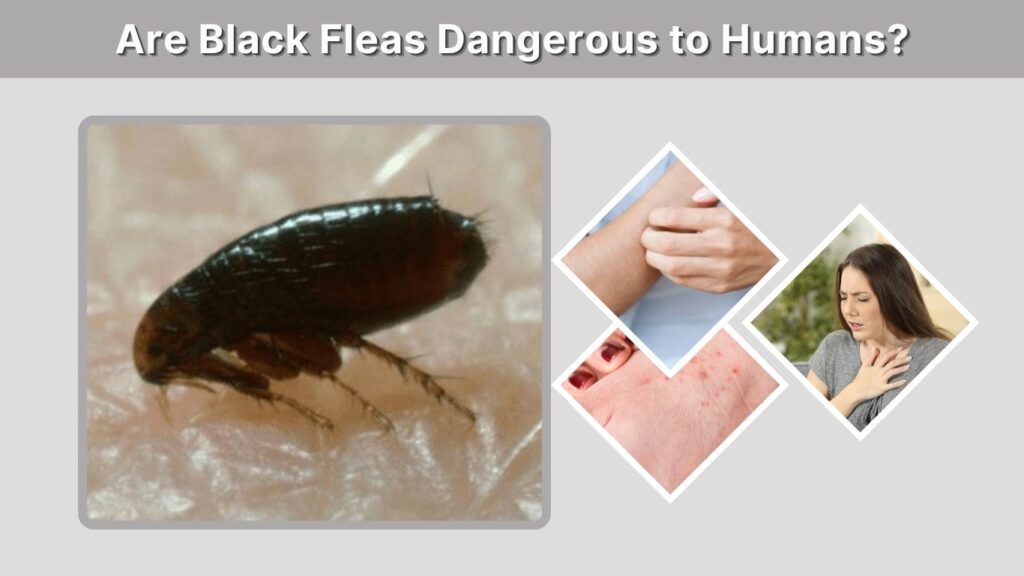
Most flea bites cause temporary itching and irritation rather than serious illness.
However, scratching can damage the skin and lead to secondary bacterial infections.
Some flea species can also transmit disease-causing organisms, although the actual risk depends on flea species, geographic location, and exposure.
Examples of flea-associated illnesses include flea-borne typhus and plague in particular regions.
Medical evaluation is appropriate if fever, severe headache, widespread rash, or other concerning symptoms develop after possible flea exposure.
How to Prevent Black Fleas From Biting Humans
Preventing repeated flea bites requires controlling fleas in the surrounding environment.
Regularly inspect household pets, maintain veterinarian-recommended flea prevention, and clean carpets and furniture.
Wash pet bedding frequently and discourage rodents and wildlife from entering your home.
When entering potentially infested areas, wearing long pants and socks can reduce exposed skin.
Consistent prevention is especially important because flea eggs, larvae, and pupae can survive in the environment even after visible adult fleas disappear.
FAQs
1. Are Fleas Black on Humans?
Yes. Many common flea species are dark brown or reddish-brown and may appear black when viewed without magnification. Their color does not change simply because they are feeding on humans.
2. Can Tiny Black Fleas Live in Human Hair?
Cat and dog fleas may temporarily move through human hair, but they generally do not live and reproduce there like head lice. They prefer furry animal hosts.
3. What Do Flea Bites Look Like on Black People?
Flea bites on darker skin may appear as small, raised, itchy bumps that are purple, brown, dark red, or similar to the surrounding skin. Some bites leave lingering dark marks after healing.
4. How Long Do Black Flea Bites Last on Humans?
Uncomplicated flea bites often improve within several days. However, itching may last longer in sensitive individuals, and post-inflammatory dark spots can remain for weeks or months.
5. How Do You Get Rid of Black Fleas on Humans Naturally?
Washing your skin, laundering clothing, vacuuming regularly, and cleaning bedding can help reduce flea exposure without applying insecticides to the body. Persistent infestations usually require coordinated household and pet flea control.
