
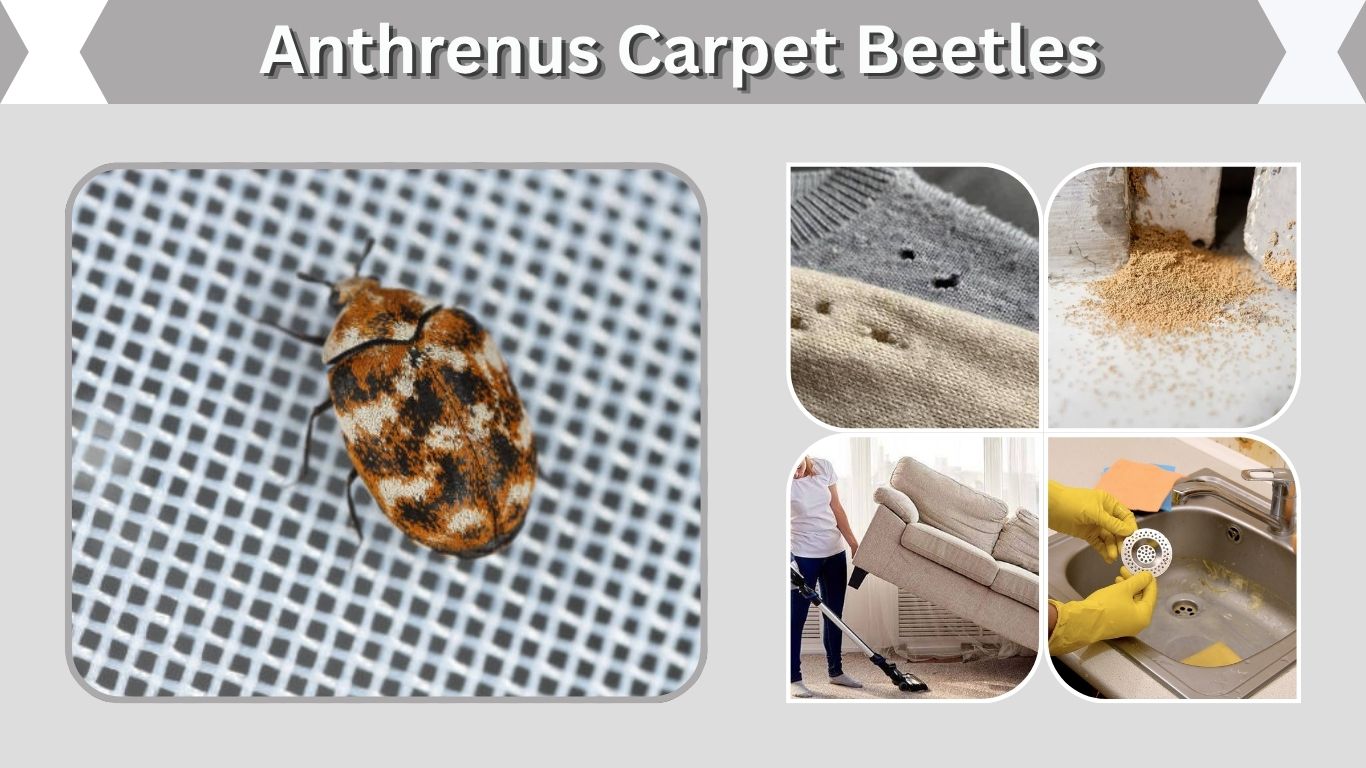
Anthrenus carpet beetles are tiny household insects known for damaging carpets, clothing, upholstery, and other natural-fiber materials. These beetles belong to the family Dermestidae and commonly appear in homes, museums, and storage areas. Although adult beetles are generally harmless, their larvae feed on wool, fur, feathers, and other animal-derived materials, sometimes causing significant damage. The varied carpet beetle (Anthrenus verbasci) is one of the most recognizable species in this group. Understanding Anthrenus carpet beetle identification, larval development, life cycle, and effective control methods can help homeowners detect infestations early and protect valuable belongings.
What Are Anthrenus Carpet Beetles?
Anthrenus carpet beetles belong to the genus Anthrenus, a group of small beetles within the family Dermestidae. They occur in many regions worldwide and are associated with natural fibers, stored animal products, and organic debris.
Adult beetles commonly feed on pollen and nectar outdoors. However, their larvae consume animal-derived materials, making them important household and museum pests.
Not all carpet beetles belong to this genus. For example, black carpet beetles belong to the genus Attagenus.
| Characteristic | Description |
| Scientific genus | Anthrenus |
| Family | Dermestidae |
| Adult size | Generally 2–4 mm |
| Body shape | Small, rounded, oval |
| Color | Black, brown, white, or yellow patterns |
| Larval appearance | Brown, segmented, hairy |
| Adult diet | Primarily pollen and nectar |
| Larval diet | Wool, fur, feathers, hair, dead insects |
| Common habitat | Homes, carpets, closets, museums |
What Do Anthrenus Carpet Beetles Look Like?
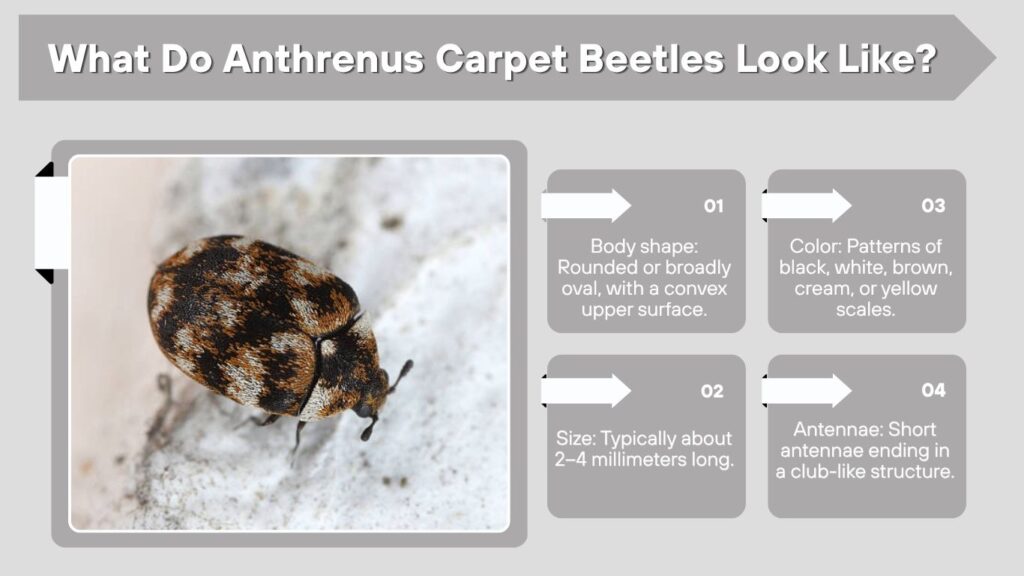
Adult varied carpet beetle
Varied carpet beetle larva
Anthrenus carpet beetles are recognized by their tiny, rounded bodies and distinctive patterns of colored scales. Their appearance varies by species, but most have compact bodies with short antennae and hard wing covers.
Adult Anthrenus Carpet Beetle Identification
- Body shape: Rounded or broadly oval, with a convex upper surface.
- Size: Typically about 2–4 millimeters long.
- Color: Patterns of black, white, brown, cream, or yellow scales.
- Antennae: Short antennae ending in a club-like structure.
- Wings: Hard outer wing covers protect functional flying wings.
- Movement: Adults often fly toward windows and natural light.
Older beetles may lose some colored scales, making their identification more difficult.
Anthrenus Carpet Beetle Larvae Identification
Anthrenus larvae look completely different from adult beetles. They have elongated, segmented bodies covered with stiff hairs.
Most are brown or golden-brown, with darker bands across their bodies. Some have distinctive brush-like tufts of hairs near their rear ends.
Larvae frequently hide in dark, undisturbed locations, including beneath carpets, behind furniture, and inside storage containers.
Common Types of Anthrenus Carpet Beetles
Several Anthrenus species occur in buildings and may damage natural-fiber materials. Their colors, body shapes, and larval characteristics help distinguish them.
1. Varied Carpet Beetle (Anthrenus verbasci)
The varied carpet beetle is among the most widespread and recognizable Anthrenus species. Adults typically measure 2–3 millimeters and display irregular patterns of white, yellow, brown, and black scales.
Its larvae have alternating light and dark bands and dense body hairs. They frequently damage wool carpets, clothing, animal specimens, and stored textiles.
This species is particularly common around windows during spring and early summer.
2. Furniture Carpet Beetle (Anthrenus flavipes)
The furniture carpet beetle has a rounded body covered with mixed yellow, white, orange, and black scales.
Its larvae attack upholstered furniture, carpets, natural-fiber padding, animal hair, and other organic materials.
Furniture carpet beetles are especially troublesome when infestations develop inside upholstered furniture, where larvae can remain hidden for extended periods.
3. Common Carpet Beetle (Anthrenus scrophulariae)
The common carpet beetle has a dark body decorated with pale and reddish-orange scales. Its markings may form distinctive bands across the wing covers.
The larvae feed on wool, fur, feathers, and other animal-derived materials.
This species can damage carpets, stored clothing, and natural history collections when suitable food sources are available.
4. Dark Carpet Beetle (Anthrenus fuscus)
Anthrenus fuscus is generally darker and less conspicuously patterned than the varied carpet beetle.
Its larvae commonly feed on dead insects and may also attack wool, fur, and feathers.
Accurate identification can require magnification because several Anthrenus species have similar appearances.
Anthrenus Carpet Beetle Life Cycle
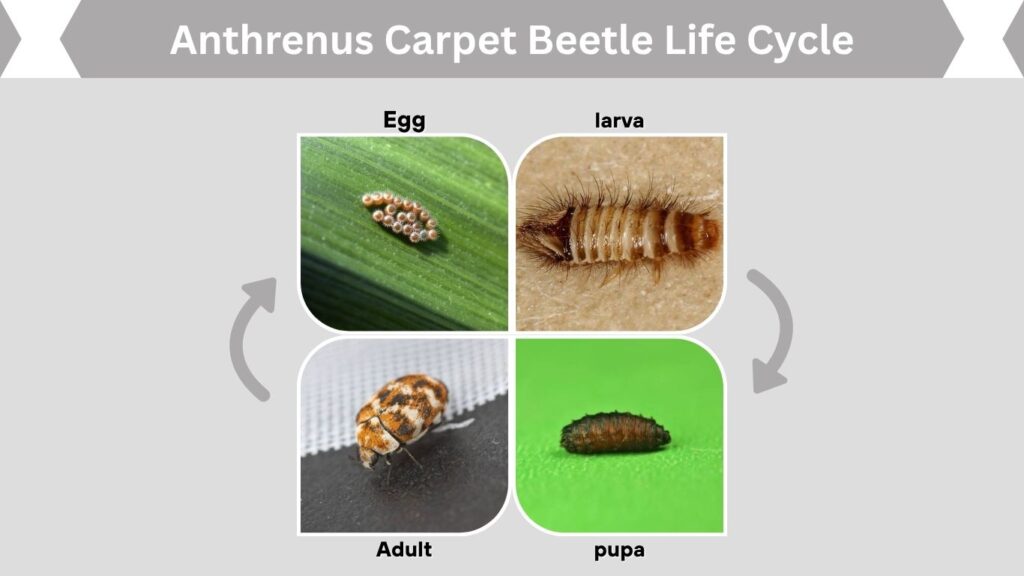
Anthrenus carpet beetles undergo complete metamorphosis, developing through four distinct stages: egg, larva, pupa, and adult.
Development depends on the species, temperature, humidity, and available food.
Four Stages of the Life Cycle
- Egg: Females deposit tiny eggs near suitable larval food sources, such as wool, feathers, or accumulated animal debris.
- Larva: Newly hatched larvae begin feeding and repeatedly molt as they grow. This is the stage responsible for household damage.
- Pupa: Mature larvae transform into pupae, where their adult structures develop.
- Adult: Fully developed beetles emerge, seek mates, and may feed on pollen outdoors.
For the varied carpet beetle, eggs typically hatch after 10–20 days. The larval stage may last approximately 220–630 days, depending on conditions, while the pupal stage lasts around 10–13 days.
Because larvae develop slowly, infestations can remain unnoticed for months.
What Damage Do Anthrenus Carpet Beetles Cause?
Anthrenus carpet beetle larvae are responsible for nearly all damage associated with these insects.
They digest keratin, a protein found in animal hair, feathers, and wool. Consequently, items containing these materials are particularly vulnerable.
Common Materials They Damage
- Wool carpets and rugs.
- Sweaters, blankets, and stored clothing.
- Upholstered furniture containing natural fibers.
- Fur coats and animal skins.
- Feather-filled pillows and decorations.
- Taxidermy specimens and insect collections.
Larvae may also feed on dead insects, pet hair, and accumulated household debris.
Clean synthetic fabrics are generally resistant, although blended or soiled materials containing suitable food residues may become infested.
Signs of an Anthrenus Carpet Beetle Infestation
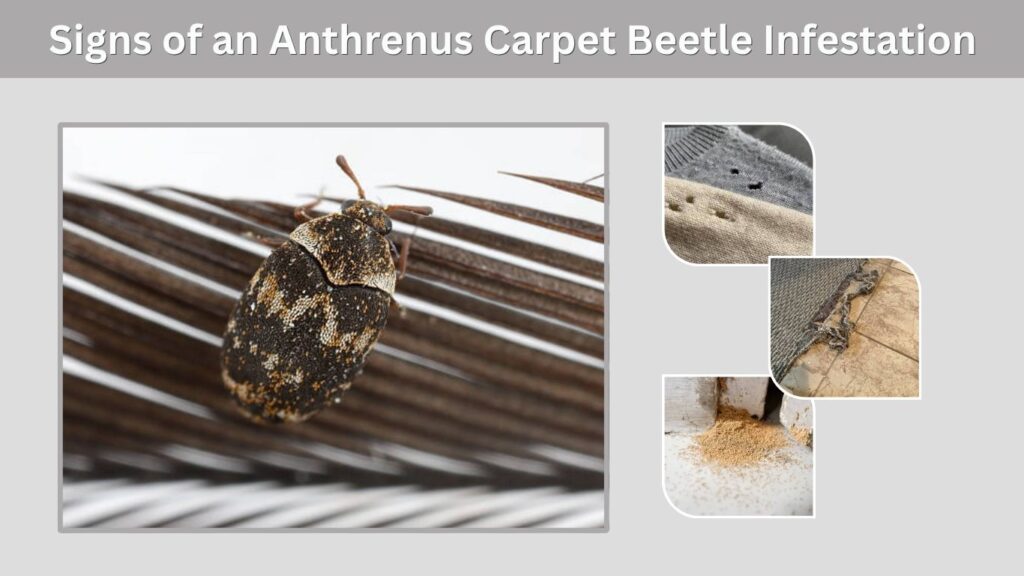
Recognizing early warning signs helps prevent extensive fabric damage.
Common indications include irregular holes in clothing, damaged carpet edges, and small hairy larvae found in protected areas.
Other signs include shed larval skins, tiny debris or fecal pellets near damaged materials, and adult beetles appearing around windows.
Finding a single adult beetle does not necessarily mean a serious infestation exists. However, repeated sightings combined with larvae or damaged fabrics warrant further inspection.
How to Get Rid of Anthrenus Carpet Beetles
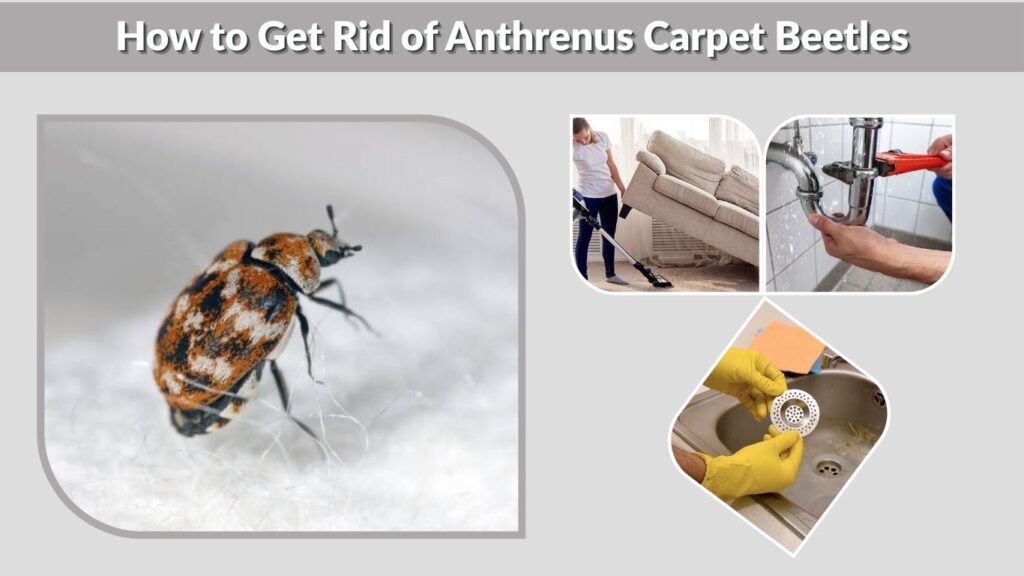
Successful control requires locating developing larvae and removing their food sources. Simply killing visible adult beetles will not eliminate a hidden infestation.
1. Vacuum Carpets and Furniture
Thoroughly vacuum carpet edges, baseboards, upholstered furniture, closets, and spaces beneath furniture.
Remove accumulated lint, pet hair, dead insects, and other organic debris. Empty the vacuum container promptly.
2. Wash or Dry-Clean Infested Fabrics
Wash suitable clothing and textiles using hot water when permitted by their care labels.
Professional dry cleaning can eliminate insects from delicate woolen and other vulnerable garments.
3. Remove Infested Materials
Inspect stored clothing, rugs, and upholstered furniture for larvae and shed skins.
Discard severely damaged items when cleaning or restoration is impractical.
4. Clean Hidden Breeding Areas
Remove old spider webs, abandoned bird-nesting material where safely accessible, and accumulated animal debris.
Inspect seldom-used closets, attic spaces, and areas behind furniture.
5. Use Appropriate Pest Treatments
If cleaning alone does not control a substantial infestation, consider a pesticide specifically labeled for carpet beetles and the treatment location.
Follow all label directions. Never apply insecticides directly to clothing, bedding, or other items unless the product explicitly permits that use.
Professional pest control may be necessary for persistent infestations.
How to Prevent Anthrenus Carpet Beetles
Regular housekeeping and proper textile storage can significantly reduce the likelihood of future infestations.
Keep wool clothing and other susceptible materials clean before placing them in storage. Use airtight containers or properly sealed garment bags.
Vacuum beneath furniture, along baseboards, and in areas where pet hair accumulates.
Inspect window screens and seal openings that may allow adult beetles to enter.
Periodically examine stored fabrics, particularly those kept undisturbed for extended periods.
Are Anthrenus Carpet Beetles Dangerous to Humans?
Anthrenus carpet beetles do not bite or sting humans, and they are not known for transmitting human diseases.
However, their larvae possess stiff body hairs that can cause skin irritation or allergic reactions in sensitive individuals.
These reactions may produce itchy bumps or rashes that are sometimes mistaken for insect bites.
The primary threat from these beetles is damage to household fabrics rather than direct harm to people.
FAQs
1. Do Anthrenus Carpet Beetles Bite Humans?
No, Anthrenus carpet beetles do not bite humans. However, their larvae have irritating hairs that may cause allergic skin reactions. These reactions can resemble insect bites, although the beetles do not actually pierce the skin.
2. How Long Do Anthrenus Carpet Beetles Live?
Their lifespan varies by species and environmental conditions. Varied carpet beetle larvae may develop for several months to more than a year, while adults generally live only a few weeks after emerging.
3. Where Do Anthrenus Carpet Beetles Lay Eggs?
Female Anthrenus carpet beetles lay eggs near suitable larval food sources. Common locations include wool carpets, stored clothing, animal hair, bird nests, and accumulated organic debris in dark, undisturbed household areas.
4. Can Anthrenus Carpet Beetles Fly?
Yes, adult Anthrenus carpet beetles can fly. They often enter homes through open windows and doors and may gather near sunlight. Their larvae cannot fly and move by crawling through suitable feeding locations.
5. What Is the Best Way to Eliminate Anthrenus Carpet Beetles?
The most effective approach combines thorough vacuuming, cleaning infested fabrics, removing accumulated animal debris, and storing vulnerable materials securely. Persistent infestations may require targeted pest-control treatments after the breeding sources have been identified.
