
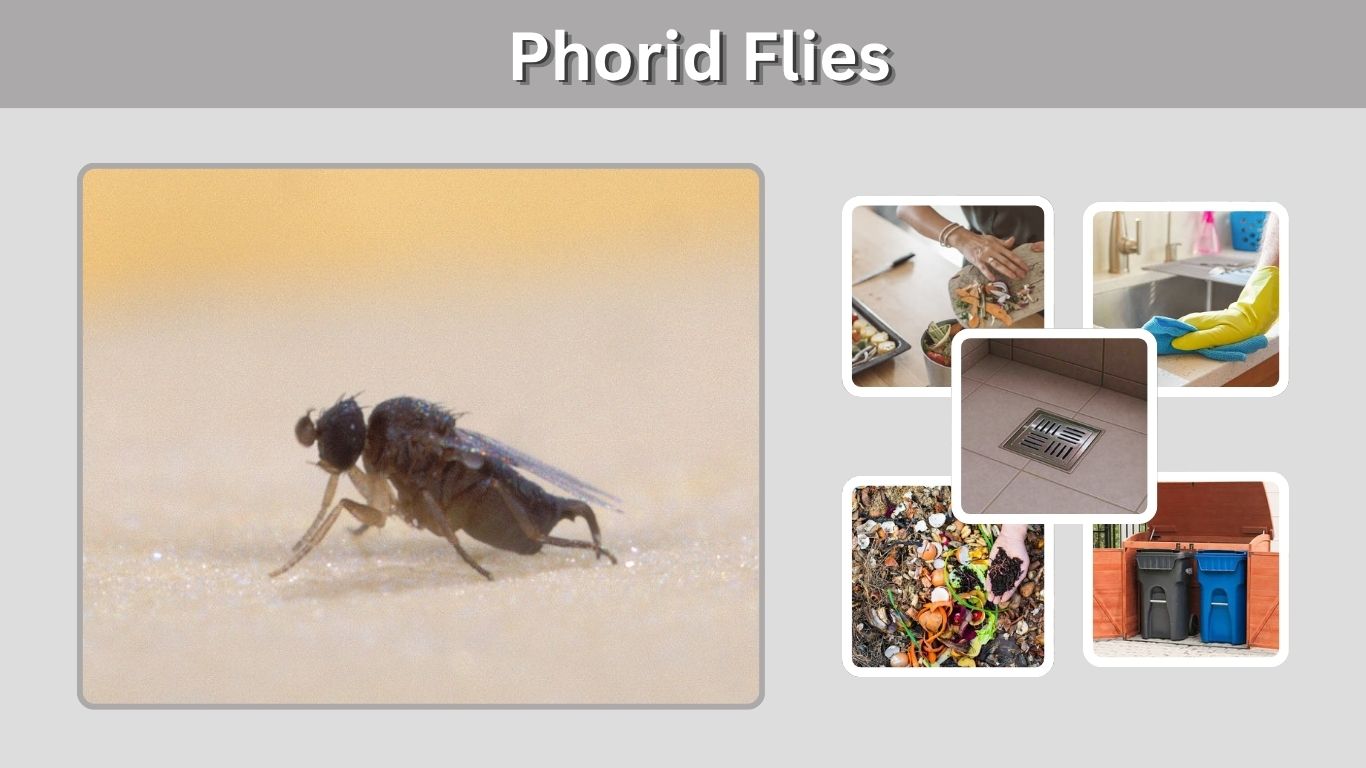
Phorid flies are tiny, humpbacked insects commonly found around kitchen drains, bathrooms, garbage, and moist organic materials. Also called scuttle flies or coffin flies, these insects reproduce quickly and can become frustrating household pests. Unlike ordinary fruit flies, phorid flies often run rapidly across surfaces before taking flight. Their presence may indicate hidden decaying materials, dirty drains, or plumbing problems. Understanding what phorid flies look like, where they lay eggs, and how to get rid of them is essential for eliminating infestations and preventing these unwanted insects from returning.
What Are Phorid Flies?
Phorid flies belong to the family Phoridae, a large group of small flies found throughout the world. They are commonly called humpbacked flies because their thorax forms a distinctive arch behind the head.
Most household phorid flies feed and reproduce around moist, decaying organic matter. Their larvae develop in materials such as rotting food, sewage residue, decomposing vegetation, and animal waste.
Although they are often mistaken for fruit flies, their distinctive running behavior and humpbacked appearance make them identifiable.
| Characteristic | Description |
| Scientific family | Phoridae |
| Common names | Scuttle fly, humpbacked fly, coffin fly |
| Size | Usually 1–4 mm |
| Color | Tan, brown, or black |
| Diet | Decaying organic material |
| Habitat | Drains, garbage, kitchens, bathrooms |
| Bites humans | No |
| Reproduction | Eggs laid near moist organic matter |
What Do Phorid Flies Look Like?
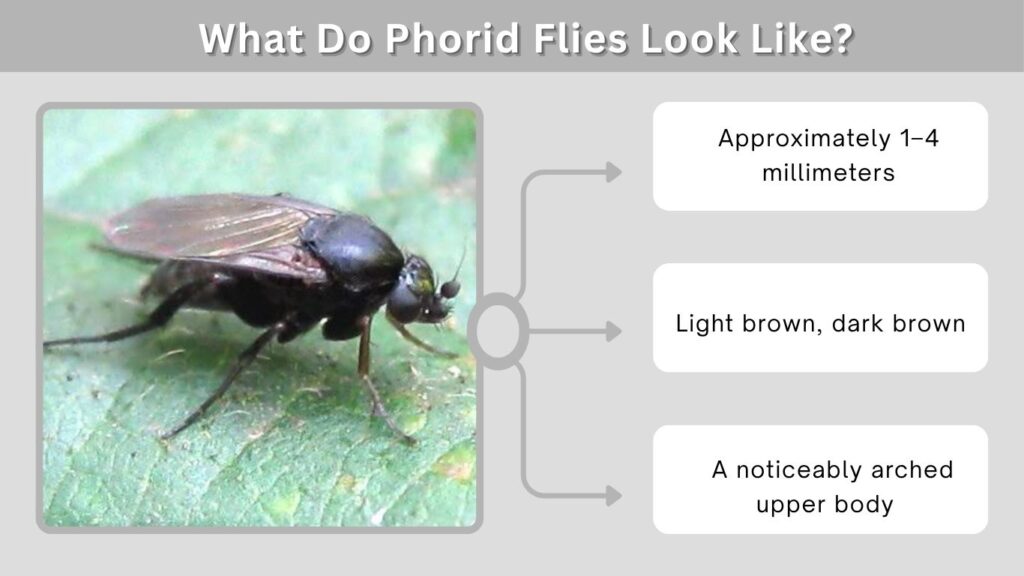
Phorid flies are extremely small insects that may appear as tiny black or brown flies moving around household surfaces. Their unusual body shape and movement patterns help distinguish them from similar-looking pests.
Key Identification Features
- Body size: Most adults measure approximately 1–4 millimeters.
- Body color: They may appear tan, light brown, dark brown, or black.
- Humpbacked thorax: A noticeably arched upper body is their most recognizable characteristic.
- Small head: Their head sits relatively low in front of the thorax.
- Wings: Transparent wings have distinctive dark veins.
- Legs: Relatively long legs help them run quickly.
- Movement: They often run in short, irregular bursts before flying.
Phorid flies are sometimes called scuttle flies because of their rapid running movements across countertops, walls, and other surfaces.
Phorid Fly Eggs, Larvae, and Life Cycle
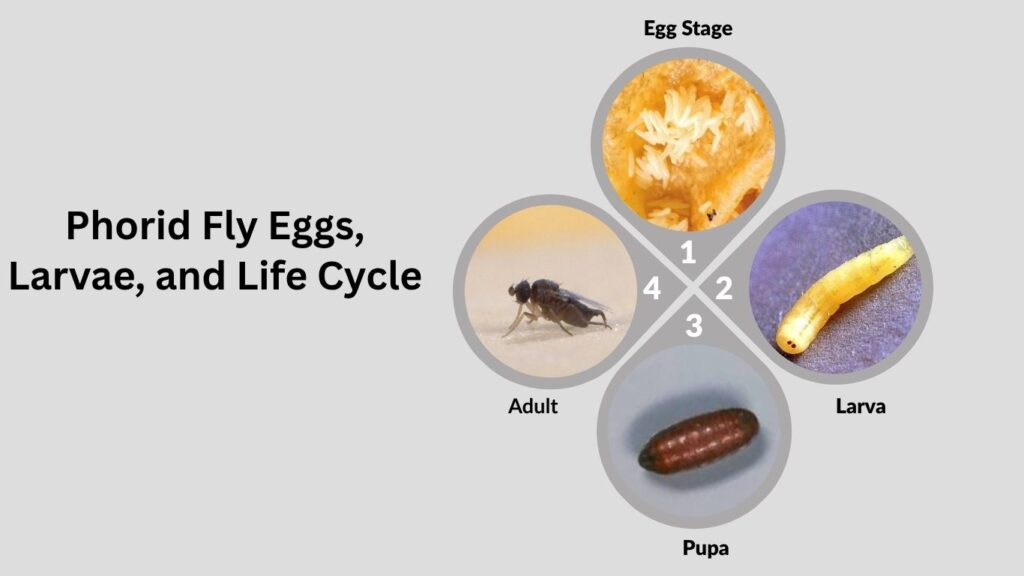
Phorid flies undergo complete metamorphosis, passing through four developmental stages. Their reproductive ability allows populations to increase rapidly when suitable breeding materials remain available.
Four Stages of the Phorid Fly Life Cycle
- Egg: Female phorid flies lay extremely small eggs on or near moist, decomposing organic materials. Household species may produce hundreds of eggs during their lifetime.
- Larva: Tiny, pale maggots hatch and feed on decaying material. They generally have elongated, legless bodies.
- Pupa: Mature larvae develop into pupae, where they undergo transformation into adult flies.
- Adult: Fully developed flies emerge, mate, and begin searching for suitable breeding locations.
Development time varies by species and environmental conditions. Some species can complete immature development in approximately 10 days under favorable conditions, while others take several weeks.
Where Do Phorid Flies Come From?
Phorid flies usually originate from damp areas containing decaying plant or animal matter. Discovering their breeding location is the most important step in eliminating an infestation.
Common breeding locations include:
- Kitchen sinks and garbage disposals.
- Bathroom and floor drains.
- Rotten vegetables or discarded food.
- Dirty garbage cans and recycling bins.
- Wet pet food and neglected litter boxes.
- Damp potting soil containing organic debris.
- Leaking sewage pipes and contaminated soil.
- Moist debris beneath household appliances.
Large numbers of phorid flies appearing repeatedly near ground-floor plumbing may indicate a damaged drain or sewer line.
However, ordinary sources such as decomposing food or dirty containers are often responsible for household infestations.
Phorid Flies vs. Fruit Flies vs. Fungus Gnats
Phorid flies are frequently confused with fruit flies, fungus gnats, and drain flies. Correct identification is important because these insects prefer different breeding environments.
| Feature | Phorid Fly | Fruit Fly | Fungus Gnat | Drain Fly |
| Appearance | Humpbacked | Rounded body | Slender, mosquito-like | Fuzzy, moth-like |
| Color | Brown or black | Usually tan or brown | Usually dark | Gray or dark |
| Movement | Rapid running | Frequent flying | Weak flying | Short flights |
| Main breeding site | Decaying organic matter | Fermenting food | Moist soil | Drain slime |
| Common location | Kitchens, bathrooms | Fruit bowls, kitchens | Houseplants | Drains, bathrooms |
The easiest way to identify phorid flies is to observe their distinctive running behavior and arched thorax.
Do Phorid Flies Bite Humans?
No, phorid flies do not normally bite humans or animals. Unlike stable flies, mosquitoes, and horse flies, common household phorid flies do not have specialized mouthparts for blood feeding.
However, they can still create sanitation concerns because they visit decaying organic materials and may mechanically transfer microorganisms onto food or household surfaces.
Rare cases of phorid fly larvae causing human myiasis have been documented, but ordinary indoor encounters generally represent a nuisance rather than a direct health threat.
How to Get Rid of Phorid Flies
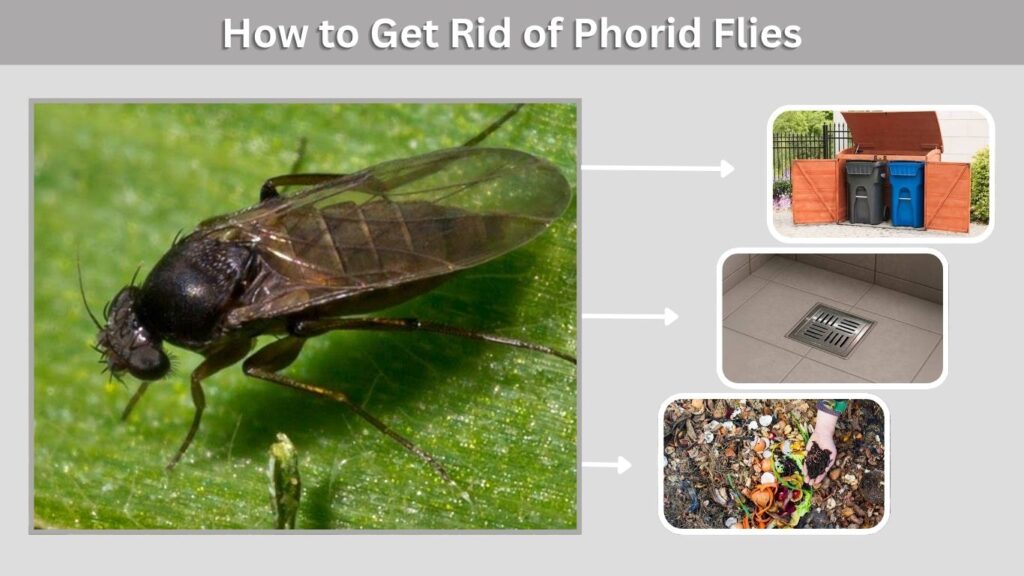
Effective phorid fly control requires eliminating breeding materials rather than simply killing visible adults. Because larvae develop in hidden, damp locations, infestations may continue until the source is removed.
1. Identify the Breeding Source
Inspect kitchen drains, bathrooms, garbage containers, refrigerator drip pans, and areas beneath appliances. Look for moisture, decomposing food, and organic residue.
Sticky traps can help determine which areas have the highest fly activity.
2. Clean Drains Thoroughly
Remove accumulated organic material from accessible drain openings using a suitable cleaning brush. Clean garbage disposals and other fixtures where food residue collects.
Use drain-cleaning products according to their labels.
3. Remove Rotten Organic Materials
Discard spoiled vegetables, decomposing food, and accumulated household waste.
Wash garbage containers regularly and clean spills beneath kitchen appliances.
4. Repair Plumbing Leaks
Check beneath sinks, around toilets, and near floor drains for moisture or sewage leaks.
Persistent infestations associated with hidden plumbing may require a professional inspection.
5. Use Phorid Fly Traps
Install appropriately positioned sticky traps to capture adult flies and monitor activity.
Although traps reduce adult numbers, they cannot eliminate larvae hidden within breeding materials.
Best Drain Cleaner for Phorid Flies
Biological or microbial drain cleaners may help control phorid flies when the infestation originates from organic residue inside plumbing.
Foaming microbial cleaners are particularly useful because they can contact buildup along pipe surfaces. Mechanical cleaning is also important when deposits are thick.
Avoid relying on bleach to eliminate phorid fly larvae. Bleach often fails to penetrate organic material sufficiently and may react dangerously with other drain-cleaning chemicals.
Never mix cleaning products or pour insecticides into household drains.
How to Prevent Phorid Fly Infestations
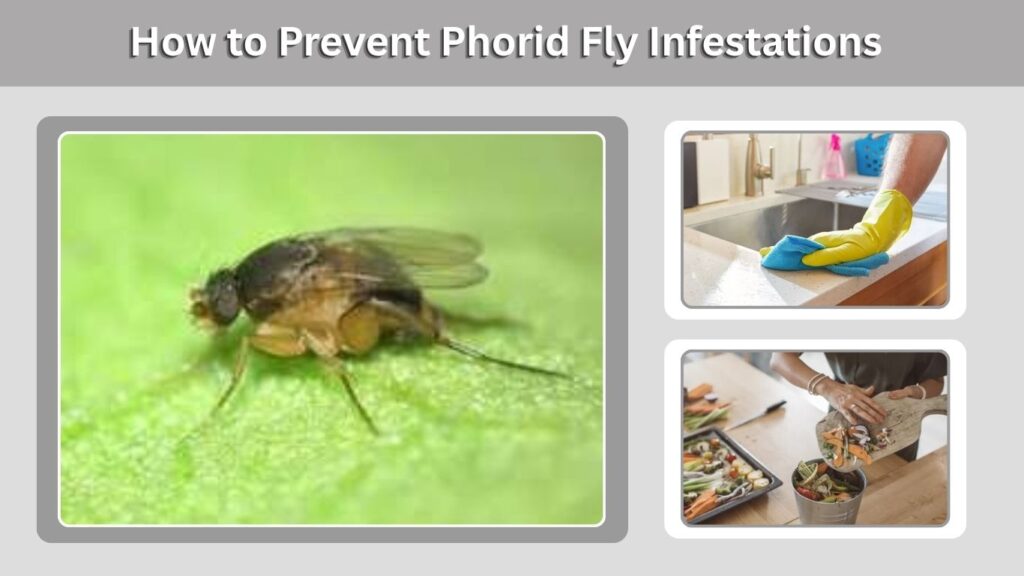
Preventing phorid flies involves regular sanitation, moisture control, and maintenance of potential breeding locations.
Keep kitchen counters clean, remove food scraps promptly, and store garbage in tightly covered containers. Inspect drains periodically and clean accumulated organic residue.
Repair leaking pipes, maintain clean pet feeding areas, and avoid leaving wet organic materials indoors.
Regularly inspect areas beneath refrigerators, washing machines, and dishwashers where moisture may accumulate unnoticed.
These preventive practices reduce the availability of breeding sites and make recurring infestations less likely.
FAQs
1. Are Phorid Flies Dangerous to Humans?
Phorid flies generally do not harm humans directly because they do not bite. However, they may carry microorganisms from decaying materials onto food or surfaces. Rare larval infestations have been reported, especially in vulnerable medical settings.
2. Do Phorid Flies Lay Eggs in Humans?
Phorid flies normally lay eggs in decaying organic material rather than on healthy humans. Rare cases of larval infestation involving wounds or body cavities have been documented. These unusual medical situations should not be confused with ordinary household infestations.
3. What Happens if You Accidentally Ingest Phorid Fly Eggs?
Accidentally swallowing contaminated food does not necessarily cause an infestation. Rare cases of intestinal myiasis have been documented, but they are uncommon. Discard contaminated food and seek medical advice if persistent gastrointestinal symptoms or other concerning symptoms develop.
4. Does Bleach Kill Phorid Flies?
Bleach may kill some exposed insects or larvae, but it generally does not eliminate infestations inside drains. Organic buildup can protect developing larvae. Thorough mechanical cleaning and appropriate microbial drain cleaners are more reliable approaches to controlling breeding sites.
5. How Long Does It Take to Get Rid of Phorid Flies?
Eliminating phorid flies may take several days to several weeks, depending on infestation severity and breeding locations. Once the breeding material is removed, adult populations should decline. Persistent activity suggests that another breeding site may remain undiscovered.
