
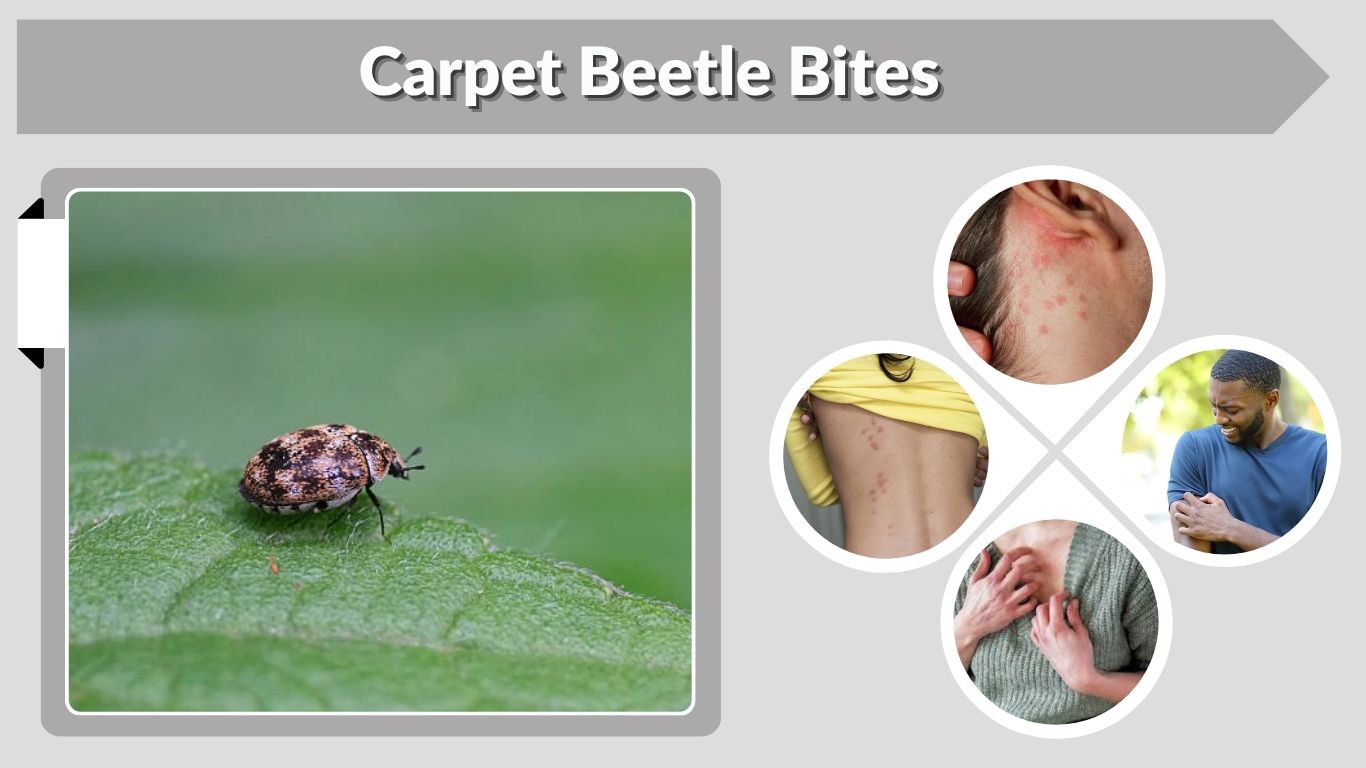
Carpet beetle bites are often blamed for mysterious itchy bumps, red spots, and skin irritation that appear after sleeping or spending time indoors. However, carpet beetles do not actually bite humans. Instead, the tiny hairs on carpet beetle larvae can trigger allergic skin reactions that resemble insect bites. Understanding the difference is important for choosing the right treatment. This guide explains what carpet beetle rashes look like, their common symptoms, how to treat irritated skin, and how to prevent future problems.
Do Carpet Beetles Bite Humans?
No, carpet beetles do not bite humans. Unlike bed bugs, mosquitoes, and fleas, carpet beetles do not feed on blood or use humans as a food source.
Adult carpet beetles typically feed on pollen and nectar or may not feed at all. Their larvae consume materials containing animal proteins, including wool, feathers, fur, pet hair, and dead insects.
However, carpet beetle larvae have tiny bristles that can irritate sensitive skin. When these hairs come into contact with the body, they may cause an itchy rash known as carpet beetle dermatitis.
Some people experience noticeable reactions, while others develop no symptoms. Therefore, finding carpet beetles near your bed does not necessarily mean they caused your skin irritation.
What Do Carpet Beetle Bites Look Like?
Although commonly called carpet beetle bites, the skin marks are actually irritation or allergic reactions caused by contact with larval hairs.
The appearance varies depending on skin sensitivity and the severity of the reaction. Some people develop small itchy bumps, while others experience larger patches of irritated skin.
Common Symptoms of Carpet Beetle Rash
Typical symptoms may include:
- Small itchy bumps: Raised spots that resemble mosquito or bed bug bites.
- Red or discolored patches: Irritated areas that may appear red, pink, purple, or darker than the surrounding skin.
- Intense itching: Persistent itching, especially where the skin contacted contaminated fabrics.
- Small blisters: Occasionally, tiny fluid-filled bumps develop.
- Localized irritation: Symptoms may appear on the arms, legs, neck, back, or other exposed areas.
These symptoms are not unique to carpet beetles. Eczema, other insects, and allergic reactions can produce similar skin changes.
Why Do Carpet Beetle Rashes Develop?
Carpet beetle larvae have specialized hairs called setae. These hairs can detach and remain in clothing, bedding, carpets, and upholstery.
When susceptible individuals touch contaminated materials, the hairs may cause an inflammatory or allergic response.
Repeated exposure can produce recurring symptoms, particularly when the original infestation remains untreated.
Do Carpet Beetle Larvae Bite?
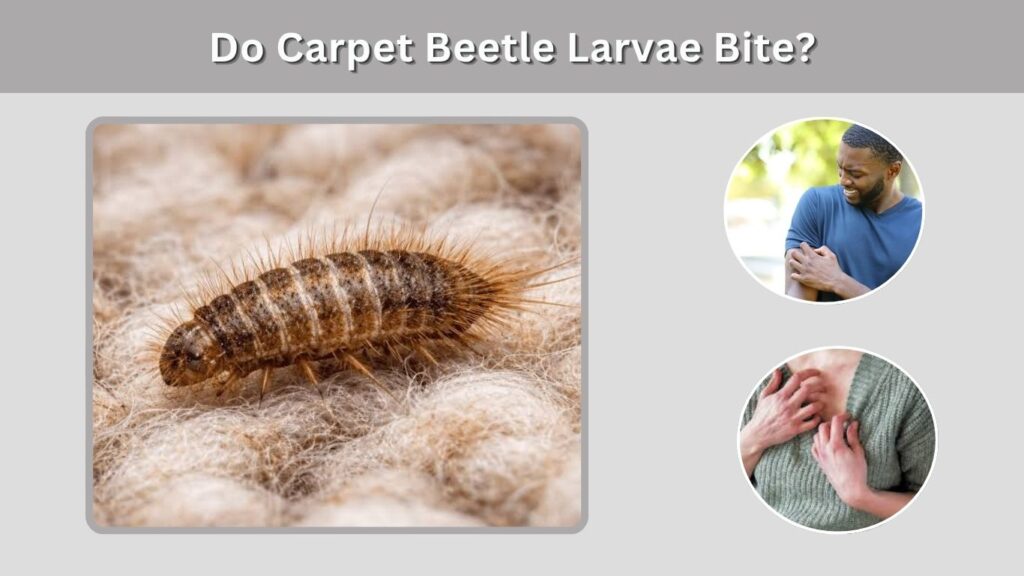
Carpet beetle larvae do not bite humans either. However, they are the main stage responsible for carpet beetle-related skin irritation.
Larvae have elongated, segmented bodies covered with stiff hairs. They commonly hide in dark, undisturbed locations, including closets, beneath furniture, and along carpet edges.
Varied Carpet Beetle Bites
Varied carpet beetles (Anthrenus verbasci) are small insects with mottled white, brown, and yellowish markings.
Their larvae have numerous light brown hairs that can irritate sensitive skin. Contact with these hairs may cause itchy bumps or patches resembling insect bites.
The insects themselves do not puncture the skin or feed on humans.
Black Carpet Beetle Bites
Black carpet beetles (Attagenus unicolor) have dark, oval adult bodies. Their larvae are elongated, brownish, and covered with hairs.
Like varied carpet beetles, black carpet beetles cannot bite humans in the way blood-feeding insects do.
Nevertheless, their larval hairs can contribute to skin irritation in susceptible individuals.
Carpet Beetle Bites vs. Bed Bug Bites
Carpet beetle rashes and bed bug bites can look similar, making identification difficult without examining the insects themselves.
However, their feeding behavior and signs of infestation are different.
| Feature | Carpet Beetle Rash | Bed Bug Bites |
| Cause | Reaction to larval hairs | Blood-feeding bites |
| Appearance | Itchy bumps or patches | Itchy bumps or welts |
| Skin puncture | No | Yes |
| Blood feeding | No | Yes |
| Typical evidence | Hairy larvae, shed skins, fabric damage | Live bed bugs, dark fecal spots, blood stains |
| Common locations | Fabrics, closets, carpets | Mattresses, bed frames, furniture |
Bed bugs generally feed at night, while carpet beetles do not seek humans for blood meals.
Finding itchy marks after sleeping does not prove that either insect caused them.
For accurate identification, inspect bedding, furniture, and nearby fabrics for physical evidence rather than relying on skin symptoms alone.
How to Treat Carpet Beetle Bites and Rashes
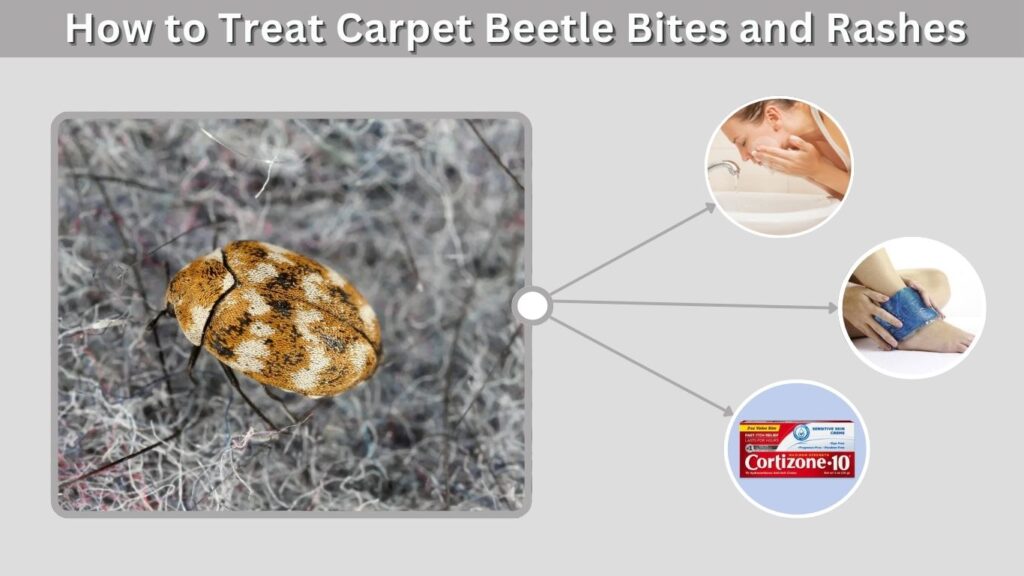
Most mild carpet beetle-related skin reactions improve after the irritating hairs are removed and further exposure is prevented.
Treatment focuses on relieving itching, reducing inflammation, and protecting the affected skin.
1. Wash the Affected Skin
Gently wash the irritated area with mild soap and lukewarm water. This helps remove debris and potential irritants.
Avoid harsh soaps, excessive scrubbing, and scented skincare products that could worsen sensitivity.
2. Apply a Cold Compress
Place a clean, cool, damp cloth against the irritated area for approximately 10–15 minutes.
Cold compresses may temporarily reduce itching, redness, and discomfort. Repeat as needed throughout the day.
3. Use Anti-Itch Treatments
Over-the-counter 1% hydrocortisone cream or calamine lotion may help relieve mild itching.
Follow product directions and ask a pharmacist or healthcare professional before treating young children, sensitive areas, or broken skin.
4. Avoid Scratching
Scratching can worsen inflammation, damage the skin, and increase the risk of infection.
Keep fingernails short and consider applying a fragrance-free moisturizer to soothe dry or irritated skin.
If symptoms are severe, persistent, or spreading, consult a healthcare professional rather than assuming carpet beetles are responsible.
How to Get Rid of Carpet Beetles in Your Home
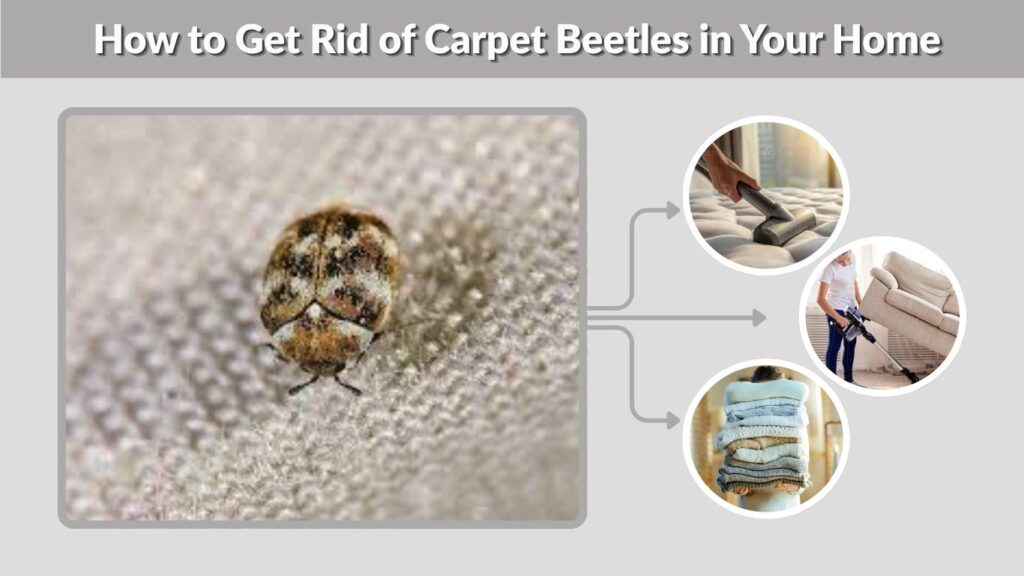
Eliminating the source of carpet beetle larvae is essential for preventing repeated skin irritation.
Carpet beetles can survive in hidden locations where natural fibers, hair, and other organic materials accumulate.
Inspect Common Hiding Places
Check closets, rugs, upholstered furniture, mattress surroundings, and spaces underneath beds.
Look for hairy larvae, discarded larval skins, damaged wool fabrics, and adult beetles near windows.
Pay particular attention to unused storage areas, where infestations may remain unnoticed.
Vacuum and Clean Thoroughly
Vacuum carpet edges, baseboards, upholstered furniture, closets, and underneath heavy furniture.
Dispose of collected debris promptly outside your living space.
Wash washable bedding and affected clothing according to their care labels. Use an appropriate hot-water cycle when the fabric allows, and thoroughly clean delicate items before storing them.
Prevent Future Infestations
Keep closets clean, regularly remove pet hair and lint, and store clean wool clothing in sealed containers.
Inspect secondhand textiles before bringing them indoors, and seal obvious gaps around windows and doors where adult beetles may enter.
If the infestation continues despite cleaning, consider contacting a qualified pest control professional.
When Should You See a Doctor?
Mild irritation may settle once exposure stops. However, recurring or severe rashes require professional evaluation.
Consult a healthcare professional if the rash spreads rapidly, becomes increasingly painful, develops signs of infection, or fails to improve.
A dermatologist may help determine whether the symptoms result from carpet beetle dermatitis, another allergic condition, or actual insect bites.
Seek emergency medical attention if you experience breathing difficulty or swelling of the throat or tongue.
FAQs
1. Do Carpet Beetles Bite Humans at Night?
No. Carpet beetles do not bite humans during the day or at night. However, larval hairs trapped in bedding may contact your skin while sleeping and cause irritation.
2. How Long Does a Carpet Beetle Rash Last?
The duration varies with skin sensitivity and continued exposure. Mild reactions may improve within several days, while more persistent dermatitis can last longer. Seek medical advice if symptoms continue.
3. Can Carpet Beetles Bite Dogs or Cats?
Carpet beetles do not bite dogs or cats to feed on blood. Their larvae primarily feed on animal-derived materials and household debris. If your pet develops itching or skin lesions, consult a veterinarian.
4. Can Carpet Beetle Bites Look Like Bed Bug Bites?
Yes. Carpet beetle dermatitis may produce itchy bumps that resemble bed bug bites. However, carpet beetles do not bite. Identifying the insect and checking for infestation evidence is more reliable than comparing skin marks.
5. Are Carpet Beetle Bites Dangerous?
Carpet beetles do not transmit disease through bites because they do not bite humans. Their larval hairs can cause uncomfortable skin reactions in sensitive individuals, but most mild reactions are manageable once exposure ends.
