
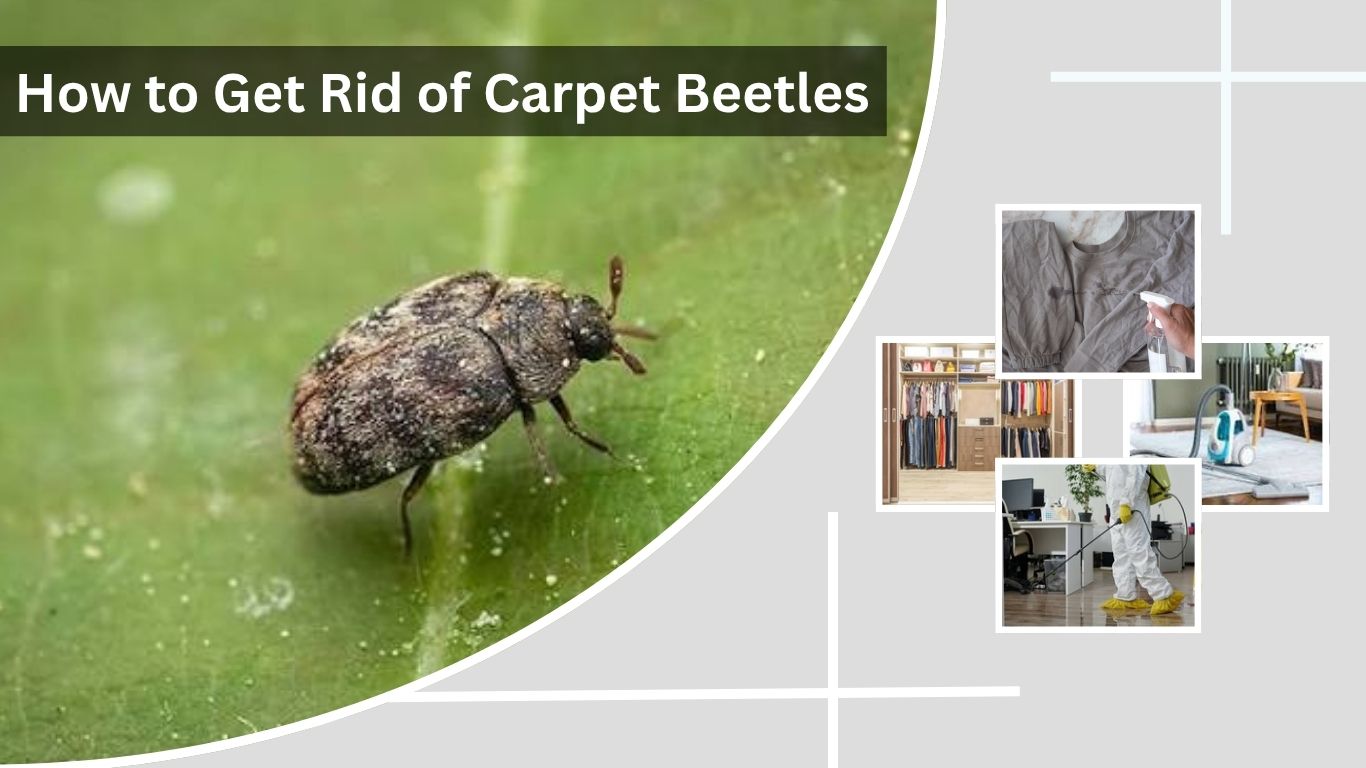
Carpet beetles are common household pests that can damage carpets, clothing, furniture, and other natural-fiber materials. If you notice tiny beetles near windows or hairy larvae hiding in fabrics, you may have an infestation. Learning how to get rid of carpet beetles involves finding their hiding places, removing their food sources, and cleaning affected areas thoroughly. Fortunately, many infestations can be controlled without professional treatment. This guide explains eight effective removal methods, natural solutions, and practical ways to prevent carpet beetles from returning.
What Causes Carpet Beetles in Your Home?
Carpet beetles enter homes through open windows, doors, ventilation openings, and infested household items. Adult beetles feed mainly on pollen and nectar, but their larvae consume animal-based materials, making carpets, clothing, and furniture attractive food sources.
Common factors that attract carpet beetles include:
- Wool carpets, rugs, and clothing
- Pet hair, lint, and accumulated dust
- Dead insects and spider webs
- Feather-filled pillows and upholstered furniture
- Stored animal-based materials
- Bird nests and other animal remains in hidden spaces
Understanding these sources helps you locate infestations and choose effective treatments.
How to Get Rid of Carpet Beetles: 8 Effective Methods
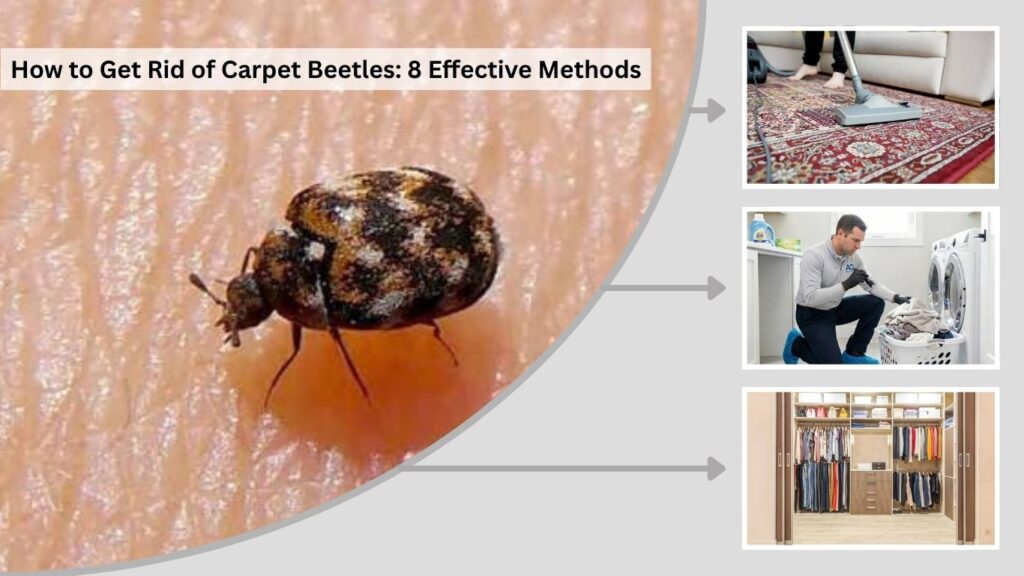
The best way to get rid of carpet beetles is to combine thorough cleaning, fabric treatment, and prevention. Concentrate on removing larvae and eliminating their food sources rather than simply killing visible adult beetles.
1. Vacuum Carpets and Furniture Thoroughly
Vacuuming is one of the most effective ways to remove carpet beetles and their larvae. Focus on carpets, rugs, upholstered furniture, baseboards, and hidden corners.
Use a vacuum attachment to clean beneath furniture, along carpet edges, and inside closets. Repeat regularly while signs of infestation remain.
Empty the vacuum outdoors immediately afterward and dispose of collected debris in a sealed bag to prevent surviving insects from escaping.
2. Wash Infested Clothes and Fabrics
Carpet beetle larvae frequently hide in wool clothing, blankets, curtains, and other natural-fiber materials.
Wash affected washable fabrics in hot water when their care labels permit. High-temperature laundering can kill eggs, larvae, and adult beetles.
For delicate fabrics that cannot tolerate hot washing, consider professional dry cleaning. Always inspect cleaned garments before returning them to storage.
3. Use Heat or Freezing Treatments
Temperature treatments can eliminate carpet beetles from suitable household items.
A hot clothes dryer can kill insects in fabrics that tolerate the heat. Small, delicate items may also be placed in a sealed bag and frozen at approximately 0°F (-18°C) for several days, provided the entire item reaches that temperature.
Follow fabric-care instructions because extreme temperatures can damage sensitive materials.
4. Deep Clean Closets and Storage Areas
Dark, undisturbed storage areas provide excellent hiding places for carpet beetle larvae.
Remove stored belongings and carefully inspect shelves, drawers, corners, and fabric containers. Vacuum accumulated lint, hair, and debris before wiping down accessible surfaces.
Pay particular attention to closets containing wool sweaters, blankets, or rarely used clothing. Return only clean, inspected items.
5. Remove Carpet Beetle Food Sources
Carpet beetles often survive because hidden organic materials remain available.
Remove pet hair, dust, dead insects, and other debris from difficult-to-reach locations. Check behind appliances, beneath furniture, and around heating vents.
Inspect accessible attic spaces for abandoned animal nests or carcasses. Use appropriate precautions or professional help when removing contaminated nesting materials.
Eliminating these sources interrupts larval development.
6. Discard Heavily Infested Items
Sometimes fabrics or stored materials become too damaged to save.
Inspect wool rugs, old clothing, feather-filled items, and upholstery for extensive larval activity. Place severely infested belongings inside sealed bags before disposing of them.
Discarding heavily infested materials prevents insects from spreading into nearby storage spaces.
7. Store Clean Fabrics in Airtight Containers
Proper storage protects clothing and household textiles from future damage.
Before storing fabrics, wash or dry-clean them and inspect for insects. Use airtight plastic containers or properly sealed storage bags.
This is particularly important for wool sweaters, scarves, blankets, and seasonal clothing that may remain untouched for months.
8. Use Targeted Insecticides When Necessary
If thorough cleaning fails to control an established infestation, a carpet-beetle-labeled insecticide may help treat affected locations.
Products must be registered and labeled for the intended indoor use. Follow all directions, including ventilation requirements and precautions involving children and pets.
Never apply insecticides directly to clothing, bedding, or other surfaces unless the label specifically permits that application. Professional treatment is preferable for inaccessible infestations.
How to Get Rid of Carpet Beetle Larvae
Carpet beetle larvae cause most household damage because they feed on animal fibers and organic debris. They commonly hide beneath carpets, behind baseboards, inside upholstered furniture, and among stored clothing.
The most effective larvae-removal approach includes:
- Inspecting hidden locations: Search carpet edges, closets, upholstery, and stored fabrics.
- Vacuuming repeatedly: Remove larvae, shed skins, eggs, and accumulated organic debris.
- Treating infested fabrics: Use suitable hot laundering, drying, dry cleaning, or freezing.
- Removing damaged materials: Dispose of items containing extensive larval infestations.
Eliminating larvae and their food sources is essential for achieving lasting control.
How to Get Rid of Black and Varied Carpet Beetles
Black and varied carpet beetles differ in appearance, but their general control methods are similar.
Black carpet beetles are typically dark-colored, while varied carpet beetles have mottled patterns of cream, brown, and dark scales.
Both types can infest animal-based fabrics and hidden accumulations of organic debris. Thorough vacuuming, laundering, inspecting stored materials, and removing breeding sources are effective strategies for controlling either type.
How to Get Rid of Carpet Beetles in Different Areas
Carpet beetles can establish infestations beyond carpets. Effective removal depends on identifying the particular materials supporting larvae in each location.
Carpet Beetles in Bedrooms and Beds
Inspect blankets, wool bedding, upholstered headboards, and areas beneath the bed. Wash affected bedding according to its care instructions and vacuum the mattress surface, bed frame, and surrounding carpet.
Carpet beetles do not feed on human blood, but larval hairs can irritate sensitive skin.
Carpet Beetles in Cars
Vacuum vehicle seats, floor mats, trunk carpeting, and narrow spaces between cushions.
Remove pet hair, food debris, and stored fabrics that might support larvae. Inspect natural-fiber seat materials and clean affected removable items appropriately.
Carpet Beetles in Kitchens
Check stored dry foods, pantry shelves, cupboard corners, and areas beneath appliances.
Discard visibly infested foods, clean shelves thoroughly, and transfer unaffected vulnerable dry foods into tightly sealed containers.
How to Get Rid of Carpet Beetles Naturally
Natural carpet beetle control focuses primarily on physical removal rather than chemical sprays.
Regular vacuuming, laundering, dry cleaning, and appropriate temperature treatments can significantly reduce infestations. Cleaning shelves and removing debris also eliminates materials larvae need for survival.
Although baking soda, vinegar, and essential oils are frequently recommended online, there is insufficient reliable evidence that these household remedies eliminate established carpet beetle infestations on their own.
For dependable results, prioritize sanitation and proven fabric treatments.
How to Get Rid of Carpet Beetles Permanently
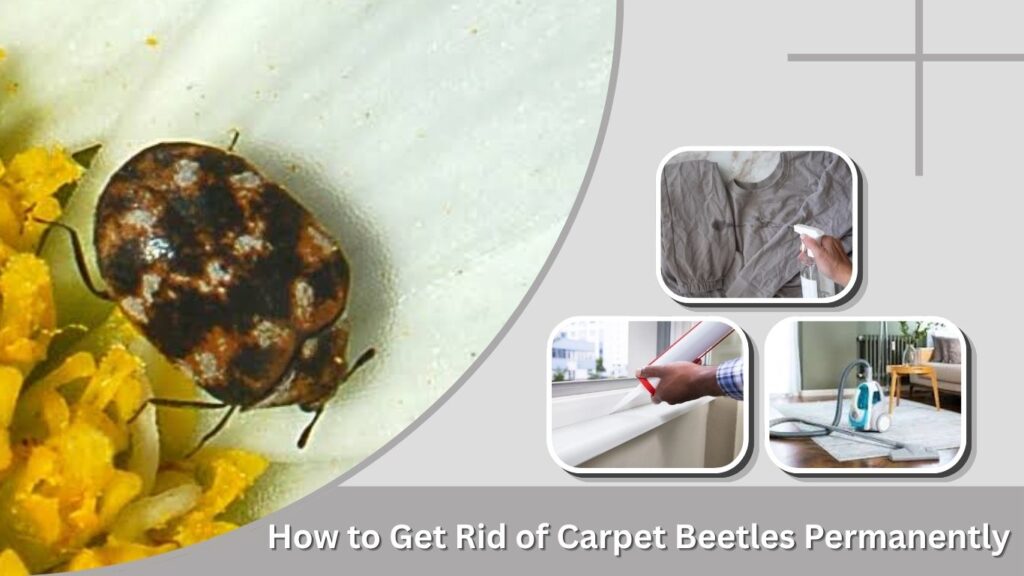
Long-term carpet beetle control requires preventing new infestations while eliminating existing breeding sources.
Inspect fabrics before storage, vacuum regularly, repair damaged window screens, and seal accessible entry gaps. Keep closets clean and avoid allowing lint or pet hair to accumulate beneath furniture.
Inspect flowers and secondhand furnishings before bringing them indoors.
Because adult carpet beetles can enter from outdoors, no treatment guarantees they will never return. However, consistent cleaning and preventive storage greatly reduce reinfestation risks.
When Should You Call a Professional Exterminator?
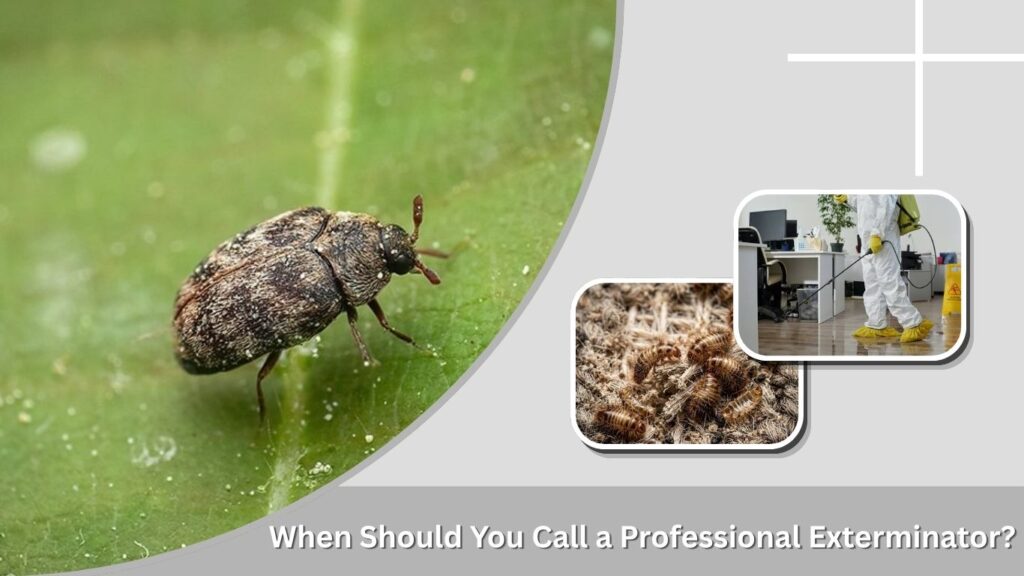
Professional pest control may be necessary when carpet beetles continue appearing despite repeated cleaning and fabric treatment.
An exterminator can inspect concealed breeding locations, identify contributing sources, and determine whether targeted pesticide applications are appropriate.
Professional assistance is especially useful when infestations extend into wall voids, inaccessible attics, or extensive upholstered furnishings.
FAQs
1. What Is the Fastest Way to Get Rid of Carpet Beetles?
The fastest practical approach combines intensive vacuuming, laundering infested fabrics, and removing larval food sources. Clean hidden areas thoroughly and discard heavily infested materials. Continue monitoring because overlooked eggs or larvae may allow the infestation to persist.
2. Are Carpet Beetles Hard to Get Rid Of?
Carpet beetles can be difficult to eliminate when larvae hide beneath furniture or inside storage areas. However, smaller infestations are often manageable through repeated cleaning, appropriate fabric treatment, and removing food sources. Persistent infestations may require professional help.
3. Can Vacuuming Alone Get Rid of Carpet Beetles?
Vacuuming can substantially reduce carpet beetle populations by removing insects, eggs, and debris. However, vacuuming alone may not eliminate larvae inside clothing, furniture, or inaccessible spaces. Combining vacuuming with laundering and source removal produces more reliable results.
4. How Long Does It Take to Get Rid of Carpet Beetles?
The time required depends on infestation severity and whether hidden breeding sources are removed. A minor infestation may improve quickly after cleaning, while widespread infestations can require repeated treatment and monitoring over several weeks or longer.
5. Can Carpet Beetles Come Back After Treatment?
Yes, carpet beetles can return when adults enter from outdoors or surviving larvae remain in concealed areas. Regular vacuuming, clean fabric storage, sealing entry gaps, and checking stored belongings help reduce the likelihood of another infestation.
