
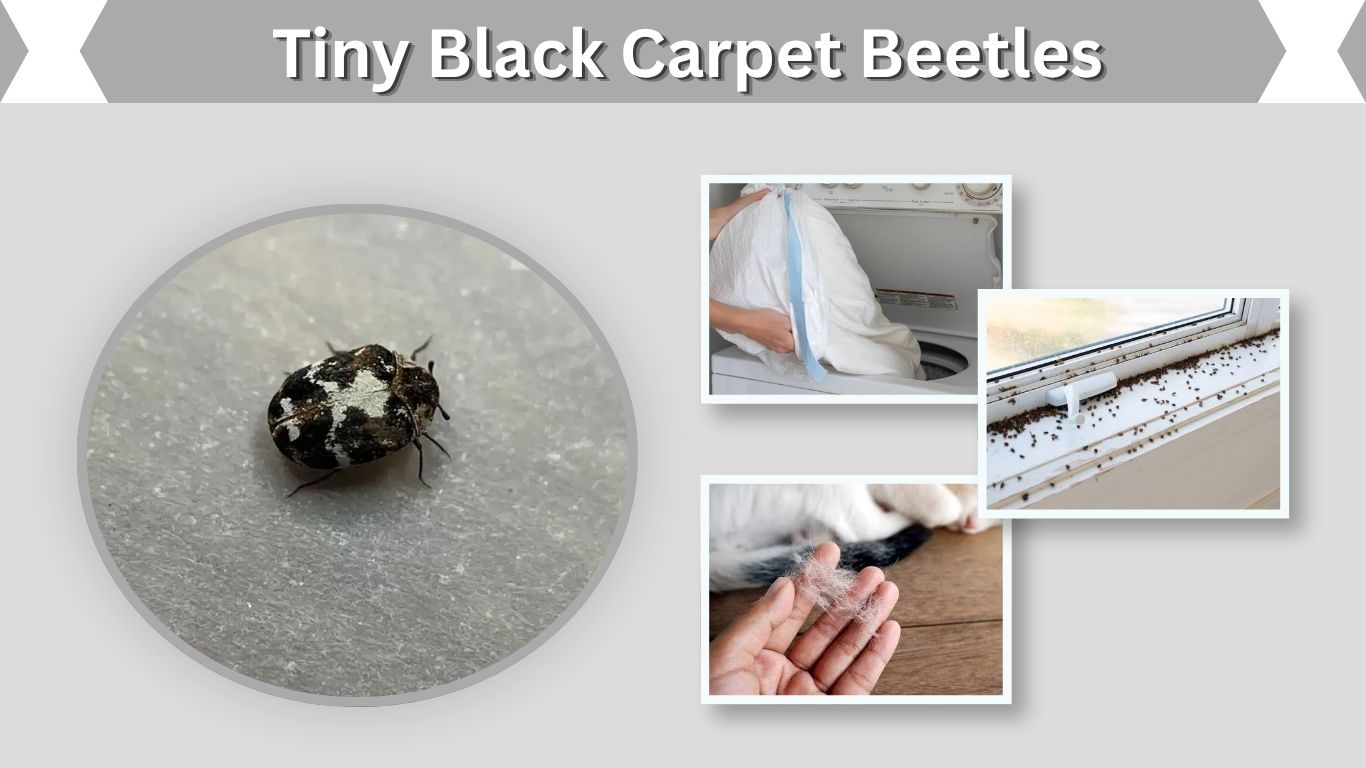
Tiny black carpet beetles are small household insects commonly found near windows, carpets, furniture, and storage areas. These dark-colored beetles have hard, oval-shaped bodies and may resemble miniature ladybugs. Although adult carpet beetles are generally harmless, their larvae can damage wool, clothing, rugs, and other natural materials. Finding tiny black beetles indoors may indicate an infestation, especially when accompanied by hairy larvae or damaged fabrics. Understanding their appearance, hiding places, and behavior can help you identify these pests correctly and eliminate them before they cause serious household damage.
What Do Tiny Black Carpet Beetles Look Like?
Tiny black carpet beetles belong to the Dermestidae family, which includes several household beetle species. Adult beetles generally have hard wing covers, short antennae, and small oval bodies. However, their appearance varies depending on the species.
Tiny Black Carpet Beetle Identification
The black carpet beetle (Attagenus unicolor) is one of the most recognizable dark-colored carpet beetles.
Adult black carpet beetles generally measure about 3–5 millimeters long. Their bodies are elongated oval rather than perfectly round, with dark brown or black wing covers.
Common identification features include:
- Body color: Shiny black or dark brown.
- Body shape: Small, elongated oval with a slightly rounded back.
- Hard shell: Firm wing covers protecting the abdomen.
- Legs: Six relatively short, brownish legs.
- Antennae: Short antennae with enlarged terminal segments.
Their small size makes them easy to confuse with other household beetles, particularly when observed without magnification.
Tiny Black Ladybug-Looking Carpet Beetles
Some carpet beetles resemble miniature ladybugs because they have rounded, dome-shaped bodies.
The varied carpet beetle (Anthrenus verbasci) is a common example. Adults typically measure around 1.5–3.5 millimeters and display irregular white, yellowish, brown, and black markings.
Unlike the more uniformly dark black carpet beetle, varied carpet beetles have colorful patterns formed by tiny scales.
These scales may wear away as beetles age, making older individuals appear nearly black.
Tiny Black Carpet Beetles With White Spots
A tiny black carpet beetle with white spots may be a varied carpet beetle or another related species.
Varied carpet beetles have irregular pale markings scattered across their wing covers. Another species, the two-spot carpet beetle (Attagenus pellio), has two distinctive white spots against a dark body.
Because different beetles can have similar patterns, close examination is necessary for accurate identification.
Tiny Black Carpet Beetles vs Other Household Bugs
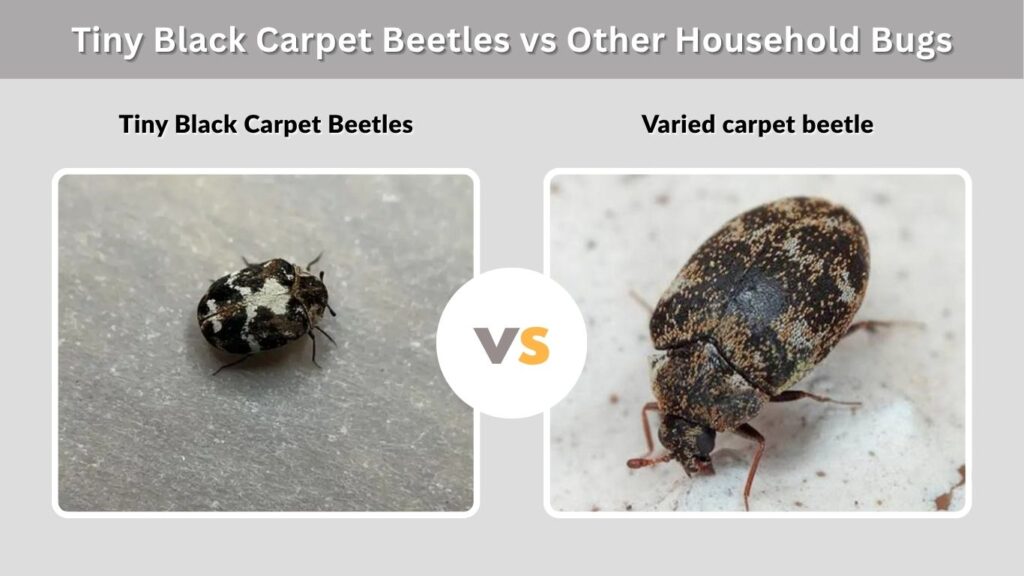
Several small household insects resemble carpet beetles. Comparing body shape, markings, and movement can help distinguish them.
| Insect | Appearance | Main Difference |
| Black carpet beetle | Dark, elongated oval | Hard shell and mostly uniform color |
| Varied carpet beetle | Small, round, mottled | White, yellow, and brown markings |
| Ladybug | Rounded, dome-shaped | Usually larger and often brightly colored |
| Bed bug | Flat, oval, reddish-brown | No hard beetle-like wing covers |
| Flea | Dark, narrow-bodied | Strong hind legs for jumping |
A hard, dark shell and oval body may suggest a carpet beetle, but appearance alone does not always confirm the species.
What Do Tiny Black Carpet Beetle Larvae Look Like?
Carpet beetle larvae look completely different from adult beetles. Instead of hard, rounded shells, they have elongated, segmented bodies covered with small hairs.
Black carpet beetle larvae are typically brown to dark brown, with bodies that taper toward the rear and end in a tuft of longer hairs.
The larvae may grow to approximately 8 millimeters, depending on their developmental stage.
Unlike adult beetles, larvae feed on animal-derived materials and cause most household damage.
Finding hairy larvae or their shed skins near carpets, clothing, or furniture provides stronger evidence of an active infestation than finding a single adult beetle.
Where Do Tiny Black Carpet Beetles Hide in Your House?
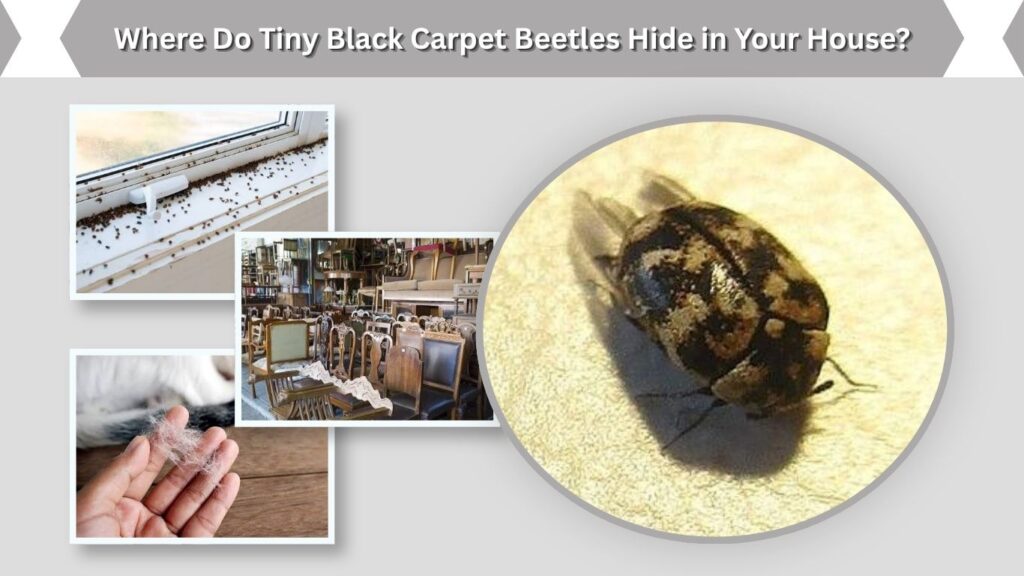
Tiny black carpet beetles can appear in several household locations. Adults often move toward light, while larvae prefer protected areas containing suitable food sources.
Tiny Black Carpet Beetles on Windowsills
Adult carpet beetles commonly appear near windows because they are attracted to light.
They may enter through open windows, damaged screens, or doors. Some arrive indoors with fresh flowers.
Finding one or two beetles near a window does not automatically mean your home has an established infestation. Repeated sightings alongside larvae or fabric damage are more concerning.
Tiny Black Carpet Beetles in Your Couch
Carpet beetle larvae may develop inside upholstered furniture when suitable food materials accumulate.
Furniture seams, cushion edges, and spaces beneath sofas can collect pet hair, lint, feathers, and organic debris.
Inspect these areas carefully if tiny beetles or hairy larvae repeatedly appear around your couch.
Tiny Black Beetles in Carpets
Carpets provide concealed areas where carpet beetle larvae can develop, particularly when they contain wool or accumulated animal hair.
Larvae commonly hide along carpet edges, beneath rugs, and around baseboards.
Damage may appear as irregular holes, thinning fabric, or small patches of missing fibers.
What Causes Tiny Black Carpet Beetles in Your House?
Carpet beetles enter homes through openings or arrive with infested materials. Once indoors, they can reproduce when suitable larval food sources are available.
Common causes include:
- Open windows and doors: Flying adults enter from outdoor environments.
- Natural fabrics: Wool, fur, feathers, and similar materials provide larval food.
- Accumulated debris: Pet hair, lint, and dead insects support larval development.
- Infested belongings: Secondhand furniture, carpets, or clothing may introduce insects.
Carpet beetles can infest clean homes, so their presence does not necessarily indicate poor housekeeping.
Do Tiny Black Carpet Beetles Bite Humans?
Tiny black carpet beetles do not bite humans or feed on blood. Adult beetles primarily consume pollen and nectar, while larvae feed on natural fibers and organic materials.
However, carpet beetle larvae have tiny bristles that may trigger allergic skin reactions in sensitive individuals.
Exposure to these hairs can cause itching, redness, or small irritated bumps that resemble insect bites.
If unexplained skin irritation occurs, avoid assuming carpet beetles are responsible without confirming the insects and considering other possible causes.
How to Get Rid of Tiny Black Carpet Beetles
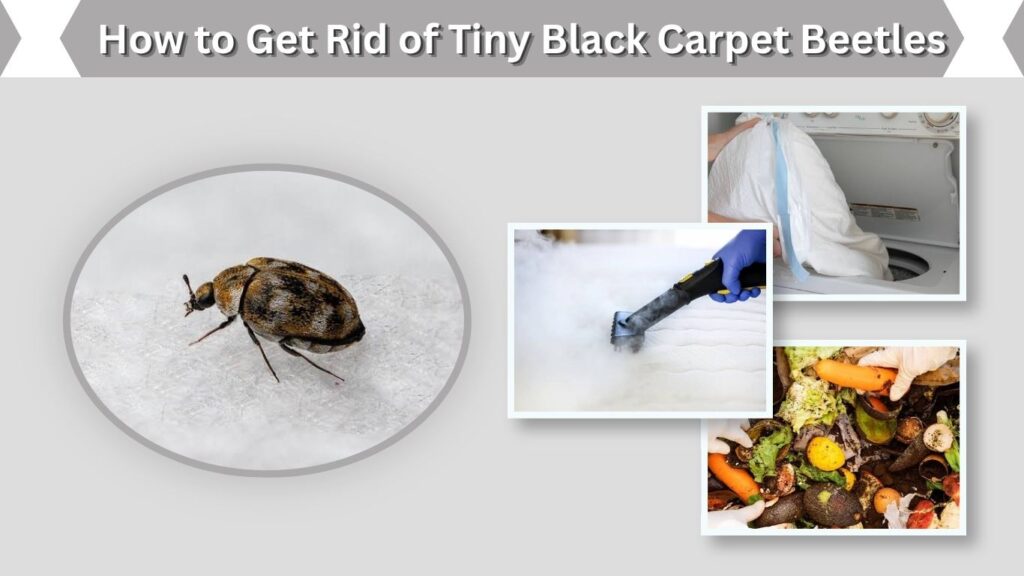
The most effective treatment involves removing larvae, cleaning infested materials, and eliminating breeding sources. Simply killing visible adults may not stop an established infestation.
1. Vacuum Carpets and Furniture
Thoroughly vacuum carpets, furniture seams, baseboards, and areas beneath heavy furniture.
Use narrow attachments to clean cracks and corners. Dispose of vacuum contents promptly in a sealed bag outside your home.
Repeat cleaning regularly while beetle activity continues.
2. Wash Infested Clothing
Wash suitable fabrics using hot water according to their care labels.
For delicate wool, silk, or valuable clothing, professional dry cleaning can eliminate carpet beetles without damaging the material.
Inspect stored fabrics carefully before returning them to closets.
3. Remove Hidden Food Sources
Remove accumulated pet hair, lint, dead insects, and heavily infested materials.
Inspect storage boxes, neglected closets, and upholstered furniture.
Identifying and removing the original breeding source is essential for preventing larvae from returning.
4. Use Appropriate Pest Control Treatments
Persistent infestations may require targeted insecticide applications.
Choose products specifically labeled for carpet beetles and approved for the intended treatment location.
Avoid spraying clothing, bedding, or surfaces not permitted by the product label. Consider professional pest control when infestations spread or originate from inaccessible spaces.
How to Prevent Tiny Black Carpet Beetles
Preventing carpet beetles requires regular cleaning and protecting vulnerable household materials.
Important prevention measures include:
- Vacuum regularly: Clean carpets, upholstery, closets, and baseboards.
- Store fabrics securely: Keep cleaned wool and seasonal clothing in sealed containers.
- Inspect secondhand items: Examine used furniture and rugs before bringing them indoors.
- Maintain window screens: Repair gaps that allow flying beetles to enter.
- Remove organic debris: Eliminate pet hair, lint, and dead insects from hidden locations.
These habits reduce suitable breeding conditions and help detect new infestations early.
FAQs
1. Are Tiny Black Carpet Beetles Harmful?
Adult carpet beetles are not directly harmful to humans. However, their larvae can damage natural fabrics, and larval hairs may cause allergic irritation in sensitive individuals.
2. Why Am I Finding Tiny Black Carpet Beetles Everywhere?
Repeated sightings may indicate that adults are emerging from an indoor breeding source. Inspect carpets, closets, furniture, and hidden areas for larvae, shed skins, or damaged natural materials.
3. Can Tiny Black Carpet Beetles Fly?
Yes. Adult black carpet beetles can fly and may enter homes through windows and doors. They are frequently observed near windowsills because they are attracted to light.
4. Are Tiny Black Carpet Beetles Bed Bugs?
No. Carpet beetles have hard wing covers and a rounded or elongated oval shape. Bed bugs have flatter bodies, lack hard wing covers, and feed on blood.
5. Do Tiny Black Carpet Beetles Live in Beds?
Carpet beetle larvae may occur in bedding containing feathers, wool, hair, or other suitable food sources. However, they do not feed on humans or depend on beds for survival.
