
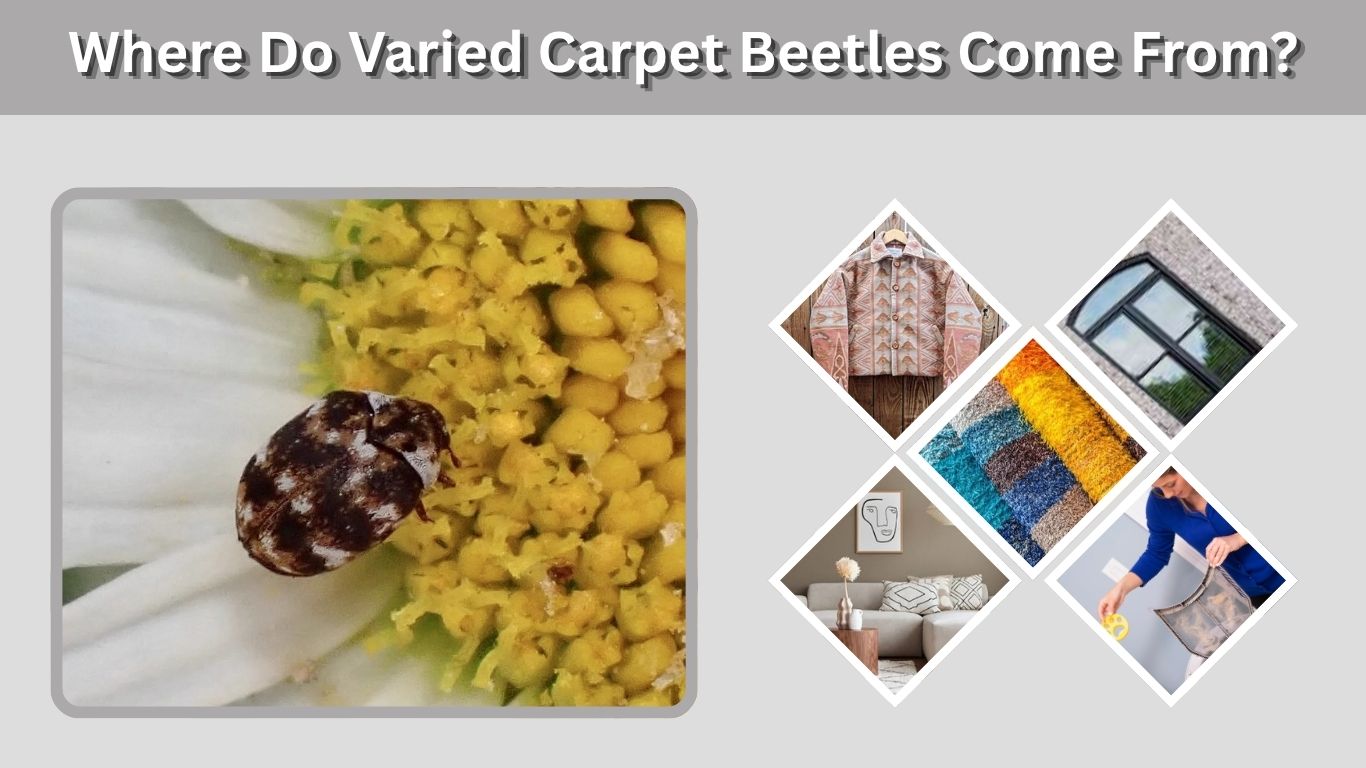
Where do varied carpet beetles come from, and why do they suddenly appear inside your home? These tiny insects usually originate outdoors, where adults feed on pollen and nectar from flowers. They can enter homes through open windows, doors, and small gaps or arrive on cut flowers and infested household items. Once indoors, female beetles may lay eggs near natural fibers, pet hair, or other organic materials. Understanding their origins, hiding places, and breeding habits is essential for preventing infestations and protecting your carpets, clothing, and furniture.
Where Do Varied Carpet Beetles Come From?
Varied carpet beetles (Anthrenus verbasci) naturally occur in outdoor environments, including gardens, flowering plants, bird nests, and other locations containing suitable food sources. They are widely distributed around the world and can survive both outdoors and inside buildings.
Although adults generally live outdoors, their larvae can develop indoors when suitable materials are available.
1. Outdoor Gardens and Flowering Plants
Adult varied carpet beetles commonly live around gardens and flowering plants. They feed on pollen and nectar, making flowers an important part of their natural habitat.
During warmer months, these small beetles actively visit flowering plants and may fly between gardens and nearby buildings.
Homes surrounded by flowering vegetation may occasionally attract adult beetles, but their presence outdoors does not necessarily indicate a household infestation.
2. Bird Nests and Animal Shelters
Bird nests are another common natural habitat for varied carpet beetles. They contain feathers, shed hairs, dead insects, and other materials that developing larvae can consume.
Varied carpet beetles may also reproduce around abandoned nests, spider webs, and other animal-associated debris.
When nests are located near roofs, attics, or ventilation openings, adult beetles may eventually enter nearby living spaces.
3. Existing Indoor Infestations
Not every varied carpet beetle found inside a house recently arrived from outdoors. Some develop entirely indoors after females lay eggs near suitable food materials.
Larvae can remain hidden for months while feeding on natural fibers and accumulated debris.
When they mature, adult beetles may emerge and move toward windows, making an established infestation suddenly noticeable.
How Do Varied Carpet Beetles Get Into Your House?

Varied carpet beetles can enter buildings through several routes. Adults are capable of flying, while larvae and eggs may be transported inside infested objects.
Understanding these entry points helps homeowners determine whether the insects are occasional visitors or part of an indoor infestation.
Through Windows, Doors, and Small Openings
Adult varied carpet beetles can fly through open windows and doors, particularly when flowering plants are nearby.
They may also enter through damaged window screens, ventilation openings, and gaps around building structures.
Because adults are attracted to light, they are frequently discovered around sunny windowsills after entering a home.
Through Flowers and Household Items
Varied carpet beetles sometimes enter homes accidentally when people bring outdoor materials or infested belongings inside.
Common introduction routes include:
- Cut flowers: Adults may hide among flowers collected from gardens.
- Secondhand furniture: Upholstered items may contain hidden larvae.
- Used carpets and rugs: Natural-fiber materials can harbor developing insects.
- Stored clothing: Wool garments may contain eggs or larvae.
- Decorative animal materials: Feathers, preserved insects, and similar objects can support infestations.
Inspecting these items before bringing them indoors reduces the likelihood of introducing carpet beetles.
Why Do Varied Carpet Beetles Appear in Homes?
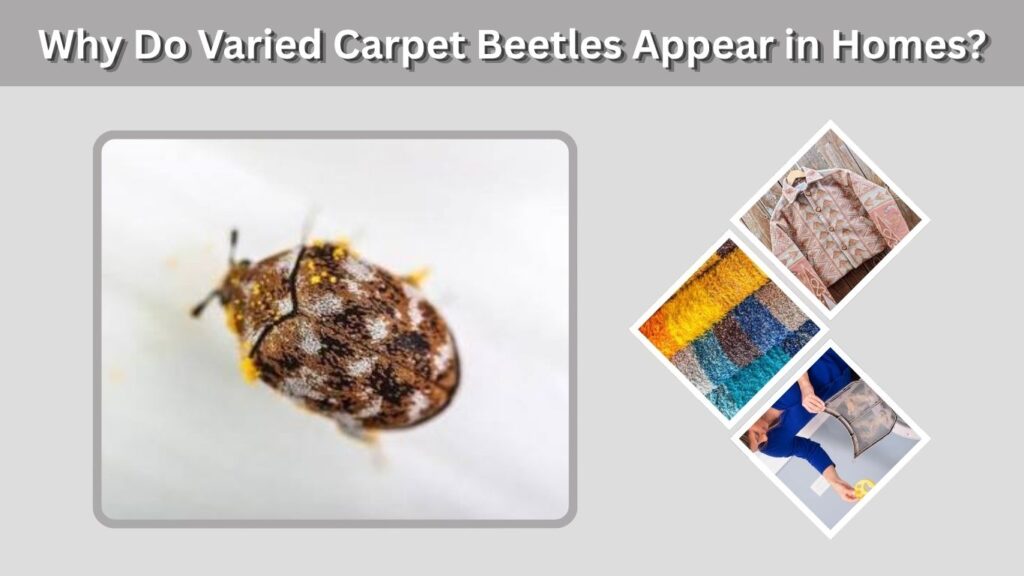
Varied carpet beetles generally establish indoor populations when they find suitable materials for their larvae to eat. Unlike adults, which primarily consume pollen and nectar, larvae feed on various dry organic materials.
A home containing natural fibers and accumulated animal debris may provide favorable conditions for their development.
Natural Fibers and Organic Materials
Varied carpet beetle larvae can feed on materials containing animal proteins, particularly keratin.
Common food sources include:
- Wool carpets and clothing
- Fur and animal skins
- Feather-filled furnishings
- Pet hair and accumulated lint
- Dead insects and spider remains
- Natural-fiber upholstery
- Stored animal-based decorative materials
Larvae generally prefer protected areas where they can feed without frequent disturbance.
Hidden Egg-Laying Locations
Female varied carpet beetles lay eggs near materials that can support their developing larvae.
Inside homes, suitable sites may include wool carpets, closets, upholstered furniture, and storage areas.
According to the University of California’s Integrated Pest Management Program, varied carpet beetle eggs generally hatch within approximately 10–20 days, although development depends on environmental conditions.
After hatching, larvae begin searching for suitable food and shelter.
Where Do Varied Carpet Beetles Hide Inside Homes?
Varied carpet beetle larvae prefer dark, protected locations where food remains available. These habits explain why homeowners may notice fabric damage before finding the insects responsible.
Adult beetles are generally easier to detect because they frequently appear around windows.
Carpets, Rugs, and Furniture
Larvae commonly hide along carpet edges, beneath rugs, behind baseboards, and inside upholstered furniture.
They may also develop in rarely disturbed corners where pet hair, dead insects, and other debris accumulate.
Wool carpets and animal-based furniture materials are particularly vulnerable because larvae can feed directly on them.
Closets, Attics, and Storage Areas
Closets and storage spaces can support infestations when natural-fiber belongings remain undisturbed for extended periods.
Attics may contain abandoned bird nests or other organic debris that supports larval development.
Inspecting these areas is especially important when adult beetles continue appearing despite regular cleaning.
How Can You Tell Where Varied Carpet Beetles Are Coming From?
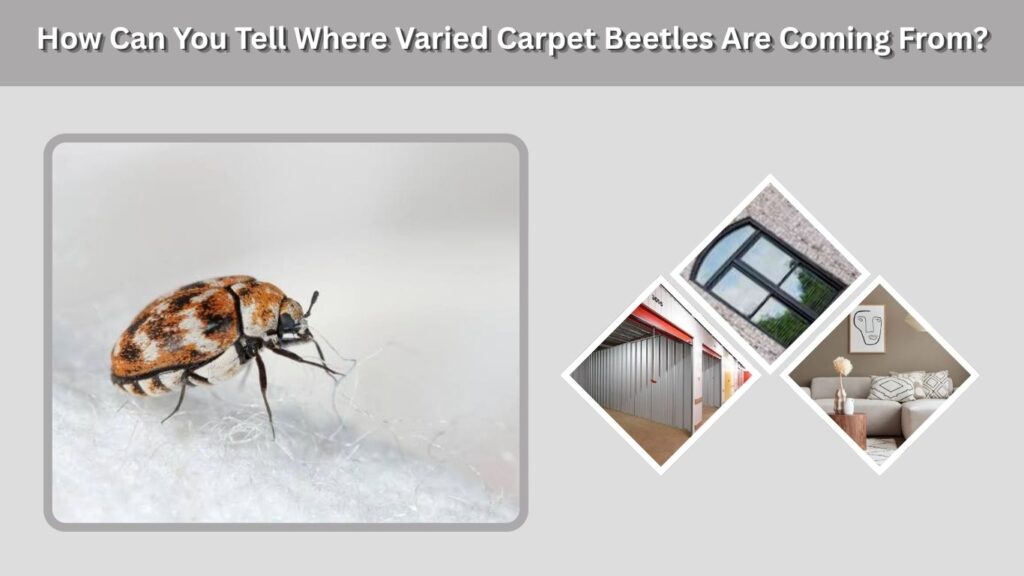
Identifying the original source of an infestation can be challenging because adult beetles and larvae occupy different locations.
Adults may appear near windows, while the actual breeding source is hidden inside carpets, furniture, or storage areas.
Common Signs of a Varied Carpet Beetle Infestation
Look for these signs when inspecting your home:
- Small, oval beetles with mottled white, brown, and yellowish markings
- Brown, hairy larvae hidden among fabrics
- Shed larval skins near feeding locations
- Irregular damage to wool or other vulnerable materials
- Repeated sightings of beetles in several rooms
Finding one adult near a window does not necessarily indicate an infestation. However, discovering multiple larvae or damaged fabrics suggests that beetles may be reproducing indoors.
Why Do They Keep Appearing Near Windows?
Adult varied carpet beetles are attracted to sunlight and frequently gather around windows.
Some may have entered from outdoors, while others may have developed inside the building.
If adults repeatedly appear, inspect nearby carpets, closets, upholstery, and other suitable larval habitats rather than focusing only on the windows.
How to Prevent Varied Carpet Beetles From Entering Your Home
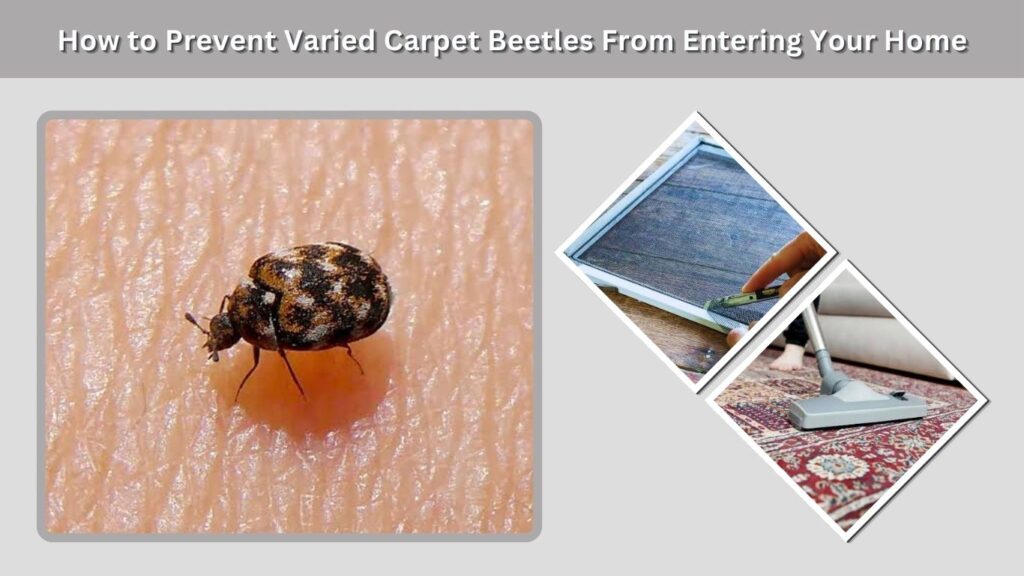
Preventing varied carpet beetles involves limiting entry points and eliminating materials that support indoor reproduction.
Regular cleaning and proper fabric storage are particularly effective because they reduce accessible food sources for larvae.
Keep Entry Points Protected
Install well-fitting window screens and repair damaged screening materials.
Seal accessible gaps around windows, doors, and ventilation openings. Inspect cut flowers before bringing them indoors, especially during periods of adult beetle activity.
These simple precautions can reduce accidental introductions.
Clean and Inspect Household Materials
Vacuum carpets, furniture, closets, and baseboards regularly. Pay particular attention to locations where lint, pet hair, and dead insects collect.
Wash or dry-clean vulnerable clothing before storing it in sealed containers.
If you discover infested materials, clean or treat them appropriately. Heavily damaged items may need to be discarded in sealed bags.
Professional pest control may be appropriate when repeated cleaning fails to eliminate an established infestation.
FAQs
1. Do Varied Carpet Beetles Come From Outside?
Yes, varied carpet beetles commonly originate outdoors. Adults live around flowering plants, bird nests, and other natural habitats. They can fly into houses through open windows or doors and may also arrive accidentally on cut flowers.
2. Why Do I Suddenly Have Varied Carpet Beetles?
Sudden appearances may occur when adults enter from outdoors or emerge from an existing indoor population. Increased adult activity during warmer months can make them more noticeable, particularly near windows where they gather in sunlight.
3. Can Varied Carpet Beetles Come From Plants?
Yes, adult varied carpet beetles commonly visit flowering plants to feed on pollen and nectar. They may accidentally enter homes on cut flowers. However, their larvae generally develop where suitable dry organic food materials are available.
4. Can You Have Varied Carpet Beetles Without Carpets?
Yes, varied carpet beetles can infest homes without carpets. Their larvae may develop in wool clothing, upholstered furniture, feathers, pet hair, dead insects, and other suitable materials. Removing carpets alone does not necessarily eliminate an infestation.
5. Do Varied Carpet Beetles Go Away on Their Own?
Occasional adult beetles may leave or die without reproducing indoors. However, established infestations can persist while larvae have suitable food sources. Thorough cleaning, removing infested materials, and limiting entry points provide more reliable long-term control.
