
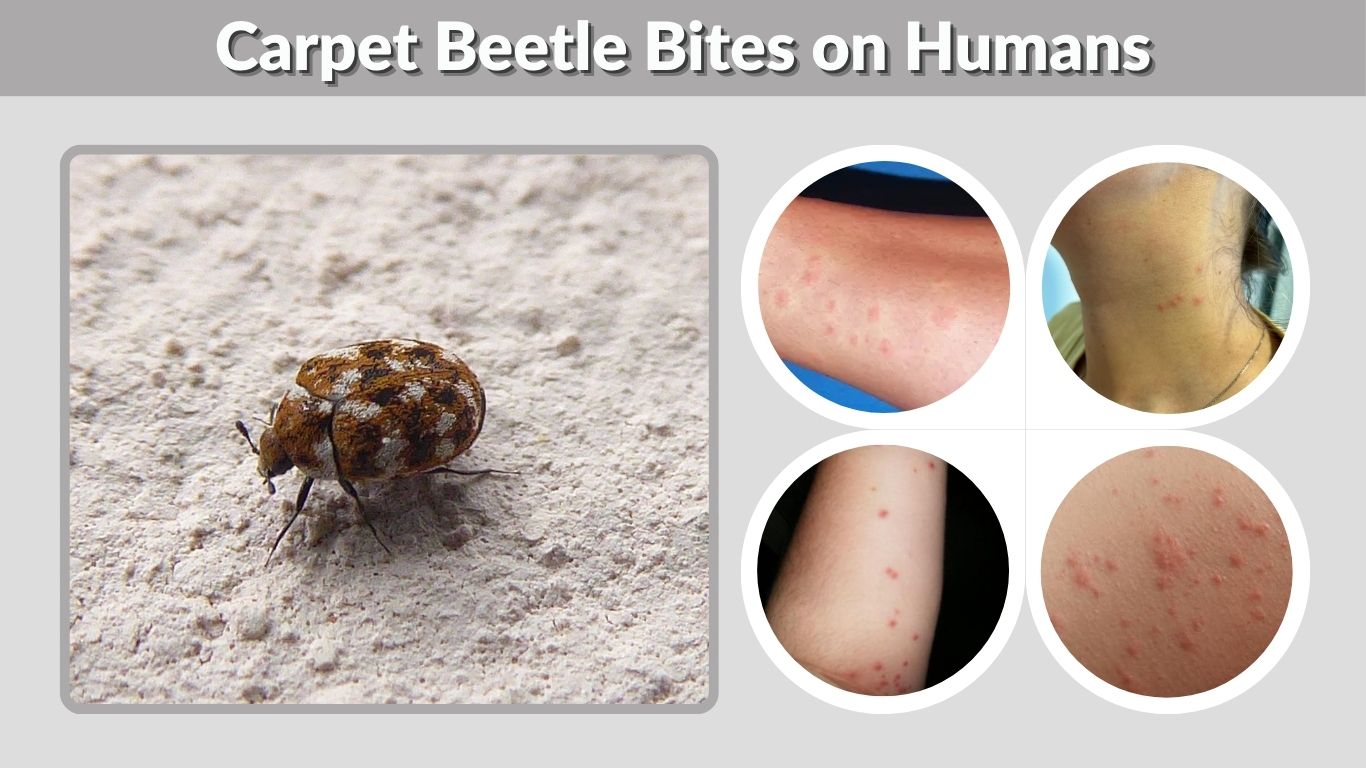
Carpet beetle bites on humans are often mistaken for mosquito bites, flea bites, or bed bug bites. However, carpet beetles do not actually bite people. Instead, their larvae have tiny bristly hairs that can cause itchy skin reactions in sensitive individuals. These reactions may appear as red bumps, raised patches, or rashes after contact with contaminated carpets, bedding, or clothing. Understanding the symptoms of carpet beetle dermatitis helps you identify possible exposure and find relief. This guide explains what these reactions look like, how to treat them, and how to prevent further irritation.
Do Carpet Beetles Bite Humans?
No, carpet beetles do not bite humans or feed on human blood. Unlike bed bugs and fleas, carpet beetles are not parasites. Adult carpet beetles primarily feed on pollen and nectar, while their larvae consume natural materials such as wool, feathers, fur, and animal hair.
Why Do Carpet Beetles Cause Bite-Like Marks?
Carpet beetle larvae have tiny protective hairs covering their bodies. These hairs can break off and become trapped in carpets, clothing, bedding, or upholstered furniture.
When sensitive skin contacts the hairs, an allergic or irritant reaction may develop. This condition is called carpet beetle dermatitis.
The resulting skin irritation can look similar to insect bites, even though the beetles have not pierced the skin.
What Do Carpet Beetle Bites on Humans Look Like?
Carpet beetle dermatitis can produce several types of skin reactions. Symptoms vary depending on individual sensitivity and exposure to larval hairs. Some people develop noticeable rashes, while others experience little or no irritation.
Common Symptoms of Carpet Beetle Dermatitis
Possible symptoms include:
- Small red bumps: Raised spots that resemble mosquito or flea bites.
- Intense itching: Persistent discomfort around affected skin.
- Red patches: Areas of irritated or inflamed skin.
- Clusters of bumps: Several itchy spots appearing close together.
- Hives or welts: Raised, itchy areas in some allergic reactions.
- Small blisters: Occasional fluid-filled bumps in more pronounced reactions.
These symptoms are not unique to carpet beetles. Similar reactions can result from other insects, allergies, and skin conditions.
Where Do Carpet Beetle Rashes Appear?
Skin irritation may develop wherever the body contacts contaminated fabrics or larval hairs.
Commonly affected areas include arms, legs, the neck, and the torso. Reactions may be noticed after sleeping in affected bedding or wearing stored clothing containing larval hairs.
The distribution of a rash alone cannot confirm carpet beetle dermatitis.
Pictures of Carpet Beetle Bites on Humans
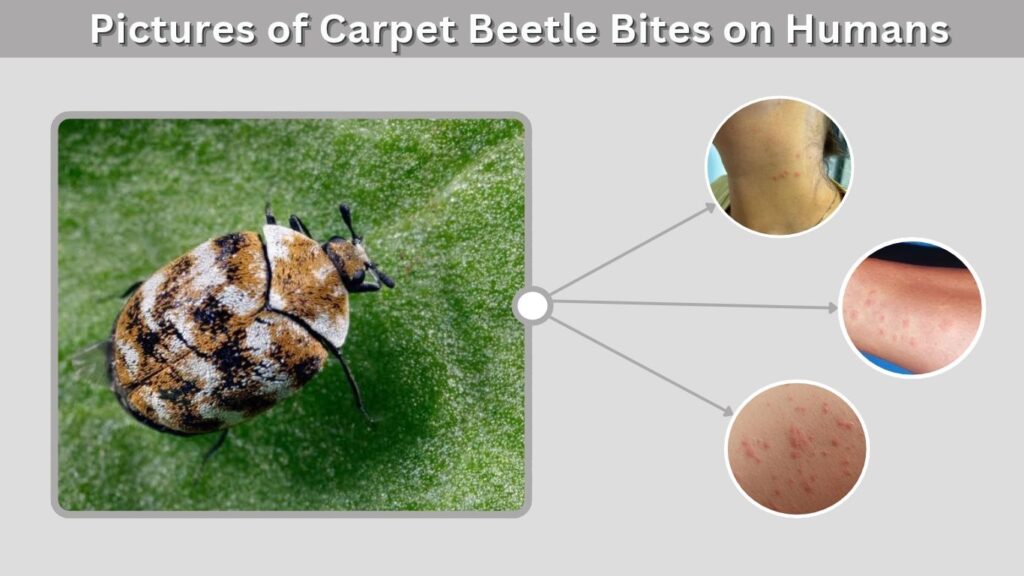
People often search for photos of carpet beetle bites on humans to identify unexplained skin irritation. However, there are no true carpet beetle bite marks because these insects do not bite people.
Pictures labeled as carpet beetle bites generally show skin reactions that may be associated with larval hairs.
What Can Carpet Beetle Dermatitis Look Like in Photos?
Clinical photographs may show scattered reddish bumps, itchy welts, or patches of inflamed skin. On darker skin tones, irritation may appear purple, brown, or darker than the surrounding skin rather than bright red.
The appearance varies considerably between individuals.
Because rashes from bed bugs, fleas, eczema, and other conditions can look similar, photographs alone are not enough to identify the cause. Finding carpet beetle larvae or their shed skins provides more useful supporting evidence.
Can Black Carpet Beetles Bite Humans?
Black carpet beetles (Attagenus unicolor) do not bite humans. Adults are generally dark brown or black, while their larvae are elongated and covered with noticeable hairs.
Like other carpet beetle species, black carpet beetle larvae can trigger irritation in sensitive individuals.
Can Varied Carpet Beetles Cause Skin Reactions?
Yes, varied carpet beetle (Anthrenus verbasci) larvae can cause allergic skin reactions through their hairs.
These larvae often hide in wool clothing, rugs, furniture, and other natural-fiber materials.
Although black and varied carpet beetles differ in appearance, neither species feeds on human blood or deliberately bites people.
Carpet Beetle Bites vs. Bed Bug Bites
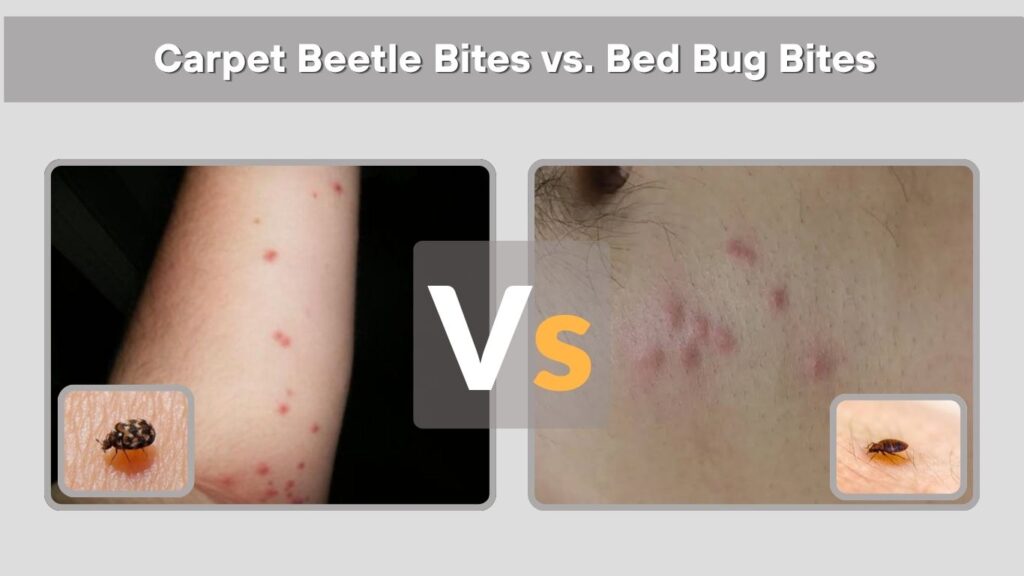
Carpet beetle dermatitis is frequently confused with bed bug bites because both can produce itchy bumps. However, their causes are different, and identifying the correct pest is essential for effective treatment.
| Feature | Carpet Beetle Dermatitis | Bed Bug Bites |
| Cause | Contact with larval hairs | Actual bites |
| Blood feeding | No | Yes |
| Skin reaction | Itchy bumps or rash | Itchy bumps or welts |
| Common evidence | Hairy larvae, shed skins, fabric damage | Bed bugs, fecal spots, shed skins |
| Human parasitism | No | Bed bugs feed on humans |
Both conditions can produce similar skin symptoms.
The most reliable way to distinguish them is to inspect the surroundings and identify the insects involved rather than relying on the rash pattern.
How to Treat Carpet Beetle Bites on Humans
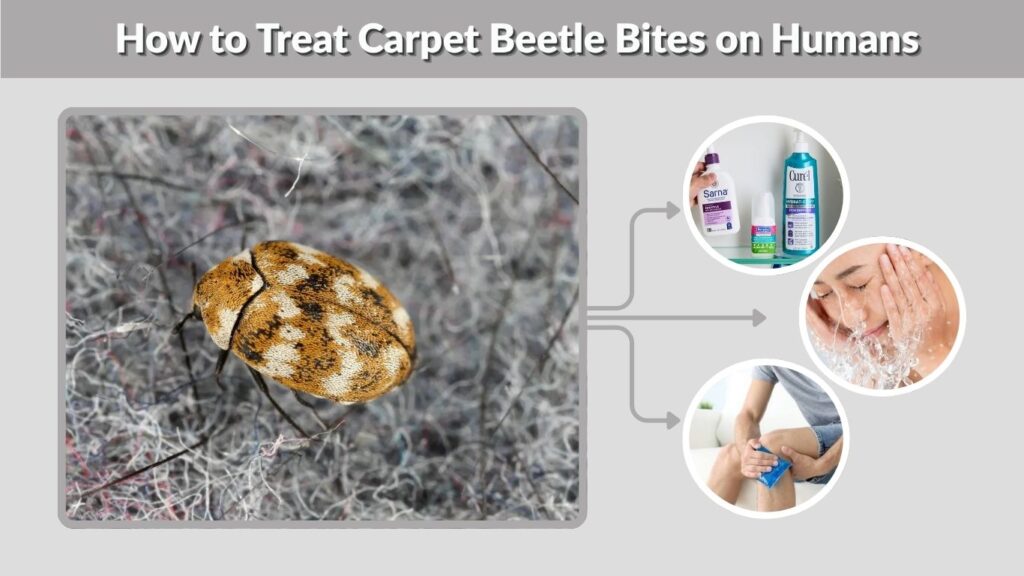
Although carpet beetles do not bite, treatment for suspected carpet beetle dermatitis focuses on relieving itching and preventing further exposure. Mild skin reactions may improve after the irritating material is removed.
1. Wash the Affected Skin
Gently wash irritated areas using mild soap and lukewarm water.
Avoid harsh scrubbing because it may worsen inflammation. Pat the skin dry using a clean towel.
Changing clothing and washing exposed fabrics may also help remove lingering larval hairs.
2. Apply a Cold Compress
A cool compress can temporarily reduce itching and discomfort.
Place a clean, cool, damp cloth against the affected skin for approximately 10–15 minutes. Repeat as needed.
Avoid placing ice directly against the skin.
3. Use an Appropriate Anti-Itch Treatment
Calamine lotion or an over-the-counter 1% hydrocortisone cream may help relieve mild contact dermatitis.
Follow product directions and ask a healthcare professional before treating young children, broken skin, or sensitive areas.
An oral antihistamine may help certain itchy allergic reactions, but check with a pharmacist or clinician about an appropriate option.
4. Avoid Scratching the Rash
Scratching irritated areas can worsen inflammation and increase the risk of a secondary skin infection.
Keep fingernails short and avoid tight clothing that repeatedly rubs affected areas.
If symptoms persist or worsen, seek medical advice rather than continuing self-treatment without identifying the cause.
How to Prevent Carpet Beetle Skin Reactions
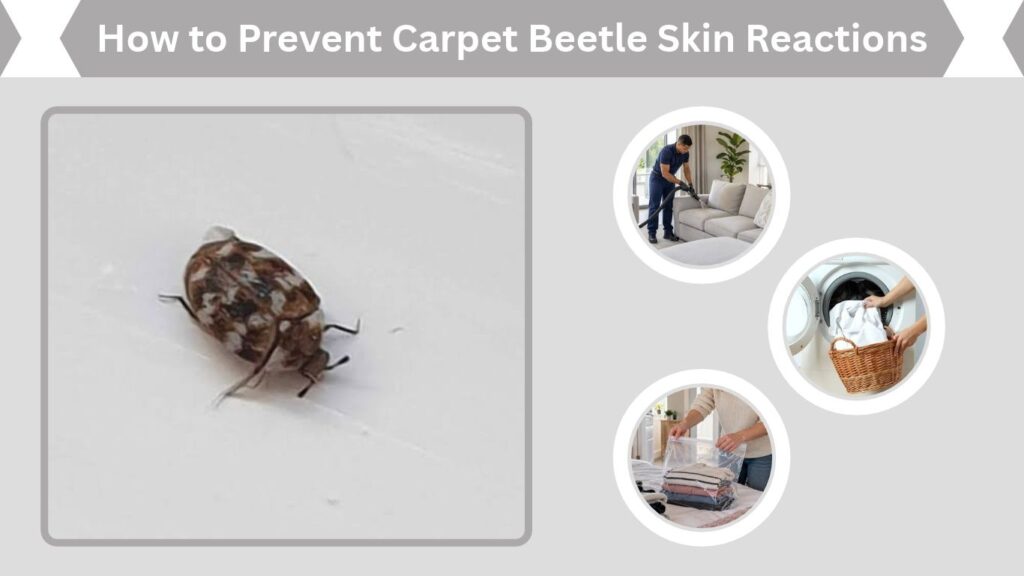
Preventing repeated skin irritation requires eliminating larval exposure and addressing any carpet beetle infestation.
Removing larvae and their food sources is more effective than treating visible adult beetles alone.
Clean Carpets and Upholstered Furniture
Vacuum carpets, upholstered furniture, baseboards, and hidden spaces regularly.
Focus on areas where pet hair, lint, and dead insects collect. Empty the vacuum outdoors after cleaning affected locations.
Wash Bedding and Stored Clothing
Wash affected bedding and clothing using temperatures suitable for the fabric.
Appropriate machine drying or professional dry cleaning can help eliminate insects from susceptible materials.
Store clean wool garments and other vulnerable fabrics in tightly sealed containers.
Remove Hidden Infestation Sources
Inspect wool rugs, closets, upholstered furniture, and stored animal-based materials for larvae or shed skins.
Remove accumulated debris and discard heavily infested items when necessary.
If carpet beetles continue appearing despite thorough cleaning, consider contacting a qualified pest-control professional.
When Should You See a Doctor?
Most mild skin irritation can be managed with basic care, but persistent or unexplained rashes deserve medical attention.
Contact a healthcare professional if itching continues, symptoms spread, or the skin becomes increasingly painful, warm, swollen, or produces pus.
Seek emergency care for difficulty breathing or swelling of the lips, tongue, or throat.
A dermatologist can help distinguish possible carpet beetle dermatitis from insect bites, eczema, and other skin conditions.
FAQs
1. How Long Do Carpet Beetle Bites Last on Humans?
Carpet beetle dermatitis may improve within several days after exposure stops, although some reactions last longer. The duration depends on individual sensitivity and repeated contact. Persistent or worsening symptoms should be evaluated by a healthcare professional.
2. Can Carpet Beetle Larvae Bite Humans?
No, carpet beetle larvae do not bite humans. However, their tiny hairs can irritate sensitive skin and cause itchy bumps resembling insect bites. Contact with larvae or shed hairs may trigger dermatitis without the insect feeding on skin.
3. Can Carpet Beetles Bite Humans at Night?
Carpet beetles do not bite during the day or night. However, larval hairs trapped in bedding may contact skin while someone sleeps and cause irritation. Itching after sleeping does not establish carpet beetles as the cause.
4. Can Carpet Beetle Bites Spread on Your Body?
Carpet beetle dermatitis is not contagious and does not spread between people. However, new areas of irritation may develop through continued exposure to larval hairs. An expanding rash may also have another cause and warrants medical evaluation.
5. Are Carpet Beetle Bites Dangerous to Humans?
Carpet beetles do not bite or feed on humans, and their associated skin reactions are usually limited to irritation or itching. However, severe allergic symptoms or infected skin require medical care. Persistent rashes should not be assumed to be carpet beetle-related.
