
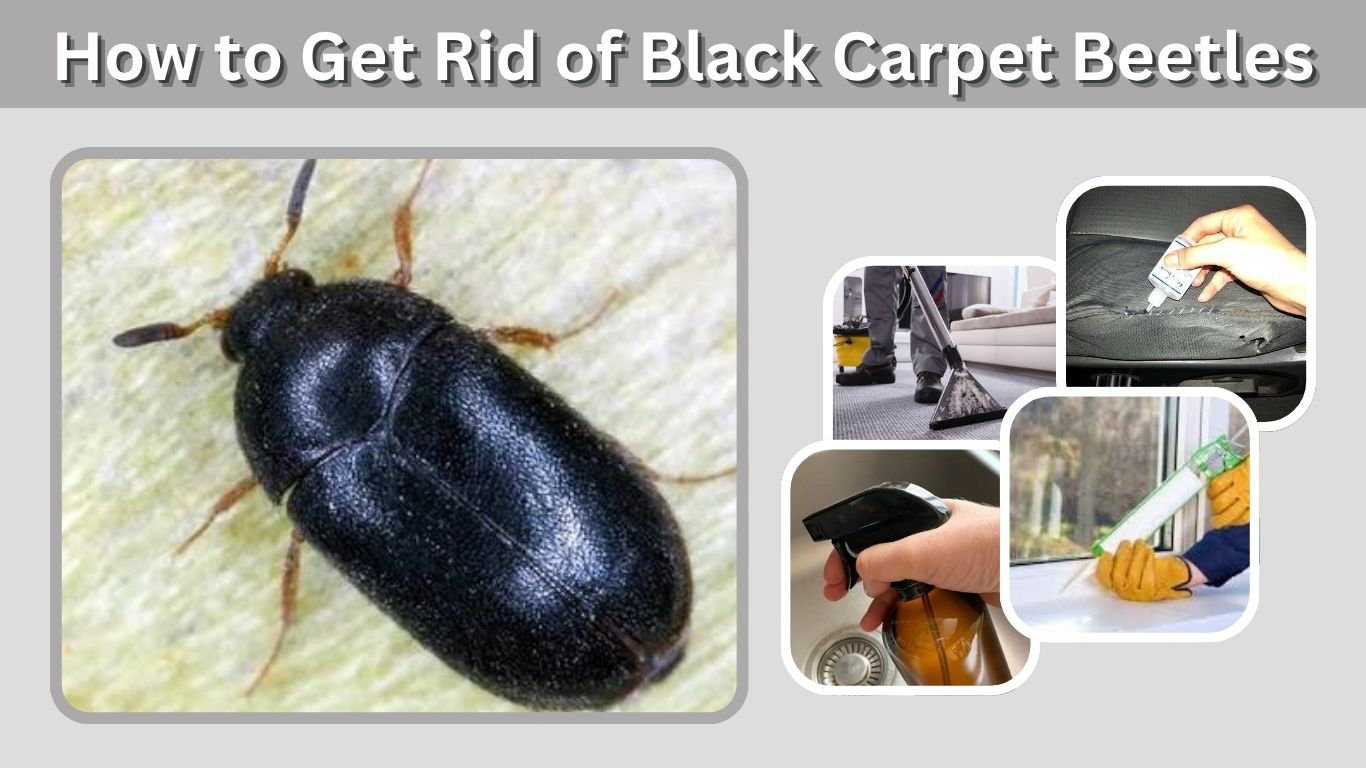
Black carpet beetles are small household pests that can damage carpets, clothing, furniture, and other natural-fiber materials. While adult beetles are generally harmless, their larvae feed on organic materials and can remain hidden for months. If you notice these insects around your home, taking action early can prevent a larger infestation. Fortunately, learning how to get rid of black carpet beetles does not always require harsh chemicals. Thorough cleaning, removing food sources, and protecting vulnerable fabrics can help eliminate existing populations and prevent them from returning.
How to Get Rid of Black Carpet Beetles in Your House
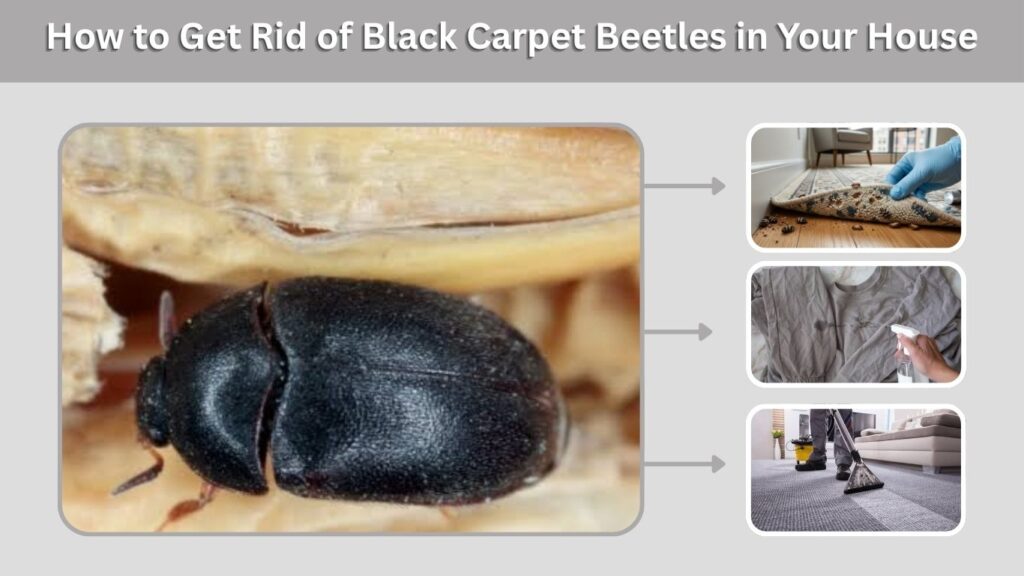
The most effective way to eliminate black carpet beetles is to locate their breeding areas and remove the materials supporting their larvae. Simply killing visible adults may not solve the problem because eggs and larvae often remain hidden. The following seven methods address different stages of infestation and help reduce the chances of beetles returning.
1. Identify and Locate Infested Areas
Before starting treatment, inspect areas where black carpet beetles commonly hide. Their larvae prefer dark, undisturbed spaces containing natural fibers or organic debris.
Check these locations:
- Carpets and rugs, especially near edges
- Closets containing wool clothing
- Upholstered furniture and cushions
- Under beds and heavy furniture
- Storage boxes and unused fabrics
- Attics and areas containing animal nests
Look for brown, hairy larvae, shed skins, and irregular fabric damage. Identifying the main infestation source makes subsequent cleaning more effective.
2. Vacuum Carpets and Furniture Thoroughly
Regular vacuuming is one of the most effective methods for controlling black carpet beetles. It removes larvae, eggs, adult insects, and organic debris that larvae use as food.
Focus on carpet edges, baseboards, furniture seams, and areas beneath heavy objects. Use a crevice attachment to reach narrow spaces where larvae may hide.
Vacuum frequently during an active infestation. Immediately empty the vacuum outdoors into a sealed bag to prevent surviving insects from escaping.
3. Wash and Clean Infested Fabrics
Black carpet beetle larvae commonly damage wool clothing, blankets, rugs, and upholstery. Cleaning affected fabrics helps eliminate insects at different developmental stages.
Wash suitable items in hot water according to their care labels. Delicate materials, particularly wool and silk, may require professional dry cleaning.
For valuable rugs and furniture, consider professional cleaning if home treatment could damage the fabric. Always inspect seams and hidden surfaces before returning items to storage.
4. Remove Larval Food Sources
Black carpet beetle larvae feed on materials such as animal hair, feathers, fur, wool, dead insects, and certain stored foods.
Removing these food sources makes your home less suitable for continued infestation.
Clean accumulated pet hair, lint, dead insects, and debris from hidden corners. Check for abandoned bird nests and animal remains in attics or wall spaces.
Dispose of heavily infested belongings that cannot be cleaned. Removing the original food source is especially important when beetles repeatedly appear after cleaning.
5. Store Clothing in Airtight Containers
Proper storage helps prevent black carpet beetles from reaching vulnerable fabrics. Wool sweaters, winter blankets, fur accessories, and natural-fiber items deserve particular attention.
Always clean clothing before storing it because food stains, perspiration, and organic residues can attract fabric pests.
Use airtight plastic containers or sealed garment bags to protect clean belongings. Avoid leaving wool clothing exposed in rarely used closets.
Inspect stored items periodically for larvae, shed skins, and damage.
6. Seal Windows and Entry Points
Adult black carpet beetles can fly into buildings through open windows, doors, and structural gaps. Preventing new adults from entering helps reduce the risk of reinfestation.
Repair damaged window screens and seal openings around door frames, vents, and windows.
Inspect cut flowers before bringing them indoors because adult carpet beetles often visit flowers outdoors.
Keeping entry points secure is particularly helpful during warmer months when adult beetles are more active.
7. Use Targeted Insecticide Treatments When Necessary
Persistent infestations may require insecticide treatment, especially when larvae develop inside inaccessible cracks or wall spaces.
Choose products specifically labeled for carpet beetle control and approved for the intended indoor location.
Apply treatments only according to the manufacturer’s instructions. Avoid spraying clothing, bedding, or other surfaces not listed on the product label.
Professional pest control is advisable when the infestation source cannot be located or insects continue appearing despite thorough cleaning.
How to Get Rid of Black Carpet Beetles Naturally
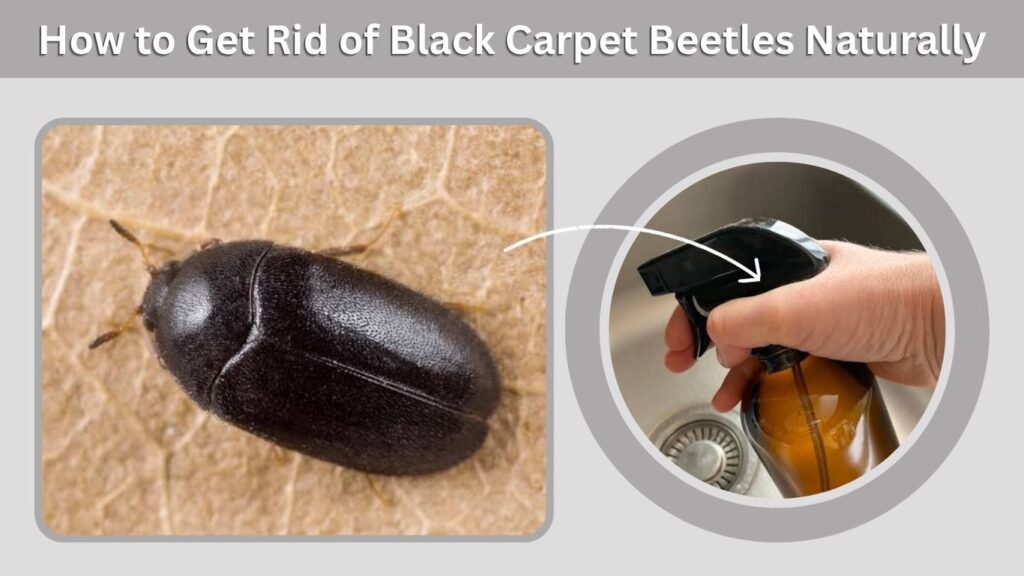
Natural control focuses on physically removing beetles and eliminating the conditions that support their development. These methods are often sufficient for minor infestations when the breeding source can be identified. Nonchemical control also reduces unnecessary pesticide exposure around household members and pets.
Vacuuming and Deep Cleaning
Vacuuming is one of the most reliable nonchemical control methods. Thoroughly cleaning carpets, furniture, closets, and baseboards removes beetles and the debris that supports their larvae.
Repeat cleaning as needed and pay attention to areas that are usually overlooked.
Freezing Small Infested Items
Certain small belongings can be treated through prolonged freezing when laundering is unsuitable.
The University of California IPM Program describes freezing suitable infested objects for approximately two weeks under sufficiently cold conditions. Items should be properly enclosed, and the treatment must be cold enough throughout.
Check whether freezing could damage delicate belongings before attempting this method.
Do Vinegar and Essential Oils Work?
Vinegar may help clean surfaces, but it is not a reliably established treatment for eliminating black carpet beetle eggs and larvae.
Similarly, essential oils should not be relied upon to eliminate an established infestation.
Removing infested materials, vacuuming, and laundering offer more dependable results than homemade repellent sprays.
How to Get Rid of Black Carpet Beetle Larvae
Eliminating larvae is essential because they cause most carpet beetle damage. Unlike adults, larvae usually remain hidden in dark locations and may continue feeding for extended periods. Successful larval control requires direct attention to their feeding areas rather than only treating visible beetles.
Start by checking carpets, natural-fiber clothing, upholstered furniture, and stored belongings. Remove any heavily infested material that cannot be cleaned.
Vacuum affected spaces thoroughly, paying special attention to corners and seams. Launder or dry-clean suitable fabrics and remove accumulated hair, lint, and other organic debris.
Continue inspecting treated areas because overlooked larvae may survive in concealed locations.
How to Get Rid of Black Carpet Beetles in Your Car
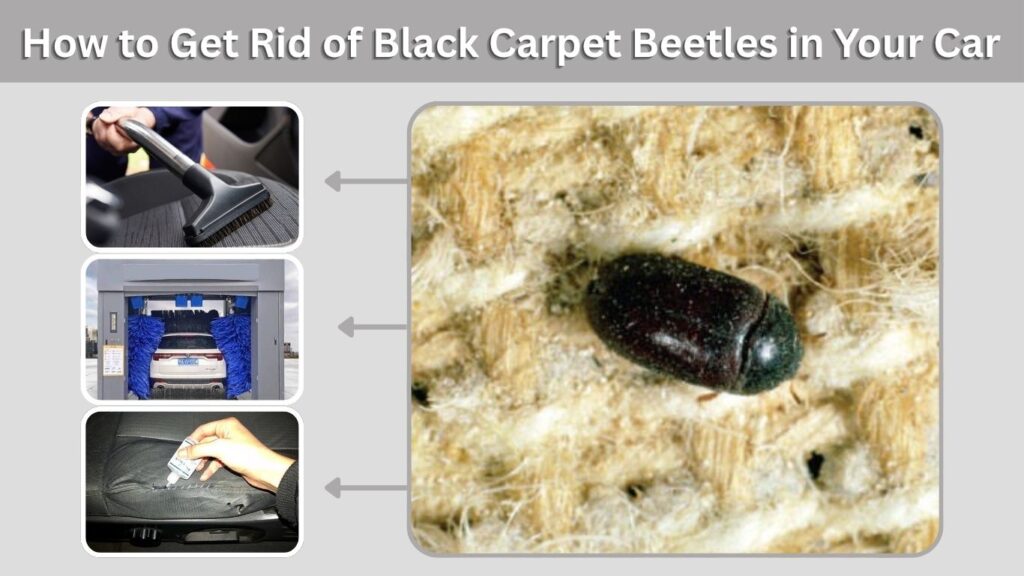
Black carpet beetles can also appear inside vehicles. They may arrive on infested belongings or enter through open windows. Vehicles containing pet hair, natural-fiber materials, and accumulated organic debris may provide food for developing larvae.
Cleaning Black Carpet Beetles From a Car
Remove floor mats, blankets, and other removable belongings before inspecting the interior.
Vacuum seats, upholstery seams, carpets, storage compartments, and the spaces beneath seats.
Clean or replace infested removable materials where necessary. Pay particular attention to pet hair and debris collecting along carpet edges.
Avoid applying household insecticides inside a vehicle unless the product label specifically permits automotive interior use.
How to Prevent Black Carpet Beetles From Coming Back
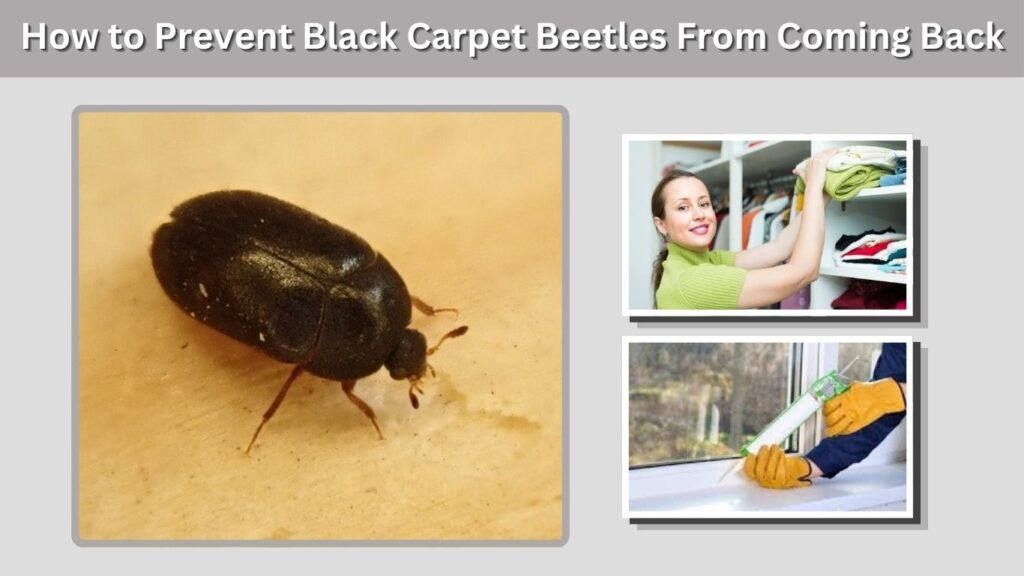
Long-term prevention depends on maintaining a clean environment and limiting access to natural-fiber materials. Even after successful treatment, adult beetles may occasionally enter from outdoors. Routine inspections help identify new activity before another infestation develops.
For ongoing prevention, maintain these habits:
- Vacuum carpets, upholstery, and hidden corners regularly.
- Store clean wool clothing in sealed containers.
- Inspect used furniture and rugs before bringing them indoors.
- Remove accumulated lint, pet hair, and dead insects.
- Repair window screens and seal structural gaps.
- Check stored foods and vulnerable fabrics periodically.
If beetles repeatedly appear in the same area, inspect nearby concealed spaces for overlooked breeding sources.
FAQs
1. What Is the Fastest Way to Get Rid of Black Carpet Beetles?
The fastest practical approach is to locate infested materials, vacuum thoroughly, and wash or dry-clean affected fabrics. Removing larvae and their food sources is more effective than simply killing adult beetles near windows.
2. Can You Get Rid of Black Carpet Beetles Permanently?
You can eliminate an existing infestation by removing its breeding source and thoroughly cleaning affected areas. However, new adult beetles may enter from outdoors, so continued prevention is necessary to reduce future problems.
3. How Long Does It Take to Get Rid of Black Carpet Beetles?
The time depends on infestation severity and how quickly hidden breeding areas are discovered. Minor problems may resolve after thorough cleaning, while extensive infestations can require repeated inspections and treatments over several weeks or longer.
4. Do Black Carpet Beetles Go Away on Their Own?
Occasional adult beetles may disappear naturally, but established infestations can persist while larvae have access to food. Removing suitable materials and cleaning hidden areas are important for preventing continued reproduction.
5. Do Black Carpet Beetles Bite Humans or Pets?
Black carpet beetles do not bite humans or pets. However, contact with larval hairs may cause skin irritation in some individuals. The insects are primarily household fabric and stored-material pests rather than blood-feeding parasites.
