
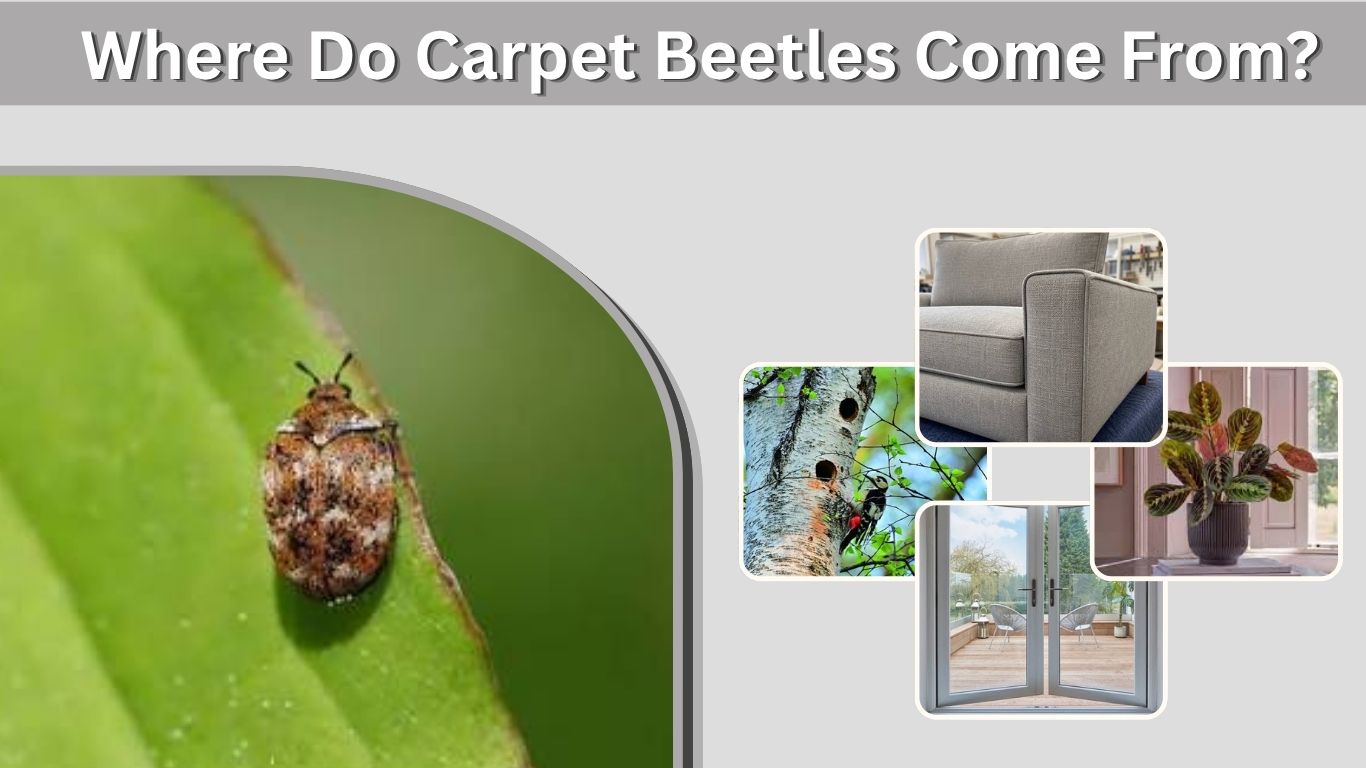
Carpet beetles usually come from outdoors, where adult beetles live around flowering plants and feed on pollen. They enter houses through open windows, doors, and small gaps or accidentally arrive on flowers, clothing, and furniture. Once inside, they lay eggs near materials their larvae can eat. Although these insects are small, their larvae can damage carpets, clothing, and upholstered furniture. Understanding where carpet beetles come from, where they hide, and what attracts them is the first step toward preventing an infestation.
Where Do Carpet Beetles Come From in Your House?
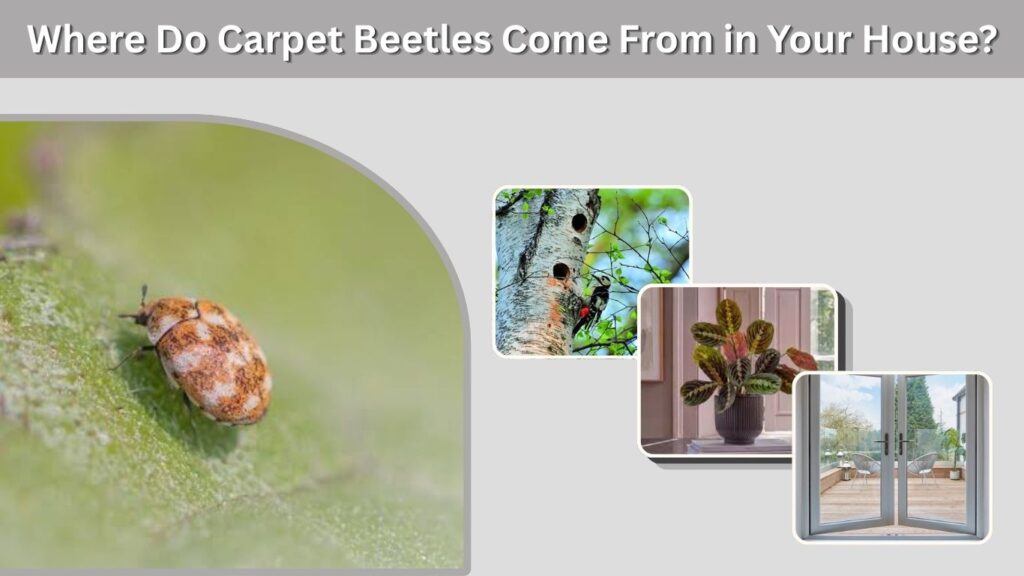
Carpet beetles naturally live outdoors, but several conditions can bring them into residential buildings. Adult beetles are capable of flying, while their larvae generally remain hidden in dark areas containing suitable food. Understanding their common entry routes and breeding sources can help homeowners identify why these insects keep appearing.
1. Open Windows and Doors
Adult carpet beetles frequently enter houses through open windows and doors, particularly during spring and summer. They can fly from nearby flowering plants into buildings while searching for suitable places to reproduce.
Damaged window screens, gaps around door frames, and uncovered vents also provide entry points. Adult beetles are attracted to light, which explains why homeowners often discover them near windowsills.
2. Flowers and Indoor Plants
Cut flowers are another common way carpet beetles enter homes. Adult beetles feed on pollen and may rest on flowers before being accidentally carried indoors.
Fresh bouquets, flowering branches, and decorative floral arrangements can introduce beetles into living spaces. Inspecting outdoor flowers before bringing them inside helps reduce this risk.
3. Secondhand Furniture and Carpets
Used furniture, antique rugs, and stored clothing can introduce carpet beetles into an otherwise pest-free home.
Their eggs and larvae may already be hiding within wool carpets, upholstered furniture, or fabric seams. Once these belongings enter the house, existing larvae may continue feeding while surviving adults reproduce.
Always inspect secondhand textiles and furniture before bringing them indoors.
4. Bird Nests and Other Animal Nests
Bird nests around roofs, attics, chimneys, and ventilation openings can support carpet beetle populations.
These nests often contain feathers, hair, and dead insects that provide food for developing larvae. Old rodent nests, abandoned wasp nests, and accumulated animal debris can create similar conditions.
Beetles originating from these areas may eventually move into nearby rooms.
5. Pet Hair and Household Debris
Carpet beetle larvae feed on animal-derived materials, including hair, fur, feathers, and dead insects.
Pet hair collecting beneath furniture, along baseboards, or inside rarely cleaned corners can become a food source.
These materials do not necessarily introduce beetles from outdoors. However, they can help an existing population survive and reproduce inside the house.
6. Stored Clothing and Fabrics
Closets and storage containers sometimes contain carpet beetle eggs or larvae, especially when clothing has been stored without cleaning.
Wool sweaters, blankets, fur accessories, and natural-fiber rugs are particularly vulnerable.
Carpet beetle larvae prefer dark, undisturbed environments, so infrequently opened storage spaces can allow infestations to develop unnoticed.
7. Stored Food and Organic Materials
Certain carpet beetle species can develop in stored dry products, including grains, seeds, cereals, and dried pet food.
Spilled food, dead insects, and other organic material in cupboards or storage rooms can also support larvae.
Infested products may introduce carpet beetles into a home, while accessible food sources can help an established infestation spread.
Where Do Carpet Beetle Larvae Come From?
Carpet beetle larvae develop from eggs laid by adult female beetles. They do not appear spontaneously in carpets, mattresses, or furniture. Adults select locations where newly hatched larvae will have access to food and protection. Because the eggs are tiny and usually concealed, homeowners often notice the larvae before realizing adult beetles have reproduced indoors.
Where Female Carpet Beetles Lay Eggs
Females commonly deposit eggs in protected places, including:
- Wool carpets and rugs
- Upholstered furniture
- Closets containing natural fabrics
- Cracks along baseboards
- Accumulations of pet hair and lint
- Bird nests and concealed wall spaces
Under favorable indoor conditions, eggs can hatch in approximately one to two weeks, although the timing varies by species and temperature.
Why Carpet Beetle Larvae Stay Hidden
Carpet beetle larvae generally avoid bright light and prefer secluded environments.
They often remain beneath furniture, inside carpet edges, behind baseboards, or within stored fabrics. They can survive for months while feeding on available materials.
Their development can be prolonged, which explains why an infestation may continue even when few adult beetles are visible.
Where Do Different Types of Carpet Beetles Come From?
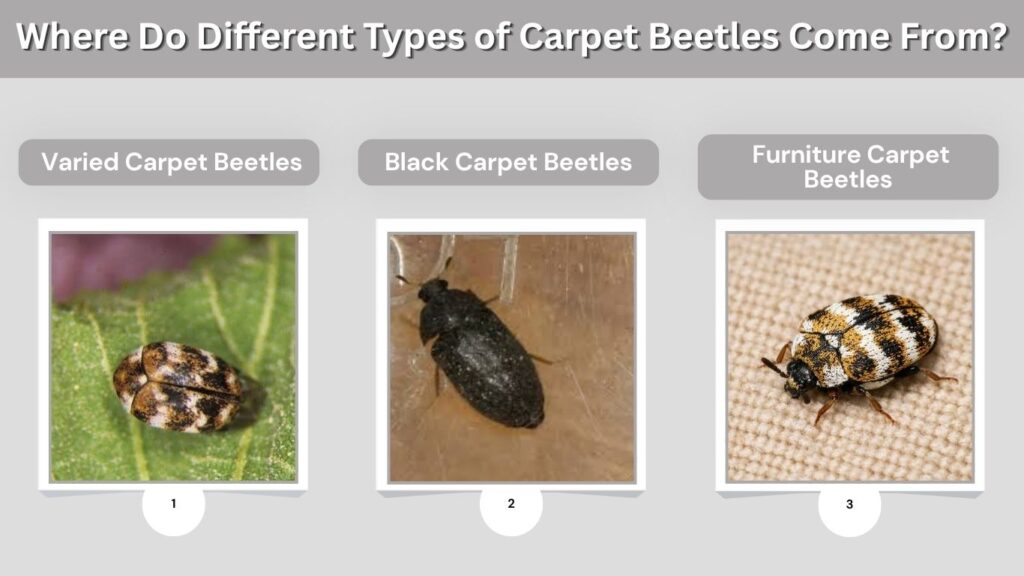
Several carpet beetle species commonly enter houses. Although their appearances differ, many share similar entry routes and feeding habits. Recognizing the species may help homeowners identify likely breeding areas and understand which household materials are at risk.
Where Do Varied Carpet Beetles Come From?
Varied carpet beetles (Anthrenus verbasci) commonly originate from outdoor flowers, bird nests, and areas containing dead insects.
Adults have small, rounded bodies with mottled white, brown, and yellowish markings.
Once indoors, females may lay eggs near wool, feathers, fur, and organic debris. Their hairy larvae often remain concealed beneath furniture or along carpet edges.
Where Do Black Carpet Beetles Come From?
Black carpet beetles (Attagenus unicolor) can enter buildings through openings or arrive with infested materials.
Adults are usually dark brown or black, with elongated oval bodies.
Their larvae feed on natural fibers and various dried organic products. Storage areas, closets, carpets, and locations containing accumulated animal debris may provide favorable breeding conditions.
Where Do Furniture Carpet Beetles Come From?
Furniture carpet beetles (Anthrenus flavipes) occur outdoors but may establish populations inside houses.
They can enter through windows or arrive on infested fabrics and furnishings.
Their larvae feed on animal-derived materials commonly found in upholstery, wool carpeting, stored garments, and other household belongings.
How to Find Where Carpet Beetles Are Coming From
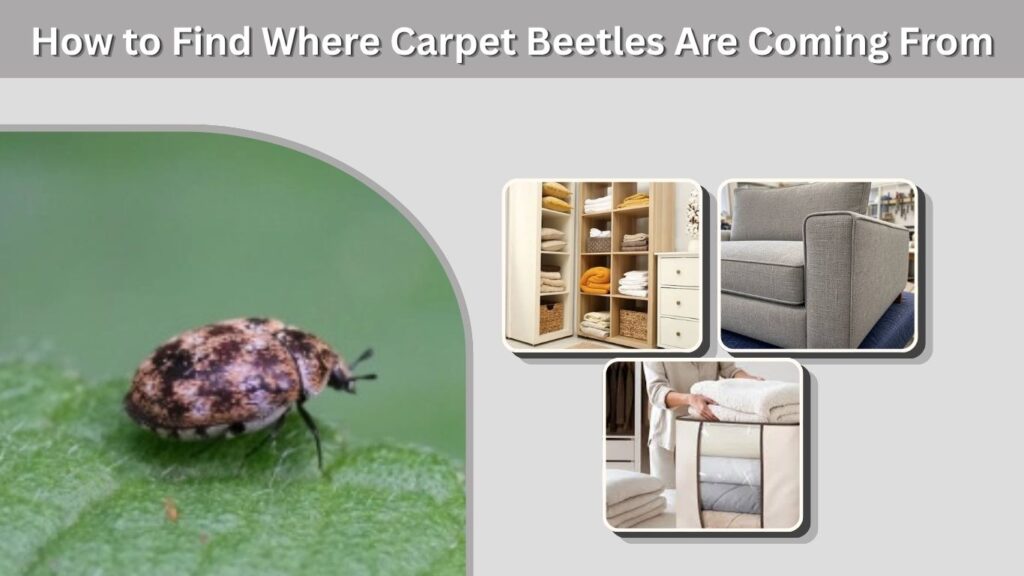
Finding the original infestation source is essential for successful carpet beetle control. Adult beetles near windows do not always indicate where larvae are developing. The most useful approach is to inspect concealed places containing animal fibers, lint, or other suitable food materials.
Check these locations carefully:
- Carpet edges: Look beneath rugs and along baseboards.
- Furniture: Examine upholstery seams, cushions, and hidden undersides.
- Closets: Inspect wool clothing, blankets, and stored fabrics.
- Bedrooms: Check beneath beds and around accumulated dust or pet hair.
- Attics: Look for old bird nests, dead insects, or animal remains.
- Storage areas: Examine dried pet food, grains, and long-unused belongings.
Common infestation signs include hairy larvae, shed larval skins, irregular holes in natural fabrics, and repeated sightings of adult beetles.
A single adult beetle does not necessarily mean an infestation exists.
How to Prevent Carpet Beetles From Entering Your Home
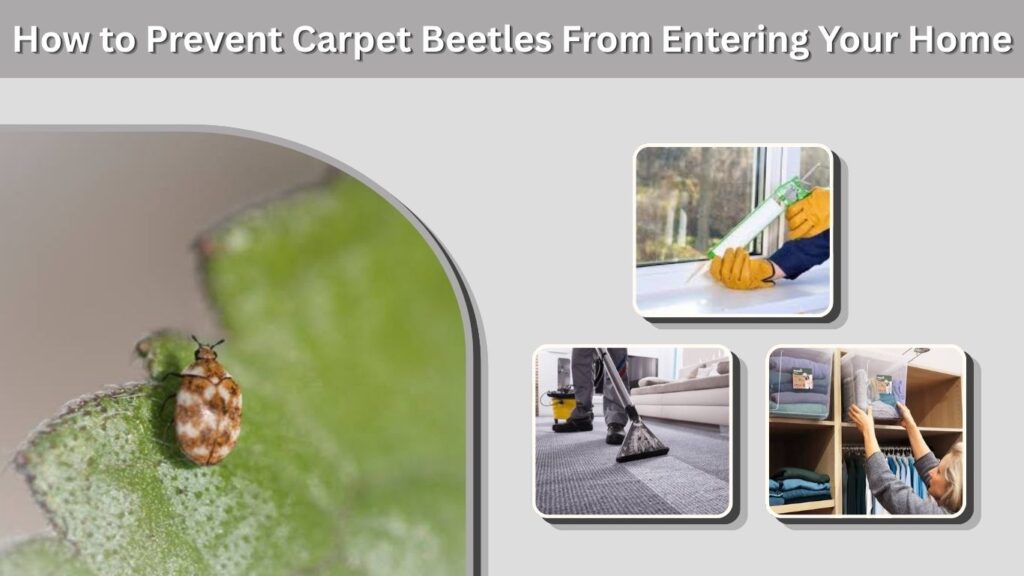
Preventing carpet beetles requires limiting their entry routes and removing materials that support larval development. Regular cleaning is particularly important because larvae can survive in locations that are rarely disturbed. Combining household maintenance with careful storage provides better protection than relying on insecticides alone.
Effective Prevention Methods
- Seal entry points: Repair window screens and close gaps around doors, vents, and windows.
- Vacuum regularly: Clean carpets, furniture, baseboards, and hard-to-reach corners.
- Inspect flowers: Check cut flowers for adult beetles before bringing them indoors.
- Store clothing correctly: Clean wool garments and keep vulnerable fabrics in airtight containers.
- Remove food sources: Eliminate accumulated pet hair, lint, dead insects, and organic debris.
- Check stored products: Inspect pet food, grains, and other susceptible dry goods.
- Inspect potential nesting sites: Have abandoned nests and animal remains safely removed when appropriate.
If larvae are discovered, thoroughly clean affected areas and wash suitable fabrics according to their care instructions. Professional pest control may be necessary when the infestation source remains inaccessible.
Do Carpet Beetles Come From Dirty Houses?
Carpet beetles can appear in clean and dirty houses alike. Their presence does not automatically indicate poor hygiene.
Adult beetles may enter an extremely clean home through an open window or arrive on freshly purchased flowers.
However, neglected cleaning can increase infestation risk because accumulated hair, lint, and dead insects provide food for larvae.
Regular maintenance reduces suitable feeding areas but cannot completely prevent occasional adult beetles from entering.
FAQs
1. Why Are Carpet Beetles Suddenly Appearing in My House?
A sudden increase in visible beetles may occur when adults emerge from hidden indoor breeding areas. Seasonal outdoor activity can also bring more beetles through windows and doors, particularly during spring and summer.
2. Where Do Carpet Beetles Come From in Bedrooms?
Bedroom infestations may originate from wool blankets, carpets, upholstered furniture, stored clothing, or pet hair beneath beds. Adult beetles may also enter through bedroom windows and subsequently lay eggs in suitable hidden locations.
3. Where Do Carpet Beetles Come From in Cars?
Carpet beetles may enter cars through open windows or arrive on infested belongings, blankets, and upholstery. Larvae may survive where natural fibers, accumulated pet hair, or other suitable organic debris provide food.
4. Can Carpet Beetles Come From Outside?
Yes. Adult carpet beetles naturally occur outdoors, particularly around flowering plants. They can fly into homes through windows, doors, vents, and other openings or be carried inside on cut flowers.
5. Do Carpet Beetles Go Away on Their Own?
Occasional adult beetles may disappear without establishing an infestation. However, populations with developing larvae can persist when suitable food remains available. Removing infested materials and cleaning breeding areas are important for lasting control.
