
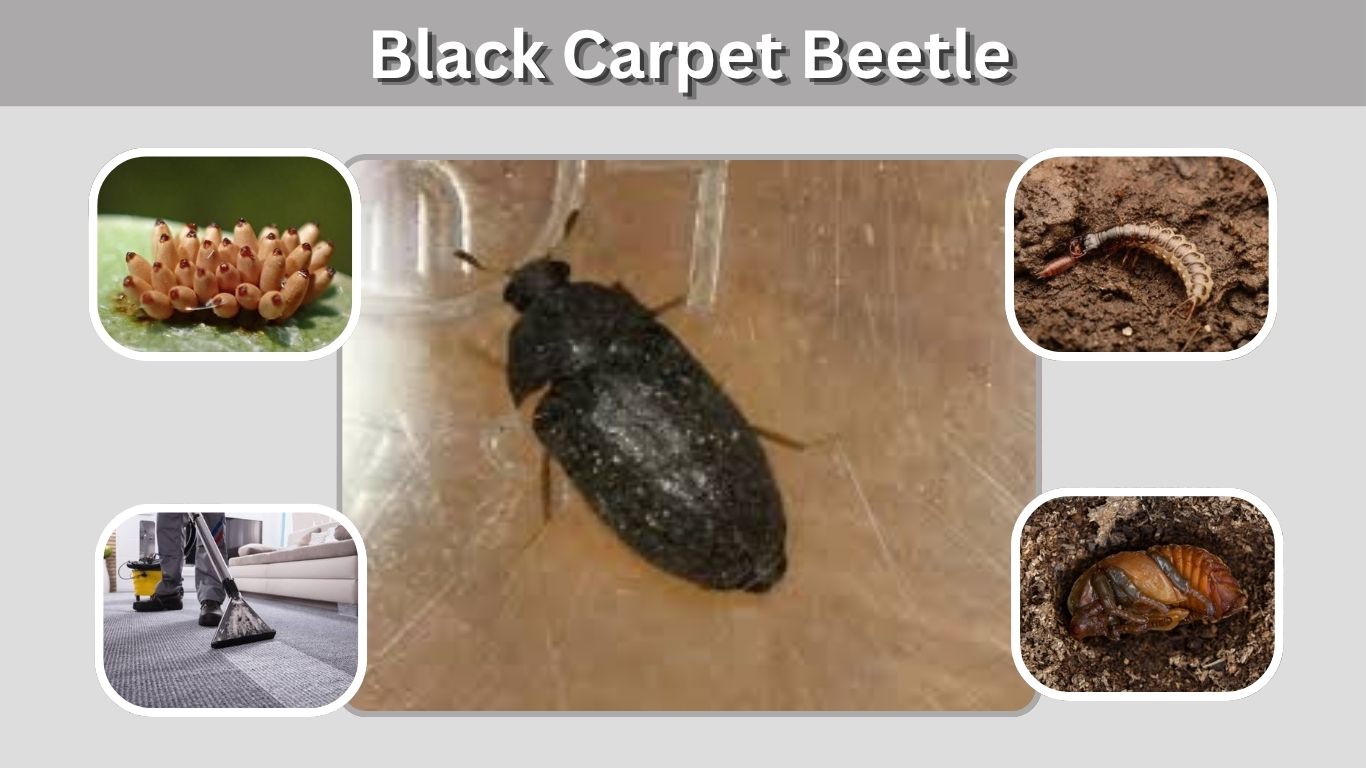
The black carpet beetle (Attagenus unicolor) is a small household pest that can damage carpets, clothing, furniture, and stored materials. Although adult beetles are generally harmless, their larvae feed on natural fibers and organic debris, sometimes causing significant damage before anyone notices them. These insects often hide in dark, undisturbed areas, making infestations difficult to detect. Understanding what black carpet beetles look like, where they come from, and how to eliminate them can help you protect your home and prevent recurring infestations.
What Is a Black Carpet Beetle?
The black carpet beetle is a species of dermestid beetle found in homes, storage buildings, and outdoor environments. It belongs to the family Dermestidae and is widely distributed across North America and other regions. Its appearance changes significantly between the adult and larval stages, so identifying both forms is essential.
Adult Black Carpet Beetle Identification
Adult black carpet beetles typically measure 3–5 mm long. Their bodies are oval, slightly elongated, and usually dark brown to black.
Important identification features include:
- Color: Dark brown, reddish-brown, or black.
- Shape: Smooth-looking, elongated oval body.
- Size: Approximately 3–5 mm long.
- Wings: Functional wings that allow adults to fly.
- Antennae: Short antennae with enlarged tips.
Adults are frequently discovered near windows because they are attracted to light.
What Do Black Carpet Beetle Larvae Look Like?
Black carpet beetle larvae look quite different from adults. They have elongated, carrot-shaped bodies covered with short brown hairs.
Mature larvae can reach approximately 7–13 mm, depending on the population and conditions.
Their most recognizable feature is a distinctive tuft of long hairs at the rear of the body. Unlike adults, larvae avoid bright light and prefer hidden locations beneath furniture, inside carpets, or within stored fabrics.
Black Carpet Beetle Life Cycle
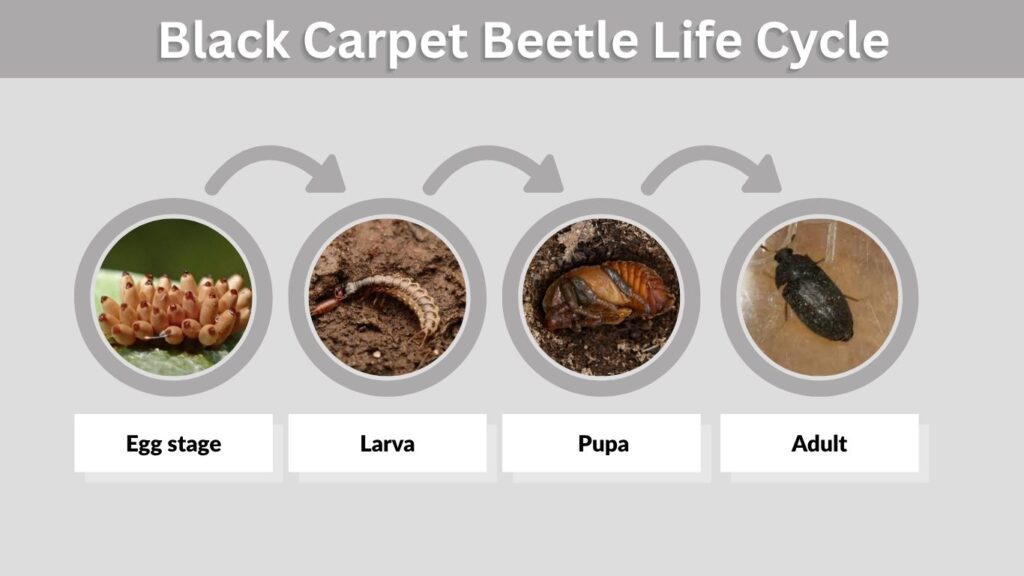
Black carpet beetles undergo complete metamorphosis, passing through four developmental stages. The length of their life cycle depends on temperature, food availability, and environmental conditions. Understanding these stages helps explain why infestations can persist for months and why removing adult beetles alone is rarely enough.
Four Stages of Development
- Egg: Female beetles deposit tiny, whitish eggs near suitable food sources. Eggs generally hatch within one to two weeks.
- Larva: Newly hatched larvae begin feeding on organic materials. This damaging stage may last several months or longer.
- Pupa: Mature larvae transform into pupae, often within their final shed larval skin.
- Adult: Adult beetles emerge, reproduce, and may fly outdoors to feed on pollen and nectar.
Larvae cause most household damage because they spend considerable time feeding before becoming adults.
Where Do Black Carpet Beetles Come From?
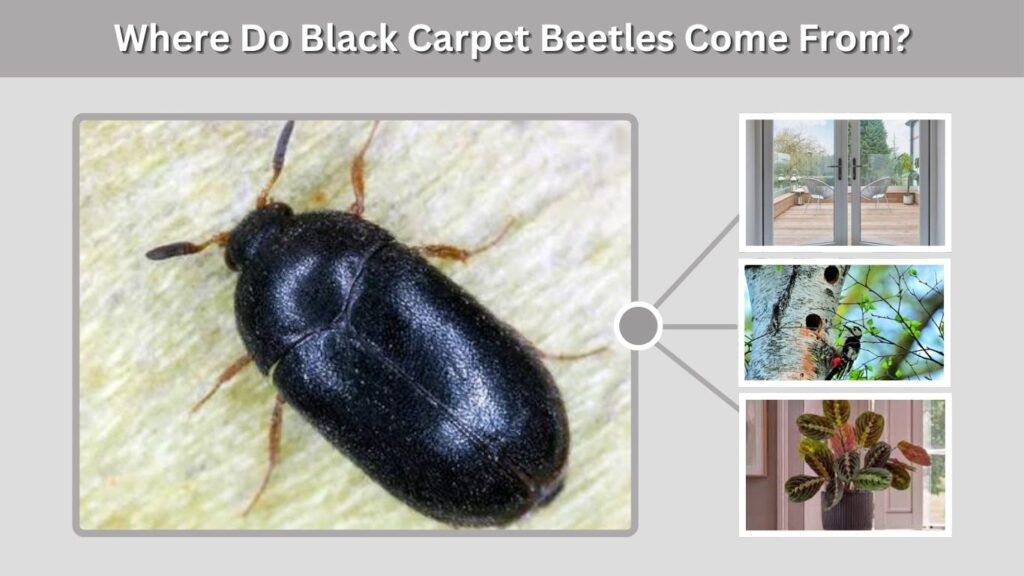
Black carpet beetles commonly originate outdoors or arrive inside houses through infested belongings. Adults can fly through open windows, damaged screens, and other structural openings. Once inside, female beetles search for concealed areas with enough food to support developing larvae.
Common Sources Inside Homes
Black carpet beetles may enter or develop in several locations:
- Windows and doors: Flying adults enter through openings.
- Cut flowers: Beetles may accidentally arrive on flowering plants.
- Used furniture: Upholstery and rugs can contain larvae.
- Bird nests: Feathers and animal debris provide food.
- Storage areas: Wool clothing, blankets, and organic materials support larvae.
Finding adult beetles near a window does not necessarily mean the infestation originates there. Hidden larvae may be developing elsewhere in the building.
What Do Black Carpet Beetles Eat?
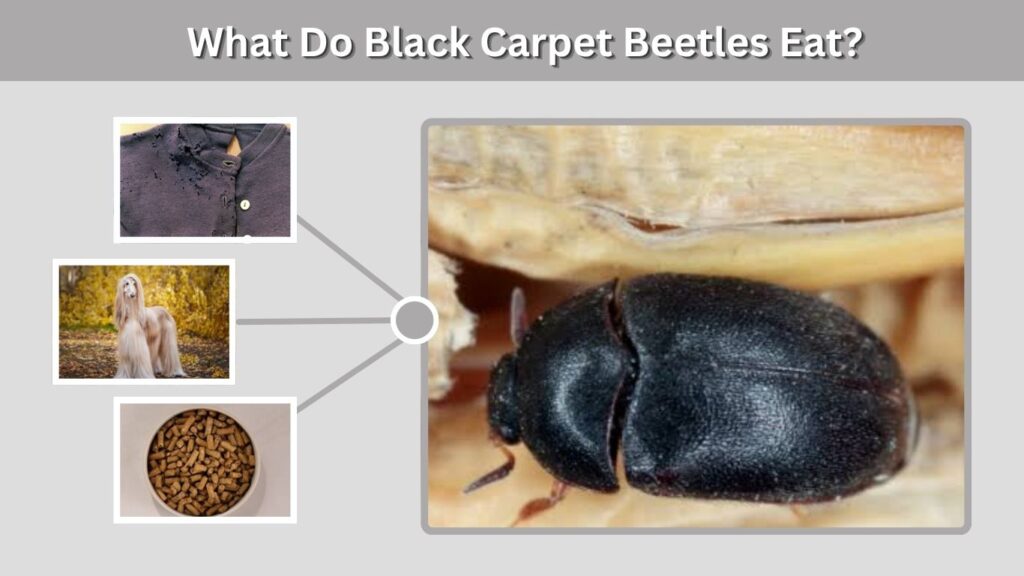
Black carpet beetle larvae feed on many dried animal and plant materials. They particularly favor substances containing animal proteins, although they can also infest certain stored foods. Adult beetles generally feed on pollen and nectar rather than household fabrics.
Common Food Sources
- Wool carpets and clothing
- Animal fur, hair, and feathers
- Leather and silk products
- Dead insects and animal remains
- Dried pet food
- Stored grains, cereals, and seeds
Clean synthetic fabrics are generally less attractive, although blended or soiled materials may still become infested.
Signs of a Black Carpet Beetle Infestation
Black carpet beetle infestations often develop unnoticed because larvae prefer dark, protected environments. Damage to fabrics may become visible before the insects themselves are discovered. Early identification allows homeowners to locate feeding areas and prevent further destruction.
Common Signs to Look For
Irregular holes in fabrics: Larvae may chew uneven holes in wool clothing, carpets, blankets, and upholstery.
Shed larval skins: As larvae grow, they shed their outer coverings, leaving brownish, hairy skins behind.
Tiny beetles near windows: Adults frequently gather around windowsills and other bright areas.
Larvae beneath furniture: Dark corners, carpet edges, and storage boxes may contain actively feeding larvae.
Fine debris: Small fecal pellets and accumulated insect remains can occur near infested materials.
Do Black Carpet Beetles Bite or Harm Humans?
Black carpet beetles do not bite or sting people. They are not blood-feeding insects and are not known to transmit diseases through bites. Their primary importance is the damage larvae can cause to household materials.
Can Black Carpet Beetles Cause Skin Reactions?
Although they do not bite, some people develop skin irritation after contacting larval hairs, shed skins, or insect fragments.
Possible reactions include itching, redness, and small irritated bumps.
These symptoms can resemble insect bites, but their appearance alone cannot confirm carpet beetle exposure.
Persistent or severe skin reactions should be evaluated by a healthcare professional to rule out other causes.
How to Get Rid of Black Carpet Beetles
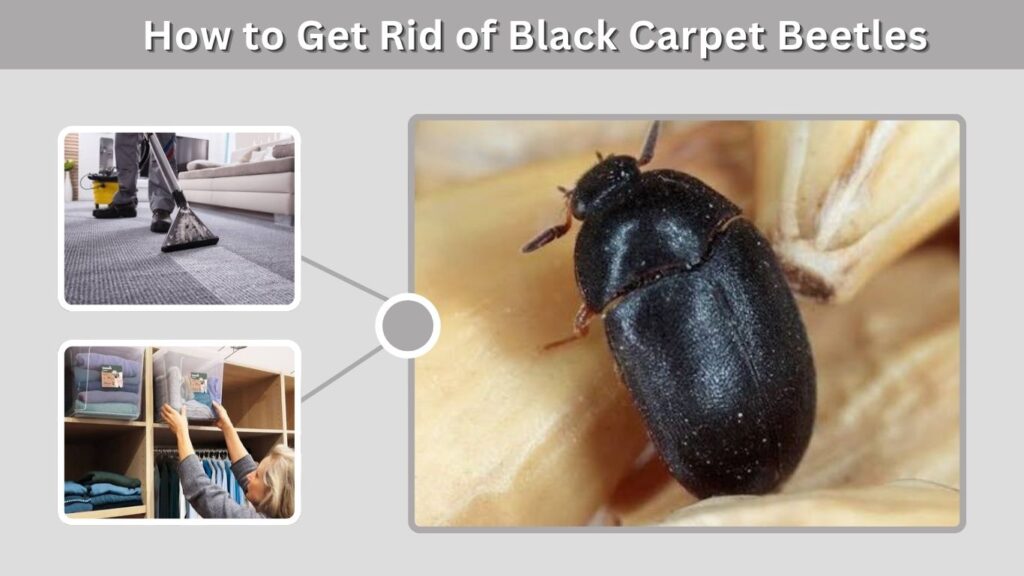
Effective black carpet beetle control begins with locating the source of infestation. Cleaning only visible beetles is insufficient because eggs and larvae may remain hidden. Combining careful inspection, thorough sanitation, and appropriate storage methods is generally the most effective approach.
1. Locate Infested Areas
Inspect wool carpets, closets, upholstered furniture, storage containers, and carpet edges. Look for live larvae, shed skins, and damaged materials.
2. Vacuum Thoroughly
Vacuum beneath furniture, along baseboards, inside closets, and around carpeting. Dispose of collected debris promptly in a sealed bag outside the home.
3. Clean Affected Fabrics
Wash suitable clothing and washable fabrics in hot water when their care labels permit. Dry cleaning is another option for delicate materials.
4. Remove Infested Materials
Discard severely damaged items that cannot be adequately cleaned. Remove accumulated lint, pet hair, dead insects, and other potential larval food sources.
5. Seal Entry Points
Repair window screens, seal structural gaps, and check openings around doors and vents. Inspect cut flowers before bringing them indoors.
6. Consider Professional Treatment
Persistent infestations may require targeted treatment by a pest control professional. Use only products specifically labeled for the intended area and pest. Never spray insecticides directly onto bedding or clothing.
Black Carpet Beetle vs. Bed Bug
Black carpet beetles are sometimes confused with bed bugs, particularly when homeowners discover small insects in bedrooms. However, these insects have different appearances, feeding habits, and household impacts.
| Feature | Black Carpet Beetle | Bed Bug |
| Body | Oval, often dark | Broad, flat, reddish-brown |
| Flight | Adults can fly | Cannot fly |
| Food | Organic materials | Blood |
| Human bites | No | Yes |
| Main concern | Fabric damage | Bites and infestation |
Unlike bed bugs, black carpet beetles do not seek out people for blood meals.
FAQs
1. Are Black Carpet Beetles Dangerous?
Black carpet beetles are not considered dangerous to humans. They do not bite or sting, but larvae can damage natural fabrics and stored goods. Some individuals may also experience skin irritation from contact with larval hairs.
2. Can Black Carpet Beetles Fly?
Yes, adult black carpet beetles have functional wings and can fly. They may enter houses through windows, doors, and vents. Their larvae cannot fly and usually remain concealed near food sources.
3. Why Are Black Carpet Beetles in My House?
Black carpet beetles may enter through structural openings or arrive on flowers and infested belongings. They can reproduce indoors when suitable food sources, including wool, pet hair, or organic debris, are available.
4. Can Black Carpet Beetles Live in Beds?
Black carpet beetle larvae may occur around beds when blankets, natural fibers, accumulated hair, or other suitable materials provide food. However, they do not feed on human blood or live like bed bugs.
5. How Long Do Black Carpet Beetles Live?
Their lifespan varies with environmental conditions. Larval development may last several months to nearly two years, while adult longevity also varies. Temperature and food availability influence how quickly the complete life cycle progresses.
