
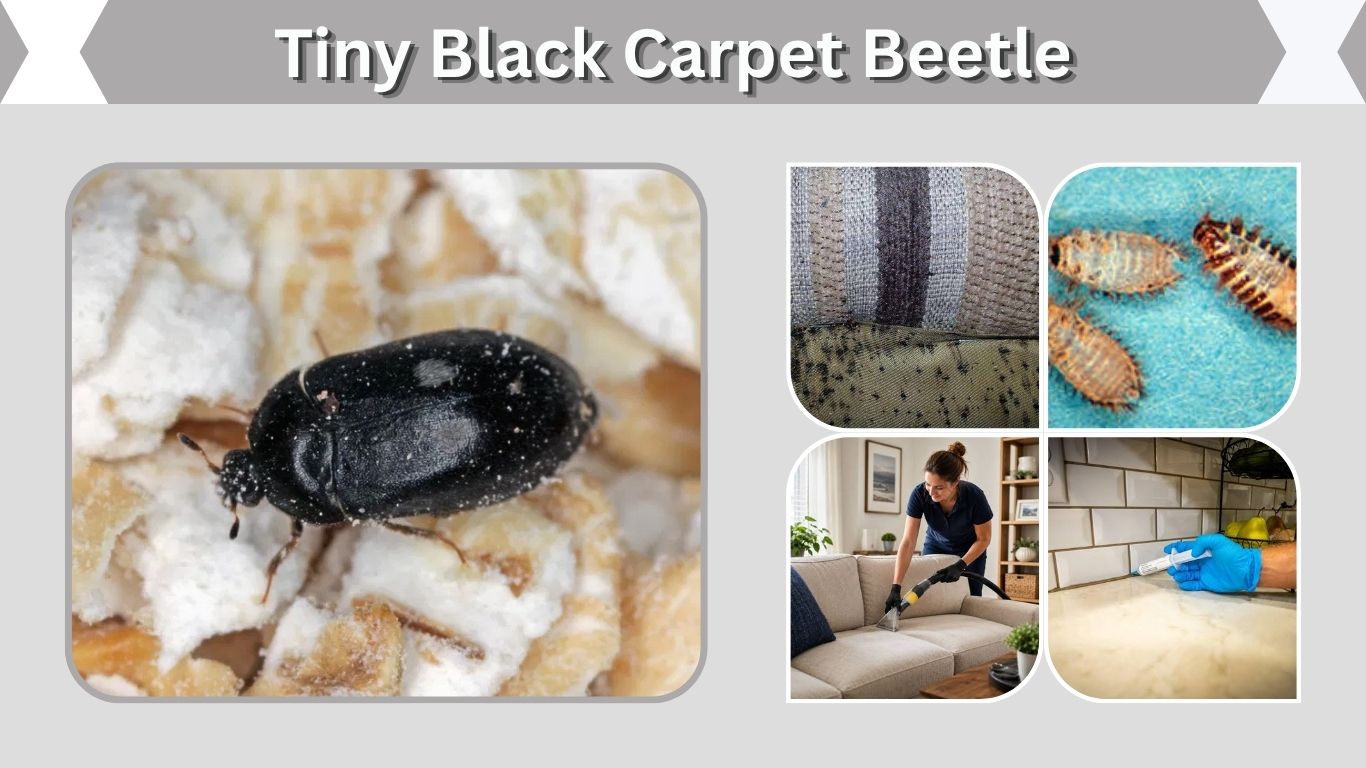
Tiny black carpet beetles are small household insects that often appear near windows, carpets, furniture, and storage areas. Their dark, oval bodies and hard outer shells can make them resemble miniature ladybugs or other small beetles. Although adult carpet beetles are generally harmless, their larvae may damage clothing, carpets, and natural-fiber materials. Finding one or two beetles does not necessarily mean your home is infested. However, understanding their appearance, where they come from, and how to identify infestation signs can help you prevent household damage.
What Is a Tiny Black Carpet Beetle?
The black carpet beetle (Attagenus unicolor) belongs to the family Dermestidae. It is a common household pest whose larvae feed on various animal-derived materials. Adult beetles are small enough to go unnoticed until they appear on windowsills or light-colored surfaces. Their appearance is different from the hairy larvae responsible for most household damage.
What Does a Tiny Black Carpet Beetle Look Like?
Adult black carpet beetles have a dark, slightly elongated oval body with a hard outer covering.
Common identification features include:
- Color: Black, dark brown, or occasionally reddish-brown.
- Size: Usually 3–5 millimeters long.
- Shape: Elongated oval rather than perfectly round.
- Shell: Hard wing covers with a smooth-looking surface.
- Legs: Six small legs, often brownish.
- Wings: Adults can fly between locations.
These characteristics help distinguish black carpet beetles from other small household insects.
Tiny Black Ladybug-Looking Bug With White Spots
A tiny black beetle with white, brown, or yellowish spots may actually be a varied carpet beetle (Anthrenus verbasci).
Varied carpet beetles have rounded bodies covered with patterned scales. They often resemble miniature ladybugs, although they are considerably smaller.
True black carpet beetles typically have more uniformly dark bodies without obvious white markings.
Older varied carpet beetles can lose their scales and appear darker, making identification more difficult.
Where Do Tiny Black Carpet Beetles Come From?
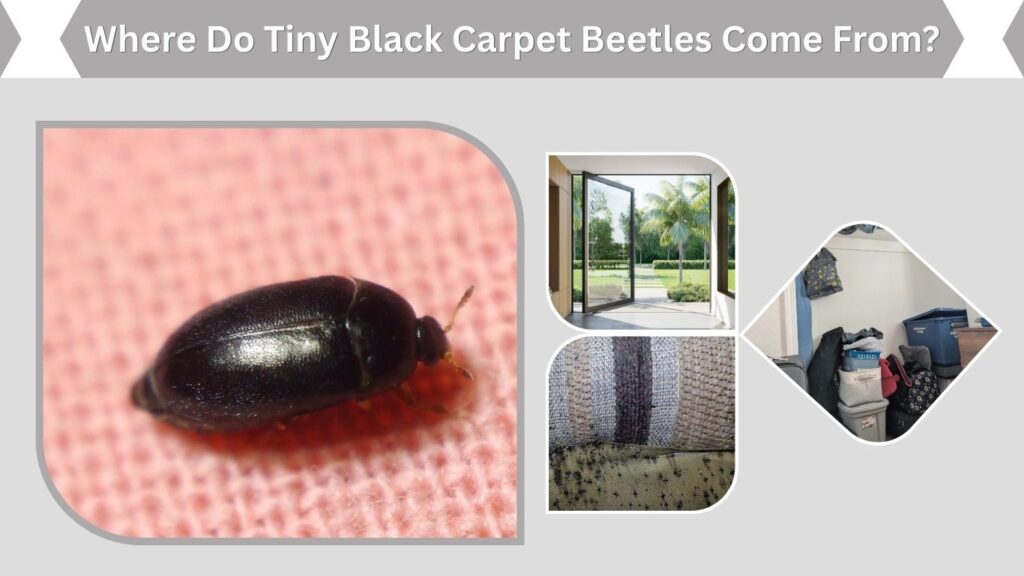
Tiny black carpet beetles often originate outdoors, where adults may visit flowers. They can enter buildings through open windows, doors, and small structural gaps. However, some infestations begin when contaminated belongings are brought indoors. Understanding these routes helps identify why small black beetles suddenly appear around the house.
Entry Through Windows and Doors
Adult carpet beetles are capable of flying and may enter through damaged screens or open windows.
They are attracted to light, which explains why homeowners frequently discover tiny black beetles on windowsills.
Finding several adults near a window may indicate outdoor entry or adults emerging from an indoor breeding area.
Infested Furniture and Clothing
Secondhand furniture, wool rugs, stored blankets, and clothing can accidentally introduce carpet beetle larvae into homes.
Their eggs and larvae are difficult to notice because they remain concealed within fabrics, seams, and storage spaces.
Hidden Organic Materials
Accumulated pet hair, feathers, dead insects, and animal remains can support developing larvae.
Bird nests, abandoned animal nests, and rarely cleaned storage areas may also harbor carpet beetles.
What Do Tiny Black Carpet Beetle Larvae Look Like?
Black carpet beetle larvae look completely different from adult beetles. Their elongated bodies are usually golden-brown to dark brown and covered with small hairs. Mature larvae can grow significantly longer than adults, making them easier to notice when they move across carpets or furniture.
Identifying Black Carpet Beetle Larvae
The larvae have carrot-shaped bodies that taper toward the rear.
A distinctive tuft of longer hairs extends from the back of the body. Their segmented appearance and brown coloration distinguish them from the smooth, hard-shelled adults.
Larvae usually avoid bright light and hide beneath furniture, inside storage areas, and along carpet edges.
What Damage Do the Larvae Cause?
Black carpet beetle larvae consume natural materials containing animal proteins.
They may damage:
- Wool carpets and rugs
- Fur and feather products
- Silk and natural-fiber clothing
- Upholstered furniture
- Stored animal-derived materials
They can also feed on certain dried stored products. Clean synthetic fibers generally do not provide suitable nutrition.
Signs of Tiny Black Carpet Beetles in Your House
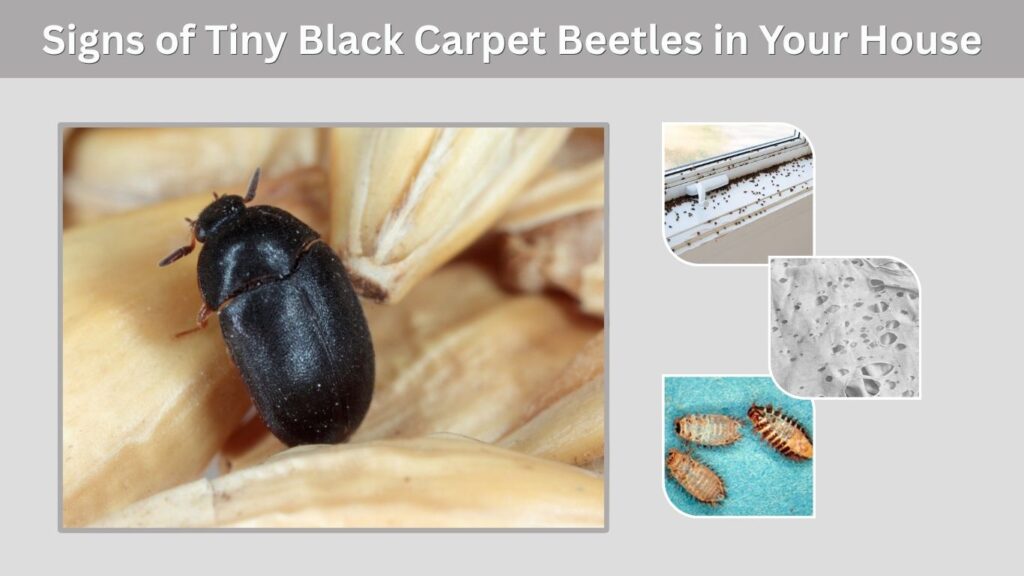
Recognizing infestation signs is important because adult beetles are not responsible for most fabric damage. Larvae may remain concealed for months while feeding on organic materials. Homeowners often discover damaged clothing or shed larval skins before finding the insects themselves.
Common Signs of Infestation
1. Small Beetles Near Windows
Adult carpet beetles frequently collect on windowsills because they are attracted to light.
2. Hairy Larvae in Hidden Areas
Look beneath carpets, furniture, beds, and storage containers for brown, elongated larvae.
3. Irregular Holes in Fabrics
Larvae may create uneven patches of damage in wool clothing, rugs, and upholstery.
4. Shed Larval Skins
Brownish, empty skins near carpets or clothing indicate previous larval development.
5. Debris Around Feeding Sites
Small fecal pellets and damaged natural fibers may accumulate near infested materials.
Tiny Black Carpet Beetle vs. Other Small Black Bugs
Not every tiny black insect found indoors is a carpet beetle. Several household pests have similar sizes or dark coloration. Comparing body shape, movement, and feeding habits can help narrow down identification before selecting a treatment method.
| Insect | Main Identification Feature |
| Black carpet beetle | Small, elongated oval, dark body |
| Varied carpet beetle | Round, mottled white and brown markings |
| Bed bug | Broad, flattened, reddish-brown body |
| Flea | Narrow body, jumps, feeds on blood |
| Pantry beetle | Small, oval or cylindrical, often found in stored foods |
A magnifying glass or clear close-up photograph can help identify uncertain specimens.
How to Get Rid of Tiny Black Carpet Beetles
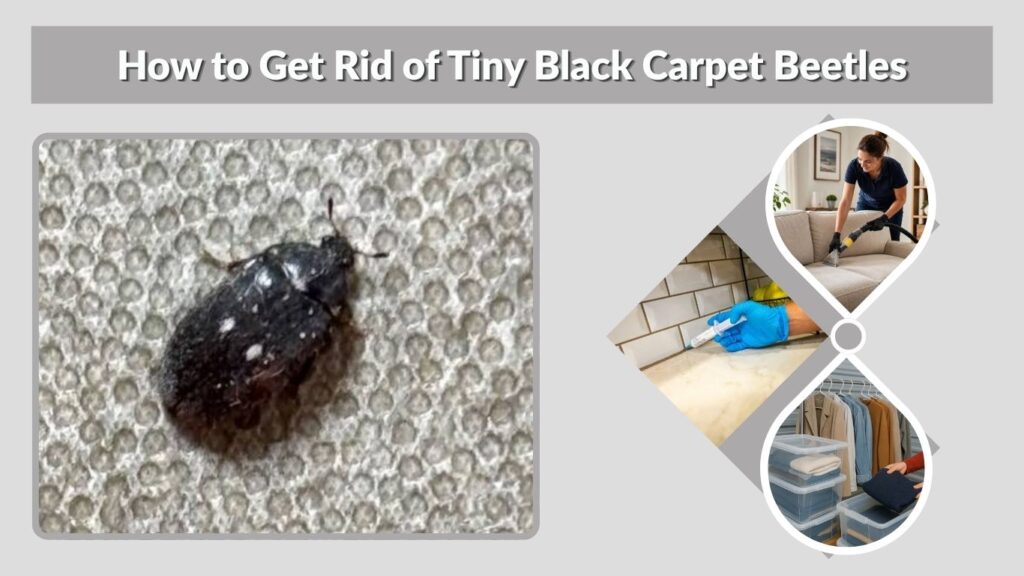
Getting rid of tiny black carpet beetles requires finding the source of the infestation and eliminating the larvae. Simply removing adult beetles near windows may not solve the problem. Thorough cleaning, careful storage, and reducing available food sources are usually the most effective approaches for household control.
1. Inspect Carpets and Furniture
Check carpet edges, furniture seams, closets, and stored textiles.
Look for hairy larvae, shed skins, and damaged natural fibers. Finding the main feeding area helps target cleaning effectively.
2. Vacuum Thoroughly
Vacuum carpets, rugs, furniture, baseboards, and hidden corners.
Use a crevice attachment beneath heavy furniture and along carpet edges. Dispose of collected debris promptly in a sealed bag.
3. Wash Affected Fabrics
Launder suitable clothing and blankets in hot water when their care labels allow.
Professional dry cleaning can help treat delicate fabrics that cannot withstand washing.
4. Remove Food Sources
Clean accumulated pet hair, lint, feathers, and dead insects.
Discard heavily infested materials that cannot be restored. Inspect stored food products if larvae are appearing in cupboards.
5. Seal Entry Points
Repair damaged window screens and seal gaps around doors and vents.
Inspect cut flowers before bringing them inside to reduce the chance of introducing adult beetles.
If repeated cleaning fails, a pest management professional can inspect hidden breeding sites and recommend appropriate treatment.
Are Tiny Black Carpet Beetles Harmful?
Tiny black carpet beetles are not considered dangerous to people. Adult beetles do not bite or sting, and their larvae do not feed on human blood.
However, their larvae can damage valuable fabrics and stored materials.
Some people may develop itchy skin irritation after contact with larval hairs or shed skins. Such irritation is not a bite, and similar symptoms can have other causes.
A persistent rash should be evaluated by a healthcare professional rather than automatically attributed to carpet beetles.
How to Prevent Tiny Black Carpet Beetles
Preventing carpet beetles involves reducing the food and shelter available to developing larvae. Regular cleaning and proper fabric storage are particularly helpful because these insects thrive in dark, undisturbed locations where organic debris accumulates.
For ongoing prevention:
- Vacuum carpets and upholstered furniture regularly.
- Store clean wool clothing in sealed containers.
- Inspect secondhand furniture before bringing it indoors.
- Remove pet hair and lint from hidden corners.
- Repair damaged window and door screens.
- Check stored fabrics periodically for larvae or damage.
A few adult beetles entering from outdoors do not necessarily require chemical treatment. Focus on locating larvae and evidence of active feeding.
FAQs
1. Why Am I Finding Tiny Black Carpet Beetles on My Windowsill?
Adult carpet beetles are attracted to light and commonly gather near windows. They may have flown indoors or emerged from hidden breeding areas. Several beetles near a window do not automatically confirm an established household infestation.
2. Do Tiny Black Carpet Beetles Bite?
No. Black carpet beetles do not bite or sting humans. Their larvae have small hairs that may trigger skin irritation in sensitive individuals, but they do not feed on blood or deliberately attack people.
3. Can Tiny Black Carpet Beetles Live in My Couch?
Yes. Carpet beetle larvae may develop inside upholstered furniture when suitable natural fibers, pet hair, or other organic materials are available. Inspect seams, cushions, and hidden areas for larvae, shed skins, and feeding damage.
4. Are Tiny Black Carpet Beetles Hard to Get Rid Of?
Small infestations can often be managed through thorough cleaning and removal of infested materials. Larger infestations may be more difficult because larvae can survive in hidden spaces for extended periods.
5. Does One Tiny Black Carpet Beetle Mean an Infestation?
No. A single adult beetle may have entered from outdoors. However, repeated sightings combined with larvae, shed skins, or fabric damage suggest that closer inspection is necessary to identify a possible breeding source.
