
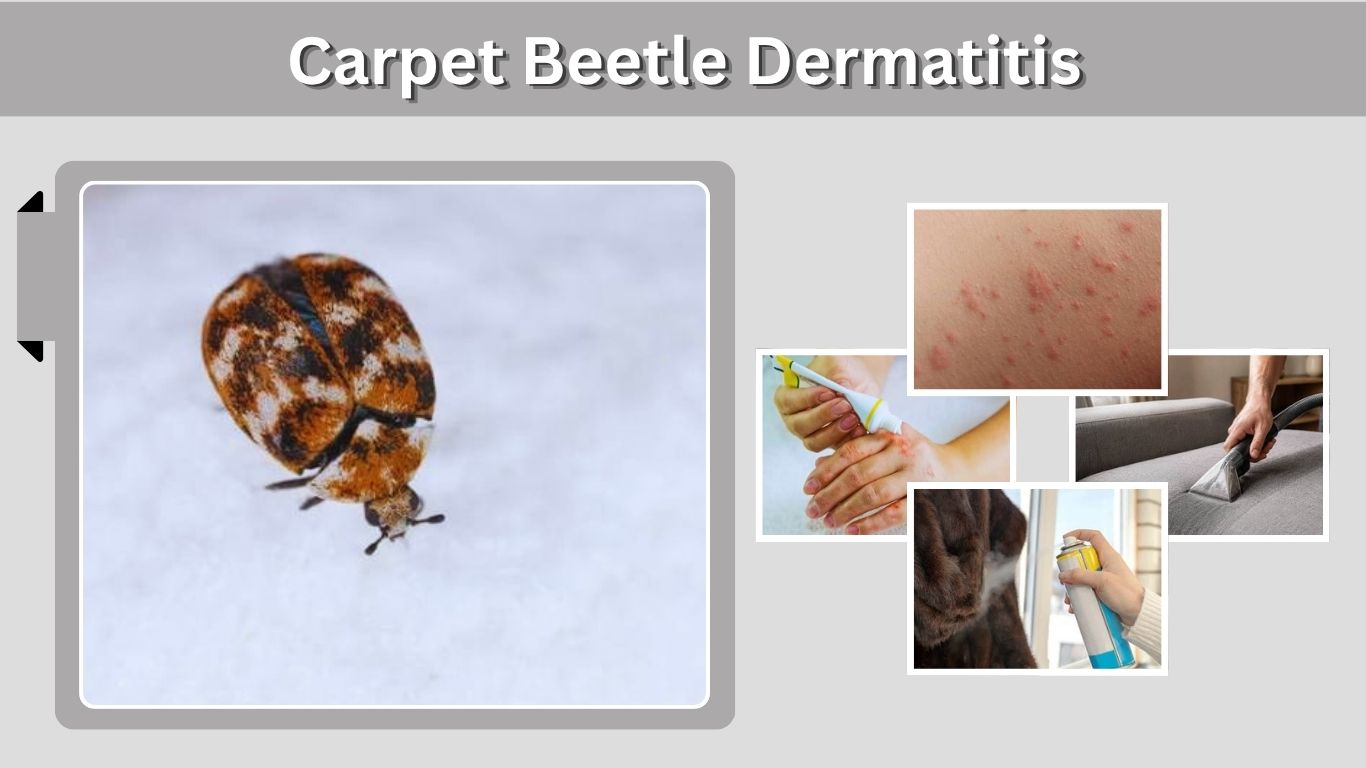
Carpet beetle dermatitis is an itchy skin condition caused by exposure to tiny hairs from carpet beetle larvae. These hairs can trigger allergic reactions, producing red bumps, rashes, and skin irritation that sometimes resemble insect bites. Although carpet beetles do not bite humans, their larvae can cause uncomfortable skin reactions, especially when they infest clothing, bedding, or furniture. Understanding the symptoms, causes, and treatment options is essential for preventing repeated irritation. This guide explains what carpet beetle dermatitis looks like, how to treat it, and how to eliminate its source.
What Is Carpet Beetle Dermatitis?
Carpet beetle dermatitis is a skin reaction associated with contact with the irritating hairs of carpet beetle larvae. It is sometimes described as carpet beetle contact dermatitis or an allergic skin reaction. Symptoms develop when sensitive individuals come into contact with larval hairs, which may become trapped in clothing, bedding, or upholstered furniture.
How Carpet Beetle Larvae Cause Dermatitis
Carpet beetle larvae have tiny bristles covering their bodies. Some of these hairs have specialized tips that can lodge in the skin and trigger an inflammatory or allergic reaction.
The hairs may spread through fabrics, household dust, or air movement. Consequently, a person can develop symptoms without directly touching a living larva.
Can Adult Carpet Beetles Cause Dermatitis?
Adult carpet beetles are not generally responsible for dermatitis. They do not bite or sting humans and primarily feed on pollen and nectar.
The larvae are the main concern because their hairs can cause skin reactions. Shed larval skins may also contribute to exposure.
Carpet Beetle Dermatitis Symptoms and Rash Appearance
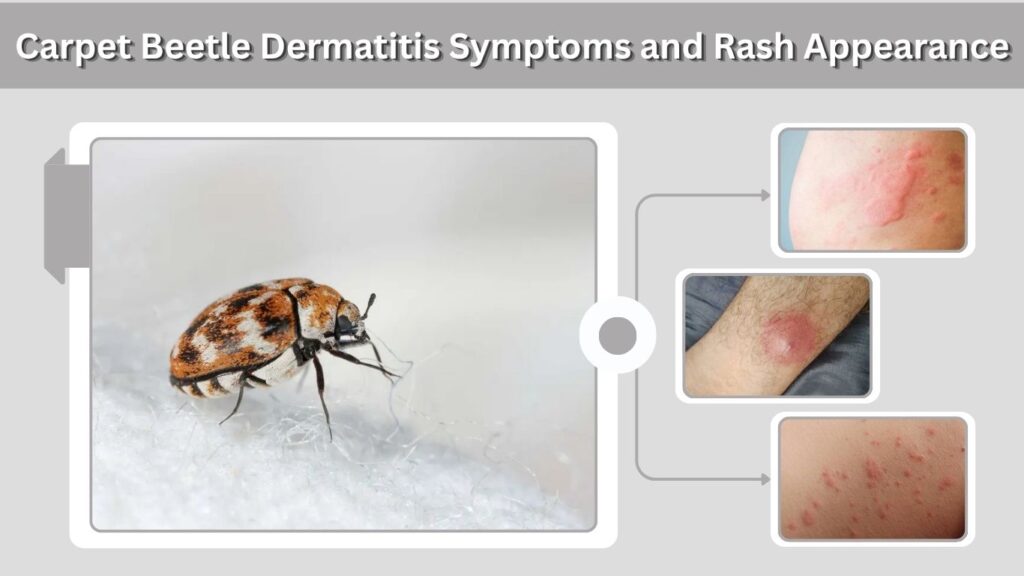
Carpet beetle dermatitis symptoms vary depending on individual sensitivity and exposure. Some people experience mild itching, while others develop noticeable rashes or raised bumps. The affected skin can resemble reactions caused by bed bugs, fleas, or other irritating substances.
Common Symptoms of Carpet Beetle Dermatitis
The most frequently reported symptoms include:
- Red or pink bumps: Small, inflamed spots appear on affected skin.
- Intense itching: Persistent itching may become particularly uncomfortable.
- Raised rash: Small, swollen bumps can resemble insect bites.
- Skin redness: Irritated areas may become visibly inflamed.
- Small blisters: Some individuals develop tiny fluid-filled lesions.
- Scratch-like marks: Scratching may produce linear marks or broken skin.
Symptoms can develop on several body areas, depending on contact with contaminated materials.
What Does Carpet Beetle Dermatitis Look Like?
Carpet beetle dermatitis pictures commonly show scattered red bumps, itchy patches, or raised lesions. On darker skin, inflammation may appear purple, brown, or darker than the surrounding skin rather than bright red.
The rash may develop on the arms, legs, abdomen, thighs, or chest. Irritation around the waistline or underwear line is possible because larval hairs can become trapped against the skin beneath clothing.
However, appearance alone cannot confirm carpet beetle dermatitis.
What Causes Carpet Beetle Dermatitis?
The primary cause is exposure to hairs from carpet beetle larvae. These insects commonly inhabit dark, undisturbed locations containing natural fibers, accumulated hair, feathers, or other organic materials.
Common Sources of Larval Hair Exposure
Carpet beetle larvae often hide inside wool carpets, stored clothing, upholstered furniture, closets, and bedding materials containing suitable food sources.
Their discarded skins and loose hairs can remain in these locations even after the insects have moved elsewhere.
Regular contact with contaminated fabrics may cause recurring skin irritation, particularly among individuals who are sensitive to larval hairs.
Is Carpet Beetle Dermatitis Contagious?
Carpet beetle dermatitis is not contagious. It cannot spread directly from one person’s skin to another.
However, multiple household members may develop similar symptoms if they encounter the same contaminated materials. Some family members may remain completely unaffected because individual reactions differ.
Carpet Beetle Dermatitis vs. Bed Bug Bites
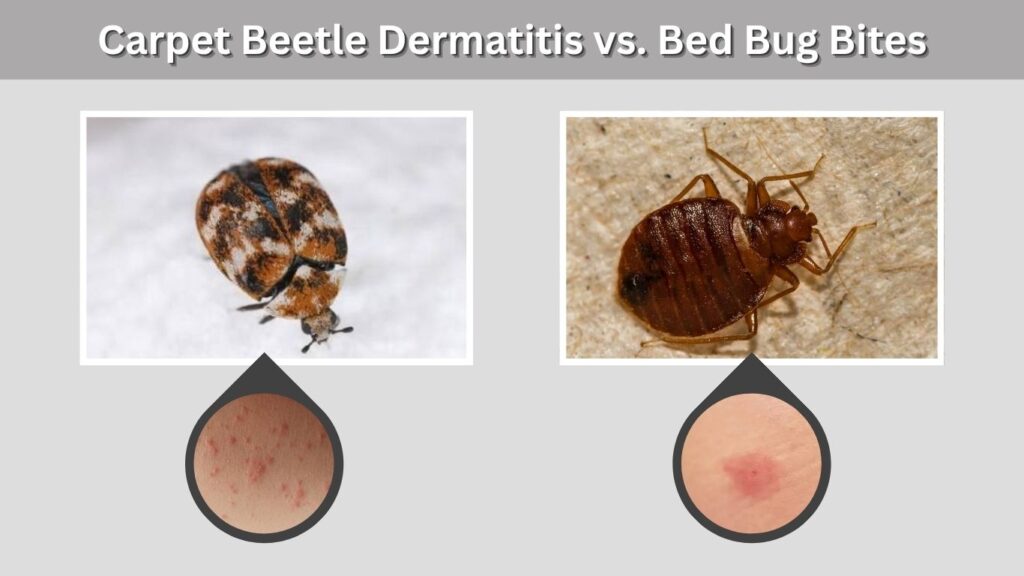
Carpet beetle dermatitis and bed bug bites can produce similar itchy skin bumps, making identification difficult. However, their causes differ significantly. Bed bugs feed on human blood, whereas carpet beetle larvae trigger reactions through contact with their hairs.
Key Differences Between the Two Conditions
- Carpet beetle dermatitis: Caused by exposure to larval hairs, not bites.
- Bed bug bites: Result from actual insect feeding.
- Rash location: Carpet beetle reactions may occur beneath clothing, while bed bug bites often affect exposed skin.
- Skin appearance: Both conditions can produce itchy, raised bumps.
- Environmental evidence: Carpet beetles leave hairy larvae and shed skins, while bed bugs may leave dark fecal spots, shed exoskeletons, and blood stains.
These differences can help guide an inspection but cannot establish a diagnosis by themselves.
Carpet Beetle Dermatitis vs. Hives
Hives typically produce raised, itchy welts that can change location or disappear within 24 hours, although new welts may develop.
Carpet beetle dermatitis may produce persistent bumps lasting several days. Nevertheless, the conditions can resemble each other, and a dermatologist may be needed to identify the cause.
Carpet Beetle Dermatitis Treatment and Cure
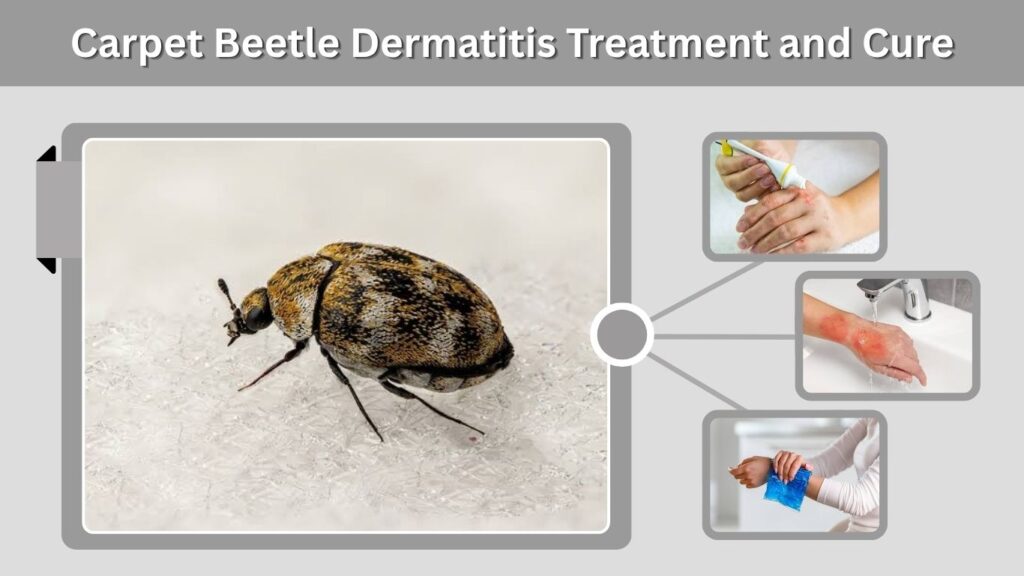
Effective carpet beetle dermatitis treatment focuses on relieving inflammation and eliminating exposure to larval hairs. Mild reactions may respond to home care, while persistent or severe symptoms require medical attention. Removing the source is particularly important because repeated exposure can cause new skin reactions.
How to Treat Carpet Beetle Dermatitis at Home
Several practical treatments may relieve itching and discomfort:
- Wash the affected skin: Gently clean exposed areas using mild soap and water.
- Apply a cold compress: Place a cool, damp cloth on irritated skin for 10–15 minutes.
- Use hydrocortisone cream: An appropriate over-the-counter 1% hydrocortisone product may reduce itching and inflammation.
- Apply calamine lotion: Calamine can temporarily soothe irritated skin.
- Use fragrance-free moisturizer: Moisturizing helps protect the skin barrier.
- Avoid scratching: Scratching increases irritation and the risk of secondary infection.
Follow medication labels carefully. Consult a healthcare professional before using steroid creams on young children, the face, or sensitive skin areas.
Medical Treatment for Severe Dermatitis
A dermatologist may recommend prescription-strength topical corticosteroids when inflammation is significant.
Oral antihistamines may help control itching in some patients. More persistent cases require evaluation to exclude eczema, scabies, insect bites, or other skin conditions.
Medication can relieve symptoms, but it will not eliminate carpet beetles from the home.
How Long Does Carpet Beetle Dermatitis Last?
The duration of carpet beetle dermatitis depends on individual sensitivity, the severity of inflammation, and whether exposure continues.
Mild reactions may improve within several days after the source is removed. Some lesions can persist for a week or longer, particularly when scratching or repeated exposure occurs.
Why Does the Rash Keep Coming Back?
Recurring dermatitis may indicate that larval hairs remain in clothing, mattresses, carpets, or other household materials.
Even when living larvae are no longer visible, shed skins and hairs can remain behind. Thorough cleaning and laundering are therefore important for preventing new reactions.
How to Prevent Carpet Beetle Dermatitis
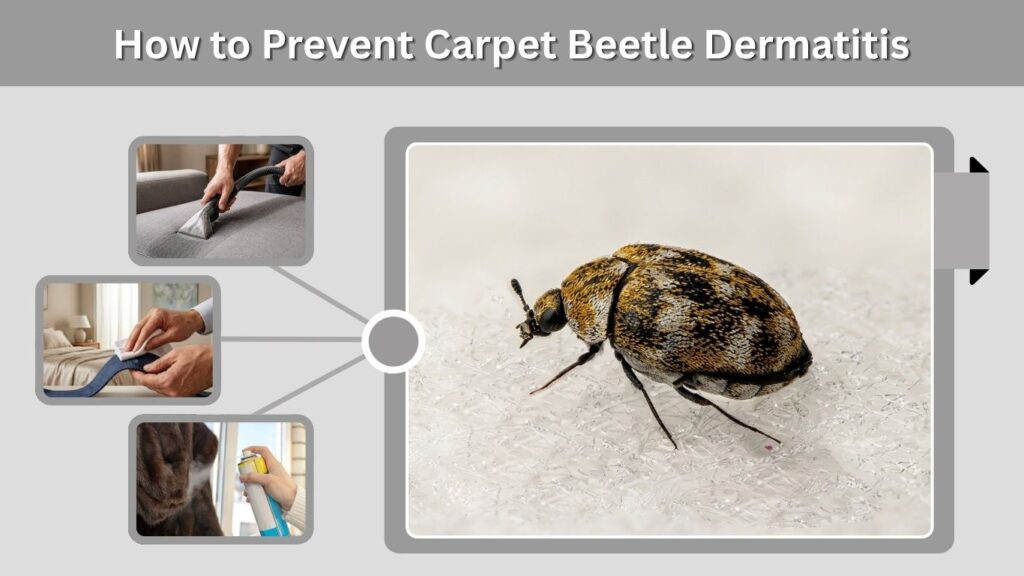
Preventing carpet beetle dermatitis requires controlling larvae and limiting contact with their irritating hairs. These pests often remain hidden in closets, carpets, furniture, and other undisturbed places. Finding and eliminating their food sources is essential for long-term prevention.
Steps to Remove Carpet Beetles From Your Home
- Vacuum thoroughly: Clean carpets, upholstery, baseboards, and underneath furniture.
- Wash affected fabrics: Launder suitable clothing and bedding using the hottest water permitted by their care labels.
- Remove shed skins: Carefully vacuum visible larvae, discarded skins, and accumulated debris.
- Inspect stored clothing: Check wool, silk, fur, and other animal-based materials.
- Clean hidden spaces: Remove lint, pet hair, and dead insects from closets and corners.
- Store clean fabrics properly: Use sealed containers or protective garment bags.
Dispose of vacuum contents promptly. Avoid spraying insecticides directly onto clothing or bedding.
Preventing Future Infestations
Maintaining a regular cleaning schedule reduces the materials carpet beetle larvae need to survive.
Inspect secondhand furniture, seal gaps around windows, and keep natural-fiber clothing clean before storage. When an infestation continues despite cleaning, a qualified pest control professional can help identify hidden breeding sites.
When Should You See a Doctor?
Although carpet beetle dermatitis is generally manageable, unexplained or persistent rashes deserve medical attention.
Consult a healthcare professional when itching interferes with sleep, the rash spreads significantly, or symptoms continue despite avoiding suspected exposure.
Increasing pain, warmth, pus, fever, or spreading redness may indicate an infection requiring prompt medical assessment. Seek emergency care for breathing difficulties or swelling of the lips or tongue.
FAQs
1. Is There a Permanent Cure for Carpet Beetle Dermatitis?
Carpet beetle dermatitis can resolve completely when inflammation is treated and exposure to larval hairs stops. However, there is no single medication that prevents every future reaction. Removing contaminated materials and controlling household infestations are essential for lasting relief.
2. Can Carpet Beetle Dermatitis Look Like Scratches?
Yes. Carpet beetle dermatitis may appear as itchy bumps accompanied by scratch-like marks. These linear marks often result from scratching irritated skin. Similar marks can have other causes, so their appearance alone does not confirm exposure to carpet beetles.
3. Can Carpet Beetle Dermatitis Affect Dogs?
Dogs may experience skin irritation from various environmental allergens, but carpet beetle dermatitis is not a well-established diagnosis in pets. If a dog develops persistent itching, hair loss, or rashes, a veterinarian should investigate other common causes.
4. Does Carpet Beetle Dermatitis Require Antibiotics?
Antibiotics are not normally needed because carpet beetle dermatitis is an inflammatory or allergic reaction rather than a bacterial infection. However, repeated scratching can damage the skin and cause secondary infection, which may require treatment prescribed by a healthcare professional.
5. Can Carpet Beetle Dermatitis Spread Across the Body?
New bumps may appear on different body areas if larval hairs contact multiple locations or exposure continues. However, the dermatitis itself does not spread through skin-to-skin contact. Cleaning contaminated fabrics helps reduce the likelihood of additional reactions.
