
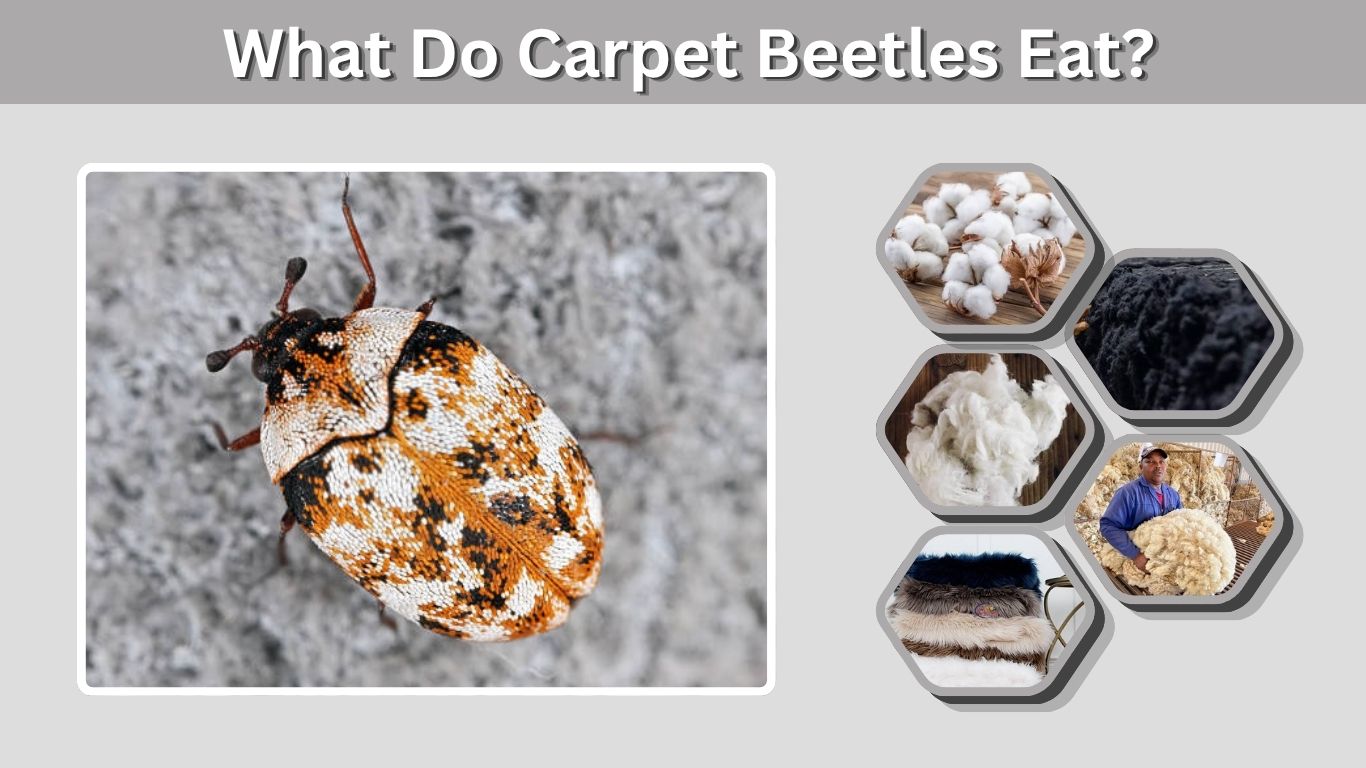
Carpet beetles are common household pests that can quietly damage clothes, carpets, upholstery, and stored belongings. However, what carpet beetles eat depends on whether they are adults or larvae. Adult beetles usually visit flowers, while larvae feed on animal-based materials such as wool, fur, feathers, and dead insects. They may also survive on organic debris hidden beneath furniture or inside closets. Understanding their feeding habits helps you recognize damage, protect different fabrics, and remove the food sources that support an infestation.
What Do Carpet Beetles Eat in the House?
Carpet beetles consume different materials depending on their species and development stage. Their larvae primarily feed on animal-derived substances containing proteins such as keratin. These materials are commonly found in carpets, clothing, furniture, and household debris. Knowing their preferred foods makes identifying potential infestation sources easier.
Common Foods Carpet Beetle Larvae Eat
Carpet beetle larvae feed on several household materials, including:
- Wool: Sweaters, blankets, rugs, and wool carpeting.
- Fur: Natural fur clothing, animal skins, and decorative hides.
- Feathers: Feather pillows, cushions, and bird nesting materials.
- Silk: Natural silk garments and upholstery.
- Hair: Shed human hair, pet fur, and animal bristles.
- Dead insects: Dried flies, moths, and other insect remains.
- Stored foods: Certain grains, cereals, and dry pet foods, depending on the species.
Why Carpet Beetles Prefer Natural Materials
Carpet beetle larvae require nutrients for growth and development. Animal-based fibers contain proteins that help them survive through their larval stages.
Unlike many household insects, carpet beetle larvae can digest keratin-rich materials. Consequently, they often infest wool carpets, stored clothing, and furniture containing natural fibers.
What Do Adult Carpet Beetles Eat?
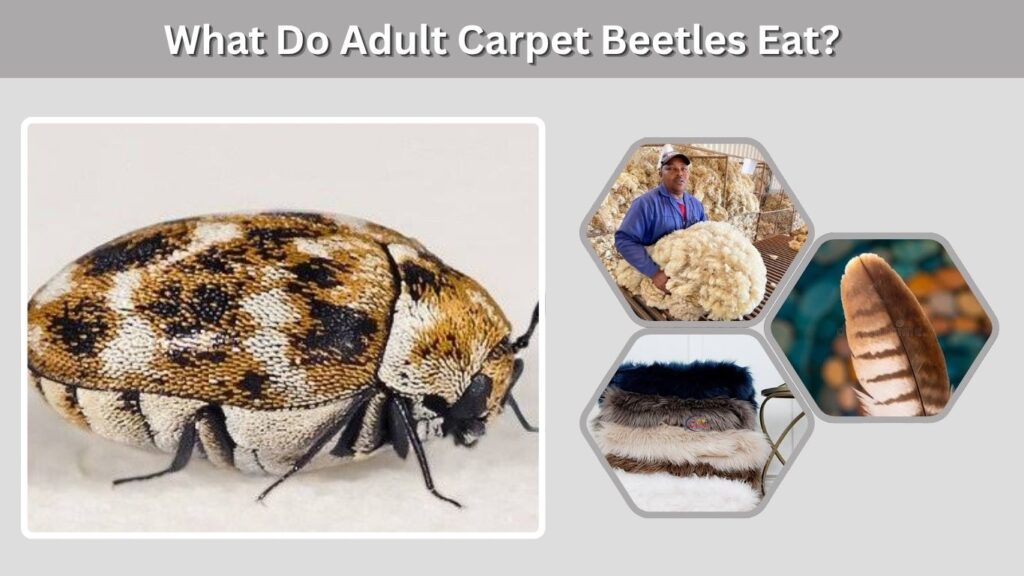
Adult carpet beetles have different eating habits from their larvae. Most adults primarily feed outdoors, visiting flowers to consume pollen and nectar. Some species may feed very little as adults.
Adult Carpet Beetles vs. Larvae
Adult carpet beetles generally do not damage clothing, carpets, or furniture. They commonly appear around windows because they are attracted to light.
Larvae cause nearly all fabric damage. They hide in dark locations and feed continuously when suitable materials are available.
What Do Black and Varied Carpet Beetles Eat?
Black carpet beetle larvae consume wool, fur, feathers, dried insects, and certain stored food products.
Varied carpet beetle larvae prefer animal-based fibers, dried insects, and organic remains. Their adults commonly visit flowers and feed on pollen and nectar.
Both species can infest houses when suitable food sources remain accessible.
Do Carpet Beetles Eat Clothes?
Yes, carpet beetle larvae eat clothes, particularly garments made from animal-based fibers. Their feeding can create irregular holes, weakened fabric, and damaged seams. Stored clothing is especially vulnerable because larvae can remain undisturbed for long periods.
Types of Clothes Carpet Beetles Eat
Carpet beetles commonly damage these clothing materials:
- Wool sweaters: Contain keratin that larvae can digest.
- Cashmere clothing: Made from goat hair and highly vulnerable.
- Silk garments: Natural protein fibers may attract feeding larvae.
- Fur coats: Provide animal fibers that support larval growth.
- Wool-blend clothing: May contain enough animal fibers to attract larvae.
How to Identify Carpet Beetle Damage on Clothes
Carpet beetle damage typically appears as irregular holes or small patches of missing fabric.
You may also discover brown, hairy larvae or empty shed skins inside drawers and closets.
Unlike adult beetles, larvae often remain concealed within fabric folds, making infestations difficult to notice immediately.
Do Carpet Beetles Eat Cotton, Polyester, or Wool?
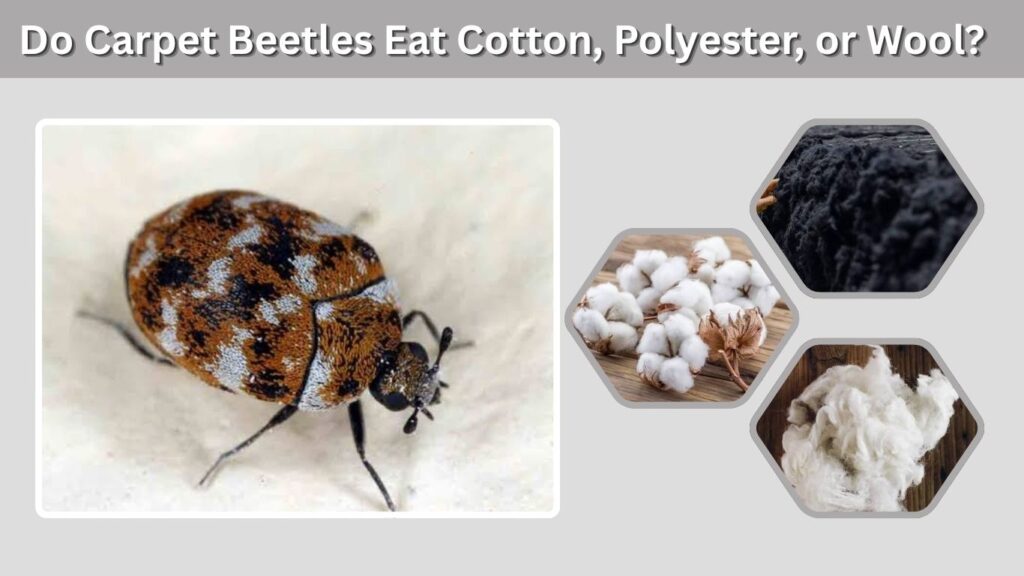
Not all fabrics attract carpet beetles equally. Their larvae prefer animal proteins rather than plant-based or synthetic fibers. However, dirty or blended fabrics may still become vulnerable when they contain suitable organic material.
Do Carpet Beetles Eat Cotton and Linen?
Carpet beetles generally do not feed on clean cotton or linen because these plant-based fabrics lack keratin.
However, larvae may occasionally damage cotton clothing contaminated with food, perspiration, or other organic substances.
Cotton blended with wool is more vulnerable than pure cotton.
Do Carpet Beetles Eat Polyester and Nylon?
Carpet beetles do not normally consume clean polyester, nylon, or microfiber because synthetic fibers provide little nutritional value.
However, larvae may feed on organic stains or animal fibers mixed into synthetic fabrics.
Clean synthetic carpeting is therefore considerably less attractive than wool carpeting.
Do Carpet Beetles Eat Wool and Cashmere?
Yes, wool and cashmere are among the preferred materials for carpet beetle larvae.
Both contain animal proteins that support larval development. Unprotected sweaters, blankets, rugs, and stored garments may experience significant damage.
Washing appropriate items and using sealed storage containers helps prevent infestations.
Do Carpet Beetles Eat Wood, Paper, or Plastic?

Carpet beetles sometimes appear near wooden furniture, bookshelves, cardboard boxes, and plastic containers. However, their presence does not always indicate that they are eating those materials. Often, they are searching for hidden organic debris.
Do Carpet Beetles Eat Wood?
Carpet beetles do not eat solid wood or wooden flooring.
Unlike termites, they cannot use wood as their primary food source. Beetles found beneath wooden furniture may instead be feeding on dead insects, hair, or other accumulated debris.
Do Carpet Beetles Eat Books and Cardboard?
Carpet beetle larvae may damage books containing leather bindings or animal-based adhesives.
However, ordinary paper and cardboard are not their preferred foods. Some species can consume certain dried plant materials, but finding damaged books does not automatically indicate carpet beetles.
Can Carpet Beetles Eat Through Plastic?
Carpet beetles cannot digest plastic as food.
Intact, airtight plastic containers help protect clothing and other vulnerable belongings.
Thin plastic bags may tear or have gaps that allow larvae to enter, so sturdy sealed containers offer better protection.
Do Carpet Beetles Eat Hair, Dust, and Household Items?
Carpet beetles can survive on small accumulations of organic materials found throughout homes. These overlooked food sources may support infestations even when natural-fiber carpets or clothing are absent.
Human Hair, Dead Skin, and Dust
Carpet beetle larvae can consume human hair and animal fur because they contain keratin.
They may also feed on suitable organic matter within household dust, including dried skin fragments and insect remains.
However, they do not feed on living human hair or human blood.
Stuffed Animals, Carpets, and Insulation
Carpet beetles may damage stuffed animals containing wool, fur, or feathers.
Natural wool carpets are particularly vulnerable, while synthetic carpets generally resist feeding damage.
Certain animal-derived insulation materials may also attract larvae, but fiberglass and conventional synthetic insulation are not normal food sources.
What Eats Carpet Beetles Naturally?
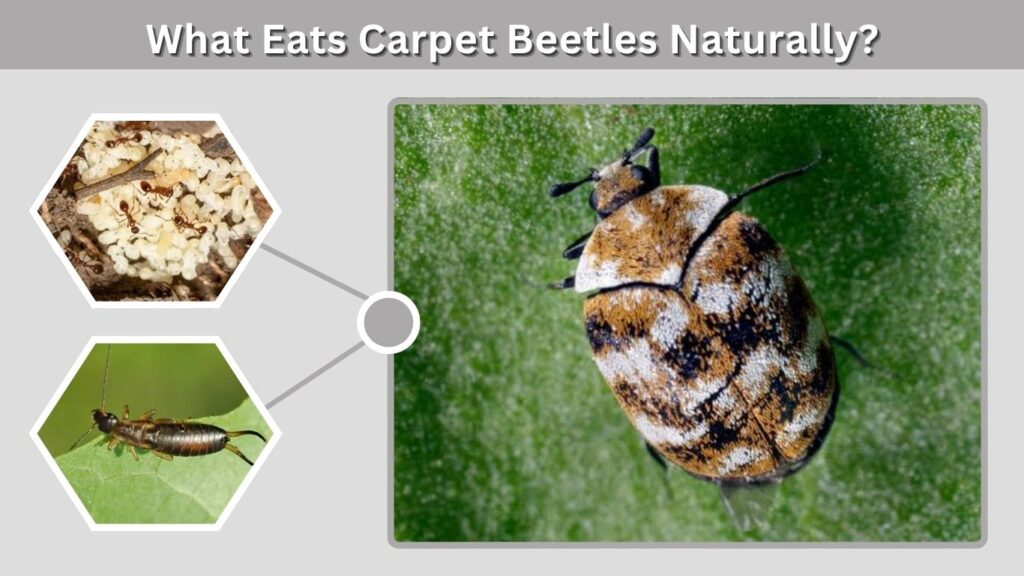
Several household predators may eat carpet beetles or their larvae. However, natural predators rarely eliminate established infestations because larvae hide inside fabrics, furniture, and narrow spaces.
Common Carpet Beetle Predators
Potential predators include:
- Jumping spiders: May capture adult beetles and exposed larvae.
- Cellar spiders: Occasionally trap carpet beetles in their webs.
- House centipedes: Hunt various small household insects.
- Ants: Some species attack exposed eggs or larvae.
- Earwigs: May occasionally consume small insect larvae.
Predators such as spiders and centipedes cannot reliably control carpet beetle populations without additional cleaning and prevention.
How to Stop Carpet Beetles From Eating Your Clothes
Preventing carpet beetle infestations requires removing suitable food sources and protecting vulnerable belongings. Regular cleaning reduces the organic debris that supports larvae, while proper storage prevents adults from laying eggs near valuable fabrics.
Effective Carpet Beetle Prevention Tips
Follow these practical steps:
- Vacuum regularly: Clean carpets, furniture, baseboards, and hidden corners.
- Wash stored clothes: Remove stains and organic residues before storage.
- Protect natural fabrics: Store wool, silk, and cashmere in airtight containers.
- Remove pet hair: Clean areas where animal fur accumulates.
- Inspect secondhand items: Examine used rugs, clothing, and furniture.
- Check hidden spaces: Look for larvae and shed skins around closets and carpet edges.
FAQs
1. Do Carpet Beetles Eat Human Hair?
Yes, carpet beetle larvae can consume shed human hair because it contains keratin. However, they do not feed on hair growing on someone’s head. Hair accumulating beneath furniture may provide a small food source for larvae.
2. Do Carpet Beetles Eat Bed Bugs?
Carpet beetles do not normally hunt living bed bugs. Their larvae primarily feed on dry animal materials and dead insects. Although they may occasionally consume dried insect remains, they are not effective natural predators of bed bugs.
3. Do Carpet Beetles Eat Plants?
Adult carpet beetles commonly visit flowers to consume pollen and nectar. Some larvae also feed on dried plant materials or stored food products. However, carpet beetles generally do not damage healthy living houseplants.
4. Do Carpet Beetles Eat Leather?
Carpet beetle larvae can damage certain leather products, especially untreated hides containing hair or animal residues. Finished leather is generally less attractive. Leather-bound books, animal skins, and other stored natural materials may require regular inspection.
5. Do Carpet Beetles Eat Food?
Some carpet beetle species eat stored grains, cereals, spices, and dry pet food during their larval stage. Their feeding preferences vary by species. Contaminated food should be discarded, and nearby shelves and containers should be cleaned thoroughly.
