
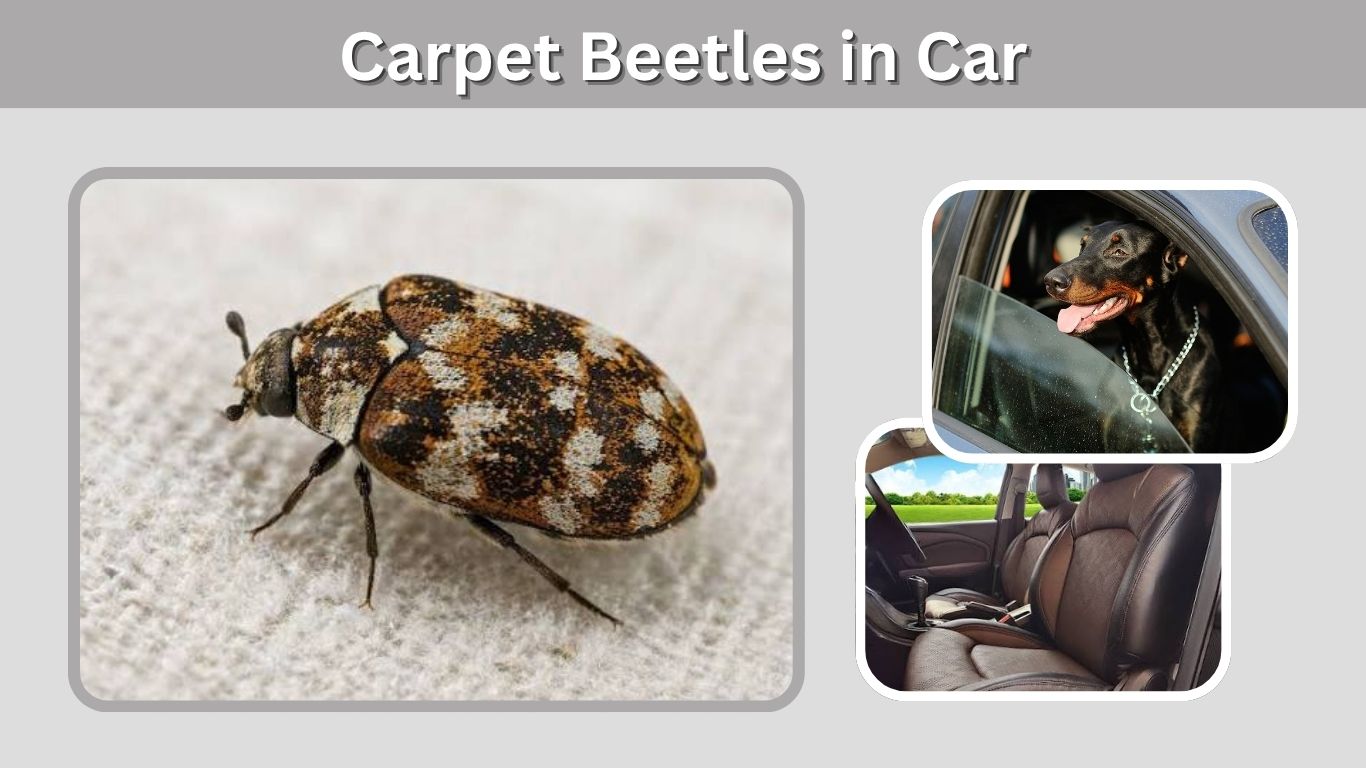
Carpet beetles in car interiors can become a frustrating problem, especially when their larvae hide beneath seats, carpets, and upholstery. These tiny insects may enter vehicles through open windows, clothing, or infested belongings. While adult carpet beetles are generally harmless, larvae can feed on natural fibers, accumulated pet hair, and other organic materials inside vehicles. If left untreated, an infestation may cause upholstery damage and repeated sightings of small insects. This guide explains why carpet beetles appear in cars, how to identify infestations, and effective removal methods.
Can Carpet Beetles Live in a Car?
Yes, carpet beetles can live inside cars when suitable food sources and protected hiding places are available. Although vehicles are not their preferred habitat, larvae may survive beneath seats, inside fabric folds, and around floor carpeting. Understanding their appearance and feeding behavior helps determine whether insects found in a vehicle are carpet beetles.
What Do Carpet Beetles Look Like in Cars?
Adult carpet beetles are small, oval-shaped insects measuring approximately 2–5 millimeters. Their bodies may be black, brown, or patterned with white and yellow markings.
Carpet beetle larvae look different from adults. They have elongated, brown, segmented bodies covered with tiny hairs or bristles. Larvae usually crawl slowly and remain hidden in dark areas.
Why Carpet Beetles Survive in Vehicles
Carpet beetle larvae feed on animal-based materials, including wool, fur, feathers, and accumulated hair. Cars containing natural-fiber upholstery, pet hair, or dead insects may provide enough food for development.
Undisturbed areas beneath seats also offer suitable hiding places.
How Do Carpet Beetles Get Into Your Car?
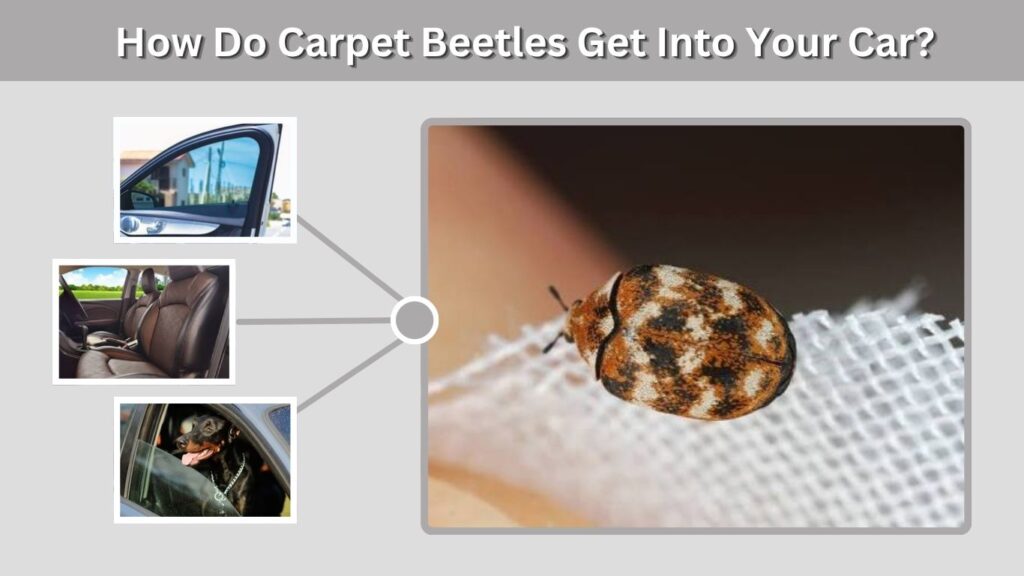
Carpet beetles enter vehicles accidentally while searching for shelter or being transported with personal belongings. Adult beetles can fly, allowing them to enter through open windows and doors. Larvae may also arrive on fabrics, floor mats, or other infested items brought into the vehicle.
Common Ways Carpet Beetles Enter Cars
- Open windows: Flying adult beetles may enter parked vehicles.
- Clothing: Eggs or larvae can travel on infested fabrics.
- Pet belongings: Animal hair and blankets may carry larvae.
- Secondhand accessories: Used seat covers and floor mats can introduce insects.
- Stored belongings: Bags and blankets transferred from infested areas may contain beetles.
- Outdoor parking: Adult beetles may enter cars parked near flowering vegetation.
Once inside, females may deposit eggs near materials suitable for larval feeding.
Signs of Carpet Beetles in Your Car
Carpet beetle infestations may remain unnoticed because larvae prefer concealed areas. Identifying an infestation requires examining car seats, carpets, floor mats, and other surfaces for insects or evidence of feeding. A single adult beetle does not necessarily indicate an established infestation, but repeated larval sightings deserve attention.
Common Signs of Carpet Beetle Infestation
- Small beetles: Black, brown, or patterned insects crawling on seats or windows.
- Hairy larvae: Brown, fuzzy insects hiding beneath seats.
- Shed skins: Empty, bristly larval skins accumulating near upholstery seams.
- Fabric damage: Irregular holes in susceptible natural-fiber seat covers.
- Dead beetles: Adult insects collecting around windows or dashboard edges.
- Repeated sightings: Multiple larvae appearing after routine cleaning.
Finding larvae and shed skins together provides stronger evidence of an active infestation.
Where Do Carpet Beetles Hide Inside Cars?
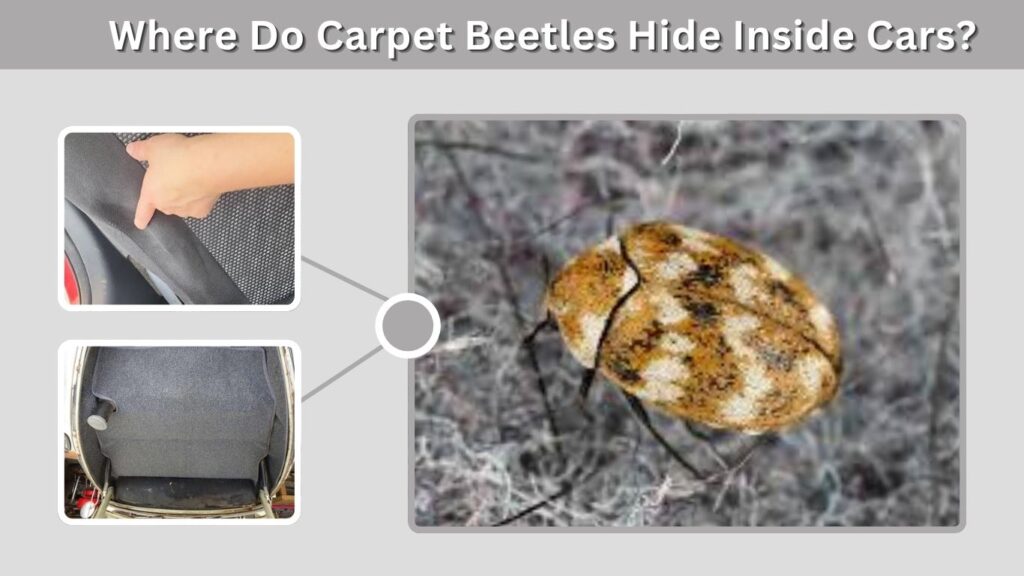
Carpet beetles prefer dark, protected locations where they remain undisturbed. Their larvae often occupy areas containing lint, pet hair, or natural fibers. Inspecting these spaces carefully helps identify feeding sites and determine whether the infestation is limited to one area or spread throughout the vehicle.
Carpet Beetles in Car Seats and Carpets
Larvae may hide beneath seat cushions, inside upholstery seams, and around carpet edges. Vehicles with wool seat covers or animal-hair materials are particularly vulnerable.
They can also shelter underneath removable floor mats and seat mounting brackets.
Carpet Beetles in Trunks and Hidden Spaces
Car trunks may contain blankets, clothing, and other stored items that provide suitable food.
Larvae can also occur around interior trim gaps and ventilation openings when accumulated debris is present. However, these locations are primarily hiding spaces rather than direct food sources.
How to Get Rid of Carpet Beetles in Your Car
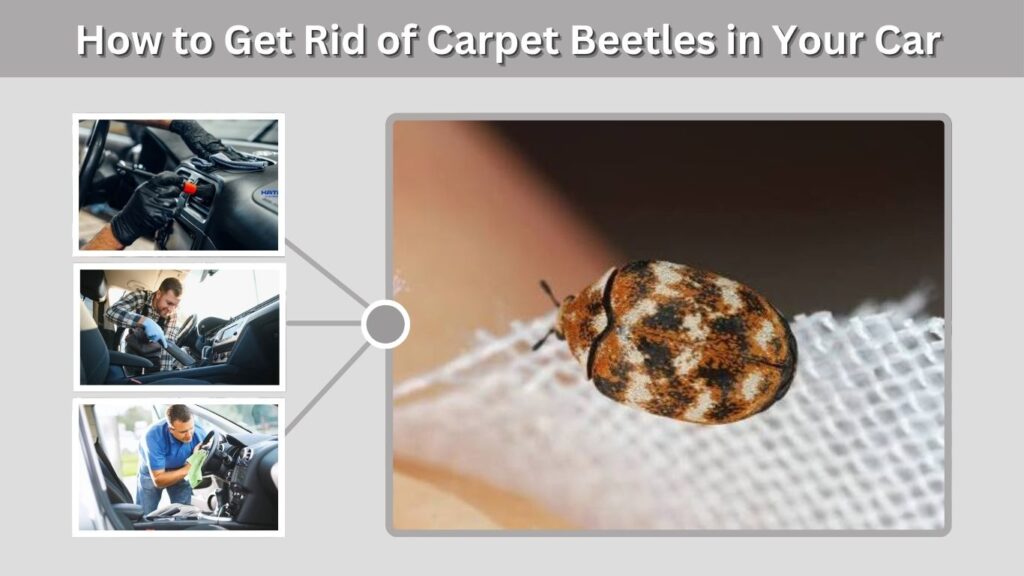
Removing carpet beetles from a vehicle requires thorough inspection and cleaning. Because larvae may hide in narrow gaps and upholstery seams, cleaning only visible surfaces is rarely sufficient. The best approach combines vacuuming, removing infested belongings, and treating affected materials without damaging vehicle interiors.
Step-by-Step Carpet Beetle Removal
- Remove belongings: Take out floor mats, blankets, clothing, and removable accessories.
- Inspect the interior: Examine seat seams, carpet edges, and hidden spaces for larvae.
- Vacuum thoroughly: Clean seats, floors, trunk compartments, and narrow crevices.
- Clean removable fabrics: Wash suitable seat covers and blankets according to their care labels.
- Remove food sources: Eliminate pet hair, lint, dead insects, and accumulated debris.
- Clean upholstery: Use vehicle-safe cleaning methods appropriate for the materials.
- Empty the vacuum: Seal and discard collected debris promptly.
- Monitor activity: Reinspect the vehicle regularly for surviving larvae.
Repeated vacuuming may be necessary to eliminate insects emerging from overlooked areas.
What Kills Carpet Beetles in a Car?
Several methods can kill carpet beetles, but vehicle interiors require special care. Seats, electronics, adhesives, and upholstery may be damaged by excessive moisture, heat, or inappropriate chemicals. Physical cleaning and targeted treatment are generally preferable to widespread pesticide application.
Steam Cleaning and Professional Detailing
Steam cleaning may kill carpet beetles and larvae when sufficiently high temperatures reach the insects. However, results depend on heat penetration.
Professional vehicle detailing can help remove insects and organic debris from difficult-to-reach areas. Excessive steam or moisture should be avoided near electronics and sensitive materials.
Carpet Beetle Sprays and Bug Bombs
Some insecticides control carpet beetles, but a product should only be used inside a vehicle if its label specifically permits that application.
Avoid using household bug bombs or total-release foggers in cars. Their flammable contents and chemical exposure risks make them unsuitable for most small, enclosed vehicles.
Will Carpet Beetles Die in a Hot Car?
Carpet beetles can die from sufficiently high temperatures maintained for an adequate period. However, leaving a vehicle parked in direct sunlight is not a reliable treatment.
Temperatures inside seats, carpets, and hidden compartments may remain lower than exposed surfaces. Some insects could survive in protected areas.
Professional heat treatment requires controlled temperatures and monitoring. Excessive heat can also damage vehicle electronics, plastics, adhesives, and upholstery.
How to Prevent Carpet Beetles in Your Car
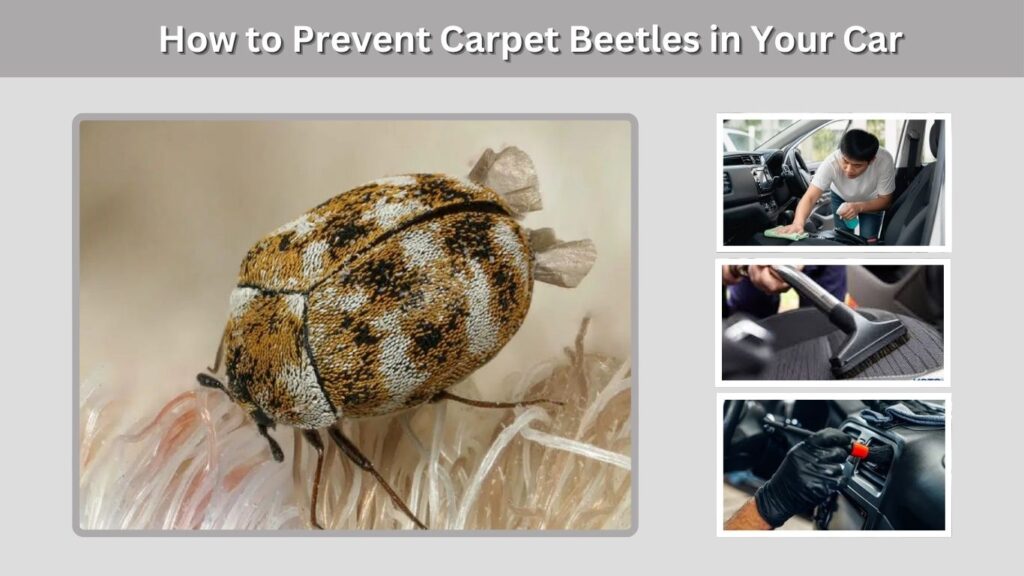
Preventing carpet beetles requires keeping vehicle interiors clean and reducing opportunities for insects to enter. Regular cleaning removes materials that support larval development, while careful inspection helps identify early infestations. These practices are especially useful for vehicles frequently transporting pets, clothing, or stored household items.
Carpet Beetle Prevention Tips
- Vacuum seats, carpets, floor mats, and trunk areas regularly.
- Remove accumulated pet hair, lint, and dead insects.
- Inspect used seat covers and accessories before installation.
- Avoid leaving wool blankets or clothing inside cars for extended periods.
- Keep windows and doors closed when parked unnecessarily.
- Clean removable floor mats and fabric accessories.
- Check previously infested areas for new larvae or shed skins.
Consistent cleaning reduces suitable food sources and makes future infestations less likely.
FAQs
Why Are There Carpet Beetles in My Car?
Carpet beetles may enter through open windows, doors, clothing, or infested belongings. Their larvae survive where suitable food materials accumulate, including pet hair and natural fibers. Repeated sightings suggest checking hidden upholstery seams, carpets, and stored items.
Can Carpet Beetles Damage Car Seats?
Yes, carpet beetle larvae can damage seat covers containing wool or other animal-based fibers. They generally do not feed on synthetic upholstery itself, although they may survive on organic debris trapped nearby. Natural-fiber carpets and accessories are particularly vulnerable.
What Is the Fastest Way to Get Rid of Carpet Beetles in a Car?
Thorough vacuuming, removing infested belongings, and cleaning affected fabrics offer the quickest practical starting point. Focus on upholstery seams, carpet edges, and hidden compartments. Persistent infestations may require repeated cleaning or professional treatment to reach concealed larvae.
Can I Use a Bug Bomb for Carpet Beetles in My Car?
Using a household bug bomb inside a car is not recommended. Foggers can release flammable substances and create hazardous pesticide concentrations in enclosed spaces. Thorough cleaning and professional vehicle-safe pest treatment are safer alternatives for persistent carpet beetle infestations.
Will Carpet Beetles Go Away on Their Own in a Car?
Carpet beetles may disappear if suitable food sources are exhausted, but larvae can survive for extended periods under favorable conditions. Waiting is unreliable when an infestation is established. Removing organic debris, cleaning upholstery, and monitoring hidden areas provides better control.
