
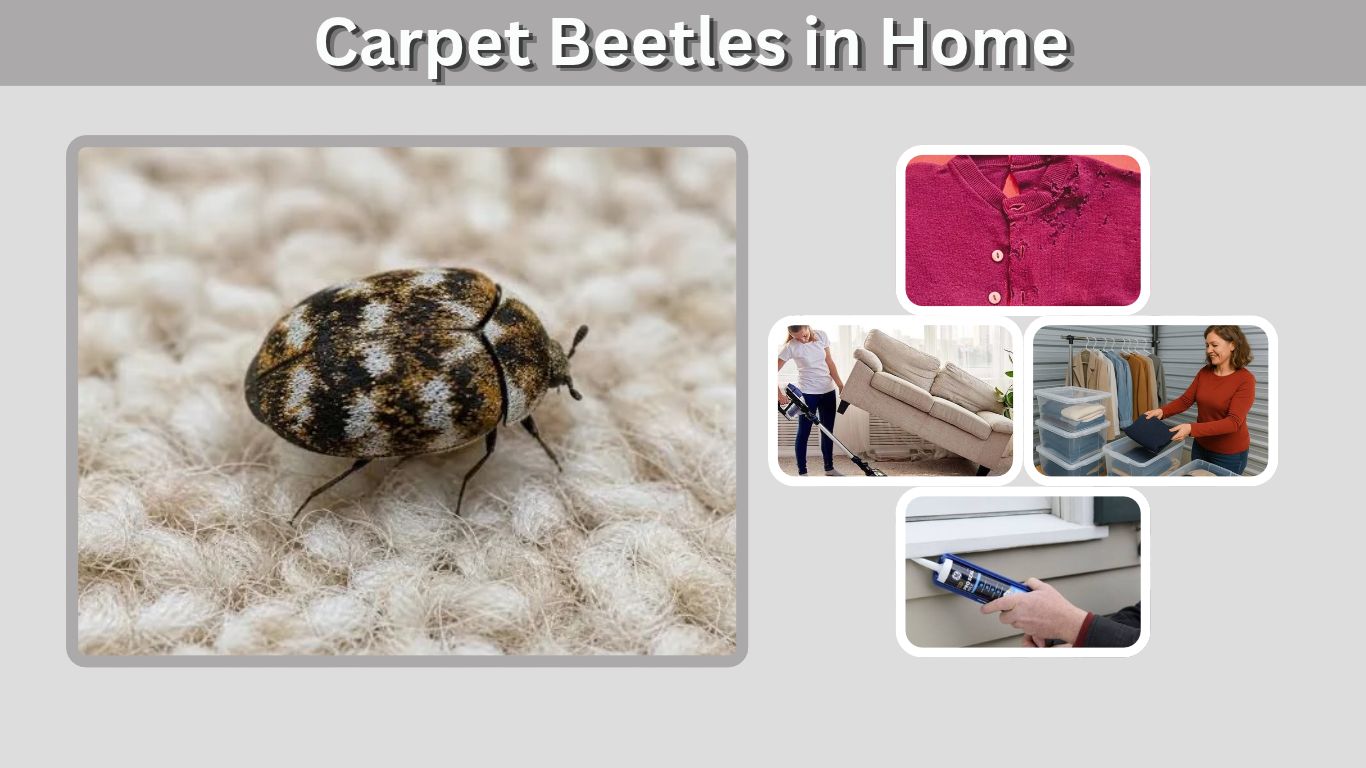
Carpet beetles in home environments are common household pests that can damage carpets, clothing, furniture, and stored fabrics. These tiny insects often enter houses through open windows, doors, flowers, or infested belongings. While adult carpet beetles are generally harmless, their larvae feed on natural fibers and organic materials, sometimes causing significant damage. Understanding what causes carpet beetles in your home is essential for preventing infestations. This guide explains how carpet beetles enter houses, where they hide, effective home remedies, and practical treatment methods to eliminate them.
What Causes Carpet Beetles in Your Home?
Carpet beetles enter homes while searching for suitable environments to reproduce. Their larvae thrive in areas containing natural fibers, animal hair, dead insects, and accumulated debris. Even regularly cleaned homes can attract carpet beetles when suitable food sources are available. Understanding their entry points helps homeowners reduce the chances of an infestation.
Common Ways Carpet Beetles Enter Homes
Carpet beetles can enter through several routes:
- Open windows and doors: Adult beetles fly indoors from outdoor vegetation.
- Fresh flowers: Beetles feeding on pollen may enter with cut flowers.
- Secondhand furniture: Infested upholstery and carpets can introduce larvae.
- Clothing and fabrics: Stored wool or other natural materials may carry eggs or larvae.
- Bird nests: Nearby nests can support carpet beetle populations.
- Wall openings: Small gaps around windows, vents, and doors provide entry points.
Once indoors, females may lay eggs near materials suitable for developing larvae.
Are Carpet Beetles Common in Homes?
Carpet beetles are relatively common household insects found in apartments, houses, and other buildings. They can survive in clean environments because even small amounts of pet hair, lint, or dead insects provide food.
However, not every home has an active infestation. Research has detected carpet beetles in all homes examined in one small household study, but that does not establish a universal infestation rate.
Finding one adult beetle near a window does not necessarily indicate a serious problem. Multiple larvae and damaged fabrics provide stronger evidence of an infestation.
Where Do Carpet Beetles Hide in Homes?
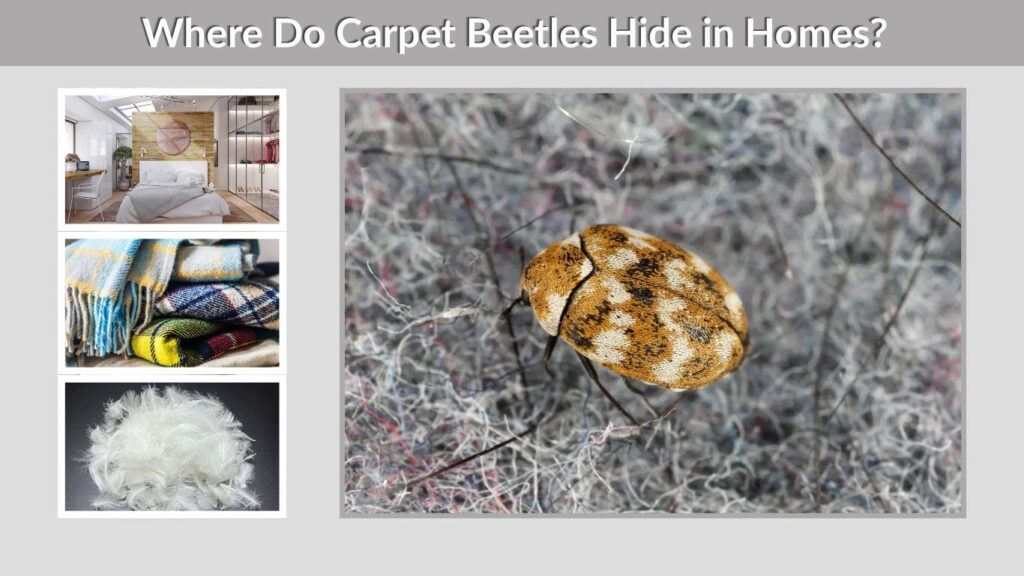
Carpet beetles prefer different environments depending on their developmental stage. Adults commonly appear near windows and other light sources, whereas larvae seek dark, undisturbed locations containing suitable food. Identifying their hiding places helps homeowners locate infestations before extensive fabric damage occurs.
Carpet Beetles in Carpets and Furniture
Larvae frequently hide along carpet edges, beneath furniture, and inside upholstered cushions. Wool carpets and furniture containing animal-based fibers provide suitable feeding materials.
Dust, lint, and pet hair collecting under furniture may also support larval development.
Carpet Beetles in Bedrooms and Closets
Bedrooms and closets provide protected locations where larvae can develop undisturbed.
Stored wool clothing, blankets, feather-filled items, and natural-fiber rugs are particularly vulnerable. Carpet beetles may also appear beneath beds or inside storage boxes.
Signs of Carpet Beetle Infestation in Your Home
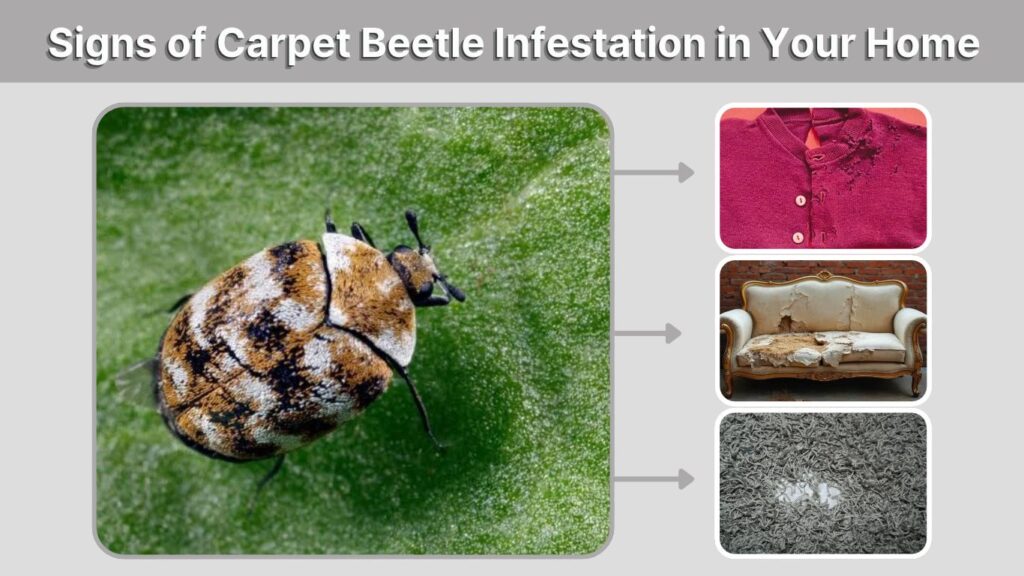
Recognizing carpet beetle activity early helps prevent damage to valuable household materials. Their larvae often remain hidden for extended periods, making infestations difficult to notice. Homeowners should inspect carpets, furniture, clothing, and storage areas regularly for physical evidence of feeding and insect development.
Common Carpet Beetle Infestation Signs
Important warning signs include:
- Damaged clothing: Irregular holes appearing in wool and other susceptible fabrics.
- Carpet damage: Thin or missing fibers around carpet edges.
- Shed larval skins: Brown, hairy skins accumulating in hidden locations.
- Live larvae: Small, fuzzy insects crawling beneath furniture.
- Adult beetles: Repeated sightings around windows and walls.
- Furniture damage: Deterioration of natural-fiber upholstery.
Finding several of these signs together suggests that carpet beetles may be reproducing indoors.
How to Get Rid of Carpet Beetles in Your Home
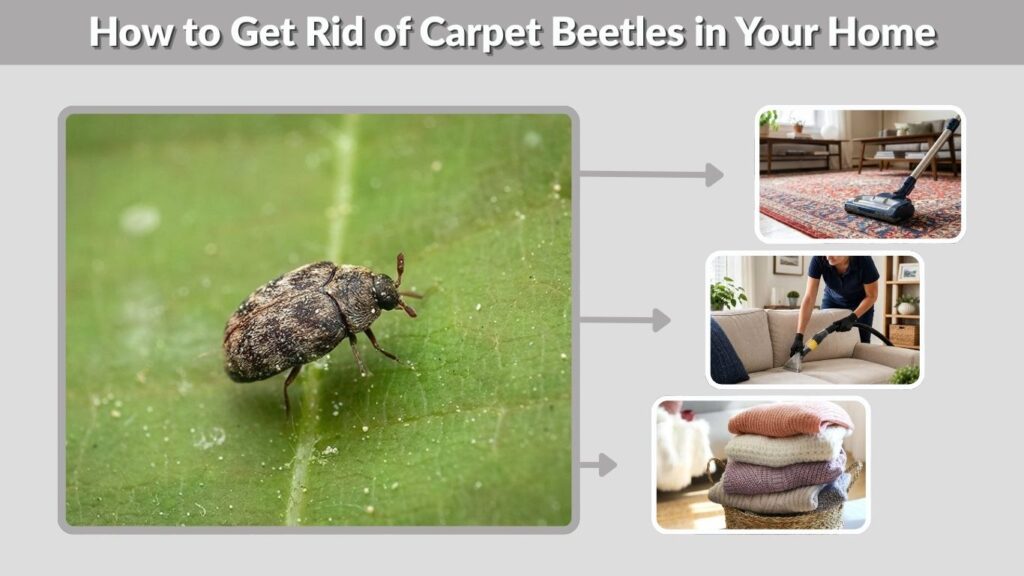
Eliminating carpet beetles requires removing both the insects and the materials supporting their development. Cleaning is usually the most important treatment because larvae can hide in inaccessible locations. Simply killing visible adult beetles rarely eliminates an established infestation.
Step-by-Step Carpet Beetle Home Treatment
Follow these steps to reduce carpet beetle populations:
- Identify the infestation: Inspect carpets, clothing, furniture, and storage areas for larvae and shed skins.
- Vacuum thoroughly: Clean carpet edges, baseboards, upholstery, and underneath furniture.
- Wash infested fabrics: Use hot washing or dry cleaning when appropriate for the material.
- Remove food sources: Eliminate accumulated lint, pet hair, dead insects, and organic debris.
- Protect stored clothing: Place clean wool garments and vulnerable fabrics in airtight containers.
- Discard severely infested items: Remove materials that cannot be cleaned or adequately treated.
- Monitor activity: Inspect previously affected locations regularly for additional larvae.
Repeated cleaning may be necessary because hidden larvae can survive in overlooked locations.
Best Home Remedies for Carpet Beetles
Home remedies can help control small carpet beetle infestations without immediately relying on chemical pesticides. However, not every popular remedy is scientifically proven to eliminate these insects. Physical cleaning, appropriate heat treatment, and removing infested materials generally provide more reliable results than homemade repellent sprays.
Vacuuming and Steam Cleaning
Regular vacuuming removes larvae, shed skins, eggs, and organic debris from accessible surfaces. Concentrate on carpet edges, furniture seams, and hidden corners.
Steam cleaning may also help when surfaces reach sufficiently high temperatures, although effectiveness depends on heat penetration and material compatibility.
Washing, Heat, and Freezing
Hot laundering and heated drying can kill carpet beetles when fabrics tolerate the treatment. Dry cleaning is another effective option.
Freezing suitable infested items can also work when temperatures are sufficiently low and maintained long enough. Delicate objects may require professional treatment.
Vinegar and Essential Oils
Vinegar can help clean certain household surfaces, but it is not a proven solution for eliminating an established carpet beetle infestation.
Essential oils may have some repellent properties, but their effectiveness is inconsistent. They should not replace thorough cleaning and source removal.
Does Ortho Home Defense Kill Carpet Beetles?
Certain Ortho Home Defense insecticide formulations are labeled for controlling carpet beetles. However, effectiveness depends on the specific product, application surface, and instructions.
EPA-approved labeling for some Ortho Home Defense Indoor & Outdoor Insect Killer formulations includes carpet beetles among the targeted insects.
How to Use Carpet Beetle Sprays Safely
Chemical treatments may be useful when cleaning alone does not control an established infestation.
Apply insecticides only to areas and surfaces specifically permitted by the product label. Never spray clothing, bedding, or food-contact surfaces unless the instructions explicitly authorize it.
Products available at Home Depot or other retailers should be evaluated by their exact labels rather than brand names alone.
How to Prevent Carpet Beetles From Entering Your Home
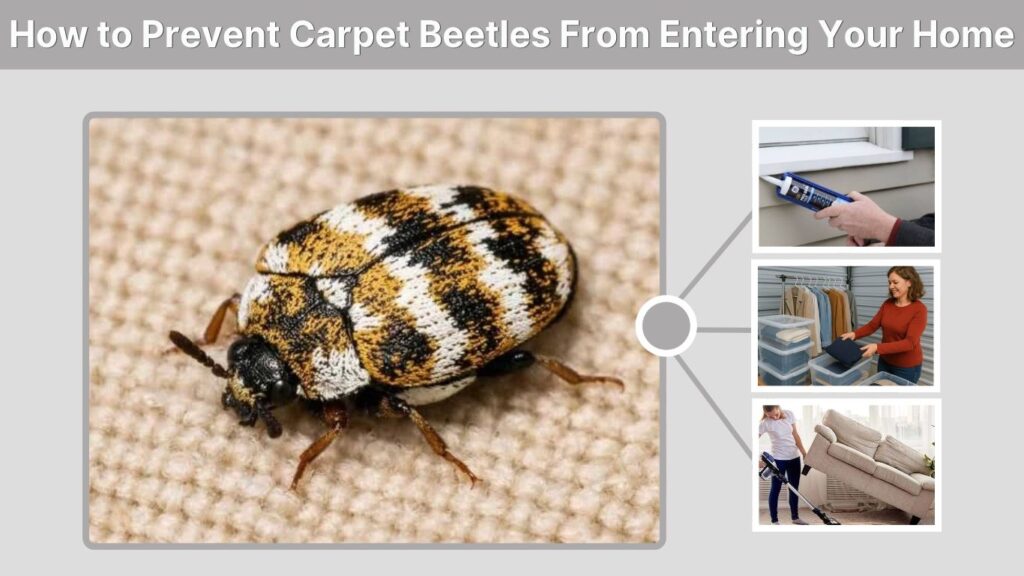
Preventing carpet beetles requires consistent cleaning, proper storage, and reducing entry points. Because adults can fly indoors and larvae survive on accumulated organic debris, maintaining a clean environment is particularly important. Regular inspections help detect early activity before beetles become established throughout the house.
Carpet Beetle Prevention Tips
- Vacuum carpets, furniture, and hidden areas regularly.
- Seal cracks around doors, windows, and baseboards.
- Inspect fresh flowers before bringing them indoors.
- Store clean wool clothing in airtight containers.
- Remove accumulated pet hair, lint, and dead insects.
- Inspect secondhand furniture before introducing it indoors.
- Monitor closets and storage areas for larvae.
These preventive practices reduce suitable food sources and make indoor reproduction less likely.
FAQs
How Do Carpet Beetles Get Into Your Home?
Carpet beetles commonly enter through open doors, windows, and damaged screens. They may also arrive on fresh flowers, secondhand furniture, or infested fabrics. Once indoors, females can deposit eggs near suitable food sources, allowing larvae to develop unnoticed.
Do All Homes Have Carpet Beetles?
No, carpet beetles are not necessarily present in every home. Although they are common household insects, their presence depends on entry opportunities and available food. Finding an occasional adult does not automatically mean that a home has an established infestation.
Can Carpet Beetles Live in a Clean Home?
Yes, carpet beetles can survive in clean homes because small amounts of pet hair, lint, feathers, and dead insects provide food. However, regular vacuuming, proper clothing storage, and removing accumulated debris significantly reduce the conditions supporting their reproduction.
Does Ortho Home Defense Work on Carpet Beetles?
Some Ortho Home Defense formulations are labeled to kill carpet beetles when applied correctly. Always verify that your specific product lists carpet beetles and permits the intended application. Insecticides work best alongside cleaning, fabric treatment, and removal of infested materials.
Are Carpet Beetles Harmful to Humans or Pets?
Carpet beetles do not bite humans or pets and do not feed on blood. However, their larval hairs can irritate sensitive skin. Their main household impact involves damaging wool, fur, feathers, upholstery, and other materials containing vulnerable natural fibers.
