
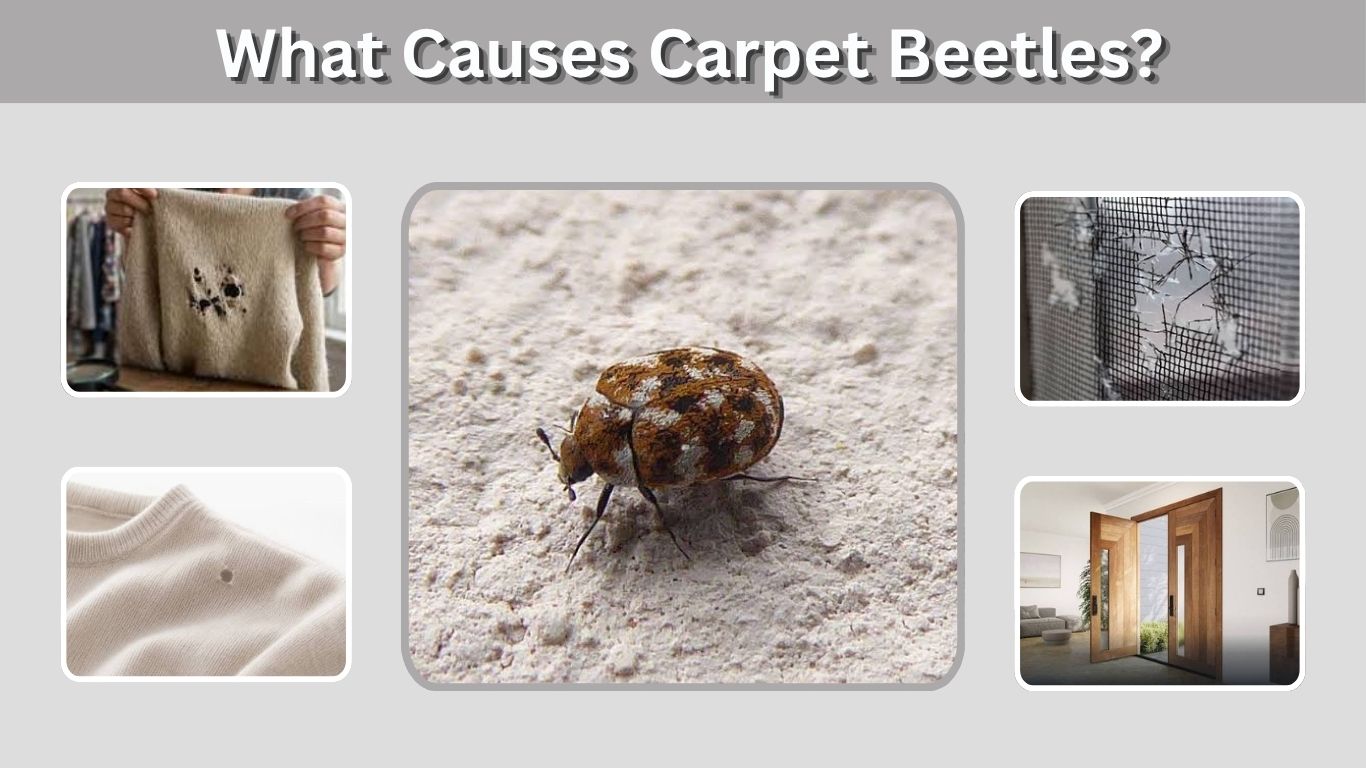
Carpet beetles are common household pests that can damage clothing, carpets, furniture, and other natural materials. But what causes carpet beetles to appear in your home, even when everything looks clean? These insects usually enter through windows, doors, or infested belongings and reproduce where they find suitable food sources. Pet hair, natural fibers, dead insects, and hidden debris can support their development. Understanding the causes of carpet beetle infestations, their warning signs, and effective prevention methods can help you protect your home from these unwanted pests.
What Causes Carpet Beetles in Your House?
The main cause of carpet beetles in a house is the availability of food and suitable breeding locations. Adult beetles often enter homes from outdoors, while their larvae develop in dark, undisturbed areas containing animal-based materials. Even regularly cleaned homes can experience infestations when insects find hidden food sources.
9 Common Causes of Carpet Beetles
- Accumulated pet hair: Shed hair from cats and dogs contains keratin, which carpet beetle larvae can digest.
- Natural fiber carpets: Wool rugs, carpets, silk fabrics, and other animal-derived materials provide suitable food for larvae.
- Open windows and doors: Adult carpet beetles can fly indoors through unscreened windows, doors, and other openings.
- Dead insects: Insect remains inside attics, wall cavities, and window frames attract scavenging larvae.
- Stored clothing: Wool sweaters, fur garments, and unwashed clothing can support infestations when stored for extended periods.
- Dust and lint buildup: Accumulations beneath furniture, along baseboards, and inside closets may contain edible organic debris.
- Bird and animal nests: Abandoned nests near roofs, vents, or attics can harbor carpet beetles feeding on feathers and animal remains.
- Infested secondhand furniture: Used carpets, upholstered furniture, and textiles may introduce carpet beetle eggs or larvae.
- Neglected storage areas: Dark closets, basements, and attics allow larvae to develop without frequent disturbance.
How Do Carpet Beetles Get Into Your Home?
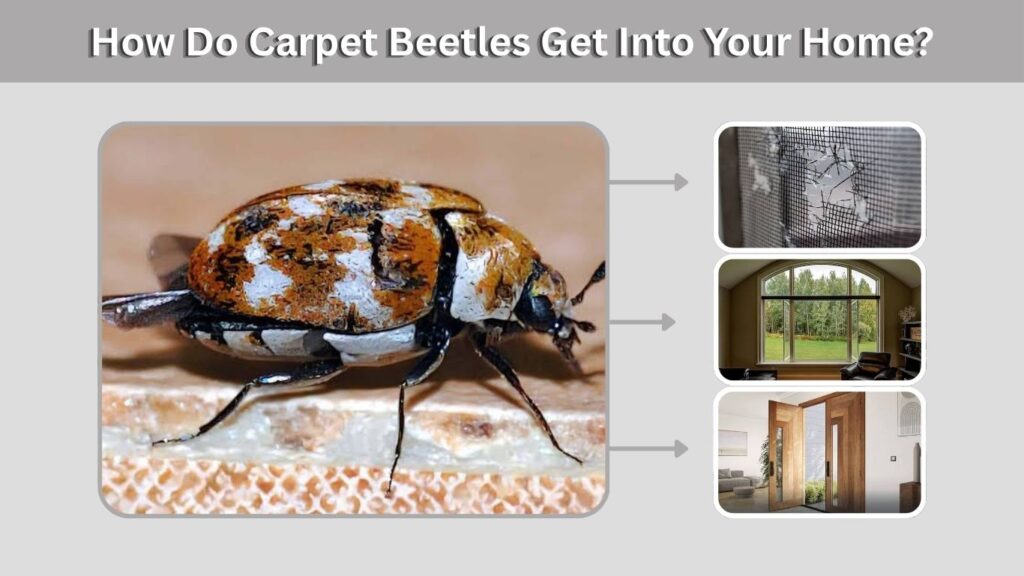
Carpet beetles commonly originate outdoors, where adults may feed on pollen and nectar. They can enter residential buildings while searching for sheltered places to reproduce. Finding a few adults near a window does not automatically indicate an established infestation, but repeated sightings or the presence of larvae deserve investigation.
Adult Carpet Beetles Flying Indoors
Adult carpet beetles can enter through open windows, doors, damaged screens, and ventilation openings. They are sometimes attracted to light and frequently appear near windowsills.
Once indoors, females may deposit eggs in protected places containing suitable food for developing larvae. These locations often include wool carpets, upholstered furniture, and stored natural-fiber clothing.
Carpet Beetles Arriving With Household Items
Carpet beetles can also travel indoors on infested clothing, secondhand furniture, rugs, and stored fabrics. Adult beetles may occasionally arrive on fresh flowers.
Inspecting used furnishings and cleaning textiles before bringing them inside can reduce the likelihood of introducing an infestation.
What Causes Carpet Beetle Larvae and Infestations?
Carpet beetle larvae develop from eggs laid by adult female beetles. Their survival depends on available food, suitable environmental conditions, and protected hiding places. Although adult beetles are often easier to notice, the larvae are responsible for most household fabric damage and can remain hidden for long periods.
Why Carpet Beetle Larvae Appear
Female beetles lay eggs near materials their offspring can consume. After hatching, the larvae begin feeding on suitable organic substances.
They often develop beneath furniture, behind baseboards, inside closets, and near animal-derived materials.
Because larvae avoid frequent disturbance, an infestation may grow unnoticed until fabric damage or shed larval skins become visible.
Why Carpet Beetle Infestations Spread
Infestations spread when larvae find additional food sources throughout a building.
Stored clothing, furniture upholstery, lint, and dead insects can sustain populations in different rooms. Larvae may also wander away from their original feeding locations.
Eliminating only visible adult beetles will not resolve an infestation if developing larvae remain hidden.
What Causes Black and Varied Carpet Beetles?
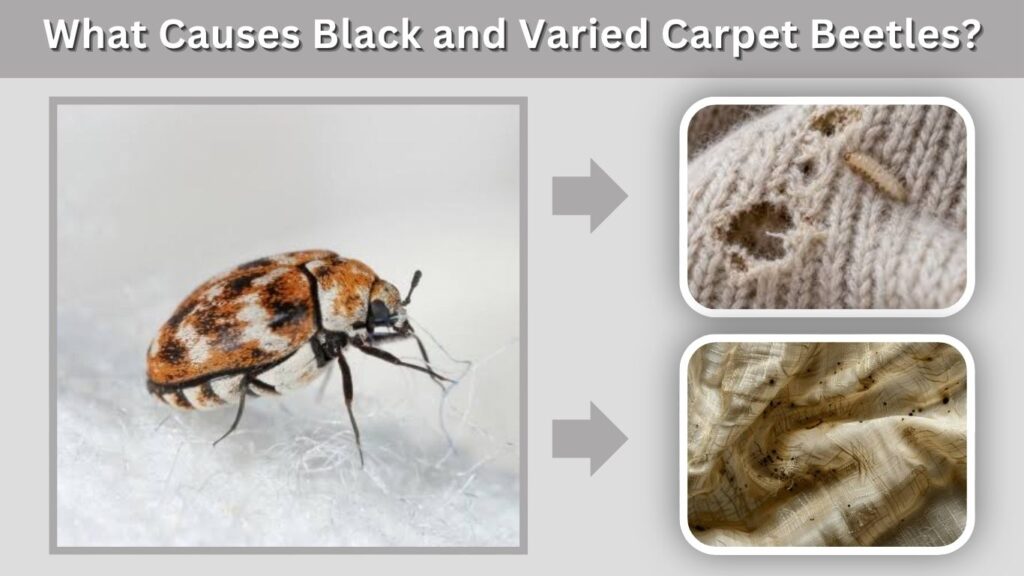
Black carpet beetles and varied carpet beetles are two common types found in homes. Both can originate outdoors and establish indoor populations when suitable food sources are available. However, their appearance, preferred feeding materials, and developmental habits differ, making proper identification useful when investigating an infestation.
Causes of Black Carpet Beetles
Black carpet beetles are commonly associated with animal-based materials, including wool, fur, feathers, and accumulated hair.
Depending on the species and conditions, larvae may also develop in certain stored food products.
They often remain hidden in protected indoor locations, including storage spaces and areas beneath furniture.
Causes of Varied Carpet Beetles
Varied carpet beetles frequently enter homes from outdoor environments, including gardens and flowering plants.
Their larvae feed on wool, silk, feathers, dead insects, and other animal-derived materials.
They may develop inside closets, carpets, upholstered furniture, and abandoned insect or bird nests.
Can Carpet Beetles Cause Skin Problems or Damage?
Carpet beetles are primarily fabric pests, but their larvae can also trigger skin irritation in sensitive individuals. The severity of these reactions varies from person to person. Identifying whether the problem involves skin irritation, damaged household materials, or both can help determine the appropriate response.
Can Carpet Beetles Cause Rashes and Allergies?
Carpet beetles do not bite humans. However, tiny hairs on their larvae can cause allergic skin reactions known as carpet beetle dermatitis.
Possible symptoms include itching, redness, and small raised bumps resembling insect bites.
Some sensitive individuals may also experience eye or respiratory irritation. Carpet beetles are not an established direct cause of eczema or hair loss.
Persistent or severe symptoms require medical evaluation because other conditions can produce similar reactions.
What Damage Do Carpet Beetles Cause?
Carpet beetle larvae can damage wool carpeting, blankets, silk clothing, upholstered furniture, fur, and feathers.
Their feeding may create irregular holes, thinning fabric, or damaged patches.
Adult beetles generally do not cause this damage because their feeding habits differ from those of larvae.
Severe infestations can affect multiple stored textiles and household furnishings.
How to Identify the Source of Carpet Beetles
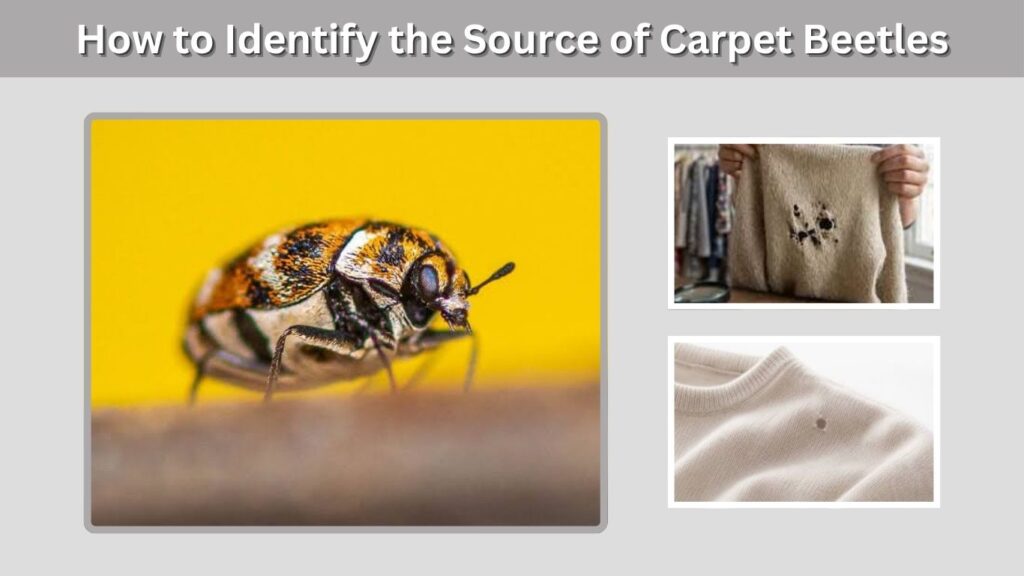
Finding the original infestation source is essential for effective control. Carpet beetles may develop far from the areas where adults are first noticed. Inspect locations containing natural fibers, dust, animal hair, and other organic materials, especially spaces that are rarely cleaned or disturbed.
Common Signs of Carpet Beetle Infestations
- Small adult beetles: Look for oval, dark, or patterned beetles around windows and light fixtures.
- Hairy larvae: Inspect carpet edges, closets, furniture seams, and storage areas for small, bristly larvae.
- Shed larval skins: Empty, brownish skins often indicate that larvae have been developing nearby.
- Damaged fabrics: Irregular holes in wool, silk, or other vulnerable materials may indicate feeding.
- Hidden organic debris: Check for accumulated hair, lint, insect remains, or abandoned animal nests.
Finding one adult beetle is not necessarily cause for concern. However, repeated sightings of larvae or damaged textiles suggest a possible established infestation.
How to Get Rid of Carpet Beetles and Prevent Them
Effective carpet beetle control focuses on removing food sources, eliminating developing larvae, and preventing additional insects from entering. Regular cleaning is often more important than applying insecticides. When infestations persist, targeted treatment may be necessary after locating the affected materials and breeding areas.
Effective Carpet Beetle Prevention and Removal Methods
- Vacuum thoroughly: Clean carpets, furniture edges, closets, and baseboards. Empty the vacuum promptly after cleaning infested areas.
- Wash affected fabrics: Use suitable hot-water washing, heated drying, or professional dry cleaning to eliminate insects from washable materials.
- Store clothing securely: Keep clean wool, silk, and other vulnerable items inside sealed, insect-resistant containers.
- Remove food sources: Eliminate excessive pet hair, lint, dead insects, and infested materials from hidden locations.
- Inspect entry points: Repair damaged window screens, seal openings, and inspect secondhand furniture before bringing it indoors.
- Check storage areas: Examine attics, closets, basements, and unused furniture regularly for larvae and shed skins.
- Consider professional treatment: If infestations continue, contact a qualified pest management professional. Use pesticides only when labeled for the intended application.
Maintaining clean storage spaces and monitoring vulnerable materials helps reduce the likelihood of recurring carpet beetle problems.
FAQs
1. What Is the Main Cause of Carpet Beetles?
The main cause of carpet beetles is the presence of suitable food sources for their larvae. Wool, animal hair, feathers, dead insects, and natural-fiber textiles can attract egg-laying females and support larval development. Adult beetles usually enter homes from outside.
2. What Causes Carpet Beetles in Your Bed?
Carpet beetle larvae may appear in beds when they find accumulated hair, feathers, wool blankets, or other suitable materials. They do not feed on human blood. Regularly washing bedding, cleaning mattresses, and inspecting nearby furniture can help reduce their presence.
3. Can Carpet Beetles Cause Itching and Hives?
Carpet beetle larvae can cause itchy rashes and allergic skin reactions in susceptible individuals. Some reactions may resemble hives, although their appearance alone cannot confirm the cause. Persistent skin symptoms should be evaluated by a healthcare professional to exclude other conditions.
4. What Causes Carpet Beetles in a Car?
Carpet beetles may enter vehicles through open windows or arrive on infested belongings. Accumulated pet hair, food debris, and natural-fiber upholstery can provide suitable food for some species. Vacuuming seats, floor mats, and hidden compartments helps reduce potential infestation sources.
5. Is Finding One Carpet Beetle a Cause for Concern?
Finding one adult carpet beetle does not necessarily mean your home is infested. Adults occasionally fly indoors from outside. However, discovering multiple larvae, shed skins, or damaged natural-fiber materials may indicate an established population that requires further inspection and cleaning.
