
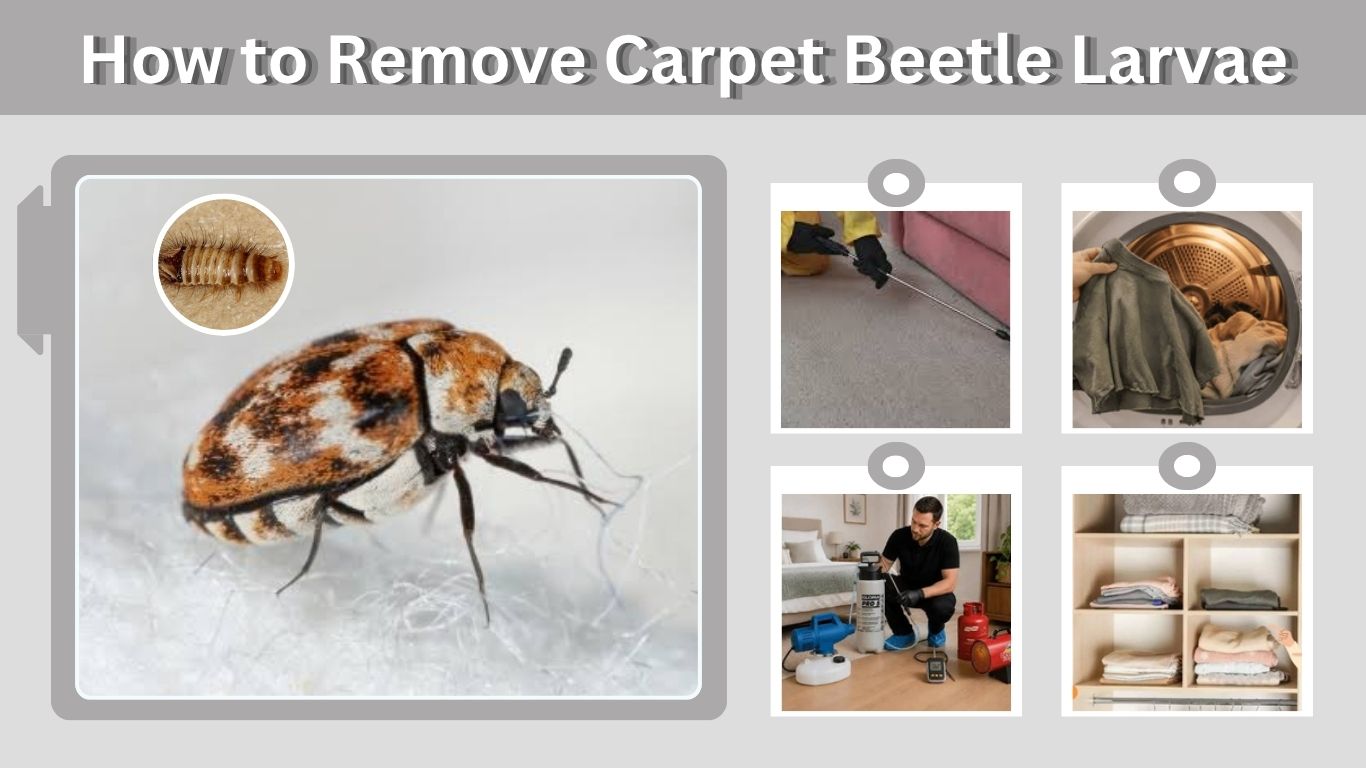
Carpet beetle larvae can damage carpets, clothing, furniture, and other household materials if they remain undetected. These tiny, hairy insects often hide in dark areas where they feed on natural fibers, pet hair, and organic debris. Fortunately, removing carpet beetle larvae is possible with proper cleaning, heat treatment, and preventive measures. Many homeowners also consider using vinegar, baking soda, or insecticides to eliminate infestations. Understanding which treatments work, where larvae hide, and how to prevent their return will help protect your belongings and keep your home pest-free.
How to Identify Carpet Beetle Larvae in Your Home
Before removing carpet beetle larvae, it is important to identify them correctly. They are the immature stage of carpet beetles and cause most of the damage associated with these household pests. Unlike adult beetles, larvae prefer dark, protected locations and may remain hidden for extended periods.
What Do Carpet Beetle Larvae Look Like?
Carpet beetle larvae are small, elongated insects with brownish or tan bodies covered in bristles. Depending on the species, they may appear striped, fuzzy, or slightly tapered.
They move slowly and frequently hide beneath carpets, inside furniture, and among stored fabrics. Their shed skins can resemble dead insects and are a common sign of infestation.
Common Signs of Carpet Beetle Larvae
- Small, hairy larvae crawling near carpets or baseboards.
- Irregular holes in wool clothing, blankets, and rugs.
- Brownish shed skins inside closets or drawers.
- Damaged upholstery or natural-fiber fabrics.
- Larvae hiding beneath furniture or around carpet edges.
Finding several larvae or damaged materials suggests that a more thorough inspection is necessary.
How to Remove Carpet Beetle Larvae by Vacuuming
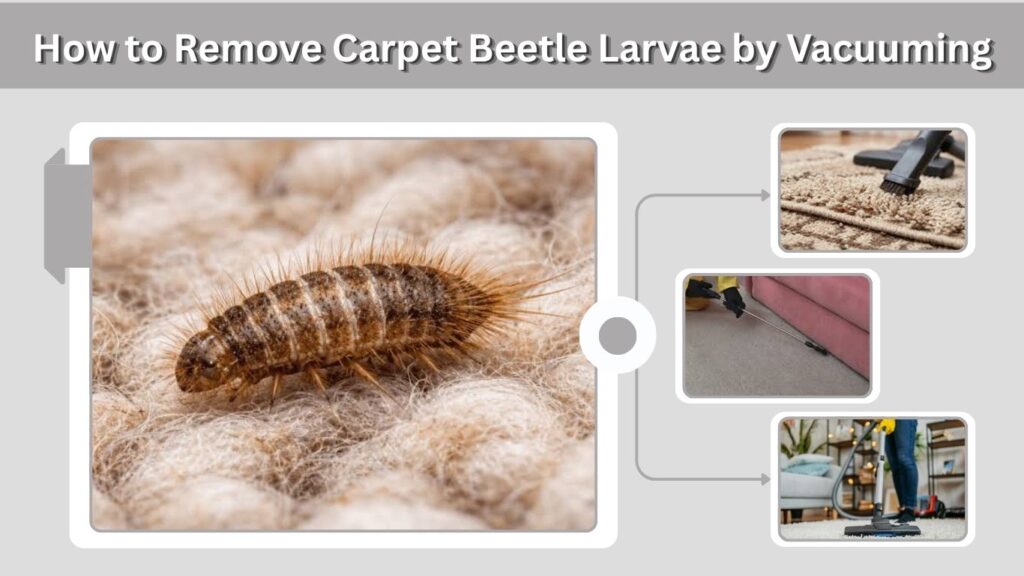
Vacuuming is one of the most effective first steps for removing carpet beetle larvae. It physically removes exposed larvae, eggs, shed skins, and the organic debris they consume. Frequent vacuuming also reduces food sources that allow infestations to continue.
Step-by-Step Vacuuming Method
- Start with carpet edges: Vacuum along baseboards, corners, and beneath furniture where larvae frequently hide.
- Clean upholstered furniture: Use suitable attachments to vacuum cushions, seams, and crevices.
- Inspect closets: Remove stored items and vacuum shelves, corners, and floors.
- Reach hidden spaces: Clean beneath beds, behind furniture, and near heating vents.
- Dispose of debris: Empty the vacuum canister or discard the bag promptly in a sealed outdoor trash container.
How Often Should You Vacuum?
During an active infestation, vacuum affected areas frequently, ideally every day or two initially. Continue inspecting and cleaning regularly until evidence of larvae disappears.
Vacuuming alone may not eliminate larvae hidden deep inside furniture or inaccessible spaces. Combining it with fabric treatment and removal of infested materials provides better results.
How to Remove Carpet Beetle Larvae From Clothes and Bedding
Carpet beetle larvae commonly develop inside stored clothing, blankets, bedding, and other fabrics containing animal-derived fibers. Treating these materials helps eliminate insects at multiple life stages and prevents them from spreading to clean items.
Washing Clothes to Remove Larvae
Wash infested clothing using the hottest water permitted by its care label. Thorough hot-water laundering can kill carpet beetle larvae and eggs.
For suitable fabrics, follow washing with an appropriate heated drying cycle.
After cleaning, inspect garments for damage and store them in sealed containers until the infestation is controlled.
Removing Larvae From Delicate Fabrics
Wool, silk, and other delicate materials may be damaged by hot washing or heated drying. Professional dry cleaning is often a better option for these fabrics.
Keep infested garments isolated in sealed bags before treatment to avoid transferring larvae to other clothing.
Do not apply household insecticide sprays directly to clothing or bedding unless their labels specifically authorize that use.
How to Remove Carpet Beetle Larvae With Vinegar
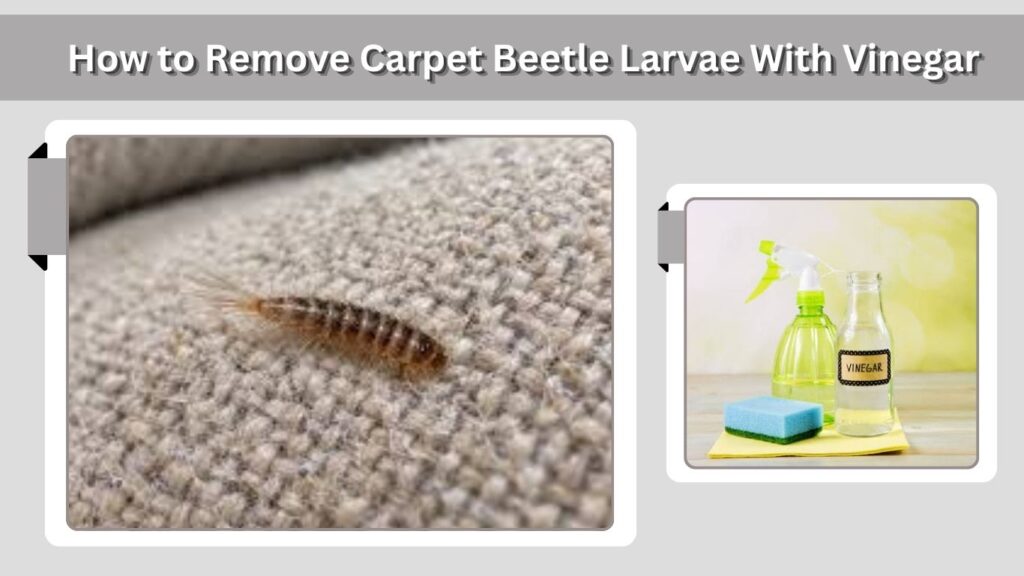
Vinegar is a popular household cleaning ingredient, but its effectiveness against carpet beetle larvae is often exaggerated. Although vinegar can help remove surface residue and dirt, there is insufficient reliable evidence that ordinary household vinegar consistently kills carpet beetle eggs or larvae.
It should be considered a cleaning aid rather than a complete pest-control treatment.
How to Use Vinegar for Cleaning
If the surface is suitable for vinegar, follow these steps:
- Mix equal amounts of white vinegar and water in a clean spray bottle.
- Test the solution on a small, hidden section of the surface.
- Lightly apply it to compatible hard surfaces, avoiding delicate fabrics.
- Wipe away dirt, dust, and organic residue.
- Allow the cleaned area to dry completely before replacing stored belongings.
Never mix vinegar with bleach or other cleaning chemicals.
Will Vinegar Kill Carpet Beetle Larvae?
Vinegar is not a dependable method for killing carpet beetle larvae or their eggs. Even if direct contact affects an individual insect, it cannot reliably reach hidden larvae inside carpet padding, furniture, or stored materials.
Vacuuming, suitable laundering, dry cleaning, and controlled temperature treatments are more effective approaches.
How to Remove Carpet Beetle Larvae From Carpets and Furniture
Carpets and upholstered furniture provide protected environments where larvae can remain undisturbed. Wool carpets, furniture containing animal-based stuffing, and areas where pet hair accumulates are particularly vulnerable. Thoroughly cleaning these surfaces helps remove larvae and prevents continued feeding.
Steam Cleaning Carpets
Steam cleaning may help control carpet beetle larvae when sufficient heat reaches the insects.
However, effectiveness depends on the equipment, fabric thickness, and actual temperature achieved inside the material.
Vacuum thoroughly before steam cleaning. Follow the carpet manufacturer’s instructions and allow surfaces to dry properly to avoid moisture damage.
Professional cleaning may be necessary for valuable rugs or severe infestations.
Cleaning Upholstered Furniture
Remove cushions and inspect the seams, underside, and internal openings of upholstered furniture.
Vacuum accessible areas carefully, especially where lint and animal hair collect.
If larvae are established deep inside feather-filled or animal-hair upholstery, ordinary surface cleaning may be insufficient. Professional treatment or replacement of heavily infested materials may be necessary.
Can Heat, Freezing, or Insecticides Kill Carpet Beetle Larvae?
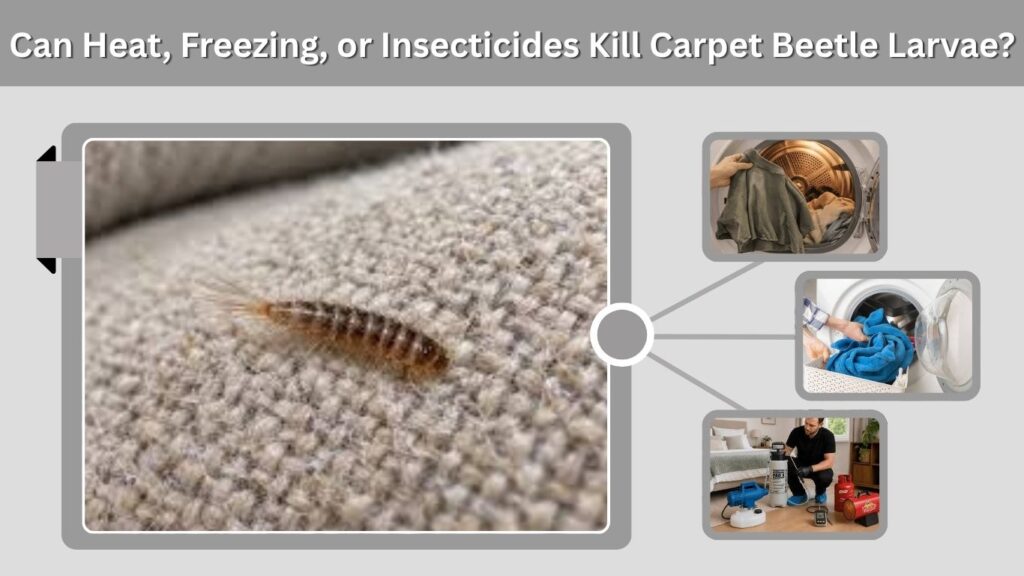
Temperature treatments and properly selected insecticides can help eliminate carpet beetle larvae. However, each approach has limitations, and certain treatments may damage delicate household materials. Choose methods based on the affected item and follow product instructions carefully.
Effective Temperature Treatments
- Hot-water washing: Suitable hot-water laundering can kill larvae and eggs in washable fabrics.
- Heated drying: Proper dryer temperatures and sufficient exposure can eliminate insects from heat-tolerant clothing.
- Freezing: Sealed, infested items can be treated using sufficiently low freezer temperatures for an appropriate duration. Freezing protocols may require up to two weeks, depending on temperature and material.
- Professional heat treatment: Controlled heating can treat certain items that cannot be washed.
Avoid exposing delicate fabrics, leather, or heat-sensitive belongings to extreme temperatures without checking their care requirements.
Using Insecticides Safely
Some insecticides labeled for carpet beetles can help control larvae in cracks, crevices, and other approved treatment areas.
However, chemical treatments work best after removing food sources and thoroughly cleaning affected locations.
Do not spray insecticides onto mattresses, bedding, clothing, or pet resting areas unless the product label explicitly permits the application.
For extensive infestations, consult a qualified pest management professional.
Why Do Carpet Beetle Larvae Keep Coming Back?
Carpet beetle larvae frequently reappear when hidden food sources or breeding locations remain untreated. Removing a few visible insects does not eliminate eggs or larvae developing elsewhere. Successful control requires identifying the source of the infestation.
Common Hiding Places to Inspect
- Carpet edges and baseboards: Larvae hide in protected gaps containing lint and hair.
- Closets and storage containers: Stored wool, silk, fur, and feathers provide food.
- Furniture and mattresses: Seams, stuffing, and accumulated organic material can support larvae.
- Attics and wall spaces: Dead insects, abandoned nests, and animal remains may harbor infestations.
- Pet resting areas: Shed fur and debris can attract developing larvae.
Removing Hidden Food Sources
Clean beneath furniture, around vents, and inside storage spaces.
Remove accumulated hair, dead insects, old spider webs, and badly infested materials. Inspect accessible abandoned bird or animal nests and arrange safe removal when necessary.
Eliminating the original food source is essential to preventing recurring infestations.
How to Prevent Carpet Beetle Larvae From Returning
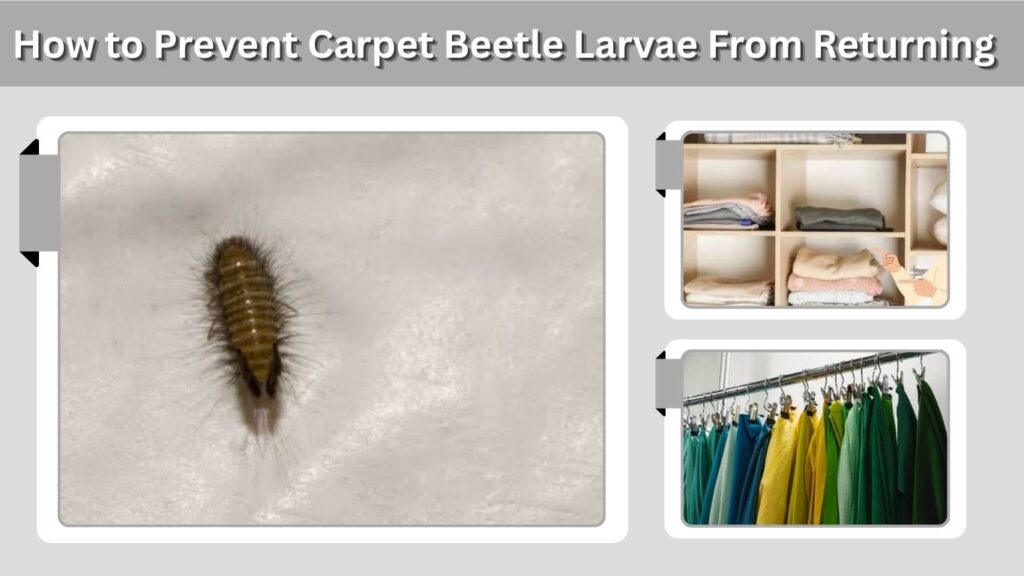
Long-term prevention involves regular cleaning and protecting vulnerable materials. Adult carpet beetles may enter homes through windows or arrive with secondhand furniture and fabrics, so continued monitoring is important even after successful treatment.
Practical Carpet Beetle Prevention Tips
Store clean wool clothing, silk garments, and other vulnerable belongings inside tightly sealed containers.
Vacuum carpets and furniture regularly, particularly around baseboards, closets, and pet resting areas. Inspect secondhand furniture and repair damaged window screens.
Avoid storing dirty or stained clothing for long periods because organic residues can provide additional food sources.
When Should You Call Pest Control?
Professional pest control may be necessary if larvae repeatedly appear despite thorough cleaning and fabric treatment.
A specialist can investigate inaccessible breeding locations, identify the infestation source, and recommend appropriate targeted treatments.
Professional assistance is especially useful when valuable carpets, large upholstered furniture, or multiple rooms are affected.
FAQs
1. What Is the Fastest Way to Remove Carpet Beetle Larvae?
The fastest practical approach combines thorough vacuuming, removing heavily infested materials, and washing or dry-cleaning affected fabrics. Targeting hidden breeding locations is essential because removing visible larvae alone will not eliminate eggs or insects developing elsewhere in the home.
2. Can Vinegar Completely Remove Carpet Beetle Larvae?
No, vinegar cannot reliably eliminate an established carpet beetle infestation. It may help clean compatible household surfaces, but it is not a proven treatment for hidden larvae or eggs. Vacuuming, suitable heat treatment, and professional dry cleaning are more dependable.
3. Will Carpet Beetle Larvae Die in the Washing Machine?
Carpet beetle larvae can die during properly conducted hot-water laundering. However, cool or short washing cycles may not reliably kill every insect. Follow garment care instructions and use suitable heated drying or professional dry cleaning when necessary.
4. Can Carpet Beetle Larvae Live in Your Mattress?
Carpet beetle larvae may occur around mattresses when they find animal hair, feathers, wool, or other suitable materials. They do not feed on human blood. Inspecting seams, vacuuming accessible areas, and cleaning surrounding bedding can help address the problem.
5. How Long Does It Take to Get Rid of Carpet Beetle Larvae?
Small, localized infestations may be controlled relatively quickly once the source is found and treated. Larger infestations can require several weeks of cleaning and monitoring. The duration depends on hidden breeding locations, infestation severity, and treatment effectiveness.
