
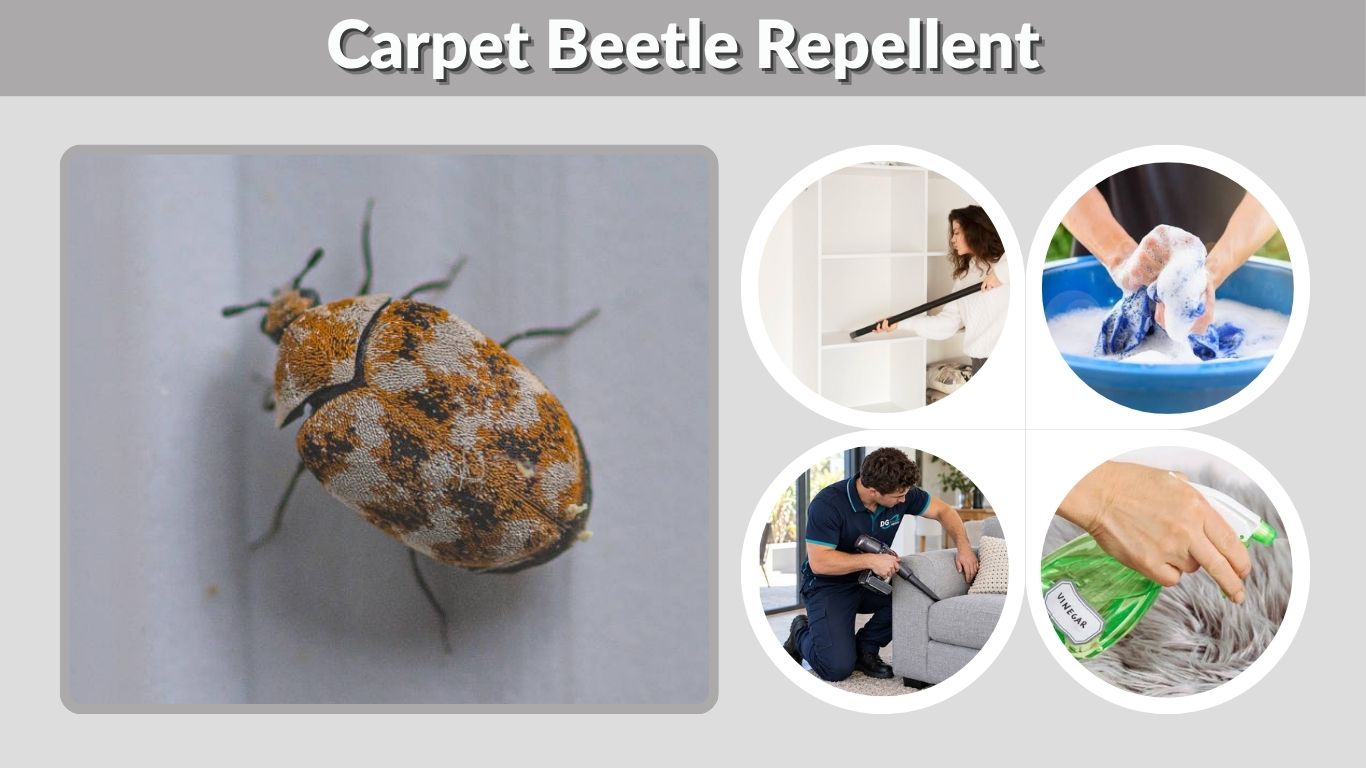
Finding an effective carpet beetle repellent can help protect your clothing, furniture, rugs, and other household fabrics from damage. Carpet beetle larvae feed on natural fibers such as wool, silk, fur, and feathers, making them troublesome indoor pests. Many homeowners try natural remedies like cedarwood, lavender, peppermint oil, and vinegar to keep these insects away. However, not every popular repellent works reliably. Understanding which methods actually prevent infestations can save time and protect valuable belongings. This guide explores natural carpet beetle repellents, their effectiveness, and practical ways to keep these unwanted insects out of your home.
What Repels Carpet Beetles?
Carpet beetles are best prevented by removing their food sources, blocking entry points, and protecting vulnerable fabrics. Although certain natural substances are promoted as repellents, most have limited evidence supporting their effectiveness in real homes.
The larvae cause most fabric damage, while adult carpet beetles usually feed on pollen and nectar outdoors.
Best Carpet Beetle Repellent Methods
The following approaches can help reduce carpet beetle activity:
- Regular Vacuuming: Removes larvae, eggs, hair, lint, and other food sources.
- Airtight Storage: Prevents adult beetles from laying eggs on vulnerable fabrics.
- Cedarwood Products: May affect very young larvae, but provide unreliable protection.
- Lavender: Commonly used in closets, although its effectiveness against carpet beetles remains unproven.
- Essential Oils: Some show insect activity in laboratory studies, but household results are uncertain.
- Hot Washing: Kills carpet beetles on washable materials when appropriate temperatures are used.
- Exclusion: Sealing gaps and repairing screens reduces beetle entry.
Among these options, thorough cleaning and proper storage offer the most dependable protection.
Does Cedar Repel Carpet Beetles?
Cedarwood is widely promoted as a natural carpet beetle repellent because it contains aromatic oils.
Certain cedar compounds can affect insects, particularly small larvae. However, cedar blocks and chests do not consistently repel carpet beetles or prevent infestations.
Cedar Blocks, Balls, and Chests
Cedar blocks and balls are commonly placed inside closets, drawers, and storage containers.
Their effectiveness depends on the wood’s age, oil concentration, and surrounding conditions.
Cedar loses volatile oils over time, making older products less useful.
Even fresh cedar should not replace proper cleaning or airtight storage. A tightly sealed storage container provides better long-term fabric protection than an unsealed cedar chest.
Does Lavender Repel Carpet Beetles?
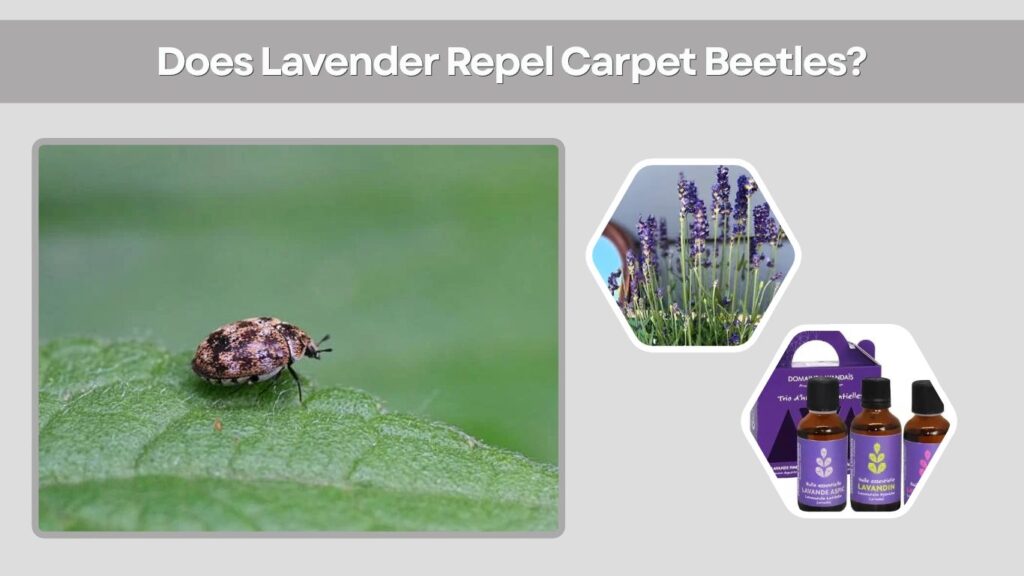
Lavender is a popular household fragrance commonly used to discourage insects. Dried lavender sachets are often placed in clothing drawers and wardrobes.
However, there is insufficient reliable evidence that lavender consistently repels carpet beetles or prevents their larvae from damaging fabrics.
Lavender Oil and Dried Lavender
Lavender products are available in several forms, including:
- Dried lavender flowers
- Lavender sachets
- Lavender essential oil
- Lavender-scented storage products
These products can make storage spaces smell pleasant, but they should not be treated as dependable carpet beetle control methods.
Concentrated lavender oil may also stain fabrics or irritate pets, making direct application to clothing and furniture undesirable.
Does Peppermint Oil Repel Carpet Beetles?
Peppermint oil contains aromatic compounds that affect some insects. This has led to its popularity in homemade carpet beetle repellent recipes.
However, laboratory activity against certain insects does not establish that peppermint oil reliably repels carpet beetles inside homes.
Using Peppermint Oil Safely
Peppermint oil should not be sprayed indiscriminately around living spaces.
Concentrated essential oils may irritate skin, damage sensitive surfaces, or create risks for pets, particularly cats.
Instead of relying on peppermint sprays, homeowners should focus on finding infested fabrics, cleaning concealed areas, and removing the materials larvae consume.
Other Natural Carpet Beetle Repellents
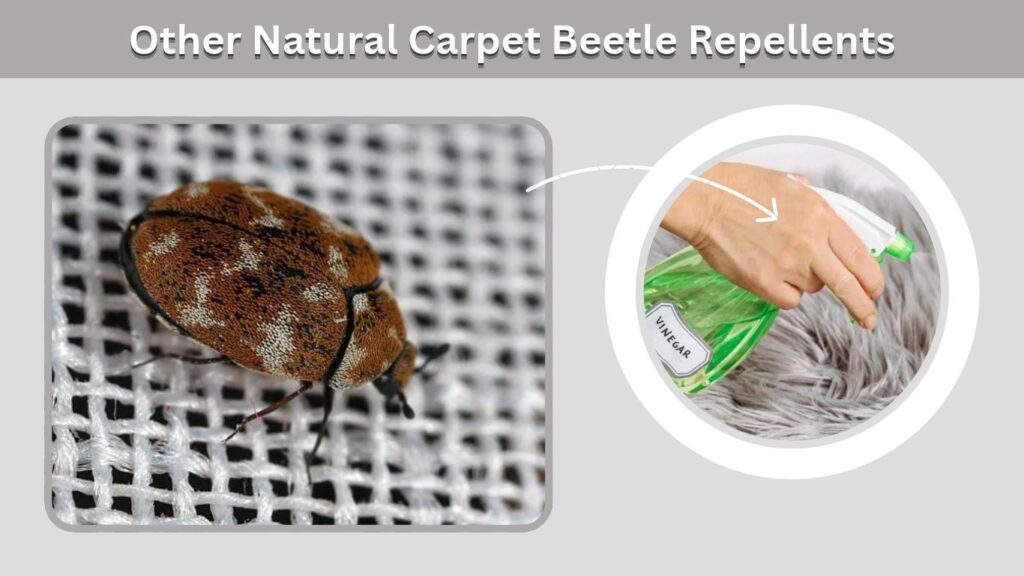
Several additional household substances are frequently recommended for carpet beetle prevention.
However, popularity does not necessarily mean that a remedy has been scientifically demonstrated to work.
Does Vinegar Repel Carpet Beetles?
Vinegar is sometimes promoted as a natural carpet beetle repellent. Nevertheless, there is little reliable evidence that ordinary household vinegar provides lasting repellency.
Diluted vinegar can help clean certain hard surfaces, but it does not reliably eliminate carpet beetle eggs or larvae hidden in fabrics.
Avoid using vinegar on delicate materials that may discolor or become damaged.
Does Eucalyptus Oil Repel Carpet Beetles?
Eucalyptus oil contains aromatic compounds with insecticidal activity against some insect species.
However, evidence supporting its effectiveness as a household carpet beetle repellent is limited.
Eucalyptus oil should not be assumed safe simply because it is plant-derived. Concentrated products can irritate people and may be toxic to pets.
Do Dryer Sheets Repel Carpet Beetles?
Dryer sheets are sometimes placed in drawers or closets because of their strong fragrance.
However, there is no convincing evidence that ordinary dryer sheets reliably repel carpet beetles.
They cannot remove eggs, kill hidden larvae, or protect infested wool clothing. Clean, properly stored garments offer more reliable protection.
How to Repel Carpet Beetles Naturally
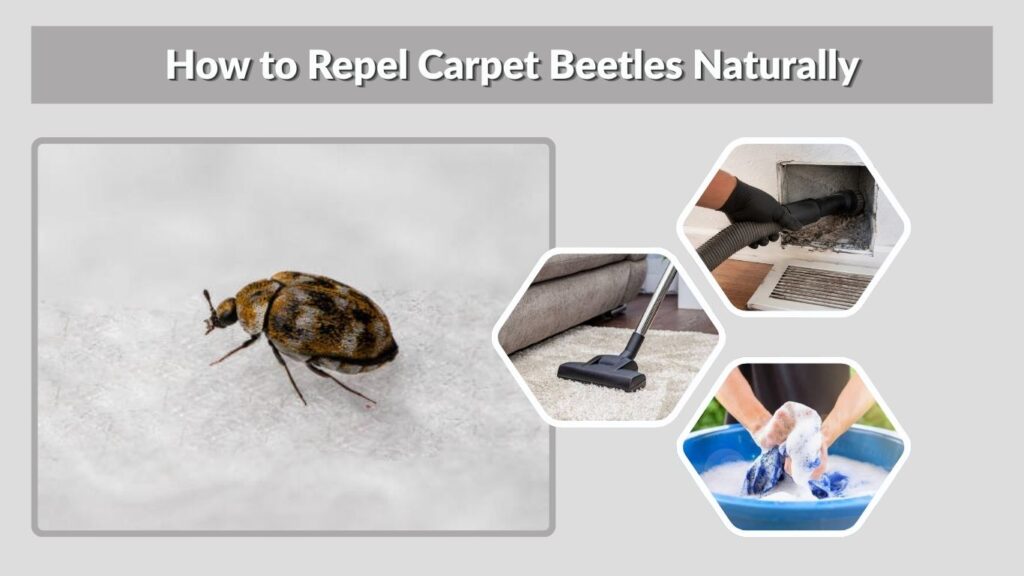
The most effective natural approach involves removing the conditions that allow carpet beetles to survive and reproduce.
Carpet beetle larvae frequently hide beneath furniture, near baseboards, inside closets, and in undisturbed fabric collections.
Natural Carpet Beetle Prevention Methods
- Vacuum Carpets Regularly: Focus on carpet edges, baseboards, and spaces beneath furniture.
- Remove Hair and Lint: Clean closets, heating vents, and concealed corners where organic debris collects.
- Wash Vulnerable Clothing: Launder washable fabrics according to their care labels.
- Store Clothes Properly: Place clean wool, silk, fur, and other animal-based materials in airtight containers.
- Inspect Secondhand Items: Check used rugs, furniture, and clothing for larvae before bringing them indoors.
- Clean Upholstered Furniture: Vacuum seams, cushions, and areas where pet hair accumulates.
- Seal Entry Points: Repair window screens and close gaps around doors and vents.
These measures reduce both potential food sources and opportunities for new infestations.
What Repels Carpet Beetle Larvae?
Carpet beetle larvae require special attention because they are responsible for most damage to fabrics and other household materials.
Unlike adults, larvae often remain hidden in dark, protected locations while feeding.
They can survive on wool, feathers, pet hair, dead insects, and accumulated organic debris.
Best Ways to Remove Carpet Beetle Larvae
Effective approaches include thorough vacuuming, appropriate laundering, dry cleaning, and carefully controlled temperature treatments.
Hot washing or professional dry cleaning can eliminate larvae and other life stages from suitable garments.
For some delicate items, carefully controlled freezing may also work, provided the temperature and duration are sufficient.
Always check the item’s care requirements before exposing it to heat or cold.
Avoid relying solely on scented products because hidden larvae can continue feeding despite the presence of fragrance.
Do Mothballs Repel Carpet Beetles?
Mothballs are pesticides, not ordinary household fragrance products.
When properly used in sealed containers according to their labels, certain mothball products release vapors capable of controlling fabric pests.
However, mothballs are not reliable general-purpose repellents in open closets or living spaces.
They can expose people and pets to harmful chemicals when used incorrectly.
Never scatter mothballs around rooms, place them near food, or use them outside the conditions specified on the product label.
How to Prevent Carpet Beetles from Coming Back
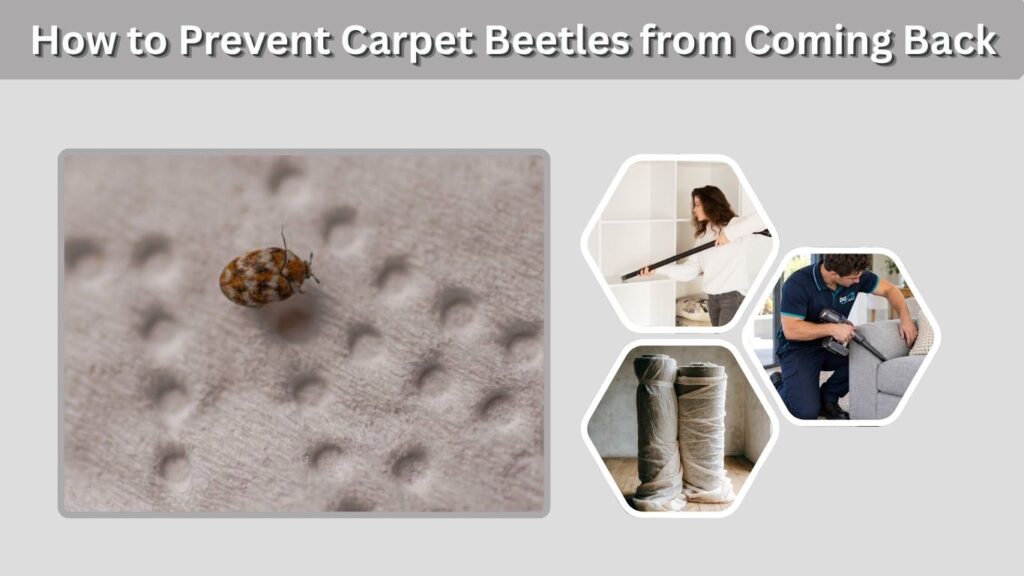
Long-term carpet beetle prevention requires continued attention to storage spaces and hidden food sources.
Simply removing visible adult beetles may not resolve an infestation because larvae can remain concealed for extended periods.
Inspect affected rooms regularly, especially where wool rugs, stored clothing, upholstery, or animal-based materials are present.
A few adults near windows do not necessarily indicate an active indoor infestation. Finding feeding larvae, shed skins, or fabric damage is a stronger reason to investigate.
If infestations continue despite thorough cleaning, consider contacting a licensed pest management professional.
FAQs
1. What scent repels carpet beetles the most?
No particular scent has been reliably established as the most effective carpet beetle repellent. Cedar, lavender, peppermint, and eucalyptus are commonly suggested, but their effectiveness in homes is uncertain. Proper cleaning, fabric storage, and exclusion provide more dependable protection.
2. Does cedarwood keep carpet beetles away?
Cedarwood contains natural oils that may affect small carpet beetle larvae, but cedar blocks and chests do not provide guaranteed protection. Their effectiveness also decreases as aromatic compounds dissipate. Airtight storage and cleaning are more reliable ways to protect vulnerable fabrics.
3. Can essential oils kill carpet beetles?
Some essential oil compounds demonstrate insecticidal activity in laboratory settings, but this does not mean homemade sprays reliably kill carpet beetles or their eggs. Concentrated oils can also create safety risks for pets and damage household materials.
4. Do ultrasonic pest repellers work on carpet beetles?
There is no convincing scientific evidence that consumer ultrasonic pest repellers reliably control carpet beetles. These devices should not replace proven prevention methods. Vacuuming, washing vulnerable fabrics, identifying larval food sources, and sealing entry points are more dependable approaches.
5. What is the best natural way to get rid of carpet beetles?
The best natural approach combines thorough vacuuming, appropriate laundering, and airtight storage. Removing hair, lint, dead insects, and infested materials eliminates important food sources. Regular inspections can help detect larvae before they cause significant damage to household fabrics.
