
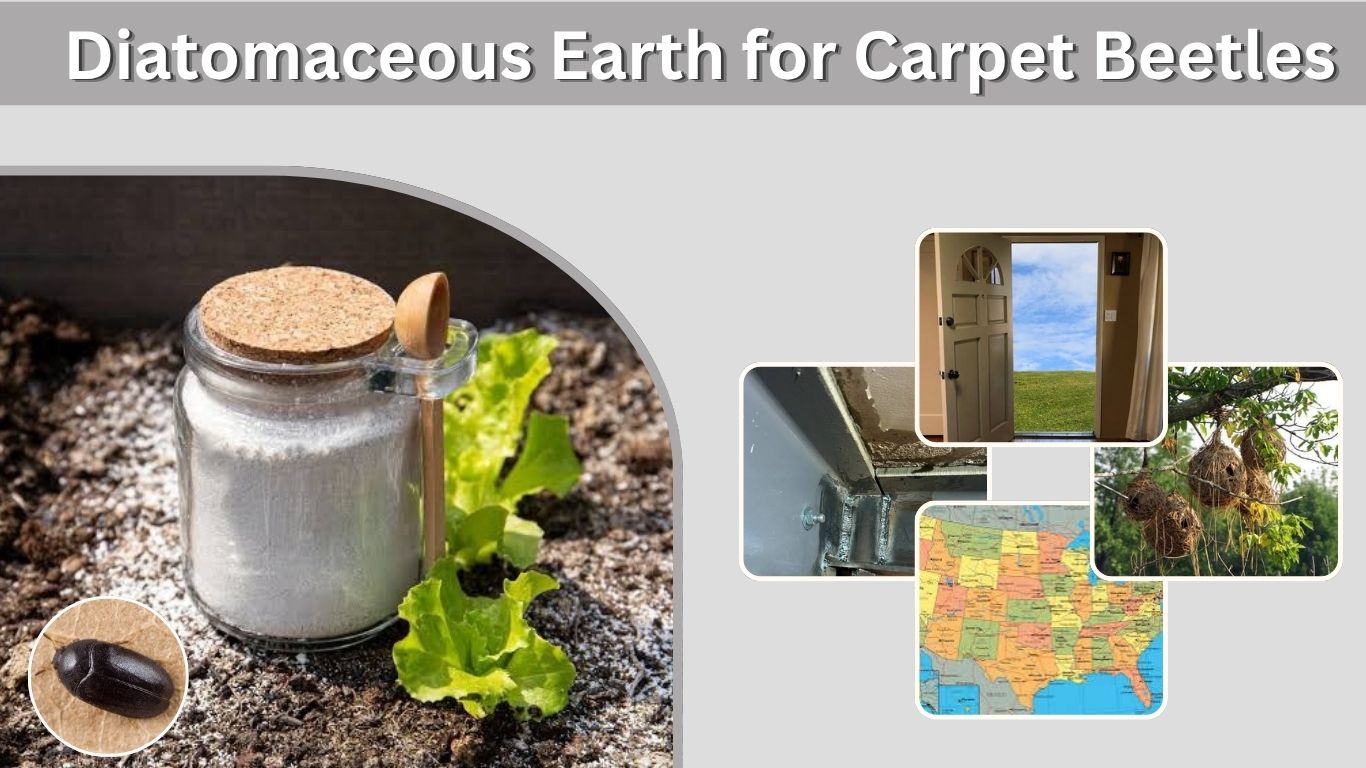
Diatomaceous earth for carpet beetles is a pest control method that can help eliminate these fabric-damaging insects. This fine, naturally occurring powder damages the protective outer layer of insects, eventually causing dehydration and death. Many homeowners use it to control carpet beetles hiding along baseboards, beneath furniture, and inside cracks. However, its effectiveness depends on proper application, moisture levels, and insect exposure. Understanding how diatomaceous earth works, how long it takes to kill carpet beetles, and where to apply it safely can help you manage infestations more effectively.
Does Diatomaceous Earth Kill Carpet Beetles?
Yes, diatomaceous earth can kill carpet beetles when they come into sufficient contact with an appropriate insecticidal formulation. It works through physical action rather than conventional chemical poisoning.
However, it does not instantly eliminate an infestation, and hidden insects may avoid treated areas.
How Does Diatomaceous Earth Work?
Diatomaceous earth consists of fossilized remains of microscopic aquatic organisms called diatoms. These remains contain silica, which forms a fine, abrasive powder.
When insects crawl through the material, the particles damage or absorb the protective waxy coating of their exoskeletons.
This allows moisture to escape, eventually causing dehydration.
Unlike many conventional insecticides, diatomaceous earth does not primarily target the insect’s nervous system.
Its effectiveness depends on direct contact and dry conditions.
Does It Work on All Carpet Beetle Species?
Diatomaceous earth may affect several carpet beetle species, including:
- Black Carpet Beetles: Adults and larvae may be susceptible to contact with insecticidal dust.
- Varied Carpet Beetles: Crawling individuals can encounter dust in treated hiding places.
- Furniture Carpet Beetles: Larvae hiding around upholstery and baseboards may contact the powder.
- Common Carpet Beetles: Insecticidal dust can affect exposed crawling stages.
Effectiveness varies according to the formulation, application location, and amount of contact.
Does Diatomaceous Earth Kill Carpet Beetle Larvae?
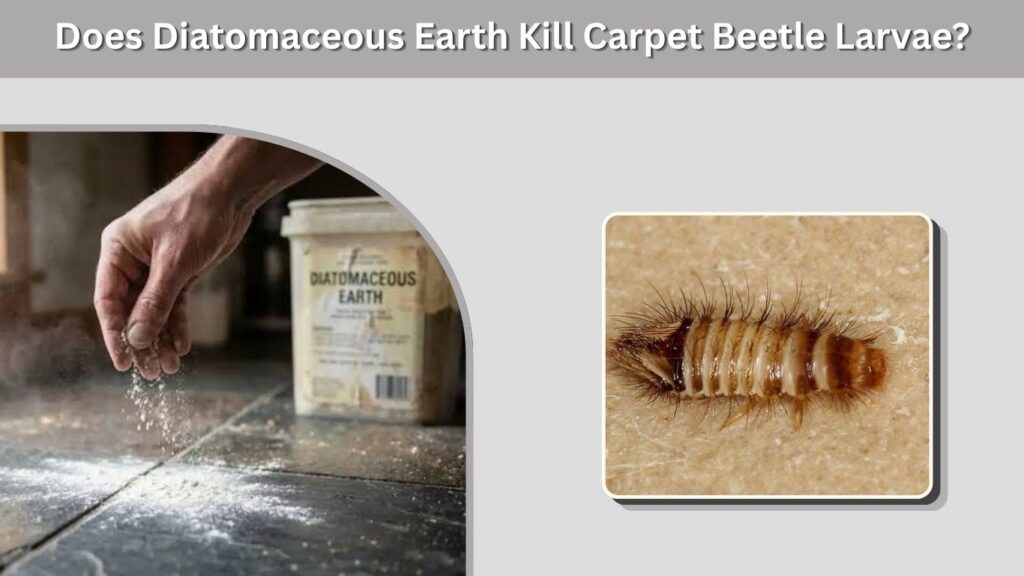
Diatomaceous earth can kill carpet beetle larvae, which are responsible for most household fabric damage.
Larvae feed on wool, fur, feathers, pet hair, and other animal-derived materials. They commonly hide in dark areas where homeowners rarely clean.
Because they move across surfaces while searching for food, larvae may encounter appropriately applied insecticidal dust.
How Diatomaceous Earth Affects Larvae
Carpet beetle larvae have protective outer coverings, but they can lose moisture when exposed to desiccant dust.
Several factors influence treatment effectiveness:
- Direct Contact: Larvae must encounter the treated material.
- Dry Conditions: Moisture reduces the powder’s effectiveness.
- Application Location: Dust must reach areas where larvae travel.
- Exposure Duration: Insects may require extended contact before dying.
- Food Sources: Remaining organic debris can support surviving larvae.
Diatomaceous earth is therefore most useful alongside thorough cleaning and removal of infested materials.
How to Use Diatomaceous Earth for Carpet Beetles
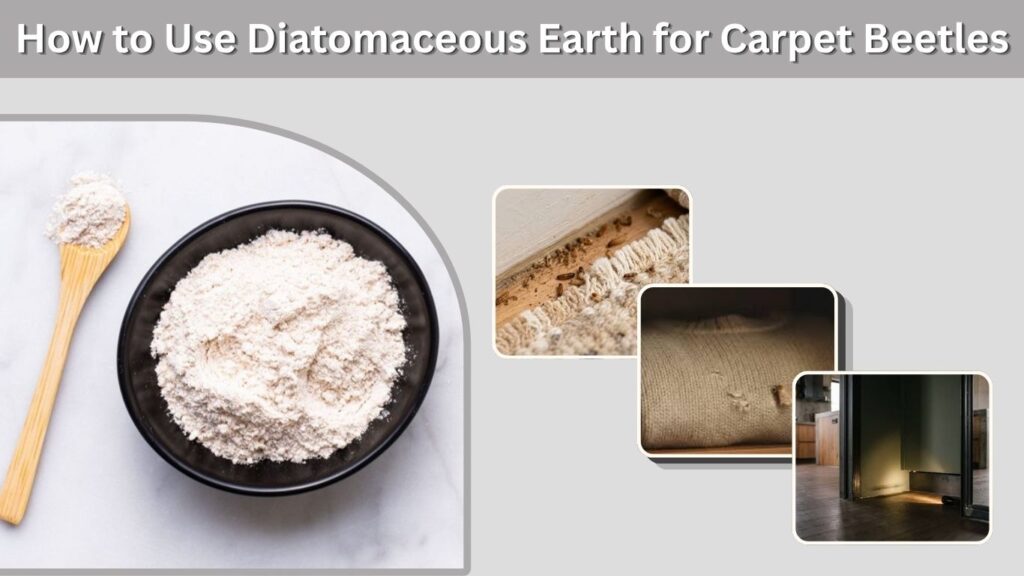
Using diatomaceous earth correctly is important for both effectiveness and household safety.
Choose an insecticide product registered for pest control and labeled for the intended pest and application area. Ordinary food-grade diatomaceous earth is not automatically appropriate for indoor insecticide use.
Step-by-Step Application Guide
- Inspect Infested Areas: Search carpet edges, closets, baseboards, and furniture for larvae, shed skins, or fabric damage.
- Vacuum Thoroughly: Remove visible insects, hair, lint, and other organic material before treatment.
- Choose the Correct Product: Use a labeled insecticidal diatomaceous earth formulation suitable for carpet beetles and the specific treatment location.
- Apply Carefully: Where permitted by the label, apply a light amount inside inaccessible cracks, crevices, or other designated locations.
- Limit Dust Exposure: Follow label requirements for protective equipment and keep children and pets away during application.
- Monitor Activity: Inspect affected locations for remaining larvae or evidence of continuing damage.
- Follow Label Instructions: Observe the product’s directions for treatment duration, cleanup, and any permitted reapplication.
Avoid spreading loose powder across entire carpets, bedding, furniture, or frequently used floors unless the product explicitly permits that application.
Where Should You Apply Diatomaceous Earth?
University extension guidance identifies cracks, crevices, and some carpet-edge locations as potential treatment areas for suitable insecticidal dusts.
Possible locations include:
- Inaccessible cracks along baseboards
- Protected gaps beneath fixed structures
- Concealed crevices near infested carpets
- Certain wall voids, when expressly permitted
- Other labeled treatment areas containing crawling larvae
Do not place dust inside ventilation ducts, near fans, on exposed sleeping surfaces, or anywhere it can readily become airborne.
How Long Does Diatomaceous Earth Take to Kill Carpet Beetles?
Diatomaceous earth does not kill carpet beetles immediately.
Individual exposed insects may die within days, but eliminating an infestation can take considerably longer.
According to the Illinois Department of Public Health, dust treatments for carpet beetles and clothes moths may require weeks to eliminate pests.
Factors Affecting Treatment Time
Several conditions influence how quickly diatomaceous earth works.
Humidity: The powder is more effective when dry. Moisture reduces its ability to damage the insect’s protective coating.
Contact: Beetles that never crawl through treated areas will remain unaffected.
Infestation Size: Larger infestations may contain larvae hidden in multiple locations.
Food Availability: Infested fabrics, pet hair, and dead insects can continue supporting surviving larvae.
Application Quality: Using the correct formulation in suitable locations improves the chances of successful treatment.
There is no scientifically established universal time frame for killing all carpet beetles with diatomaceous earth.
Does Diatomaceous Earth Kill Carpet Beetle Eggs?
Diatomaceous earth should not be relied upon to kill carpet beetle eggs.
Its main action involves damaging the protective outer surface of mobile insects, allowing moisture to escape.
Eggs are different from adult beetles and larvae, and there is insufficient evidence that ordinary diatomaceous earth treatments reliably eliminate carpet beetle eggs.
How to Eliminate Carpet Beetle Eggs
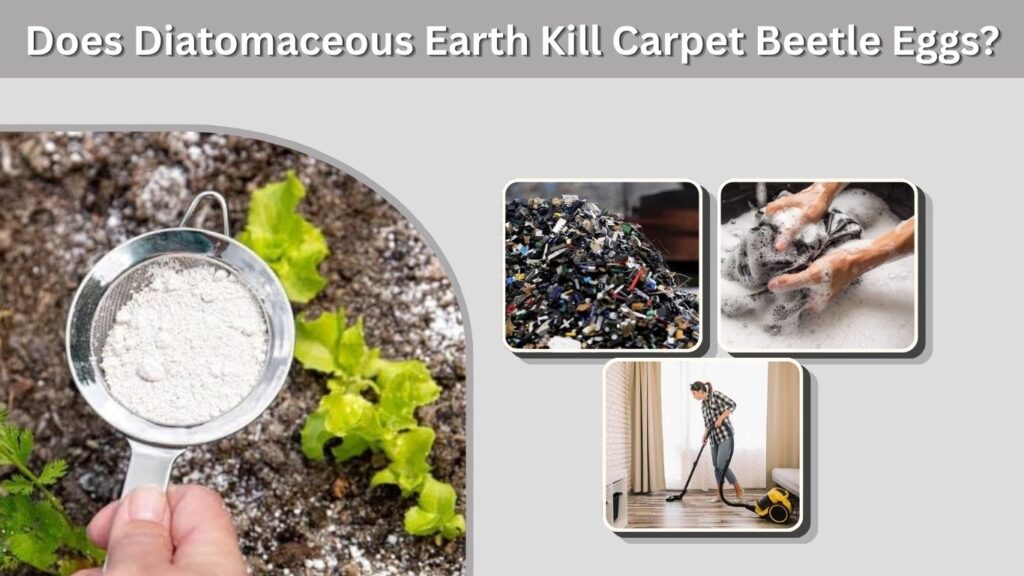
Several methods can help remove or destroy eggs:
- Vacuuming: Removes eggs from accessible surfaces and crevices.
- Hot Washing: Can kill eggs and larvae on suitable washable fabrics.
- Dry Cleaning: Provides an effective treatment for many delicate garments.
- Steam Cleaning: Can destroy insect stages when sufficient heat reaches them.
- Removing Infested Items: Eliminates heavily infested materials that cannot be salvaged.
Continue inspecting vulnerable fabrics after treatment because surviving eggs or hidden larvae may allow the infestation to continue.
Food-Grade Diatomaceous Earth vs. Insecticidal Diatomaceous Earth
Diatomaceous earth is sold for different purposes, including food processing, filtration, and pest control.
These products are not interchangeable.
| Type | Intended Use | Suitable for Carpet Beetle Treatment? |
| Food-Grade DE | Food or feed processing | Not automatically; lacks pest-control directions |
| Registered Insecticidal DE | Pest control | Yes, when the label permits |
| Pool-Grade DE | Swimming pool filtration | No |
Is Food-Grade Diatomaceous Earth Safe?
Food-grade diatomaceous earth is purified for specific food-related uses, but this does not mean it is safe to scatter around living areas.
Breathing airborne diatomaceous earth can irritate the nose and respiratory tract. Contact may also irritate the eyes or skin.
The National Pesticide Information Center recommends choosing pesticide-labeled products because they provide evaluated use instructions and safety precautions.
Boric Acid vs. Diatomaceous Earth for Carpet Beetles
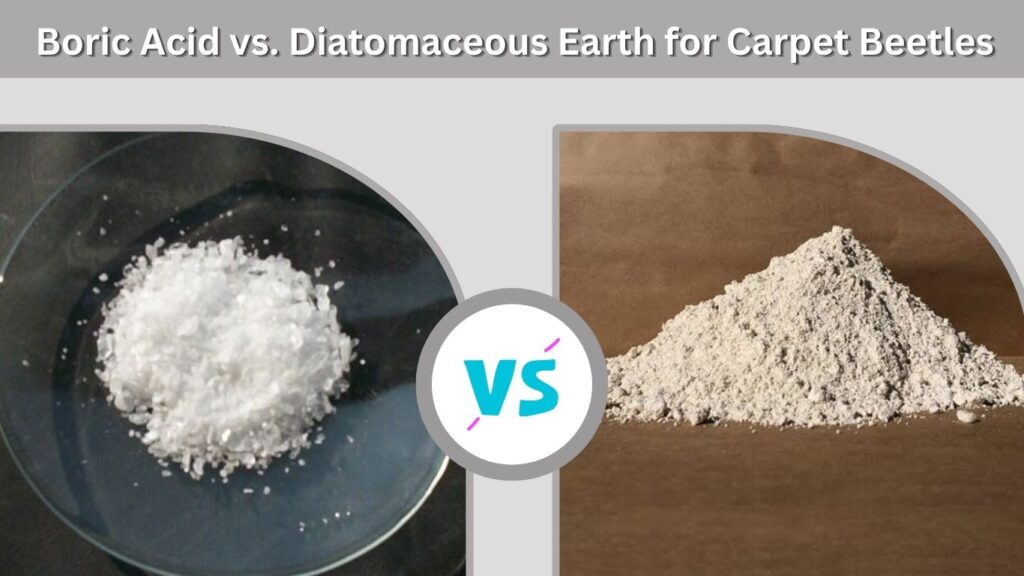
Boric acid and diatomaceous earth are sometimes used as insecticidal dusts, but they work differently.
Diatomaceous earth acts mainly by disrupting the insect’s protective outer coating and causing moisture loss.
Boric acid has toxic effects on susceptible insects, particularly when ingested, although its effectiveness varies among pests.
Which Treatment Is Better?
Neither product is universally superior for carpet beetles.
Their performance depends on the formulation, application location, insect exposure, and environmental conditions.
Both require careful use and appropriate pesticide labeling.
For most household infestations, identifying larval food sources and cleaning affected materials should remain the first steps.
A licensed pest management professional can determine whether additional insecticide treatment is necessary.
Is Diatomaceous Earth Safe Around Pets and Children?
Diatomaceous earth is a naturally occurring material, but natural substances are not automatically harmless.
Fine airborne particles may irritate the respiratory system, eyes, and skin.
Children and pets are particularly likely to encounter dust applied near floors.
To reduce exposure, follow the pesticide label, keep treated areas inaccessible where required, avoid creating dust clouds, and never apply the powder directly to pets unless a product is specifically labeled for that use.
FAQs
1. Does diatomaceous earth really work on carpet beetles?
Yes, diatomaceous earth can kill carpet beetles and larvae through dehydration when they contact an appropriate insecticidal formulation. However, it cannot guarantee complete infestation removal. Thorough cleaning, removal of food sources, and proper fabric storage remain essential.
2. How long should diatomaceous earth stay down for carpet beetles?
The treatment period depends on the product label and infestation conditions. Diatomaceous earth can remain active while dry and undisturbed, but successful carpet beetle control may require weeks. Follow the label’s directions for application, monitoring, and removal.
3. Can diatomaceous earth kill carpet beetle eggs?
Diatomaceous earth is not a reliable stand-alone treatment for carpet beetle eggs. Vacuuming, hot washing, dry cleaning, and suitable heat treatments are more dependable methods of dealing with eggs in infested materials. Repeated inspection helps detect surviving insects.
4. Can I sprinkle diatomaceous earth directly on my carpet?
Avoid sprinkling loose diatomaceous earth across exposed carpets unless the specific pesticide label explicitly permits it. Airborne dust can irritate the respiratory system. Targeted application in labeled locations is preferable to widespread powder application.
5. Is diatomaceous earth better than boric acid for carpet beetles?
Neither treatment is consistently better in every situation. Diatomaceous earth causes dehydration through physical action, while boric acid affects insects differently. Effectiveness depends on the product, application conditions, and insect exposure. Cleaning and eliminating larval food sources are essential with either method.
