
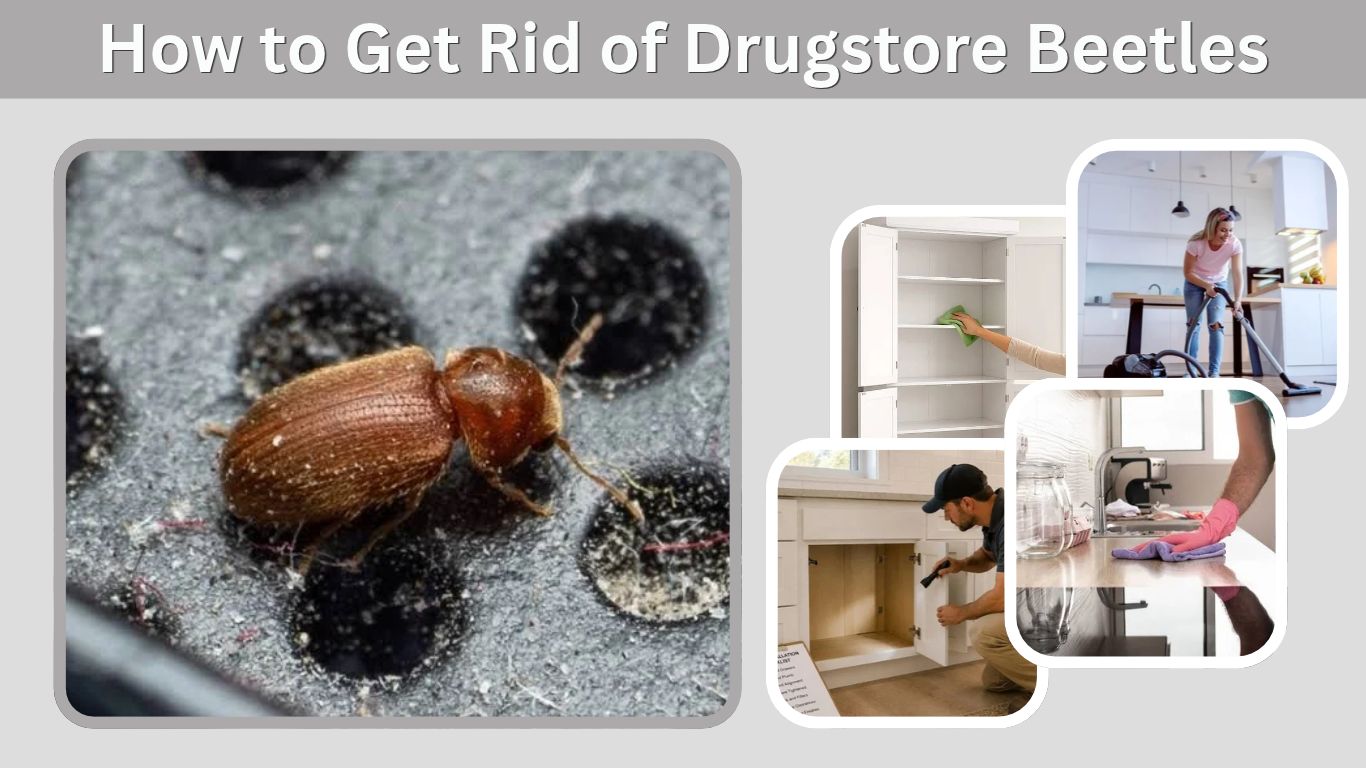
Drugstore beetles are tiny pantry pests that can quickly spread through flour, cereals, spices, dry pet food, and other stored products. Finding them in your kitchen or bedroom can be frustrating, especially when adults keep appearing after cleaning. Fortunately, getting rid of drugstore beetles usually does not require heavy pesticide use. The key is finding infested materials, removing hidden eggs and larvae, and preventing access to new food sources. This guide explains effective home treatments, natural control options, and practical ways to stop future infestations.
What Causes Drugstore Beetles in Your House?
Drugstore beetles (Stegobium paniceum) are small, reddish-brown insects that infest dried foods and other stored materials. Most infestations begin when contaminated products are brought into the home.
Adult beetles can fly between rooms, making it difficult to locate their original breeding source. They commonly gather near windows, lights, and pantry shelves.
Signs of a Drugstore Beetle Infestation
- Small Brown Beetles: Tiny, oval insects crawling on shelves or countertops.
- Flying Beetles: Adults gathering around windows and indoor lights.
- Damaged Packaging: Small holes in paper, cardboard, or thin plastic.
- White Larvae: Cream-colored, C-shaped grubs inside stored products.
- Food Contamination: Fine debris, insect waste, and damaged food particles.
- Repeated Sightings: Beetles appearing in different rooms over several days.
How to Get Rid of Drugstore Beetles Step by Step
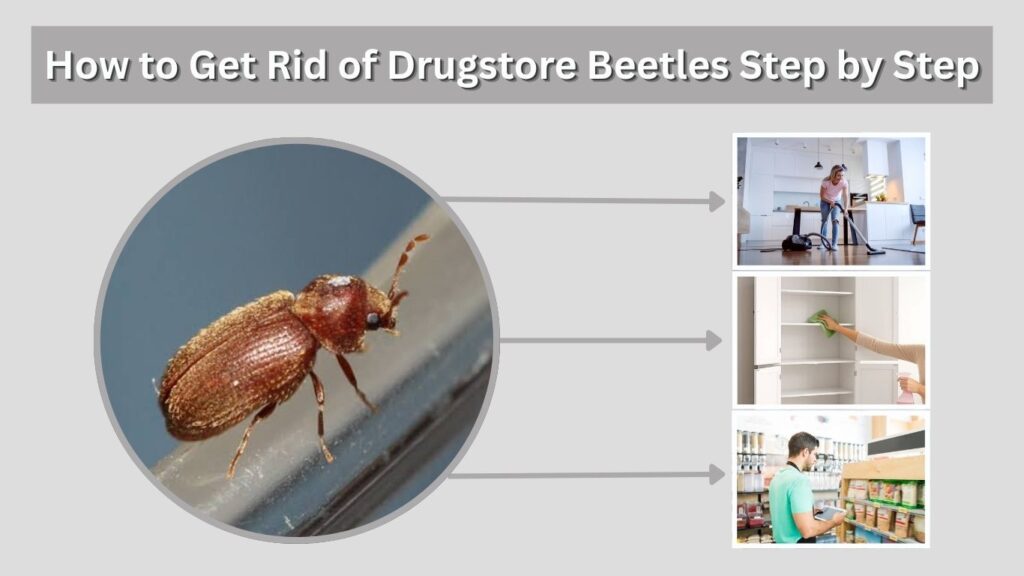
The most effective way to eliminate drugstore beetles is to locate their breeding source and remove contaminated materials. Spraying visible insects alone rarely solves the problem because hidden larvae can continue developing inside food packages.
A thorough inspection combined with cleaning and secure food storage usually provides effective long-term control.
7 Steps to Remove Drugstore Beetles
- Inspect Stored Foods: Examine flour, rice, cereals, pasta, spices, dried fruits, and pet food for insects or damage.
- Discard Infested Products: Seal contaminated materials inside plastic bags and dispose of them outside your home.
- Empty Pantry Shelves: Remove stored products to inspect cupboards, corners, and hidden spaces.
- Vacuum Thoroughly: Clean shelf joints, cracks, corners, and areas containing spilled food. Empty the vacuum immediately afterward.
- Clean Storage Surfaces: Wash shelves with mild detergent and water, then allow them to dry completely.
- Use Airtight Containers: Transfer unaffected foods into sturdy glass, metal, or thick-plastic containers with secure lids.
- Monitor for New Activity: Inspect cupboards regularly and investigate any beetles appearing after cleaning.
How to Get Rid of Drugstore Beetles Naturally
Natural drugstore beetle control focuses on removing breeding materials and using physical treatments rather than relying on chemical sprays.
These methods are particularly useful in kitchens where insecticide contamination is a concern.
Freeze Suspected Infested Materials
Freezing can kill drugstore beetle eggs, larvae, pupae, and adults inside suitable materials.
For items worth preserving, use a freezer maintained at 0°F (-18°C) or colder for at least four days. Larger packages may require additional time to reach the necessary temperature throughout.
However, visibly infested food intended for consumption should generally be discarded rather than reused after freezing.
Does Vinegar Kill Drugstore Beetles?
Vinegar is not a reliable treatment for eliminating drugstore beetle infestations.
Although diluted vinegar can be used for ordinary household cleaning, it does not consistently kill hidden eggs and larvae inside stored products.
Removing infested food and thoroughly vacuuming affected areas is more effective than relying on vinegar sprays.
How to Get Rid of Drugstore Beetles in Your Kitchen
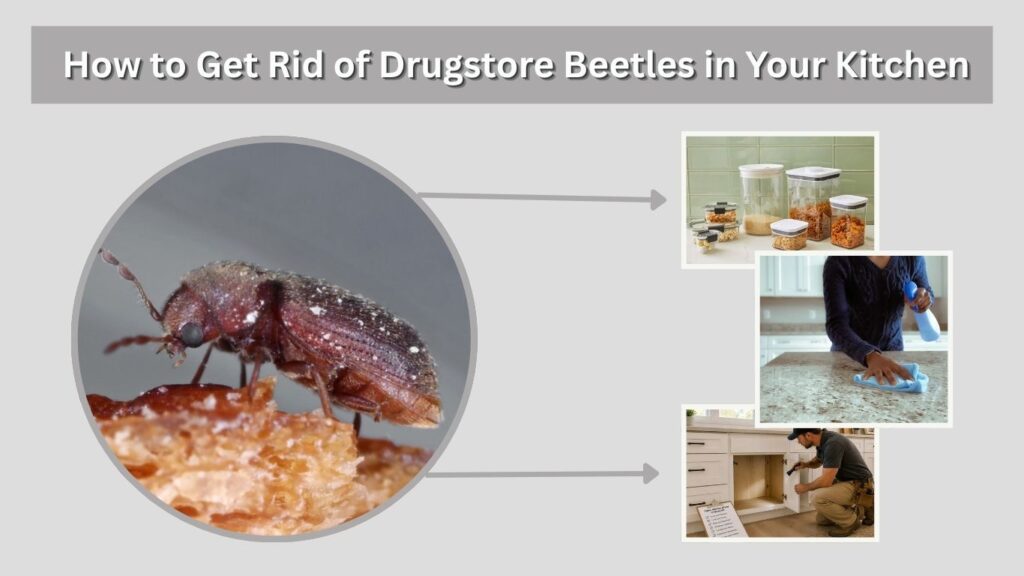
Kitchens are common infestation locations because they contain abundant dry foods. Even unopened packages can become infested when beetles enter through packaging seams or chew through vulnerable materials.
Clean Kitchen Cabinets and Pantry Shelves
Remove everything from affected cabinets and inspect packages individually. Pay particular attention to old spices, forgotten baking ingredients, and dry pet food.
Vacuum shelving joints and corners where food particles may accumulate.
After cleaning, return only unaffected products stored in properly sealed containers. Continue monitoring the pantry for newly emerging adults.
How to Get Rid of Drugstore Beetles in Your Bedroom
Drugstore beetles sometimes appear in bedrooms even when there is no obvious food source.
Adult beetles are attracted to light and may fly from the kitchen into other rooms. However, stored snacks, dried flowers, or hidden food materials can also support infestations.
Remove Drugstore Beetles From Bedrooms
Begin by inspecting windowsills, furniture, storage boxes, and areas containing dried plant materials.
Vacuum visible beetles and clean spaces beneath furniture.
Check nearby rooms for contaminated food because the bedroom may not contain the original infestation.
Drugstore beetles do not feed on human blood and are not bed bugs.
Where Do Drugstore Beetles Hide?
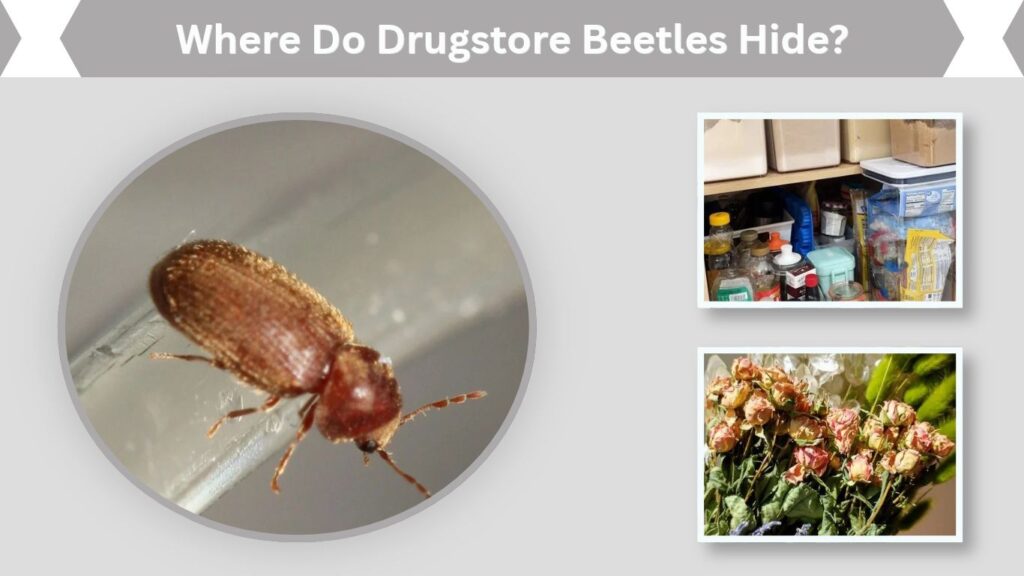
Drugstore beetles can develop inside many materials beyond ordinary pantry foods. Finding hidden breeding sources is especially important when insects continue appearing after initial cleaning.
Common Drugstore Beetle Hiding Places
- Pantry Cabinets: Flour, cereal, biscuits, and baking ingredients.
- Spice Containers: Pepper, paprika, dried herbs, and seasonings.
- Pet Food Storage: Dry dog food, cat food, and birdseed.
- Decorative Materials: Dried flowers, potpourri, and seed arrangements.
- Storage Boxes: Forgotten food packages and dried botanical products.
- Hidden Food Sources: Grain-based rodent bait or food stored by rodents in concealed spaces.
Do Drugstore Beetle Traps Work?
Drugstore beetle pheromone traps attract adult male beetles using species-specific chemical signals.
These traps help detect activity, monitor population changes, and sometimes identify areas near the infestation source.
Are Pheromone Traps Enough?
Pheromone traps cannot eliminate an entire infestation because they do not remove hidden eggs or larvae.
They should be used alongside thorough inspections, sanitation, and appropriate food storage.
Choose traps specifically labeled for drugstore beetles rather than assuming every pantry beetle trap attracts the same species.
What Insecticide Kills Drugstore Beetles?
Insecticides are usually unnecessary for small household infestations. They cannot reliably reach insects developing inside sealed packages or contaminated foods.
Spraying kitchen cupboards without removing the breeding source typically provides only temporary results.
When Is Professional Extermination Necessary?
Professional pest control may be appropriate when infestations persist despite repeated inspections and thorough cleaning.
A specialist can help identify overlooked breeding materials and determine whether treatment in inaccessible areas is justified.
Never apply insecticides directly to food or food-contact surfaces unless the product specifically permits that use.
How Long Does It Take to Get Rid of Drugstore Beetles?
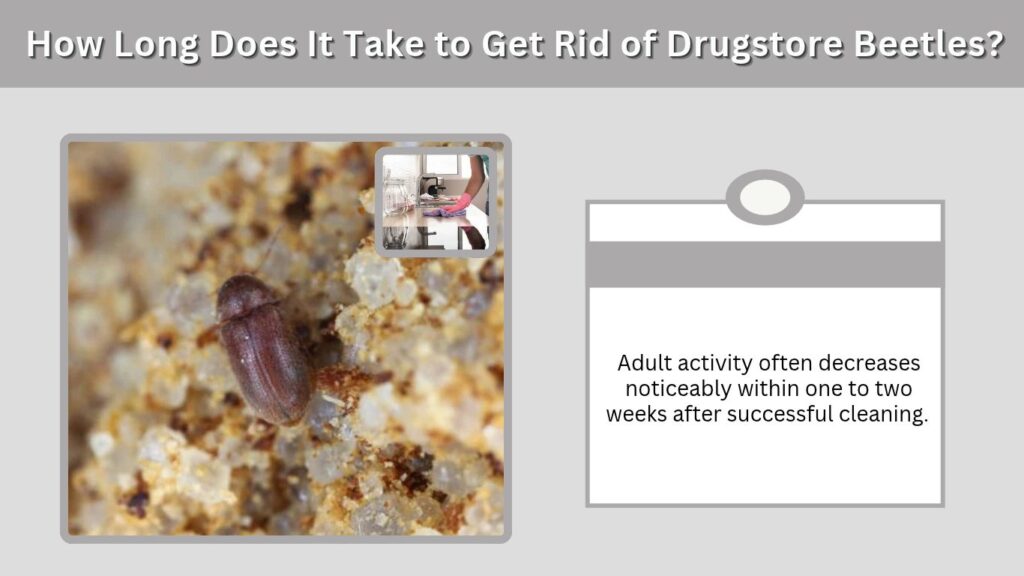
The elimination period depends on infestation severity and whether all contaminated products have been removed.
Adult activity often decreases noticeably within one to two weeks after successful cleaning. However, beetles may continue emerging temporarily from overlooked materials.
Why Do Drugstore Beetles Keep Coming Back?
Recurring beetles usually indicate an unidentified breeding source or newly introduced infested products.
Check stored spices, pet food, dried decorations, and rarely opened cabinets.
If beetle numbers remain high after cleaning, repeat your inspection rather than relying on additional sprays.
How to Prevent Drugstore Beetles From Returning
Preventing drugstore beetles requires proper food storage, regular cleaning, and attention to products that remain unused for extended periods.
These simple habits make kitchens and storage areas less attractive to pantry pests.
Drugstore Beetle Prevention Tips
- Store Foods Securely: Use airtight glass, metal, or sturdy plastic containers.
- Inspect New Groceries: Check dry foods for damaged packaging and visible insects.
- Clean Food Spills: Remove crumbs and food residue promptly.
- Rotate Pantry Supplies: Use older products before purchasing additional stock.
- Check Pet Food: Store animal feed securely and inspect it regularly.
- Avoid Excessive Storage: Purchase reasonable quantities of dry foods.
- Monitor Regularly: Investigate repeated sightings before populations increase.
FAQs
1. What Is the Fastest Way to Get Rid of Drugstore Beetles?
The fastest effective approach is locating and discarding infested products, thoroughly vacuuming storage areas, and transferring unaffected foods into airtight containers. Removing the breeding source is essential because killing visible adults alone will not eliminate hidden eggs and larvae.
2. Can You Get Rid of Drugstore Beetles Naturally?
Yes, drugstore beetles can often be eliminated through nonchemical methods. Discard contaminated foods, freeze suitable nonfood materials, vacuum affected areas, and maintain proper storage. These methods target the infestation source without introducing unnecessary insecticides into food storage spaces.
3. Why Are Drugstore Beetles in My Bedroom?
Drugstore beetles may enter bedrooms because adult beetles can fly and are attracted to artificial light. Hidden snacks or dried decorative materials may also provide breeding sources. Inspect nearby rooms and stored products to determine where the infestation originated.
4. Will Drugstore Beetles Go Away on Their Own?
Drugstore beetles may eventually disappear if suitable breeding materials become unavailable. However, infestations can continue for months when contaminated foods remain indoors. Removing the source, cleaning thoroughly, and improving food storage are the most reliable solutions.
5. Do Drugstore Beetles Bite Humans?
Drugstore beetles are not known to bite humans or feed on blood. Their primary concern is contamination of dried foods and stored products. If unexplained skin irritation occurs, consider other possible causes rather than assuming drugstore beetles are responsible.
